Are you winning or losing in the wrestling match of life?

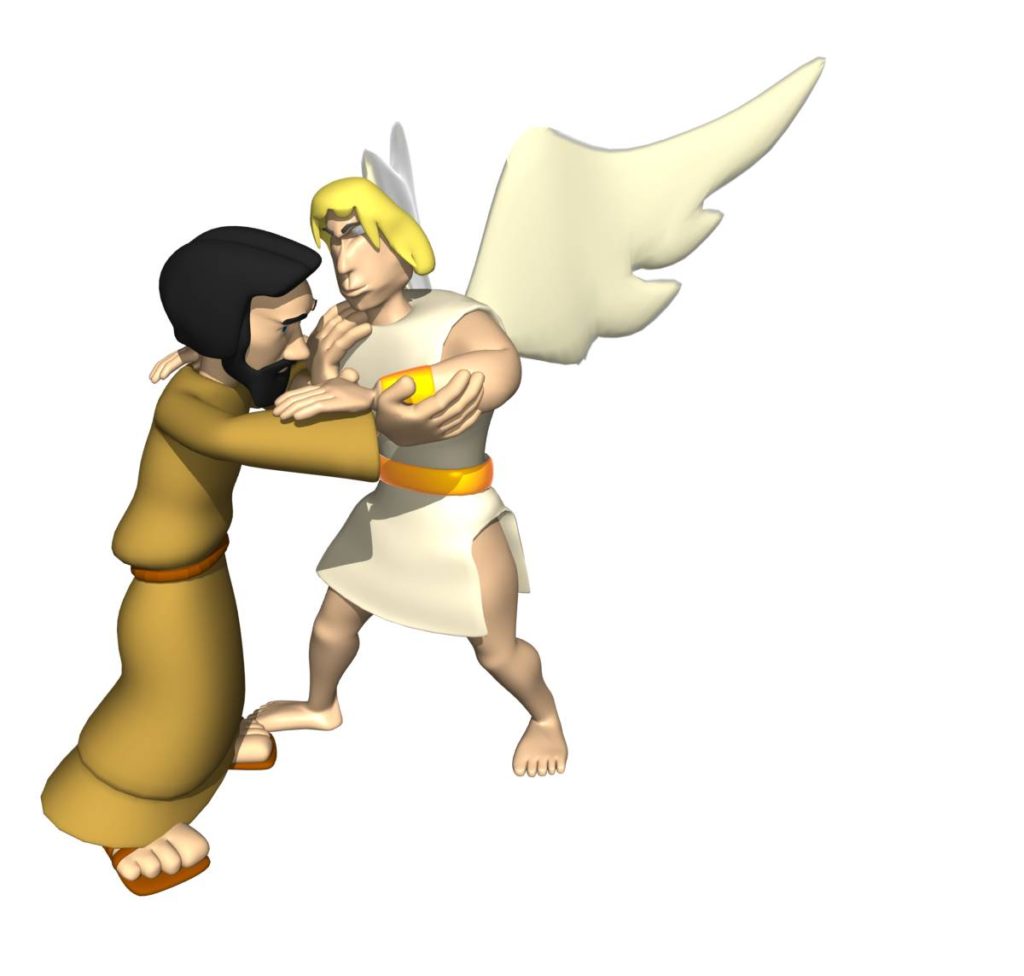
Genesis 32:24, Wrestled with him. Why did Elohim wrestle all night with Jacob? Why not just wound him early on and save the time and trouble? What does this teach us about the long-suffering nature of Elohim, who will continue to strive with us and our fleshy tendencies and self-reliances, until we finally submit to him and recognize that only through him can we have real strength and victory, though we might end up physically lame in the process? Why the wrestling all night“till the breaking of the day”? What does night and breaking of day represent metaphorically with regard to our spiritual walk? What does this teach us about faith, the struggles of this life and about not giving up until the very end when the blessings and dawning of a new day are about to break forth? There are many things to learn from this passage of Scripture about ourselves.

At the end of his struggle, Jacob received the new name of Israel (verse 28). Through this struggle, he took a quantum leap spiritually and became a new man with a new identity. Has this ever happened to you? Don’t we progress spiritually only out of crisis? “There is no gain where there is no pain,” as the saying goes. 

What were the positive results of Jacob’s struggle? Verse 32 says of Jacob, “as he passed over Penuel the sun rose upon him, and he limped upon his thigh.” Penuel means “faces of El.” Taking a little poetic license (at the drash, allegorical or third level of Hebraic biblical interpretation) here, we could paraphrase this verse as follows: “As Jacob emerged out of the darkness of self-reliance, the face of Elohim shined favorably upon him as he no longer relied on the flesh.” Pause to reflect on this for a moment and take quick stock of your spiritual walk in the light of these words.

Who are some other notable Biblical characters besides Jacob who struggled with trying to achieve their divine mission through human means? How about Abraham with Hagar, Moses when he murdered the Egyptian, Samson, or Peter when he cut off the ear of the high priest’s servant? Can you think of some others? What did these men learn about walking in the Spirit versus walking in the flesh? 

Now consider your own life. Have you ever struggled between doing your will versus submitting to the will and ways of Elohim? How did it go? 

Where are you at in the struggle of life?

The only way to know that there is higher way is to walk in the Spirit of Elohim through a spiritual relationship with Yeshua the Messiah and to learn about the heart, mind and will of the Creator. How to do we know how to do this? Simply this. By acknowledging the fact that our ways haven’t worked out so well for us and that we need help from above. This involves repenting of our sin (i.e. going against the ways of Elohim), receiving Yeshua as our Lord and Savior, and then studying the words, ways and will of Elohim in the Bible, and by studying the lives and examples, both the failure and successes, of the people written about therein, and then by conforming our lives to the truth of the Bible. In this manner, we go from being a child of the darkness to becoming a child of the light (1 Thess 5:1–5) with a new awareness, a new identity—an overcomer, a conqueror, and child or prince of El, like Jacob becoming Israel.

Genesis 32:28, Jacob but Israel. Jacob/Ya’acov means “heel snatcher/holder or supplanter,”while Israel/Yisra’el meansPrince of El or El Prevails/Prevailer with El.” What can we learn about the change of Jacob’s character as reflected in the changing of his name? Who is the focal point of the name and the initiator of the action in the first name … in the second name? What can we learn from this for our own faith walk?

Genesis 32:32, The muscle that shrank. Please notice that the sinew, representing the strength of Jacob’s, flesh only shrank. It was not removed. What does this signify spiritually with regard to the redeemed man’s old sin nature? 

Simply this. At the point in one’s spiritual journey when one is regenerated by the Spirit of Elohim, a person doesn’t lose their identity, personality or soul (i.e. his mind, will and emotions). 

What then happens to a person’s soul? It must be transformed and renewed by the Spirit of Elohim to be conformed to YHVH’s perfect will (Rom 12:2). One’s soul (their mind, will and emotions or personality) will still try to assert dominance over their personal spirit or the spirit that resides inside of them, but one must learn to submit their soul and spirit to the Spirit of Elohim, that is, to the mind, will, ways and Word of Elohim, their Creator. 

Paul discusses the struggle between the soul and the spirit in ­Romans 7:14–25. This is the same struggle that Jacob faced in his dark night of the soul. There he died to his own will and finally submitted totally to that of his Heavenly King.



 

How to Deal With Demons in Yourself and Others—Updated

Mark 5:1–20, The Gadarene demoniac.

Eighteen Attributes of a Demonic Spirit

This encounter between Yeshua and this demon-possessed individual teaches us about the characteristics of one who is tormented, oppressed or even possessed by a demon or an evil, unclean spirit.

  • One with an unclean spirit is “unclean in thought and life” (Mark 5:2).
  • Such an individual may have a pre-occupation with things relating to death and dying (Mark 5:3).
  • They may possess superhuman strength thanks to the aid of the demon in them (Mark 5:4).
  • They may act wild, and unable to be restrained (Mark 5:4).
  • They may be prone to fits of shouting loudly (Mark 5:5), shrieking or making a shrill cry (Mark 9:18).
  • They may cut themselves, or resort to other acts of self-mutilation (Mark 5:5) or self destruction (e.g. burning oneself by fire, Matt 17:15; Mark 9:22), or attempts at drowning (Mark 9:22).
  • The demoniac may possess supernatural knowledge (Mark 5:7).
  • The demon can speak through the demonized person (Mark 5:7), or cry out (Mark 9:26).
  • A demonic spirit wants to possess or inhabit something; if not a human, then an animal (Mark 5:12), or a house, an objects like idols or books (Acts 19:19; Rev 13:15) or even a mechanical device or “matrix” (e.g. the image of the beast in Rev 13:13–14).
  • They may be clothed improperly or scantily (Mark 5:15).
  • They will not a possess a “right [sound, self-controlled, sober]” mind (Mark 5:15).
  • A demonic or an unclean spirit may cause convulsions or spasmodic contractions, bodily contortions within a person, or cause a person to be hurled to the ground (Mark 1:25; 9:18, 20) resulting in one wallowing or rolling around on the ground (Mark 9:20).
  • Epileptic-type seizures or madness can be symptoms of demon possession (Matt 17:15).
  • A demoniac may foam at the mouth (Mark 9:18, 20).
  • A demoniac may grind or gnash their the teeth (Mark 9:18)
  • A demonic spirit can cause one’s body to waste away, dry up or become rigid (Mark 9:18).
  • Demonic spirits can accompany people as they come into the congregation of YHVH (Mark 1:23; Luke 4:33).
  • A demonic spirit can make one to be mute or unable to speak (Mark 9:17).

How does one deal with a demon or demonic influence in a person? The short answer is this: Preach the gospel to them, and if they believe in Yeshua the Messiah, then, in the name of Yeshua, cast the demon out of them (Mark 16:15–17). Remember these Scripture promises:

Then he called his twelve disciples together, and gave them power and authority over all devils, and to cure diseases. (Luke 9:1)

How to Deal With a Demonic Spirit in Yourself or Someone Else

Continue reading
 

What is Jacob’s Trouble from a Hebraic perspective?

I hear many Christian Bible prophecy teachers talk about Jacob’s Trouble and tie it into their eschatological speculations about the pre-trib rapture, Daniel’s 70th week and on and on. Most of them seem to simply be regurgitating what others before them, who are ignorant of the Torah and who really don’t know much about the Tanakh have said. They don’t even know who the descendants of Jacob are in end times Bible prophecy. So how can they even hope to come to an understanding of this subject? It’s the blind leading the blind!

A few years ago, I did an in depth study on the subject of Jacob’s Trouble. I went into the study with no preconceived ideas except only to let the Bible speak for itself. The following is what was revealed to me. — Natan

Genesis 32:1–32, Jacob’s trouble explained.

Jacob’s Trouble, His Dark Night of the Soul and End Times Prophecy

Genesis 32 is the story of Jacob’s return to Canaan after having been exiled from his homeland for 20 years. His exile occurred after he obtained his divinely promised birthright through shrewd if not unscrupulous means from his brother Esau resulting in his having to flee Canaan for fear of his life due to Esau’s vengeance. Jacob found refuge in the region of Babylonia at his Uncle Laban’s home where he married Laban’s two daughters, Leah and Rachel. Eventually, Jacob had to flee Babylon with Laban in angry pursuit. As Jacob and his family are returning to Canann, they encounter Jacob’s brother Esau who, along with his small army, physically stood in Jacob’s way from entering the land of his promised inheritance and wanted to kill Jacob. 

This account is not only the story of Jacob’s personal, spiritual struggles, but it also has end times prophetic implications relating to the regathering out of exile of the twelve tribes of Israel (the Jews and the Christians) and their return to their Promised Land in Israel under Yeshua their Messiah at his second coming. The Scriptures refer to this as Jacob’s Trouble (see Jer 30:7).

The Jewish sages believe that the encounter between Jacob and Esau (no doubt informed by Jeremiah’s prophecy) is prophetic in nature and will happen again in the end times, but this time on a much larger scale and this time involving the numerous descendants of Israel and Esau. The end-times Israelites will be attempting to return to their ancestral homeland, while the descendants of Esau will be blocking their way. As we proceed in this study, we will see whether this prophecy is beginning to come to pass in these last days.

Not only this, the Jewish sages speak of two major redemptions in Israel’s long history. The first redemption occurred when YHVH delivered the oppressed and enslaved children of Israel out of Egypt at the exodus. The second or final redemption will occur at the end of this present era when the Messiah will regather and lead his exiled and scattered Israelite people back to the Promised Land in fulfillment of numerous biblical prophecies. 

Rolling the film backwards a little in the present story of Jacob, Laban had chased Jacob out of the area of Babylon, and yet Jacob was being blocked from entering Canaan by his murderous brother Esau (or Edom meaning “red”). This is reminiscent of Pharaoh chasing the Israelites out of Egypt only to find themselves blocked by the Red Sea, which is a prophetic picture of Edom. In both instances, YHVH’s people were forced to rely totally on him for deliverance from their enemies who were in front of and behind them.

Initially, Jacob deals with the crisis in a typically human way—by scheming and conniving instead of having faith in YHVH to work things out. He figured that by bribing angry and bloodthirsty Esau with wave after wave of gifts, he might appease Esau and assuage his brother’s desire for revenge (Gen 32:13–20).

Yet Jacob’s dual response to his present danger by resorting to both appeasement and prayer was not acceptable to YHVH who wanted Jacob to be a man of unmitigated faith—to solely trust in him. To bring Jacob to this point, a part of Jacob had to die. His prideful self-reliance to extricate himself from difficult situations had to die. This tendency was based on fear of death, and not on faith in YHVH. For Jacob to mature spiritually, YHVH wanted Jacob to leave his aspect of his human nature on the east side of the Jordan where Babylon (a spiritual metaphor for the old spiritual man and the ungodly ways of this world) was located. In its place, a spiritually-oriented man who would totally trust YHVH in all things had to rise up; Jacob could no longer trust in his soul man (i.e. his mind, will and emotions) to dictate his actions; he had to rely on the Spirit of Elohim to lead him through his personal spirit. Only a man of faith who was might in the Spirit would be worthy to enter the Promised Land. As Jacob had to discover, the old soul-reliant man, however, would not die without a fight as we are about to see.

Continue reading
 

Blog Scripture Readings for 12-8 Through 12-14-19

Aside

Parashat Vayishlach — Genesis 32:4 (3)* – 36:43
Haftarah — Obadiah 1:1–21
Prophets — 1 Samuel 4:1 – 10:27
Writings — Psalms 56:1 – 62:12
Testimony — Mark 4:20 – 7:37

Our new annual Scripture Reading Schedule for 2019-2020 with daily readings is available to download and print. If you are still working through 2018-2019’s Scripture Reading Schedule, the link will still be available on the right sidebar under “Helpful Links”. If you are using a mobile device or tablet, the link may be below, meaning you’ll need to scroll down instead.

Most of this week’s blog discussion points will be on these passages. If you have general comments or questions on the weekly Scripture readings not addressed in a blog post, here’s a place for you to post those. Just use the “leave a reply” link or the “share your thoughts” box below.

The full “Read Through The Scriptures In A Year” schedule, broken down by each day, can be found on the right sidebar under “Helpful Links.” There are 4 sections of scripture to read each day: one each from the Torah, the Prophets, the Writings, and from the Testimony of Yeshua. Each week, the Torah and haftarah readings will follow the traditional one-year reading cycle.

* Verse numbers in parenthesis refer to the verse number in Christian English Bibles when they differ from Hebrew Bibles or the Tanakh.

Weekly Blog Scripture Readings for 12/8/19 through 12/14/19.


Is modern Babylon with its “Labans” holding you back?

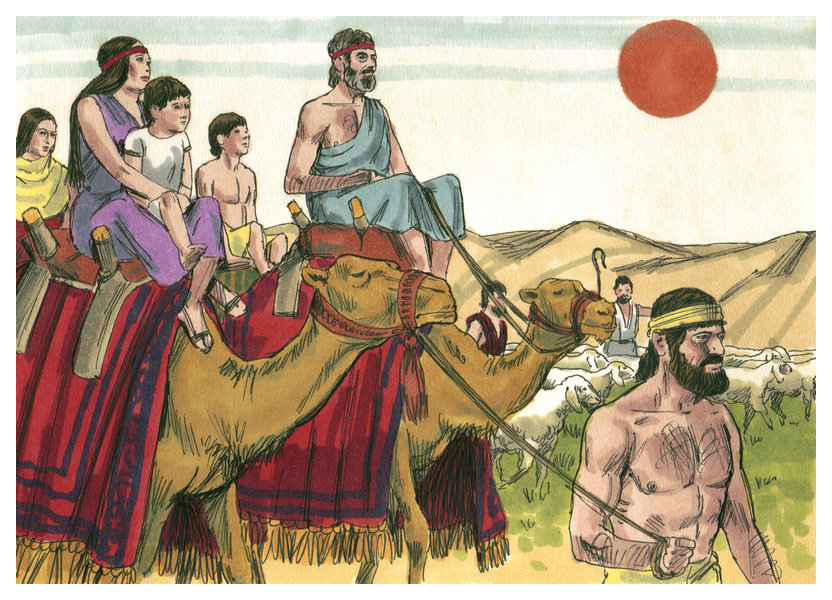
Jacob and his family fleeing Laban and Babylon

Genesis 31:43, These daughters are my daughters. Laban claims that Jacob’s wives and children belonged to him. Laban was also steeped in the idolatry of Babylon having in his possession idols or images called teraphim (Gen 31:19, 34–35), which were legal symbols of his wealth, since they were actual title deeds to his property. The gods of one’s property also acted as good luck charms insuring the land’s prosperity. This is a picture of social and economic grip that end times Babylon attempts to exert upon the modern descendants of Jacob. What can we learn from this lesson in Jacob’s life?

Modern Babylon and its Labans want to control and possess the wives and children of the end times saints or the redeemed Israel of Elohim (Gal 6:16). This it does by attempting to indoctrinate them in its pagan religious system, and then by keeping Jacob’s modern descendants (Christians and Jews) from returning to their spiritual and physical homeland and birthright inheritance, and from returning to the Torah-faith of their fathers. Aren’t governmental institutions (e.g. public educational institutions and state and federal Child Protective Services agencies, social welfare programs, various government regulations that have greatly diminished or eliminated many of our personal freedoms along with Elohim-given parental rights), socio-political organizations (e.g. ACLU, UN, many NGOs) and greedy corporate systems (e.g. banks and financial institutions) that enslave people through debt, corrupters of our food supplies that destroy people’s health into our foods (e.g. the additions of chemicals preservatives and taste enhancers, genetically modified food, the use of chemical pesticides that find their way into the foods we eat), pharmaceutical companies and the mainstream medical establishment that enslaves and destroys people’s minds and bodies through drugs the modern-day Labans who want to kill, steal and destroy for the benefit of money, power and control? Affirmatively yes! 

Revelation 18:13 says that end times Babylon the Great will traffic in the bodies and souls of men. This is likely a reference to the trafficking in human body parts (for medical purposes, no doubt) and the enslavement of men’s hearts and minds (through drugs and chemicals). 

All of these things speak at some level to the modern day enslavement of people including their religious expression, freedom of thought and action. 

In these end times, the saints of Elohim must protect themselves and their loved ones from the idols and the evil machinations of the Elohim-hating, devil worshiping idolators around them, even as Jacob, in order to protect his loved ones, had to flee Babylon and Laban. 

Let us not forget John’s closing words in his first epistle: “Little children, keep yourselves from idols” (1 John 5:21). An idol is anything that gets between us and Elohim, and which moves us downward and away from him on our spiritual path instead of upward and closer to him.

Laban and Balaam. It is quite possible that the false prophet Balaam, who heard from YHVH and had a sense of righteousness, though was still steeped in paganism, was a descendant of Laban. Both Laban and Balaam were from Aram (part of greater Babylon) and only 280 years separated them. One of the Aramaic Targums (Targum Jonathan) equates Balaam with Laban, while other Jewish scholars view Balaam as Laban’s grandson. Both were involved in a mixed-religious system in that they had some truth and some error, some good and some evil. This is the nature of religious Babylon (meaning “mixture” or “confusion”). A mixture of what? Of good and evil. Remember the tree by that name in the Garden of Eden? Who was the one who enticed man to indulge in that fruit in rebellion to YHVH’s commands? 

Continue reading
 

Your life may be the only Bible that some people are reading!

Who me?

Mark 3:2–5, Healing on the Sabbath. The Pharisees’ attitude toward Sabbath observance versus their lack of concern for the man with the withered hand demonstrates that those who have a legalistic and punctilious view of the Torah usually possess hard hearts toward those in need, and have difficulty showing love and compassion. 

While emphasizing the letter-of-the-law obedience, Torah legalists miss the heart and spirit of the law. 

Yeshua teaches that mercy is an aspect of the greater Torah (Matt 23:23), as does Paul (1 Cor 13). James tersely states the same concept: “Mercy triumphs over judgment” (NKJV, NAS). In many places, the Scriptures teach that judgment must be balanced, even tempered, by mercy (e.g. Pss 85:10; 89:14; Jer 9:24).

While adhering to the wonderful principles of YHVH’s Torah and loving Yeshua by keeping is commandments, don’t forget to do so  in mercy and love—especially with regard to those around you, who are watching your example. After all, the example of your life may be the only Bible that they’re reading!


Are you in the House of El or Babylon?

Genesis 28:1–22 and 29:1, Jacob’s journeys. Jacob was fleeing from his spiritual home, Beth-el or House of El, and was heading east some 500 miles on foot as a lone traveler and fugitive en route to Babylon (definitely not the House of El). What is the spiritual and prophetic significance of this? What is there for us to learn?

The same Scriptures elsewhere refers prophetically to Babylon as “the habitation of devils and the hold of every foul spirit, and a cage of every unclean and hateful bird” (Rev 18:2). Through his own human effort, Jacob had connived to procure the birthright blessing and in so doing had stepped out of the will of YHVH by trusting in himself instead of having faith in divine Providence to bring about YHVH’s perfect and blessed will for his life. 

But YHVH is gracious and often blesses us in spite of our human foibles and weaknesses. For example, YHVH had been gracious to Isaac earlier when he stepped out of YHVH’s perfect will for his life in attempting to flee Canaan for Egypt by graciously comforted him and redirecting his steps (Gen 26:1–6). Likewise, YHVH met the lonely Jacob and encouraged him at the outset of his long journey, for in Genesis 29:1 we read, “Jacob lifted up his feet and came into the land of the people of the east” (KJV, marginal reference). 

What can we learn about the ways of YHVH from these examples? Are you in tune with his methods of operation in the life of the believer? The more we study the word of YHVH, and the examples of the lives of those showcased therein, the more we can learn about our own lives. So study the recorded events about the lives of YHVH’s servants of old to learn wisdom for your daily life and spiritual walk. In so doing, you will learn how to stay in YHVH’s will for your life, and when you a happen to get out of his will, you will become aware of his mercy and grace.

Are you resting and abiding in the House of El or struggling in Babylon or somewhere in between?