Genesis 45:5, 7, 8,Elohim sent me. Joseph was sold into slavery at age 17, was freed from prison and made ruler of Egypt at age 30. After that, seven years of plenty followed, and then two years of famine had passed by the time he was reunited with is brothers. Only after 22 years in Egypt did Joseph finally figure out Elohim’s grand and wonderful plan for his life, and how it involved the saving of his family.
Had Joseph lost faith along the way, become embittered over his multiple misfortunes, and turned away from Elohim, the nation of Israel may have never been preserved.
Keeping one’s eyes on YHVH Elohim, and refusing to lose faith during the dark times of one’s life can yield some amazingly triumphant outcomes, as we learn from the life of Joseph. This is because YHVH watches over those who place their trust in him and who obey him the best they can. Their lives are in his hands, and the circumstances of their lives are under his guidance. Because of his love for his children, and because of the good plans he has for them, whatever he allows to happen to them will be for their ultimate good. So find the blessing in everything and your love and faith in your Creator will be strengthened.
Does the story of Joseph sound like a trite chliché to you? Well, read the Bible; it is full of such stories of hope, faith and blessing. Moreover, millions of Bible believers down through the ages have similar stories to tell because they trusted in the Word and promises of Elohim. So put your trust in him today. What have you got to lose except your dark despair and empty hopelessness?
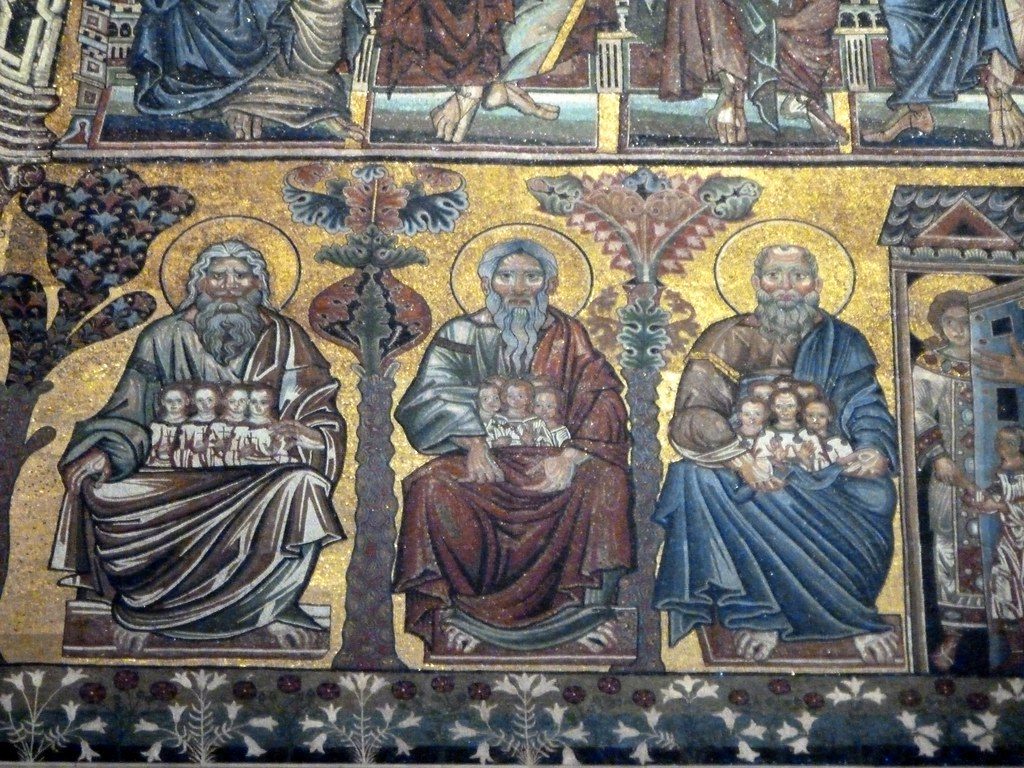
Scripture records that Abraham was the patriarch (literally chief father) of the Hebrew people, and a pillar of faith because of his trust in and obedience to YHVH Elohim. As such, he is often referred to as the Father of the Faithful. But when Elohim first called this man of faith and grandfather of the Israelite people, was he a giant in his faith? Not at all. Yes he had faith, but his faith was imperfect; it had to grow, and it was a process, which we will discuss below.
Abraham’s faith, like the proverbial mustard seed, started out small, but it was still enormous compared to most other people. After all, on a mere promise from Elohim, he uprooted his entire family and travelled on foot hundreds of miles across the dangerous desert and through various countries and encountering many hardships along the way in hopes of a better life. It was if he were moving from New York City to Jawbone Flats, Oregon, a virtual ghost town in the mountains—population four!
Abraham’s first steps of faith were measured, cautious, incremental and at times hesitant, yet through it all YHVH was gracious because Abraham’s heart was inclined to do his will. Because of Abraham’s faithfulness, YHVH still counted it to him for righteousness (Gen 15:6). Not only that, but he passed his mountain moving, gravity defying faith on to his children and grandchildren and beyond, and this legacy of faith lives on in many of his descendants to this day.
There is much that we, as the children of Abraham through our faith in Yeshua the Messiah, can learn from this pillar of faith and his immediate descendants and associates that will strengthen our own faith in YHVH Elohim and his promises.
Abraham and Sarah
Genesis 12:1, Get thee out of thy country. Did Abram immediately leave his father’s house and go directly to the country that YHVH would show him, or did he fulfill YHVH’s will for his life in incremental steps? Compare Genesis 11:31 with Genesis 12:1. Did Abram leave his father’s house completely, or take part of his father’s house with him including his father and nephew? Haran is located in northern Mesopotamia and is nowhere near Canaan. When Abram finally made his way to Canaan minus his father, did he still have part of his kindred with him, something YHVH instructed him to leave behind (Gen 12:1)? Did his nephew Lot prove to be a help or a hindrance to Abram in fulfilling YHVH’s mission for his life in a new land? What lessons can we learn from this account?
First, YHVH is gracious to us even when we don’t obey him completely and immediately. Scripture still refers to Abraham as the father of the faithful or faithfulness (Rom 4:12, 16).
Second, Abram was a man of prominence in Babylon (Chaldea), was recognized as a mighty prince (Gen 23:6), and was 75 years old when YHVH asked him to leave the comforts of life in Babylon to trek across the desert to the backwoods region of Canaan. No doubt, this was not an easy move for Abram for the reasons already stated.
Those who would follow Yeshua have to make similar choices as Abram did: to stay in the Babylon of this world, or to leave it. What did Yeshua tell his disciples about the sacrifices that they would need to make to be a follower of YHVH? (See Matt 10:35–39.) At the same time, what did Yeshua say would be the eternal rewards of those, who like our father Abraham, set out in faith for a new spiritual destiny? ( See Matt 19:29.) What physical obstacles stand in your way of fulfilling YHVH’s spiritual calling, mission and destiny for your life?
Genesis 16:1–16, Abraham takes matters into his own hands. The faith of Abraham, the father of the faithful, was tried greatly. After waiting years for a son, he finally gave in to doubt and unbelief. In stead of waiting for YHVH to give him a son, Abraham too matters into his own hands and endeavored to work out YHVH’s plans and purposes in his life through fleshly means. The result was Ishmael, the father of many of the modern Moslem Arabs. What can we learn from this mistake of Abraham?
Parashat Vayigash — Genesis 44:18 – 47:27 Haftarah — Ezekiel 37:15-28 Prophets — 1 Samuel 25:1 – 31:13; 2 Samuel 1:1-27 Writings — Psalms 77:1 – 82:8 Testimony — Mark 14:53 – 16:20; Luke 1:1-66
Our new annual Scripture Reading Schedule for 2019-2020 with daily readings is available to download and print. If you are still working through 2018-2019’s Scripture Reading Schedule, the link will still be available on the right sidebar under “Helpful Links”. If you are using a mobile device or tablet, the link may be below, meaning you’ll need to scroll down instead.
Most of this week’s blog discussion points will be on these passages. If you have general comments or questions on the weekly Scripture readings not addressed in a blog post, here’s a place for you to post those. Just use the “leave a reply” link or the “share your thoughts” box below.
The full “Read Through The Scriptures In A Year” schedule, broken down by each day, can be found on the right sidebar under “Helpful Links.” There are 4 sections of scripture to read each day: one each from the Torah, the Prophets, the Writings, and from the Testimony of Yeshua. Each week, the Torah and haftarah readings will follow the traditional one-year reading cycle.
Weekly Blog Scripture Readings for 12/29/19 through 1/4/20.
Genesis 44:32–34,Became surety for the lad. On this passage states Christian commentator Matthew Henry, “Judah’s faithful cleaving to Benjamin, now, in his distress, was recompensed long afterwards by the tribe of Benjamin keeping with the tribe of Judah, when the other tribes deserted it” (Matthew Henry Concise Commentary on the Whole Bible, p. 56). This is a small piece of biblical trivia that had historical ramifications for hundreds of years later.
It is amazing that some 800 years later the fraternal love between these two brothers remained in the collective psyches their descendents such that the tribe of Benjamin remained loyal to that of Judah.
What does this say about generational blessings (and curses) or attitudes that are passed on down to one’s descendants? If curses can be passed on down to the third or fourth generation (Exod 20:5), how about blessings? The Book of Proverbs states that, “Death and life are in the power of the tongue, and those who love it will eat its fruit,” (Prov 18:21) and that, “A wholesome tongue is a tree of life, but perverseness in it breaks the spirit,” (Prov 15:4).
Generations of our descendants can be affected positively or negatively by the inclination of our hearts and the words of our mouth.
It had been Judah’s idea originally to sell Joseph to slave traders. Since that time, Judah’s heart had changed so that now he was willing to lay down his life for his brother, Benjamin, Joseph’s only full brother. This change of heart on Judah’s part and the resulting outpouring of love for his youngest brother had lasting positive results. What are the prophetic implications of this relationship between Joseph (Ephraim and Manasseh) and Judah?
Did Judah recognize Joseph, or did Joseph have to reveal himself? (Read Gen 45:1–4.) Was Judah “blinded” to whom Joseph was? Why? What is this a prophetic picture of? (See Rom 11:25.) As we have seen in previous studies, Joseph was a type of the Messiah as well as the father of Ephraim and Manasseh, the dominate tribes of the Northern Kingdom of Israel, who went apostate and became as “lost sheep” among the nations of the world (Hos 7:8; 8:8; Ezek 34:16 and numerous other Scriptures). Therefore, who does Joseph prophetically represent? This is a prophetic picture of the “lost sheep of the house of Israel” and the Messiah who would come to seek out those lost sheep (Matt 15:24; 10:6). And whom does Judah represent? Is Judah a prophetic shadow of the Lion of the Tribe of Judah who would later come as the Messiah to redeem his “brother” who would be lost in spiritual Egypt? Or does he represent the Southern Kingdom of the house of Judah who is “blind” to his Messiah? Perhaps he is a prophetic picture of both. These are potentially difficult questions to answer. One could easily force these scriptures in Genesis to fit into a false prophetic scenario.
This has been a head scratcher for the Jewish sages as well. They have seen in the story of Joseph, the Suffering Servant, a Messiah Son of Joseph figure who they felt would be a descendant of Ephraim and who would come to redeem the lost sheep or exiles of the house of Israel in preparation for a second Messiah to come whom they refer to as the Conquering King or Messiah the Son of David, (Mesorah PublicationsTheArtScroll Bereishis,vol. 1b, pp. 2121–2122). They see these Messiahs as two separate individuals. Yet in our story of Joseph and Judah can we see the antetypes of these two Messiahs acting out their roles at the same time? Could Judah and Joseph point to both comings of Messiah Yeshua? At his first coming, did not Yeshua, the Suffering Servant, come to redeem a remnant of lost Judah in addition to a much larger portion of “the lost sheep of the house of Israel”? Yet at his second coming, will not this same Messiah Son of Joseph come back as the Lion of Judah to be revealed to his Jewish brothers (the modern day Jewish people) who had previously rejected him? (See Zech 12:10.)
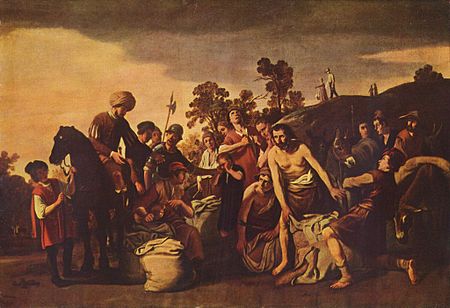
Genesis 42:27–28, 35, His money…each man’s bundle of money. Some modern biblical scholars suggest a discrepancy in this account, thus ostensibly proving that this story draws from two different oral traditions and documents that have been combined to form the biblical narrative we now have. So what are the facts?
For example, J.C.L. Gibson states that “the brothers were dumfounded when they open their sacks at a staging post, on their first return form Egypt, and find their money in them (Gen 42:27–28). It is a dramatic moment, but it is stretching our credulity more than a little to find that they were likewise dumfounded on finding the money after they had returned to Canaan” (Gen 42:35; Language and Image of the Old Testament, pp. 39–40).
There is, however, one small detail that this University of Edinburgh Old Testament professor fails to take into consideration. The Bible doesn’t say in Gen 42:27–28 that each of the brothers opened his sack as the author incorrectly states, but, rather, that “one of them opened his sack…” and that when they got home “they emptied their sacks….” The fact is that only one man opened his sack (that had presumably been sown shut) in order to provide food for the brothers for their journey home, but when they got home, all the brothers “emptied their sacks” (v. 35) presumably to transfer the grain into more secure storage vessels than sacks were the grain would be subject to destruction by fungus, weevils, moths and rodents.
So the brothers were dumfounded the first time when the one sack was opened to find the money, and then dumfounded again when all of their sacks were opened at home to find each man’s money.
Considering that grain sacks are sown shut with a large needle and small cordage, and that once a sack is open, it is difficult to keep the contents from spilling out—especially when being transported over a rough path in a jostling cart—it is highly unlikely that the brothers would have opened any more sacks than necessary except to supply their food needs along the way. This is why only one sack was opened, and not all of them, just as the biblical account tells us.
Joseph’s Brothers Didn’t Recognize Him as Their Savior (Gen 42–44)
Joseph’s brothers didn’t recognize that Joseph was their savior (from famine). Prophetically, and in our time, most Jews neither recognize Christians (the descendants of Ephraim and Manasseh) as their brothers, nor that the Jesus of Christianity is their Savior who will supply spiritual food for which their hearts are longing (but not finding in rabbinical Judaism), a that he died to redeem them from their sins.
The Scriptures prophecy that this spiritual blindness would occur to many of the children of Israel, including the Jews. We read about this in Isaiah 8:14 and Romans 11:25.
The Concept of Deliverance Through Substitution (Gen 42:17–19, 24)
Joseph made known to his brothers a way of deliverance through substitution in that they would all be saved if Simeon were held back for ransom.
Continuing our comparison between Joseph and Yeshua, what religious people-group in the last two thousand years has been making known to the world the way of deliverance through the substitutionary (sacrificial, blood atonement) work of Messiah Yeshua the Son of Joseph at the cross of Calvary? The Jews or the Christians?
Interestingly, even though Joseph suggested that substitution be made so that the brothers might live (verse 19), it was Judah who ended up laying down his life as a ransom for Benjamin, his youngest brother, by becoming surety for him (Gen 44:32–34). In prophetic fulfilment of this antitype, we see that it was Yeshua the Messiah, son of Joseph, who descended from Judah, and who offered to lay down his life that his brothers (you and me) might live.
Judah’s actions are antetypical of those of Yeshua the Messiah in the following areas:
Both sought to please their fathers.
Both acted out of unconditional love for their younger brother.
Both stood to gain nothing personally, but rather stood to lose much, if their plan did not work. Judah, a prince, would become a slave in Egypt; Yeshua would become a slave to death and hell, if he sinned.
Both Judah and Yeshua were willing to lay down their lives for their brethren because of their love for their father (Gen 44:18–34; John 8:28; chapter 17).
It is interesting to note that Matthew Henry, the Christian Bible commentator, draws a similar analogy between Judah’s actions here and Messiah Yeshua.
Additionally, Judah’s love for his father and Benjamin, and his willingness to lay down his life as a ransom to become a slave in Egypt to Joseph, is analogous to Messiah Yeshua’s love for the lost sheep of the house of Israel to whom he came to reach out and to ransom in order to bring them back into the sheepfold of Israel (John 10:15–16; Matt 10:6; 15:24).
Judah Approaches Joseph (Gen 44:18)
Judah came near to Joseph was willing to lay down his life for his younger brother (Gen 44:18–34). This is another prophetic picture of the future Messiah who would come to this earth in willingness to give his life as a ransom to save his brothers. The Scriptures call Yeshua the “Lion of the tribe of Judah” (Rev 5:5) who initiated the process in seeking to save his brothers who were spiritually lost (Rom 5:8; Luke 19:10; Matt 18:11; ), and who Yeshua referred to as the lost sheep of the house of Israel (Matt 10:6; 15:24).
What is my purpose for posting all of these articles on this blog? Is it so that you the reader can fill yourself with more head knowledge about the Bible and feel better about yourself because of how much you know? Or is it because I want to inflate my ego by showing you how much I know about the Bible? NO!
There are several reasons why I created this blog and post so many articles on a regular basis. Here are the reasons:
It is my great desire to show people the beauty and relevance of the Bible as a modern-day guide for day-to-day living.
It is to help proclaim the glorious and life-changing message of the gospel of Yeshua the Messiah in hopes that people will embrace it and live by it.
It is to show people how to live a blessed life now and forever into eternity.
It is to help hurting people find hope, meaning and purpose in their life.
For those who already “know” Yeshua, it is to provoke them to go higher and deeper in their spiritual walk with him.
To help promote spiritual revival.
It is to wake people up out of their spiritual lethargy in hopes that they will fall in love with the Creator of the universe and his Word, the Bible, and the Messiah, whom he sent to redeem mankind from the damnable evil of sin.
Finally, I want the articles on this blog to be a giant kick in people’s behind to help them to get them off of their duff and to real with Elohim and themselves, and then to start doing the right thing.
This is my reasonable service to our Heavenly King! That’s all. Nothing more or less.
Mark 14:51, A certain young man…naked. The reason for the inclusion of this detail in the Gospel record has puzzled many commentators. For example, Matthew Henry suggests that it was added to show the barbarous nature of the Jewish gang that arrested Yeshua, and how narrow was the disciples’ escape from their hands. There seems, however, to be a greater spiritual lesson to be learned from this story, which we will now discuss.
Previous to this, Yeshua, as he and his disciples were coming into the Garden of Gethsemane, admonished them to sit and pray with him (v. 32), to stay and watch (v. 34), to watch and pray so as not to fall into temptation because of the weakness of the flesh (v. 38). Instead, the disciples slept (vv. 37, 40).
Elsewhere, Yeshua instructed the elect saints of the last days to endure tribulation and spiritual apostasy to the end (Matt 24:13), and to watch vigilantly and be ready for his second coming (Matt 24:42, 44; 25:13). These warnings are in the context of his Parable of the Ten Virgins. All slept while awaiting the bridegroom’s arrival. While five were spiritually prepared, five were not. Those who were unprepared were dubbed as foolish and weren’t allowed into the wedding.
Likewise, in the end times, there will be believers who YHVH views as wretched, miserable, poor, blind, and naked because they have grown lukewarm spiritually (Rev 3:14–17).
The point of this discussion is this: If the disciples of Yeshua fail to maintain a state of spiritual preparedness (by watching, praying, keeping oil in their spiritual lamps, enduring to the end) while awaiting his return, they, like the young man in Gethsemane and the Laodiceans in the book of Revelation, will be found to be spiritually naked lacking robes of righteousness on the day of his return and thus unprepared to meet him (Rev 19:7–9 cp. Matt 22:2, 11–12).