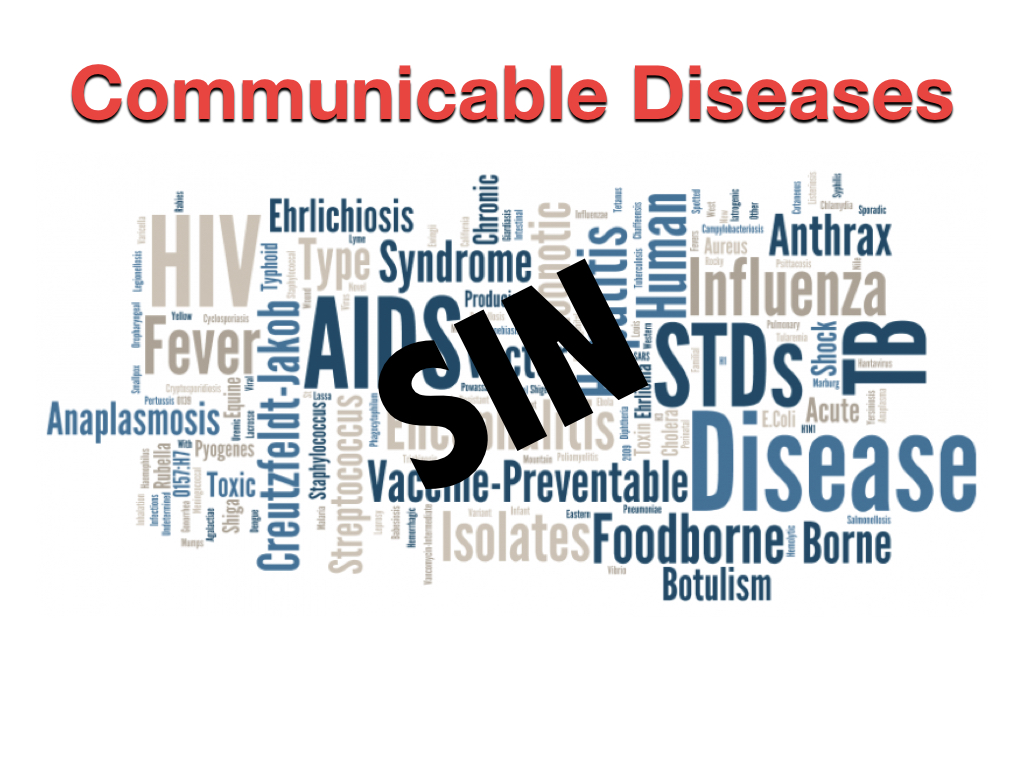
COVID-19—The Similarities Between Sin and Germs

In this time of viral epidemics whether they be as serious as we are being told they are or not, the fact remains that plagues and pestilences do occur and affect people’s lives in dramatic ways. This should be a time of reflection for all of YHVH’s people, a time to search our own lives, to evaluate our own spiritual walk before YHVH Elohim and our relationship with Yeshua our Messiah. Life is a divine gift, and good health, next to salvation, is one of the greatest gifts of all. The following piece that I wrote many years ago when considered against the backdrop of the current Coronavirus/COVID-19 virus will hopefully give us some food for thought as we compare the spiritual virus of sin with the physical virus that is raging all around us. Please take a moment to pause and reflect on this…selah! — Natan

How Leviticus chapters 12, 13 and 14 relate to you

These several chapters are some of the most difficult ones in the Torah for us to wrap our brains around spiritually. What is the relevance of these arcane laws of ritual impurity and “leprosy” to modern people? With a little thought, we can see that there are some deep and relevant spiritual truths contained in these biblical passages!

As Matthew Henry points out in his classic gospel-oriented commentary on the Bible, after the laws concerning clean and unclean foods in Leviticus 11 come the laws concerning clean and unclean persons. As germs are contagions causing physical disease, so man is infected with the spiritual contagion of a sin nature that brings about spiritual disease ultimately leading to death. Henry explains that man imparts his depraved sin nature to his offspring at conception, which is why the woman needed to go through ritual cleansing after childbirth. Similarly, the Bible teaches us that the plague of leprosy (Heb. tsaraasreferring to a generic skin disease) was a judgment by Elohim against the sins of rebellion, greed and misuse of the tongue (e.g. Miriam, Gehazi and King Uzziah).

The spread of and cure for spiritual diseases is similar to those of physical diseases, as we’ll discuss below. First, however, let’s compare and contrast how physical germs are similar to spiritual sin “germs.”

What are germs?

With the help of several modern health care professionals, we first need to learn about germs. 

“Our bodies are pretty amazing. Day after day, they work hard—digesting food, pumping blood and oxygen, sending signals from our brains and much more.

“But there is a group of tiny invaders that can make our bodies sick—they’re called germs.

“Some kids may think that germs are bugs or cooties or other gross stuff. Actually, germsare tiny organisms, or living things, that can cause disease. Germs are so small and sneaky that they creep into our bodies without being noticed. In fact, germs are so tiny that you need to use a microscope to see them. When they get in our bodies, we don’t know what hit us until we have symptoms that say we’ve been attacked!” (from: kidshealth.org/en/kids/germs.html).

Where do germs live?

“Germs have favorite places to live, preferred ways to travel, and if they are harmful, have their own unique ways of causing disease. Germs can live in or on dirt, water, countertops, our skin, our intestines, and in many other places around us. Some germs can survive on their own while others prefer living in people or animals. Some germs live only in hot areas of the world while others live only in cold areas. When germs find a place that is good for them, they multiply and set up a home for themselves” (from: www.sfcdcp.org/germs.html).

How do germs spread diseases?

“Germs spread in different ways. To catch an infectious disease, you first need to be exposed to a harmful germ. Then it needs to get on or into your body and act in its unique ways to cause disease. Our bodies are good at fighting infections; not everybody who is exposed to germs will get sick, but some will. Here are the most common ways to be exposed:

Touching. Some germs live in body fluids like mucus, pus, and stool. Even the invisible drops released when people talk, cough, or sneeze can carry germs. Touching a contaminated surface or object, then touching your eyes, nose, mouth, a cut, or other opening in the body, can lead to an infectious disease.

Eating or drinking. Some germs exist in food and untreated water. Unwashed fruits and vegetables, and foods not properly cooked or kept at the right temperature, may carry harmful germs.

Breathing. Some germs spread through the air. When someone coughs, sneezes, or talks they can release germs. When harmful germs are inhaled, they can cause illness.

Getting bitten. Animals can carry and spread infectious diseases to people. Bites from wild animals, pets, or even a small animal like a bat or insect can cause illness. Even if the animal doesn’t look sick, it may carry harmful germs” (from: www.sfcdcp.org/germs.html).

With very little imagination, we can see how sin, like germs, are always trying to attack us spiritually and infect us with sinful thoughts, words and deeds. This is one reason that the Bible likens sin to yeast. As one rotten apple can cause a whole box of apples to rot, so it only takes miniscule amount yeast to “infect” a lump of bread dough thus causing it to rise.

How can we prevent the spread of unhealthy germs and thus diseases?

Continue reading

 

YHVH to Redeem the Israelite Captives From Spiritual Blindness (Torahlessness)

Isaiah 42:5–43:10 

What is the Haftorah (Haftorot, plural)? It is that portion of the writings of the biblical prophets that in Jewish synagogues is traditionally read after the reading of the weekly Torah portion (Parashah). The subject of the Haftorah portion usually directly relates to the subject of the corresponding Torah portion, “and usually contains an explicit reference to some event described in the section previously read from the Torah” (Jewish Encyclopedia, article entitled Haftorah, p. 135). No one knows when the custom of reading a portion of the writings of the Prophets on the Sabbath along with the weekly Torah portion originated, but it seems to be of pre-Christian era derivation (Ibid.p. 136). Jewish tradition traces the origination of coupling the Torah with the Prophets back to the intertestamental period of Antiochus IV Ephiphanes (168–165 B.C.) who forbade the Jewish people from reading the Torah thus forcing them to read a corresponding section from the prophets instead that would remind them of that particular Torah portion (Ibid.). Whatever the case, the studying of the Haftorah portions teaches Bible students the divinely inspired co-relationship between the YHVH’s Torah and the rest of his Word, and encourages us to study the whole counsel of that Word for our spiritual edification.


Let’s determine the context of the Isaiah passage under consideration. Although this Haftorah portion commences in verse five, we cannot fully understand it without considering the fuller context of the preceding passages in Isaiah. For example, to whom is Isaiah 42:1–4 referring? (See Matt 12:17–21.) Please note that Matthew says that Yeshua is quoting Isaiah (verse 17), yet verse 21 (“And in his name shall the Gentiles trust.”) is not found in the Masoretic text of Isaiah 42:1–4 from which our English Bibles are translated, although the Greek Septuagint (LXX) contains this phrase in its Isaiah 42 passage. Can we explain why the LXX contains this phrase, yet the Masoretic text does not? Perhaps the Masoretic Text, which was accepted by Rabbinic Judaism in the first millennia of the common era as the official Hebrew text from which translations of the Hebrew Scriptures would be made, purposely omitted it in order to diminish the Christian notion that Yeshua was the Suffering Servant on whose name the people of the nations would place faith in order to be redeemed. (In our studies, we have discovered other instances where the rabbis have tampered with the original Hebrew to slant meanings in their favor and away from any concept of Yeshua being the Messiah.) After all, elsewhere in Isaiah we find similar statements (Read Isa 50:10; 51:5 cp. Zeph 3:12). Therefore, Matthew is indeed correct when he states that Yeshua was quoting from Isaiah. Another possibility is that the LXX translation is inaccurate having been glossed (biased) by Christian translators. A third possibility comes into view when one realizes that the Masoretic Text was but one of several text families of Hebrew “Old Testaments” in circulation at the time of Yeshua. There existed the Targumim (the Aramaic translation of the Hebrew Scriptures) along with the Hebrew text from which the Dead Sea scrolls “Old Testament” derives, along with competing Hebrew “Old Testaments” from other scribal families besides the Masoretes. The Hebrew in many of these will vary slightly. Whatever the case, the Word of YHVH is not broken in Matthew 12:21, for indeed there are other passages in Isaiah which clearly point to Yeshua (e.g. Isa 50:10) being a light to the nations and redeeming them if they will but put their trust in his name.

Having established that our Haftorah passage is definitely a reference to Yeshua the Messiah, let us ask the next question. Who is the target group to which Isaiah is prophetically referring as being the recipient of Messiah’s spiritual “light” (verses 6–7)? Who is Isaiah addressing in his prophecy? In verses 16–20 YHVH refers, to his blind and deaf servants who have turned to idolatry and turned their backs on YHVH, but who will turn back to YHVH (verse 17). He says of this people-group that there are many things that they have not “observed” (the Hebrew word for observe is shamar, Strong’s H8104, meaning“kept, guarded or heeded”), and then in the next verse he begins to talk about his Torah. Would this passage in Isaiah make sense if it were referring to Gentiles who had never in their past known the Elohim of Israel or his Torah-laws? (Read verse 24.) Now who is the target group identified in 43:1? Is he talking to the Gentiles or to the descendants of Jacob who have lost their way spiritually and become mixed with the Gentiles (Hos 7:8; 8:8)? What does YHVH promise to do with his wayward children who have become lost and scattered among the Gentiles? (Read Isa 43:5–10.) How would he redeem them? This is a major issue with which Isaiah deals. (Read Isa 49:1–7; 50:1; 52:13–15; 53:1–12.) In all of these passages, who is the people-group to whom the prophet is continually urging them to return to YHVH offering them a message of redemption and hope? (See Isa 44:1, 2, 5, 21; 45:4, 19; 46:3, 13; 48:1, 12; 49:3, 5, 6, 7, 26; 51:1, 4, 17; 52:2; 54:5; 56:8.)

Now that we know what the subject of this Haftorah portion is and who the target group is, what can we learn from this passage?

Isaiah 42:5, Who created. What are the similarities between this passage and the Genesis chapter one creation account (especially verses 1–6). Both accounts speak of light. In Genesis chapter one, we understand that the light alluded to here is both physical and spiritual in nature. Isaiah speaks of this light in a prophetic and spiritual context. If 42:1–6 are referring to Yeshua, then how is he “light to the Gentiles” and what is that light? (See John 1:1–14; 8:12 and 9:5.)

Continue reading
 

When the Going Gets Tough … Let Faith in YHVH Arise to Carry You Onward!

Isaiah 40–41

Isaiah 40:27–41:16,The Soncino Edition Pentateuch introduces its commentary to this Haftorah portion as follows:

The Sedrah [Parashah] opens with the call of Abraham and [YHVH] bidding, “Be thou a blessing” unto all the families of the earth. Such, likewise declares the great Prophet of Consolation, is the Divine charge to the Children of Abraham. Israel, suffering in Exile, might well despair of the fulfilment of the Divine promise, nay, even of God’s remembrance of that promise. The Prophet stills such questionings. In God, Israel has the source of inexhaustible strength. The everlasting God will not fail to carry through His great purposes for mankind through Israel His servant, the child of “Abraham, My friend.”

How firmly do you believe this? When the daily rigors and routine of life take their toll on you, your faith wanes, your upward look dims, the joy of your salvation diminishes, your first love for Yeshua lessens, and your hope in YHVH’s promises for your life is tarnished, what do you do? What is your reaction and response? Do you call to remembrance the ongoing faithfulness of YHVH to his promises and to his Word as Isaiah here encourages us to do?

Isaiah 40:27, My way is hid from YHVH. Is YHVH hiding from us, or have we walked away from him, and in reality he is there all along? Abraham might well have despaired when he left the cosmopolitan comforts of Ur and vacated to a sandbox piece of land on the eastern shores of the Mediterranean Sea. He might have despaired when the land YHVH promised him did not come immediately into his possession, when he even had to flee the land promised him because of famine, when he waited for about two decades to have a son through whom YHVH’s promises would be fulfilled, and upon the death of his wife he had to purchase, at a premium price, a burial plot in the very land that YHVH had promised to him decades before. Yet he overcame the despair to become the Father of the Faithful, and an example to us all. What can we learn from Abraham? (Read Heb 11:8–19.)

Isaiah 40:28, Have you not known? Abraham was in exile in a foreign land, and so was Israel during its captivity. We are spiritual exiles in a foreign land called spiritual Babylon awaiting our spiritual inheritance. While enduring the rigors and ignominy of exiled status, the fear can arise that one has been forgotten by YHVH. When this situation arises, what does Isaiah counsel us to do? We are called to remember the very character of YHVH, the Set-Apart One of Israel. That simple act opens up a reservoir of divine enablement and upliftment that will begin pouring into our lives. (Read verses 29–31.)

Isaiah 41:2ff, Who raised up the righteous one from the east.This is enigmatic and confusing language. Some commentators say this is referring to Abraham (e.g., ArtScroll Chumash, Adam Clarke in his commentary), some say it refers to Cyrus, the Persian king who liberated the Jews and allowed the to return to Israel (Ibn Ezra, Soncino Pentateuch), and some see it as a reference to both (Matthew Henry in his commentary). Regardless of whom Isaiah is referring to here, what is the bottom line message? (Read through verse 5 and then start again in verse 8 and continue to verse 16 for the answer.) What major attributes of YHVH are being emphasized here? Notice some of the key phrases in these verses that speak of YHVH’s sovereignty:

Who accomplished it?

I am YHVH … I will be the same.

The islands saw and feared.

Israel … whom I have chosen.

I have summoned you.

You are my servant, I have chosen you.

Now look at some key phrases that speak of YHVH’s tender mercy:

I have … not despised you.

Fear not for I am with you.

I have strengthened you … even helped you, even supported you with my righteous right hand.

I shall be your help … your Redeemer.

Now look at what YHVH promises to do to the enemies of his people who would prevent them from receiving YHVH’s promises:

All who are angry with you shall be shamed and humiliated, those who contend with you shall be like nothing and shall perish.

You shall seek them but not find them.

The men who struggle with you; they shall be like utter nothingness.

(Read Verses 15–16.)

This is what YHVH promises to those who walk with him and trust in him as Abraham did.

To whom is YHVH making these promises? As we have studied in the previous two Haftorah portions, there is only one nation to whom YHVH primarily is directing all of Isaiah’s prophesies. Who is that nation today? Who is the seed of Abraham today? (Read Gal 3:29 for starters! Then read Eph 2:11–19.) What call is YHVH sending forth to his people at this very moment? He is calling them to come out of exile to Babylon (Read Rev 18:4). Is your life presently being shaken and turned upside down? Is YHVH separating the wheat from the chaff in your spiritual life? Are you passing through the fires of refinement and being given a new direction and purpose in life, a fresh start and a new beginning? Are the old religious paradigms fading away and new ones arising where YHVH is demanding of you a higher, more righteous, more obedient, and a more intimate walk with him? Can you trust YHVH’s leading? Is he strong enough to vanquish your enemies, meet your needs and bring you into your promised inheritance? For you, that is a yes or no question. If you answer yes, then trust and obey him as you go forward as Israelites—as the seed of Abraham.


Dealing with the viral pandemic of the disease of sin (part 2)

Leviticus 12–13 Explained

These chapters are perhaps some of the most difficult of the Torah for modern people to understand much less to ascertain the relevance of, so often we pass over them without much thought. However, when we view them from a more drash or allegorical level of biblical interpretation, suddenly they take on a whole new meaning and are packed full of deep revelations pertaining to our perennial internal struggle against sin as well as with sin in the world around us we explain in the discussion below. Sin is not a popular subject to discuss, but if we are to rise to the spiritual level for which Elohim created us—to be in some sense like him (1 John 3:1-3).

The Hebrew Terms Relating to This Passage Defined

  • Tzaraas: a skin disease (improperly translated as “leprosy” in some Bibles). This Hebrew word means “to be struck with leprosy” (BDB) or “to smite heavily, to strike, or scourged of Elohim” since the leprosy was viewed as a special divine infliction (Wilson’s Old Testament Word Studies, pp. 248–249) against such sins as jealousy (cf. Miriam, anger, lack of full compliance with Elohim’s commands (cf. King Uzziah), and covetousness (cf. TWOT, p. 777).
  • Niddah: this refers to someone who is separated or menstruous.
  • Tumah: this refers to spiritual impurity.
  • Metzora: one with a skin disease; Metzora is a contraction of the Hebrew word motzi and ra meaning “one who speaks slander.”

The Issues Explained

Leviticus chapters 12 and 13 deal with the subject of human contamination and delineates what could seem to be a lot of irrelevant and archaic, if not arcane, regulations relating to childbirth and skin diseases. Why is YHVH so concerned about “human contamination”? What is the larger picture here to help us gain understanding into the Father’s intent and heart behind these Torah-laws? The Jewish sages teach that man must not forget that even the gnats and earthworms preceded him in the creation. This is to teach man humility. But conversely, each stage of Elohim’s creation added something to that which had been created previously and that man was the final, crowning touch that would pull all the creation together to fulfill its purpose of spirituality in the performance of Elohim’s will. Man is therefore the last of the creatures to be created, but the first in significance because he is the purpose of it all and that if man is not worthy of his calling, then he has added nothing of substance to YHVH’s handiwork (The ArtScroll Tanach Series Vayikra, p. 184).

All this is to say that YHVH has a plan to redeem man from his sinful or depraved (animalistic) state. Man can choose to be elevated to this higher spiritual plane or to remain in a state no better than that of a gnat or a worm having added nothing to the creation’s spiritual betterment. 

Continue reading
 

Dealing with the viral pandemic of the disease of sin (part 1)

As I write this, the viral pandemic called the Coronravirus or COVID-19 is sweeping the globe and taking lives with it. The world has not seen anything like this since the influenza epidemic of more than 100 years ago which killed tens of millions of people at that time. Viruses are analogous to sin: both are a lethal infectious diseases and a silent killers. With the stark images of the ravages of the Coronavirus in our minds and the ruination in its wake, let’s now switch over to the concept of the infectious spiritual disease of sin and where it leads to if it’s not appropriately dealt with.

Leviticus Chapters 12–15

Leviticus chapters 12 through 15  are some of the most distasteful and difficult to explain in the whole Bible, much less to relate to and to apply to our lives. After all, who wants to talk about diseases, disgusting molds and mildews, and bodily discharges? And who can relate to leprosy? Yuk!

Yet the Torah contains these subjects for a reason. Yes, sanitation, cleanliness and our physical good health is important to our Creator for obvious reasons, but lurking behind this distasteful and, at times, even revulsive subject is a much deeper issue: the disease of sin. When we view sin in terms of a contagious spiritual disease, suddenly we gain a new and deeper understanding of its destructive nature.

Even though the old adage, “Cleanliness is next to godliness” is not in the Bible, it is a biblical truism. Our cleanliness at all levels, body, soul (mind, will and emotions) and spirit are vital to a right relationship with Elohim. He is holy or set-apart (i.e. from the pollution, filth and defilement of this world), and without holiness, no one can see Elohim (Heb 12:14). In essence, holiness is nothing more than spiritual cleanliness. This is the deeper meaning behind Leviticus chapters 12 through 15.

Overview of Parshiot Tazria-Metzora (Lev 12–13 and 14–15)

Often these two parshiot (the plural of parashah meaning “Torah portion” in Hebrew) are combined in the yearly Torah reading cycle depending on how the biblical calendar falls for the year. Their combining is likely due to the fact that each is relatively short and deals with related subjects: namely, the ritual purity laws. 

Continue reading
 

Are YOU part of the end-times Elijah Generation preparing the way for the Messiah?

Isaiah 40:1–26,

Isaiah the prophet ministered in Judah for about 40 years from 740 to 697 B.C., approximately 100 years before the southern kingdom of Judah fell to the Babylonians in 586 B.C. Judah’s captivity in Babylon would last for 70 years. The Book of Isaiah contains more messianic prophecies than any other book in the Tankah, and many of those prophecies specifically relate to the redemption through the Messiah of the two houses of Israel.

In the Isaiah 40 prophecy, according to rabbinic understanding, Isaiah is prophesying (in verses 3–5) concerning Israel’s deliverance from exile seventy years after her captivity (The Soncino Pentateuch, p. 777). This is not an incorrect interpretation of this prophecy, although it is not necessarily the only one, for we know, as with many of the Scripture’s ancient prophecies, there are sometimes multiple fulfillments. Because the old adage that says, “history repeats itself,” is true, and because human behavior remains unchanged from time immemorial, though the players and costumes change on history’s theatrical stage, many biblical prophetic themes have cyclical patterns. In the present case, where Isaiah speaks in verse three of “a voice crying in the wilderness,” (Isa 40:3) we know that the gospel writers ­applied this to John the Baptist preparing the way for the coming of Yeshua the Messiah (Matt 3:3; Mark 1:3; Luke 3:4; John 1:23). What in this prophecy did the gospel authors see as applying to Yeshua the Redeemer and Savior of Israel? First, Yeshua himself declared John the Baptist to be that messenger who would prepare the way for the Messiah that Malachi prophesied about (cp. Matt 11:10 and Mal 3:1). The messenger of Malachi 3 and 4 seems to be the same individual mentioned in Isaiah 40. Furthermore, Isaiah 40:3 speaks of preparing the way for YHVH and making a highway in the desert for Elohim. Clearly, the gospel writers recognized that Yeshua was YHVH Elohim based not only on his claims to deity, but based on the fact that Isaiah states that the Messiah, the Redeemer of Israel, would not only be YHVH Elohim, but that he was the arm of YHVH (Isa 53:1) making him a manifestation, if you will, of YHVH. 

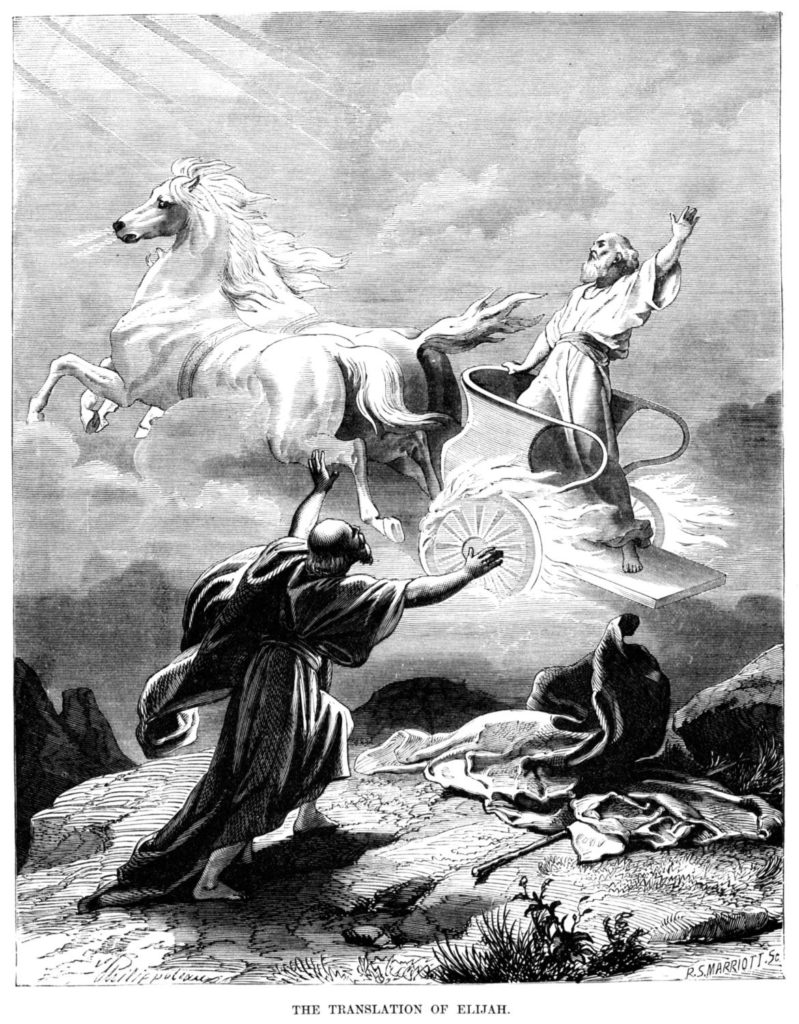
Not only did the gospel authors see John the Baptist in the Isaiah 40 prophecy (Isa 40:3–4 cp. Matt 3:3; Mark 1:3; Luke 3:4–5; John 1:23) because they recognized who Yeshua was and could see that John had fulfilled the Isaiah 40 passage, but they also likened John to Elijah the prophet who had come to prepare the way for Yeshua (Mal 3:1 cp. Matt 11:10; Mark 1:3). Additionally, we know that an end-time prophet, or prophets, will come to prepare the way for the second coming of Yeshua. This is clear from Malachi 4:5–6 where we find the prophecy concerning Elijah the prophet coming before the great and terrible day of Elohim’s wrath, which is understood to occur just prior to the coming of Messiah. This Elijah-type person, or person(s), coming in the spirit of Elijah (like John the Baptist, see Matt 17:11–13), will effect a great spiritual revival in helping to turn the hearts of the children to their spiritual fathers (Mal 4:6), and in so doing will be preparing Israel to meet their Messiah. So we can link the Isaiah 40 passage with John the Baptist and Elijah the Prophet and with an end-time generation of righteous individuals who will be fulfilling this prophecy; that is, they will be preparing the way of YHVH, exalting the valleys, lowering the mountains, and making the crooked paths straight. What do these poetic expressions mean in concrete spiritual terms?

Continue reading
 

Surprise, surprise! Both Rabbinic Judaism and mainstream Christianity are secular humanistic religions

Isaiah 28:7, The priest and the prophet have erred through strong drink … wine … they err in vision, they stumble in judgment.Here the prophet is addressing Judah. In Scripture, when wine causes spiritual degradation what is the cause of this? (Read Revelation 14:8; 17:2; 18:3.) Wine is the stuff of spiritual harlotry. What does YHVH plead with his people to do in this regard? (Read Rev 18:4.)

Through the lips of his prophets, YHVH not only bring words of rebuke and judgment to his people, but also words of encouragement. Isaiah speaks of a time when not only will YHVH discipline his people for their idolatrous ways, but he will bring them back from exile and restore them as a people to worship him (instead of pagan deities) in their own land. In this regard, study the following passages: Isaiah 27:12–13; 28:5–6; 29:22–23. Have these prophecies yet been fulfilled with regard to both houses of Israel (Ephraim and Judah)?

What are some examples of humanist or pagan influences that persist in the modern Christian church (Ephraim) and in Rabbinic Judaism (Judah), which could lead to YHVH’s judgment? Here are a few examples to ponder:

Rabbinic Judaism and Secular Humanism

Rabbinic Judaism went humanist at Yavneh after the destruction of the Temple in A.D. 70 when rabbinical authority replaced the Levitical authority. It was there, under the influences of such rabbis as Akiba, that Judaism rejected divine authority and established the rabbinical system. Some say this was necessary to insure the survival of Judaism in the wake of the destruction of the Temple and removal of Jews from Jerusalem and environs by the Romans after A.D. 135. But this reason does not explain why or how so many Jewish traditions supplanted the truth of the Bible before this time. Yeshua makes reference to this in Matthew 15:1–9. Rabbinic authority often supplanted the Word of Elohim. “The Jewish Encyclopedia” defines ‘Rabbinical Authority’ as ‘The power or right of deciding the Law, in dubious cases, or of interpreting, modifying, or amplifying, and occasionally of abrogating it, as vested in the Rabbis as its teachers and expounders’” (Rabbi Akiba’s Messiah, Daniel Gruber, p. 82, emphasis added). Some examples of this are as follow:

  • The concept of the “Oral Torah/Law” came into being sometime in the second-century A.D. as being on a par with or greater than the Written Torah (Gruber, pp. 60, 76–77). This led to the traditions of the elders, which were eventually codified in the Mishnah and Talmud.
  • YHVH is subject to rabbinic halachic (legal) rulings (ibid., pp. 76–77).
  • There are many rabbinic decrees and rulings that supplant biblical law. This was especially the case after the destruction of the Temple when the Jewish religious leaders practically reinvented their religion (ibid., p. 78). Examples of this are:
  • Alternative means of atonement (the shedding of blood is no longer necessary; atonement is achieved through prayer [tefilim], charitable deeds [mitzvot] and charitable giving [tzedakah]) along with other activities such as study of the Torah, being circumcised and giving to the Jewish “rabbis” (ibid.).
  • In Matthew 23 (along with Matt 15:3–9 and Mark 7:7–13), Yeshua rebukes the Jewish leaders of his day for replacing YHVH’s Torah with man-made traditions.
  • The Jewish leaders or sages are allowed to make pronouncements from Moses’ Seat or by beit din (rabbinic) ruling (called takanot and ma’asim) that totally annulled the Torah (Gruber, pp. 80–81; The Hebrew Yeshua Versus the Greek Jesus, Nehemiah Gordon, pp. 47–53). Later these rulings were codified into the Talmud (Gordon, p. 52).
  • The sages have the right to change and control the calendar. The modern rabbinic or traditional Hebrew calendar dates to A.D. 360. For example, many times, according to the rabbinic calendar Rosh Chodesh (the new moon) does not fall on the actual day the new moon is sighted, and Yom Teruah (the Day of the Shofar Blowing ), which Torah states must fall on the first day of the seventh month (i.e. the rosh chodesh of that month), does not actually occur on rosh chodesh.
  • One month on the Jewish calendar is named after a pagan deity (Tammuz) when the Torah specifically states that Israelites are not to take the name of pagan deities on their lips.
  • Rabbinic law allows a divorced and remarried woman to remarry her first husband, something Torah forbids (Gruber, p. 81).
  • The Jewish sages instituted the laws of postponement, which says that YHVH’s feasts cannot fall on certain days, and therefore have to be postponed.
  • The sages teach that baking soda (sodium bicarbonate), a leavening agent, is permissible to eat during the Days of Unleavened Bread when Torah demands that we abstain from all bread containing leavening agents.
  • The wearing of all white tzitzits (fringes) have replaced the Torah law that says they must have a blue thread.
  • Torah says that Israelite lineage is determined by one’s father. Modern rabbinic law says that it is determined by one’s mother.
  • The ineffable name doctrine, which states that using the Hebrew names of Elohim (e.g. YHVH) are prohibited, even though Scripture commands that we use them and not forget them.
  • Singing and playing of musical instruments is prohibited under rabbinic law at religious services (Sabbath and appointed times), yet the Torah commands that the shofar be blown on these days, and the Psalms speak of it occurring, and the biblical record states that music and singing were a big part of the Levitical priesthood system in the Temple (Jewish Book of Why, Alfred J. Kolatch, p. 143).
  • The shofar is never blown on the Sabbath, even when the Day of Shofar Blowing falls on a Sabbath, even though Torah commands us to do it (Kolatch, p. 228).
  • The anti-missionary movement within Judaism is the outgrowth of humanist philosophy, for it attempts to destroy the deity of Yeshua and rejects the authority and divine inspiration of the Renewed Covenant Scriptures.

Christianity and Secular Humanism

Continue reading