Who Is God of the Old Testament?

Acts 7:35, The Angel. 

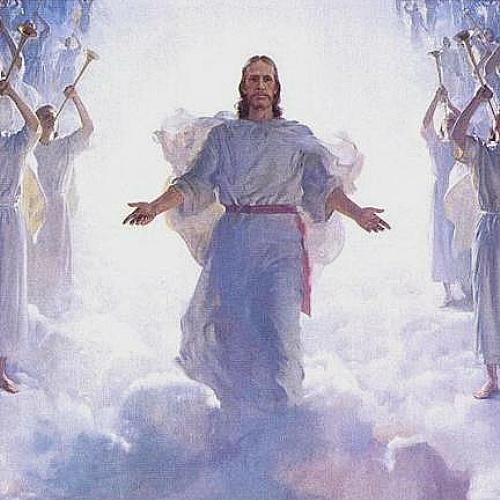
In Acts chapter seven verse 35 and the following several verses, Stephen makes a reference to an Angel. To whom is he referring: to YHVH the Father or YHVH the Son who became Yeshua the Messiah?

Angel is the Greek word angelos which has several meanings including the stereotypical meaning of the word angel. But the word angelos as well its Hebrew equivalent malak can also refer to a human messenger as well as to a divine messenger such as YHVH, the Word of Elohim or the preincarnate Yeshua the Messiah, as was the case with the “Angel” or Divine Messenger or YHVH who spoke to Moses from the burning bush in Exodus chapter three. 

This same Divine Messenger or YHVH spoke to the Israelites from Mount Sinai when giving the children of Israel the Torah-law as Stephen state in verse 38. 

Elsewhere, Paul goes on to say that the same Divine Entity, who later came to be known as Yeshua the Messiah, was the One who lead the Israelites in the wilderness and gave them water from the rock (1 Cor 10:4). 

Moreover, Yeshua clearly states in John 5:37 that the Israelites did not hear the voice of his Father, YHVH the Father, in the wilderness. Thus, whose voice did they hear? Who was the Messenger or “Angel” to which Stephen makes reference in this verse? It was none other than the preincarnate Yeshua the Messiah who was the Word of Elohim to which John makes reference at the beginning of his Gospel (John 1:1) who become the Messiah (John 1:14). 

Finally, in John 8:58, Yeshua states that he was the I AM of Exodus 3:14 that spoke to Yeshua out of the burning bush; Yeshua is YHVH the Son as opposed to YHVH the Father. The fact Yeshua was making the connection between himself and the I AM of Exodus is the reason that the Jews picked up stones in an attempt to kill Yeshua; they viewed his statements as blasphemous, since he was claiming to be deity. 

Thus, when we connect all of these statements together by Stephen, Paul, John and Yeshua, we see that Yeshua in his preincarnate state, and not YHVH Elohim the Father, who was the God of the Old Testament who spoke to the patriarchs, to Moses as well as to the prophets. 

The fact that Yeshua was the part of the Godhead who was the God of the Old Testament and not the Father (per se or directly) is contrary to what the mainstream church teaches and what most Christians believe. 

With this in mind, how does the fact that Yeshua or Jesus in his preincarnate state as the One who gave the Israelites the Torah-law from Mount Sinai challenge the idea that the same Divine Being who later came as Yeshua the Messiah came to do away with the same Torah-law as the mainstream Christian church teaches? Is this prevalent teaching in Christianity not incongruent with the facts of the Bible? How does the fact that Yeshua in his preincarnate state gave the law to the Israelites change how one views “the Law of Moses?” Similarly, does YHVH’s statement in Malachi 3:6 that “I am YHVH, I do not change” as well as the statement in Hebrews 13:8 that “Yeshua the Messiah is the same yesterday, today and forever” not make more sense with respect to YHVH’s Torah-law, which is his unchanging and immutable standard of righteousness for all people for all time?

It is time for honest and truth-seeking Bible students and disciples of Yeshua to question and challenge many long held church traditions that are contrary to the plain and simple Truth of the Bible, and to bring their thinking and lifestyles into alignment with Truth!

Acts 7:37, A Prophet. Stephen is pointing out to the Jews that Yeshua was the fulfillment of Moses’ Deuteronomy 18:15 prophecy that “YHVH will raise up for you a Prophet like me from your midst, from among your brethren. Him you shall hear….”

Acts 7:38, He. Who is the “he” that Stephen is referring to here: the Prophet or Moses? The antecedent of he must be Moses, since in the same sentence he is juxtaposed with “the Angel.” As we discuss in our notes in verse s 35 and 37, that “Angel” was none other than the preincarnate Yeshua the Messiah.

Acts 7:53, Angels. Or human messengers, since this can be the meaning of the Greek word angelos.


Peter’s Vision Explained

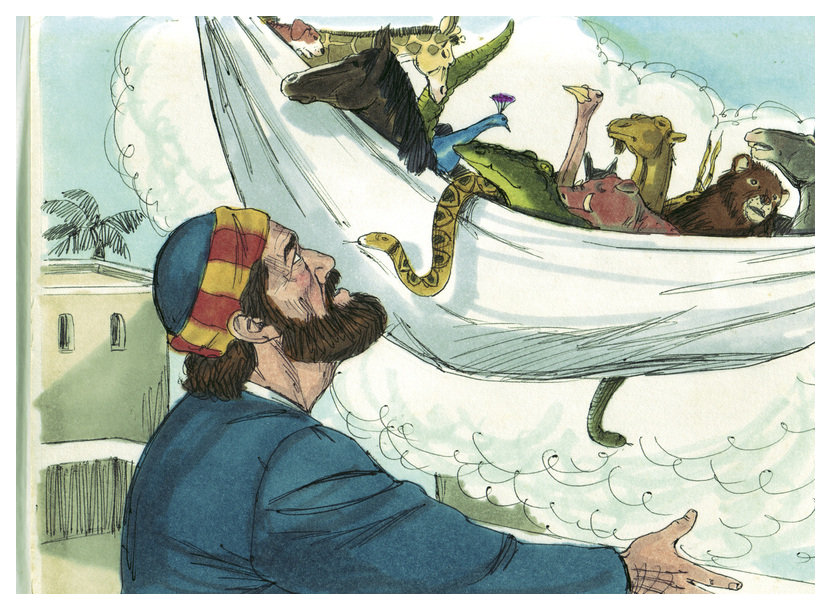
Acts 10:13–15, Peter’s vision. In Peter’s vision of the sheet covered with unclean animals, the voice from heaven commanded him three times to kill and eat these unclean animals. Peter was confused by the meaning of this vision since being a Torah-law abiding Jew he knew that eating unclean meat was forbidden and in good conscience he could not do that which was contrary to YHVH’s Torah-law, for to do so was sin (sin is the violation of the law, 1 John 3:4). 

Often visions are metaphorical in nature and not literal. There are many examples in the Scriptures of people receiving metaphorical visions. For example, read the books of Daniel and Revelation. Indeed, Peter’s vision was no exception, for no sooner had the vision ended when three Gentile men appeared at his door seeking the gospel message and the Spirit of Elohim bade Peter to go and to meet them. Peter then realized that the interpretation of his vision was that he should not call any man common or unclean; that is, the gospel message is for all people regardless of their ethnicity (verse 28). In Peter’s case, Bible itself interprets his vision. The issue is not about whether it is now permissible to eat non-kosher meat or not, but rather the Spirit of Elohim was directing the apostles to begin taking the gospel to the Gentiles, who by Jewish standards were considered common and unclean (verse 28).

Now consider this. If Yeshua had meant to say in Matthew 15:11 and Mark 7:18–19 that it was now permissible to eat all foods including those meats that the Torah prohibits to be eaten (e.g. pork, shellfish, etc.), presumably Peter would have known this, since he was present when Yeshua made the statement (see Matt 15:15). If Peter knew that Yeshua had given the okay for his disciples now to eat unclean meat, why then did Peter so strongly object when the voice from heaven commanded him to eat the unclean animals in the vision (Acts 10:13–14)? Obviously, Peter had not changed his opinion about not eating unclean meat, since Yeshua had never annulled the Torah command forbidding the eating of unclean meats in the first place. 

There is another point to consider with regard to Peter’s vision. In the Tanakh, unclean animals or beasts of the field was a Hebraic metaphor for the people of the nations (goyim), or Gentiles. Peter would have been aware of the meaning of this metaphor once the angel explained to him that the unclean animals he had seen in his vision was a not a reference to the biblical dietary laws, but to the Gentiles. Moreover, to the Jewish religious tradition of the day, interaction with the Gentiles was something that orthodox Jews did not do. To do so made one unclean or unkosher. This is not a biblical concept, since in the Tanakh, the nation of Israel was to be a light to the nations and to bring them to Elohim. Furthermore, the Torah is inclusive with regard to allowing Gentiles to be sojourn with the Israelites as long as they would accept Elohim and his laws and abandoned their heathen ways. There was to be one and the same Torah-law for both the native born Israelite and the Gentile that was grafted into Israel. There are also several examples in the Tanakh of Gentiles converting to the Israelites’ religion and being fully accepted (e.g. Ruth and Rahab). Once the angel explained the meaning of Peter’s dream, it would have been clear to Peter that Elohim was expressing disapproval of the Jewish view of Gentiles and that this vision was a mandate from heaven to evangelize the Gentiles. Moreover, the Gentile who was converted and brought into Israel was made spiritually clean, but the Scriptures never considered unclean animals kosher, and never made any provision for unclean animals to be made kosher—ever! 

Acts 10:13–15, Rise…kill and eat…Not so, Lord. On occasion, YHVH will give his servants a dream or vision that on the surface or at face value seems outrageous or even anti-Torah as was the case with Peter’s dream. It seemed that YHVH was asking Peter to violate his own Torah-Word by eating unclean meats. This is how the modern church has largely interpreted this vision, while de-emphasizing its metaphorical meaning. 

So why does Elohim use such methods at times to get his attention? Certainly, he’d never ask his people to go against his Written Word. This is impossible. Therefore, if one receives a dream that they believe is from Elohim, yet he seems to be asking them do something contrary to Scripture, as was the case with Peter’s vision, then it behooves one to ask oneself the following questions. Was the dream truly from Elohim, or from my own soulish desires or from Satan? Or is the dream to interpreted metaphorically, and YHVH is simply using hyperbole, strong, albeit symbolic, imagery to grab our attention, again as was the case with Peter’s vision, to strongly convey to us a particular direction in which he wants us to go or something he wants us to do? 

Interpreting dreams and visions can be a dicey issue as Nathan the prophet found out when he misinterpreted the vision he received from Elohim pertaining to David. YHVH wanted to build up the house or dynasty of David, but Nathan interpreted the vision as David building a house (a temple) for Elohim. Likely both Nathan’s and David’s passion for wanting to build a temple to replace the aging and derelict Tabernacle of Moses was forefront on their mind causing them to come to an erroneous interpretation of the dream. This is why it’s important to ponder over any dreams or visions we receive from Elohim to ensure that we’re interpreting the correctly.

Examples of righteous saints pondering over dreams, visions and angelic visitations include Joseph who pondered the angel’s announcement about the birth of Yeshua and waited for confirmation from heaven before acting and putting Mary away (Matt 1:19–20). Similarly, Jacob in response to Joseph’s seemingly preposterous and impertinent dream publicly rebuked him before his mockingly sceptical brothers, yet he afterward pondered the matter in his heart (Gen 37:11). 


Elohim’s Fiery Judgment Upon Nadab and Abihu—A Lesson for the End Time Saints

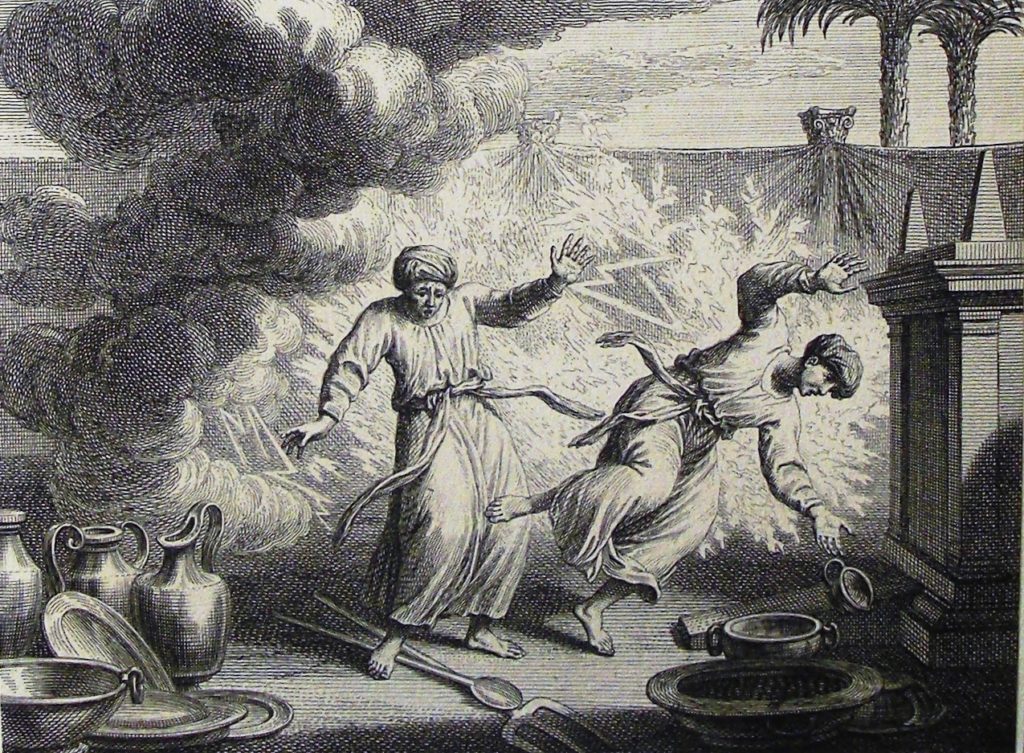
Leviticus 10:1–7, Nadab and Abihu…profane fire. 

Nadab and Abihu were executed by the fire of YHVH for not following his commandments. This disobedience was induced by the consumption of alcohol, which impaired their ability to follow YHVH’s protocols for the tabernacle service (Lev 10:9). What can we learn from this tragic story of the disobedience of YHVH’s servants who should have known better, and how will this story repeat itself at the end of this present age upon some of YHVH’s unfaithful servants? We will now discuss the prophetic implications of this story and how history will repeat itself shortly. 

Nadab and Abihu, the sons of Aaron the high priest, were unfaithful to Elohim in that they neglected to take his commandments seriously. Perhaps they thought that his instructions in righteousness did not apply to them but to someone else, or that his laws were done away with, or that YHVH Elohim simply did not really mean what he said. Whatever the case, while executing the ministerial role as Levitical priests in the tabernacle, they became lukewarm and careless in their duties and profaned the holy things of Elohim through their excessive use of alcohol and careless indifference to the Word of Elohim. Because they were in leadership positions as priests, their example of unrighteousness like a spiritual contagion could have infected the children of Israel and destroyed that new nation at its inception. Therefore, YHVH Elohim had to deal quickly and forcefully with these erring and rebellious sons of Aaron. In answer to their sin of not obeying YHVH’s laws, the holy fire of Elohim, like a bolt of lightning out of heaven, came out (presumably from the tabernacle—a picture of Elohim’s heavenly tabernacle and throne room) and fatally struck Nadab and Abihu then and there. 

What are the lessons that we can learn from this horrific story, and what are the end time prophetic implications of it? 

We learn from the book of Revelation that at end of the Messianic Age (or Millennium) that YHVH Elohim will execute unrepentant sinners fire by casting them into the lake of fire (Rev 20:15). This is because they have been made drunk by the false religious teachings of the whore system of religious spiritual Babylon and Satan (Rev 18:3–4). Even many of YHVH’s own people will fall prey to the Antichirst worldwide political-religious-economic system and fail to heed his warning to “come out of her my people” (Rev 18:4). Many will even take the mark of the beast thus forfeiting their possible salvation (Rev 14:9; 15:2; 20:4).

We are now living in an age where, thankfully, most of our sinful actions are not met with instant divine judgment (the case of Ananias and Sapphira who lied to the Holy Spirit in the book of Acts is a notable exception). Does knowing that YHVH will not instantly “zap” us with his proverbial lightning bolt from heaven when we sin cause us to become lax and even calloused toward sin in our lives? Do we truly walk in the fear of YHVH? Do we fear the consequences of sin even though the results may not be immediate? For many, the answer is yes. Therefore, the rest of us need to ask ourselves some serious questions lest we too slip into a state of careless indifference toward YHVH and his commandments as did Nadab and Abihu and, later, Annais and Sapphira. How loose is your spiritual walk? How many hidden sins that no one knows about do you have that you are failing to deal with that could lead down the proverbial slippery slope and away from Elohim? 

One thing is certain. As one progresses in their faith walk, the path of righteousness becomes narrower and ­narrower, and fewer people are on that straight and rigourous path. Moreover, there are levels of rewards in Yeshua’s kingdom. Not everyone will be “the greatest in the kingdom of heaven.” Some will be the least, and many will not even be there at all (Matt 5:19 cp. 1 Pet 4:18). Remember that the tares (i.e. those masquerading as saints of Yeshua) that were mixed in with the wheat (i.e. the true saints or converts of Yeshua) were culled out and burned (Matt 13:24–30). This is a picture of the true versus false converts coexisting in the spiritual body of Yeshua or the church to the very end! Let us not forget that the saints in Laodicean church were secure in their state of spiritual lassitude, yet YHVH had some harsh words for them. If they failed to repent and amend their ways, he promised to reject them.

It is time for the people of Elohim to wake up from their spiritual lethargic and drunken stupor, repent of their sin of taking a careless and even indifferent view of YHVH’s commandments.

“And to the angel of the church of the Laodiceans write, ‘These things says the Amen, the Faithful and True Witness, the Beginning of the creation of Elohim: I know your works, that you are neither cold nor hot. I could wish you were cold or hot. So then, because you are lukewarm, and neither cold nor hot, I will vomit you out of My mouth. Because you say, ‘I am rich, have become wealthy, and have need of nothing’—and do not know that you are wretched, miserable, poor, blind, and naked—I counsel you to buy from Me gold refined in the fire, that you may be rich; and white garments, that you may be clothed, that the shame of your nakedness may not be revealed; and anoint your eyes with eye salve, that you may see. As many as I love, I rebuke and chasten. Therefore be zealous and repent. Behold, I stand at the door and knock. If anyone hears My voice and opens the door, I will come in to him and dine with him, and he with Me. (Rev 3:14–20)

And I heard another voice from heaven saying, “Come out of her, my people, lest you share in her sins, and lest you receive of her plagues.” (Rev 18:4)

Therefore let him who thinks he stands take heed lest he fall. (1 Cor 10:12)


Natan’s Mother Now Awaits the Resurrection

This past Friday afternoon, my mother went to her resting place where she awaits the resurrection of the righteous dead at Yeshua’s second coming. She fought a hard battle against cancer. She was a few days shy of her 85th birthday. My parents were married for 62 years. My father is doing fine. Our family is relieved that mom is free of her sick bed where she languished for a couple of months. Thankfully, she had little if any pain (other than bed sores) until the very last night, and even then, the pain was not from cancer, but the bed sores. Thank you for your prayers.


Is the Spirit of Elohim a He, She or It?

Acts 8:16, For as yet He had. 

In most of our modern English Bibles, this verse supports the notion that the Holy or Set-Apart Spirit is masculine by using the third person singular of the verb in reference to the antecedent Holy Spirit, which is found in the preceding verse. Is this a correct translation? 

First, the Greek word spirit pneuma/pneuma is a neuter gender noun. To be grammatically correct, therefore, our verse should read, “For as yet, It….” and not “He.” However, the Bible reveals that the Set-Apart Spirit is a Person, so it has to be either masculine or feminine. In our text, the English words “he had” are the one Greek word ’hn which is the active, indicative, imperative, third person singular of the verb ’eimi meaning, in its infinitive state, “to be,” or in its imperfect tense, “was.” In this verse, the verb ’eimi in this form can mean either, “he was, she was, or it was” (Basics of Biblical Greek, p. 59, by William Mounce). 

So how do we determine what the gender should be of the Set-Apart Spirit? In the Tanakh, the Hebrew word for spirit (as in Set-Apart Spirit) is ruach/JUr, which is in the feminine gender. Since the concept of the Set-Apart Spirit originates in the Hebrew language of the Tanakh, and since Elohim (the plural Hebrew noun indicating the plurality of the Godhead) reveals himself as both male and female (Gen 1:26–27), it is, therefore, illogical to refer to the Set-Apart Spirit in the masculine gender in Acts 8:16. 

Therefore, in Acts 8:16, referring to the Set-Apart Spirit as he is a blatant example of scribal gloss, and is an example of the translators bowing to the Catholic doctrine of the third person in the Godhead being male in gender even though the linguistics of this verse don’t support it, and something the Bible as a whole doesn’t support. This now begs the following question: If the Set-Apart Spirit isn’t male, but is part of the Godhead, then what other gender is there for the Set-Apart Spirit to be?


Leviticus Chapter 9—Natan’s Commentary Notes

Leviticus 9:1, 9, 15, 18, Take for yourself…sons of Aaron…the people’s offering. Redemption (along with obedience to YHVH’s commands leading to righteousness and holiness) starts with the individual (in this case, Aaron the high priest)—especially the head or priest of the home (i.e. the husband or father) and then ripples out to the immediate family (“the sons of Aaron”) and then spreads to those around us (“the people”). 

Leviticus 9:2–4, YHVH will appear. It is impossible to appear before YHVH Elohim without the shedding of innocent blood for the atonement of man’s sins. Man is too sinful and unholy to be able to come before his perfect and holy Creator. The sooner human’s realize their sinfulness and unworthiness, and the need to deal with the sorry state their live is in, the sooner they will be able to fill their inner (some say the “God-shaped) void and the unmet need of having an intimate relationship with their Creator.

Leviticus 9:6, This is the thing. When atonement for sin is made, and a person comes to their Creator on that basis, YHVH and his glory will appear in one way or another in that person’s life.

Leviticus 9:6, 23, The glory [kobowd] of YHVH. Kobowd means “glory, honour, glorious, abundance, riches, splendour, dignity, reputation, reverence.” The root word of kobowd is the verb kabad or kabed meaning “to be heavy, be weighty, be grievous, be hard, be rich, be honourable, be glorious, be burdensome and be honoured.” According to The TWOT, the literal meaning of kabad/kabed is rarely used in Scripture; rather, its figurative meaning (e.g. to be heavy with sin) is more commonly used. As such, in Scripture it often refers to a weighty, impressive or prominent person in society who is worthy of honor and respect. 

Derivatives of kabed include kabed meaning “great,” kabed meaning “liver,” kobed meaning ­“great,” kabod meaning “glorious” (Ps 45:14; Exek 43:41), kabod meaning “glory,” k’budda meaning “abundance, riches” (Judg 18:21) and k’bedut meaning “heaviness” (Exod 14:24).

In Lev 9:6 and 23, kabod is a noun referring to glory, glorious, honor or honorable and is often used combination with another noun as a noun-adjective (e.g. the glorious king).

Leviticus 9:7, Go to the altar…sin offering…make atonement. For the glory of YHVH to appear in one’s life, one must first go to the altar of the cross, and must do two things: lay one’s life down as an offering or living sacrifice (i.e. die to one’s carnal sin nature) before YHVH, and then receive Yeshua as an atoning sin offering in payment for one’s sins. 

Leviticus 9:12, Sprinkled all around. (Other references to sprinkling of the blood include Exod 24:6; 24:8; Lev 6:27; 8:11; 8:19, 24, 30; 9:12, 18.) This is a prophetic picture of Yeshua’s shedding or sprinkling his blood on the cross. The apostolic writers use the term sprinkling on several occasions to describe what happened on the cross for the atonement of sin (1 Pet 1:2; Heb 9:13–14; 10:22; 12:24).

Leviticus 9:22–23, Aaron lifted his hand…blessed the people…the glory of YHVH…fell on their faces. The acceptance of and the blessings from heaven flow down to us when what we are doing lines up with heaven’s word and will. Aaron lifting his arms up and blessing the people pictures the river of life flowing from heaven through him and onto all the people. This river of life occurred because Aaron had followed the instructions Moses had received from YHVH (i.e. the Torah), then he cleansed himself of sin (v. 1), then the spiritual renewal and the river of life and redemption flowed to his immediate family (v. 9), then outward to the people around him (vv. 15 and 18). This done, the people were blessed and “the glory of YHVH appeared to all the people” (v. 23), and their sin offering was accepted as in heaven and earth came into agreement with each other resulting in the people worshipping Elohim (v. 24). 

Leviticus 9:24 and 10:1,Fire from heaven versus profane fire. Fire is a biblical metaphor for spiritual light and truth. Divinely revealed Truth originates only from heaven. Man, because of his fallen, sinful condition, is incapable of originating Truth. Whatever religion, philosophy or ideology man invents out of his own carnal mind will, at best, be a mixture of Truth and error. This mixture is the result of humans feeding from the tree of the knowledge of good and evil, and listening to the fork-tongued two-pathed serpent (i.e. of good and evil or talking out of both sides of his mouth at once), who is lurking in that tree waiting to subvert and deceive man into joining his sinful rebellion against the Almighty Creator. That is why walking away from YHVH’s the divinely revealed (Torah) instructions—the spiritual light and fire of YHVH, is so perilous. This is what Nadab and Abihu did when they offered up strange fire to Elohim; they followed the inclinations of their sinful and fallen natures instead of walking in the light of YHVH’s truth by following his instructions. Playing with fire is a double-edged sword; fire both enlighten, energizes and purifies, but is also a symbol of divine judgement in that it destroys and consumes the carnal and often sinful works (the wood, hay and stubble, 1 Cor 3:12–15) of rebellious and prideful man.


Blog Scripture Readings for 4/4 Through 4-10-21

Aside

Parashat Shemini — Leviticus 9:1 – 11:47
Haftarah — 2 Samuel 6:1 – 7:17
Prophets — Isaiah 38:1 – 45:25
Writings — Job 8:1 – 14:22
Testimony — Acts 8:26 – 12:25

Our annual Scripture Reading Schedule for 2020-2021 with daily readings that began on 10/11/20 is available to download and print. The link to the previous 2019-2020’s Scripture Reading Schedule will still be available on the right sidebar under “Helpful Links” into next year. If you are using a mobile device or tablet, the link may be below, meaning you’ll need to scroll down instead.

Most of this week’s blog discussion points will be on these passages. If you have general comments or questions on the weekly Scripture readings not addressed in a blog post, here’s a place for you to post those. Just use the “leave a reply” link or the “share your thoughts” box below.

The full “Read Through The Scriptures In A Year” schedule, broken down by each day, can be found on the right sidebar under “Helpful Links.” There are 4 sections of scripture to read each day: one each from the Torah, the Prophets, the Writings, and from the Testimony of Yeshua. Each week, the Torah and haftarah readings will follow the traditional one-year reading cycle.

Weekly Blog Scripture Readings for 4/4 through 4/10/2021.