From Mt. Rushmore: Stop the Hating! We’re One Nation Indivisible Under God!
3


The following video was sent to me by one of the readers of this blog. Thank you John from Tasmania! After watching it, I am compelled to share it with you and highly encourage you to watch it. In the video, Catherine Austin Fitts, a Christian, a former investment banker and political insider, connects many dots and ties together in a united and concise way the seeming unrelated subjects of Covid, artificial Intelligence, transhumanism, robotics, the internet of all things, what is behind the recent riots in the US, racial division in the US, the recent US presidential elections, the rise of a global technocratic dictatorship and how all of this ties into the globalists plans to enslave humanity (and to reduce the population) for the benefit of a few power and money hungry globalist “elites” whom she euphemistically refers to as “Mr. Global.”
I have been following the various threads mentioned above for decades, but to date, I have not heard any analysis as thorough as this one where all the dots are connected.

Fitts is no lightweight in the world of business or government as you will see from the links below. Please take time to check them out before watching the video. This understanding will lend credence to what she has to say in the video.
In her video, she even makes a brief reference to the book of Revelation as the prophecies therein relate to the things occurring globally presently.
As a watchman on the wall for many decades, I am very careful as to what I share on this blog. I know a whole lot more about current world conditions and what is going on behind the scenes as it relates to Bible prophecy than I am able to share. On many things I am taking a wait-and-see attitude, since my sense of what is going on is often more based on spiritual discernment than on empirical evidence, which is often scanty and difficult for the humans peons at the lower level like you and me to quantify. And quite frankly, because of the normalcy bias mental paradigm in which most of us live, few people are able to receive the hard cold facts that are hidden in plain sight of what is going on in this world economically, politically and spiritually. It can be frightening and overwhelming to the average person. Despite this, hopefully you will find the following info helpful and enlightening.
No matter what, our main goal should always be to keep our eyes on Yeshua and to stand on his word and promises as the anchor of our faith.
Now for the info on Catherine Austin Fitts.
Parashat Bo — Exodus 10:1 – 13:16
Haftarah — Jeremiah 46:13-28
Prophets — 1 Kings 1:1 – 7:51
Writings — Psalms 106:1 – 110:7
Testimony — Luke 11:14 – 13:35
Our new annual Scripture Reading Schedule for 2020-2021 with daily readings that began on 10/11/20 is now available to download and print. The link to the previous 2019-2020’s Scripture Reading Schedule will still be available on the right sidebar under “Helpful Links” into next year. If you are using a mobile device or tablet, the link may be below, meaning you’ll need to scroll down instead.
Most of this week’s blog discussion points will be on these passages. If you have general comments or questions on the weekly Scripture readings not addressed in a blog post, here’s a place for you to post those. Just use the “leave a reply” link or the “share your thoughts” box below.
The full “Read Through The Scriptures In A Year” schedule, broken down by each day, can be found on the right sidebar under “Helpful Links.” There are 4 sections of scripture to read each day: one each from the Torah, the Prophets, the Writings, and from the Testimony of Yeshua. Each week, the Torah and haftarah readings will follow the traditional one-year reading cycle.
Weekly Blog Scripture Readings for 1/17 through 1/23/2021.
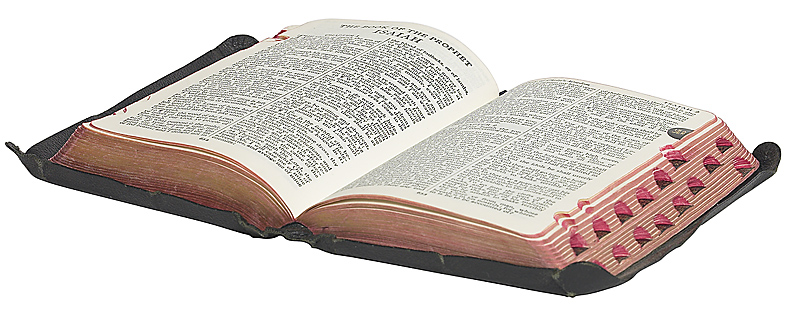
(Author’s note: This is the updated and rewritten version of an article that I wrote in the early 2000s. The information contained therein is based largely on the booklet entitled, Hermeneutics: How to Understand the Scriptures by James Scott Trimm [http://www.nazarene.net or http://www.lulu.com/shop/james-trimm/nazarene-jewish-manifesto/paperback/product-403845.html], although I have added many of my own fresh insights and some new information to the original material.)
In this article, we will cover the concept of peshat, remez, drash and sod or the plain or literal, the hint or suggested, the allegorical, and the hidden or mystical meaning of Scripture.
Five Basic Principles For Understanding the Scriptures
The Literal Principle
This is very similar to a rule of Jewish hermeneutics which states that “no passage loses its simple, plain or literal (in Heb. pashat) meaning.” This principle involves understanding a passage first in its plain, literal sense, according to the normal meaning of the words and phrases used unless there is evidence (within the text itself) to interpret it in an allegorical, symbolic or non-literal (in Heb. drash) sense.
The Cultural or Historical Principle
It is important to understand a biblical passage in its cultural-historical context or in the light of the culture and history of the person who wrote it. The Bible was written by Hebraic people living in the Middle East with an agricultural background and who thought differently and spoke a language with idioms and phrases completely different than ours. To view the Bible through a Greco-Roman, western cultural and linguistic lens, for example, as opposed to understanding it through the Hebraic and eastern culture in which it was written is to miss much of its richness and truth.
The Grammatical Principle
This principle involves understanding the text in accordance with its proper grammar. Just what do the nouns and prepositions refer to? What are the idioms of the original language? What are other peculiarities of the original language in which the text was written?
Anyone who has studied foreign languages, especially non-European ones that are different from English, will immediately understand the significance of this point. Each language is unique to itself, and to properly understand that language, one must have a basic understand of it.
The Bible, for example, was written in three ancient languages. It is, quite frankly, the epitome of ignorance and arrogance to the think that a simple knowledge of English will yield the full richness of these ancient languages to the cursory reader. Sometimes there are no English words or phrases even to convey the intended meaning of some biblical words and phrases. There are, however, a plethora of excellent resources written in English that will aid the serious Bible student in understanding the richness of biblical idioms, Hebraic linguistic and literary genres and devices. A literal treasure trove of revelation awaits the spiritually hungry Bible student!
The Synthesis Principle
This principle tells us that if we understand two biblical passages in a way that they contradict each other, then we are misunderstanding one or both of them. Usually as we dig deeper into Scripture and gain more understanding on a subject, then the confusion will clear up and the ostensible contradictions between scriptures will resolve themselves.
The Rule of First Principle
This rule of biblical interpretation states that the first time a word, phrase or concept appears in Scripture establishes a precedence as to the meaning of that word, phrase or concept in all future usages in Scripture. Moreover, this rule in biblical hermeneutics states that the first place the Scriptures mention a word, subject or idea, then this is to be viewed as a foundational truth upon which all subsequent Bible passages are based. A future principle or truth cannot nullify or abrogate a previous one. If it does, then the fault is with the interpreter and not with Scripture.
Ironically while claiming to adhere to the law of first mention, many Bible teacher in the mainstream church have blatantly and perpetually violated this law by asserting that the truths revealed in the New Testament take precedence over and abrogate those of the Old Testament, especially when it comes to the YHVH’s Torah-law or the law of Moses. Over the millennia, the church has devised many circuitous and circumambulatory philosophical theologies to get around many simple truths. We see this in Christian theologians attempts to explain away the Torah-law, the Sabbath, the biblical feasts and dietary laws, a Hebraic-centric understanding of Scripture and the accompanying lifestyle that goes with it.
Because the church has replaced so many biblical truths with the unbiblical traditions of men, more and more people are realizing that the church has, in many cases, lied to them and as such are returning to the biblical or Hebraic roots of the Christian faith. They are returning to their spiritual foundations, the bedrock or the first principles of their faith.
Of interesting note is the fact that when the apostolic writers penned what became known as “the New Testament,” there was no “New Testament” yet. All Christians of the first century had was “the Old Testament.” When in their writings the apostles referred to Scripture, they were speaking of the Tanakh or Old Testament (e.g. 2 Tim 3:16–17; Acts 17:11). So everything we read in the Testimony of Yeshua (or New Testament) must be understood in the light of the Tanakh (or Old Testament) and can never contradict it. This is how the early first century church would have approached biblical truth, and we would serve ourselves well to follow the example of those who sat at Yeshua’s feet.
The Practical Principle
Continue reading
Parashat Va’eira — Exodus 6:2 – 9:35
Haftarah — Ezekiel 28:25 – 29:21
Prophets — 2 Samuel 18:1 – 24:25
Writings — Psalms 98:1 – 105:45
Testimony — Luke 8:26 – 11:13
Our new annual Scripture Reading Schedule for 2020-2021 with daily readings that began on 10/11/20 is now available to download and print. The link to the previous 2019-2020’s Scripture Reading Schedule will still be available on the right sidebar under “Helpful Links” into next year. If you are using a mobile device or tablet, the link may be below, meaning you’ll need to scroll down instead.
Most of this week’s blog discussion points will be on these passages. If you have general comments or questions on the weekly Scripture readings not addressed in a blog post, here’s a place for you to post those. Just use the “leave a reply” link or the “share your thoughts” box below.
The full “Read Through The Scriptures In A Year” schedule, broken down by each day, can be found on the right sidebar under “Helpful Links.” There are 4 sections of scripture to read each day: one each from the Torah, the Prophets, the Writings, and from the Testimony of Yeshua. Each week, the Torah and haftarah readings will follow the traditional one-year reading cycle.
Weekly Blog Scripture Readings for 1/10 through 1/16/2021.
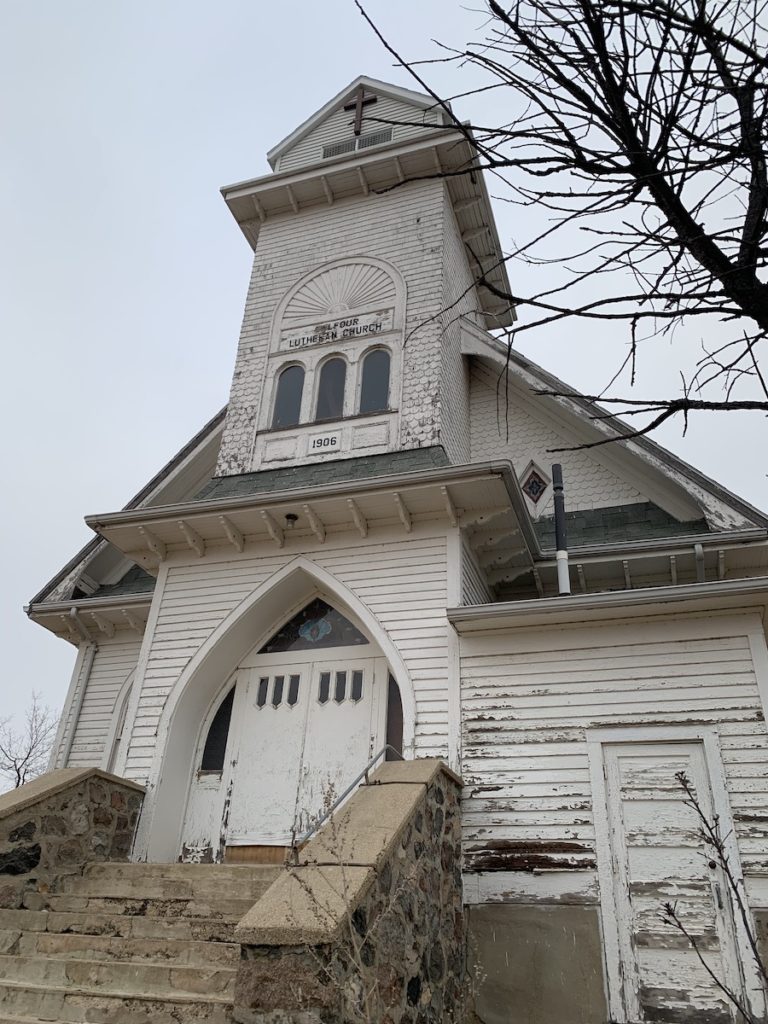
Presently, Sandi and I are in northern North Dakota visiting our children after a 1,300 mile road trip to get here from Oregon. Neither of us had ever been to this part of our country before, so all the sights and experiences are new.
North Dakota contains lot of flat ground with few trees. The “mountains” are really small hills. Grain silos and derelict windmills are everywhere and often dominate the skyline punctuated by an occasional church steeple and cell phone tower. The vast prairie is littered with many old abandoned buildings indicating that life is hard in this country and not everyone made it.
Usually there is many feet of snow on the ground at this time of the year and the temperatures are in the subzero Fahrenheit range. However, this year has been extremely mild with temps in the teens and 20s at night and 30s to low 40s (Fahrenheit) during the day.
Please enjoy.