Romans 1–6: Natan’s Commentary Notes

This blog posting is lengthy and contains a lot of spiritual meat. Sorry for the major download all at once. This is actually a small fraction of my commentary notes on Romans chapters one through six. I actually have 74 pages of notes on this section of Scripture alone.

During the work week, due to my heavy work schedule, I have little time for ministry, and barely time for my own personal devotions. Since the major ice storm we had back in February, my tree service business has nearly tripled, I have doubled my employees and purchased additional equipment to handle the demand, and we are still majorly backlogged with work. I have been working 10 to 13 hours a day during the week and many hours on Sunday to keep up with it all. Thank Elohim for the Shabbat, or else l, like a mindless fool, I would probably be working then too—literally working myself into an early grave, no doubt! Thank you Yah for the fourth commandment. KEEPING YOUR TORAH-LAWS IS NOT A BURDEN BUT A JOY AND RELIEF! HalleluYah!!!

Sadly, from a few small and petty-minded murmurers and complainers out there among the modern day children of Israel, I am sometimes criticized when I post such a long piece. For those of this childish and ungrateful demeanor I have two things to say: If you don’t like it, switch the channel and go back to eating baby food. And while you’re at it, take a long walk on a short dock! This is not the place for you. Don’t bother to comment. I’ll just delete it!

For the rest of you, YHVH bless and keep you and may he make his face to shine upon you and grant you his glorious shalom! Amein.


Romans 1:1, Paul, a servant. Servant is the Greek word doulos literally meaning “to tie or to bind, a bond servant, a slave, a man of servile condition, one who gives himself up to another’s will, devoted to another to the disregard of one’s own interest.” Of doulos, Strong’s Expanded Concordance says that this word refers to one who was in permanent relation of servitude to another one whose will was completely subject to the will of another… The focus is on the relationship, not on the service. This word also refers to a slave, which was originally the lowest term in the scale of servitude. This word if found 127 in the Testimony of Yeshua and is used numerous times to refer to those whose service is used by Messiah in extending and advancing his cause among men (Thayer’s Greek-English Lexicon of the NT). The disciples of Yeshua applied doulos to themselves with regard to their relationship of service to their Messiah (Ro. 1:1; Gal. 1:10; Phil. 1:1; 2 Tim. 2:24; Tit. 1:1; Jas. 1:1; 2 Pet. 1:1 and of other ministers of the gospel (Col 4:12; 2 Tim 2:24; Jude 1:1) and of all who obey Elohim’s commands who are his true worshippers (e.g. Lk 2:29; Rev 2:20; 7:3; 9:2, 5; 22:3, 6). Do you view yourself as a servant-slave of Yeshua your Master, who purchased or redeemed you with his precious blood from the death penalty hanging over you brought on by your sins?

Romans 1:5, Grace…for obedience.

What Is the Full Definition of the Word Grace?

If one were to ask most Christians what is the meaning of the word grace, they would say something like “free and unmerited pardon.” While this is not an incorrect answer, it is only half of the answer. The other half of the answer will take the typical Christian into spiritual territory where they may not want to do.

Grace is the Greek word charis. The word grace has several subcomponent meanings. It is the removal by Elohim from the individual of guilt caused by sin—the wiping clean of the slate containing a man’s past sins. It is a divine and unmerited favor or pardon of Elohim toward sinful man. 

Grace also indicates favor on the part of the giver (Elohim) and thankfulness on the part of the recipient (man) and is to be distinguished from mercy which is the pardoning or removal of the penalty or consequences of sin. 

Grace removes guilt, mercy removes misery. But grace is also the divine influence or enablement upon the heart of man (see Strong’s Expanded Concordance). But grace is not only unmerited divine favor, but is also the divine enablement or empowerment to walk righteously before Elohim. It is “the merciful kindness by which Elohim, exerting his holy influence upon our souls, turns men to the Messiah, keeps, strengthens, increases them in faith, knowledge affection, and kindles them the ability to exercise righteous virtues (see 2 Cor 1:12; 4:15; 6:1; 12:9; 2 Thess 1:12; Acts 11:23; 13:43; 18:27; Rom 6:14; Gal 5:4; Col 3:16; 1 Cor 15:10) according to Thayer’s Greek -English Lexicon of the NT. 

So in summary, we see that grace is not only the unmerited divine favor that wipes away our past sins, but the divine empowerment or enablementto obey Elohim by walking in a state of righteousness and virtue, so that one does not sin (i.e. not transgress the Torah-laws of Elohim; see 1 John 3:4) thus incurring upon oneself the penalty for or wages of sin (i.e. death) and hence the need, once a gain, for unmerited divine favor or pardon.


Romans 1:6, Called of Yeshua the Messiah.

When It Comes to Salvation, Who Invites Whom?

Many Christian evangelists talk of “choosing to follow Jesus” or “inviting Jesus into your heart” or “making a decision to accept Jesus.” To often, the emphasis is on the person of their own initiative of calling on or making the choice to follow Yeshua. While this idea may not be totally incorrect, it, sadly, places the emphasis on the wrong person, can feed carnal or humanistic pride, takes the focus off of where it should be placed and is largely an unbiblical message. Let us explain.

The word called in the Greek is kletos meaning “an invitation to a banquet, invited (by Elohim by the proclamation of the gospel) to obtain eternal life or salvation in the kingdom of Elohim through Messiah Yeshua.”The writers of the Testimony of Yeshua use this and other similar Greek words to express the idea of a calling going forth from YHVH Elohim to call those to salvation. In fact, the idea of YHVH choosing us (and not us him) is a prominent theme (nearly 50 occurrences) in the apostolic writings. The gospel accounts reference Yeshua speaking of a calling at least several times (e.g. Matt 9:13; 20:16; Mark 2:17; Luke 5:32). Luke in the book of Acts speaks of a divine calling of believers to Yeshua (Acts 2:39) and to believers into the ministry (Acts 13:2; 16:10) as does the Paul in nearly 30 places in his epistles (e.g. Rom 1:7; 8:28; 1 Cor 1:1, 9, 24, 26; 7:15, 17, 20, 24; Gal 1:6, 15; Eph 1:18; 2 Thess 2:12; 2 Tim 1:9). Likewise, Peter makes reference to YHVH callingpeople into his kingdom (1 Pet 1:15; 2:9, 21; 5:10; 2 Pet 1:10) as does Jude (Jude 1:1) and John (Rev 17:14; 19:9). 

This same idea is carried forth in the words chosen, election and elect—words which occur in the Testimony of Yeshua another 46 times. These words derive from the Greek words ekloge and eklectos meaning “picked or called out ones(called out of the world for a place in the kingdom of Elohim).”

Continue reading →

 

Natan’s Commentary Notes on Numbers 8–11: The Menorah, Silver Trumpets & Glory Cloud

Numbers 8

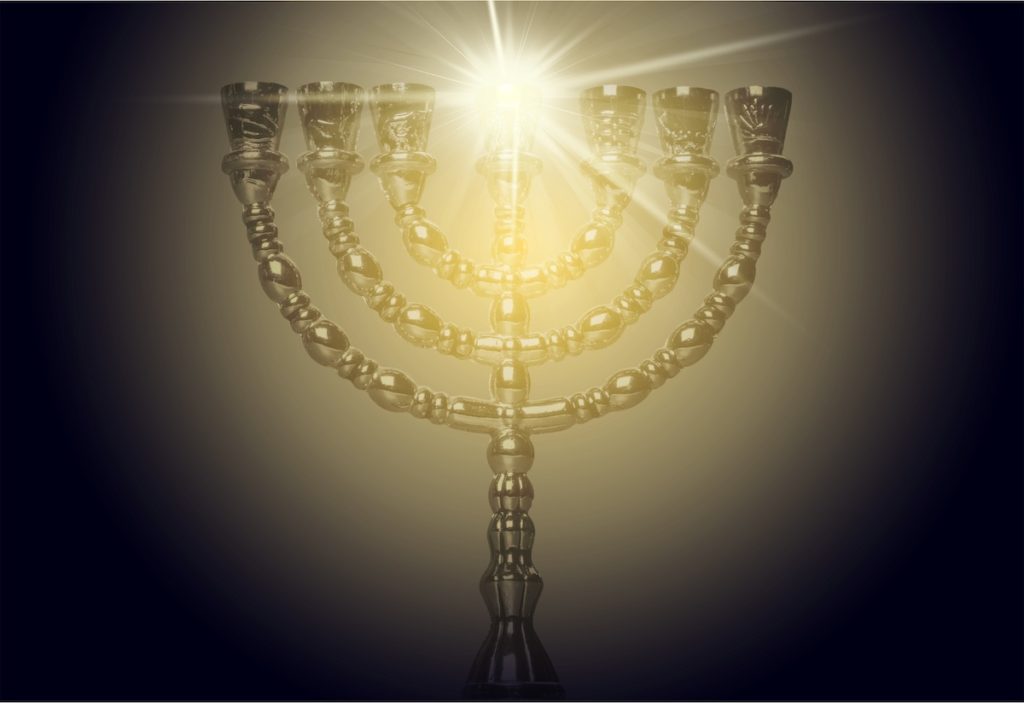
Numbers 8:2, The menorah. The phrase toward the face of the menorah is an interesting one. The Jewish sages teach that the three wicks on the right and the three on the left were all directed toward the menorah’s central stem, thus concentrating light toward the center. The menorah symbolized that YHVH is the Source of all light (The ArtScroll Stone Edition Chumash, p. 775). What are the connotations of this for a believer in Yeshua? How did Yeshua describe himself? (See John 8:12; 9:5.) Moreover, what did he mean when he said that “I am the vine and you are the branches?” (John 15:5) What does this mean and how is this pointing to a type of human menorah? Now relate this to the seven Messianic assemblies of Revelation 2 and 3 being likened to menorahs (Rev 1:13, 20). Is Yeshua the center of all that we do? Do we place all of our focus on him? Can we say, as the Apostle Paul did, that “in him we live and move and have our being” (Acts 17:28)? Does the power of his resurrected life and anointing flow through you even as oil was in the menorah and sap flows through a tree to its branches?


Redeemed Israelites Are That Menorah

The Scriptures plainly states that Yeshua and his body of followers are likened to a tree of which the seven-branched menorah that adorned the mishkan (tabernacle) in the wilderness as well as the sanctuary of Solomon’s Temple is a picture. Furthermore, remember what Yeshua said in John 15:5? “I am the vine and you are the branches …” This is a perfect picture of the menorah, which has a central trunk with six (the number representing man) branches growing out of the trunk. Remember what Yeshua said in Matthew 5:14–15, that his followers were to be lights upon a lampstand on a hill for all the world to see—a clear allusion in the mind of anyone in Yeshua’s audience to the temple’s menorah (which was upon the Temple Mount like a light on a hill).

Additionally, when a redeemed believer in and follower of Yeshua is in a sacred state of worshipping his Master and Savior, he will often lift his arms heavenward. Not only is this the universal sign of surrender (in this case to one’s Heavenly Master), but when we lift our hands our bodies are actually forming a human menorah. By doing this, in worship we are acting out what we are—a lampstand to the world radiating forth the good news of the truth and love of Yeshua.

In fact, The Scriptures shows us that the menorah, and not the cross, is the symbol of Yeshua’s spiritual body of believers. We see this in Revelation 1:12, 20 and 2:1 where the seven congregations are symbolized as a seven-branched menorah! The menorah here is the symbol of the congregation of redeemed believers.

Though the cross is representative of the redemptive work Yeshua accomplished on our behalf, it is not the symbol of the body of believers, commonly called the “church,” but the menorah is! Furthermore, in Jewish thought, the menorah is analogous to an olive tree (the ancient temple menorah was constructed of hollow tubes of solid gold filled with olive oil that burned when lit), to which the Apostle Paul makes reference in Romans 11, as representing the tree of life (which ultimately represents Yeshua) into which all must be grafted if they are to be part the spiritual body of Yeshua and have his eternal life.


Numbers 8:10, The children of Israel shall lay their hands. By this act, the Israelites were affirming on earth YHVH’s choice of the Levites as the tribe who would minister to him in the tabernacle by assisting those of the Aaronic priesthood. When did YHVH chose the Levites to serve him? (See Exod 32:29, read the preceding verses for context; cp. Num 8:18–19.) Are there examples in the Testimony of Yeshua of the congregation of redeemed Israelites laying hands on individuals who had been chosen to serve YHVH in some special way? (Read Acts 6:1–6; 13:1–3.) What was a key element in the choosing of these spiritual vessels? (Note Acts 6:3; 13:3.)

Numbers 8:24, From twenty-five years old. A young Levite went into a five year training period starting at age 25. How long did this apprenticeship last and when did he begin ministering as full-fledged Levite? (See Num 4:23; , 30,35,39.) Can you recall other biblical examples of YHVH preparing his servants for leadership by passing them through a period of time of spiritual training and refinement? Let’s test your knowledge of Bible trivia how long did Moses, Joshua, Samuel, David, the 12 disciples, and Paul spend in YHVH’s apprenticeship program before being launched into ministry? YHVH’s qualifications for ministry leaders are stringent and are not to be trivialized. The same is true for leaders in the congregation of redeemed Israelites. (Review 1 Tim 3:1–7; Tit 1:5–9.)

Numbers 9

Numbers 9:1–14, The Second Passover. Here we see contrasted those who are not able to keep the Passover, but it is in their heart to do so, while the second group are able to keep the Passover, but don’t want to. To the first group, YHVH is gracious and makes allowances for them through the spirit of the law, while to the second group, the penalty is banishment from Israel.

Continue reading →
 

Is the Mainstream Christian Church the Real Cult?

Returning to the Hebraic Foundations of the Christian Faith: “The Faith Once Delivered” or Cultism?

Beloved, while I was very diligent to write to you concerning our common salvation, I found it necessary to write to you exhorting you to contend earnestly for the faith which was once for all delivered to the saints. (Jude 1:3, emphasis added)

In recent years there has been great awareness brought upon the subject of non-Christian cults by Christian apologetic organizations whose mission it is to defend the “historic Christian faith” against teachings they consider to be contrary to the Bible and to traditional or normative Christian theology and tradition. At the same time, the so-called Messianic or Hebrew roots movement has come under the scrutiny of some of these “cult watchers.” Are those Christians returning to the Hebraic foundations of their Christian faith join a cult or are they actually earnestly contending for the faith once and for delivered to the disciples of Yeshua the Messiah (Jesus Christ)?

Many well-meaning Christians in their zeal to protect core Christian beliefs from the onslaught of missionizing activities by cultic groups have developed a fortress-like mentality where they label everything a cult that does not agree with their definition of “the historic Christian faith”. Yet at the same time, many of these same Christians would be hard-pressed to define the word cult or to explain the sociological, psychological and theological implications the label they so glibly attach to those who disagree with them.

So what is the truth? Is labeling the Messianic or Hebrew roots movement as a cult justified or not? To answer this question, we will use the same criteria that those Christian “watchdog” organizations themselves use to define a cult. We will then see if this moniker is justified when it comes to those Christians who are returning to a more Hebraic or Jewish orientations to their spiritual walk.

This author has a unique perspective on the subject of cultism having been born and raised in a name-brand cult till age 30 where upon leaving the cult he became an ordained Christian evangelist in a major Christian (Protestant) denomination where he then reached out to those bound up in cultism as he once was.

In exploring the ramifications of cultism, let us first define the word cult from Webster’s Dictionary: A cult is

Continue reading →
 

Moses coming into the holy of holies—an example for US to follow

Numbers 7:89, When Moses went into the tabernacle.Moses entering into the inner most sanctuary of the tabernacle is a lesson for us in how to experience intimacy with our Father in heaven through Yeshua the Messiah. To understand this, let us first ask and answer some important question.

The holy of holies in the tabernacle from which the voice of YHVH emanated pictured what? (See Rev 7:15.) The Tabernacle of Moses is a spiritual picture of what? (Read Eph 3:21–22; 1 Cor 3:16; 1 Pet 2:5.) 

If the holy of holies represents Elohim’s throne room in heaven, and the saints are the temple of the Set-Apart Spirit, can they, like Moses, hear the voice of Elohim? Again, let us explore the answer to this question by asking some more questions and finding the answers in Scripture. (See what Yeshua said in answer to this question in John 10:3–5, 27 cp. Acts 8:29; 10:19; 11:12; 29:4.) How does YHVH now speak to his people? (Note John 16:13; 1 Cor 2:12.) How does the Spirit interact with man to speak the mind, heart and will of Elohim to humans? (See John 14:17; Job 32:8; Prov 20:27; Rom 8:16; Eph 3:16; 1 John 2:20, 27; 4:2–3; 1 Cor 2:10–14.)

We find a corollary passages to Numbers 7:9 in Psalms 61:4 where David speaks of abiding in YHVH’s tabernacle forever, and putting his trust in the shelter of YHVH’s wings.With this in mind, now consider this:Over the mercy seat on the ark of the covenant, which was the seat of Elohim’s presence on earth and symbolically represented his heavenly throne room, was the over-shadowing wings of the two cherubim (for another perspective of Elohim’s throne room, see Isa 37:16; Ezek 10:1–22; 11:22–23). It was in this place of intimate worship before the “Rock that his higher than me” (verse 2) that David sought shelter or refuge and deliverance from his enemies (verse 3). Phrases like, “under the shadow of your wings” is a Hebraism meaning “before YHVH in the place and state of worship” (see also Pss 17:8; 36:7; 57:1; 63:7; 91:1, 4). 

It was also in this place—between the cherubim—that Moses heard the voice of Elohim (Num 7:89), and that David would see the power or might, strength and glory or manifest presence of Elohim in a prophetic, ecstatic or spiritual vision (Ps 63:2). The saints now have access to the throne of Elohim through Yeshua the Messiah and prayer (Rev 5:8; 8:3). 

Occasionally, YHVH will still communicate with his servants through an audible voice, dreams, visions, or an angelic visitation. But this is rare now, even as it was in biblical times. This is because YHVH is testing his people to see if they will walk by faith, not by sight (2 Cor 5:7), and will remain faithful to his written word as found in the Bible. 

Currently, YHVH is refining, testing and preparing his bride—his people— for her marriage to Yeshua. Will she be faithful to him having never seen him visually? The time is coming after Yeshua’s coming, however, when she will be in YHVH’s blessed presence forever, which is the object or end goal of our faith.

Voice of One…above the mercy seat. Think about this for a moment. The ark of the covenant upon which the mercy seat rested contained and was surrounded by several items, which give us an understanding as to on what basis we are to come into YHVH’s presence to hear his voice. 

First, the ark contained Aaron’s rod that budded. Second, it contained the golden pot of manna and then the two tablets containing the ten words written by YHVH’s finger. Leaning up against the ark was the scroll containing the entire Torah that was given to the Israelites through Moses. 

All together these items in and around the ark teach us that man can only come into YHVH presence on the basis the Torah-word of Elohim of which Yeshua was and is the Living Manna or bread from heaven, and upon which man must feed for his spiritual sustenance. 

Even as the manna was in a golden pot, so YHVH’s words should be within the heart of man. The ten words or commandments which were written by YHVH’s finger form the foundation of the Torah and need to be written on the heart of man. 

The heart of man contains two parts, like the two stone tablets, and man’s heart, until spiritually regenerated, is hard and stoney like the rock upon which the ten words were written. 

YHVH is calling his servants to be a kingdom of priests of which Yeshua the Messiah is our Chief High Priest of which the rod, a symbol of the tree of life, is a prophetic picture. Under King Yeshua’s rulership, in his millennial kingdom, his priest-saints will exercise the authority in leading this world into obedience to and the worship of YHVH. The saints are presently in training for that lofty role as Yeshua’s kings and priest co-ruling with him over the world (1 Pet 2:9; Rev 1:6; 5:10; 20:6). 

The Torah scroll leaning up against the ark shows us that obedience to YHVH’s instructions is dependent on our relationship with Yeshua through which his words must be written on our hearts by the indwelling presence of the Spirit of Elohim. 

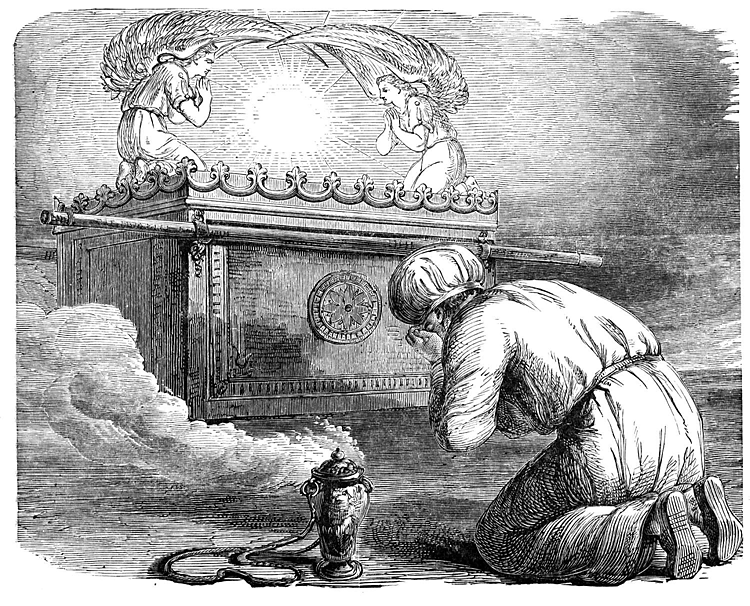
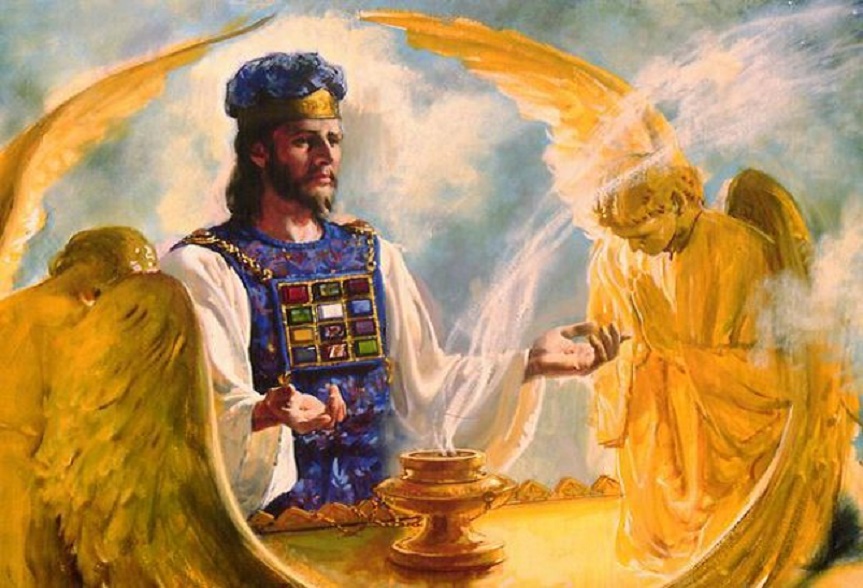
Moreover, when the high priest would come into the holy of holies, he carried a censor filled with incense and sprinkled lamb’s blood on the ark of the covenant. This is pictures the saints coming into YHVH’s Presence only through the blood of Yeshua the Messiah who atoned for man’s sins, and through humble prayer like a contrite petitioner before a mighty king. 


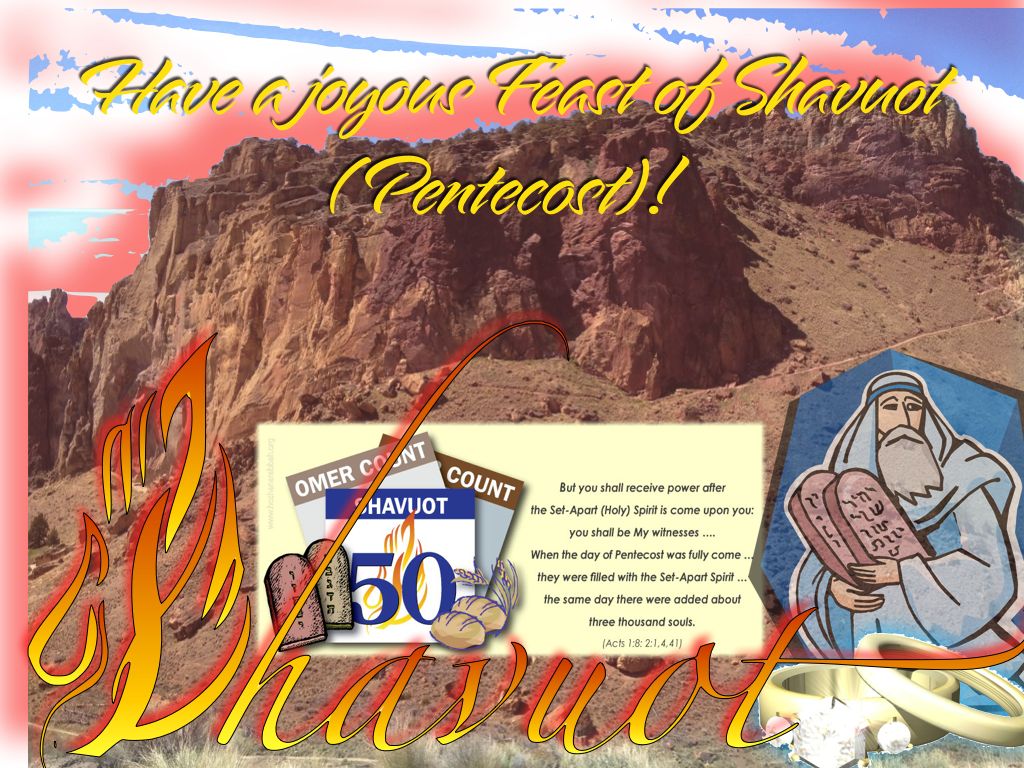
Have a Joyous Shavuot/Feast of Weeks/Pentecost 2021!

Free resources from Hoshana Rabbah to help you have a more enlightened and meaningful Shavuot/Pentecost:


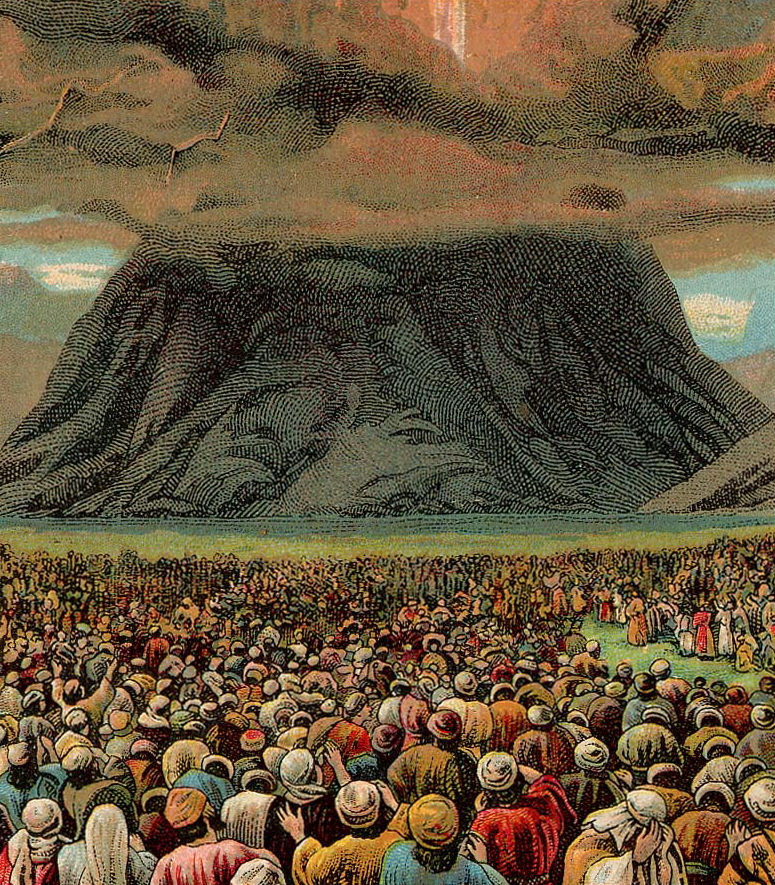
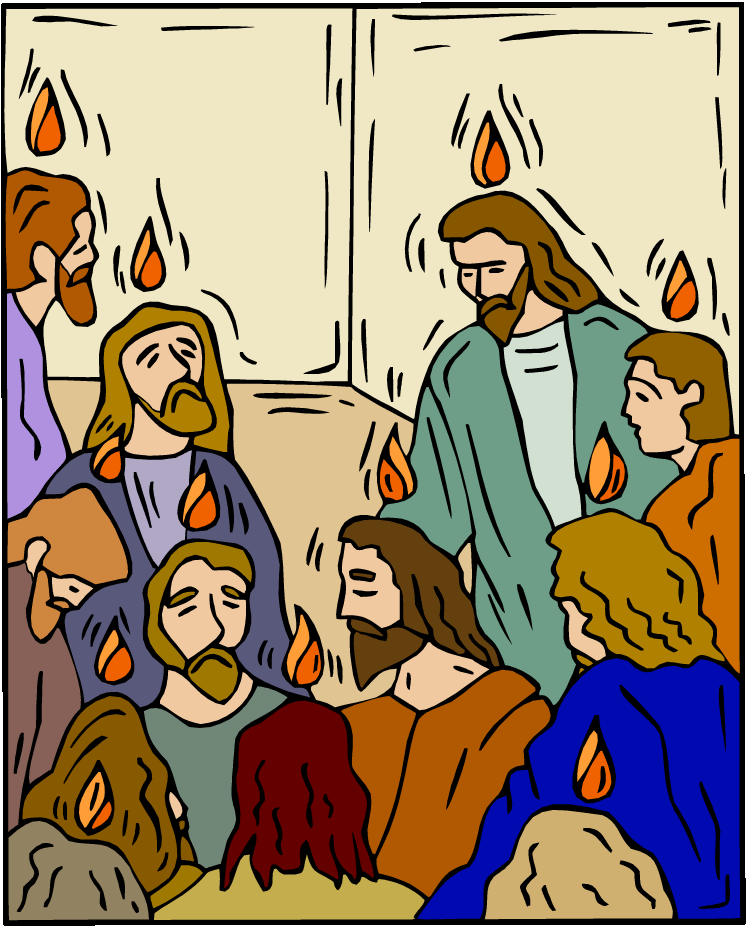
Preparing for Shavuot/Pentecost—Insights from Exodus 19, 20 and Acts 2

To fully understand Scripture and to extract its applicable meaning to us, we must insert ourselves into the scriptural narrative and ask, what can I learn from this and how does it apply to me?  With such an inquiring mind and an open heart, the still small voice of the Spirit of Elohim will begin to whisper insights into our spirit and mind. 

This is how the Word of Elohim comes alive to us and how we find spiritual direction—light in the darkness—to guide us in the path of life. With this in mind, let us now discover what we can learn from Exodus chapter 19 as the children of Israel prepared to meet YHVH Elohim on the day of Pentecost (or Shavuot—its Hebrew name).

Insights from Exodus 19

Exodus 19:3, Moses. The name Moses/Moshesh literally means “drawing out or rescued.” What was Moses drawn out of or rescued from? From the waters of the Nile River in Egypt. Water can be a biblical metaphor for humanity, and Egypt a metaphor for Satan’s world. That is to say that Moses was drawn out of or rescued from the seas of humanity. YHVH then used Moses to rescue, draw forth or fish the children of Israel out of the same sea of Satan’s world. 

Exodus 19:3, Moses went up. Even before Elohim called Moses, he was willing to go up. Elsewhere in the Psalms, we learn that if we incline our hearts toward YHVH, he will incline himself toward us. Yeshua promised that all those who ask, seek and knock will be rewarded accordingly.

Exodus 19:3, From the mountain. YHVH not only exists, but he exists above the earth on a proverbial mountain far above the human plane. Isaiah declared that YHVH is “high and lifted up.” He is calling us to come up to him. Will we go up to him, or do we love this world too much to answer his call to come up? Twice David the psalmist asks and then answers the question, who will ascend the hill or mountain of YHVH?

YHVH, who may abide in Your tabernacle? Who may dwell in Your holy hill? He who walks uprightly, and works righteousness, and speaks the truth in his heart; he who does not backbite with his tongue, nor does evil to his neighbor, nor does he take up a reproach against his friend; in whose eyes a vile person is despised, but he honors those who fear YHVH; he who swears to his own hurt and does not change; he who does not put out his money at usury, nor does he take a bribe against the innocent. He who does these things shall never be moved. (Ps 15:1–5)

Who may ascend into the hill of YHVH? Or who may stand in His holy place? He who has clean hands and a pure heart, who has not lifted up his soul to an idol, nor sworn deceitfully. He shall receive blessing from YHVH, and righteousness from the Elohim of his salvation. (Ps 24:3–5)

Are you a spiritual mountain climber, or one who is content to be a spiritual low-lander preferring to inhabit the basement of life?

Exodus 19:3, From the mountain. YHVH not only exists, but he exists above the earth on a proverbial mountain far above the human plane. Isaiah declared that YHVH is “high and lifted up.” He is calling us to come up to him. Will we go up to him, or do we love this world too much to answer his call to come up?

Exodus 19:4, Brought you [Israel] to myself. YHVH’s purpose for calling Israel out of Egypt was to bring them to himself. One cannot be of the world and the same time be in Elohim. Yeshua said that his servants cannot serve two masters—Elohim and this world (or mammon). He also declared that though we are in this world, we are not to be of this world. Though we live in this world physically, we are not to be a part of, loyal to or identify with this world spiritually.

Exodus 19:5, If…then. The agreement between Elohim and Israel known as the Mosaic or Siniatic Covenant was conditional. His blessings upon Israel and his elevating them to favored nation status was conditional upon their obeying his voice and walking in covenant with him. It was based on relationship. Is not everything in life that we do based on conditional agreements and relationships with other people and the world around us? There are things we have to do if we want certain outcomes. If we fail to do them, then we pay the price. This includes marriage agreements, employer-employee relationships, friendships, buying a car or house, staying behind a guardrail on the edge of a cliff, following the driving rules of the road, obeying the laws of the land, taking care of our bodies, eating and not eating certain foods, and the list goes on and on. Why should we think that our relationship with our Creator is any different? If we follow his rules, we will be blessed, and if we do not, we will suffer the consequences.

Exodus 19:5, Obey my voice…keep my covenant. Too many times we are inclined to think of the Bible in terms of dos and don’ts—laws and rules. If we stop mid-sentence in verse five, this is what we come up with, and this is off-putting to most people who are naturally averse to rule-keeping. However, obedience to YHVH and his commandments is simply a means to an end as the second half of this verse shows us. It is about relationship with our Creator—about blessings, life and eventually immortality. 

Exodus 19:5, Special treasure to me. Why does YHVH want to bring you and me to himself? He wants us to be his own treasured possession. What is your treasured possession? If your house was burning down or you had to flee immediately and could take only one possession, what would it be? That is how YHVH views those who seek and follow him, but much, much more.

Exodus 19:5, Above all people. YHVH exists in heaven, on a proverbial mountain. He invites his people—those who answer his call—to come up to him. He has shown us the way—his way, the way of Torah (i.e. obeying his voice and keeping covenant with him), which is the way up to him. When we come up to him, it will put us above the people around us. That is why the Bible always speaks of “going up to Jerusalem” or “going down to Egypt.” Heaven is above this earth; the earth is below heaven.” Those who are citizens of the kingdom of Elohim are at a higher spiritual plane than those who are of this earth or world. It does not mean that Elohim’s saints are better than anyone else. It just means that they are walking at a higher level spiritually, and that they have been saved by his grace—his unmerited pardon, and that he has divinely enabled them to obey him. Let no man glory in his, wisdom, might or riches but only in the fact that he understands and knows Elohim (Jer 9:24).

Exodus 19:5, For all the earth is mine. Why does YHVH add this phrase after the previous one? What is his point? As the Creator of all things, everything belongs to him; therefore, he determines the rules and on what basis he will elevate people to a special status before him. He delivered Israel out of Egypt and chose Israel to be his own treasured people conditional upon their obeying his voice and walking in covenant with him (v. 5). All of the other religions, man-made philosophies and spiritual paths notwithstanding, there is only one way to Elohim; it is his way.

Exodus 19:6, Kingdom of priests…a holy nation. YHVH had a purpose for elevating his people to that of favored nation status. It was not so that they could just revel in his blessings eating, drinking and making merry until they passed from this mortal scene. No. YHVH had a end game plan for his people then, and he still has the same plan for his people now. It is to taste and see that YHVH is good, that obeying him brings blessings and then to share that good news with those around us. If you are a follower of Yeshua, are you fulfilling your role as his a part of his royal priesthood, holy nation and his own special people to proclaim the praises of him to those who are still dwelling in the darkness of this world and to help bring them into the marvelous light of his Truth as Peter proclaims (1 Pet 2:9)? Or are we just reaping the benefits of YHVH’s grace upon our lives, and living our lives for our own self-centered benefit without fulfilling our end of the deal to be spiritual salt and light to those around us? Is our relationship with YHVH a one-way street where we expect all the benefits without giving anything in return? If so, ask yourself this: How does such a relationship work in a marriage or friendship where one party does everything and the other party does nothing in return? How long can this last before the one doing all the giving says, “Forget it, I’m out of here! This one-sided relationship is no longer worth my time or effort.” Eventually, YHVH will say the same thing to those who are only takers and not givers. They will hear the words, “Depart from me you workers of iniquity, I never knew you.”

Continue reading →
 

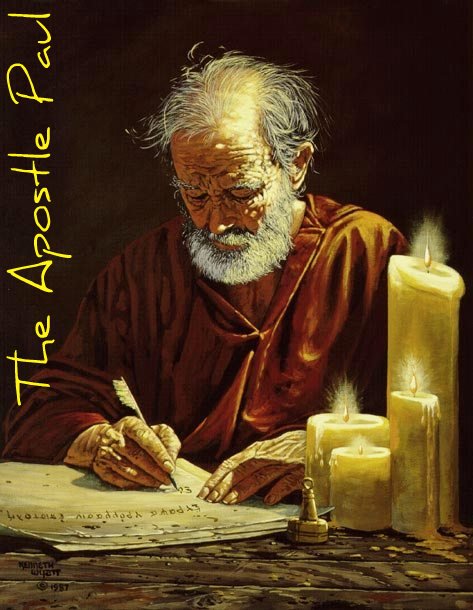
How to Easily Understand the Hard Sayings of Paul

2 Peter 3:15–16, Paul…hard to understand. If the writings of Paul are confusing as Second Peter 3:15-16 affirms, then why did the Holy Spirit write confusing things through Paul and not through others? 


Why Paul Is Difficult to Understand

Paul was hard to understand in the first century as Peter states in 2 Peter 3:16–17, and he’s hard to understand now in the twenty first century, as we will discuss below. In fact, it might be said that if it was hard for Paul’s contemporaries (those who knew him and ministered with him) to understand him, then, logically, it follows that it will be even much harder for those of us to understand him who live 2000 years later and who didn’t know him or work with him. To the former point, Peter writes, 

And account that the longsuffering of our YHVH is salvation; even as our beloved brother Paul also according to the wisdom given unto him hath written unto you; As also in all his epistles, speaking in them of these things; in which are some things hard to be understood, which they that are unlearned and unstable wrest, as they do also the other scriptures, unto their own destruction.  Ye therefore, beloved, seeing ye know these things before, beware lest ye also, being led away with the error of the wicked, fall from your own stedfastness.

Again, if Paul was hard to understand in his day, how much more 2000 years later!

For those living and working with Paul, he was hard to understand because of his intellect and education. He was one of the top Jewish scholars of his day with an intellect to match it. You weren’t taught by Gamliel, the grandson of Hillel the Great, the founder of the Hillel School of Phariseeism and considered by some modern Jews to be the greatest sage of the common era, unless you were the top of your class in Judaism! This was the same Paul who was well-travelled, multi-lingual, could debate with the Greek philosophers of Athens, could quote Greek literature from memory and was from a wealthy and prominent family who were Roman citizens because of their wealth and influence. By contrast, most of Yeshua’s other disciples were from the backwoods regions of the Galilee and were common tradesman. Today it would analogous to a logger from Oregon or a fur trapper from Alaska suddenly linking up into a working relationship with a PhD professor in physics or philosophy from Oxford, Cambridge, Harvard or Yale universities. 

Now scroll forward 2000 years. Since then, we have nearly 2000 years of church history with all of its institutionalized traditions, syncretistic belief systems, man-made doctrines, anti-Semitic theologies and so on to have to wade through. The very purveyors of these church traditions are also the same people (the Christian leaders and “scholars”) who are translating our Bibles. This means that they’ll often be translating the biblical text in ways that agree with their best (often anti-Torah) understandings of Scripture. 

It is this Babylonian mixture of truth and error (man made doctrines and traditions of men along with questionable if not faulty Bible translations) out of which most of us have come. We have to somehow weave our way through this tangled religious theological web and mess and figure out what is truth and what is error, what to keep and what to toss out, who is right and who is wrong, what is wheat and what is chaff. This isn’t easy to do especially when we’ve been indoctrinated, even brainwashed by the church to view Paul, the Torah-law and the rest of the Bible in a certain way through the lenses of those who have taught us their viewpoints be they right or wrong. One’s attempt to separate the precious from the vile and the holy from the polluted promises, justifiably so, to be a daunting and frightening proposition. That’s why the majority of people will prefer to stay in the comfort zones of their churches and man made traditions, rather than to step out into the unknown and unexplored wilderness of being a truth seeker, and, like a modern-day archeologist, to dig down to the bedrock of biblical truth. To step out of the boat of the church system means that, like Peter, you have to have a higher measure of faith than those who will remain safely and comfortably in the boat of their religious traditions. It means that one has to keep their eyes on Yeshua and follow his voice, or else sink into the spiritual watery depths of spiritual confusion. It means that you have to role up your sleeves and get to work, and put on your rubber muck boots and slog through the muddy dung in the barnyard of men’s religious traditions, some of which are good and many of which are vile, to get to the solid high ground of biblical Truth.

Unlocking the Mystery of Understanding Paul

Now let’s discuss Paul specifically to unlock the mystery of how to understand him. This is not a complicated task if done in a logical way. The way NOT to do it is to cherry pick Paul’s difficult-to-understand scriptural passages out of the larger contest of Scripture and then to explain them one-by-one. To attempt to understand Paul in this manner becomes an impossible knot to untie—especially in light of how many Christian scholars have translated his hard sayings through the grid of their faulty understanding and biases. 

Rather, the best way to understand Paul is to step back and to view his writings from the larger context of Scripture—to see the whole forest instead of merely focusing on the individual trees. For example, Paul told the saints in Corinth to imitate him as he imitated Messiah Yeshua (1 Cor 11:1). By the way, Paul’s statement here lines up with John’s instructions to all the saints in his first general epistle to do the same (1 John 2:6). If we’re to imitate Yeshua, then we must, logically, ask ourselves what our Master did, so that we can imitate him as Paul (and John) instructs. For sure Yeshua followed the Torah-law. If not, then he was a sinner, for we read in Scripture that “sin is the violation of the Torah-law” (1 John 3:4), that sin is unrighteousness (1 John 5:17) and that YHVH’s Torah-law defines what righteousness is (Ps 119:172). On the contrary, we know that Yeshua kept the Torah, for he was without sin, for if he had sinned, he wouldn’t been our perfect, sin-free Savior or Redeemer. He kept the Torah in all points and never violated a single command, which would have been sin (Heb 4:15; 2 Cor 5:21; 1 Pet 2:22; 1 John 3:5). Not only did Yeshua obey the Torah, but he clearly upheld its validity again and again (e.g. Matt 5:17–21; John 14:15, 21), and he commissioned his disciples to carry his instructions in this regard forward to the whole earth (Matt 28:20, 18–20 for context). So according to Paul, this is what he imitated, and what he expected the saints of his day (and us) to imitate.

Next, we read in numerous places that Paul spoke favorably of the Torah law. 

Continue reading →