Shalom dear ones in Yeshua. Sandi and I are back from celebrating Sukkot 2021 in the mountains and high desert of Central Oregon not too far from where we live. Our children and a couple of close friends gathered around us as we camped in our travel trailer. While out of “Babylon,” we did not have access to the internet, so I was not able to upload any blog posts. Now it is time to play catch up.
Here are a few phots from our sukkah-ing in the wilderness en route to the Promised Land of our spiritual inheritance. Please enjoy.
This is an early morning view of a foggy meadow not far from our campsite in Western Oregon where we spent the first part of Sukkot before we escaped to the high desert country of Central Oregon (about 200 miles SE of our home.
The following pictures are from along the river a few minutes walk from our campsite.
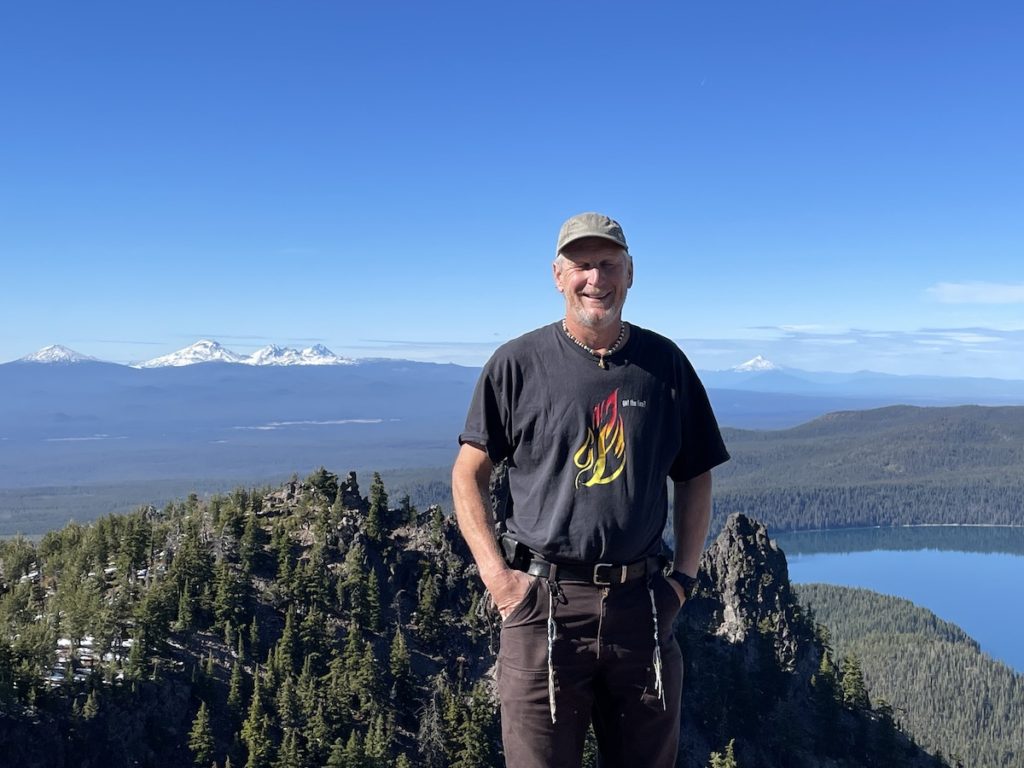
An early morning view of the river with frost on everything.Another morning from the same spot on the river. I took these photos during my early morning prayer walks.The high desert in bloom.A 100 foot tall waterfall we viewed while on a hike in the mountains.Nathan with the Cascade mountains in the background. I have climbed almost all those those mountains in my younger days.Nathan with Kaeli, our youngest daughter, who came out from North Dakota to spend Sukkot with Sandi and I along with our other children.Nathan looking through a hole in a rotten trunk of a large maple tree.
Today we begin our new annual Scripture readings and study. If you are just joining us as we read through, study and discuss all of Scripture in a year, welcome! Our new annual Scripture Reading Schedule for 2021-2022 with daily readings is available to download and print. If you are still working through 2020-2021’s Scripture Reading Schedule, the link will still be available on the right sidebar under “Helpful Links”. If you are using a mobile device or tablet, the link may be below, meaning you’ll need to scroll down instead.
Most of this week’s blog discussion points will be on these passages. If you have general comments or questions on the weekly Scripture readings not addressed in a blog post, here’s a place for you to post those. Just use the “leave a reply” link or the “share your thoughts” box below.
The full “Read Through The Scriptures In A Year” schedule, broken down by each day, can be found on the right sidebar under “Helpful Links.” There are 4 sections of scripture to read each day: one each from the Torah, the Prophets, the Writings, and from the Testimony of Yeshua. Each week, the Torah and haftarah readings will follow the traditional one-year reading cycle.
Weekly Blog Scripture Readings for 9/26 through 10/2/2021.
Several doctors from the Food and Drug administration’s (FDA) vaccine hearing on Friday claimed in explosive testimony that the COVID-19 vaccine is killing more people than it’s saving and is driving the coronavirus mutations like the so-called ‘Delta’ variant.
FDA’s Vaccines and Related Biological Products Advisory Committee after 8 hours of testimony voted 16-2against Joe Biden’s proposed COVID-19 booster shot program.
During that hearing, Dr. Steve Kirsch, director of the COVID-19 Early Treatment Fund, claimed that the injections are killing more people than they’re helping.
“I’m going to focus my remarks today on the elephant in the room that nobody likes to talk about: that the vaccines kill more people than they save,” Kirsch said via teleconference.
“Today, we focus almost exclusively on COVID death saves and vaccine efficacy because we were led to believe that vaccines were perfectly safe. But this is simply not true.”
“For example, there are four times as many heart attacks in the treatment group in the Pfizer 6-month trial report,” Kirsch continued. “That wasn’t bad luck. VAERS shows heart attacks happened 71x more often following these vaccines compared to any other vaccine.”
“In all 20 people died who got the drug, 14 died who got the placebo. Few people noticed that. If the net all-cause mortality from the vaccine is negative, vaccines, boosters, and mandates are all nonsensical.”
“Even if the vaccines had a 100% protection, it still means we killed two people to save one life,” he added.
Kirsch also explained that in nursing home death data shows about half the vaccinated died, while none of the unvaccinated died.
Viral immunologist and biologist Dr. Jessica Rose noted that, based on the VAERS data, the vaccine risks outweigh the benefits in young people, especially children, pointing to a thousand-fold increase in adverse reactions to the injection in 2021 compared to over the last decade.
“There’s an over 1000% increase in the total number of adverse events for 2021 and we are not done with 2021,” Rose said.
Rose also said the data suggests the COVID vaccines are driving the surge of COVID mutations like the “alpha” and “delta” variants.
“The emergence of both of these variants and their subsequent clustering arose in very close temporal proximity to the rollout of the COVID products in Israel,” she said.
“Israel is one of the most injected countries, and it appears from this data that this represents a clear failure of these products to provided protective immunity against emergent variants and to prevent transmission,” she added.
An ER physician from New Orleans, Dr. Joseph Fraiman, noted not enough large-scale clinical trial data exists to assure well-informed unvaccinated Americans that their risk of experiencing vaccine side effects is lower than their chance of being hospitalized.
Doctor on FDA Vax Panel Admits Never Sleever’s Are More Informed Than The Vaxxed…
“Demand the booster trials are large enough to find a reduction in hospitalizations,” Fraiman told the FDA panel. “Without this data, we the medical establishment cannot confidently call out anti-COVID vaccine activists who publicly claim that vaccines harm more than they save, especially in the young and healthy.”
“The fact we do not have the clinical evidence to say these activists are wrong should terrify us all,” he added.
After these alarming testimonials, it’s no wonder the FDA committee voted the booster program down.
The FDA panel voting against the booster program represents a major blow to the Biden administration, who announced in August its plan to roll out boosters for Americans who already took two doses of the jab.
An FDA panel’s vote deals the Biden administration’s push for universal booster shots a setback. New York Times, 17 Sep 2021 The Biden administration’s push to make Covid-19 booster shots available to most fully vaccinated adults has been stymied for now by a Food and Drug Administration advisory panel’s recommendation that Pfizer boosters be made available only to those 65 and over and those at high risk of severe Covid. However, the roiling debate over whether the shots are needed more broadly remains unsettled. The panel of experts on Friday overwhelmingly voted not to recommend boosters for those over 16 after a tense, daylong debate that put divisions within the agency and the administration on public display. The vote was a blow to President Biden, strengthening criticism of his effort to enhance the immunity of already vaccinated Americans at a time when most residents of poor nations have not even had first doses. The F.D.A. and the Centers for Disease Control and Prevention authorized third shots for some immunocompromised individuals more than a month ago, on the ground that the additional dose would simply lift their protection to the level other people achieve with two shots. Some F.D.A. experts said that the data from Pfizer and elsewhere still seemed to show that two shots protected against severe disease or hospitalization for months afterward, and that there was not enough evidence that a third shot would stem the spread of infection. Some also criticized a lack of data that an additional injection would be safe for younger people. The panel’s final recommendations left some room for the White House to argue that the core of its booster strategy remained intact. Depending on how “at high risk” is defined, tens of millions of Americans could conceivably be deemed eligible for additional shots of the Pfizer vaccine. And a small but growing number of people have stopped waiting for federal authorization and are finding ways to receive booster shots…
The other news outlets that I reviewed followed a similar track as did NBC and Forbes when reporting about the FDA Advisory Boards vote against the vaccine booster shots. They focused on the fact that the board voted in favor of giving booster shots to those over 65 years old, but failed to give the reasons—the damning testimony—as to why they voted against giving the shot to those of a younger age. These major media sources failed to give us all of the facts. Instead, they spun this story in such a way as to blunt the full truth of it. And you still trust the major media to tell you the truth?
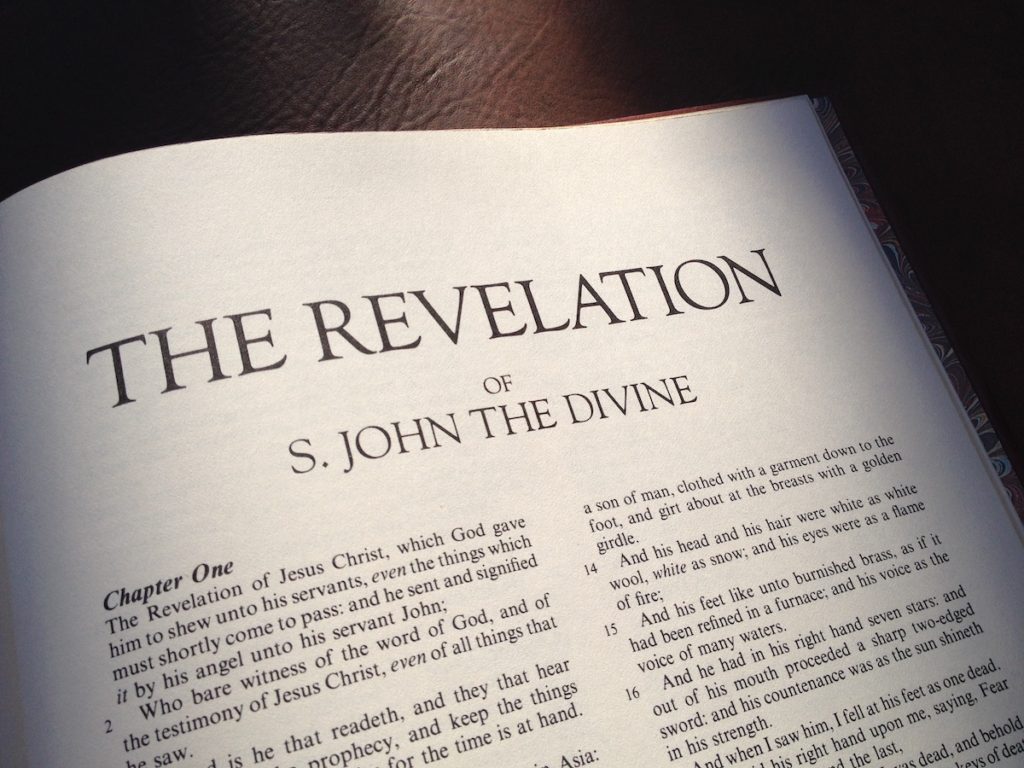
Revelation 13:1–14, On the rise of Luciferian, antichrist New World Order technocratic system and the mark of the beasts. See notes on Isa 25:7.
Revelation 13:1, The beast…the sea. Two possible end time scenarios may explain the setting of this vision.
The first scenario is that the beast of Revelation 13 that rises up out of the sea is the end times New World Order, anti-Christ system comprised of the kings of the earth and their armies (see Rev 19:19). This beast is the political and economic branch of the Babylon the Great New World Order system. The metaphor of the sea is a Hebraism meaning “the seas of humanity.” This could be a reference to all the oceans of the earth or just to the Mediterranean Sea, which is in the middle of the earth (the meaning of word Mediterranean) and may symbolically represent all the earth’s oceans. Since all the kings of the earth follows this beast (v. 3), and “all the world” worshipped the dragon who gives authority to the beast (v. 4), it seems that seas is likely a reference to all the seas or oceans of the earth. This beast seems to correspond with the fourth beast of Daniel’s four beast vision (Dan 7:7ff).
The second scenario is that the sea is just the Mediterranean Sea. The island of Patmos from which John received his vision (Rev 1:9) is located just east of Turkey between the Aegean and Mediterranean seas. If this is the case, then the beasts that John sees rising out of the Mediterranean Sea represent localized regional powers and aren’t global in nature. The seven heads being the seven regional empires that have dominated that region over the millennia (Egypt, Babylon, Assyria, Persia, Greece, Rome and the Ottoman Turks) seem to give credence to the validity of this second scenario explaining John’s vision. If this is the case, then the ten horns may be ten end time regional Muslim powers under a caliphate confederacy who conspire together for the destruction of Israel. Perhaps Psalm 83:1–8 is a prophecy pertaining to this. These ten nation of Psalm 83 may be the ten toes of Daniel’s ten-toe prophecy (Dan 2:41–42).
Revelation 13:1, Seven heads and ten horns. The seven heads appear to be the seven “world”-ruling manifestations of this Babylonian beast system down through the ages to the present time (i.e. Egypt, Assyria, neo-Babylon, Persia, Greece, Rome and end times Babylon the Great comprised of all nations [i.e. the New World Order]). The ten horns may be ten global semiautonomous regional governments, which, when combined, comprise all the nations of the earth and make up Babylon the Great. This may be what Daniel saw in the ten toes of the great image of Daniel 2. Perhaps the two legs of that image represent apostate Christianity and Islam—the two great religions of the world, which are in nearly every nation and become semi-united in some bizarre, demonic way. The two legs of Daniel’s image could also represent the first Roman Empire that then broke into the Eastern and Western Roman Empires. The spiritual descendants of the Western Roman Empire is apostate Christianity out of which comes the European and American-based New World Order, which is the head of Babylon the Great. The descendants of the Eastern Roman Empire became the Ottoman Turkish Empire. The fourth beast of Daniel’s four beast vision also had ten horns (Dan 7:7). Daniel speaks of a little horn coming up in the midst of the ten horns, which plucked three of the first horns up by the roots (Dan 7:8). This same horn speaks pompously (Dan 7:8, 11) and makes war against the saints (Dan 7:21, 22, 25) and prevails against them until Yeshua destroys it at his second coming (Dan 7:11, 21, 22). John uses similar language to describe the political and economic beast of Revelation 13:1. This beast also makes war against the saints and overcomes them (Rev 13:7).
Revelation 13:2, The dragon gave him his power. This is the ultimate end-times antichrist system. Also see notes at 2 Thess 2:3–4 where we discuss the parallels between the Man of Sin, Antichrist figure, Isaiah’s prophecy about the fall of Satan (Isa 14), and the Satan-led leader of end times Babylon the Great as prophesied about in this chapter.
Revelation 13:7–8, Every tribe, tongue and nation…all who dwell on the earth.Does this beast have authority over every single heathen on earth, and every last heathen on earth will worship him? In the Scriptures, all and every are sometimes used as hyperbole where exaggeration is used to emphasize a point. (For a discussion of this, see notes at 2 Sam 16:22 and Zech 14:2.)
Revelation 13:8, Whose names. This states that some names aren’t written in the Lamb’s Book of Life. This seems to counter the idea that all humanity’s names are written in the Book of Life, only to be erased when they fail to receive the salvation of the Lamb.
Revelation 13:11, Another beast.This beast is the religious leg of the Babylon the Great New World Order, and comes out of the earth (probably the European or Eurasian continent), since this would be the perspective of the John, the writer. “Out of the earth” could be a reference to the devil and demon spirits coming out of the pit to torment men (i.e. Rev 9:1–11).
Two horns.The religious branch of Babylon has two horns—one that speaks like a lamb and one that speaks like a dragon. Could this be a reference to an ecumenical uniting of apostate Catholic Christianity (with her apostate daughters) and Islam?
Revelation 13:15, The image of the beast.Inanimate objects can be demon possessed.
Revelation 13:16, He.This is a reference to the religious beast. It is this beast who causes all humans to take a mark on their head or hand, in order that they might buy or sell. In other words, the religious beast component of Babylon the Great uses its miraculous power and spiritual deceptions to entice humanity to worship the image of the first or political and economic beast (a cloak for Satanic worship). This false religion beast is behind the effort to kill all those who refuse to worship the image of the beast.
Revelation 13:18, The number of the beast.Which beast is being referred to here—the first or second beast? The first beast would be political figure, while the second beast would be a religious figure.
It seems that almost everyday, I’m either receiving emails, watching videos, reading news reports, listening to news podcasts or hearing directly from folks about people’s fears concerning government imposed mandates with regard to COVID restrictions being placed on them. These restrictions are often questionable legally if not outright illegal and go against our, often our constitutionally guaranteed, civil rights. What ware we do do about this when it affects our ability to work and provide for our families as well as move about in order to buy food and so on? The following short essay are my thoughts on this.
With regard to State imposed COVID mandates, many of us are watching our governments go rogue and illegal in their march toward tyrannical control over their constituents for the purpose of power and money and to advance various satanic agendas. This has great implications as to how it affects our lives, so what are we to do?
In more and more instances, it seems that the ruling authorities no longer care about the rule of law, and will do whatever necessary, legal or illegal, to advance their genocidal and demonic schemes. For them, the ends justify the means, and this has always been the main rule from their playbook.
The fact is that we are marching irrevocably toward the Babylon the Great new world order just as the book of Revelation predicts would happen in the end times.
As the need for and survival tactic of civil disobedience becomes more and more apparent, we will need to pray for YHVH’s strategic gameplan on how to fight those edicts that are against his word and limit or prevent us from accomplishing his will for each of us. May he give us the wisdom and discernment on how to act, what to say and to know when and how to do it such that we are in his perfect will, so that he will fight our battles for us and glorify his name through us in the process.
Our greatest hour when we can shine the brightest in the darkness of this world is just around the corner. We must hang on to this hope and truth as we go forward.
Yes, to be sure, our lifestyles will change and our civil rights and freedoms abridged, but in the process, our YHVH Elohim will open doors and avenues for us to go through and in which to operate heretofore unknown and invisible to us that will allow us to survive and flourish despite it all. This is our only hope, and we must cling to it for life, or else our faith is mere talk and is in vain. And if that be the case, then as Solomon the wise Preacher declared, as did Paul the apostle, we may as well eat, drink and be merry, for tomorrow we die, for that is all there is.
But no, this is not our fate. On the contrary, it is now time to start thinking outside of the box of the limitations of our own thinking and self-imposed paradigms as we move forward into this uncharted territory that none of us have been in before. After all, YHVH lives outside of our boxes and thus has ways, means and resources at his disposal of which we know nothing about; therefore, we must boldly step forward in faith, trusting in him and praying for wisdom from above, while taking each step carefully under his watchful guidance. He will show each of us the way, and when one door shuts behind us, he will open another in front of us, and we will find the blessing from heaven above in it all if we look for it. Amein.
Our new annual Scripture Reading Schedule for 2021-2022 with daily readings that begins next week on 9/26/21 is available to download and print. The link to the current 2020-2021’s Scripture Reading Schedule will still be available on the right sidebar under “Helpful Links” into next year. If you are using a mobile device or tablet, the link may be below, meaning you’ll need to scroll down instead.
Most of this week’s blog discussion points will be on these passages. If you have general comments or questions on the weekly Scripture readings not addressed in a blog post, here’s a place for you to post those. Just use the “leave a reply” link or the “share your thoughts” box below.
The full “Read Through The Scriptures In A Year” schedule, broken down by each day, can be found on the right sidebar under “Helpful Links.” There are 4 sections of scripture to read each day: one each from the Torah, the Prophets, the Writings, and from the Testimony of Yeshua. Each week, the Torah and haftarah readings will follow the traditional one-year reading cycle.
Weekly Blog Scripture Readings for 9/19 through 9/25/2021.
Joshua 1:7-9 Only be strong and very courageous, that you may observe to do according to all the law which Moses My servant commanded you; do not turn from it to the right hand or to the left, that you may prosper wherever you go. This Book of the Law shall not depart from your mouth, but you shall meditate in it day and night, that you may observe to do according to all that is written in it. For then you will make your way prosperous, and then you will have good success. Have I not commanded you? Be strong and of good courage; do not be afraid, nor be dismayed, for YHVH Elohim is with you wherever you go.”
Chazak, chazak, v’nitchazek. Be strong, be strong, and may you be strengthened!
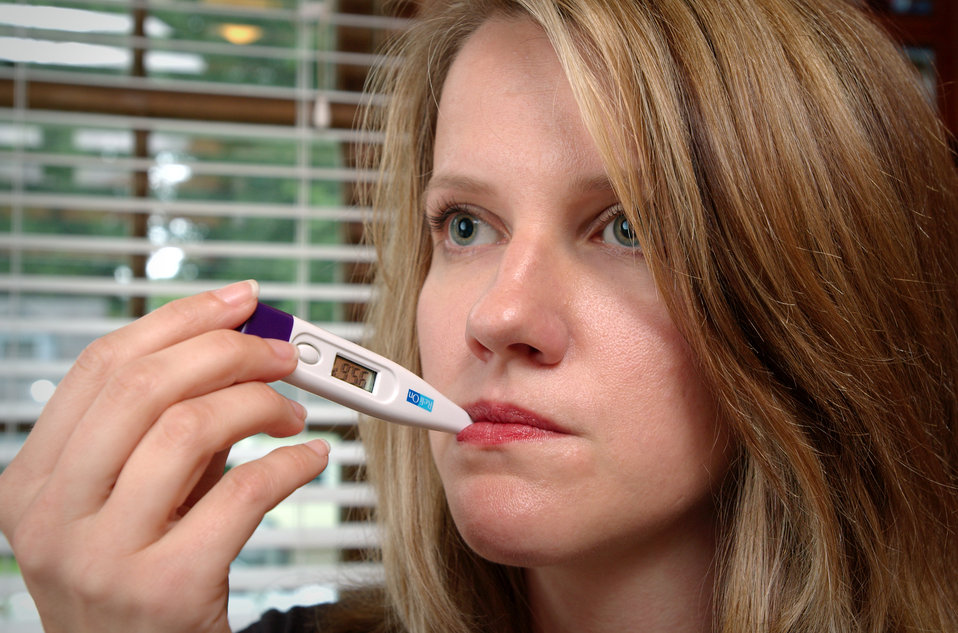
Are you hot, cold or lukewarm in your love for Yeshua the Messiah? It’s time to take your temperature!
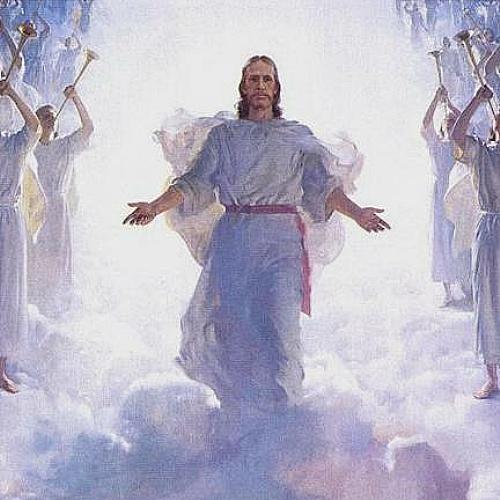
Having recently celebrated Yom Teruah (the Day of Trumpets) and now finding ourselves between Yom Kippur (the Day of Atonement) and Sukkot (the Feast of Tabernacles), we need to ask ourselves some questions. Since these fall biblical festivals prophetically picture the return of Yeshua the Messiah, the establishment his millennial kingdom on earth, and his marriage to his higher level (wise virgin) saints, it is time for each of us to take our spiritual temperature. Does our heart still pound passionately for Yeshua, our Master and Savior? How much do we love him, and is he first place in our lives above all else? If not, then what can we do about it? This article offers solutions to the prevalent spiritual disease known as lukewarmitis.
Do you love Yeshua the Messiah (Jesus Christ) first and foremost above everything else in your life? Yeshua said, “He who loves father or mother more than Me is not worthy of Me. And he who loves son or daughter more than Me is not worthy of Me. And he who does not take his cross and follow after Me is not worthy of [i.e. deserving of or suitable for] Me. He who finds his life will lose it, and he who loses his life for My sake will find it.” (Matt 10:37–39). Do you love Yeshua more than anything in your life including your most cherished family members and even your own life?
To be worthy or deserving of or suitable for Yeshua, he demands that we put him first in our life above everything else. Yes, he loves everyone, but he will not grant eternal life and entrance into his kingdom to just anyone. Many are called, few are chosen (Matt 22:14). To gain eternal life and entrance into his kingdom, one must be worthy of it. After all, he wants to give us everything including eternal life. But in exchange, he demands that we give him everything we have. O how we fall short in this!
The question is this: How much do YOU love Yeshua the Messiah? Is he the first love of your life? This is an important question to answer. Those people in whose lives he is not in first place, even though they may claim to believe in and even obey him, to one degree or another, risk being excluded from his kingdom.
Do you think that you are automatically guaranteed of eternal life just because you give Yeshua some lip service, perform some religious activities, and do a couple of good things now and again when it’s convenient? Well think again. To the saints in Ephesus, Yeshua warned,
Nevertheless I have this against you, that you have left your first love. Remember therefore from where you have fallen; repent and do the first works, or else I will come to you quickly and remove your lampstand from its place—unless you repent. (Rev 2:4–5)
The marriage supper of the Lamb (Yeshua) is coming. Some people will be worthy to be part of this, others who thought that they worthy will not be found worthy.
Then he said to his servants, “The wedding is ready, but those who were invited were not worthy.” (Matt 22:8; and do not forget about Yeshua’s warning to the lukewarm Laodiceans in Rev 3:14–22)
Similarly, the five foolish virgins also thought they were worthy to enter into the marriage feast of the Lamb of Elohim, but were excluded because they did not love Yeshua enough to properly prepare themselves.
“Those who were foolish took their lamps and took no oil with them…Afterward the other virgins came also, saying, ‘Lord, Lord, open to us!’ But he answered and said, ‘Assuredly, I say to you, I do not know you.’ Watch therefore, for you know neither the day nor the hour in which the Son of Man is coming.” (Matt 25:3, 11–13)
Elsewhere Yeshua warned,
“Not everyone who says to Me, ‘Lord, Lord,’ shall enter the kingdom of heaven, but he who does the will of My Father in heaven. Many will say to Me in that day, ‘Lord, Lord, have we not prophesied in Your name, cast out demons in Your name, and done many wonders in Your name?’ And then I will declare to them, ‘I never knew you; depart from Me, you who practice lawlessness!’” (Matt 7:21–23)
Other Scriptures that speak of being worthy of Yeshua include,
[T]hat you may walk worthy [i.e. deserving or suitable] of the Lord, fully pleasing Him, being fruitful in every good work and increasing in the knowledge of Elohim… (Col 1:10)
[T]hat you would walk worthy [i.e. deserving or suitable] of Elohim who calls you into His own kingdom and glory. (1 Thess 2:12)
[W]hich is manifest evidence of the righteous judgment of Elohim, that you may be counted worthy [i.e. deem entirely deserving] of the kingdom of Elohim, for which you also suffer… (2 Thess 1:5)
Therefore we also pray always for you that our Elohim would count you worthy [i.e. to deem entitled or fit] of this calling, and fulfill all the good pleasure of His goodness and the work of faith with power… (2 Thess 1:11)
The following is a list of reasons to love Yeshua, so that he will become the first love in your life above everything and everyone else, and so that you will be counted worthy of him including deserving to receive his free gift of eternal life and inclusion in his kingdom.
Yeshua is your Creator; he gave you physical life (John 1:3, 10; Col 1:16; Heb 1:2, 10).
Yeshua is your spiritual Creator and offers you eternal life (immortality) free of charge if you will only love, serve and obey him.
Yeshua died and paid the penalty for your sins, so that you might live forever with him in his Father’s kingdom.
When Yeshua came to this earth as a man, he gave you an example that you can follow of how to live your life.
Like a light in the darkness, Yeshua has given you the Truth of his word (the Bible) to guide me through life.
Yeshua has given you his Set-Apart (Holy) Spirit as an internal spiritual dynamic force to empower you from within to want to follow and obey him.
Yeshua has revealed the Father and his love to you and desires to make you a part of the Father’s spiritual home (John 14:23).
Yeshua supplies all of your needs according to his riches in glory (Phil 4:19) and freely gives you all things (Rom 8:32).
Yeshua has delivered you from all charges and condemnation of the enemy (Satan, the accuser of the brethren) against those who belong to him (Rom 8:33–34).
Yeshua is seated at the right hand of Elohim the Father in heaven where he defends you against the charges of Satan your enemy in the court of heaven (Rom 8:34).
Yeshua has made you to be more than a conqueror (over the world, the flesh and the devil) (Rom 8:37).
Yeshua has given you power and authority over all the enemy’s demonic forces (Luke 9:1; 10:19).
Through Yeshua, you will be made rich (1 Cor 8:9). What price tag can you put on eternal life?
Yeshua gives you hope (1 Thess 1:3).
Yeshua has granted you his mercy which leads to eternal life (Jude 1:21).
Yeshua’s love roots and grounds you (so that like a well-rooted tree, the storms of life cannot topple you) (Eph 3:17).
The knowledge of Yeshua’s love passes all human understanding and causes you to be filled with the fullness of Elohim (Eph 3:19).
Yeshua is able to do exceedingly abundantly above all that you ask or think (Eph 3:20).
The Father answers our prayers when we ask him anything in Yeshua’s name (John 16:23).
Countless other reasons to love Yeshua could also be added to this list…
For these reasons, who can separate us from the love of Yeshua?
Who shall separate us from the love of Messiah? Shall tribulation, or distress, or persecution, or famine, or nakedness, or peril, or sword? For I am persuaded that neither death nor life, nor angels nor principalities nor powers, nor things present nor things to come, nor height nor depth, nor any other created thing, shall be able to separate us from the love of God which is in Messiah Yeshua our Lord. (Rom 8:35, 38–39).
The bad news is that,
If anyone does not love the Lord Yeshua the Messiah, let him be accursed. O Lord, come! (1 Cor 16:22)
What is the curse that is upon those who do not love Yeshua? It is death, which is the result or wages of sin (Rom 6:23; Ezek 18:4). Yeshua will cast all of those who do not love him into the lake of fire (Rev 20:11–15). Simply stated, if they do not want him, then he will give them what they want—an eternity without him in the form of death—the extinguishing of life.