Could the COVID passport that some politicians are saying will not come, yet that is slowly and steadily being forced onto the lives of more citizens in more countries actually be a blessing in disguise for the saints? I believe that it could be. What do I mean by this?
The following is not a discussion about the merits or demerits of vaccines COVID or otherwise. That is another discussion for another time. Rather, this is about the implications of a COVID passport that may well determine who can do what, when and where or not. Such a passport would be about separating people into classes—the vaccinated and the unvaccinated. Why does this matter and how does it affect you should the requirements of a COVID passport come knocking on your door?
Likely all those reading this believe in the veracity of the Bible, and the fact that Scripture predicts that certain events will happen before the second coming of Yeshua the Messiah. One of these prophesied events is the famous mark of the beast of Revelation 13 in the Bible. According to Scripture, only those who have the mark of the beast will be permitted by the State or the powers that be to buy and sell. In other words, to survive in a modern world in a somewhat normal fashion, it will be mandated that everyone takes the mark. Probably a few who live off the land in a self-sufficient manner and are off grid somewhere far away from others will not be too negatively affected by the mark of the beast, but this will be a small minority of people. For the rest of us whose lives are urban and depend on others for survival, not being able to buy or sell could be a real problem—even a life threatening one.
So at some point in the end times, as per Revelation 13:16–17, the world will be divided into two classes of people: those who take the mark and are able to buy and sell (i.e. survive in a contemporary culture), and those who refuse to take it. By now, it should not hard to see where I am going with this line of thought.
For the record, I do not for one second believe that either the COVID shot, or jab as it is being called, or the COVID passport are the mark of the beast. Neither one fits the biblical criteria for the mark. However, are these things conditioning people to eventually accept the infamous mark?
Let’s get real. Do you really think that all those folks who are promoting either the jab or the passport are knowing agents of the devil intent on helping to fulfill biblical prophecy so that Yeshua can return? Of course not. They are simply doing what they think is best for themselves and for humanity. Yes, of course, there are sinister elements, even demonic evil doers at the top who have their new world order, globalistic and Luciferian agendas. But there have always been and there always will be these type of people seeking world dominion at the expense of the rest of us. It all goes back to the snake in the tree in the garden, who from the beginning was intent on thwarting the will of the Creator. Nothing has changed since then. Satan is the god of this world, and he is opposed to all that is good, and he has his human agents that are helping to fulfill his nefarious purposes whether they know it or not. These people are his useful idiots.
Deuteronomy 23:9,Keep yourself from every wicked thing. An aspect of physical warfare or, more importantly as it pertains to the saint, in spiritual warfare that many Bible teachers who teach on the subject fail to cover is the spiritual state of the warrior. The focus is usually on the enemy or the battle tactics employed, but, again, not on the condition of soldier who is going up against the enemy of the people of Elohim. This section of the Torah covers this oft-overlooked subject (vv. 9–14).
The word wicked as found in this verse is the generic Hebrew word ra or ra’ah meaning in its most basic sense “evil, bad or distress.” So what does the Torah state in this passage that makes a person evil or bad and unclean and is thus offensive to Elohim? Simply this: bodily emissions that happen to naturally emanate from the human body whether it be human waste or seminal emissions. Such occurrences take a man from a state of ritually purity or being clean (Heb. tahor) to being unclean (Heb. tamay). The solution to the problem is, in the case of nocturnal emissions, cleansing by water, and in the case of the eliminations of bodily waste, burying the waste. What this teaches us it that if one goes into battle in an unclean state, this is offensive to Elohim, and the soldier may not have the favor of Elohim while he is engaging the enemy in battle. This is not a good thing for the warrior!
When it comes specifically to spiritual warfare (as outlined in 1 Cor 10:4–6 and Eph 6:10–18), the drash or homiletical level understanding of this passage teaches us that when engaging the enemy in spiritual battle, the saint must be as clean as possible spiritually. That means that all unconfessed sins need to be repented of and that all illicit behavior must be eliminated from one’s life if one expects the benefits of YHVH’s miraculous aid. One be continually washed clean of sin by the blood of Yeshua the Messiah and by the water of the Word and the Spirit of Elohim.
Because these principles of ritual and spiritual purity are usually not taught to the saints, it is no wonder that many times our prayers are not answered and that the enemy trounces Christians on the streets, in the courts, in the political arena and many other battlefields in various venues in our society.
All this is to say that the saint must clean up his own act and house first before confronting the enemies of Elohim to do the same. Both Yeshua and Paul address the hypocrisy of those who point the fingers at others while guilty of the same or similar sins.
Judge not, that you be not judged. For with what judgment you judge, you will be judged; and with the measure you use, it will be measured back to you. And why do you look at the speck in your brother’s eye, but do not consider the plank in your own eye? Or how can you say to your brother, ‘Let me remove the speck from your eye’; and look, a plank is in your own eye? Hypocrite! First remove the plank from your own eye, and then you will see clearly to remove the speck from your brother’s eye. (Matt 7:1–5)
Therefore you are inexcusable, O man, whoever you are who judge, for in whatever you judge another you condemn yourself; for you who judge practice the same things. But we know that the judgment of Elohim is according to truth against those who practice such things. (Rom 2:1–2)
Deuteronomy 25
Deuteronomy 25:4,You shall not muzzle. According to Hirsch, this law applies not only to animals, but to workmen as well. It stands to reason logically, if YHVH cares about feeding animals while working, how much more should employers be concerned for their workmen? Rashi disagrees and says it refers only to animals (and not to workmen) and specifically to those animals that are involved in the production of food as would be the case with an ox that was used in treading out grain (to separate the kernel from the chaff). Paul disagrees with Rashi and views this Torah command as a more broadly applicable proverb implying that an employer should not deprive his employees of their wages. He specifically applies this principle to individuals who minster the gospel (1 Cor 9:9; 1 Tim 5:19). Those who work in YHVH spiritual field (the church), Paul reasons, should be supported by those they serve.
Titus 1:10–16,The perils of false leaders in the church.By the time Paul wrote this letter to Titus, only a few short decades after the death and resurrection of Yeshua, the church was already in a state of spiritual disarray. False leaders had already arisen subverting and deceiving the saints, while lying and giving in to “Jewish fables” or to unbiblical doctrines or “commandments of men” for “dishonest gain,” “defiled” in “mind and conscience” feigning to know Elohim but the fruit of the lives were “abominable, disobedient” and they failed to meet the qualification of the true servant-leaders of Elohim. Paul called on Titus to “rebuke sharply” these “evil beasts” (v. 12). How much worse is it today, 2000 years later, within the Christian church?
Titus 1:12–13,Cretans are.In today’s politically correct speech climate, this statement would be considered racist, even if it were a totally accurate statement. The word Crete may mean “fleshly.”
Titus 1:14,Turning from the truth. As we have stated many times previously, in contrast to doctrines and traditions of men by which the Word of Elohim is made of non-effect, Scripture defines Truth as YHVH’s Torarh-Word and Yeshua the Messiah who was the Word of Elohim incarnate. Any doctrine or teaching of men that falls short of this in any way is, to one degree or another, deficient in Truth and is thus suspect.
Jewish fables.Many people in the mainstream church are content to dismiss the Torah merely as a Jewish fable having little or no relevance to Christians. Yet, at the same time, the same preachers will passionately promote Christmas trees, Santa Claus and Easter bunnies. So what’s wrong with this picture?
Moreover, many Bible teachers in the mainstream church teach that this verse refers to the Torah. They use it in attempting to prove that the commandments of the Torah are no longer valid for believers. Is this correct? You mean, since the Torah has been “done away with” it is now acceptable to steal, murder, commit adultery, lie and worship idols among other things?
In reality, Paul can’t be referring to the Torah here without contradicting himself elsewhere. In numerous places, he strongly upholds and defends obedience to the Torah (Rom 3:31; 7:7, 12, 14; 13:8–10; 1 Cor 7:19; 9:21; Gal 3:10; 6:2; 2 Tim 6:14; Tit 2:14) and even claims to follow it himself (Acts 21:24; 24:1425:8; 28:17; 1 Cor 9:21). He must be talking about the Jewish traditions of men, which Yeshua said in Matthew 15:3–9 and Mark 7:7–9 make of non-effect the word of Elohim.
In fact, this is exactly what Paul is referring to here in this verse when he says “Jewish fables and commandments of men.” This is not a reference to the Torah the commandments which, in truth, came from YHVH Elohim and not from men. In the same verse, Paul contrasts these commandments of men with “the truth” from which men have turned away.
So what is this truth that Paul references here? Since Bible defines its own terms, we must look to it for the definition of the word truth. Elohim is the source of truth (Deut 32:4 cp. Pss 86:11; 89:14; 117:2), he is truth (Ps 25:10; 31:5; 33:4), and his Torah is truth (Ps 119:142, 151).
Truth is the opposite of a fable. One example of a Jewish fable and a commandment of men would be the idea that one can’t be saved unless they’re first circumcised (Acts 15:15:1, 5), which was the subject of the Acts 15 council. Paul vehemently fought this Jewish fable, and the whole Book of Galatians, for example, largely deals with this issue. If Paul had meant the Torah when mentioning “Jewish fables” then this makes Paul into a schizophrenic liar (since he promotes and lauds the Torah and claims to follow it elsewhere), while elsewhere he views the Torah as irrelevant and not necessary to be obeyed. Were Paul against the Torah, this would put Paul at odds with Yeshua who upheld the Torah (Matt 5:17–19) and with himself when he said to imitate Yeshua the Torah-keeper as he himself did (1 Cor 11:1).
From this brief discussion, it should be obvious to a logical minded person that Paul doesn’t have the Torah in view when he mentions fables in this verse.
Titus 1:15,Mind and conscience.Mind is the Greek word noos meaning “the intellect, that is, mind (divine or human; in thought, feeling, or will.” Conscience is the Greek word suneidesis meaning “co-perception, that is, moral consciousness.” Though the conscience or spirit of man is the candle of YHVH (Prov 20:28; Ps 18:28) and is what the Spirit of Elohim activates at the time of one’s spiritual regeneration, the spirit of man can be defiled (stained, polluted or contaminated) obviously by the corrupting influences of the world, the flesh and the devil. Since the spirit of man can be influenced or informed negatively it needs to be made perfect (complete). (See notes at Heb 12:23.)
Titus 1:16,In works deny him.A spiritual leader is known by his works or fruits, not his words. If the works of his life fall short of the biblical standard of righteousness, then his words, no matter how alluring and good sounding they may be, are meaningless.
Titus 2
Titus 2:1, Sound. Literally “healthy or uncorrupt or true.”
Titus 2:3, Not given to much wine. It doesn’t say “not given to wine,” but “not given to much wine” contrary to what some in the Christian church teach. The fact is that the saint shouldn’t give themselves over to any other influence, wine or otherwise, except that of Yeshua the Messiah and his Word and the Spirit of Elohim.
Titus 2:4–5, Young women…homemakers. This statement that young woman should be homemakers is not only not politically correct today, but is ridiculed and derided by today’s society. However, the fruit of woman not staying home and rasing their children is well-evidenced in the broken families and dysfunctional children that women not being homemakers has engendered.
Titus 2:10–11, Adorn [Gr. kosmeō] the doctrine of Elohim.Kosmeō means “to put in proper order, that is, decorate (literally or figuratively) or to adorn, garnish, trim.” Those around us observe our actions and all that we do either brings glory to YHVH Elohim and his Word, or it doesn’t. Our lives may be the only Bible that some people read, the only light of heaven that shines into their lives, and the only human mirror through which they see the reflection of Elohim and his Word; therefore, live an obedient, faithful, righteous, godly and sober life in this present age (v. 11).
Titus 2:11–13, The grace [Gr. karis] of Elohim. This scripture lists the two aspects of grace or karis: redemption from sin or free unmerited pardon AND the free gift of divine enablement to now go forward and to live in Torah-based righteousness.
Titus 2:13–14, Looking for. There is perhaps no better verse in Scripture that so succinctly expresses the quintessential hope of the saint as this one.
Titus 2:14, Special people. This is a biblical idiom or Hebraism that in Hebrew is am segullah meaning “treasured possession, or the special treasure of a king.” Am segullah is how YHVH refers to his people, the Israelites, first in Exodus 19:5 (see also Deut 14:2; 7:6; 26:18; Ps 135:4; Mal 3:17; 1 Pet 2:9).
Lawless [Gr. anomia] deed. That is, Torahless deed.
Titus 3
Titus 3:5, Works of righteousness. Scripture doesn’t leave us guessing as to what it means by “works of righteousness.” See Ps 119:172; Matt 5:19 and Rev 19:6–9.
Titus 3:8, 14, Good works [Gr. ergon]. Ergon refers to “toil (as an effort or occupation); by implication an act: – deed, doing, labour, work.” The mainstream Christian idea that good works are somehow antithetical to the Christian walk is erroneous and has led many people astray spiritually. The Scripture is clear that no ne is saved by their good works, but once saved, the evidence or fruit of their salvation and of the Spirit of Elohim being at work in their lives will be good works. Moreover, the saint will be rewarded accordingly in the world to come on the basis of his good works in this life.
Divorce and remarriage is a hot topic to discuss, and arriving at a balanced biblical perspective is not always easy. Those who advocate divorce and as well as those who are against it have their favorite scriptures that justify their position, while each side tends to overlooks the Scriptures that disagree with them. In this study, we will look at one aspect of divorce and the reasons that Scripture permitted it under certain circumstances. To be sure, this is a delicate subject that affects the lives of so many people.
Deuteronomy 24
Deuteronomy 24:1, Write her a bill of divorcement. Divorce laws and a bill of divorcement (Heb. get)is the subject of this passage. This verse forms the basis of the divorce laws of the Torah and the actual get or bill of divorce, which was a written document that a husband gave to his wife because of some immoral activity on her part (The ArtScrollStone Edition Chumash, p. 1058). The subject of divorce and remarriage is a large subject and is beyond the scope of this present work, yet it is interesting to note that Moses himself, the one who YHVH used to pen the Torah, was very likely divorced and remarried. (We have discussed this subject in Parashat Yitro.) YHVH himself divorced Israel and gave her a get because of her unfaithfulness to him, though he never remarried. (See the teaching below.)
The Real Purpose for Divorce Under Torah
Deuteronomy 24:1–4, Natan’s Notes on the Biblical Reasons for Divorce
Jeremiah 3:14, After YHVH divorced Israel (v. 8), he was still married to her. What’s going on here? Even though YHVH divorced Israel, he still considers himself married to her because he had made a covenantal vow with Israel, and vows can’t be broken (except by death or under very stringent requirements). Period.
Look at Hosea 1:2 cp. 3:1–3. Hosea’s actions toward Gomer, his adulterous wife, is an example of YHVH’s unfailing love for is Israel, who was his spiritual adulterous wife. Marriage is a covenant vow that when broken by adultery requires the death penalty for the offending party. Gomer committed adultery. Yet Hosea brought her back and redeemed her from adultery. He loved her unconditionally and laid his life down for her (as YHVH does for us, see Eph 5:28).
Deuteronomy 24:1 can’t be used as a justification for divorcing under just any circumstances. Only if the wife has committed or is committing sexual immorality (in Hebrew ervah) can her husband put her away. A bill of divorcement, in Hebrew called a get, must first be issued for the purposes of restoring the immoral woman. One cannot put their wife away for any reason. Even Yeshua confirmed this in Matthew 5:32. Ideally, according to the Torah and to Yeshua, some sexual immorality (in Hebrew ervah)has to have been committed for a man legally to divorce his wife according to the Torah-law. I inserted the word ideally because there are seldom ideal situations in life, and humans rarely live up to YHVH’s ideal moral and spiritual standards. As such, Yeshua admits that the Torah as administered by Moses allowed for divorce to occur, sadly, because of the hardness of human hearts (Matt 19:8). What does “hardness of heart” mean? Scripture doesn’t say. The following is simply my speculation on what this means. For example, I would not expect one to be required to stay married if several severe conditions existed such as physical abuse, criminality, drug addictions, abandonment, total dereliction of responsibilities or extreme heathenism. Such sins make it all but impossible for a righteous person to remain in such a spousal relationship. A spouse who is practicing such has violated their contractual marriage vows and thus there legally and technically is no marriage. A believer shouldn’t be forced to remain in such a relationship. Having said this, it is the saint’s duty, as much as possible, to vet out a prospective mate before marrying them to ensure that they have never been involved nor are currently involved in such activities. One should only marry an Elohim-fearing, commandment-keeping, born again faithful believer in Yeshua the Messiah, who has a long fruit-bearing track record of such a lifestyle. Again, this is Natan Lawrence speaking, not Scripture, but it is my best understanding of scriptural principles as they relate to marriage and divorce.
Marriage between two believers is a vow with YHVH. Marriage between two unbelievers is something else. It is simply an agreement or contract between two people. Maybe YHVH is part of it, maybe he is not. It all depends on the vows and the situation.
Deuteronomy 24 is not a permission to divorce and to remarry. Rather it is a judgment because of sin. It must be viewed in this manner. YHVH’s Torah-laws, statutes and ordinances are for when things go well. The judgments of Torah, on the other hand, were for when things went wrong. A judgment was meted out because some Torah-law had been broken and now a solution to the problem had to be found or worked out within the framework of Torah. This is the situation Deuteronomy 24 is dealing with respect to the marriage covenant that has been violated. A get was a temporary legal measure to protect the adulterous woman from stoning so that the marriage could be restored.
In the Torah, divorce was to be a temporary situation to bring the sinning wife to repentance and to restore YHVH’s perfect ideal of marriage—to restore order back into the home, to heal the family structure. If the sinning wife refuses to repent and remarries (Deut 24:2–3), and continues in her sin and she becomes divorced again or if her second husband dies, then this severs the marriage covenant permanently. This act on her part renders the marriage covenant null and void forever.
Again, a bill of divorcement or a get under the Torah was a temporary legal measure to protect the adulterous woman from stoning, so that the marriage could be restored. Matthew 1:19 demonstrates this. Joseph acted righteously in not putting Miriam (Mary) his pregnant betrothed wife away, which could have resulted with her being stoned to death. By all outward appearances, she was guilty of adultery, but Joseph’s act of mercy was an example of his exercising mercy over judgment. It ended up that she was pregnant not by a man, but by the Spirit of Elohim resulting in the birth of Yeshua the Messiah. Thus Joseph’s act of mercy spared the Messiah from potential death.
In Malachi 2:10–17, YHVH addresses the issue of divorce. Here the prophet speaking for YHVH is discussing the treacherous nature and misuse of divorce, which is one of the reasons YHVH states that he hates divorce (v. 16). This is because divorce often results in treacherous dealings between people (vv. 10–11, 14) and it violates and profanes sacred covenants (vv. 10), it profanes the holy institution of marriage, which YHVH loves (v. 11), because it is often the result of adultery (vv. 11–12), and adultery leading to divorce often causes a man to leave the wife of his youth (v. 14) thus breaking the oneness of marriage (v. 15), and divorce covers one’s garments with violence (v. 16). Again, for these reasons, YHVH hates divorce, and why he refers to it as “evil” and unjust (v. 17).
According to YHVH’s Torah standard, the righteous are to care for widows and orphans, not to create them as a result of the misuse of Torah’s laws regarding divorce.
In Matthew 5:32 Yeshua’s words fit into the above context. Only, ideally under the strictest standards of the Torah, for sexual immorality is divorce permissible. Otherwise divorce is unlawful, since the couple is legally still married and a bill of divorce (a get) is simply a temporary measure for purposes of reconciliation the couple and bringing the marriage back together.
In Matthew 19:3, when Yeshua mentions divorce “for just any reason,” he is referring to the Pharisaical schools of Beit Shamai and Beit Hillel of the time. The Pharisees that came to him asking the question were from School of Hillel. Yeshua is taking the Beit Shamai conservative position as was the case when John the Baptist took Herod to task for his adultery. Verse 8 shows that there is a provision for divorce but it is not YHVH’s perfect will. Rather it is a judgement and an indictment against carnal men.
Again, in 1 Corinthians 7:10–11, we see that the primary purpose of divorce is for reconciliation of the marriage, not so that one can justify themselves in getting out of a less than ideal marriage in order to fetch themselves another spouse. Divorce and remarriage, as millions of people will attest to, causes a shipload of unintended negative consequences on the lives of many people and often for generations to come. It is something to be avoided if at all possible.
Deuteronomy 24:4,Her first husband who divorced her shall not take her again to become his wife.The prophetic implications of this are astounding in light of YHVH’s divorce of unfaithful Israel and his eventual remarriage to her. The whole message of the gospel and Yeshua’s death on the cross relate to this verse. (See the teaching below.)
Deuteronomy 22:1–4,Caring for a brother’s property. Concern for the property of others is the subject of these verses. In this respect, let us not forget the second half of the shema: You shall love your neighbor as yourself (Lev 19:18). What is the response of the wicked with respect to concern for their neighbor’s well being? (Read Gen 4:9.) On this passage of Scripture one rabbinical commentator states: “[T]he commandment to return lost property is ‘fundamental’ and that ‘all society depends upon it.’ It is not just a matter of one person taking care of another’s possessions or of ‘loving’ another. What is important here is the critical matter of ‘trust’ among human beings. A society depends upon the faith people place in one another. Without people feeling that they can rely upon one another—that others are looking out for what belongs to me and I must look out for what belongs to them—society collapses in suspicion, selfishness, and bitter contention” (A Torah Commentary For Our Time, vol. 3, p. 149).
Deuteronomy 22:9, You shall not sow your vineyards with different kinds of seed. (See notes at Lev 19:19.)
Deuteronomy 22:10,You shall not plow with an ox and with a donkey(that is, a kosher animal with a non-kosher animal). Baal Ha Turim, the ancient Jewish Torah scholar, interprets this verse to mean that a righteous person should not enter into a business partnership with a wicked person. The Mishnah states: “Distance yourself from a bad neighbor; and do not bind yourself to a wicked person (Avos 1:7, The ArtScroll Baal HaTurim Chumash, p. 2065). What does the Testimony of Yeshua say about being unequally yoked with unbelievers? (See 1 Cor 15:33; 2 Cor 6:14.)
Deuteronomy 22:5–12, Various laws. Matthew Henry in his commentary says of these various laws: “God’s providence extends itself to the smallest affairs, and his precepts do so, that even in them we may be in the fear of the Lord, as we are under his eye and care…. If we would prove ourselves to be God’s people, we must have respect to his will and to his glory, and not to the vain fashions of the world. Even in putting on our garments, as in eating or in drinking, all must be done with serious regard to preserve our own and other’s purity in heart and actions.” Let’s think and meditate on this.
Deuteronomy 22:6–7,If a bird’s nest.What does this passage teach us about caring for the environment and being good stewards of YHVH’s creation? How about showing mercy to animals and man’s role in preserving the species? What are the broader implications here? What are you doing to protect the environment, and to be good stewards of this earth? It starts at with each of us with our own home and garden—the tiny spot on earth that YHVH has given us to tend and keep.
Deuteronomy 23
Deuteronomy 23:2, A child of incest shall not. Mamzer (translated in the KJV as bastard; NKJV one ofillegitimate birth) means “a child of a prohibited marriage.”Contrary to popular opinion, this is not referring to one born out of wedlock (the result of fornication or premarital relations), but rather the fruit of an incestuous or adulterous relationship (The ArtScroll Stone Edition Chumash, p. 1054). According to S. R. Hirsch, a Jewish Torah scholar, a mamzer was disadvantaged legally in no other way except that he was excluded from the assembly or congregation (qahal) of YHVH. According to The Theological Wordbook of the Old Testament, the Hebrew word qahal is equivalent to the Greek word ecclesia,which is commonly translated as church in the NT (ibid., vol. 2, p. 790). What does Torah’s treatment of a mamzer say about YHVH’s view of the sanctity of marriage and the family and the upholding of such as a cornerstone institution within the assembly of the saints? Hirsch comments on this verse, “[A] mamzer accordingly represents, by his existence, a sin against those laws by which God wishes marriage in His qahal to be elevated out of the sphere of simply physical association by that which [the Talmud in] Kiddushin [73a] expresses” (Judaica Press The Pentateuch/Deuteronomy, p. 456).
In the Torah, premarital sex is not a capital offense. When it happened, the man was either to marry the young lady, or he had to pay a fine to her father. Incest, however, like homosexuality, was an abomination in YHVH’s eyes (Lev 18:6–18, 26–29), thus it would stand to reason that YHVH would take a harder stand on the product of such a sexual union. The point is to teach his people not to get involved in such sinful sexual practices in the first place.
Deuteronomy 23:10–15,When the army goes out. With regard to the sanctity of the camp, the Jewish sages teach that whereas other armies triumph by force of numbers and arms, Israel’s success is in the hands of Elohim, and, therefore, its army’s most potent weapon is its righteous behavior (The ArtScroll Stone Edition Chumash, p. 1055). Holiness and righteousness (i.e. obedience to YHVH’s commands coupled with trusting faith in Yeshua and in his blood atonement) can help us defeat our enemies (see Rev 1:5; 12:11, 17; 14:12). Though the phrase, “Cleanliness is next to godliness” is not found in the Scriptures, it is nevertheless a true statement in light of this Torah passage.
Deuteronomy 23:18,Price of a dog. The price of a dog, according to Keil and Delitzsch, is not the price paid for the sale of a dog, but is a figurative expression used to denote the gains of a male prostitute, who was called thus by the Greeks because of the dog-like manner in which homosexuals debase themselves sexually. YHVH considers homosexuality so abominable that he specifically lists dogs (along with sorcerers, murders, idolators and liars) as being excluded from the New Jerusalem (Rev 22:15).
The story below is very alarming and only the beginning of what is to come.
I live 20 minutes from this park. In the past, I have preached the gospel there.
What is the sickest part of it all is that the police did not show up to protect the Christians from the lawless Satanists. In the past when we street preached in Portland, the police were there to help keep the peace. The leftist thugs have now replaced the police. These Antifa goons have become the SA Brownshirts warlords in control of the Portland streets, and no one, not even the police, are able to stand up to them or stop them. This is because the politicians have defanged the police and rendered them impotent.
The church is largely impotent to do anything as well. I used to preach to skinhead gangs and the like in downtown Portland. The anointing of Elohim was all over us when we did it. When the gangs and Satanist came against me, I’d lift up the name of Yeshua and they’d back off. They couldn’t touch me. We saw miracle after miracle. Now all the Christians do is stand around with their fingers in their mouth and say “peace in the name of Jesus” as the thugs mace them and toss their sound equipment in the river.
Moreover, where are the preachers to preach sin and repentance at that moment to these Satanist? Signs and wonders follow the preaching of the gospel, not thumb sucking and Kumbaya singing Christians. That’s what we used to do and YHVH was there to protect us. Now all these impotent Christians can do is stand there with their fingers in their mouths and sing Kumbaya. Sick and sad how the church as devolved.
YHVH bless any Christians that may not have been in the videos who stood up and preached the gospel as Yeshua commissioned us to do.
And what’s with the sissy pastor standing in his slick suit off to the side looking all dapper, but saying and doing nothing? As I’ve said many times, as long as the pastors are behind their acrylic pulpits in the safety of their churches standing behind their security detail, they’re powerful “men of God.” But get them out into the streets, and they wilt like the real pansies that most of them are. I stood behind a pulpit for 18 years, and I also spent years on the streets preaching the gospel, so I know what I’m talking about. — Natan
Antifa members assaulting a prayer and worship event in downtown Portland, Oregon. | YouTube/Mary Todd
Dozens of black-clad Antifa militants carrying shields and melee weapons on Saturday assaulted Christians, including children, who were attending a prayer and worship event in downtown Portland, Oregon, featuring Canadian Pastor Artur Pawlowski.
Portland police looked on as Antifa bear-sprayed Christians and their children, lobbed “flash bombs” into the crowd, and reportedly threw the sound equipment being used for the prayer event into the Willamette River, PJ Media reported.
In black bloc and riot gear, armed Antifa could be seen in a video physically confronting the Christian attendees. One of the members sprayed a congregant with what appeared to be pepper spray. The attendees stepped back to evade the assault, The Post Millennial reported.
“Where is your God now?” one of the Antifa members can be heard shouting in the video.
A woman attending the prayer event described the group as “ruthless.”
“Antifa just rolled in like an angry mob, started throwing flash bombs at everybody, macing everybody … rotten eggs,” CBN News quoted her as saying. “They threw a flash bomb into a group of kids that were out there from 4 months old to like 10.”
Pawlowski, who serves as pastor of Street Church and Cave of Adullam Church in Calgary, Alberta, Canada, and has been seen in viral videos documenting his encounters with law enforcement over COVID-19 restrictions, was also sprayed in the face with mace.
An attendee who helped the pastor was quoted as saying, “Walked up to ask them to stop throwing things at the children. There’s kids down there. I mean, they’re toddlers and they sprayed me too.”
“Welcome to Portland. You won’t like it here, pastor,” tweeted an Antifa member, who identifies herself as Melissa Lewis on Twitter.
In an earlier interview with The Christian Post, Pawlowski spoke about his interactions with authorities over the past year and doubled down on his characterization of local law enforcement as Nazis and communists.
Pawlowski has compared the measures taken by law enforcement officials to enforce novel coronavirus restrictions on churches to the actions taken by authorities in his native Poland when it was under communist rule.
In March 2020, he was informed that Street Church would have to “shut down and stop taking care of the poor.” Pawlowski refused to obey that order, concluding that by issuing “orders to stop feeding them [and] giving them necessities of life, they were sentencing them to death. [And] some of them did die.”
“All of those people wandering the streets, if I don’t feed them or someone like me does not feed them … they’re going to attack your house or break into your car,” he added. “You got to provide people with food if they cannot get it on their own for whatever reason. … Addictions or mental illness or whatever it is, those people will eat this way or that way. I prefer to feed them instead of letting them go and hurt other people to get what they need.”
The Saturday prayer and worship event in Portland was announced a month ago, which gave Antifa enough time to plan the attack.
Antifa has also attacked several churches in Portland.
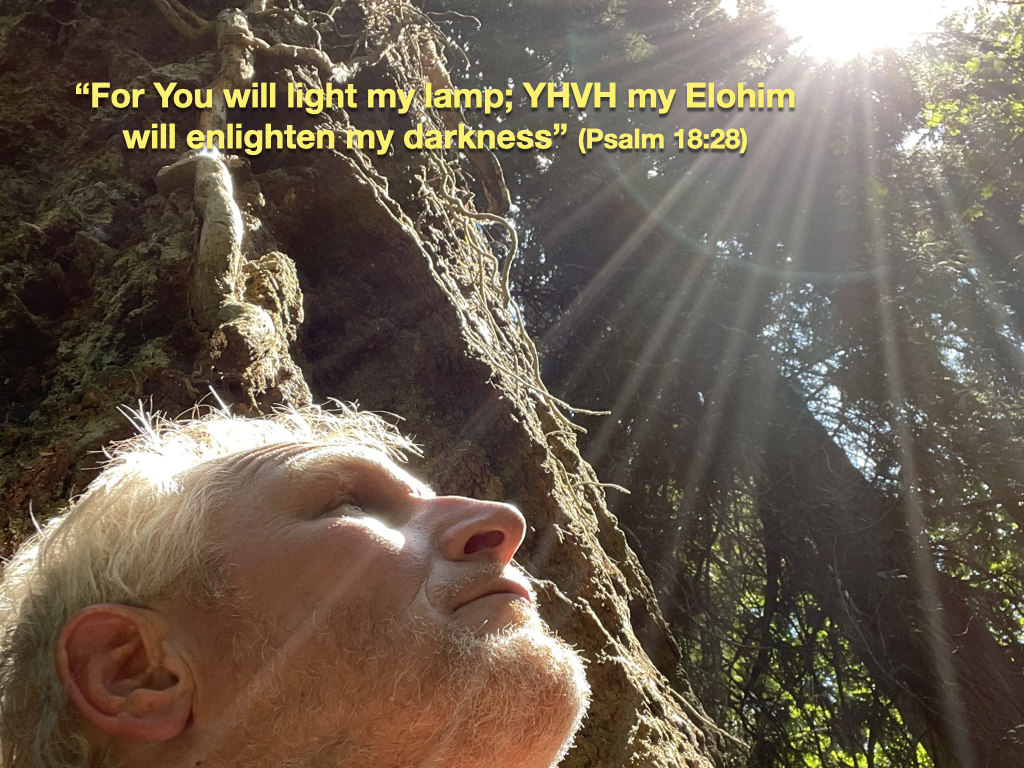
As I rapidly move through my sixth decade of life, I have watched many people come and go, rise and fall, live and die. I have travelled to more than 20 countries on four continents, 25 U.S. states, lived in Europe, started businesses and ministries, been married for decades, raised four children, pastored a church for years, and written and published many writings. I have traversed, climbed and skied the mountains, hung from dizzying heights on ropes, swam in rivers, lakes and oceans, climbed 15 to 20 thousand trees, encountered demons, stared death in the face too many times to remember, and even been sprayed by a skunk. I have been loved as well as hated by those I thought were my friends. Much water has passed under the bridge called life, and now it is time to ponder it all.
Each of us has a story to tell, and as we grow older, we feel the need to share it, but why bother? Who will listen to it anyway? Most people are too wrapped in their own lives to care. Nevertheless, this all causes us to keep searching for meaning and purpose for our existence. And this compels me to return again and again to the Rock of Ages—the Bible, the Word of Elohim and to the source of the Truth that is above and way beyond each of us, for understanding and wisdom in order that I may more fully comprehend the complexities, that is, the whys and wherefores of life.
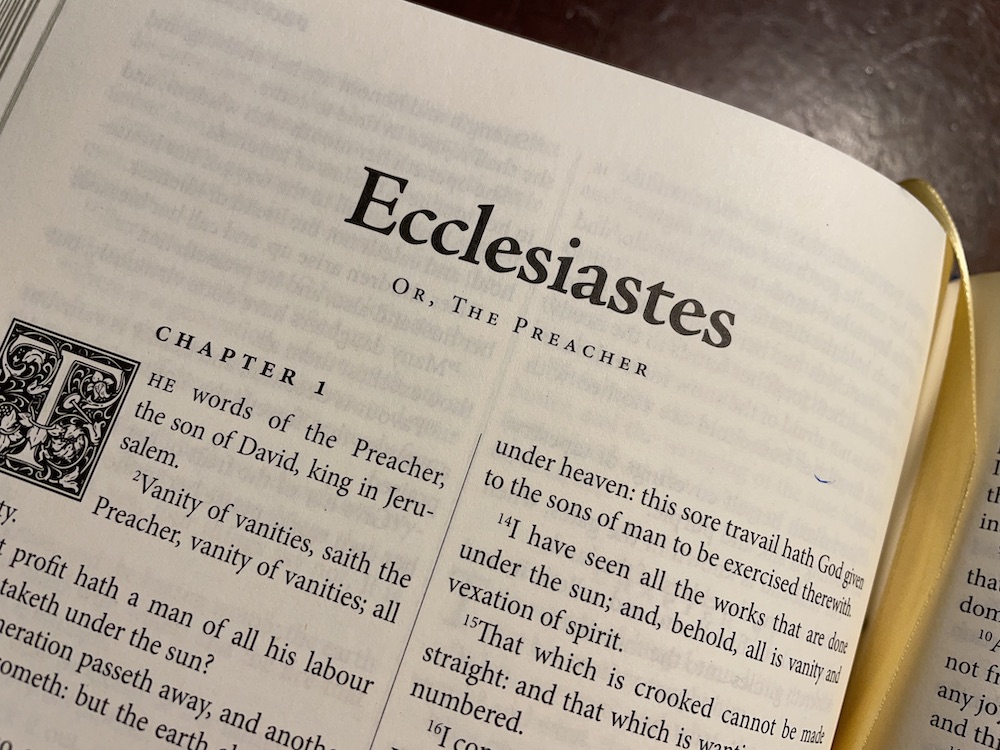
This all brings me to the book of Ecclesiastes (in Hebrew Kohelet meaning “the Preacher”) to hear from a wise man who had done it all. Here are my recent reflections on the wisdom found in this often overlooked and forgotten book of the Bible. Please enjoy and maybe something said will resonate and bless the reader. —Natan
Ecclesiastes 7
Ecclesiastes 7:1–15,Practical keys to lessening the vanity or emptiness of life. So far the Preacher has taught us that life’s endeavors ultimately amount to vanity or nothingness. In spite of this, he has also taught us how to find some meaningful, though temporal, enjoyment in this physical life although all humans are in the endless cycles of this earthly prison of time and space. Now the preacher gives us some more practical wisdom on how to squeeze some meaning out of an ultimately meaningless existence (if this physical life is all that there is).
Ecclesiastes 7:16–17,Do not be overly. Moderation in all things is a key to happiness and will help to prolong life.
Ecclesiastes 7:18, He who fears Elohim. The fear of Elohim is a recurring them in Ecclesiastes. It is as if the Preacher is toying with the reader to provoke him to look beyond the ultimately meaningless existence of this physical life. He seems to be teasing us with the proverbial carrot on a stick in front of the mule routine. Despite the ultimated meaninglessness of life on this earth, in the Preacher’s mind there must be some over-arching benefit to both acknowledging and fearing the Creator. Is this perhaps a key that unlocks the iron door to the prison called life and is the only means to escape the empty vanity and meaninglessness of it all?
Ecclesiastes 7:19–24, More practical keys to lessening the vanity or emptiness of life.
Ecclesiastes 7:27–29, Here is what I found. The Preacher sums up what he has found to this point in diligently seeking to find the meaning of life. The more he searches, the deeper he drills down to find the answer to this perennial and universal questions as to the meaning of life, the more the answer still eludes him.
Elohim made man upright. Man was initially created upright and righteous, but the serpent in the tree conned man into disobeying the Creator’s laws, and man has been scheming to circumvent them ever since.
Ecclesiastes 8
Ecclesiastes 8:1–17,More ponderings on the conundrums of life. In this chapter, the Preacher continues his musings trying to make sense of the injustices and ironies of life. But through it all he is certain of one thing: It will be well with those who fear Elohim, but it will not be well with the wicked (vv. 12–13). For certain, the Preacher knows that there is a wrong way and a right way to live one’s life, and that those who chose the path of good will be better off than those who do not. This may not seem like a stunning revelations, but a rather simple truth. But this truth escapes many people who blithely and thoughtlessly go about the business of life from day to day satiating the lust of the eyes and flesh and the pride of life and think nothing more about it.
So once again, the Preacher tosses into the mix a “God principle” to encourage us to take our eyes off of the mundaneness of the endless cycles life and begin to begin, if every so slightly, to fix our gaze heavenward.