Romans 1–6: Natan’s Commentary Notes

This blog posting is lengthy and contains a lot of spiritual meat. Sorry for the major download all at once. This is actually a small fraction of my commentary notes on Romans chapters one through six. I actually have 74 pages of notes on this section of Scripture alone.

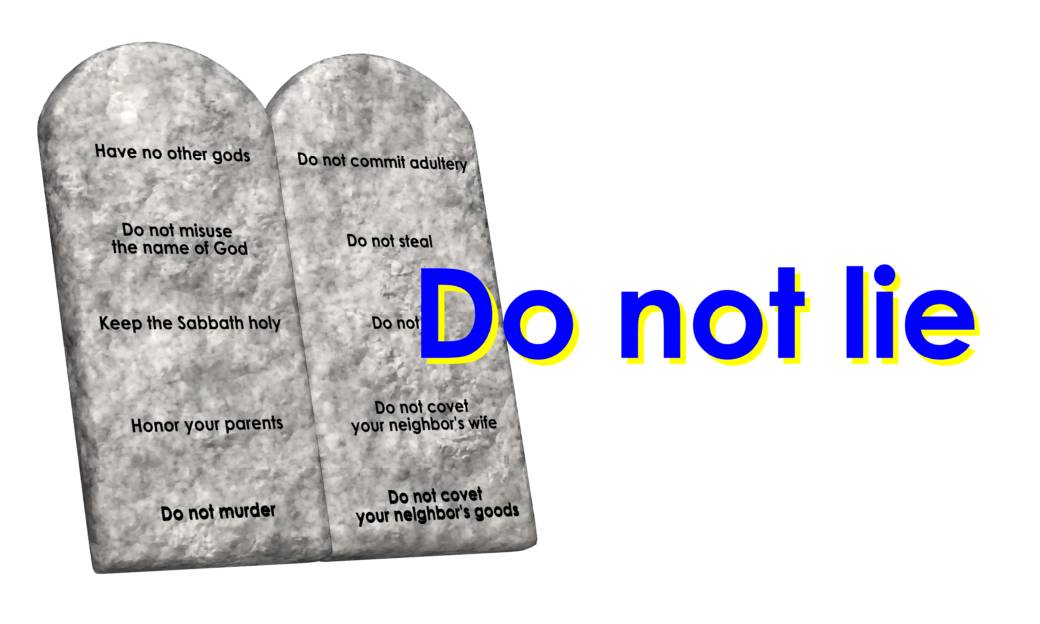
During the work week, due to my heavy work schedule, I have little time for ministry, and barely time for my own personal devotions. Since the major ice storm we had back in February, my tree service business has nearly tripled, I have doubled my employees and purchased additional equipment to handle the demand, and we are still majorly backlogged with work. I have been working 10 to 13 hours a day during the week and many hours on Sunday to keep up with it all. Thank Elohim for the Shabbat, or else l, like a mindless fool, I would probably be working then too—literally working myself into an early grave, no doubt! Thank you Yah for the fourth commandment. KEEPING YOUR TORAH-LAWS IS NOT A BURDEN BUT A JOY AND RELIEF! HalleluYah!!!

Sadly, from a few small and petty-minded murmurers and complainers out there among the modern day children of Israel, I am sometimes criticized when I post such a long piece. For those of this childish and ungrateful demeanor I have two things to say: If you don’t like it, switch the channel and go back to eating baby food. And while you’re at it, take a long walk on a short dock! This is not the place for you. Don’t bother to comment. I’ll just delete it!

For the rest of you, YHVH bless and keep you and may he make his face to shine upon you and grant you his glorious shalom! Amein.


Romans 1:1, Paul, a servant. Servant is the Greek word doulos literally meaningto tie or to bind, a bond servant, a slave, a man of servile condition, one who gives himself up to another’s will, devoted to another to the disregard of one’s own interest.” Of doulos, Strong’s Expanded Concordance says that this word refers to one who was in permanent relation of servitude to another one whose will was completely subject to the will of another… The focus is on the relationship, not on the service. This word also refers to a slave, which was originally the lowest term in the scale of servitude. This word if found 127 in the Testimony of Yeshua and is used numerous times to refer to those whose service is used by Messiah in extending and advancing his cause among men (Thayer’s Greek-English Lexicon of the NT). The disciples of Yeshua applied doulos to themselves with regard to their relationship of service to their Messiah (Ro. 1:1; Gal. 1:10; Phil. 1:1; 2 Tim. 2:24; Tit. 1:1; Jas. 1:1; 2 Pet. 1:1 and of other ministers of the gospel (Col 4:12; 2 Tim 2:24; Jude 1:1) and of all who obey Elohim’s commands who are his true worshippers (e.g. Lk 2:29; Rev 2:20; 7:3; 9:2, 5; 22:3, 6). Do you view yourself as a servant-slave of Yeshua your Master, who purchased or redeemed you with his precious blood from the death penalty hanging over you brought on by your sins?

Romans 1:5, Grace…for obedience.

What Is the Full Definition of the Word Grace?

If one were to ask most Christians what is the meaning of the word grace, they would say something like “free and unmerited pardon.” While this is not an incorrect answer, it is only half of the answer. The other half of the answer will take the typical Christian into spiritual territory where they may not want to do.

Grace is the Greek word charis. The word grace has several subcomponent meanings. It is the removal by Elohim from the individual of guilt caused by sin—the wiping clean of the slate containing a man’s past sins. It is a divine and unmerited favor or pardon of Elohim toward sinful man. 

Grace also indicates favor on the part of the giver (Elohim) and thankfulness on the part of the recipient (man) and is to be distinguished from mercy which is the pardoning or removal of the penalty or consequences of sin. 

Grace removes guilt, mercy removes misery. But grace is also the divine influence or enablement upon the heart of man (see Strong’s Expanded Concordance). But grace is not only unmerited divine favor, but is also the divine enablement or empowerment to walk righteously before Elohim. It is “the merciful kindness by which Elohim, exerting his holy influence upon our souls, turns men to the Messiah, keeps, strengthens, increases them in faith, knowledge affection, and kindles them the ability to exercise righteous virtues (see 2 Cor 1:12; 4:15; 6:1; 12:9; 2 Thess 1:12; Acts 11:23; 13:43; 18:27; Rom 6:14; Gal 5:4; Col 3:16; 1 Cor 15:10) according to Thayer’s Greek -English Lexicon of the NT

So in summary, we see that grace is not only the unmerited divine favor that wipes away our past sins, but the divine empowerment or enablementto obey Elohim by walking in a state of righteousness and virtue, so that one does not sin (i.e. not transgress the Torah-laws of Elohim; see 1 John 3:4) thus incurring upon oneself the penalty for or wages of sin (i.e. death) and hence the need, once a gain, for unmerited divine favor or pardon.


Romans 1:6, Called of Yeshua the Messiah.

When It Comes to Salvation, Who Invites Whom?

Many Christian evangelists talk of “choosing to follow Jesus” or “inviting Jesus into your heart” or “making a decision to accept Jesus.” To often, the emphasis is on the person of their own initiative of calling on or making the choice to follow Yeshua. While this idea may not be totally incorrect, it, sadly, places the emphasis on the wrong person, can feed carnal or humanistic pride, takes the focus off of where it should be placed and is largely an unbiblical message. Let us explain.

The word called in the Greek is kletos meaning “an invitation to a banquet, invited (by Elohim by the proclamation of the gospel) to obtain eternal life or salvation in the kingdom of Elohim through Messiah Yeshua.”The writers of the Testimony of Yeshua use this and other similar Greek words to express the idea of a calling going forth from YHVH Elohim to call those to salvation. In fact, the idea of YHVH choosing us (and not us him) is a prominent theme (nearly 50 occurrences) in the apostolic writings. The gospel accounts reference Yeshua speaking of a calling at least several times (e.g. Matt 9:13; 20:16; Mark 2:17; Luke 5:32). Luke in the book of Acts speaks of a divine calling of believers to Yeshua (Acts 2:39) and to believers into the ministry (Acts 13:2; 16:10) as does the Paul in nearly 30 places in his epistles (e.g. Rom 1:7; 8:28; 1 Cor 1:1, 9, 24, 26; 7:15, 17, 20, 24; Gal 1:6, 15; Eph 1:18; 2 Thess 2:12; 2 Tim 1:9). Likewise, Peter makes reference to YHVH callingpeople into his kingdom (1 Pet 1:15; 2:9, 21; 5:10; 2 Pet 1:10) as does Jude (Jude 1:1) and John (Rev 17:14; 19:9). 

This same idea is carried forth in the words chosen, election and elect—words which occur in the Testimony of Yeshua another 46 times. These words derive from the Greek words ekloge and eklectos meaning “picked or called out ones(called out of the world for a place in the kingdom of Elohim).”

Continue reading
 

How to Easily Understand the Hard Sayings of Paul

2 Peter 3:15–16Paul…hard to understand. If the writings of Paul are confusing as Second Peter 3:15-16 affirms, then why did the Holy Spirit write confusing things through Paul and not through others? 


Why Paul Is Difficult to Understand

Paul was hard to understand in the first century as Peter states in 2 Peter 3:16–17, and he’s hard to understand now in the twenty first century, as we will discuss below. In fact, it might be said that if it was hard for Paul’s contemporaries (those who knew him and ministered with him) to understand him, then, logically, it follows that it will be even much harder for those of us to understand him who live 2000 years later and who didn’t know him or work with him. To the former point, Peter writes, 

And account that the longsuffering of our YHVH is salvation; even as our beloved brother Paul also according to the wisdom given unto him hath written unto you; As also in all his epistles, speaking in them of these things; in which are some things hard to be understood, which they that are unlearned and unstable wrest, as they do also the other scriptures, unto their own destruction.  Ye therefore, beloved, seeing ye know these things before, beware lest ye also, being led away with the error of the wicked, fall from your own stedfastness.

Again, if Paul was hard to understand in his day, how much more 2000 years later!

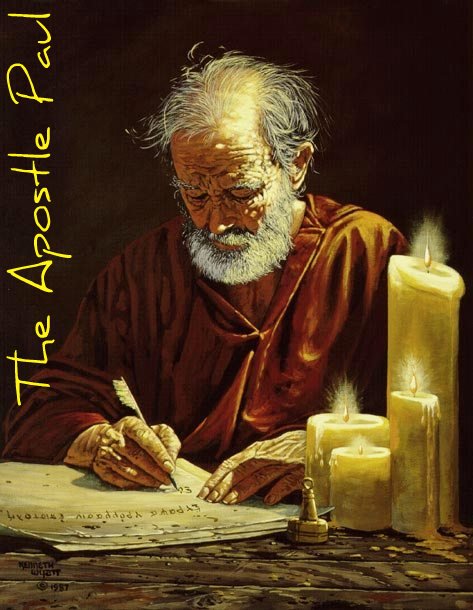
For those living and working with Paul, he was hard to understand because of his intellect and education. He was one of the top Jewish scholars of his day with an intellect to match it. You weren’t taught by Gamliel, the grandson of Hillel the Great, the founder of the Hillel School of Phariseeism and considered by some modern Jews to be the greatest sage of the common era, unless you were the top of your class in Judaism! This was the same Paul who was well-travelled, multi-lingual, could debate with the Greek philosophers of Athens, could quote Greek literature from memory and was from a wealthy and prominent family who were Roman citizens because of their wealth and influence. By contrast, most of Yeshua’s other disciples were from the backwoods regions of the Galilee and were common tradesman. Today it would analogous to a logger from Oregon or a fur trapper from Alaska suddenly linking up into a working relationship with a PhD professor in physics or philosophy from Oxford, Cambridge, Harvard or Yale universities. 

Now scroll forward 2000 years. Since then, we have nearly 2000 years of church history with all of its institutionalized traditions, syncretistic belief systems, man-made doctrines, anti-Semitic theologies and so on to have to wade through. The very purveyors of these church traditions are also the same people (the Christian leaders and “scholars”) who are translating our Bibles. This means that they’ll often be translating the biblical text in ways that agree with their best (often anti-Torah) understandings of Scripture. 

It is this Babylonian mixture of truth and error (man made doctrines and traditions of men along with questionable if not faulty Bible translations) out of which most of us have come. We have to somehow weave our way through this tangled religious theological web and mess and figure out what is truth and what is error, what to keep and what to toss out, who is right and who is wrong, what is wheat and what is chaff. This isn’t easy to do especially when we’ve been indoctrinated, even brainwashed by the church to view Paul, the Torah-law and the rest of the Bible in a certain way through the lenses of those who have taught us their viewpoints be they right or wrong. One’s attempt to separate the precious from the vile and the holy from the polluted promises, justifiably so, to be a daunting and frightening proposition. That’s why the majority of people will prefer to stay in the comfort zones of their churches and man made traditions, rather than to step out into the unknown and unexplored wilderness of being a truth seeker, and, like a modern-day archeologist, to dig down to the bedrock of biblical truth. To step out of the boat of the church system means that, like Peter, you have to have a higher measure of faith than those who will remain safely and comfortably in the boat of their religious traditions. It means that one has to keep their eyes on Yeshua and follow his voice, or else sink into the spiritual watery depths of spiritual confusion. It means that you have to role up your sleeves and get to work, and put on your rubber muck boots and slog through the muddy dung in the barnyard of men’s religious traditions, some of which are good and many of which are vile, to get to the solid high ground of biblical Truth.

Unlocking the Mystery of Understanding Paul

Now let’s discuss Paul specifically to unlock the mystery of how to understand him. This is not a complicated task if done in a logical way. The way NOT to do it is to cherry pick Paul’s difficult-to-understand scriptural passages out of the larger contest of Scripture and then to explain them one-by-one. To attempt to understand Paul in this manner becomes an impossible knot to untie—especially in light of how many Christian scholars have translated his hard sayings through the grid of their faulty understanding and biases. 

Rather, the best way to understand Paul is to step back and to view his writings from the larger context of Scripture—to see the whole forest instead of merely focusing on the individual trees. For example, Paul told the saints in Corinth to imitate him as he imitated Messiah Yeshua (1 Cor 11:1). By the way, Paul’s statement here lines up with John’s instructions to all the saints in his first general epistle to do the same (1 John 2:6). If we’re to imitate Yeshua, then we must, logically, ask ourselves what our Master did, so that we can imitate him as Paul (and John) instructs. For sure Yeshua followed the Torah-law. If not, then he was a sinner, for we read in Scripture that “sin is the violation of the Torah-law” (1 John 3:4), that sin is unrighteousness (1 John 5:17) and that YHVH’s Torah-law defines what righteousness is (Ps 119:172). On the contrary, we know that Yeshua kept the Torah, for he was without sin, for if he had sinned, he wouldn’t been our perfect, sin-free Savior or Redeemer. He kept the Torah in all points and never violated a single command, which would have been sin (Heb 4:152 Cor 5:211 Pet 2:221 John 3:5). Not only did Yeshua obey the Torah, but he clearly upheld its validity again and again (e.g. Matt 5:17–21John 14:1521), and he commissioned his disciples to carry his instructions in this regard forward to the whole earth (Matt 28:2018–20 for context). So according to Paul, this is what he imitated, and what he expected the saints of his day (and us) to imitate.

Next, we read in numerous places that Paul spoke favorably of the Torah law. 

Continue reading
 

Leviticus 26:1–46 on Blessings and Curses and YOU

Divine Blessings and Curses Are Based on Obedience to YHVH’s Torah-Word 

As divine blessings come upon people for Torah obedience, so do curses come upon a people who have forgotten their Elohim because they have been blessed materially and in their self-sufficiency have forgotten who is the source of their blessings as this chapter shows. These are immutable laws that are written in the universe and no human-devised philosophical or religious ideologies regardless of their cleverness can circumvent them. To go against these laws is like attempting to push a giant boulder up a steep mountainside. Eventually the boulder will role backwards crushing the pusher. What wisdom can be learned from this passage on blessings and curses?

 YHVH’s Torah instructions continually stresses that blessings are contingent upon obedience to YHVH. Similarly, Yeshua reveals that rewards in his everlasting kingdom are also contingent on obedience to his Torah-laws. The greater the obedience, the greater the reward (Matt 5:17).These principles are universal, yet how prone humans are to forget the cycles of history that repeat themselves over and over again like the unstoppable turning of giant millstone grinding into powder those who refuse to learn the lessons from the past. Each generation proudly asserts its exceptionalism and that, somehow, it is immune to YHVH’s inexorable and immutable principles of divine judgment. Only in the perfect hindsight of history can we see the fallacy of this assumption. Ancient Israel failed to learn these lessons as have subsequent people who are both ignorant of Scripture as well as many who claim to follow the Bible.

In the case of America, and Great Britain before her (and other formerly European Christian nations as well), there was in times past a national consciousness of core biblical values and, to one degree or another, a general public acknowledgement, acceptance of and respect for the Elohim of the Bible. However, as the historical record reveals, as a nation becomes blessed, it reaches an apogee of prominence, power and wealth where it becomes rich and increased with goods and no longer needs Elohim—or so it thinks. It then becomes materially fat and forgets the source of its wealth and falls into a state of self-sufficiency leading to spiritual blindness in that it fails to recognize its true spiritual state (recall YHVH’s warning to a lukewarm church in Rev 3:14–22). This can happen to individuals, churches and to whole societies.

Because YHVH loves his people and wants to walk among them, to be their Elohim and to bless them (Lev 26:12), when they disobey him and walk in ways that are harmful to their well-being, like any loving parent, he is forced to discipline them. Again and again he sends them his prophets and watchmen to warn them that they are on a path of self-destruction. But because of pride, most people refuse to humble themselves and repent (Lev 26:40–41). It is the same old story over and over again. Human pride insists that “judgments cannot happen to us because we are so special, ”  and “All things will continue as they have from the beginning and no evil shall befall us.” Such a self-assured individual and society retorts in mocking and scoffing tones in response to all those who would hold them accountable for their errant ways (2 Pet 3:3–7). If only the great people, nations and empires that have already trodden this well-worn path and are now in the dust bin of history could speak from their graves and this generation had heart ears to hear!

As a loving Father, YHVH does not lower the gavel of his full disciplinary judgments immediately upon his wayward children. He increases the dosage of his spiritual medicine incrementally in hopes that each successive ratcheting down of his judgments will bring healing to his spiritually apostate children such that they will humble themselves, confess their iniquity (or Torahlessness, Lev 26:40) and repent of their sin and submit to his laws, so that he can bless them. 

In this chapter, YHVH reveals four sets of judgments with each one becoming seven times more severe than the previous one (Lev 26:18, 21, 24, 28). This reminds us of YHVH’s end-times judgments upon a rebellious world that has given itself over to devil worship just prior to the return of Yeshua as prophesied in the book of Revelation. In that book, there are seven seals, seven trumpets, seven thunders and, finally, seven bowl judgments. 

What can you do? You may not be able to change society, but a societal change begins one step and one life at a time; it starts with your life! That is the only thing for certain that you can change. No one person can turn the whole earth into a beautiful garden, but you can start by eradicating the weeds from your own garden. You know what needs to be done. Just listen to your conscience—to YHVH’s Spirit knocking at the door of your heart (Rev 3:20), and then repent and obey YHVH and his commandments. It is that simple.

The corollary to this passage on blessings and curses with regard to Torah obedience is Deuteronomy chapter 28.

Some More Thoughts on Divine Judgment

Continue reading
 

Acts 15 Explained As You’ve Never Heard It Before

Acts 15

Acts 15:1, Custom of Moses. What is the “custom” or “manner” of Moses as mentioned in Acts 15:1? Likely it is the Torah principle that circumcision of both the flesh and the heart is a requirement for citizenship in the nation of Israel. However, the latter takes precedence over and is at a higher spiritual level than the former, as we will now discuss.

The Torah-law requires physical circumcision of males, who the spiritual heads of their families as a ritual signifying sanctification (or being set apart or being separated) from the carnal rudiments of this world, the flesh and the devil. When the father, as the spiritual representative and head of his family, was physically circumcised, it is as if his whole family (including the females) were circumcised as well. 

But physical circumcision as Scripture, including the Torah, teaches is but a step toward and points to the higher principle of heart circumcision, which all people (both male and female) must undergo if they are to be part of the “Israel of Elohim” (Gal 6:16), which is comprised of both Jews and non-Jews, who have been grafted into the olive tree of Israel (Rom 11:11–32) and are not part of the nation of Israel through Yeshua the Messiah and are no longer Gentiles (in a spiritual sense; Eph 2:11–19). 

So the overall principle of circumcision comes from the YHVH Elohim. How it was specifically implemented and applied in daily life, or the exact details of how the law of circumcision was walked out, is specific to the era in which the people of Elohim lived. This is a fundamental distinction between the basic, eternal and over-arching principles of the Elohim’s Torah-law compared to “the law of Moses.” The principles of the former are for all time and for all people, while the latter are the specifics of how those principles were applied in the daily lives of a particular people at a particular time—in this case, the children of Israel who had a physical nation governed by many laws (i.e. the law of Moses) specific to that situation. In the case of physical circumcision, it was a physical proof of citizenship, like a passport, that one actually wore on one’s body. Since there is no longer a physical nation of Israel as in ancient times,  this specific law is not applicable in the same way as it was then; however, the higher principle of heart circumcision still applies today and includes both males and females. 

Another example of a literal Torah principle that does not apply to us today is the Torah’s ox in a ditch rule. Today, how many of us now use an ox for work or transpiration? Obviously we do not, but the principle of the pulling an ox out of the ditch on the Sabbath day still applies to us but in a different way, even though most of us have never even seen an ox much less own or use one. This principle allows us to help someone in need, or to perform emergency word on the Sabbath, which would otherwise be a violation of the biblical law to rest on that day. The eternal principles of the Torah, like the laws of circumcision and ox in the ditch, never change, but exactly how these principles are applied may vary from one generation and culture to another. 

This concept is very different than what the Christian church teaches about the law of Moses, which they say was “fulfilled” by Yeshua, which they take to mean was “done away with” or abrogated, so that we no longer have to do it. This concept, of course, is fundamentally flawed and illogical and is patently absurd, since it violates countless Scripture from one end of the Bible to the other that specifically uphold the validity of the Torah for all believers for all time. If the Torah was in fact been “done away with,” as the church teaches, then it logically follows that it is now permissible to murder, lie, have sex with animals, not have to tithe to your church, be a homosexual, etc., etc. Of course, this is patently ridiculous, yet this is, in essence, shows the logical fallacy of what church teaches with regard to the Torah-law of Elohim.

Continue reading
 

Who Is God of the Old Testament?

Acts 7:35, The Angel

In Acts chapter seven verse 35 and the following several verses, Stephen makes a reference to an Angel. To whom is he referring: to YHVH the Father or YHVH the Son who became Yeshua the Messiah?

Angel is the Greek word angelos which has several meanings including the stereotypical meaning of the word angel. But the word angelos as well its Hebrew equivalent malak can also refer to a human messenger as well as to a divine messenger such as YHVH, the Word of Elohim or the preincarnate Yeshua the Messiah, as was the case with the “Angel” or Divine Messenger or YHVH who spoke to Moses from the burning bush in Exodus chapter three. 

This same Divine Messenger or YHVH spoke to the Israelites from Mount Sinai when giving the children of Israel the Torah-law as Stephen state in verse 38. 

Elsewhere, Paul goes on to say that the same Divine Entity, who later came to be known as Yeshua the Messiah, was the One who lead the Israelites in the wilderness and gave them water from the rock (1 Cor 10:4). 

Moreover, Yeshua clearly states in John 5:37 that the Israelites did not hear the voice of his Father, YHVH the Father, in the wilderness. Thus, whose voice did they hear? Who was the Messenger or “Angel” to which Stephen makes reference in this verse? It was none other than the preincarnate Yeshua the Messiah who was the Word of Elohim to which John makes reference at the beginning of his Gospel (John 1:1) who become the Messiah (John 1:14). 

Finally, in John 8:58, Yeshua states that he was the I AM of Exodus 3:14 that spoke to Yeshua out of the burning bush; Yeshua is YHVH the Son as opposed to YHVH the Father. The fact Yeshua was making the connection between himself and the I AM of Exodus is the reason that the Jews picked up stones in an attempt to kill Yeshua; they viewed his statements as blasphemous, since he was claiming to be deity. 

Thus, when we connect all of these statements together by Stephen, Paul, John and Yeshua, we see that Yeshua in his preincarnate state, and not YHVH Elohim the Father, who was the God of the Old Testament who spoke to the patriarchs, to Moses as well as to the prophets. 

The fact that Yeshua was the part of the Godhead who was the God of the Old Testament and not the Father (per se or directly) is contrary to what the mainstream church teaches and what most Christians believe. 

With this in mind, how does the fact that Yeshua or Jesus in his preincarnate state as the One who gave the Israelites the Torah-law from Mount Sinai challenge the idea that the same Divine Being who later came as Yeshua the Messiah came to do away with the same Torah-law as the mainstream Christian church teaches? Is this prevalent teaching in Christianity not incongruent with the facts of the Bible? How does the fact that Yeshua in his preincarnate state gave the law to the Israelites change how one views “the Law of Moses?” Similarly, does YHVH’s statement in Malachi 3:6 that “I am YHVH, I do not change” as well as the statement in Hebrews 13:8 that “Yeshua the Messiah is the same yesterday, today and forever” not make more sense with respect to YHVH’s Torah-law, which is his unchanging and immutable standard of righteousness for all people for all time?

It is time for honest and truth-seeking Bible students and disciples of Yeshua to question and challenge many long held church traditions that are contrary to the plain and simple Truth of the Bible, and to bring their thinking and lifestyles into alignment with Truth!

Acts 7:37, A Prophet. Stephen is pointing out to the Jews that Yeshua was the fulfillment of Moses’ Deuteronomy 18:15 prophecy that “YHVH will raise up for you a Prophet like me from your midst, from among your brethren. Him you shall hear….”

Acts 7:38, He. Who is the “he” that Stephen is referring to here: the Prophet or Moses? The antecedent of he must be Moses, since in the same sentence he is juxtaposed with “the Angel.” As we discuss in our notes in verse s 35 and 37, that “Angel” was none other than the preincarnate Yeshua the Messiah.

Acts 7:53, Angels. Or human messengers, since this can be the meaning of the Greek word angelos.


What Is Truth? (Explaining the difference between Truth and truth)

This is an important question that has dangerous implications. Why? Because truth is like a sharp sword that cuts. It separates good from evil, light from darkness, sin from righteousness; it differentiates between those who are of Elohim and those who are of the world, the flesh and devil; that is, those who are of the kingdom of the god of this world—Satan the devil. Oooh, that hurts! But the fact remains: we are either in Elohim’s kingdom or the devil’s kingdom. To ignore or renounce the former is to acquiesce knowingly or unknowingly, it makes no difference, to the latter. For these reasons, most people flee from answering the question “What is truth.” This is because their deeds are evil and they do not want the glorious light of YHVH’s Truth to shine into their lives and to expose their evil deeds as John declared about Yeshua in John 3:18–21.

He who believes in [Yeshua] is not condemned; but he who does not believe is condemned already, because he has not believed in the name of the only begotten Son of Elohim. And this is the condemnation, that the light has come into the world, and men loved darkness rather than light, because their deeds were evil. For everyone practicing evil hates the light and does not come to the light, lest his deeds should be exposed. But he who does the truth comes to the light, that his deeds may be clearly seen, that they have been done in Elohim.”

Not only that, let us not forget an important fact: there are two kinds of truth. Truth with a capital T and truth with a small t. The former is divinely revealed Truth, while the latter is truth at a physical level (e.g. 2 + 2 = 4 or the law of gravity). To acknowledge the former means that one has to accept not only the idea of divine revelation, but a Divine Revealer. If so, then there is a Divine Judge who determines right and wrong. If this is true, then that Judge will bless those who live up to that divine Truth, and curse those who do not.

To acknowledge the existence of divinely revealed Truth carries with it serious implications regarding one’s lifestyle. That is why most humans choose the downward path (call Baalism or feeding from the tree of the knowledge of good and evil) of sin and succumb to the notion that God is dead or irrelevant. Not only that, they attack those who believe in Elohim (the Jews and the Christians), they attack the Bible—the Word of Elohim, they attack the Holy Land where Elohim placed his name, and they attack anything that remotely represents any of these things (e.g. morality, marriage, the family, church, male and female genders and so on). This is the spirit of Antichrist, which we see rising up like a tidal wave of evil in these last days all over the world. But the reality is that these are only the death throes of Satan and his kingdom of darkness, for he knows that his time as the ruler and god of this world is short, and that King Yeshua is coming soon to dethrone him. That is why the devil is pulling out the all the proverbial organ stops in a vain attempt to prevent the inevitable and inexorable march of Truth!

For these reasons, it is important that you understand the answer to the question, “What is Truth?”


John 18:38, What is truth? 

In this age of moral relativism or situational ethics, it is unpopular to believe in, much less purport, that there is one single truth. Most humans live under the notion that every person can determine their own truth for themselves. The problem with this delusion is that when your truth conflicts with my truth there will inevitably be conflict. Ultimately, there will be a breakdown in law and order leading to anarchy resulting in unending theft, murder and wars. This was the case in primeval and medieval societies like Europe before strong central governments evolved to enforce law and order. The history of British Isles alone before there was a strong king in London was one series of blood baths after another by various raping and pillaging parties.

Continue reading
 

John 5—Natan’s Commentary Notes

The Gospel of John contains many deep spiritual insights that are found in none of the other three Gospels. John wrote this Gospel probably in the AD 90s when he was very old and likely after all the other apostles were already dead, and some 60 years after the death and resurrection of Yeshua. By that time, he had seen a lot of water go under the bridge—both good and bad, so to speak, and had developed many keen and unique insights that come only with time, experience, understanding and wisdom. Please enjoy a few of the golden nuggets in John’s writings that this disciple of Yeshua has discovered over the years and is now sharing with you below.


John 5:2, In Hebrew. (Gr. Hebraisti) This phrase indicates that either John was originally written in Greek, or it was written in Hebrew, then translated into Greek with the insertion of this editorial comment. 

John 5:4, Troubled/stirred the waters. The Greek word for stir or trouble can mean “to agitate, disquiet, make restless, cause inward commotion, to strike one’s spirit with fear, perplex the mind, render anxious or distressed or to cause dread.” The troubling of the waters at the Bethesda Pool was more than just a breeze causing some riffles over the waters. Those at the pool’s edge must have sensed something supernatural when the angel troubled waters—that something supernatural was about to occur. Perhaps they sensed the presence of Elohim in their spirit. The outward stirring of the waters (with the inward stirring of the spirit?) coupled with their acting in faith to get to the waters to be healed brought about healing. What is the lesson here for us? When we sense the presence of the Almighty to heal us, we must step forth in faith seeking Elohim’s healing touch in our lives. Our seeking might result in our finding heaven’s miracle for our lives at that exact moment.

John 5:12, Sin no more. Sometimes our physical infirmity is a result of sin was case in this verse, and sometimes sin is not the cause of the infirmity as was the case with the man who was born blind (John 9:2–3). Only by divine revelation (or by the Holy Spirit gift of the word of knowledge) was Yeshua able know the cause of an ailment when praying for someone’s healing. Yeshua’s healing of the man at the Bethesda Pool was an act of divine grace by Yeshua. Yeshua didn’t require the man to repent of his sin before healing him, although he advised him sin no more, so that a worse judgment wouldn’t come on him later.

John 5:18, [Yeshua]…broke the Sabbath. (Also see notes on Matt 12:1–14.) Allow me to share an interesting and sad, but true story from my life about a false Christian teacher that I went head-to-head with. Many years ago, I was in a meeting where a Christian Bible teacher was giving a message on the end times. In the middle of his teaching and totally out of context, he quoted this passage from John and claimed that Yeshua broke the Sabbath. There was a rustle in the audience of about 300 people. A little later, he made the same statement again and began to deride the Sabbath. This time there was an audible moan from some in the audience—many of whom were Sabbath keepers. A feeling of being hit in the gut went through me. A little later, he made the same statement again, and continued to bash Sabbath observance. This time, I could hold my peace no longer, and I stood up and challenged him in the middle of the meeting. I told him that to say that Yeshua had broken the Sabbath was to call Yeshua a sinner, and that Yeshua had not broken the Sabbath, but some Jewish legal traditions (or halakhah) pertaining to the Sabbath. The speaker was flustered and had no response, and the host of the meeting decided to take an intermission.

A year later, it was announced that this Bible teacher had suddenly and unexpectedly dropped dead in the pulpit while preaching. One can’t help but wonder if he had come under divine judgment for blasphemously teaching that Yeshua was a sinner by supposedly breaking the fourth commandment.

Had this false teacher simply pulled down a concordance from his bookshelf and looked up the word broke in the Greek, and had read John’s statement in verse 12 in the context of verses 8–10, he wouldn’t have been teaching this blasphemous heresy about our Master and Savior!

Here is the explanation of this passage: The word broke is the Greek word luo meaning “to loose, untie someone or something bound, to dissolve, destroy.” According to The Theological Dictionary of the NT, luo means “to free from prison, open something closed; destroy fetters, foundations, walls; to release.” What Yeshua was breaking was the Jews’ extra-Torah legal traditions that made the Sabbath a burden by prohibiting the alleviation of human suffering and need on this day (John 5:8–10). He was in no way violating the actual Torah, since there is no Torah-law prohibiting healing on the Sabbath or carrying one’s bed role. In attempting to follow the Torah through men’s traditions, many of the Jews of Yeshua’s day had actually omitted the weightier matters of the Torah (justice, mercy and faith, see Matt 23:23), and had forgotten that YHVH is more concerned with heart issues rather than religious legalism, since he desires mercy over sacrifice, and the knowledge of Elohim over burnt offerings (Hos 6:6).

Any tradition of man that violates the letter and the spirit of the Torah is an illegal tradition. Yeshua was only violating an illegal tradition of men. Therefore, in the eyes of the Jews he was breaking the Torah. In reality, he was loosing (not breaking) the Torah from the traditions of men that had corrupted the true intent of the Sabbath law. A better translation of this verse would be, “he…loosened/untied the Sabbath [from men’s legalistic traditions].” Yeshua didn’t come to set men free from the Sabbath. He came to set the Sabbath free from men’s unbiblical traditions.


Did Yeshua Break the Law?

According to most of our English Bibles, Yeshua broke the Torah-law of Moses. For example, we read in John’s Gospel,

Therefore the Jews sought all the more to kill Him, because He not only broke the Sabbath, but also said that God was His Father, making Himself equal with God. (John 5:18, NKJV)

Continue reading