Is the Torah the “ministry of death” which is “passing away?”

2 Corinthians 3:7, Ministry of death. Is this a reference to the Torah law that YHVH gave to Moses and the Israelites (and which was passed on down to us)? If so, which aspects of it are the “ministry of death”?

Just previously in verse six, Paul is speaking about the new covenant and the letter bringing death and the spirit bringing life. What is he referring to here? Is the spirit of the Torah-law all that is applicable to the believer today, and not the letter?

If the Torah has been done away with, then why did Yeshua in his Sermon on the Mount excoriate the Jews for keeping the letter and not the spirit of the Torah? In fact, he strongly affirmed that his disciples must keep both the letter and the spirit of the Torah. To keep only the spirit would be tantamount to saying it’s all right to murder as long as you don’t hate the person, commit adultery as you don’t lust in the process, and so on. It is plain to see that his notion is absurd. Yet this is what many Christians believe. We must keep the spirit, but don’t have to keep the letter of the law, and they will use this passage of Scripture to justify their belief. If this is not what Paul meant here, then what is he talking about when he is favoring the spirit of the Torah over the letter?

If  Paul is not referring to the Torah as the “ministry of death” in this passage, then to what is he referring? Paul references the stone tablets containing the Torah that Moses brought back the second time from Mount Sinai. Some aspect of this Torah (i.e. “the ministry of death”) brought the curse of death. Was it the Torah law itself, which tells man how to love Elohim with all of his heart, soul and strength and his neighbor as himself that brought death? It seems inconceivable and Continue reading


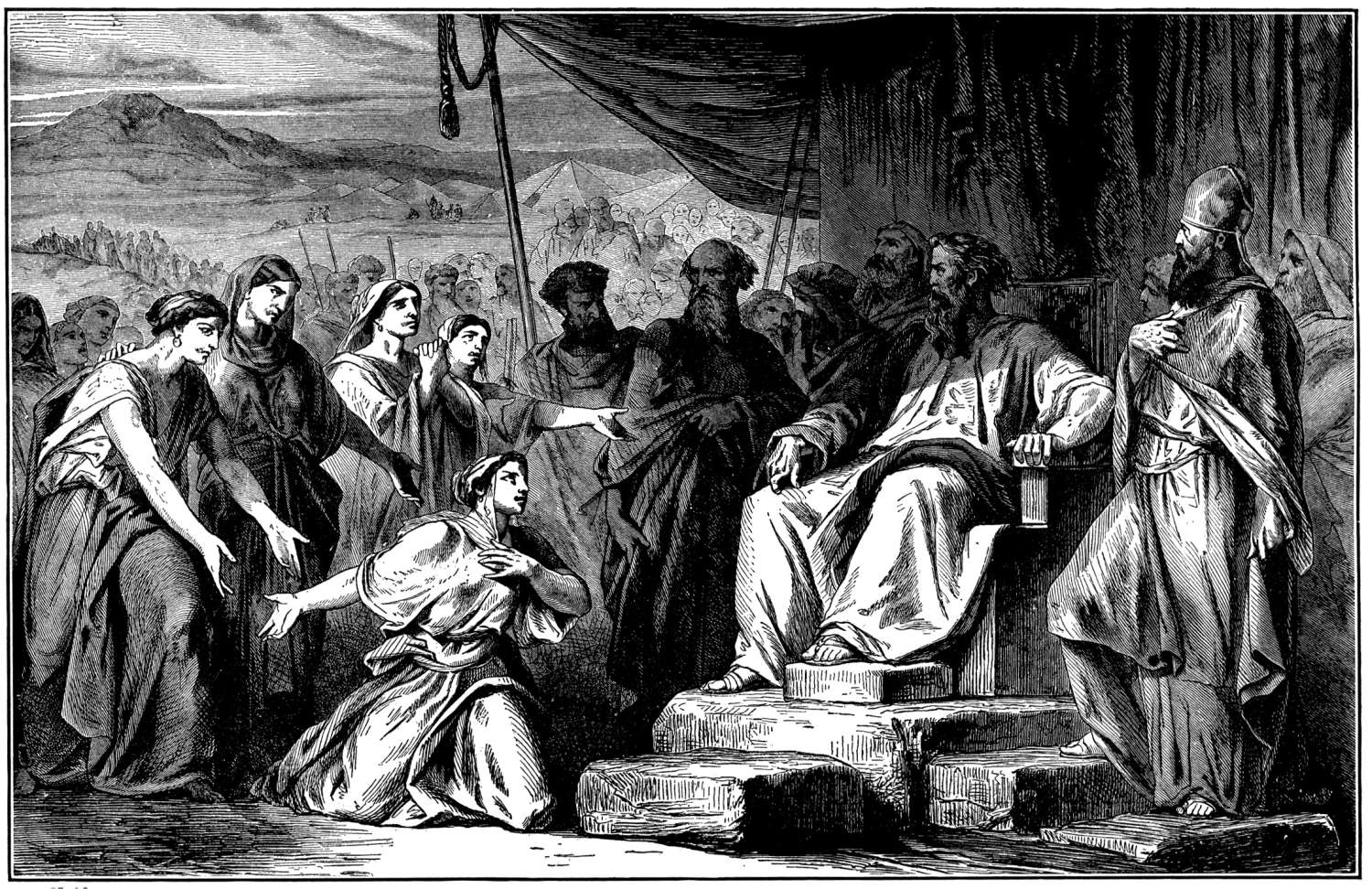
The Daughters of Zelophehad and Equal Rights for Woman

Numbers 27:1–11, The daughters of Zelophehad. A Torah Commentary For Our Times/ATCFOT (UHAC Press, NY, 1993) has an interesting discussion regarding the incident involving the daughters of Zelophehad (Num. 27:1–11) that may answer some questions that contemporary women have regarding the Torah’s view of women. “Modern commentator Jacob Milgrom contrasts ancient Israelite practices of inheritance with those of their neighbors.” He notes that the practice of equality of inheritance between sons and daughters was upheld in Egypt and Mesopotamia one thousand years before the codification of the Torah. Later on the Greeks can be added to this list of countries that practiced “equal rights.” Milgrom then asks, “In face of such ‘equality’ of treatment how then are we to explain the fact that the Bible gives women no inheritance rights except in the case where there are no sons?” Does the Torah seem to discriminate against women regarding the inheritance of land and property from the estates of their parents, he asks? (p. 80).

“Milgrom suggest that in contrast to ancient Israel’s neighbors…where ‘centralized urban societies’ already existed, the early Torah laws of the Israelites reflect a nomadic-clan structure. In such a society ‘the foremost goal of its legal system was the preservation of the clan.’ Equity between members of the tribe or family preserves peaceful relationships and strengthens cooperation between all person.” He goes on to say that this explains the justness of the pleas of the daughters of Zelophehad where the principle of upholding the clan is preserved. The Torah sees that the daughters receive their father’s inheritance and at the same time that the clan and father’s name are preserved. (ibid.)

This solution does not promote equal rights, as we know it today, with sons regarding inheritance. Both the Torah and Talmud teach that in most cases inheritance of property is from father to son and that women share the lot of their husbands and do not inherit from their fathers (Ibid., quoting from JPS Commentary: Numbers, pp. 482–484).

The Jewish sages further note that though the daughters aired their complaints about what they perceived to be an unjust situation, they nonetheless did so in a respectful and organized (not rebellious, loud, boisterous or aggressive) manner. They calmly “drew near” and “stood before Moses,” the high priest and the tribal princes of Israel (verses 1-2) and aired their concerns in neither a threatening nor challenging manner. There was no subversiveness on their part involving other potential disgruntled parties (as was the case when Korah and his group rebelled against Moses’ leadership). According to rabbinic tradition, the daughters in their wisdom chose a suitable place, a proper time and the proper approach to lobby Moses regarding their issues (ibid.; ArtScroll Davis Edition Baal HaTurim Bamidbar, p. 1691–1692). 

Does not such an approach recall several other woman of righteous stature in similar situations that are mentioned in Scripture: Sarah to Abraham, Abigail toward David, Ruth before Boaz and Esther before Ahasuerus and various women before Yeshua?

S. R. Hirsch in his commentary translates verse seven as follows:

Quite right is the speech of the daughters of Zelophehad, thou shalt surely give them male rights of hereditary possession among their father’s brethren and thou shalt cause the inheritance of their father to pass over to them. (emphasis added) 

Hirsch notes from the Hebrew grammar in this verse that they spoke with correctness of speech and presentation of fact. “That which the daughters of Zelophehad have said is quite as it ought to be, their speech corresponds to the truth and right (The Pentateuch/Bamidbar, pp. 453–454, Judaica Press).

Note that YHVH is the One stating (to Moses) that they have spoken that which is right, proper and truthful. Rashi in his commentary on this verse states, “Fortunate is the person whose words the Holy One, Blessed is He, confirms.” Rashi goes on to say that these daughters saw or uncovered an aspect of the eternal truth of the Torah that was resident in the heart of YHVH but which had not been revealed to man yet. Their eye Continue reading


Blog Scripture Readings for 7-1 Through 7-7-18

Aside

THIS WEEK’S SCRIPTURE READINGS FOR STUDY AND DISCUSSION:

Parashat Pinchas — Numbers 25:10 – 30:1 (29:40)*
Haftarah — 1 Kings 18:46 – 19:21 | Jeremiah 1:1 – 2:3**
Prophets — Ezekiel 16:1 – 20:49
Writings — Ezra 1:1 – 7:28
Testimony — 2 Corinthians 2:1 – 8:24

Our annual Scripture Reading Schedule for 2017-2018 is available to download and print.

Most of this week’s blog discussion points will be on these passages. If you have general comments or questions on the weekly Scripture readings not addressed in a blog post, here’s a place for you to post those. Just use the “leave a reply” link below.

The full “Read Through The Scriptures In A Year” schedule, broken down by each day, can be found on the right sidebar under “Helpful Links.” There are 4 sections of scripture to read each day: one each from the Torah, the Prophets, the Writings, and from the Testimony of Yeshua. Each week, the Torah and haftarah readings will follow the traditional one-year reading cycle.

* Verse numbers in parenthesis refer to the verse number in Christian English Bibles when they differ from Hebrew Bibles or the Tanakh.

** A different Haftarah is read when it is a special sabbath in Jewish tradition. This week it is when Parashat Pinchas falls after a minor fast on the traditional calendar. When that happens, the section in Jeremiah is read. Both readings are included here.

Weekly Blog Scripture Readings for 7/1/18 through 7/7/18.


Phinehas: Who Will Stand Up Against Evil?

Who will rise up for me against the evildoers? or who will stand up for me against the workers of iniquity? Psalm 94:16

By in large, most Bible believers (no matter the label: Christian, Catholic, Orthodox, Protestant, Messianic, Hebrew Christian, Hebrew Roots or whatever) are nice, and well meaning people who want to do right, but, at the same time, are sit-on-your-thumbs do nothing pacifists. They refuse to actively confront evil.

These folks suffer from a spiritual disease called ‘none-rock-the-boat-itis.”

Make no mistake. Yeshua wasn’t a go-along-to-get-along kind of person! Nor were the prophets, apostles, disciples and preachers of righteousness whose lives and actions the Bible record.

Those who suffer from this spiritual malady of super-spiritualism are lukewarm believers. Period! They need to look at themselves in the mirror and ask themselves a serious question: “What am I doing to be salt and light in the world? To help fulfill the great  commission? To help advance the kingdom of Elohim? To spread the gospel?

Everyone can do something no matter how little or large.

Too many people are like the unprofitable servant in Yeshua’s parable who lazily buried his talent in the ground and chose, instead, to live a selfish, me-centered life. Remember what Yeshua’s response to this person was on judgment day in Matthew 25?

His lord answered and said unto him, Thou wicked and slothful servant, thou knewest that I reap where I sowed not, and gather where I have not strawed: Thou oughtest therefore to have put my money to the exchangers, and then at my coming I should have received mine own with usury.Take therefore the talent from him, and give it unto him which hath ten talents. For unto every one that hath shall be given, and he shall have abundance: but from him that hath not shall be taken away even that which he hath.  And cast ye the unprofitable servant into outer darkness: there shall be weeping and gnashing of teeth. (Matt 25:26–30)

Numbers 25:7, Phinehas…took a javelin. Phinehas, the priest, rose up against evil and took a stand for righteousness and YHVH commended him for it. In this case, the grandson of Aaron the high priest was not acting as a self-appointed vigilante as it may appear. Rather, YHVH had given the priests the authority to act as judges in Israel and to pronounce sentence in criminal matters (Deut 17:9–11). Additionally, Phinehas was doubly justified in his action against the fornicators, since he was an eyewitness of these sexual crimes, and the Torah teaches that the hand of the eyewitness was to be the first to rise up in executing judgment against the criminals (Deut 17:6; Ezek 44:24). So as an eyewitness and as a priest, he was legally justified in his actions. The priests and Levites were to act as Israel’s legal experts (Lev 10:10–11; Deut 24:8; 33:10; 2 Chron 17:9; 30:22; Neh 8:2, 8; Hag 2:11; Ezek 44:23; Mal 2:7) and to make determinations between the holy and the profane (Ezek 22:26; 44:23).

Who are YHVH’s priest on the earth today? According to Peter, and John the saints are those priests (1 Pet 2:7; Rev 1:6; 5:10; 20:6). As such, the saints presently possess the divinely mandated legal authority to fulfill the responsibilities of the priesthood of old when it comes to teaching the laws of Elohim to the nations in which they live (Lev 10:10–11). Moreover, Yeshua, our Great High Priest, has tasked his disciples with the responsibility and authority to judge righteously (i.e. to make judgments according to YHVH’s standards of righteousness, John 7:24), and to be spiritual fruit inspectors (Matt 7:15–20). Today, this responsibility is primarily exercised within the congregation of the righteous (1 Cor 5:12; 6:1–6). However, besides this, the righteous saints are to act as spiritual salt in this world and to be like a spiritual light on a hill for the world to see (Matt 5:13–16). This means that they are to preach the gospel to the world, to make disciples and to teach those around them all that Yeshua has commanded them (Matt 28:18–20; Mark 16:15–16). This means that the saints have heaven’s authority and commission to act as the spiritual and moral compass and conscience for the nations in which they live. This means that they will be standing against evil wherever and however they can as directed by the Spirit of Elohim, even as Phinehas did.

It is time that the righteous servants of YHVH Elohim begin to stand up in a more vocal and demonstrative way against the evil that is being foisted upon our society by those who are bent upon destroying the family, morality, and any vestiges of biblical standards of righteousness that may still exist around us. In Psalm 94:16, YHVH asks the question of his servants, “Who will rise up for me against the evildoers or who will stand up for me against the workers of iniquity?” With this in mind, the question we need to ask ourselves is this: If not me, who; if not now, when? If you have something worth living for, then do you have something worth giving your life for? If those who are caught up in demonically inspired religious systems are willing to die for their faith calling it “a holy war” and “martyrdom for their [demon] god,” can the saints of YHVH at least not take a verbal stand against the tide of evil that is sweeping our society?

The Bible is full of examples of YHVH’s servants standing against unrighteousness in their day and their receiving YHVH’s blessing for it. Several examples include the Hebrew midwives disobeying the edict of Pharaoh to commit infanticide (Exod 1:15–22), Phinehas executing judgment against the fornicators (Num 25:7–8), the three Hebrew children refusing to worship the golden image (Dan 3:8–18), Daniel violating the king’s edicts by praying to YHVH (Dan 6:10–12), John the Baptist criticizing Herod for his adultery (Mark 6:18), Yeshua turning over the money changers’ tables in the temple (Matt 21:12), and Peter and John for disobeying the Jewish leaders’ command to not preach the gospel (Acts 4:18–20). Many more examples could be given. Remember all the biblical prophets? 

Numbers 25:11, Has turned back my wrath…because he was zealous. Read Psalm 94:16. What are some other examples of righteous men and women in the Bible who stood up against evil in their day whom YHVH praised for doing so? Did Phinehas rise up against evil in his own carnally-minded, emotionally-based zeal? If not, then whose zeal was he full of? (Read verse 11 again.) When we take a stand against evil as led by the Word and Spirit of the YHVH Elohim, can it ever be wrong to do so, even though the world may not agree with us and may even criticize or persecute us for doing so? Not only that, Phinehas placed his life on the line between the righteous judgment of Elohim and those who were sinning. Many times, the servants of YHVH actually have to leave their comfort zones and place themselves in harm’s way on the ragged edge between good and evil to take a stand for YHVH Elohim. (Note Aaron’s actions in Num 16:46–50.) The examples of such actions from the pages of the Scriptures are too numerous to list. Some notable examples include: 

  • Noah preaching righteousness against the utterly corrupt generation of his day.
  • David versus Goliath (1 Sam 17)
  • Elijah confronting the prophets of Baal (1 Kgs 18:20ff)
  • John the Baptist confronting King Herod (Matt 14)
  • Yeshua confronting the religious leaders of his day on numerous occasions (e.g. Matt 23)
  • Peter and John versus the Jewish leaders (Acts 4)
  • Stephen confronting the Jewish leaders (Acts 7)
  • Paul and Silas preaching against false religion in Philippi (Acts 16) and preaching the gospel on the streets in Thessolonica (Acts 17), in Corinth (Acts 18) and again in Ephesus (Acts 19)

At times, YHVH tried to find such a person who would stand for his truth, but was unable to do so (see Jer 5:1; Ezek 22:30).


Are You Cursable?

Numbers 22:11–12, Dealing with curses from the enemy. Make no mistake about it, false prophets are neither the friends of YHVH nor his people. They are grievous wolves who hate YHVH’s people and want their total destruction.

For example, in verse 11 Balak asks Balaam to pronounce a mild curse (arah) on Israel that would result simply in their being driven away, not on their being destroyed. But then notice in verse 17 how Balak employs a much stronger Hebrew expression (kavah) to curse Israel implying their total destruction, thus indicating Balaam’s hatred for Israel (and his contempt for YHVH).

In verse 12, YHVH uses the milder term to let Balaam know that even the mildest curse would not prevail against his people (The ArtScroll Stone Edition Chumash, p. 858).

Do you walk so closely to YHVH in relationship with Yeshua and in his righteousness that you are protected from even the mildest curse directed at you from the enemy? Do you stay under the blood of Yeshua so that no spiritual darts of Satan can pierce your spiritual armor (Eph 6:16; Rev 12:11)? Do you take refuge perpetually under the shadow of the wings of the Almighty (Ps 91:1, 4)? How does the child of YHVH do this every day?

Proverbs 26:2 states, “As the bird by wandering, as the swallow by flying, so the curse causeless shall not come.” Do you have any “spiritual doors” open so that the Evil One has “legal” entrance into your life to attack you?

The solution to the problem is to repent by turning from sin and then turn to Yeshua! Obey his Word so that you do not open yourself up to the curses for disobedience as mentioned in Deuteronomy 28.


Blog Scripture Readings for 6-24 Through 6-30-18

Aside

THIS WEEK’S SCRIPTURE READINGS FOR STUDY AND DISCUSSION:

Parashat Balak — Numbers 22:2 – 25:9
Haftarah — Micah 5:6 – 6:8
Prophets — Ezekiel 7:1 – 15:8
Writings — Daniel 7:1 – 12:13
Testimony — 1 Corinthians 14:1 – 16:24; 2 Corinthians 1:1–24

Our annual Scripture Reading Schedule for 2017-2018 is available to download and print.

Most of this week’s blog discussion points will be on these passages. If you have general comments or questions on the weekly Scripture readings not addressed in a blog post, here’s a place for you to post those. Just use the “leave a reply” link below.

The full “Read Through The Scriptures In A Year” schedule, broken down by each day, can be found on the right sidebar under “Helpful Links.” There are 4 sections of scripture to read each day: one each from the Torah, the Prophets, the Writings, and from the Testimony of Yeshua. Each week, the Torah and haftarah readings will follow the traditional one-year reading cycle.

Weekly Blog Scripture Readings for 6/24/18 through 6/30/18.


Spiritual Gifts from Heaven

1 Corinthians 12 Spiritual Gifts

How do we bring glory to Elohim, live in his river of life and help to advance his kingdom initiatives on earth? By receiving his spiritual gifts and then learning to exercise them.

The spiritual gifts Elohim gives to his children are essential in all aspect of our lives from the time we receive the gift of salvation, but beyond that as well. They establish us in him as a fully functioning and important part of his kingdom being advanced on earth. They help us to be his hands, feet and mouth to reach many people for him.

We must know what our spiritual gifts are so that instead of being a side-lined pew warmer, we are a fully functioning member of the body of Yeshua. Knowing our gift and then functioning in most importantly brings glory to Elohim, and as a by-product gives our life meaning, purpose and direction.

The Gifts (Gr. Charismahtohn) of the Spirit

Having then gifts differing according to the grace that is given to us, whether prophecy, let us prophesy according to the proportion of faith. (Rom 12:6) 

So that ye come behind in no gift (charisma); waiting for the coming of our Lord Yeshua Messiah. (1 Cor 1:7)

For I would that all men were even as I myself. But every man hath his proper gift (charisma) of Elohim, one after this manner, and another after that. (1 Cor 7:7)

There are diversities of gifts, but the same Spirit. (1 Cor 12:4)

But covet earnestly the best gifts [charisma]: and yet shew I unto you a more excellent way. (1 Cor 12:31)

Follow after charity, and desire spiritual gifts (lit. spirituals), but rather that ye may prophesy. (1 Cor 14:1)

Neglect not the gift (charisma) that is in thee, which was given thee by prophecy, with the laying on of the hands of the presbytery.(1 Tim 4:14)

Wherefore I put thee in remembrance that thou stir up the gift (charisma) of Elohim, which is in thee by the putting on of my hands. (2 Tim 1:6)

As every man hath received the gift, even so minister the same one to another, as good stewards of the manifold grace of Elohim. (1 Pet 4:10)

 Spiritual Gifts (Charisma) in a General Sense

For the wages of sin is death; but the gift (charisma) of Elohim is eternal life through Yeshua Messiah our Lord. (Rom 6:23)

But the free gift is not like the transgression. For if by the transgression of the one the many died, much more did the grace of Elohim and the gift by the grace of the one Man, Yeshua the Messiah, abound to the many. The gift is not like that which came through the one who sinned; for on the one hand the judgment arose from one transgression resulting in condemnation, but on the other hand the free gift arose from many transgressions resulting in justification. (Rom 5:15–16 NAS)

Salvation Is Elohim’s Greatest Gift to Man

For I long to see you, that I may impart unto you some spiritual gift (charisma), to the end ye may be established. (Rom 1:11)

The Purpose of Spiritual Gifts 

Spiritual gifts help to establish, make firm, make stable, place firmly a person in the body of Yeshua or kingdom of Elohim. They give one a purpose and function. If you know what your gift is, you’ll better understanding your spiritual call and purpose. This will give your life meaning and direction. This glorifies Elohim, helps to advance his kingdom and keep you in his perfect will and in his river of life for you.

I thank my Elohim always concerning you for the grace of Elohim which was given to you by Messiah Yeshua, that you were enriched in everything by Him in all utterance and all knowle.g. even as the testimony of Messiah was confirmed in you, so that you come short in no gift, eagerly waiting for the revelation of our Master Yeshua the Messiah. (1 Cor 1:4–7)

Spiritual gifts from Elohim enrich our lives in all that we say and think.

Misc. Spiritual Gifts (Charisma)

For the gifts and calling of Elohim are without repentance. (Rom 11:29)

Israel was YHVH’s chosen and gifted people.

Do not neglect the gift that is in you, which was given to you by prophecy with the laying on of the hands of the eldership. (1 Tim 4:14)

Ministry gifts come by prophecy and the laying on of hands by the elders. 

Word Definitions

The Greek word for gifts (as in spiritual gifts, see Rom 6:23; 2 Cor 12:4, 9, 28, 30, 31; 14:1; 1 Pet. 4:10) is charisma and means the following:

  • a favour with which one receives without any merit of his own
  • the gift of divine grace
  • the gift of faith, knowle.g. holiness, virtue
  • the economy of divine grace, by which the pardon of sin and eternal salvation is appointed to sinners in consideration of the merits of Messiah laid hold of by faith
  • grace or gifts denoting extraordinary powers, distinguishing certain redeemed believers and enabling them to serve the church of Messiah, the reception of which is due to the power of divine grace operating on their souls by the Spirit of Elohim.

From the study notes found in The Spirit Filled Life Bible in an article entitled “The Holy Spirit and Power,” (by Paul Walker), we learn the following things about spiritual gifts from heaven:

Romans 12:3–8 Lists Seven Gifts from the Father

All born again or redeemed believers should have one or more of these gifts. Often they are innate character traits a person already possesses naturally, but once they are born again by the Spirit of Elohim, these traits will often be employed for ministry purposes. These gifts are basic life purpose or residential motivational gifts that a person is gifted with for the benefit of others.

  • Prophecy
  • Ministry
  • Teaching
  • Exhortation
  • Giving
  • Leadership
  • Mercy

1 Corinthians 12:8–10, 28 Lists Nine Gifts from the Spirit of Elohim

These gifts are a result of receiving the baptism of the Set-Apart Spirit and are used on an as-need basis in ministry situations as the Spirit of Elohim wills them to be used and as the individual allows the Spirit to use him or her (1 Cor 12:11).

Inspirational/Fellowship Gifts ­—Power to Speak

  • Tongues
  • Interpretation of Tongues
  • Prophecy

Gifts of Power—Power to Do

  • Healing
  • Miracles
  • Faith

Gifts of Revelation—Power to Know

  • Discernment of Spirits
  • Word of Knowledge
  • Word of Wisdom

Ephesians 4:11 (also 1 Cor 12:28) Lists the Gifts from the Son

Only selected individuals are chosen by Elohim to fill these governing positions within the congregation of the saints. These gifts are to help facilitate and equip the spiritual body of believers.

  • Apostle brings governmental and spiritual order into the body of Yeshua.
  • Prophet brings divine guidance to the body of Yeshua.
  • Evangelist brings people into the kingdom of Elohim.
  • Shepherd or Pastor brings love and nurturing to the body.
  • Teacher brings stability by grounding believers in Elohim’s word and truth.