Do You Have a Sunny Disposition? If not, get ready…

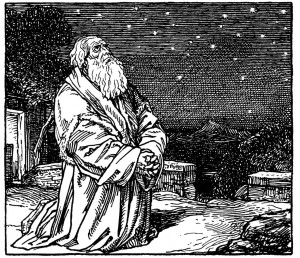
Matthew 13:43, Shine forth as the sun. The reward of the resurrected righteous will cause them to shine forth like the sun or stars (Dan 12:3), and like Yeshua (1 John 3:2), whose face shines like the sun (Rev 1:16), for he is the Sun of Righteousness (Mal 4:2), who will be the light of the New Jerusalem shining in place of the physical sun (Rev 21:23; 22:5; Isa 60:20).

Paul speaks of the resurrection of the saints or their glorification that will occur at that time, and he also likens the saints’ appearance to the stars. As stars have different levels of brightness, so too will the saints (1 Cor 15:41–43) in accordance with their levels of rewards based on their level of obedience to the Torah (Matt 5:19; 16:27; Rom 2:6–11; 2 Cor 5:10; Eph 6:8; 1 Pet 1:17; Rev 19:8; 22:12–15).

Hebrews 2:10 says,

For it became him, for whom are all things, and by whom are all things, in bringing many sons unto glory, to make the captain of their salvation perfect through sufferings.

The word glory in this verse means “majesty, excellence, dignity” as well as “the splendor or brightness of the stars.” Perhaps Paul’s statement in 1 Corinthians 2:9 makes more sense in this light.

But as it is written, Eye hath not seen, nor ear heard, neither have entered into the heart of man, the things which God hath prepared for them that love him.

Hopefully this word of encouragement from the Word of Elohim will help to brighten your day.


Messiah Yeshua—the Servant of Elohim

Matthew 12:18–21, Behold! My Servant. The nation of Israel was to be YHVH’s servant to be a spiritual light to the Gentiles (Isa 49:6 cp. Deut 4:5–6), yet Israel failed in their YHVH-ordained mission to evangelize the world. Therefore, YHVH raised up Yeshua out of Israel to be that Servant instead. This is why Matthew applies this prophecy to Yeshua in this passage.

Furthermore, Matthew in applying Isaiah’s prophecy to Yeshua’s first coming sees him not as fulfilling his kingly role (in Jewish thought, Messiah Son of David, the Conquering King [e.g. Rev 19–20]—of which the life of David was viewed as a prophetic prototype), but his servant role (in Jewish thought, Messiah Son of Joseph, the Suffering Servant [e.g. Isa 53]—of which the life of Joseph was viewed as a prophetic prototype). At Yeshua’s second coming, he will come as the Conquering King of kings and Lord of lords to defeat his enemies and to establish his kingdom on the earth.

Matthew 12:23, Son of David. The popular expectation of the Jews in Yeshua’s day was that the Messiah would come to fulfill the role as the Conquering King Messiah to liberate them from the tyranny of the Romans and to re-establish a sovereign Israelite nation. Even the followers of Yeshua thought this (e.g. Matt 20:21; Acts 1:6). Therefore, the Messianic expression Son of David was a euphemistic title reflecting this expectation.


The Heavens Declare

Psalms 19:1-3

The heavens declare the glory of El; and the firmament sheweth his handiwork. Day unto day uttereth speech, and night unto night sheweth knowledge. There is no speech nor language, where their voice is not heard.


You  gotta see this!

Louie Giglio – Nature Singing to God

http://www.youtube.com/watch?v=IB835wkz1Tc&feature=related


The Abrahamic Covenant Revisited

Genesis 12:1, Elohim’s covenant with Abraham. In the recent past on this blog, I inserted several teachings on the Abrahamic Covenant and how this covenant serves as the model for the process by which we as New Covenant believers are redeemed. If you didn’t have a chance to read them, or would like to refresh your understanding, I invite you to read them now.

To access these posts, either use the search and find box at the top of this page by typing in “Abrahamic Covenant,” or click on the phrase “Abrahamic Covenant” in the tag cloud on the right side of this page. Either way, all my past posts on this subject will pop up.

Understanding the Abrahamic Covenant is beneficial to your spiritual understanding in several ways.

  • It shows the character and nature of Elohim and how he relates to men legally.
  • It shows how the salvation of the redeemed believer is rooted in the Torah and, specifically, the Abrahamic Covenant. It’s not an invention of the Apostle Paul or the New Testament Christians.
  • We see the consistency  of the Word of Elohim from beginning to end, and the immutable nature of Elohim.
  • It will help you to understand the background of what Paul is saying in the Epistle to the Romans—especially in chapter 4.

Happy reading!


Blog Scripture Readings for 10/21 through 10/27/12

Aside

Parashat Lekh L’kha — Genesis 12:1 – 17:27
Haftarah — Isaiah 40:27 – 41:16
Prophets — Joshua 17:1 – 24:33
Writings — Psalms 15:1 – 21:13
Testimony — Matthew 10:25 – 14:21

Most of this week’s blog discussion points will be on these passages.

There are 4 sections of scripture to read each day. One each from the Torah, the Prophets, the Writings, and from the Testimony of Yeshua. Each week, the Torah reading will follow the traditional one-year reading cycle as well as the haftarah. By reading all the scriptures on this schedule each day, you will have read all scriptures from Genesis to Revelation by the end of next Sukkot (2013)!

The full Scripture Reading Schedule broken down by each day can be found on the right sidebar under “Helpful Links.”

If you have general comments or questions on the weekly Scripture readings not addressed in a blog post, here’s a place for you to post those. Just use the “leave a reply” link below.

Weekly Blog Scripture Readings for 10/21 through 10/27/2012


Meaning of Disciples’ Names

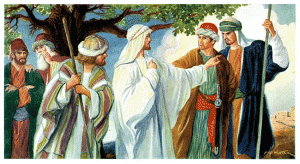
Matthew 10:2–4, The names of the twelve. The disciples’ names reflect the multilingualism that had influence over Jews of the first century in the land of Israel. Likely, Yeshua and his disciples were multilingual. They spoke Hebrew and Aramaic and likely had some knowledge of Greek as well.

  • Simon Peter  Heb. shimon (from shama) meaning “heard.” Gk. petros meaning “a rock or stone.”
  • Andereas Gr. (from aner) meaning “manly.”
  • James. Heb. jacob meaning “heal catcher, supplanter.”
  • John Heb. jochanan (Yah and chanan) meaning “YHVH has graced, shown mercy.”
  • Philip Gk. philoppos (philos meaning “friend” and hippos meaning “horse”) meaning “a friend or lover of horses.”
  • Bartholomaios Aram. meaning “son of Tolmai.”
  • Thomas Aram. meaning “coupled or joined together, twin.”
  • Matthew Heb. Matthaios or Mattiyahu meaning “gift of YHVH.”
  • Thaddaeus Of uncertain origin. Could be Greek or Hebrew.
  • Judas Heb. Yehudah meaning “praise.”
 

Introduction to the Psalms

Name of the Book

The Hebrew name for Psalms is Sepher Tehillim meaning “Book of Praises.” The word psalm is the Hebrew word mizmor meaning “melody” and derives from a word to mean “to sing, sing praise, make music.” The English word psalm derives from the Greek word psalmos meaning “a song sung to harp music.”

The Nature of the Book

The Book of Psalms is a collection of devotional materials including prayers, poems, and hymns, some of which were set to music. Worship and praise of Elohim through music is a unifying aspect of this book. The psalms include songs of thanksgiving, hymns of praise, psalms of repentance and confession, psalms that invoke curses upon one’s enemies, psalms sung by pilgrims en route to Jerusalem, and messianic psalms.

Authors of the Psalms

This book contains psalms by at least six authors. David wrote 73 psalms (according to the titles of the psalms) and two others are ascribed to him in the Testimony of Yeshua (Ps 2, see Acts 4:25 and Ps 95, see Heb 4:7). Asaph either wrote or was responsible for preserving 12 psalms (Pss 50 and 73 through 83). The sons of Korah wrote 11 psalms (Pss 42, 44 through 49). Solomon composed two psalms (Pss 72 and 127), while Etham wrote Psalms 89, Moses authored Psalm 90 (and possibly Ps 91), and Heman (Ps 88). Several Psalms have no designated author.

Categories of Psalms

The psalms can be group into four categories:

  • Didactic Psalms that give instruction (e.g., Ps 119).
  • The Messianic Psalms containing prophecies relating to the Messiah (e.g., Ps 22).
  • The Imprecatory Psalms where the servant of Elohim pleads his case before the Almighty pleading for justice for the righteous and punishment upon the wicked (e.g., Ps 109).
  • Penitential Psalms expressing the feelings of the repentant heart but also the desire for spiritual cleansing (Pss 32; 38; 51;102; 130; 143).

Other classifications of Psalms include:

  • Psalms of degrees or ascent (i.e., Pss 120–134). These are psalms that were sung on special occasions as the priests were ascending the steps of the temple, or that were sung as the Israelites were going up to Jerusalem to celebrate the yearly biblical pilgrimage feasts (i.e. Passover and the Feast of Unleavened Bread, the Feast of Weeks, the Feast of Tabernacles).
  • The miktam (or michtam) psalms (Pss 16; 56–60). Though the meaning of the term michtam is unclear, it seems to refer to a psalm that is considered as precious as stamped gold.

The Five Books Within the Psalms

According to Jewish tradition, the Book of Psalms can be divided into five smaller books or sections. They are,

  • Book One: Pss 1–41
  • Book Two: Pss 42–72
  • Book Three: Pss 73–89
  • Book Four: Pss 90–106
  • Book Five: Pss 107–150

Scholars aren’t sure why Psalms is so sub-divided. One theory is that the five sections correspond to the five books of the Torah (or Pentateuch). Or they may simply be individual collections of psalms that were eventually combined to form the larger book we now have.