Welcome to the Tabernacle of Moses

If you were the Creator of the universe, what means would you use to communicate with those that you had created through love in your likeness and image? In a remote way, it’s like a human standing over an anthill trying to communicate with the ants. What’s more, how does an all powerful, Spirit Being, loving Father in heaven relate to his mortal children who are but mere dust without vaporizing them with his raw power? The difficulty is compounded when fearful humans don’t want to hear the voice of Elohim, which is what happened when YHVH Elohim’s voice thundered from Mount Sinai. The children of Israel begged him not to talk to them, lest they die. They asked the Almighty One to speak to them instead through Moses (Exod 20:19).
Tabernacle-b 257138

When man sinned at the tree of knowledge and YHVH kicked them out of the Garden of Eden, direct communications between man and his Maker were hampered, if not all but cut off. However, Elohim had a plan to restore the loving relationship he had with man before the rebellion. But if men refuse to hear you when you speak, what are you do?

To be certain, the Almighty doesn’t lack for ways to communicate with men. Man is without excuse when it comes to hearing Elohim, for even the heaven’s declare the glory of the Creator and the plans he has for mankind. The visible things of this creation shout loudly about the spiritual mysteries heaven desires to reveal to its earthly subjects. Furthermore, Elohim speaks to select servants through dreams, visions, signs, wonders, angels, and even jackasses! But how does he speak to a whole nation, if that nation is plugging its ears refusing to hear its Master’s voice?

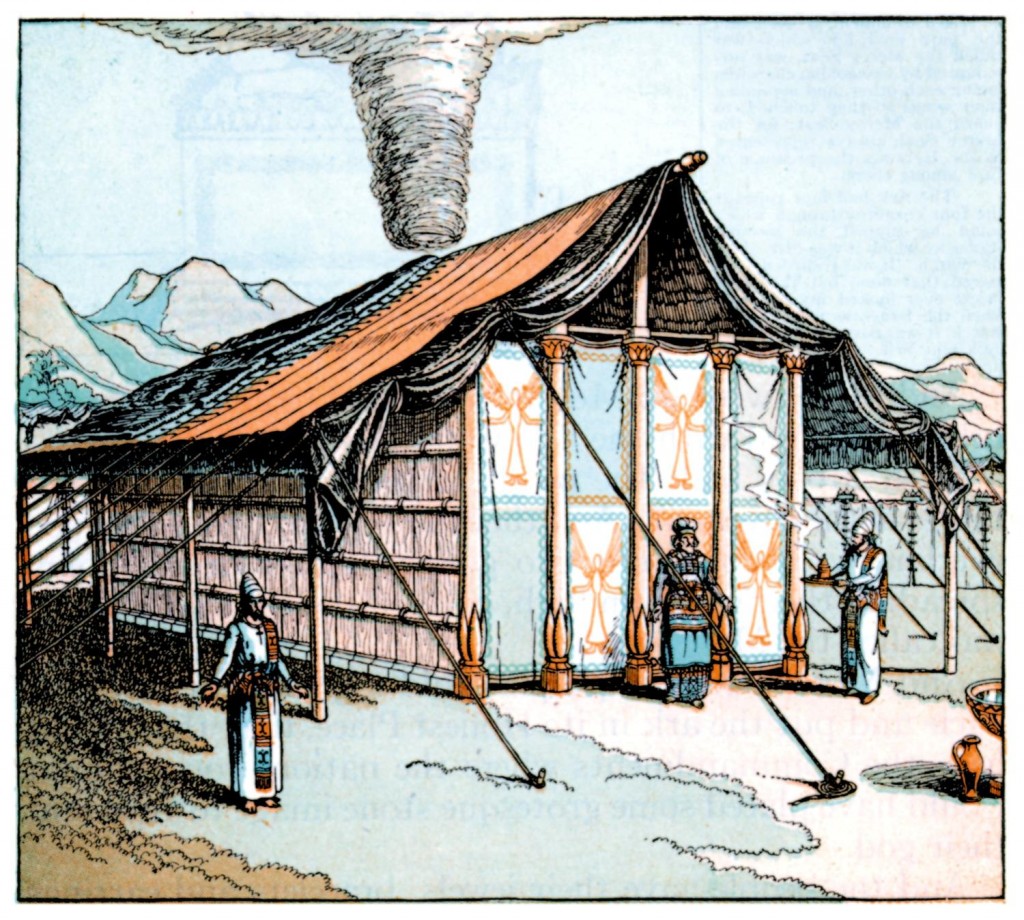
Enter into the picture the Tabernacle of Moses, which was literally a three-dimensional gospel message tract. It is the visual demonstration Continue reading →


Did Yeshua Break the Sabbath?

John 5:18, [Yeshua]… broke the Sabbath. Listen to an interesting and sad, but true story. Many years ago, I was in a meeting where a Christian Bible teacher was giving a message on the end times. In the middle of his teaching and totally out of context, he quoted this passage from John and claimed that Yeshua broke the Sabbath. There was a rustle in the audience of about 300 people. A little later, he made the same statement again and began to deride the Sabbath. This time there was an audible moan from some in the audience — many of whom were Sabbath keepers. A feeling of being hit in the gut went through me. A little later, he made the same statement again, and continued to bash Sabbath observance. This time, I could hold my peace no longer, and I stood up and challenged him in the middle of the meeting. I told him that to say that Yeshua had broken the Sabbath was to call Yeshua a sinner, and that Yeshua had not broken the Sabbath, but some Jewish legal traditions (or halakhah) pertaining to the Sabbath. The speaker was flustered and had no response, and the host of the meeting decided to take an intermission.

A year later, it was announced that this Bible teacher had suddenly and unexpectedly dropped dead in the pulpit while preaching. One can’t help but wonder…

Yeshua didn't come to set men free from the Sabbath. He came to set the Sabbath free from men's unbiblical traditions.

Yeshua didn’t come to set men free from the Sabbath. He came to set the Sabbath free from men’s unbiblical traditions.

Had this false teacher simply pulled down a concordance from his bookshelf and looked up the word broke in the Greek, and had read John’s statement in verse 12 in the context of verses 8–10, he wouldn’t have been teaching this blasphemous heresy about our Master and Savior!

Here is the explanation of this passage: The word broke Continue reading →


Do You Go to Heaven When You Die?

John 3:13, No one has ascended to heaven. Most Christians believe that when they die, they immediately go to heaven in spite of Yeshua’s clear statement in this verse.

Heaven, Christian -21823731

Some believers see this verse as referring to saints who died before his resurrection, but not true of those who died afterwards, even though Yeshua doesn’t say this. Therefore, they reason, this is why, according to Peter, David, who was born before Yeshua, is still resting in his grave awaiting the last days resurrection (Acts 2:29).

If what the majority of Christians believe on this subject is true, then the saints of old are second-class citizens and YHVH is a respecter persons (which he is not, see Acts 10:34; Rom 2:11) in that they have to wait for resurrection day and for their ultimate reward of eternal life, while saints born since Yeshua receive their glorified bodies immediately upon death.

Laying aside all the church traditions and doctrines of men, what does the Bible in the simplest and clearest terms say about the timing of the saints receiving immortality? Paul states that the resurrection of all the dead saints and their receiving immortality occurs not at the time of their physical death, but at the second coming of Yeshua at the last trumpet (1 Cor 15:51–54; 1 Thess 4:13–18 cp. Rev 11:15, 18).

Actually, men’s eternal inheritance isn’t heaven, but the New Jerusalem, which is coming down from heaven to the new earth (Rev 21:2).


Blog Scripture Readings for 2/10 through 2/16/13

Aside

Parashat Terumah — Exodus 25:1 – 27:19
Haftarah — 1 Kings 5:26 – 6:13 (12) *
Prophets — 2 Kings 22:1 – 25:30; Isaiah 1:1 – 4:6
Writings — Psalms 119:145 – 129:8
Testimony — John 3:22 – 6:71

Most of this week’s blog discussion points will be on these passages. If you have general comments or questions on the weekly Scripture readings not addressed in a blog post, here’s a place for you to post those. Just use the “leave a reply” link below.

The full “Read Through The Scriptures In A Year” schedule, broken down by each day, can be found on the right sidebar under “Helpful Links.” There are 4 sections of scripture to read each day. One each from the Torah, the Prophets, the Writings, and from the Testimony of Yeshua. Each week, the Torah and haftarah readings will follow the traditional one-year reading cycle.

Weekly Blog Scripture Readings for 2/10 through 2/16/13.

* Verse numbers in parenthesis refer to the verse number in Christian Bibles.


The Prophetic Implications of Water to Wine

Yeshua’s First Recorded Miracle: Water to Wine

John 2:1–12— And the third day there was a marriage in Cana of Galilee, and the mother of Yeshua was there, and both Yeshua was called, and his disciples, to the marriage. When they wanted wine, the mother of Yeshua said unto him, “They have no wine.” Yeshua said unto her, “Woman, what have I to do with you? Mine hour is not yet come.” His mother said unto the servants, “Whatever he says unto you, do it.” And there were set there six water pots of stone, after the manner of the purifying of the Jews, containing twenty or thirty gallons apiece. Yeshua said unto them, “Fill the water pots with water.” And they filled them up to the brim. And he said unto them, “Draw out now, and bring it unto the superintendent of the dining room.” And they brought it. When the superintendent of the dining room had tasted the water that was made wine, and knew not where it came from (but the servants which drew the water knew;) the superintendent of the dining room called the bridegroom and said unto him, “Every man at the beginning does set forth good wine; and when men have well drunk, then that which is worse, but you have kept the good wine until now.” This beginning of miracles did Yeshua in Cana of Galilee, and manifested forth his glory; and his disciples believed on him. After this he went down to Capernaum, he, and his mother, and his brethren, and his disciples, and they continued there not many days.

Water to wine 20438978

Prophetic Points to Analyze:

  • verse 1— and the third day
  • verse 1— a marriage
  • verse 1— in Cana of Galilee
  • verse 3— wine
  • verse 6— six water pots of stone
  • verse 7— water
  • verse 10— old versus new wine
  • verse 11— this was the first miracle of Yeshua’s ministry

“And the third day there was a marriage in Cana of Galilee …” The phrase “the third day” is a prophetic term meaning “in three thousands years” or “in the third millennia” (cp. Gen 22:4; Exod 19:11; Hos 6:2). In this passage, “the third day” is pointing to the time when there will be a marriage between Yeshua and his bride (the saints, Rev 19:7–9).

The wedding occurred at Cana of Galilee. Galilee is in the historic homeland of the house of Israel (Ephraim) or Northern Kingdom, yet in the time of Yeshua Continue reading →


Make No Mention

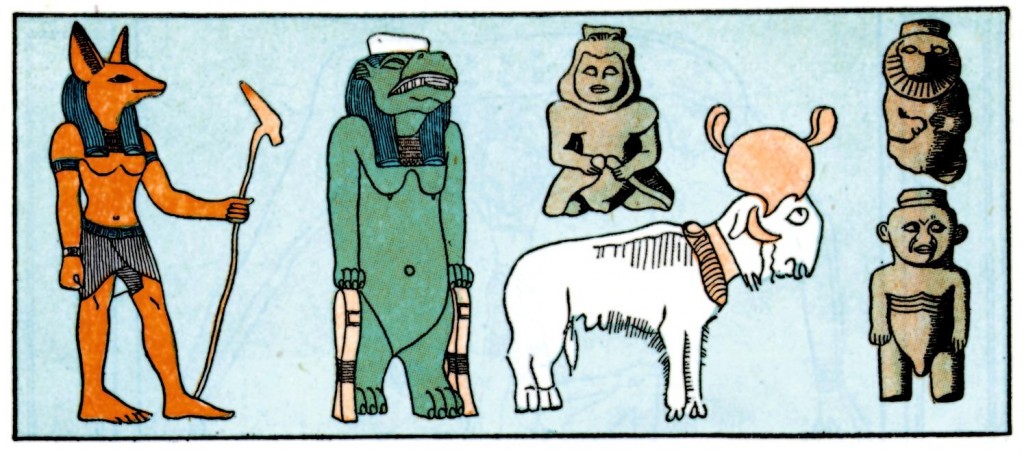
Exodus 23:13, Make no mention of the name of other gods, neither let it be heard out of your mouth. (See also Ps 16:4.) Not only is YHVH against the worship of pagan deities and wants their names to be destroyed (Deut 12:3), but he says that he will take from the lips of his people the names of pagan deities (Hos 2:17), and eventually, he will restore a pure language (presumably one that is free of pagan names) to his people (Zeph 3:9).

256826

Living this Torah principle out today is difficult in view of the fact that such common things as the days of the week and some of the months of the year are named for pagan deities making normal communication without using these names difficult. Nevertheless, the redeemed righteous of YHVH will endeavor to be mindful of this command and speak as cleanly as possible.

In our modern society, only a few people worship ancient pagan deities. In our materialistic and secular society, people are more likely to worship themselves, money, the mind of man, pleasure, power, fame, sex, entertainment, education, possessions, success or whatever else is first place in their lives ahead of YHVH Elohim.

By the way, the name Jesus doesn’t derive from the name of the Zeus, the name of a pagan Greek god, as some have erroneously claimed.


Blog Scripture Readings for 2/3 through 2/9/13

Aside

Parashat Mishpatim — Exodus 21:1 – 24:18
Haftarah — 2 Kings 12:1 – 17 **
Prophets — 2 Kings 15:1 – 21:26
Writings — Psalms 119:33 – 119:144
Testimony — Luke 23:44 – 24:52; John 1:1 – 3:21

Most of this week’s blog discussion points will be on these passages. If you have general comments or questions on the weekly Scripture readings not addressed in a blog post, here’s a place for you to post those. Just use the “leave a reply” link below.

The full “Read Through The Scriptures In A Year” schedule, broken down by each day, can be found on the right sidebar under “Helpful Links.” There are 4 sections of scripture to read each day. One each from the Torah, the Prophets, the Writings, and from the Testimony of Yeshua. Each week, the Torah and haftarah readings will follow the traditional one-year reading cycle.

Weekly Blog Scripture Readings for 2/3 through 2/9/13.

** A different Haftarah is read when it is a special sabbath in Jewish tradition. On 2/9 is the traditional “Shabbat Shekalim”, the Sabbath that falls just before the last rosh chodesh (new moon/month) of the year when the Shekels were “due” into the temple treasury. This haftarah is read as a reminder.