Overview of Romans — The Gospel, the Torah, & the Israelite Nation Reunited

The following overview of Romans is a radical departure from what the mainstream church teaches. Read it and see if what I say doesn’t unite the truth of the Bible from beginning to end, instead of pitting one section of the Bible against the other, which is  the approach the church typically takes when presenting the teachings of Paul.

The Main Themes of Romans

This is perhaps the only book in the Bible that is organized systematically like a theological textbook from beginning to end with each point leading to the next. This is not how biblical books are typically arranged.
Romans 65290914

In this epistle, there are several main themes.

Pre-eminently, Elohim is the Just Judge of the universe to whom all are accountable (both Jews and Gentiles). This concept alone is huge, since most humans don’t want to believe they’re accountable to anyone except their own egos.

The Torah is Elohim’s standard of righteousness by which he will judge the deeds of all men (both Jews and Gentiles) fairly. If people can accept the fact that there is a supreme Being to whom they’re accountable for their actions, then it’s a short next logical step to accept that such a Being (Elohim) has laws that man must follow if he’s not to run afoul of that Being.

Next, Paul counters a religious system that purported to explain who that Being was and what he required of sinful man. This was Judaism. The problem is that Judaism had perverted the truth of Elohim into a racially exclusive, legalistic, works-based salvational system. Paul attempts to correct this error, and restore this religion to its original truth.

Paul then presents the gospel message of salvation by grace through faith in Yeshua the Messiah is at the center of YHVH’s process to redeem sinful man.

Before Elohim, the Creator of the universe, there is no racial inequality between Jews and Gentiles. Elohim isn’t a racist. All are equal before him. All are sinners, and all need Yeshua.

Paul’s Epistle to the Romans keeps Yeshua and the gospel message front and center, yet at the same time Paul weaves together the good news of Yeshua with that of the righteous lifestyle of Torah-obedience. Together, these two messages form a beautiful tapestry-like picture encompassing the message of the entire Bible from Genesis to Revelation — a message of the salvation of man resulting in his being reconciled to Elohim, and his becoming elevated to the spiritual status as a child of Elohim. This process occurs through man’s relationship with Yeshua the Messiah who is both the Written Torah incarnate.

Part 1 — Introduction: The Cornerstone of the Gospel Message

At the very beginning of his epistle, Paul carefully and boldly sets in place the cornerstone for what is to follow. He declares the preeminence of the gospel message and his submission to the lordship of Yeshua the Messiah and his unflinching mission to preach this truth.

1:1–17, The theme of Yeshua and the gospel message are front and center.

Part 2 — Putting Man in His Place

In this section, Paul climbs into the seat of his spiritual bulldozer and begins leveling the playing field between opposing groups of people by putting man in his rightful place before Elohim, who is the Just Judge of the universe. He first attacks the godless heathen for Continue reading

 

Blog Scripture Readings for 5-31 Through 6-6-15

Aside

THIS WEEK’S SCRIPTURE READINGS FOR STUDY AND DISCUSSION:

Parashat B’ha’alatkha — Numbers 8:1 – 12:16 
Haftarah — Zechariah 2:14 (10)* – 4:7
Prophets — Jeremiah 31:1 – 37:21
Writings —Ecclesiastes 1:1 – 7:29
Testimony — Romans 3:1 – 9:33

Most of this week’s blog discussion points will be on these passages. If you have general comments or questions on the weekly Scripture readings not addressed in a blog post, here’s a place for you to post those. Just use the “leave a reply” link below.

The full “Read Through The Scriptures In A Year” schedule, broken down by each day, can be found on the right sidebar under “Helpful Links.” There are 4 sections of scripture to read each day. One each from the Torah, the Prophets, the Writings, and from the Testimony of Yeshua. Each week, the Torah and haftarah readings will follow the traditional one-year reading cycle.

* Verse numbers in parenthesis refer to the verse number in Christian Bibles when it differs from the Hebrew Bible or Tanakh.

Weekly Blog Scripture Readings for 5/31 through 6/6/15.


Hanging Out in the Holy of Holies

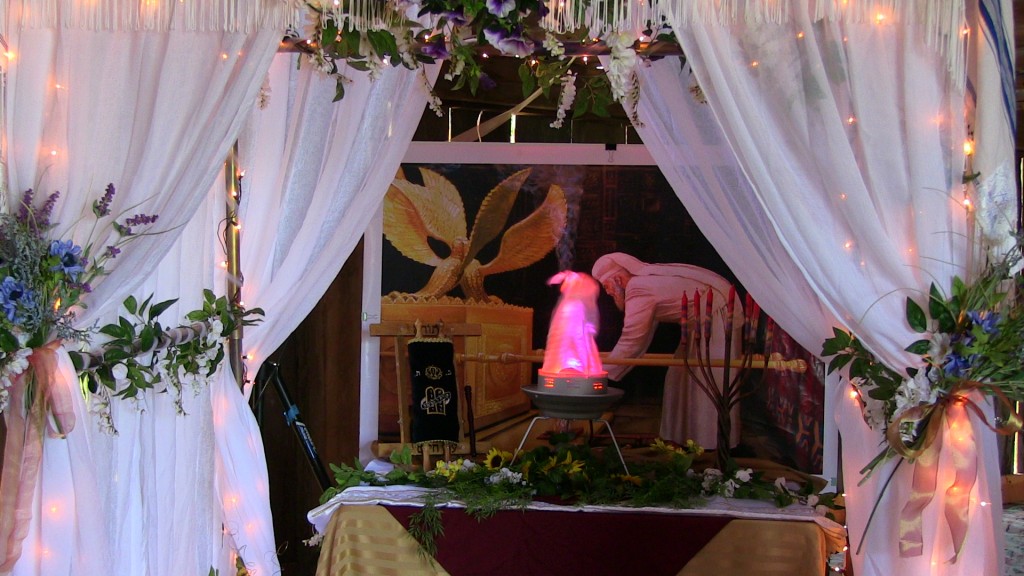
Numbers 7:89, When Moses. Moses going into the inner most sanctuary of the tabernacle is a lesson for us in experiencing intimacy with YHVH Elohim.

The holy of holies in the tabernacle from which the voice of YHVH emanated pictured what? (See Rev 7:15.) The Tabernacle of Moses is a spiritual picture of what? (Read Eph 3:21–22; 1 Cor 3:16; 1 Pet 2:5.) If the saints are the temple of the Set-Apart Spirit, can they, like Moses, hear the voice of Elohim? (See what Yeshua said in answer to this question in John 10:3–5, 27 cp. Acts 8:29; 10:19; 11:12; 29:4.)

How does YHVH now speak to his people? (Note John 16:13; 1 Cor 2:12.) How does the Spirit interact with man to speak the mind, heart and will of Elohim to humans? (See John 14:17; Job 32:8; Prov 20:27; Rom 8:16; Eph 3:16; 1 John 2:20, 27; 4:2–3; 1 Cor 2:10–14.)

IMG_0306

A corollary passages to this verse is found in Psalms 61:4 where David speaks of abiding in YHVH’s tabernacle forever, and putting his trust in the shelter of YHVH’s wings. Consider this. Over the mercy seat on the ark of the covenant are the over-shadowing wings of the two cherubim, which is representative of Elohim’s throne and glorious Presence on earth (see Isa 37:16; Ezek 10:1–22; 11:22–23). It was in this place of intimate worship before the “Rock that his higher than me” (verse 2) that David sought shelter or refuge and deliverance from his enemies (verse 3). Phrases like, “under the shadow of your wings” is a Hebraism meaning “before YHVH in the place and state of worship” (see also Pss 17:8; 36:7; 57:1; 63:7; 91:1,4). It was also in this place —between the cherubim — that Moses heard the voice of Elohim (Num 7:89), and that David would see the power or might, strength and glory or manifest Presence of Elohim in a prophetic, ecstatic or spiritual vision (Ps 63:2).

The saints now have access to throne of Elohim through prayer (Rev 5:8; 8:3). Occasionally, YHVH will still communicate with his servants through an audible voice, dreams, visions, or an angelic visitation. But this is rare even as it was in biblical times. This is because YHVH is testing his people to see if they will walk by faith, not by sight (2 Cor 5:7), and will remain faithful to his written word.

Currently, YHVH is refining, testing and preparing his bride for her marriage to him. Will she be faithful to him having never seen him? The time is coming, however, when she will be in YHVH’s blessed Presence forever, which is the object or end goal of her faith.


Gifts for the One Who Already Has Everything

Numbers 7:12–88, A silver platter…silver bowl…fine flour mixed with oil…one gold pan/ladle…full of incense…one young bull. These items that each tribe brought as a gift to the tabernacle symbolize spiritual aspects of the redeemed believer’s life. Let’s now explore this.

Gifts 20391749

By offering these gifts to YHVH for the tabernacle service, it’s as if, as Matthew Henry points out in his commentary, that the tribes were preparing a banqueting table for YHVH Elohim, the Great King. He desires to abide and to fellowship with his people (see Exod 25:8).

Each tribe bringing the same gift signifies what? (See Deut 10:17; Acts 10:34 cp. Rom 2:11; Col 3:11.)

We see that YHVH is totally impartial and righteous in his dealings with men. Silver represents what in the Scriptures? (Note Lev 5:15 cp. 1 Pet 1:18.)

The Scriptures liken man to what? (Read Isa 64:8 cp. Acts 9:15; 2 Tim 2:20–21.)

The fine flour mixed with oil to make unleavened bread on the altar of Elohim is a spiritual picture of what? (See John 6:35,48 cp. 1 Cor 5:7.)

Gold in the Scriptures is always a picture of that which is of the highest quality and value. It is a picture of YHVH’s thoughts and character (see Exod 39:1, 30), and the priceless value of his Torah-word (note Ps 119:72, 127). Golden bowls full of incense symbolizes what? (See Rev 5:8; 8:3.)

The animals gifts that the tribes brought pictured what? (Read Heb 9:11–15; 10:12–13.)

As you can see, these gifts were symbolic of spiritual realities in the life of the redeemed believer. (Ponder or discuss this.) What can man possibly give to YHVH that he doesn’t already have? Any gift we give to him is simply a symbolic gesture of our love and devotion to him. It speaks of the condition of our heart vis-à-vis our relationship with our Heavenly Father, and when our hearts our hearts are totally inclined to serve him, this pleases him immensely!


Blog Scripture Readings for 5-24 Through 5-30-15

Aside

THIS WEEK’S SCRIPTURE READINGS FOR STUDY AND DISCUSSION:

Parashat Nasso — Numbers 4:21 – 7:89 
Haftarah — Judges 13:2-25
Prophets — Jeremiah 24:1 – 30:24
Writings — Ruth 4:1-22; Lamentations 1:1 – 5:22
Testimony — 1 John 4:1 – 5:21; 2 John; 3 John; Jude; Romans 1:1 – 2:29

Most of this week’s blog discussion points will be on these passages. If you have general comments or questions on the weekly Scripture readings not addressed in a blog post, here’s a place for you to post those. Just use the “leave a reply” link below.

The full “Read Through The Scriptures In A Year” schedule, broken down by each day, can be found on the right sidebar under “Helpful Links.” There are 4 sections of scripture to read each day. One each from the Torah, the Prophets, the Writings, and from the Testimony of Yeshua. Each week, the Torah and haftarah readings will follow the traditional one-year reading cycle.

* Verse numbers in parenthesis refer to the verse number in Christian Bibles when it differs from the Hebrew Bible or Tanakh.

Weekly Blog Scripture Readings for 5/24 through 5/30/15.


The Spangled Banners of the Twelve Tribes

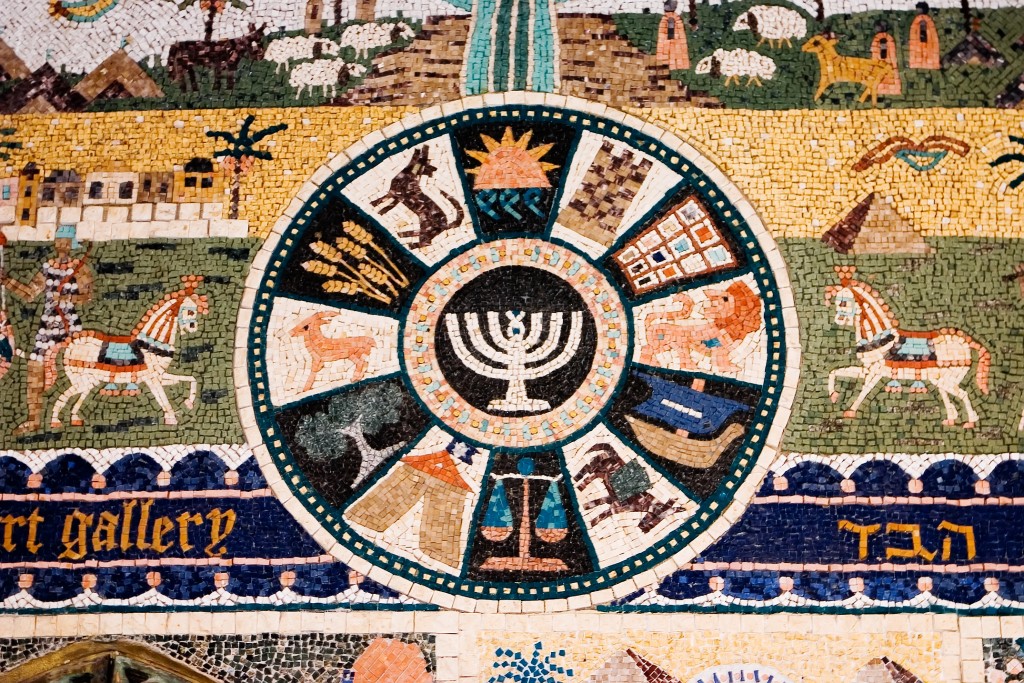
Numbers 1:52, Standard [or banner]. Each tribe had its own flag or banner. Although the Torah doesn’t tell us what these flags looked like, Jewish oral tradition records this information. According to Numbers Midrash Rabbah, the flag of each tribe was the color of its stone in the high priests breastplate and is described as follows:

mosaics in cardo blvd, jerusalem, israel

  • Reuben’s stone was ruby and the color of the flag was red with embroidered mandrakes.
  • Simeon was topaz and his flag was green with the town of Shechem embroidered thereon.
  • Levi was smaragd (like an emerald) and the color of his flag was one third each of white, black and red and was embroidered with the urim and thummim.
  • Judah’s was carbuncle and the color of his flag was like the heavens and was embroidered with a lion.
  • Issachar’s was a sapphire and the color of his flag was black and embroidered on it was the sun and moon, which is an allusion to the text in 1 Chronicles 12:33 that the sons of Issachar understood times.
  • Zebulun’s was an emerald and the color of his flag was white with a ship embroidered on it in allusion to the text that Zebulun shall dwell at the shore of the sea (Gen 49:13).
  • Dan’s stone was the jacinth and the color of his flag was similar to sapphire, and embroidered on it was a serpent in allusion to the text that Dan shall be a serpent in the way (Gen 49:17).
  • Gad’s was an agate and the color of his flag was a blend of black and white, and on it was embroidered a camp in allusion to text that says Gad shall be a troop (Gen 49:19).
  • Naphtali was an amethyst and the color of his flag was like clarified wine of not a very deep red, and on it was embroidered a dear in allusion to the text which says that Naphtali will be like a dear let loose (Gen 49:21).
  • Asher was beryl and the color of his flag was like the precious stone with which women adorn themselves, and embroidered with an olive tree in allusion to the text that says that Asher’s bread shall be fat (Gen 49:20).
  • Joseph was an onyx and the color of his flag was jet black and embroidered thereon for both princes, Ephraim and Manasseh, was Egypt because they were born in Egypt.
  • On Ephraim’s flag was embroidered a bullock in allusion to the text that says his firstling would be a bullock (Deut 33:17).
  • On Manasseh’s flag was embroidered a wild ox in allusion to the text which says his horns are that of a wild ox (Deut 33:13), which alludes to Gideon, the Joash, who came from that tribe.
  • Benjamin’s stone was jasper and the color of his flag was combination of all the twelve colors, and embroidered thereon was a wolf in allusion to the text that says that Benjamin is ravenous like a wolf (Gen 49:27).

Now compare this list of precious and semiprecious stones with the list of stones that will comprise the twelve foundations of the New Jerusalem (Rev 21:19–21). There are a lot of similarities.


General Overview of the Book of Numbers (B’midbar)

The English name Numbers derives from the fact that in this book the Israelites are counted or numbered on several occasions (see chapters 1, 2, 3, 4, 26). Leviticus ends with YHVH instructing his people to count their flocks for tithe purposes, while Numbers begins with YHVH, as the ultimate Good Shepherd (or in Hebrews, YHVH Rohee), counting the Israelites themselves, who are the sheep of his pasture (Pss 74:1; 79:13; 95:7; 100:3). The fact that this counting took place in the wilderness proves that it was not for political or national economic reasons, but was in fulfillment of YHVH’s Torah instructions. Each Israelite was to give a half-shekel of silver toward the maintenance of the tabernacle. The shekels then counted would give the exact number of Israelites (Exod 30:12–16).

Numbers, Book of 65289250

The Hebrew name B’midbar meaning “in the wilderness” originates from the fact that this book chronicles Israel’s wandering in the wilderness. The Book of Exodus, on the other hand, records the deliverance of Israel from Egypt, its establishment as a nation, its covenantal relationship with YHVH and the construction of the tabernacle (mishkan), which was the symbol of YHVH dwelling or tabernacling in the midst of his chosen people. The Book of Leviticus deals with the inner workings of that tabernacle and the mechanics of how sinful man could maintain a right spiritual relationship with a righteous Elohim. This was accomplished through the agency of the Levitical priesthood that would function within the tabernacle as a human intermediary between man and his Creator.

The Book of Numbers covers much of Israel’s forty years wandering in the wilderness and recounts the early years of this nation under YHVH’s theocratic rule. Recorded are Israel’s triumphs and defeats, its obedience and disobedience to YHVH’s rule of law and the resulting consequences whether blessing or cursings.

In this book, we see several main subdivisions. Chapters 1:1–10:10 cover instructions from YHVH to Israel while still at Mount Sinai. Chapters 10:11–36:13 cover the Israelite’s actual wilderness journey. The second section dealing with the wilderness journey has two main parts: the perishing in the wilderness of the older generation (10:11–25:18), and the preparation of the second generation of Israelites to enter the Promised Land (chapters 26–36).

Reoccurring themes in the Book of Numbers include the continual murmuring of Israelites and the divine punishment on them as a result. YHVH made promises to care for them and lead them into the Promised Land. Instead of having faith and trust in him, with few exceptions, the Israelites exhibited doubt and unbelief in YHVH. As a result, the entire older generation, with the exception of faithful Joshua and Caleb, perished in the wilderness never to realize the promises YHVH had made to them concerning the Promised Land. This is a poignant lesson for all believers in their faith walk. The spiritual application of this lesson is not missed by the writer of the Epistle to the Hebrews in chapter four of that book. When YHVH makes promises, his people need to embrace those promises with enthusiastic and optimistic faith and never let them go. After all, if we cannot trust our Creator, then who or what can we trust?

In this book, we see revealed the grace of YHVH, that he is longsuffering and slow to anger (14:20–38), but that he is also just, and as a father, he disciplines those he loves. His judgments are measured and progressive. The more his children refuse to obey him and resist him, the stronger the judgments. Eventually, the older generation of Israelites died off in the wilderness. This teaches us that death is the final judgment against the sin of rebellion and unbelief. There are no eternal rewards or spiritual inheritance for those who refuse to take hold of YHVH’s promises and to go forward in faith and faithful obedience to him.

We see the work and person of the future Yeshua the Messiah in the Book of Numbers as well. As Provider, he meets all of Israel’s needs both physical and spiritual. Paul reveals that Yeshua was the spiritual Rock that gave them water in the wilderness (1 Cor 10:4). Twice, Israel received water from the rock (Exod 17:1–7 and Num 20:1–13). Additionally, the secular prophet, Balaam, prophesied about the Messiah who was to rise out of Israel like a star (Num 24:17). Leading rabbinic Jews sages, such as Akiva ben Joseph of the early modern era, mistakenly applied this verse to the Jewish zealot, Bar Kokhba, when he endeavored to throw off the yoke of Roman rule over the Jewish people during the Second Jewish Revolt of A.D. 133–135.