Who Is “the Israel of Elohim” or “The One New Man”?

In Galatians 6:16, Paul makes an interesting statement that most people blithely pass over. In his final salutations to the saints of Galatia, he refers to them as “the Israel of Elohim/God.” Likely this church was comprised of some Jews, but mostly Greeks of non-Jewish ethnic origination, so why is he referring to all as “the Israel of Elohim”? What is Paul thinking here and what important biblical truth is he trying to convey? We will discuss the ramifications of this statement below.

Let’s begin to answer the question, “Who is Israel by Israel? by asking another question:
With whom does the Bible say that the Creator of the Universe (YHVH/Yehovah Elohim) want to have an eternal relationship? We know that YHVH Elohim (God) loves everyone and sent his Son to the earth that the whole world might be saved (John 3:16). We also know that he desires that no men should perish, but that all should come to repentance (2 Pet 3:9). But there’s a problem. The Bible—the Word of Elohim — also teaches that one can only enter into relationship with the Creator—YHVH Elohim—(resulting in salvation and immortality) by coming through Yeshua (Jesus) the Jewish Messiah via a personal and covenantal relationship with him.

This begs the next question. With whom does the Creator make covenants? Anyone and everyone? No. 

In the Apostolic Scriptures (New Testament), YHVH Elohim declares that in the end times, he will make a new covenant with the two houses of Israel (not the Gentiles or non-Israelites)—that is, the house of Judah and the house of Israel (Heb 8:8). We know who Judah is (i.e., the Jews), but who is the house of Israel?

Continue reading

 

What’s the deal with the biblical command to wear fringes?

Numbers 15:37–41. Tassels on the corners. The command to wear tzitzits on the corners of one’s garment was to act as a reminder to keep one from committing intentional sins, even as a wedding ring worn on the finger serves to remind one of one’s marriage covenant, and help keep one from committing adultery. This is why this command is placed directly after the warning against committing intentional sin (vv. 30–31), and the example of the man who committed intentional sin by gathering sticks on the Sabbath (vv. 32–36).

Corners. The ancient Israelites wore four cornered tunic-like garments. Why did YHVH instruct them to wear tzitzits on the four corners? This was likely to teach them that the Israelites’ Torah-based covenant with Elohim was there to box them in, to surround them, to remind them of their sworn obligations to Elohim,to keep them on the right path spiritually, and to protect them, so that they would receive Elohim’s blessings and be his representatives to the surrounding nations. With this view in mind, the shape of the garment is no longer the issue. That happened to be the style of clothing of that day. We no longer wear four-cornered garments. What matters is to wear four tzitzits on one’s four sides to represent our spiritual commitments to Elohim and our allegiance to his word, the Torah, and our understanding that his word will guide, direct, protect and bless us is we treasure it and adhere to it. Tzitzits are to our relationship with Elohim what a wedding ring is to our spousal relationship.

The Law of the Fringes Tzitzits 

Shofars, Davidic worship dance, prayer shawls (talit or tallit), a Torah scroll and tzitziyot (plural for ­tzitzit — fringes or tassels) all have something in common: they are hallmark symbols of those who are returning to the Hebrew roots of their faith. When a Christian begins to discover their ancient spiritual roots, it’s like coming home, or like a hand fitting into a glove. It’s not long before they begin acting out their renewed faith in a highly demonstrable manner such as growing beards, wearing fringes, blowing shofars, keeping the Sabbath and biblical feasts. Outsiders may view this as mere religious fanaticism and exhibitionism, but to the saint who truly feels that he has returned to his spiritual roots, these things are symbols of a faith that is more than superficial in nature. They represent a connectedness to his spiritual family tree, to the nation of Israel and eventually to the God of Israel, YHVH Elohim, the originator of that faith, family tree and nation.

Continue reading
 

Has He really told you to go up?

Numbers 14:40–45, We … will go up. Here we see the Israelites preparing to go and to possess Canaan in their own strength and against the will of YHVH. Where did this carnally-driven endeavor lead them?

Matthew Henry discusses how this act demonstrates how the carnal mind is enmity against YHVH (Rom 8:7), for when he bade them to go, they would not, and when he forbade the children of Israel from going, that is when they decided to go. They distrusted his strength, and trusted in their own. What was the result of their expedition? Failure!

Let us take warning from the fate of Israel, lest we perish after the same example of their unbelief. Let us go forth, depending on YHVH’s mercy, power, promise and truth. Do you think that the Israelites were rationally aware of what they were doing? We can easily look back in 20/20 hindsight and see the folly of their ways, but let us pray that YHVH gives us the discernment to see when each of us is guilty of the same in our own lives.

From Psalm 37,

Delight yourself also in YHVH, and He shall give you the desires of your heart.  Commit your way to YHVH, trust also in Him, and He shall bring it to pass.…Rest in YHVH, and wait patiently for Him…The steps of a good man are ordered by YHVH, and He delights in his way.


Are we any different?

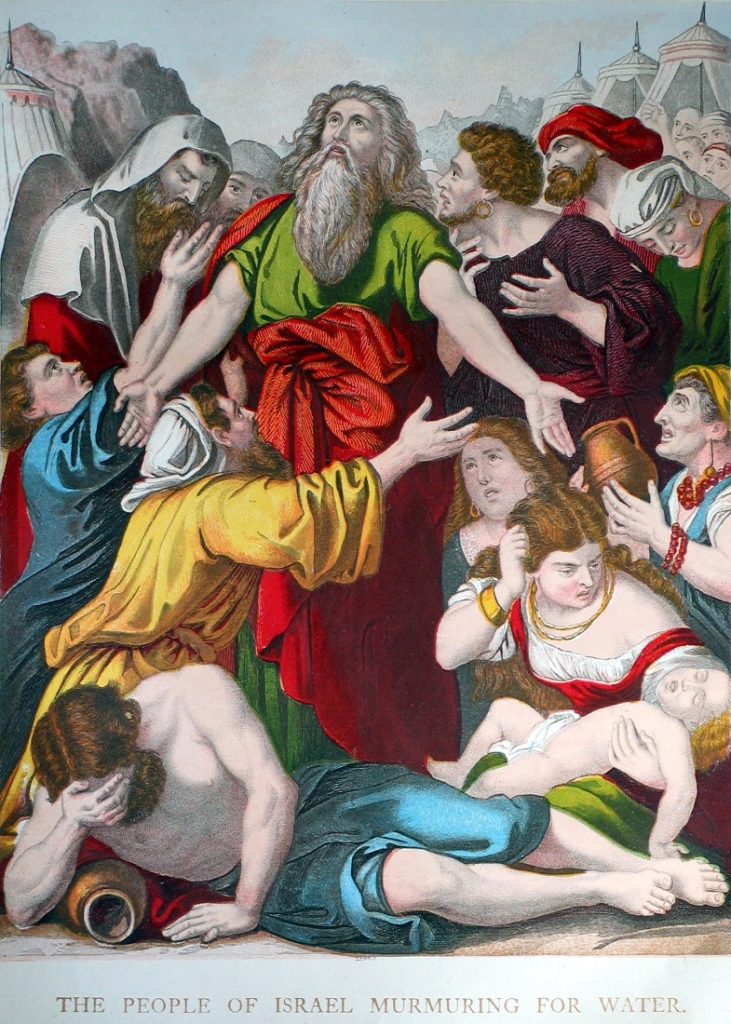
Numbers 14:22, Have tempted me now these ten times. Israel, while in the wilderness, tested YHVH ten times and refused to heed his voice.

According to the Jewish sages, these ten times were: Exodus 14:11; 15:24; 16:3; 16:20; 16:27; 17:2; 32:4; Numbers 11:1; 11:4; and here (i.e. believing the spies’ evil report). Look at each of these incidents where Israel “tested” YHVH and preferred to walk in doubt and unbelief rather than to trust YHVH’s Word.

These are examples for us to learn from (1 Cor 10:11). Be blatantly honest with yourself: how many times have you tested your Heavenly Father in the same areas Israel did?

Human nature and carnality has remained the same from then until now.


Caleb and Joshua—Men of Faith

Numbers 13:6, Caleb the son of Jephunneh.Although Caleb is listed here as being from the tribe of Judah, he nevertheless was of Canaanite heritage having become part of Judah when they conquered the land of Caleb’s ancestors. Elsewhere, the Torah lists Caleb as the son of Jephunneh, the Kenizzite (Num 32:12, also Josh 14:6, 14). Who were the Kenizzites (also Kenezite)? They were among the original inhabitants of Canaan (Gen 15:19), that Israel eventually dispossessed when taking the Promised Land. This people originated from Eliphaz, the oldest son of Esau. Thus, Caleb was an Edomite who accepted the Elohim of Israel and became grafted into the tribe of Judah (Josh 15:13). Throughout the Tanakh, Edom (a nickname for Esau) remains a sworn enemy of Israel maintaining a perpetual hatred for YHVH’s people and constantly covetous of their land even into modern times. In fact, the case could be made that the modern day Palestinians, if not descendants of Edom, at least manifest the same hatred for Israel as did the ancient Edomites. It is out of this people that Caleb comes.

The name Caleb means “dog,” although it can have the favorable connotation of faithful, loving and tenacious like a dog. Indeed, in his life, Caleb exemplified his name’s meaning in his faithfulness to the Elohim of Israel, in his faith and tenacious zeal to go up and to conquer the Promised Land as YHVH commanded.

Evidently Caleb defected from his own tribal peoples and joined the Israelites, while they were wandering in wilderness and before they came up to take the Promised Land. This speaks volumes about Caleb’s character in that he was willing to forsake his pagan heritage and align himself with the Elohim and people of Israel years before they actually dispossessed his people of their ancestral land. Caleb remained aligned with those who took that land and killed his heathen family. 

Indeed, Caleb was a unique individual in that he chose a spiritual path less traveled and one that was unpopular, and he clung ardently to that path despite, at times, vicious opposition. The Torah records that he had a different spirit and that he fully followed Elohim (Num 14:24). For this, YHVH promised him an inheritance in the Promised Land (ibid.). May we be like Caleb!

Numbers 13:16, Moses called Hoshea the son of Nun Yehoshua. Prior to sending the spies forth, Moses renames his assistant Hoshea (whose name means “salvation”) to Yehoshua (or Joshua,meaning “Yah [short for Yehovah] Saves”) by adding the Hebrew letter yud to Hoshea’s name so that his name would now begin with the first letter of YHVH’s name—the English letter “Y”.

What was the prophetic significance of this name change? Who is it that will lead us into our spiritual Promised Land or our spiritual and eternal rest? (See Heb 4:8 and 11, especially verse 8, where the author shows that Yehoshua was the foreshadow of Yeshua.)

Do you possess a vibrant and active faith in Yeshua? Is he the Chief Cornerstone of your spiritual house, the Author and Finisher of your faith and the Captain of your salvation to lead you into the spiritual rest of his eternal kingdom? Are you faithfully following him as the Israelites followed Yehoshua/Joshua into the Promised Land?


Are you walking by faith or by sight?

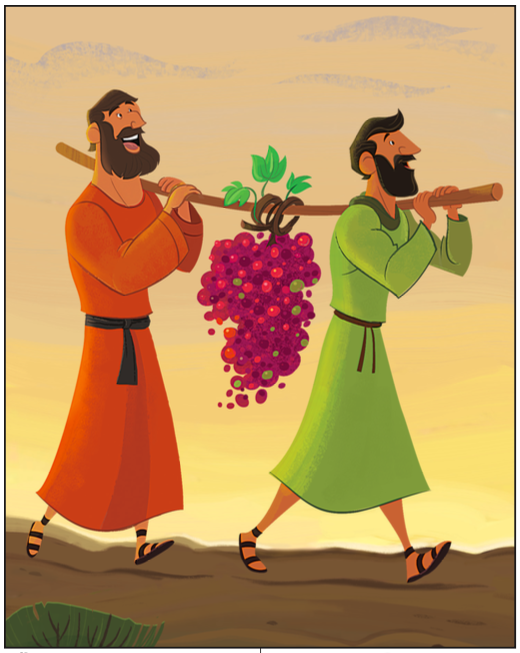
Numbers 13:2, Send forth men, if you please (The ArtScroll Stone Edition Chumash).The implication here is that Elohim gave Moses permission to send out the spies, but left the final decision up to him. This idea is confirmed in Deuteronomy 1:22 where Moses states that the idea to spy out the land came from the Israelites, not from YHVH. By allowing them to do this, it appears that YHVH was deliberately putting them to the test to see if they would trust him when he had already told them that Canaan was a good land and theirs for the taking with his help. Would they walk by faith in his word and promises or would they have to see the actual land before believing YHVH’s word? 

When YHVH gives you a promise, do you have to see it come to pass before believing it, or are you able simply to begin taking steps of faith toward the fulfillment of the promises without actually seeing any tangible evidence of the end goal? What has YHVH promised you and what steps of faith have you taken toward possessing your spiritual “promised inheritance?” (Note the scriptural definition of faith in Heb 11:1.)

YHVH did not choose the twelve spies, the people did; hence, the name of this parashah, “Send for Yourselves.” When people choose their own leaders the failure rate is high­—in this case ten of twelve leaders were faithless duds. Man-inspired and initiated efforts seldom produce lasting spiritual benefits. This effort ended in the faithless leaders shouting down those who had courage and faith. In the spiritual destiny that YHVH has called you to pursue, do you act like Caleb and Joshua or one of the other ten spies? Are you running upward and onward toward your spiritual inheritance, or are you holding back? Are you hearing the voice of YHVH’s Spirit so that you know what your personal spiritual marching orders are? Do you know how to hear his voice? If not, why not? Most of us sometimes act as Joshuas and Calebs and at times like the other ten spies. We tend to be inconsistent in our spiritual walk. What are you doing to become more like Joshua and Caleb?

Eighteenth-century Christian Bible commentator, Matthew Henry, in his comments on this passage, discusses the demerits of the people’s choice to search out the land of Canaan. He then compares the unbelief of the ten carnal spies with the doubt and unbelief in the walk of the believer. He notes that the motion to search out the land appears to have come from the people (see Deut 1:22). They had a better opinion of their own policy than of Elohim’s wisdom. Thus we ruin ourselves, he says, by believing the reports and representations of sense rather than of divine revelation. We walk by sight, not by faith (pp. 130–131, ­Matthew Henry Concise Commentary on the Whole Bible, Moody Press). 

What is “divine revelation?” One does not hear this concept often discussed. What is it and how does a born-again believer receive it? Henry continues, Difficulties that are in the way of salvation dwindle and vanish before a lively, active faith in the power and promise of Elohim. All things are possible, if they are promised, to him that believes, but carnal sense and carnal professors are not to be trusted. Unbelief overlooks the promises and power of Elohim, magnifies every danger and difficulty, and fills the heart with discouragement. May YHVH help us to believe! We shall then find that all things are possible through him who strengthens us (Ibid.)


Blog Scripture Readings for 6-23 Through 6-29-19

Aside

Parashat Sh’lach L’cha — Numbers 13:1 – 15:41 
Haftarah — Joshua 2:1-24
Prophets — Jeremiah 51:36 – 52:34; Ezekiel 1:1 – 5:17
Writings — Ecclesiastes 9:1 – 12:14; Esther 1:1 – 3:15
Testimony — 1 Corinthians 1:1 – 7:24

Most of this week’s blog discussion points will be on these passages. If you have general comments or questions on the weekly Scripture readings not addressed in a blog post, here’s a place for you to post those. Just use the “leave a reply” link below.

The full “Read Through The Scriptures In A Year” schedule, broken down by each day, can be found on the right sidebar under “Helpful Links.” There are 4 sections of scripture to read each day: one each from the Torah, the Prophets, the Writings, and from the Testimony of Yeshua. Each week, the Torah and haftarah readings will follow the traditional one-year reading cycle.

Weekly Blog Scripture Readings for 6/23/19 through 6/29/19.