If It Looks Like a Duck… It Must Be Xmas!

Jeremiah 10:1, Do not learn the way of the nations. This passage is familiar to a few people, but unfamiliar to the majority. After YHVH’s admonition to his people to not follow the idolatrous customs of the heathen nations, Jeremiah describes one of their “futile” or “vain” (literally, empty or meaningless) customs—one with which we are all familiar! What follows is a perfect description of a Christmas tree minus the star on top, twinkle lights and a few other garish ornamentations. Some ardent devotes of Christmas aver that Jeremiah’s tree is not a Christmas tree, since this passage was penned long before the birth of Christ. This is true. However, much later (in about the fifth century AD) the church simply added “Christ” to a pagan custom that long pre-existed the birth of the Messiah. Therefore, as the expression goes: If it looks, acts and sounds like a duck, it must be one!

But what is the greater message of this passage in the larger context of the surrounding scripture verses? This is often overlooked. Understanding context is perhaps the greatest key to understanding the truths of the Bible!

Before and after Jeremiah’s description of the modern Christmas tree, are numerous lamentations about YHVH’s people abandoning his Torah-laws for heathen and carnal practices (e.g., 8:9; 9:13–14). They have backslid spiritually (e.g., 8:5–6) by turning to the idolatrous practices of the surrounding pagan nations (e.g., 8:19; 10:8–9, 14–15). Even their shepherds (spiritual leaders such as pastors have become brutish or dull-hearted in this regard and have turned away from YHVH (e.g. 10:21).

In the midst of Jeremiah’s woeful lament over Israel’s spiritual declension are warnings from the Almighty about the judgments that will come upon Israel if it fails to repent and turn from its heathen ways (e.g. 8:13, 15–19; 9:7–12, 15–22, 25–26; 10:10–11; 17–25).

Perhaps YHVH’s greatest accusation against his people comes in the last verse of chapter 9, just before the description of the Christmas tree. YHVH accuses the people of Israel of being “uncircumcised in heart.” This is a biblical expression that means that a person’s heart is hardened or calloused to the truth of YHVH as revealed in his Word. Such a person is more inclined to follow the ways of the world, the flesh and the devil than to love YHVH Elohim by obeying his commandments (see John 14:15) whether it’s convenient, expedient or popular or not (note what Yeshua says in John 12:43).

We’ve all heard the excuses… “I can’t give up Christmas because…. Our family… My mother-in-law… My kids… What will people think if…” You fill in the blanks. More Importantly, what does YHVH Elohim say about this? Well, he tells us quite clearly and unmistakably in Jeremiah 10 and the surrounding chapters!

 

Parallels Between Jeremiah’s Day and Ours

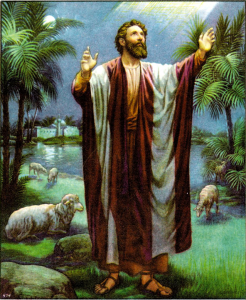
Jeremiah chapters 1—8. As you all know, Jeremiah prophesied to ancient Israel some 2800 years ago. What relevance could a bearded and robed prophet from the Middle East have to us living in the 21st century? The answer is simple: People are people! Only the actors, costumes, sets and venues change.

So what social and spiritual issues burdened the old prophet’s heart?

  • Israel worshipped other gods besides YHVH Elohim (Jer 2:5).
  • Their religious leaders didn’t know Elohim (Jer 2:8).
  • False prophets filled the land (Jer 2:8) who predict only ear-ticklying nicety things (Jer 6:11).
  • Religious people relied on their own efforts—programs, man-made religious systems—instead of relying on the Spirit of Elohim to lead them (Jer 2:13).
  • The fear of YHVH Elohim was gone from the land (Jer 2:19; 5:24).
  • Israel had turned to false eastern religious systems (e.g. pantheism and earth worship, Jer 2:27).
  • The abominable practice of abortion/infanticide was socially acceptable (Jer 2:34).
  • The fatherless and needy were not being defended (Jer 5:28).
  • The religious system was full of self-appointed leaders who were con artists who lacked spiritual power (Jer 5:31).
  • False spiritual leaders were popular among the people (Jer 5:31)
  • The people and spiritual leaders were given over to greed and covetousness—i.e., the love of money (Jer 6:13; 8:10).
  • Everyone had rejected the Torah (Jer 6:19).
  • People refused to repent of their wicked sins (Jer 8:6).
  • The land was full of false spiritual teachers who didn’t know the Torah, and who spoke falsely (Jer 8:8–9).

From Jeremiah’s day until now, are things really different in our society or even in the church world?

What are the national sins of our day that you believe are the most wicked and are deserving of YHVH’s judgments?


The Death Penalty

Leviticus 20 (entire chapter), The death penalty. In this chapter, YHVH lists the penalty for the sins that he considers to be the most abominable, grievous and ruinous to a society. He then prescribes the punishment for these sins—usually the death penalty.

As you read through this chapter, consider the penalties for these sins in the U.S. That’s right… there are none (with the exception of incest with one’s minor children)! Not only that, most of these sins are tolerated (bestiality, incest, adultery, sex during menstruation), but many of these abominable practices are promoted and even celebrated (e.g., homosexuality, abortion, witchcraft, necromancy).

In our society, there is punishment for animal neglect, failing to pay taxes, or violating a building code, while there is no penalty for the sins of abortion, witchcraft, homosexuality, etc. What’s wrong here?

Notice that the punishments that YHVH prescribes for these crimes would, in most cases, in our society be considered uncivil, barbaric, or cruel and unusual (e.g., banishment, stoning, burning by fire).

The question must be asked, if we accept the Bible as the revealed truth of Elohim, then who knows best what punishment fits a crime—man or the Creator?

Interestingly, the U.S. has the highest criminal incarceration rate of any nation in the world (743 adults per 100,000 people). By year end 2010, the U.S. had 2,266,800 people incarcerated in its prisons and jails (http://en.wikipedia.org/wiki/Incarceration_in_the_United_States). Yet ancient Israel had no prison system whatsoever. Criminals were either banished from society, killed, or had to pay the victim restitution for their crimes.

From this brief discussion, several realizations should come to light:

  • What YHVH considers to be sin, man often either tolerates or celebrates.
  • Men’s order of priorities when it comes to the level of sin and the penalties that meet those crimes is different from that of YHVH.
  • Men’s justice systems deal with criminals very differently than did YHVH.
  • What divine judgments must be meted out on a society that tolerates or revels in the sins that YHVH calls abominable, unclean, abhorrent, and perverse?

In this context, the following scripture passage comes to my mind:

For my thoughts are not your thoughts, neither are your ways my ways, saith YHVH. For as the heavens are higher than the earth, so are my ways higher than your ways, and my thoughts than your thoughts. (Isa 55:8–9)


Blog Scripture Readings for 4/15–4/21/12 Midrash

Aside

For the second week of seven weeks of the 50-day count of the omer.

Leviticus 18–24; Jeremiah 1–14; and Psalms 17–23

Most of this week’s blog discussion points will be on these passages. The full year’s Bible Reading Schedule can be found on the right sidebar under “Helpful Links.”

If you have general comments or questions on the weekly Scripture readings not addressed in a blog post, here’s a place for you to post those. Just use the “leave a reply” link below.


The Ancient Ritual of Two Doves … and Yeshua??

Leviticus 14:4–32, Read this scripture passage and see how many clues you can find that point to Yeshua. We’ll give you hints along the way by providing you with the scripture verses to look up that will give you the answers. The purpose of this exercise is to show you that all the ceremonies and rituals that were part of the sacrificial system all prophetically pointed to Yeshua the Messiah, who fulfilled them all. This means that if we place our trusting faith in him, we no longer have to do the laborious and involved rituals that our ancient forefathers had to do in order to atone for their sins—we simply have to repent and believe in, love, follow and obey Yeshua and his word.

Now let’s look at the ritual for cleansing a metzora (one with a skin disease—a picture of our sinfulness) who had tzaraas (an infectious skin disease caused by sin).

Verses 4–7, two birds: One bird (likely a dove or pigeon) was killed in a clay pot over running water. The other bird along with the cedar wood, scarlet cloth and hyssop were dipped into the clay pot containing the blood from the killed bird and the running water. The water-blood mixture was then sprinkled on the diseased person (metzora) who was being purified, and the living bird was let loose and allowed to fly away. There is a lot going on here, but it all prophetically pointed to Yeshua’s death, burial and resurrection. Before deciphering this ritual out, perhaps it would help to understand the spiritual meaning of the wood, scarlet and hyssop, which we will explain next.
Continue reading →


How Is Your Lot in Life?

Psalms 16:5–6, Lot… lines. The English word lot means “a portion that is assigned to someone” and may refer to the idea of randomly drawing lots as part of a decision making process. Likely, our English word lot as in a piece of land, or a land lot, derives from these concepts. In ancient Israel, the tribal land allotments were determined by the casting of lots once the children of Israel came into the Promised Land (Josh 13:6; 14:2).

Part of this ancient process of surveying land involved measuring parcels of land with a cord (Manners and Customs of Bible Lands, pp. 245–246, by Fred H. Wight; also Ps 78:55; Amos 7:17). When lots were cast for land allotments, pebbles were placed in a bag with marks on each stone to represent each parcel of property. Pebbles were drawn, and each man received his lot. Each individual soon discovered whether his portion of land was desirable or not.

David used this as an illustration of Elohim’s goodness to him when he makes the praise declaration in verse 6 that “the lines have fallen to me in pleasant places” (Ibid.). No doubt, David is referring to the spiritual inheritance of the righteous, for he proclaims that YHVH is his portion and his inheritance (v. 5).

How has YHVH blessed you with favorable lot lines? Do you know Yeshua, and has he redeemed you from your sins and placed your name in his Book of Life? Rejoice! Even if you’re struggling with your physical lot in life, please remember the prayer of Habakkuk who praised YHVH regardless (Hab 3:17–19).


Happy Last Day of the Feast of Unleavened Bread

Days of Unleavened BreadHag HaMatzot or the Feast of Unleavened Bread is the second annual festival on YHVH’s biblical calendar, and occurs on the fifteenth day of the month of the Abib, which is the day immediately following Passover (or Pesach, Lev 23:5–8). Because both of these occur back-to-back, the Jews often refer to Passover and Unleavened Bread simply as Passover Week or some similar term that places the main emphasis on the Passover. But it must be noted that, though related, these two festivals are separate in meaning and purpose. Passover pictures Israel coming out of Egypt. Upon separating from Egypt, YHVH (the LORD) then commanded the Israelites to put all leavened food products out of their houses and to eat unleavened bread (flat bread) for seven days, hence the origins of the Feast of Unleavened Bread. Additionally, the first and seventh days of this week-long event are Sabbaths, and YHVH commanded his people to hold a set-apart convocation (or gathering) on these Sabbaths.

What, you may ask, is the purpose of putting leavening out of one’s home and eating unleavened bread products such as matzoh for one week? This seems like a curious request by YHVH of his people. Not surprisingly, the Creator of the universe has a reason for everything. The spiritual implications are enlightening and highly relevant to the disciples of Yeshua. In commanding his people to deleaven their homes and lives, YHVH was/is teaching us an object lesson, which applies to us as much today as to the Israelites of long ago.  Continue reading →