Blog Scripture Readings for 4/9–4/15/12 Midrash

Aside

Leviticus 11–18; Isaiah 55–66; Jeremiah 1–2; and Psalms 11–17

Most of this week’s blog discussion points will be on these passages. The full year’s Bible Reading Schedule can be found on the right sidebar under “Helpful Links.”

If you have general comments or questions on the weekly Scripture readings not addressed in a blog post, here’s a place for you to post those. Just use the “leave a reply” link below.


He Is Risen!—Proven from the Tanakh (OT)

An Analysis of Tanakh Scriptures That Predict the Resurrection of the Messiah

Psalms 16:10, For thou wilt not leave my soul [nephesh] in hell [sheol]; neither wilt thou suffer thine Holy [chaseed or faithful, kind, pious, devout, saint, godly] One to see ­corruption [shakhath or decay of the grave according to The Theological Wordbook of the Old Testament (TWOT)].

Commentary: To whom is this verse referring? Obviously not normal humans whose bodies and souls go into the grave at the time of death (so says this verse) (to await the resurrection) and where they decay? Who in Scripture, but Messiah Yeshua resurrected after three days before his body could corrupt (start to decay)? According to Jewish thought bodily decay starts after three days.

Continue reading →


What Is the Midpoint of the Torah?

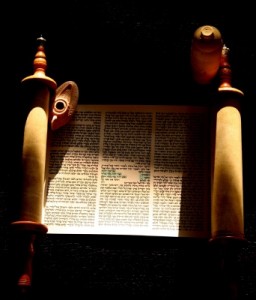
Leviticus 10:16, Diligently sought or inquired insistently (ASET). According to one Jewish tradition, these two words are the exact halfway mark of the words of the Torah. “This is to teach us that the entire Torah revolves around constant inquiry. One must never stop studying and seeking deeper and broader understanding of the Torah” (The ArtScroll Vayikra/Leviticus Commentary, p. 159).

How many times have you read a passage in the Word of Elohim only to receive a fresh revelation or to find a new nugget of understanding? This is because the Word of Elohim is spiritually alive! (Heb 4:12; John 14:25–26; 16:13; also Ps 119:30; Isa 55:11.)

It must be noted that other Jewish traditions place the center of the Torah in other passages. (These options are discussed in the Babylonian Talmud, Kiddushin 30a.)


To Tithe or Not to Tithe … That Is the Question

Leviticus 10:13, Because it is due. In the days before coinage, a man’s wages were weighed out in silver bullion or bartering occurred. In the case of the Levites (including the priests), they were given a portion of the offerings and sacrifices as their wages for serving the people. It is often the attitude of those in congregations that ministers should serve the people for free—without pay, and they therefore refuse to give. This is contrary to the Torah, which commands the Israelites to remunerate the Levites for their services (see Lev 27:30, 32). YHVH even calls the tithe to his ministers “their inheritance” (Num 18:21, 26).

Although the Testimony of Yeshua doesn’t uphold the concept of tithing per se, it does enforce the Torah principle of giving to the ministry. For example, Paul instructed the believers in Philippi about giving. He addresses the issue of supporting his ministry and that by their faithfulness in giving to him it is in effect giving an offering (a sacrifice) to YHVH, and that the Philippians would be blessed for this (Phil 4:16–19). He goes on to say that we are to give to those who spiritually feed us (1 Tim 5:17–18). Paul backs up this assertion by quoting a Torah principle here.

Let the elders that rule well be counted worthy of double honour, especially they who labour in the word and doctrine. For the Scripture says, “You shalt not muzzle the ox that treads out the corn. And, The labourer is worthy of his reward.”

What’s more, the Scriptures tell us that great blessings from heaven accrue to those who tithe to YHVH’s spiritual work on earth (Mal 3:10–11).

To not tithe, according to the Scriptures is called “robbing Elohim” (Mal 3:8–9). Those who refuse to tithe bring a curse upon themselves (Mal 3:9). Paul rebukes the congregation in Corinth for not supporting him financially, and states that he has “robbed” other churches who did support him, thus forcing him to use their offerings to pay his ministry expenses in Corinth (2 Cor 11:8–9). Corinth was not the only stingy congregation in the first century. The problem seemed to be widespread then (Phil 4:15) as it is today.


Does Elohim Hate?

Another can of worms…

Psalms 5:5, You hate. The idea of Elohim hating is anathema to the sensibilities of most Christian-minded people. After all, doesn’t the Bible declare that “Elohim is love” (1 John 4:8,16)? How could he also hate anything, much less people? Yet this is what this verse says, “[YHVH] hates all workers of iniquity.” Let’s explore this concept and try to understand how this could be so.

But first, let’s define the word hate. According to Webster’s New World Dictionary, hate means “to have a strong dislike or ill will for; to wish to avoid.” According to Strong’s Exhaustive Concordance, the word hate in the Tanakh (or Old Testament) means “to hate as an enemy or foe, to be utterly odious.” As used in the Testimony of Yeshua, hate means “to detest.”

Here are some examples of certain things that Elohim hates, and of Elohim commanding his people to hate certain things as well.

Your throne, O Elohim, is for ever and ever…. You love righteousness, and hate wickedness… (Ps 45:6–7) 

Here we see that Elohim loves what is good and detests that which is evil or sinful (or Torahless).

The foolish shall not stand in your sight; you hate all workers of iniquity. (Ps 5:5)

Workers of iniquity is a biblical expression referring to “those who walk contrary to Torah.”

YHVH tries the righteous, but the wicked and him that loves violence his soul hates. (Ps 11:5)

These six things does YHVH hate, yes, seven are an abomination unto him: a proud look, a lying tongue, and hands that shed innocent blood, an heart that devises wicked imaginations, feet that be swift in running to mischief, a false witness that speaks lies, and he that sows discord among brethren. (Prov 6:16–19)

Continue reading →

 

The Sprinkling of Blood & Yeshua’s Crucifixion

More Passover meditations—

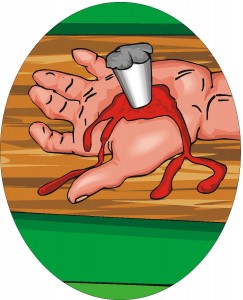
Leviticus 1:5, Sprinkle. The Heb. word zaraq means “to scatter, sprinkle, toss, throw, scatter abundantly, strew.” The sprinkling of the blood of the sacrificed animal on and around the altar of sacrifice (and elsewhere in the tabernacle as well) is mentioned numerous times in the Torah (e.g. Exod 24:6; 29:16; Lev 1:11; 3:2, 8, 13; 4:6,17; 5:9; 7:2). The blood was even sprinkled on the people (Exod 24:8), and on Aaron and his sons (Exod 29:20–21). This is a prophetic picture of Yeshua bleeding, while dying on the cross and shedding his blood as an atonement for our sins. Yeshua’s sprinkling of his blood on the cross fulfilled the sprinkling of blood under the sacrificial system in the following ways:

  • On the altar, which is a picture of the cross (Exod 24:6–8).
  • All around the altar (Exod 29:12–16) including on the earth beneath the altar (Lev 7:2). Yeshua’s blood covered himself and the entire area around
    the cross.
  • On the high priest’s garments (Exod 29:20–21). Yeshua is our Great High Priest who was covered in his own blood during his crucifixion.
  • The blood was sprinkled seven times for perfection (Lev 4:6–7). Yeshua bled from seven areas of his body (his head, back, two hands, two feet, and his side).
  • At the bottom of the altar (Lev 4:6–7). Yeshua’s blood would have dripped down and pooled at the base of the cross.
  • On the side of the altar (Lev 5:9). The cross was entirely covered in blood.
  • Sprinkled seven times before the door of the tabernacle (Num 19:4). Yeshua died (probably on the Mount of Olives) on the hill of Golgotha (or Calvary) in view of the temple in Jerusalem just outside the city gates (Heb 13:12).

The Scriptures tell us that the life of the flesh is in the blood, and that YHVH has given it to us upon the altar as an atonement for sins, for it is the blood that makes atonement for our soul (Lev 17:11). Additionally, without the shedding of blood, there is no remission for sins (Heb 9:22).

All the religions of the world (including rabbinic Judaism), except those that have faith in Yeshua, are bloodless and have no provision to save man from his sins.

Let’s ponder Yeshua’s death on the cross and his shedding his blood to make atonement for (or to cover) our sins as we approach Passover.


Blog Scripture Readings for 4/1–4/7/12 Midrash

Aside

Leviticus 3–9; Isaiah 39–52; and Psalms 3–9

Most of this week’s blog discussion points will be on these passages. The full year’s Bible Reading Schedule can be found on the right sidebar under “Helpful Links.”

If you have general comments or questions on the weekly Scripture readings not addressed in a blog post, here’s a place for you to post those. Just use the “leave a reply” link below.