This past Friday afternoon, my mother went to her resting place where she awaits the resurrection of the righteous dead at Yeshua’s second coming. She fought a hard battle against cancer. She was a few days shy of her 85th birthday. My parents were married for 62 years. My father is doing fine. Our family is relieved that mom is free of her sick bed where she languished for a couple of months. Thankfully, she had little if any pain (other than bed sores) until the very last night, and even then, the pain was not from cancer, but the bed sores. Thank you for your prayers.
Our annual Scripture Reading Schedule for 2020-2021 with daily readings that began on 10/11/20 is available to download and print. The link to the previous 2019-2020’s Scripture Reading Schedule will still be available on the right sidebar under “Helpful Links” into next year. If you are using a mobile device or tablet, the link may be below, meaning you’ll need to scroll down instead.
Most of this week’s blog discussion points will be on these passages. If you have general comments or questions on the weekly Scripture readings not addressed in a blog post, here’s a place for you to post those. Just use the “leave a reply” link or the “share your thoughts” box below.
The full “Read Through The Scriptures In A Year” schedule, broken down by each day, can be found on the right sidebar under “Helpful Links.” There are 4 sections of scripture to read each day: one each from the Torah, the Prophets, the Writings, and from the Testimony of Yeshua. Each week, the Torah and haftarah readings will follow the traditional one-year reading cycle.
Weekly Blog Scripture Readings for 4/4 through 4/10/2021.
Acts 2:1,With one accord in one place. The location of this event was likely in the Solomon’s portico area of the temple mount, and not in the traditional site of the upper room located on Mount Zion in the City of David, which is southeast and outside of the temple mount area. (See notes at Acts 5:12.) Here, the disciples were gathered in one accord. This is likely the spot where the Acts 2 Pentecost gathering occurred. The reasons for this supposition are these: First, this area was large enough to accommodate thousands of people (unlike the traditional upper room location on Mount Zion in the City of David). Second, people from many nations would have been passing through the city gates located in this area en route to the temple and would have heard Peter preaching. Third, mikveh pools were located just to the south of the Temple Mount (and are still visible today) where those who repented and believed could have been easily and quickly baptized.
In one place. Where did the early believers hold their meetings? In “church” buildings? Not necessarily.
Acts 2:1 In one accord in one place. The upper room or on the southern steps of the temple?
Acts 3:1 At the temple at the hour of prayer at the Beautiful Gate.
Acts 3:11 Peter preaches in the temple area at Solomon’s Porch.
Acts 4:5, Peter preaches to the Sanhedrin.
Acts 4:31, The place or room where they were assembled was shaken.
Acts 5:11, The church was not a building, but the body of redeemed believers—the saints, set-apart ones.
Acts 5:12, The church met at Solomon’s Porch in the temple area—all in one accord.
Acts 5:42, Met daily in the temple and every house where they taught and preached Yeshua the Messiah.
Acts 8:3, The church met in houses (Greek oikos meaning “an inhabited house, home, any dwelling place, building of any kind.”
Acts 9:20, Paul preached Yeshua in the synagogues of Damascus.
Acts 10:22, 44, Meeting in Cornelius’ house, and the Spirit falls.
Acts 12:12, Gathered together praying in Mary’s house.
Acts 13:5, Peached the gospel in the synagogues.
Acts 13:13ff, Went into the synagogue on the Sabbath for the purpose of preaching the gospel, and on the next Sabbath as well (v. 44).
Acts 14:1, Preaching again in the synagogue.
Acts 15:21, Go to the synagogue each Sabbath to learn Torah.
Acts 16:13, Meeting by a river side, customary prayer was made on the Sabbath.
Acts 16:40, Lydia’s house a gathering place of the brethren.
Acts 17:3, Paul, as was his custom, reasoned with the Jews on the Sabbath in their synagogue.
Acts 17:5, A congregation in Jason’s house.
Acts 18:4, More reasoning with the Jews in the synagogue every Sabbath.
Acts 18:7, The house of Justice was a gathering place for the believers.
Acts 18:19, More preaching to the Jews in the synagogue.
Acts 18:24ff, Apollos preaching in the synagogue where Priscilla and Aquilla met him.
Acts 19:8, Paul continues to preach in the synagogues.
Acts 19:9–10, The disciples of Paul met daily in a school for two years.
Acts 20:8, Sabbath evening, meeting in an upper room.
Acts 28:23, In Rome, Paul preaches the gospel from his place of lodging.
Acts 28:31, From his own rented house, Paul preached the kingdom of Elohim and the gospel for two years.
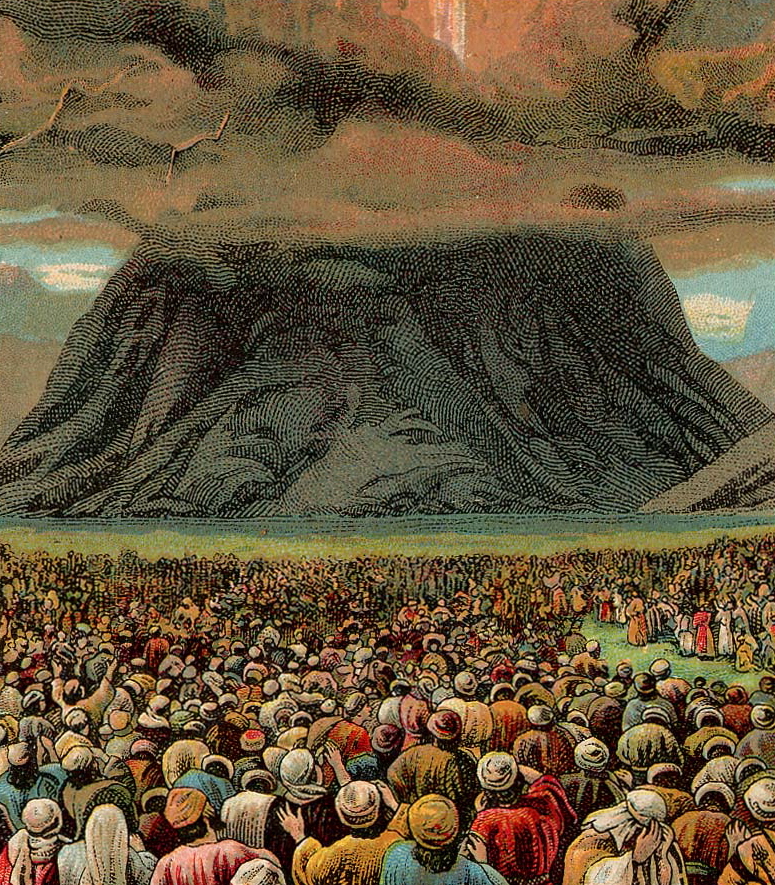
Shavuot at Mount Sinai and Pentecost in Acts 2
Although some 1500 years separate the first Pentecost at the foot of Mount Sinai and the one recorded in Acts 2, they are wonderfully linked to each both prophetically and spiritually. Few people understand this. In fact, one large branch of Christianity takes its name from Pentecost, yet it is safe to say that most Christians who claim the moniker of “Pentecostal” know little about the deeper implications of this term.
The first Pentecost is the foundation for and points to the latter one. Each was a watershed event for the people of YHVH that helped set their course of destiny for generations to come. We can learn much by studying these two events and understanding the spiritual implications for us as end time believers even though these events occurred thousands of years ago.
At the first Shavuot, the commandments of Elohim were written on two tablets of stone (Exod 24:12); on the Day of Pentecost, the same Torah was written on the heart of men by the Spirit of Elohim on Shavuot (or Pentecost, Acts 2:1–4; Heb 8:10). In 2 Corinthians 3:3 we read,
“Forasmuch as you are manifestly declared to be the epistle of Messiah ministered by us, written not with ink, but with the Ruach of the living Elohim; not in tables of stone, but in fleshly tables of the heart.” (2 Cor 3:3)
Interestingly, as YHVH inscribed the Torah on two stones at Sinai, likewise the human heart is also comprised of two “tablets,” or compartments, which physicians refer to as the “left heart” and the “right heart.”
Join Natan today, Monday, (the first day of the Feast of Unleavened Bread on the biblical new moon, abib barley calendar) at 12 noon (US Pacific or West Coast time + one hour) or 7 PM UTC (Universal Coordinated Time). To join the conversation click this link: https://join.skype.com/UiDegA5gye5i.
Our annual Scripture Reading Schedule for 2020-2021 with daily readings that began on 10/11/20 is available to download and print. The link to the previous 2019-2020’s Scripture Reading Schedule will still be available on the right sidebar under “Helpful Links” into next year. If you are using a mobile device or tablet, the link may be below, meaning you’ll need to scroll down instead.
Most of this week’s blog discussion points will be on these passages. If you have general comments or questions on the weekly Scripture readings not addressed in a blog post, here’s a place for you to post those. Just use the “leave a reply” link or the “share your thoughts” box below.
The full “Read Through The Scriptures In A Year” schedule, broken down by each day, can be found on the right sidebar under “Helpful Links.” There are 4 sections of scripture to read each day: one each from the Torah, the Prophets, the Writings, and from the Testimony of Yeshua. Each week, the Torah and haftarah readings will follow the traditional one-year reading cycle.
Weekly Blog Scripture Readings for 3/28 through 4/3/2021.
The Torah Origins of the Communion Ritual and the Priesthood of All Believers
Why were the priests allowed to eat some of the offerings? What’s this all about? Let’s answer this question with a question. Why do believers in Yeshua eat the communion elements, and what do they represent? Is there a connection between the Levitical priests eating of the sacrifice and the saints eating the communion elements? Now let’s explore this idea.
In Leviticus 6:26 and 29, only the male priests were allowed to eat of the sin offering. Likewise, YHVH commanded the male priests to eat the baked unleavened bread of the minchah offering (Lev 6:16, 18). Yeshua himself not only continued this Levitical practice, but expanded and elevated it to a higher level at his last supper.
When Yeshua initiated communion among his disciples, what in essence was he saying? Simply this. His disciples were all now his holy or set-apart priests. This is the origination of the concept of the priesthood of all believers, or the royal priesthood as Peter terms it (1 Pet 2:9), or a kingdom of priests John calls it who will rule with King Yeshua in his millennial kingdom (Rev 1:6; 5:10; 20:6).
It was YHVH’s desire that the children of Israel would become such a priesthood even before he called the Levites to be his set-apart priests (Exod 19:6). However, they failed in this mission when they chose to worship the golden calf instead of YHVH (Exod 32). At that time, YHVH chose the faithful Levites to be his priests instead of the firstborn male leaders from all the tribes of Israel (Exod 32:26, 29; Num 3:11–13, 44).
Moreover, Isaiah prophesied about the priesthood of all believers—a priesthood that would extend beyond the confines of the Aaronic priesthood (Isa 66:21 cp. Dan 7:18). This higher level priesthood would extend beyond the patriarchal male leaders, who were the original priests in Israel (Exod 19:22, 24), to include all the Israelites, both male and female (Exod 19:6), as well as Gentiles who have been grafted into Israel through Yeshua the Messiah (Gal 3:28–29; Eph 2:11–19; Rom 11:11–32), which Paul refers to as the Israel of Elohim (Gal 6:16).
Being a kingdom of priests who will teach the inhabitants of planet earth the ways of Elohim is the role and destiny of all the modern day saints of Elohim who have been washed of their sins (i.e. Torahlessness, 1 John 3:4) in the blood of Yeshua (Rev 1:6), for they will reign with Yeshua on this earth (Rev 5:10) for a thousand years as Elohim’s resurrected and glorified adopted sons and daughters (Rev 20:6; John 1:12 cp. Rom 8:14–15, 23; 9:4; 2 Cor 6:18; Gal 4:5–6; Eph 1:5; 1 Jhn 3:1–2; Rev 21:7).
So saints of the YHVH Elohim, encourage yourself with these immutable promises from the Word of Elohim! Are you presently preparing yourselves now for auspicious and lofty role?
Leviticus 7:13, Leavened bread. The Torah prohibited the offering of leavened bread on the altar (Lev 2:11). There are only two instances where leavening in bread was permitted in the tabernacle service. In this verse, leavened bread was offered in conjunction with the peace offering (Lev 2:13), where it was eaten as part of the sacrificial meal. This was not a sin offering, but the peace offering. Therefore the bread of this offering didn’t represent the body of Yeshua. It was merely part of the fellowship meal representing a peaceful and loving relationship between the offerer and the Creator, and was similar to a family picnic, dinner or barbecue. But it wasn’t placed on the altar, nor was it a part of the sacrifice, therefore, it wasn’t a prophetic picture of the sinless Yeshua dying on the cross.
The second instance of leavened bread being offered in a tabernacle service occurred when the Torah instructs the priests to wave two loaves of leavened bread on Shavuot or Pentecost before YHVH (Lev 23:17). These two loaves prophetic and symbolic metaphors for the two houses of Israel (the northern kingdom and southern kingdom)—a spiritual picture of Jews and Christians. In this ceremony, the gracious and merciful Creator was demonstrating his acceptance of his people despite their sin.
Leviticus 7:23, Not eat any fat. All the organ fat of the ox, sheep and goats was used as part of the sacrificial service (Lev 7:30–31).The organ fat was given to YHVH as part of the burnt offering (Lev 1:3), the peace offering (Lev 3:3–4), the sin offering (Lev 4:8–10, 19). Fat is the Hebrew word cheleb/CKJ meaning “fat of humans or animals” or metaphorically, “the choicest, best part, or abundance of the land.” Therefore, the fat as one of the choicest parts of the animal was reserved for sacrifice to YHVH on the altar. But not eating fat, the Israelites in their minds preserved a reverence for YHVH’s altar upon which the fat or the best part was offered to YHVH. To eat the fat was to show irreverence for that best part that belonged to Elohim, which is why the offender was cut off from the nation of Israel. As living sacrifices who have been redeemed or bought with the blood of Yeshua, are we giving YHVH the best part of our lives? After all, he so loved us that he gave us Yeshua, which was the best he had to offer.
Leviticus 7:26,Not eat any blood.
The Supreme Significance of Blood
YHVH revealed in the Torah that the life of flesh is in the blood (Lev 17:11). Therefore, the blood symbolizes the whole life of the living being. This is why the blood being poured upon the altar made atonement for the souls of men (Lev 17:11–12), since it represented and pointed to the shedding of Yeshua’s blood when he sacrificed his life on the cross in atoning for men’s sins. Respecting the blood is necessary not only because it symbolizes the sanctity of the life of man who was made in the Creator’s image (Gen 1:26 cp. 9:6), but more importantly, because of the blood of Elohim’s Son that was shed for man’s redemption (Lev 17:11). For one to eat the blood showed disdain for what the blood typifies. In times past, this was so important to YHVH that a violation of this prohibition resulted in banishment from the nation of Israel.
The blood was to be reserved for the sacrificial service, where it was used symbolically to represent Yeshua’s shedding his blood on the cross. The blood of a lamb was put on the door posts to protect men from YHVH’s judgment against sin (Exod 12:7, 13). Moses sprinkled the blood of oxen on the people symbolizing their coming into covenantal relationship with YHVH (Exod 24:5–8). Additionally, the blood of sacrificed animals was sprinkled throughout the tabernacle, on Aaron and his sons, and all around the altar to sanctify it. All these acts and uses of the blood were illustrative of the unrestricted cleansing power of the blood of Yeshua (Rev 1:5; 7:14; 12:11; 1 Pet 1:2, 19; Heb 9:12; 10:19–22; 12:24; 1 John 1:7; Matt 26:28), which is why YHVH expected his people to treat the blood with a reverence. Those who didn’t evidenced a heart of indifference for the set-apart or kadosh things of Elohim—an intolerable offence in the Creator’s eyes.
On the dark and satanic side, the blood of humans and animals is profaned through demonic rituals involving drinking it and even cannibalism. This is an abominable perversion of holy communion and was an aspect of ancient heathen religions (Ps 16:4; Ezek 39:17, 19 cp. Num 13:32), and is a practice in which the end time antichrist heathens of the Babylonian whore system will engage (Rev 17:6; 18:13, 24).
The Spiritual State of America and Other Formerly Christian Nations
Isaiah 1:3,The ox knows its owner.The “Beasts of the Field Explained.” Apostasy and spiritual degradation leads to one place: a complete loss of one’s spiritual identity. When one forgets one’s spiritual heritage and relationship with their Creator, they becomes, in a sense, like an animal, maybe even worse. (See 2 Pet 2:12 and Jude 1:10.)
As an interesting side note, Scripture prophesied that Israel would become animalistic in its apostate condition as it sought to imitate the heathen nations around it. As a result and in judgment, YHVH would allow Israel to be taken over and swallowed up by the same nations, which Scripture refers to by the Hebraism or Hebrew poetic metaphor “the beasts of the field.” In Deuteronomy 7:22, we see that this same Hebraism represent the nations of the earth from which Israel was to stay separate. (See also Jer 12:9; 27:6; Dan 7:3.) The children of Israel were scattered or exiled and became “meat” or prey for all the beasts of the field (Isa 56:9; Ezek 34:5; Hos 2:12). Scripture likens exiled Ephraim (the Northern Kingdom), who fell into idolatry and mixed with the beast (Gentile) nations, to beasts of the field themselves (Hos 2:16–19 cp. Acts 10:12). In the future, YHVH will make a covenant (a marriage betrothal agreement or ketubah) with Israel who had themselves become “beasts of the field” (Hos 2:18; see also Jer 31:31–33 cp. Rom 1:23,18–25).
Can you see America and the formerly Christian West in this? These nations were once a predominately Christian, but now have rejected and scorn their spiritual heritage. What has been the result of this spiritual and moral declension? What is the current state of Christianity in these formerly Western Christian nations? Can we not see how YHVH has been lifting his hand of blessing off of them, and how with their spiritual and moral decline they have been declining economically, geopolitically and culturally?
The Hebrew Word Goy (Meaning Gentile) Explained
Isaiah 1:4,A sinful nation.The Word Goy Explained. The word nation is the Hebrew word goy meaning “gentile”or, in a spiritual sense, “heathen”This is one of a number of passages in Scripture where Israel is referred to as a gentile nation.
In the KJV, Goy is translated in the Tanakh as nation 374 times, as heathen 143 times, as Gentiles 30 times, and people 11 times. Whenever the word gentile is used in the KJV it is the word goy. According to Strong’s Concordance, the meaning of goy is “a foreign nation; hence a Gentile; also (fig.) a troop of animals, or a flight of locusts.”According to GeseniusHebrew-Chaldee Lexicon,the word goy means “a people, a confluence of men,” and “contextually in holy Scripture it is used to refer to the other nations besides Israel, the foes of Israel, and strangers to the true religion of Israel.”
There are times when this word refers specifically to Israel:
The descendants of Joseph in general (Gen 48:19)
The Southern Kingdom of Judah when it forsook Elohim and its covenant with him and became like the surrounding heathen nations (Isa 1:4)
The Northern Kingdom of Israel or Ephraim or Samaria (Isa 9:1)
Israel in general (Isa 26:2; 49:7; Ps 33:12; Gen 12:2; 35:11).
There are numerous other instances in Scripture where the words goy or goyim (plural) are applied to the descendants of Abraham. Scripture’s use of the term is unbiased and lacks any of the pejorative implications that have been applied to the term subsequently (e.g. Gen 17:4, 5, 6, 16; 18:18; 25:23; 46:3; Exod 19:6; 33:13; Deut 4:6, 7, 8, 34; Ezek 37:22).
As already noted, goy simply means “people group.” The Greek word ethnos (Strong’s G1484) as found in the Testimony of Yeshua is equivalent in meaning to the Hebrew word goy.
There For the Grace of Elohim Go All of Us!
Isaiah 6:4–7, Coal …from the altar. Which altar in the temple did this coal come from and what did it represent spiritually and prophetically? What deeper truth was YHVH trying to teach Isaiah here? There were two altars in the Tabernacle of Moses: the altar where animals were sacrifice—a symbolic and prophetic picture of Yeshua’s atoning death on the cross, and the incense altar in the holy place.