Our annual Scripture Reading Schedule for 2020-2021 with daily readings that began on 10/11/20 is available to download and print. The link to the previous 2019-2020’s Scripture Reading Schedule will still be available on the right sidebar under “Helpful Links” into next year. If you are using a mobile device or tablet, the link may be below, meaning you’ll need to scroll down instead.
Most of this week’s blog discussion points will be on these passages. If you have general comments or questions on the weekly Scripture readings not addressed in a blog post, here’s a place for you to post those. Just use the “leave a reply” link or the “share your thoughts” box below.
The full “Read Through The Scriptures In A Year” schedule, broken down by each day, can be found on the right sidebar under “Helpful Links.” There are 4 sections of scripture to read each day: one each from the Torah, the Prophets, the Writings, and from the Testimony of Yeshua. Each week, the Torah and haftarah readings will follow the traditional one-year reading cycle.
Weekly Blog Scripture Readings for 6/20 through 6/26/2021.
Our annual Scripture Reading Schedule for 2020-2021 with daily readings that began on 10/11/20 is available to download and print. The link to the previous 2019-2020’s Scripture Reading Schedule will still be available on the right sidebar under “Helpful Links” into next year. If you are using a mobile device or tablet, the link may be below, meaning you’ll need to scroll down instead.
Most of this week’s blog discussion points will be on these passages. If you have general comments or questions on the weekly Scripture readings not addressed in a blog post, here’s a place for you to post those. Just use the “leave a reply” link or the “share your thoughts” box below.
The full “Read Through The Scriptures In A Year” schedule, broken down by each day, can be found on the right sidebar under “Helpful Links.” There are 4 sections of scripture to read each day: one each from the Torah, the Prophets, the Writings, and from the Testimony of Yeshua. Each week, the Torah and haftarah readings will follow the traditional one-year reading cycle.
Weekly Blog Scripture Readings for 6/13 through 6/19/2021.
Our annual Scripture Reading Schedule for 2020-2021 with daily readings that began on 10/11/20 is available to download and print. The link to the previous 2019-2020’s Scripture Reading Schedule will still be available on the right sidebar under “Helpful Links” into next year. If you are using a mobile device or tablet, the link may be below, meaning you’ll need to scroll down instead.
Most of this week’s blog discussion points will be on these passages. If you have general comments or questions on the weekly Scripture readings not addressed in a blog post, here’s a place for you to post those. Just use the “leave a reply” link or the “share your thoughts” box below.
The full “Read Through The Scriptures In A Year” schedule, broken down by each day, can be found on the right sidebar under “Helpful Links.” There are 4 sections of scripture to read each day: one each from the Torah, the Prophets, the Writings, and from the Testimony of Yeshua. Each week, the Torah and haftarah readings will follow the traditional one-year reading cycle.
Weekly Blog Scripture Readings for 6/6 through 6/12/2021.
Our annual Scripture Reading Schedule for 2020-2021 with daily readings that began on 10/11/20 is available to download and print. The link to the previous 2019-2020’s Scripture Reading Schedule will still be available on the right sidebar under “Helpful Links” into next year. If you are using a mobile device or tablet, the link may be below, meaning you’ll need to scroll down instead.
Most of this week’s blog discussion points will be on these passages. If you have general comments or questions on the weekly Scripture readings not addressed in a blog post, here’s a place for you to post those. Just use the “leave a reply” link or the “share your thoughts” box below.
The full “Read Through The Scriptures In A Year” schedule, broken down by each day, can be found on the right sidebar under “Helpful Links.” There are 4 sections of scripture to read each day: one each from the Torah, the Prophets, the Writings, and from the Testimony of Yeshua. Each week, the Torah and haftarah readings will follow the traditional one-year reading cycle.
Weekly Blog Scripture Readings for 5/30 through 6/5/2021.
Leviticus 16:1–34, Passover and the Day of Atonement compared. A cursory reading of the Scriptures seems to indicate that there exists overlapping similarities between some of the blood atonement ceremonies of Passover or Pesach and the Day of Atonement or Yom Kippur. What are the differences between the sin atonement offerings of Pesach and Yom Kippur?
Perhaps realizing the fact that the Passover occurs during the spring feast day season and the Day of Atonement occurs during the fall feast day season may help to answer this question. This is because prophetically the spring feast days picture Messiah Yeshua’s first coming, while the fall feast days prophetically point to his second coming. How does this understanding shed light on the answer to this question?
Both Pesach and Yom Kippur picture redemption through the shed blood of Yeshua, that is, the saint being delivered from bondage to sin and the rudiments of this world. Passover symbolizes the first steps a new believer takes when coming out of spiritual Egypt and accepting Yeshua, the Lamb of YHVH, as one’s Savior and Master. Yom Kippur, on the other hand, pictures the blood of the Lamb covering over the saint’ sins after his initial salvation experience and the corporate sins of the nation of Israel.
If our understanding of the order of end time events is correct, Yom Kippur also prophetically points to the time when Yeshua will return to the earth to initiate the final regathering of the lost and scattered tribes of Israel, and to prepare to marry his bride, redeemed Israel or the Israel of Elohim (Gal 6:16), that is, the saints. Perhaps this latter understanding will help to answer why another Passover-like feast is needed. Yom Kippur does not focus so much on leaving Egypt, but rather on YHVH’s people preparing to enter the millennial kingdom under the Messiah. Those saints who will be the betrothed bride of Yeshua need to make themselves ready for Yeshua’s return by putting on spiritual robes of righteousness that are spotless and pure. Although the bride of Messiah saints are not sinners by definition, for the Bible calls them “the righteous” (1 Pet 4:18), they still sin (hopefully only occasionally; 1 John 1:8–9; Rom 7:13–25), and still need to have their sins washed away by the blood of Yeshua, even just before they meet Yeshua at his return. Yom Kippur pictures this final redemptive cleansing or preparation time of Yeshua’s bride.
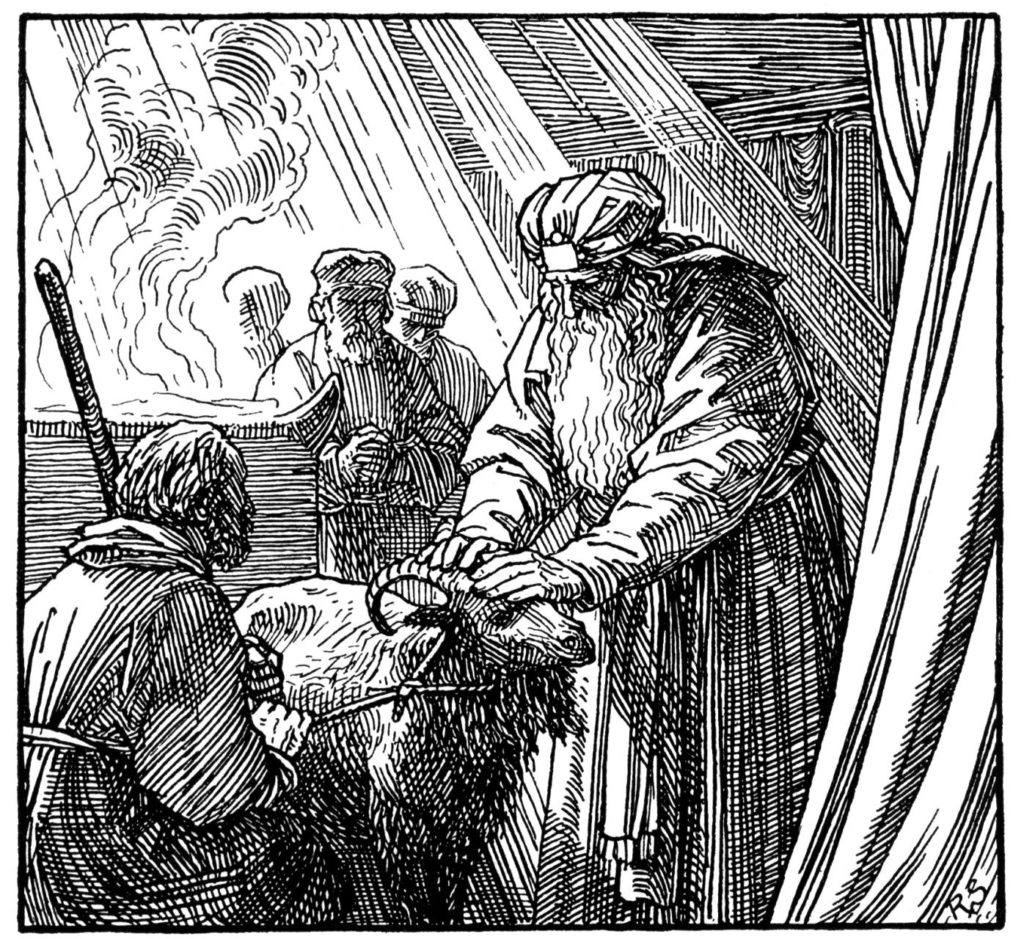
Understanding the Yom Kippur Goat Rituals
Understanding and interpreting the rituals of Leviticus 16 can be perplexing and complicated task. This is because often encrypted in certain scriptural passages the deep and open-minded Bible student will find multiple levels of meaning and prophetic fulfillments. The serious biblical researcher understands this and is not put off by any seeming discrepancies between a surface or literal fulfillment of a scripture vis-à-vis its prophetic fulfillment. An example of this would be the virgin and child prophecy of Isaiah 7. There was both a historical or immediate fulfillment of this prophecy and a future one relating to the coming Messiah.
Moreover, we must keep something else in mind when dealing with biblical passages that are difficult to understand because they contain figurative language of a prophetic nature that often employ typologies (types and shadows). By definition, a type is a person or thing that represents someone or something else. When dealing with prophetic types in Scripture, the type never perfectly mirrors that to which it is prophetically pointing. The type is merely a shadow of what is to come (Col 2:17; Heb 10:1; 8:5), and therefore it is neither a perfect representation of the reality nor its there a perfect one-to-one correlation between the two. However, there are enough similarities to deduce a correlation between the two, even as a shadow is the shape and outline of the image it represents, but it doesn’t contain all the details of it.
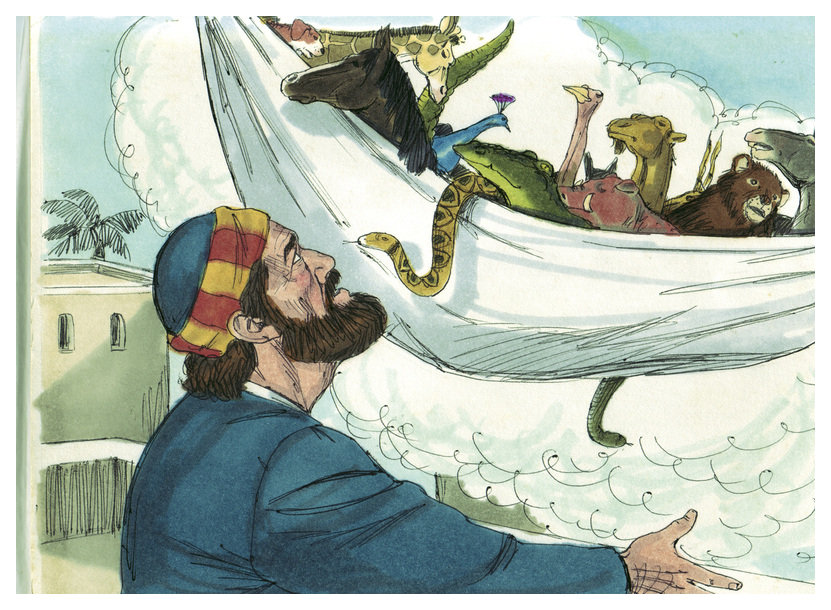
Acts 10:13–15, Peter’s vision. In Peter’s vision of the sheet covered with unclean animals, the voice from heaven commanded him three times to kill and eat these unclean animals. Peter was confused by the meaning of this vision since being a Torah-law abiding Jew he knew that eating unclean meat was forbidden and in good conscience he could not do that which was contrary to YHVH’s Torah-law, for to do so was sin (sin is the violation of the law, 1 John 3:4).
Often visions are metaphorical in nature and not literal. There are many examples in the Scriptures of people receiving metaphorical visions. For example, read the books of Daniel and Revelation. Indeed, Peter’s vision was no exception, for no sooner had the vision ended when three Gentile men appeared at his door seeking the gospel message and the Spirit of Elohim bade Peter to go and to meet them. Peter then realized that the interpretation of his vision was that he should not call any man common or unclean; that is, the gospel message is for all people regardless of their ethnicity (verse 28). In Peter’s case, Bible itself interprets his vision. The issue is not about whether it is now permissible to eat non-kosher meat or not, but rather the Spirit of Elohim was directing the apostles to begin taking the gospel to the Gentiles, who by Jewish standards were considered common and unclean (verse 28).
Now consider this. If Yeshua had meant to say in Matthew 15:11 and Mark 7:18–19 that it was now permissible to eat all foods including those meats that the Torah prohibits to be eaten (e.g. pork, shellfish, etc.), presumably Peter would have known this, since he was present when Yeshua made the statement (see Matt 15:15). If Peter knew that Yeshua had given the okay for his disciples now to eat unclean meat, why then did Peter so strongly object when the voice from heaven commanded him to eat the unclean animals in the vision (Acts 10:13–14)? Obviously, Peter had not changed his opinion about not eating unclean meat, since Yeshua had never annulled the Torah command forbidding the eating of unclean meats in the first place.
There is another point to consider with regard to Peter’s vision. In the Tanakh, unclean animals or beasts of the field was a Hebraic metaphor for the people of the nations (goyim), or Gentiles. Peter would have been aware of the meaning of this metaphor once the angel explained to him that the unclean animals he had seen in his vision was a not a reference to the biblical dietary laws, but to the Gentiles. Moreover, to the Jewish religious tradition of the day, interaction with the Gentiles was something that orthodox Jews did not do. To do so made one unclean or unkosher. This is not a biblical concept, since in the Tanakh, the nation of Israel was to be a light to the nations and to bring them to Elohim. Furthermore, the Torah is inclusive with regard to allowing Gentiles to be sojourn with the Israelites as long as they would accept Elohim and his laws and abandoned their heathen ways. There was to be one and the same Torah-law for both the native born Israelite and the Gentile that was grafted into Israel. There are also several examples in the Tanakh of Gentiles converting to the Israelites’ religion and being fully accepted (e.g. Ruth and Rahab). Once the angel explained the meaning of Peter’s dream, it would have been clear to Peter that Elohim was expressing disapproval of the Jewish view of Gentiles and that this vision was a mandate from heaven to evangelize the Gentiles. Moreover, the Gentile who was converted and brought into Israel was made spiritually clean, but the Scriptures never considered unclean animals kosher, and never made any provision for unclean animals to be made kosher—ever!
Acts 10:13–15, Rise…kill and eat…Not so, Lord. On occasion, YHVH will give his servants a dream or vision that on the surface or at face value seems outrageous or even anti-Torah as was the case with Peter’s dream. It seemed that YHVH was asking Peter to violate his own Torah-Word by eating unclean meats. This is how the modern church has largely interpreted this vision, while de-emphasizing its metaphorical meaning.
So why does Elohim use such methods at times to get his attention? Certainly, he’d never ask his people to go against his Written Word. This is impossible. Therefore, if one receives a dream that they believe is from Elohim, yet he seems to be asking them do something contrary to Scripture, as was the case with Peter’s vision, then it behooves one to ask oneself the following questions. Was the dream truly from Elohim, or from my own soulish desires or from Satan? Or is the dream to interpreted metaphorically, and YHVH is simply using hyperbole, strong, albeit symbolic, imagery to grab our attention, again as was the case with Peter’s vision, to strongly convey to us a particular direction in which he wants us to go or something he wants us to do?
Interpreting dreams and visions can be a dicey issue as Nathan the prophet found out when he misinterpreted the vision he received from Elohim pertaining to David. YHVH wanted to build up the house or dynasty of David, but Nathan interpreted the vision as David building a house (a temple) for Elohim. Likely both Nathan’s and David’s passion for wanting to build a temple to replace the aging and derelict Tabernacle of Moses was forefront on their mind causing them to come to an erroneous interpretation of the dream. This is why it’s important to ponder over any dreams or visions we receive from Elohim to ensure that we’re interpreting the correctly.
Examples of righteous saints pondering over dreams, visions and angelic visitations include Joseph who pondered the angel’s announcement about the birth of Yeshua and waited for confirmation from heaven before acting and putting Mary away (Matt 1:19–20). Similarly, Jacob in response to Joseph’s seemingly preposterous and impertinent dream publicly rebuked him before his mockingly sceptical brothers, yet he afterward pondered the matter in his heart (Gen 37:11).