Some Thoughts on Moses’ Divorce and Remarriage

Numbers 12:1, Whom he had married. Some Jewish sages (e.g. Rashi, Baal HaTurim) teach that Moses divorced Zipporah and remarried an Ethiopian or Cushite woman. Was Moses’ marriage to the Ethiopian woman legal in YHVH’s eyes? If not, perhaps this is what the siblings’ complaint was about. Consider this. When Moses married Ziporah, he was not “saved.” His first encounter with YHVH occurred at the burning bush after he had already married Zipporah. This is when Moses received his spiritual calling. He received salvation on Passover night in his house with the lamb’s blood painted on the door. He was baptized in the Red Sea and received the Torah at Mount Sinai.

There is no indication that Zipporah accepted Moses’ heavenly calling to follow YHVH. Even though her father, Yitro, as a descendant of Abraham, knew and seemed to have followed YHVH, this may not have been the case with his daughter. To the contrary, she seems to have resisted YHVH and obedience to him (Exod 4:24–26). In fact, it appears that she returned to Yitro, her father, in Midian and did not accompany Moses in the exodus (see Exod 18:2).

The point is that sometimes YHVH will call, commission and grant salvation to a married person, but the person’s spouse is not open to receiving that calling and salvation. In such instances if the unsaved spouse remains hard hearted toward YHVH and after a period of time has passed, the saved spouse is released from their marriage and is free to remarry a believer.  Paul discusses this in 1 Corinithians 7:10–16.

Though the Torah doesn’t tell us, it is entirely possible that Zipporah was dead by the time Moses married the Cushite woman, since he was an elderly man (somewhere between the age of 80 and 120). Yeshua accepts the fact that because of the hardness of hearts, the Torah permits divorce (Matt 19:8) and presumably remarriage, as seems to have been the case with Moses.

Presumably, the Cushite woman was part of the mixed multitude that accompanied the Israelites in their exodus out of Egypt.


 

What are the 11 levels of a prophet?

There Are Eleven Levels of a Prophet

A little known fact in modern-day church prophetic circles is that the Bible reveals that there are eleven levels of a prophet. The list below is adopted from The Guide to the Perplexed (by Moses Maimonides [or the Rambam] pp. 241–245.) Most so-called prophets in the church if they are on the list of the requirements for being a true prophet are at the lowest levels. This fact alone should cool the prophetic jets of most who think they’re Elohim’s elect and anointed prophet to the body of Yeshua. In reality, considering Israel’s long history, the Scriptures reveal that there were very few Elohim-sent prophets. Long periods of time passed without there being a true prophet of Elohim in Israel. There was no shortage of false and carnal-minded prophets, however. Now here’s the list:

  • Divine assistance given to a person to induce or encourage him to do something good and grand (e.g. Judg 2:18; 1 Sam 11:6; 1 Chr 12:18; Exod 2:17; 1 Sam 16:17). Scripture often records this occurrence when it states, “And the Spirit of YHVH came upon so and so…”
  • The person feels as if something came upon him, and as if he had received a new power that encourages him to speak. Such a person is said to speak by the Set-Apart Spirit. The books of Psalms, Proverbs, Ecclesiastes, Song of Solomon, Daniel, Job, Chronicles and the rest of the Ketuvim (Writings or Hagiographa) were written under the inspiration of the Set-Apart Spirit. See also 2 Sam 23:2; Num 11:25; 2 Chron 20:14–15; Num 23:5; etc.) Often prefaced by the phrase, “The Spirit of YHVH spoke to me…” or “So and so prophesied…”

Below are the levels of a prophet. Not all people who have these experiences are prophets. Those who hold the biblical office of a prophet will experience these things regularly and will manifest the biblical fruits, power, authority and anointing of a prophet.

  • This is the lowest class of a prophet. Those who introduce their speech by the phrase, “And the word of YHVH came unto me…” or a similar phrase. Sometimes he will see a prophetic allegory in a dream. Such was the case with Zechariah.
  • The prophet hears in a prophetic dream something clearly and distinctly, but does not see the speaker as in the case of the call of young Samuel (e.g. 1 Sam 3).
  • A person addresses the prophet in a dream, as was the case in some of the prophecies of Ezekiel (e.g. Ezek 40:4).
  • An angel speaks to him in a dream. This applies to most of the prophets in Scripture (e.g. Gen 31:11).
  • In a prophetic dream it appears to the prophet as if YHVH spoke to him (e.g. Isa 6:1, 8; 1 Kgs 22:19).
  • Something presents itself to a prophet in a prophetic vision; he sees allegorical figures, such as were seen by Abraham in the vision “between the pieces” (Gen 15:9–10); for it was in a vision by daytime, as is distinctly stated.
  • The prophet hears words in a prophetic vision, but does not see the person speaking to him; as is said in reference to Abraham, “And behold, the word came to him, saying, This shall not be thine heir.” (Gen 15:1, 4). This occurred to Paul on the road to Damascus (Acts 9:3ff)
  • The prophet sees an angel that speaks to him in a prophetic vision as happened with Peter in his vision of the sheet from heaven (Acts 10:3) (also Rev 19:10; 22:9)
  • He sees an Angel (or Messenger) of YHVH (literally, the preincarnate YHVH Yeshua) that speaks to him in a vision, as was the case when Abraham was addressed by an angel at the sacrifice of Isaac (Gen 22:15) and many other places where the Messenger of YHVH speaks to his servants directly (e.g. Gen 12:7; 16:7–13; 17:1, 22; 18:1; 22:11, 15; 32:24–32; 35:1; Exod 3:2; 13:21; 14:20; 33:9–11; 34:5; Num 11:25; Deut 31:15–16; Num 22:35–38; Josh 5:13–15; Judg 6:11–23; 13:3; Isa 6:1ff; John in the Book of Revelation).

If you fancy yourself being a prophet, where are you on this list? Probably near the bottom. Until Elohim elevates you, it might be best to hold your peace and wait a little longer on him.


Seven Ways to Misuse the Mouth

Mouth 4 20837968

Numbers 12:1–3, Miriam and Aaron spoke against Moses. This is slander! None of us are immune from this sinful proclivity of man’s fallen nature. Sadly, such activity is rife within our congregations! As long as we give in to gossip and slander we will grieve the Spirit of Elohim and will not advance spiritually. We’re all guilty of this. Confess your sin and repent now! What does YHVH say about those who sow seeds of discord among brethren? How does view it? (See Prov 6:16 and 16.) How did the apostles handle such individuals? (Note Rom 16:17; Tit 3:10; 2 Thess 3:6; 1 Tim 3:5.) What was the penalty that YHVH prescribed for Miriam because of the evil misuse of her mouth? (Read Num 12:14.) How does this penalty compare with that which Paul prescribes for those who cause division and strife with in the congregation? What does Paul teach about slandering or rebuking an elder in the congregation? (See 1 Tim 1:19.) What does he call such activity? (Read verse 20.)

Seven Ways to Misuse the Mouth

(From a book entitled Stop the Runaway Conversation by Dr. Michael Sedler)

The Backbiter: One who speaks against an absent individual. All criticisms and comments, as the name implies, are made without the accused being present or are behind his back. (Ps 15:2–3; Rom 1:30; Prov 25:23; 2 Cor 12:20)

The Busybody: One who seeks out information on a false report and spreads it by means of gossip, slander, backbiting, etc. YHVH takes this very seriously. In fact, he equates being a busybody with being an evildoer or even a murderer. (1 Pet 4:15; 1 Tim 5:13; 2 Thess 3:11)

The Complainer: One who finds fault. This type of person often uses a personal situation as a platform for his or her complaint. “I was treated unfairly.” “Do you know what this person did?” You think that’s bad, let me tell you what happened to me.” These are the types of phrases that will come from such a person. (Num 11:1; Jude 16)

The Murmurer: One who grumbles. We find that this person is usually complaining but only loudly enough for those in close proximity to hear. The murmuring person is seldom happy or pleased with the outcome of situations. Like the complainer, he looks for faults and then justifies a bad attitude with his comments. (Phil 2:14; Num 16:2; Jude 16)

The Slanderer: This is an individual who tries to injure someone’s reputation or character by false and defamatory statements. (Num 14:36; Jer 6:28; 9:4; 1 Tim 3:11; Prov 10:18; Ps 101:5)

The Talebearer (or Gossip): This is a person who elaborates and exaggerates so as to make a story more dramatic or “juicy”). (Prov 11:13; Lev 19:16; Rom 1:28–30; see also Prov 18:8; 20:19; 26:20,22; 1 Tim 5:13)

The Whisperer: This is an individual who talks about other people privately, secretly and covertly in order to hurt them. (Prov 16:28; Ps 41:7)


Patiently Enduring the Storms of Adversity

Stormy sky over flooded lighthouse

Romans 15:4, Patience and comfort of the Scriptures. Just before this passage, Paul enjoins the spiritually strong to follow the example of Yeshua to support those who are spiritually weak (Rom 15:1–3). This can be especially trying when they are of one’s own physical or spiritual household — they are always present and there is no escape from them. Patience or perseverance in such cases is required and is a spiritual test that those who are strong must pass. It may take years or decades to pass this test if one has, for example, a spiritually weak marriage partner or other family member with which one has constant interaction.

In this verse, Paul offers advice on how to cope with this situation.

First, those who would seek the higher ground of spiritual maturity must learn patience, which can become a great jewel in one’s spiritual crown. Patience or longsuffering is perhaps the chief attribute of love (1 Cor 13:4), which is a fruit of the Spirit—doesn’t come easily, but only through the fiery refinement process of hardships brought on by people constantly rubbing us the wrong way. In this passage (Rom 13:4), Paul appeals to the example of Yeshua who endured much and mastered patience as he was reproached for sinners’ (that’s you and me) sake. If we want to strive for the high mark of being like him, we should endeavor to follow his example.

Second, in dealing with weak people, Paul encourages us to find comfort in the Scriptures (Rom 15:4). By immersing ourselves in the Word of Elohim and letting it renew and transform our thinking through the work of the Set-Apart Spirit in our hearts, we can endure the reproaches of weak and difficult people. The Scriptures are a world of their own—a refuge and island of peace in the midst of the roiling seas of adversity, and a firm rock to stand on in the billowing waves of life’s troubles.

May the hope of becoming more like Yeshua and conforming ourselves to the wise instructions of the Scriptures and examples of righteous people found therein give us hope to persevere through our difficulties and come out the other side more conformed to the image of Yeshua who is the epitome of loving patience toward us.


The Pillar of Fire—Who, What and Why?

Tabernacle100dpi

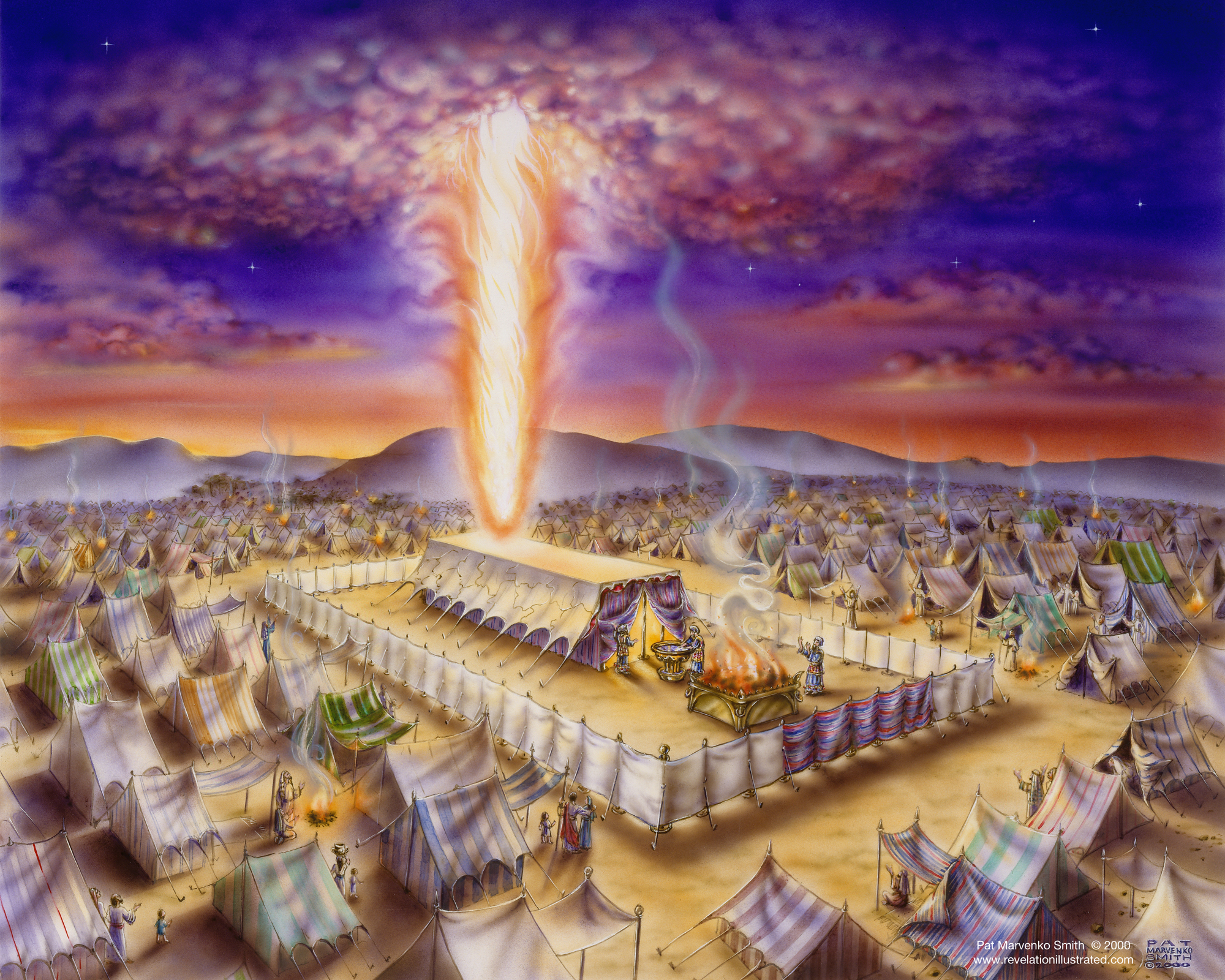
Numbers 9:22–23, Abode … rested … journeyed. How do these concepts relate to our spiritual walk? How do we know when to rest or abide, and when to journey? How does YHVH show us his will for our lives? Matthew Henry in his commentary on this passage says, “Thus we are taught to see [Elohim] always near us, both night and day. As long as the cloud rested on the tabernacle, so long as they continued in the same place. There is no time lost, while we are waiting for [Elohim’s] time. When the cloud was taken up, they removed, however comfortably they were encamped. We are kept at uncertainty concerning the time of our putting off the earthly house of this tabernacle, that we may be always ready to remove at the command of [YHVH]. It is very safe and pleasant going when we see [Elohim] before us, and resting where he appoints us to rest. The leading of this cloud is spoken of as signifying the guidance of the blessed Spirit.” (Read Pss 37: 3–7, 23–24; 73:24; Prov 3:6; Rom 8:14.) Are we ready to lay our lives down, die to self, and to follow YHVH’s perfect will for our lives no matter how much it may stretch our faith?

Some Additional Insights on the Pillar of Fire That Guided the Israelites

In Exodus 13:21 we read,

And YHVH went before them by day in a pillar of a cloud, to lead the way; and by night in a pillar of fire, to give them light; to go by day and night.

Then in Exodus 14:19 it is written,

And the Angel of Elohim, which went before the camp of Israel, removed and went behind them; and the pillar of the cloud went from before their face, and stood behind them.

Who is this “Angel” of Elohim (in other places he is called “the Angel of YHVH”)? Angel is an unfortunate translation. The Hebrew word for angel is palak and simply means “a heavenly or a human messenger.” Prophetically this word can refer to human messengers such as the one coming in the spirit of Elijah prior to Messiah’s Continue reading


The Second Passover and the Lost Sheep of the House of Israel

Numbers 9:6–11, Defiled by a human corpse. This passage can also be understood allegorically. The second Passover is a prophetic picture pertaining to the lost and scattered sheep of the house of Israel who, like those individuals in this passage, had been journeying in exile (just like the prodigal son in Yeshua’s parable) among the Gentiles in a foreign land and away from the land and Elohim of Israel. In the process of their spiritual wandering, they have become defiled by sin and death (likened here to touching a human corpse), since the wages of sin is death (Rom 6:23), and all have men have sinned and fallen short of the YHVH’s glory (Rom 3:23). While in exile (again like the prodigal son in the parable), they awake to their spiritual apostasy and want to come back home to observe the Passover (a picture of redemption or salvation).

Passover is the only biblical festival for which YHVH’s allows a make up. At the first Passover in Egypt, those who weren’t in their houses under the lamb’s blood-painted doors fell under the death penalty for sin and were killed. This teaches us that Passover is a picture of man’s obtaining salvation through the blood of Yeshua, the Messiah who is the Lamb of Elohim.

YHVH desires that all men be saved and come to know Yeshua the Savior, and Passover is a picture of this. This is why he gives men a second chance to keep the Passover—he wants all to be saved (John 3:16; 2 Pet 3:9), including his lost, scattered, exiled and prodigal children from the house of Israel.