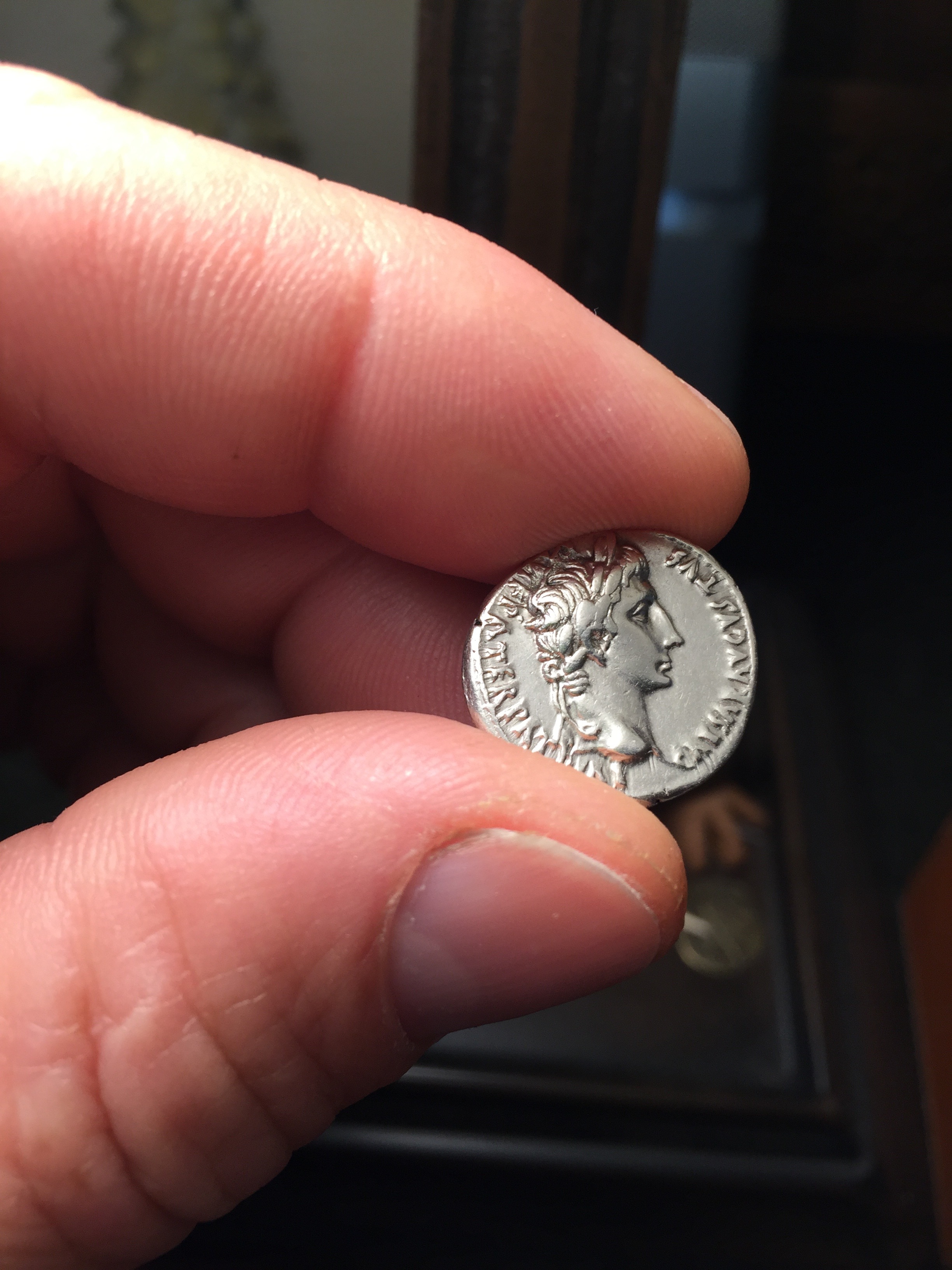
How to Hear the Voice of YHVH

John 10:3, Hear his voice.

YHVH Wants to Commune With His People

From the beginning in the Garden of Eden, YHVH wanted to have a personal, communicative relationship with men.

And they heard the voice [Heb. kol] of the YHVH Elohim walking in the garden in the cool [Heb. ruach] of the day: and Adam and his wife hid themselves from the presence [Heb. panyim] of the YHVH Elohim amongst the trees of the garden. And the YHVH Elohim called unto Adam, and said unto him, Where art thou? And he said, I heard thy voice in the garden, and I was afraid, because I was naked; and I hid myself. (Gen 3:8–10)

You Can Hear the Voice of YHVH

Yeshua tells us that we can hear his voice.

To him the porter openeth; and the sheep hear his voice: and he calleth his own sheep by name, and leadeth them out. And when he putteth forth his own sheep, he goeth before them, and the sheep follow him: for they know his voice. And a stranger will they not follow, but will flee from him: for they know not the voice of strangers. … My sheep hear my voice, and I know them, and they follow me. (John 10:3–5, 27)

Throughout the Bible, there are many examples of YHVH’s servants hearing his voice. Here are a few examples from the book of Acts of people hearing YHVH.

Then the Spirit said unto Philip, Go near, and join thyself to this chariot. (Acts 8:29)

While Peter thought on the vision, the Spirit said unto him, Behold, three men seek thee. (Acts 10:19)

And the Spirit bade me go with them, nothing doubting. Moreover these six brethren accompanied me, and we entered into the man’s house. (Acts 11:12)

And finding disciples, we tarried there seven days: who said to Paul through the Spirit, that he should not go up to Jerusalem. (Acts 21:4)

It’s All About Spiritual Activation

To enter into a relationship with YHVH Elohim, our Creator and Father in heaven, and to become his sons and daughters, we must be spiritually activated.

Man is comprised of body, soul and spirit (1 Thess 5:23). Before being spiritually regenerated or born again, our soul (our mind, will and emotions) controls what we think, say and do. The Scriptures talk say this about the spirit in man.

But there is a spirit in man: and the inspiration of the Almighty giveth them understanding. (Job 32:8)

Who knoweth the spirit of man that goeth upward, and the spirit of the beast that goeth downward to the earth? (Eccl 3:21)

The burden of the word of YHVH for Israel, saith YHVH, which stretcheth forth the heavens, and layeth the foundation of the earth, and formeth the spirit of man within him. (Zech 12:1)

For what man knoweth the things of a man, save the spirit of man which is in him? even so the things of Elohim knoweth no man, but the Spirit of Elohim. (1 Cor 2:11)

Man can’t enter into a relationship with a YHVH who is a Spirit through his soul. Elohim is a Spirit, and we must relate to him through Continue reading


Golden Calf Worship Among YHVH’s People Today

Let’s look at the series of events that occurred as the children of Israel were leaving Egypt, which have major relevance to what is occurring in mainstream Christianity in our day. If we fail to learn the lessons of history, we’ll likely repeat the mistakes of history. It has to do with golden calf worship.

YHVH redeemed the children of Israel out of Egypt and set the slaves free. He blessed them not only by giving them their freedom, but by giving them the wealth (gold and silver) of Egypt as well. We read that the Israelites exited of Egypt with a high hand. They were victorious, free and wealthy.

YHVH led them into the wilderness en route to the Promised Land—normally an eleven day journey. They had some difficulties: Pharaoh tried to kill them at the Red Sea, they lacked clean drinking water, and they had food issues, but YHVH provided them deliverance from Pharaoh, gave them clean water, manna and meat, and they overcame these trials.

Next, YHVH led the Israelites to the foot of Mount Sinai, and on Shavuot he made a covenantal agreement with them and gave them his Torah as their national constitution. They agreed to obey him and to keep his commandments. He promised to bless them if they remained faithful to him.

Moses went up to Mount Sinai to receive the Torah-covenant on two tablets of stone. While he was gone for 40 days, the people grew worried and anxious and become weary of waiting for Moses to return.  This was a test they had to pass of their faithfulness. Would they be faithful to YHVH and keep his commandments, or would they stray spiritually from the path of righteousness YHVH had given them and they had agreed to follow?

The Israelites got tired of waiting, and took the gold from Egypt and turned it into a golden calf, and then they rose up to play (to party). They even called their revelry a feast to YHVH! They used religious verbiage like “YHVH” and “feast” to add legitimacy to their illegitimate activities, but this didn’t change the sin of their behavior. Sin is still sin regardless of how we attempt to cloak it in spiritual terms and costumes in an attempt to justify our wicked behavior.

Moses then came down from Sinai with the stone tablets, saw the people worshipping the golden calf and the people playing, and he brought judgment against those who were unfaithful to YHVH and rewarded those who had been faithful to him.

Let’s now analyze this story to see what spiritual lessons we can glean from it.

YHVH blessed the children of Israel by setting them free from Egypt, giving them honor as freedmen, taking them to himself to be his own special people, giving them a religion, a legal code and much material wealth. What was the first job assignment YHVH gave his people to do? It was to build a tabernacle so that YHVH might dwell in their midst.

YHVH gave the Israelites wealth from Egypt not only as a remuneration for their years of slavery in that nation (Torah teaches that a workman is worthy of his hire), but he gave them wealth so they could build him a home. Instead, what was the first thing the Israelites did with their wealth? They built a golden calf in honor of their past life in Egypt.

The golden calf represented the spiritual idols or strongholds of sin that were already in their hearts, and which they failed to leave behind in Egypt. Though the Israelites had physically come out of the idolatry of Egypt, they hadn’t gotten Egypt’s idols out of their own hearts. When the way of the wilderness became too tough and their faith was tested (i.e. would they remain faithful to YHVH in the time Continue reading


What truth shall make you free?

John 8:32, Know the truth. “The truth shall set you free” is an often-quoted axiom, but few understand its deeper biblical implications.

We violate the sanctity of Scripture if we impose on it our own meanings. This is a cavalier and presumptuous approach to understanding the Bible and can hardly be called “rightly dividing the word of Elohim” (1 Tim 2:15).This practice often occurs with this verse. To do so is to twist the meaning of the Scriptures to fit our own vicissitudes and biases. This is humanism and insults the mind, will and sovereignty of the Almighty as divinely revealed in his Holy Word.

To properly understand this verse, we must look solely to the Bible for the keys to understanding it. We can start this process by first asking the question, what is truth?

The Bible defines its own terms when it calls the Torah truth (Ps 119:142 and 151). The truth of Torah (i.e. the law of Moses) will set a person free, for when one hears and obeys the Torah, one ceases sinning (i.e. violating YHVH’s Torah-law; 1 John 3:4), and therefore doesn’t come under the penalty of the Torah-law’s judgment for breaking it, which the Bible calls sin and which leads (ultimately) to eternal death (Ezek 18:4; Rom 6:23). When one is not under the judgment of sin, one is free. With freedom comes life.

Yeshua the Messiah himself is also the truth (John 14:6), for he is the Living Torah-Word of Elohim (John 1:1, 14). When we place our trusting faith in Yeshua and follow him, his spiritual life in the form of his Set-Apart Spirit will then flow through us and empower us to walk away from sin and follow the spiritual light of his Torah, which will keep us sin-free. This is the path that leads us toward the ultimate freedom from eternal death resulting in everlasting life (John 8:52). As such, sin will no longer have any legal claim on us, and thus we will not come into condemnation, but will pass from death into everlasting life (John 5:24). This is possible because Yeshua has taken upon himself our past sins (Rom 3:25), paid the legal penalty of them, and wiped our spiritual slate clean and has given us a fresh start in life (Gal 2:20; 1 Cor 5:17) to walk sin-free (in accordance with his standards of righteousness, which is the Torah). This is the result of knowing the truth and experiencing the freedom that comes therefrom.

It’s astounding how so many people have been taught to believe the exact opposite of the truth—that the laws of Elohim will place you under bondage instead of setting you free!

Now that you have been set free from the traditions of men, which make of none effect the word of Elohim, you now have the freedom to understand the fuller, biblical meaning of Yeshua’s statement, “And you shall know the truth and it shall make you free.”


The Holy Half Shekel—Another Pointer to Yeshua!

Exodus 30:15 and 16, To make atonement for your souls. Some will read these verses and conclude that one can buy their redemption through charitable giving and therefore circumvent the need to place one’s faith in Yeshua’s atoning death on the cross. Does this passage suggest a theology where man can save himself from his sins by acts of charity? Let’s dig a little deeper to see what these verses are really teaching us.

In this passage, YHVH instructed the Israelites to pay an annual half-shekel temple tax. This money went, in part, toward, the service (verse 16) and constructing of the Tabernacle of Moses (e.g. Keil and Delitzsch Commentary on the OT, vol. 1, p. 459; Exod. 38:21–31), and later toward the purchase of the animals the priests sacrificed (The Temple and Its Service, by Alfred Edersheim, p. 48). In this way, the people were participating vicariously in the act of sacrificing an innocent animal as an offering or atonement for their sins. Again, the Scriptures reveal that this sacrificial system merely pointed prophetically toward the Greater Sacrifice that would come later in the Person of Yeshua, the Redeemer of Israel. (Read Isa 53.) On the point that the paying the half-shekel was a merely a temporary solution to the problem of man’s sin, Keil and Delitzsch say in their commentary on this passage,

As an expiation [atonement] for souls, it pointed to the unholiness of Israel’s nature, and reminded the people continually, that by nature it was alienated from God, and could only remain in covenant with the Lord and live in His kingdom on the ground of His grace, which covered its sin (ibid.)

Keil and Delitzsch’s point is further strengthened in Exodus 30:16, which says,

And you shall take the atonement money of the children of Israel, and shall appoint it for the service of the tabernacle of the congregation; that it may be a memorial unto the children of Israel before YHVH, to make an atonement for your souls. (emphasis added; ibid.)

The giving of the half-shekel was a memorial to what? The Hebrew word for memorial is zikrown (Strong’s H2146) meaning “reminder, token, record.” According to The TWOT, a zikrown is an object or act which brings something else to mind or which represents something else. It reminded them of their sinfulness and pointed prophetically to a Redeemer—Yeshua the Messiah— who would come and take away their sins once and for all (Heb 10:10). For a more detailed study of this subject, please see our teaching article entitled, “The Atonement: Bloody or Bloodless? Understanding the Concept of Atonement in the Torah” located on the Hoshana Rabbah website at http://www.hoshanarabbah.org/pdfs/atone.pdf.


What is the biblical age of accountability?

Exodus 30:14, From twenty years old and above. This passage gives us the first indication that the Torah viewed the age of accountability to be 20 years old (see also Num 1:3, 18, 20; 26:2). That is to say, those who died prior to age 20 were not held eternally accountable for their sins, and presumably might be given a second chance to live out their lives at some latter date, although there is no clear scriptural reference to confirm this notion.

The idea that YHVH held one accountable for their sins after the age of twenty is supported by the fact that all Israelites over age of 20 (with the notable exceptions of Caleb and Joshua) died in the wilderness prior to entering the Promised Land because of sins they had committed during their wilderness journey, while those under age 20 were allowed into the land, presumably because YHVH considered them to be guilt free (Num 14:29; 32:11).

If 20 is the age of accountability, then this begs the obvious question: what will happen to those who died before age 20? It is generally accepted by many in the church that babies or young children who have died before having had a chance to “accept Yeshua” will be given a second chance to do so. But what about those who died “unsaved” prior to age 20? Some have speculated that they may be resurrected at some time in the future and be allowed to live out their lives during the Millennium (see Isa 65:17–20).

Perhaps the reason Satan will be released at the end of the Millennium from the pit where he was held captive will be to give all those living on the earth at that time (including those who died under the age of accountability) a chance to accept or reject Yeshua. YHVH will use the devil to test the loyalties of this new crop potential saints (Rev 20:7–10). Those who remain faithful will inherit eternal life, while those whom Satan seduces into rebellion will have their part in the second death (Rev 20:11–15).

O, the merciful grace of Elohim!


Exodus 30:11–34:35 Parashat KiTisa

This is a gospel-oriented Torah study. Our goal is to connect the good news of Yeshua the Messiah (the gospel message) to its Hebraic, pro-Torah roots or foundations. The information given here is more than head knowledge. Understanding and wisdom (the right application of knowledge that is based on truth) is taught thus making biblical truth practical, relevant and applicable to your daily life. The truths of the Bible not only have the power to transform your life here and now for the better, but eventually to take you past the veil of death and into eternity.

This Torah study is subdivided in sections by topic in a magazine format thus making it easy to watch at several sittings.

May you be blessed as you watch this video.

For a free, printable adult and youth Torah study guide on this Torah portion (parashah), please go to http://www.hoshanarabbah.org/parshiot.html


Blog Scripture Reading Schedule for 3-12 Through 3-18-17

Aside

THIS WEEK’S SCRIPTURE READINGS FOR STUDY AND DISCUSSION:

Parashat Ki Tisa — Exodus 30:11 – 34:35
Haftarah — 1 Kings 18:1-39 | Numbers 19:1-22, Ezekiel 36:16-38**
Prophets — 2 Kings 21:1 – 25:30; Isaiah 1:1 – 2:22
Writings — Proverbs 4:1 – 10:32
Testimony — John 7:53 – 10:42

Our new Scripture Reading Schedule for 2016-2017 is available to download!

Most of this week’s blog discussion points will be on these passages. If you have general comments or questions on the weekly Scripture readings not addressed in a blog post, here’s a place for you to post those. Just use the “leave a reply” link below.

The full “Read Through The Scriptures In A Year” schedule, broken down by each day, can be found on the right sidebar under “Helpful Links.” There are 4 sections of scripture to read each day. One each from the Torah, the Prophets, the Writings, and from the Testimony of Yeshua. Each week, the Torah and haftarah readings will follow the traditional one-year reading cycle.

** A different Haftarah is read when it is a special sabbath in Jewish tradition. This week it is Shabbat Parah on the traditional calendar. Otherwise, only 1 Kings 18:1-39 would be read.

Weekly Blog Scripture Readings for 3/12/17 through 3/18/17.