Divine Judgment in the “Age of Grace”?!

Acts 5:1–11, The deaths of Ananias and Sapphira. Why did YHVH kill them? They committed the unpardonable sin in that they willfully and in a premeditated plot lied to the YHVH. There is no sacrifice or forgiveness for willful sin. YHVH was showing us that even in the age of the New Covenant, his grace doesn’t cover willful sin. Let us all fear YHVH Elohim and tremble before him all the time!

Some scholars suggest that YHVH killed them because they violated the Torah laws regarding the handling of devoted things, for which there was a death penalty (Lev 27:28–29). Perhaps so.

Whatever the case, it’s interesting to note that YHVH struck Ananias and Sapphira dead after the cross in, what many Christians call, the dispensation of grace era when, in their minds, sin doesn’t carry the same severe penalty us under “old covenant,” law of Moses era. What we learn from this is that YHVH still views sin as sin, and the wages of sin is still death (Rom 6:23). This has never changed before or after the cross of Yeshua.

Just because one isn’t struck dead immediately upon having sinned doesn’t mean one hasn’t incurred the death penalty. That death penalty is only waived when one repents of their sin and asks for YHVH’s forgiveness through faith in Yeshua whose death paid the death penalty price for our sins.

Likely, such divine judgments still occur in our day more frequently than we realize. It may not involve the death of the individual, but rather sickness, demonic attacks, financial setbacks and other adversities that occur to us. The problem is that because of human pride and spiritual deafness and blindness, most people fail to recognize the cause of their problems. We attribute them instead to random circumstances and time and chance instead of to YHVH’s hand of judgment against us because of our sin, which we fail to recognize and repent of.

Paul addresses this issue in 1 Cor 11:27–32 with regard to those who eat of the communion elements in a careless or indifferent manner.

Therefore whoever eats this bread or drinks this cup of the Lord in an unworthy manner will be guilty of the body and blood of the Lord.

But let a man examine himself, and so let him eat of the bread and drink of the cup.

For he who eats and drinks in an unworthy manner eats and drinks judgment to himself, not discerning the Lord’s body.

For this reason many are weak and sick among you, and many sleep.

For if we would judge ourselves, we would not be judged.

But when we are judged, we are chastened by the Lord, that we may not be condemned with the world.


Blog Scripture Readings for 4-9 Through 4-15-17

Aside

THIS WEEK’S SCRIPTURE READINGS FOR STUDY AND DISCUSSION:

Parashat — (No Parasha This Week)
Haftarah — Ezekiel 37:1-14**
Prophets — Isaiah 29:1 – 37:38
Writings — Job 1:1 – 7:21
Testimony — Acts 4:23 – 8:25

Our new Scripture Reading Schedule for 2016-2017 is available to download!

Most of this week’s blog discussion points will be on these passages. If you have general comments or questions on the weekly Scripture readings not addressed in a blog post, here’s a place for you to post those. Just use the “leave a reply” link below.

The full “Read Through The Scriptures In A Year” schedule, broken down by each day, can be found on the right sidebar under “Helpful Links.” There are 4 sections of scripture to read each day. One each from the Torah, the Prophets, the Writings, and from the Testimony of Yeshua. Each week, the Torah and haftarah readings will follow the traditional one-year reading cycle.

** A different Haftarah is read when it is a special sabbath in Jewish tradition. This week it is Pesach Shabbat Chol hammed (the Sabbath that falls during the Feast of Unleavened Bread) on the traditional calendar.

Weekly Blog Scripture Readings for 4/9/17 through 4/15/17.


The Biblical Origins of the Baptism Ritual

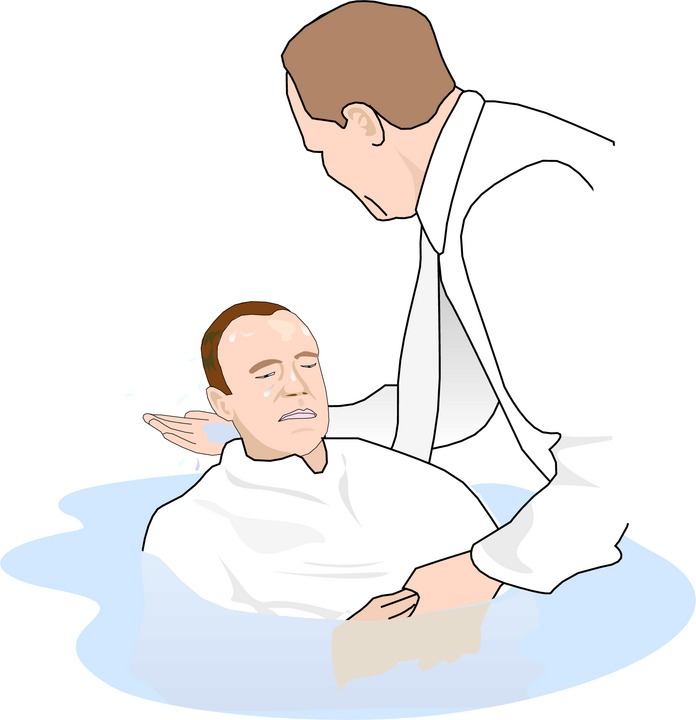
Acts 2:23, Be baptized. (Also see notes at Matt 28:19.) The term baptism in Hebrew is tevilah meaning “immersion” which occurs at a mikveh meaning “a gathering of waters.” For those coming from a Christian background baptism is something that occurs at the beginning of a believer’s spiritual walk and involves baptism (immersion) in water for the remission of sins (Acts 2:38; 22:16; Rom 6:3–6; 1 Cor 15:29; Gal 3:27; Eph 4:5; Col 2:12; 1 Pet 3:21). Yet the Paul the apostle talks of baptisms (plural) in Heb 6:2. Evidently, in Jewish thought immersion for the remission of sins is but one of many such ritual immersions.

Indeed, in the Testimony of Yeshua we not only read about baptism for the remission of sins, but the baptism of repentance of John the Baptist (Acts 1:5; 10:37; 13:24; 19:4); baptism (immersion) of the Set-Apart Spirit (Luke 3:16; Acts 1:5; 8:16; 11:16); baptism with fire (Matt 3:11; Luke 3:16). Here we see the four types of immersions spoken of in the Testimony of Yeshua.

The concept of ritual immersion for a variety of reasons stems from commands in the Torah relating to ceremonial washings signifying spiritual and physical cleansing (Lev 14:1–4, 7, 9; Exod 19:10; Lev 8:6; 15:5, 8, 10–13, 16–18, 21; 16:4).

Moreover, the prophet Ezekiel speaks of YHVH sprinkling his people to cleanse them from their impurities, which is a picture of the new spiritual life of which immersion is e a type (Ezek 36:25).


Got the Anointing? Got the Anointed One??

Leviticus 8:12, Anointing oil … consecrates [Heb. kadash]. The Hebrew word kadash signifies the state of something that belongs to the realm of the sacred, and which is set-apart for divine use and has been separated from the sphere of the secular, common or profane. The Bible often uses the term holy (meaning “set-apart”) to signify this state of being. The word of Elohim designate many things as set-apart:

  • The ground upon which YHVH is standing (Exod 3:5; Josh 5:15)
  • The people of Israel (Exod 19:6; Deut 14:21; 26:19)
  • The Sabbath (Exod 16:23; 20:8)
  • The Tabernacle of Moses (Exod 26:33)
  • The garments worn by the high priest (Exod 28:2)
  • The altar of sacrifice (Exod 40:10)
  • The offerings made on the altar (Lev 6:18)
  • YHVH’s feast days (Lev 23:2)
  • The camp of Israel (Deut 23:14)
  • Heaven as the abode of Elohim (Deut 26:15)
  • YHVH Elohim (Job 6:10; Pss 22:3; 78:4; 99:5)
  • Zion and Jerusalem (Ps 2:6; Matt 27:53; Rev 22:19)
  • The Spirit of Elohim (Matt 1:20)
  • The angels (Matt 25:31)
  • The servants of Elohim (Mark 6:20)
  • The name of YHVH (Luke 1:49)
  • Yeshua (Acts 2:27; 3:14)
  • YHVH’s prophets (Acts 3:21)
  • The saints (1 Pet 2:9; Rev 22:11)
  • The Torah (2 Pet 3:21)

YHVH’s people are to learn to make a difference between that which he designates as being kadash (holy) and that which is profane (Lev 10:10). In order to do this, one must know what YHVH defines as set-apart and then align our thinking and lifestyle with that.

The act of consecrating someone (or something, e.g. Exod 30:26), as occurs in Leviticus 8:12, often involves the ritual of pouring olive oil on them to signify their being set-apart for a special work or service. This is called anointing (see Exod 28:41; 29:7; 1 Sam 16:12; 1 Kgs 1:34; Isa 61:1; 2 Cor 1:21).

Yeshua’s title is Messiah (Heb. Mashiach) literally meaning, “one who is anointed, smeared or consecrated with (olive) oil.” The English word Christ derives from the Greek word Christos/Cristos, which is the Greek equivalent of the Hebrew word mashhiach. In biblical thought, the Messiah would be One coming from heaven who would possess a super-anointing of the Spirit of Elohim (Isa 11:1–10; 42:1–21; 61:1–3; John 3:34) to accomplish the purposes of Elohim on earth.

Have you placed your trusting faith in Yeshua the Messiah, the Anointed One from heaven? He is the only one who can take away the shame, guilt and penalty of your sin, and the only one who defeated death and can lead you past the veil of death and into immortality.


Parashat Tzav Leviticus 6:8[1]-8:36

Haftorah Reading

Jeremiah 7:21–8:3; 9:22(23)–23(24)

Testimony of Yeshua

On being a living sacrifice: omans 12:1–2

On Yeshua being our High Priest and the ultimate sacrifice: ebrews 4:14–5:10; 7:1–28; 8:1–6; 9:1–28; 10:1–39; 13:10–14

On being a pure spiritual temple:  Corinthians 6:14–7:1; 1 Peter 1:14–16

On the spiritual priestly garments of the saints: phesians 5:27; 6:10–18; Revelation 7:13–14; 19:8

Outline of This Week’s Parashah (Torah Portion)

—6:8 (1) The Law of the Elevation or Burnt (Olah) Offering

—6:14 (7) The Meal or Grain (Minchah) Offering

—6:24 (17) The Sin (Chatat) Offering

—7:1 The Guilt (Asham) Offering

—7:11 The Thanksgiving (Todah) or Peace (Shelamim) Offering

—7:19 Eating in a State of Contamination

—7:22 Fat and Blood Not to Be Eaten

—7:28 The Parts of the Offering to Be Burned and Those Given to the Priests as Gifts

—8:1 Consecration of Aaron and His Sons for the Priestly Service in the Tabernacle

Study Questions for This Week’s Midrash (Torah Discussion)

1 6:10 [6:3 in Jewish bibles], Linen britches. The Jewish sages teach that every Israelite should be a human temple. If he is set-apart (kadosh), then the temple of his body will be kadosh; if he sins he contaminates it. This is consistent with the teachings of the apostles (see the Testimony of Yeshua readings above). Furthermore, in this parashah we see the high priest donning a “fitted” linen tunic and britches “on his flesh,” which was an illusion to robes of righteousness (Lev 6:10 [3]). Most of us have too casual a view of sin—something a righteous and set-apart Elohim hates and calls an abomination (Ps 5:5; Prov 6:16–19). Sin that is not repented of will damn us eternally (Ezek 18:4, 20; Rom 6:23). Our sin sentenced Yeshua to a hideous death on the cross in our place. (Selah: pause and reflect.)

Perhaps the greatest area of sin is with our mouths; it defiles our spiritual temples probably every day! (Read Mark 7:14–23 and Jas 3:1–12.) Our mouths sow discord among brethren, speak vanities, murders and lies—things that Elohim (his Hebrew name referring to the judgment side of his character) hates and calls an abomination in Proverbs 6:16–19. The tongue is a world of iniquity, especially behind closed doors where we let down our guard with our family and loved ones. There our tongues rip, slice, slash, murder, speak vanities and hypocrisy almost without measure. The word Babylon comes from the Hebrew word bavel meaning “confusion or mixture” referring to when the languages of men were confounded at the Tower of Bavel. How can we be a righteous and set-apart priesthood offering up praise and worship to our Creator with our lips when 30 minutes before our lips were murdering our wife, children, husband or someone else on the way to Shabbat services? Is this not confusion? A divided heart? A forked (serpent’s) tongue? The Scriptures plainly tell us to come out of Babylon’s ways (Rev 18:4). The writer of Hebrews says, “Follow peace (shalom) with all men, and holiness, without which no man can see the Master” (Heb 12:14). If we could but tame the tongue, then we would be able to steer the whole temple of our spiritual ship (to mix metaphors) into the glorious harbors of holiness and relationship with man and with our Creator. Let’s stop and take some time to repent of our sinfulness in these areas.

2 6:17 (10), No leaven. Why does YHVH stipulate this prohibition? The main Jewish commentaries are unable to answer this question. It is not until we understand the spiritual implications of leavening as revealed in the Testimony of Yeshua that this prohibition makes Continue reading


From A.D. 70 to A.D. 135 — How the Church Became Divorced From Its Hebraic Roots

This is a long read—good for a Shabbat afternoon! But it’s important to know the historical facts. Knowing this truth will help us to better understand the background of the NT church and how the early second century church cut itself off from its Hebraic spiritual roots in so many way.— Natan

What is called Christianity today in many ways is very dissimilar, and in many respects, outright antagonistic to the religion of the first-century, book of Acts believers. How did this come to be?

Many modern Christian churches prides themselves on being “a New Testament church,” yet what they practice and believe is often very different from and even opposed to the teaching and practices of the apostles and primitive, first century church. For example, life for the apostolic believers in Jerusalem revolved around the temple (Acts 2:46; 3:1; 5:19-21; 5:42; Acts 21:26; 22:17; 24:18; 25:8; 26:21), and for those outside of the land of Israel, on most Sabbaths, they attended the local synagogue (Acts 13:14; 14:1; 17:1–2; 18:4, 7, 8, 19, 26; 19:8). Not only did the first apostles and early believers not celebrate any pagan influenced holidays such as Easter, Christmas, Halloween, Lent, and the rest, but they adhered to the Torah or law of Moses (see references below). The Book of Acts record is also clear that early believers kept the Bible festivals (as outlined in Lev 23; Acts 2:1; 18:21; Acts 27:9; 1 Cor 5:8; Jude 12) of Passover, Unleavened Bread, Pentecost, Day of Trumpets, Day of Atonement, Feast of Tabernacles, and the Eighth Day.

What’s more, the book of Acts records that both Stephen and Paul were falsely accused of teaching that the laws and customs of Moses were nullified, and, as a result of this false accusation, both lost their lives defending Torah-obedience.

A hundred other examples could easily be given showing how the Christian church has veered away from the Hebrew or Jewish roots of its faith, but hopefully, the reader gets the point.

So what happened to cause Christianity to veer so widely from the Hebrew or Jewish roots of its faith and to arrive at the place where it hardly resembles that religious faith from which it sprang? This is not an easy question to answer since one must look back nearly 2000 years and attempt to reconstruct the times in which our spiritual forefathers lived. Moreover, we must understand what was transpiring politically, religiously, and socially at the time to answer this question properly. It is also imperative that we understand the contextual social and linguistic fabric, the backdrop of history, and the parade of political Continue reading


A t-Shaped Cross Vs. an I-Shaped Cross Discussed

Stauros, the Koine Greek word for cross, like most words in all languages, has several meanings. To arrive at the true meaning of a word, we can’t just look at the first meaning in a list of dictionary definitions or choose the meaning that best suits our personal biases or theologies.

Too determine which dictionary definition of a word best applies to a particular word in a literary situation, we must consider all the meanings of a word and then look at the context of the literature in which the word is found, and then choose the meaning that best fits.

Even then, well meaning people will have differences of opinions on this (e.g. The Companion Bible, by E.W. Bullinger, appendix 162). This is the dilemma that scholars who translate literary documents from one language to another face. This is the case with the Koine Greek word, cross, which is found in the NT some 32 times.

Stauros means “un upright, pointed stake used for fencing or in the construction of a stockade. It can also refer to a torture instrument, or a cross on which the Roman’s executed criminals. A stauros came in several basic forms: a vertical upright, pointed stake, or an upright stake with a crossbeam resembling our capital letter “T” or our small letter “t”, or it consisted of two intersecting beams of equal length like our letter “X”. Due to the sign that was attached to the top of Yeshua’s torture stake, it seems that his cross was shaped like a “t”; that is, the upright stake projected above the cross beam thus giving the Romans a place to attach the sign (The TDNT, vol 7, p. 572; International Standard Bible Encyclopedia, vol 1, pp. 826-827).

The reasons that I lean toward the idea that Yeshua was crucified on a t-shaped cross are several. As noted above, such a cross gave a place for the Romans to attach their sign (Mattt 27:37, Mark 15:26, Luke 23:38, John 19:19).

Additionally, more than one nail was used in Yeshua’s hands to attach him to the cross (John 20:25). The use of two nails would have been more necessary had the cross been t-shaped as opposed to an upright stake.

Moreover, the Tabernacle of Moses is a symbolic and prophetic picture of the death, burial and glorification of Yeshua. It is literally a multi-dimensional gospel tract! As such, the furnishings therein are arranged in the form of a t-shape cross.

Similarly, the tribal encampments around the tabernacle are laid out like a perfect t-shaped cross (see Num 2). This is a picture of the believer who, through the ritual of baptism for the remission of sins (see Rom 6:3–11) must symbolically identify with the death, burial and resurrection of Yeshua when coming to faith in him.

Furthermore, the marks made by the blood of the lamb on the doorposts of the Israelites’ homes on their first Passover in Egypt made the outline of a perfect t-shaped cross (Exodus 12:7). There are several dozen aspects of this first Passover that prophetically pointed forward to Yeshua who was the Passover Lamb of Elohim slain from the foundation of the world for the redemption of man from his sin, and who fulfilled these symbols perfectly by his death. The t-shaped cross is but one of these prophetic symbols. An I-shaped cross would not have fit this symbology.

Moreover, when Moses initiated the the tabernacle, his steps form a perfect cross—actually a cross with an arrow on it that points man into the holy of holies, which is a picture of YHVH’s heavenly throne room (Exod 40).

Next, when the angelic messenger of YHVH went through Jerusalem before its fall to the Babylonians to search out those saints that would be spared from that judgment, he put a mark in the form of a Paleo-Hebrew letter tav (shaped like our small letter t) on their foreheads. This was another prophetic symbol that pointed to Yeshua, who, through his work on the cross, is our salvation (Ezek 9:4).

Finally, when Jacob was prophetically praying over his two grandsons who whose descendants would largely become the Christian church, he crossed his arms in the shape of a Paleo-Hebrew letter tav, which, pictographically, some take to mean,”sign or seal of the covenant” (Gen 48:14).

With regard to the Scriptures that say that Yeshua was crucified on a tree, the Hebrew word for tree is etz, which can mean both tree and stick (e.g. see Ezek 37:16). A cross whether in a t or an I shape is still made of wood and both can fit the definition of the Hebrew word etz. But how many trees have you seen that don’t have branches? More trees in their natural state resemble a t shape than an I shape. Some trees even have trunks with branches that are opposite each other on the trunk like a t-shaped cross. So in light of these facts, it is not a logical stretch to call a t-shaped cross “a tree.”

Personally, I don’t care whether Yeshua died on a t or an I shaped cross—only that he died for my sins. This is the main point! Let’s never stray from the importance of this truth. Furthermore, I have no ax to grind in this argument. I could care less about defending any cherished doctrines or traditions of the church. I care only about finding and then believing the truth as a found in the Bible. The overwhelming evidence points to the fact that Yeshua was crucified on a t, and not an I shaped cross. That is the reason, and the only reasons, I subscribe to this idea.

I will conclude with this personal testimony. I was born and raised in a Torah-believing church that hated traditional Christianity. We had a sinful Pharisaical superiority complex. We rejected many biblical truths simply because the mainstream church believed them. The idea of a t-shaped cross was one of those ideas we rejected. It wasn’t until I was in my early 30s after leaving that church that I began to objectively examine the truth about the shape of the cross and became convinced based on the biblical evidence that it was t-shaped, not I-shaped as I had been brainwashed to believe. When I presented the biblical evidence to some family members who were still in that church, they flat-out rejected what I had to say—not because it wasn’t the truth, but simply because their minds were closed and the truth didn’t conform to their biases and bigoted opinions. They had been psychologically conditioned to believe something else for the wrong reason. Sadly, there are too many people in our day who are returning to the biblical, Torah foundations of our faith and are rejecting biblical truths simply because the church believes the same things. Shame on us for our lack of intellectual honestly. I’ve been there and done that! I had to repent to this sin.