The 18 Benefits of Studying and Obeying YHVH’s Torah

The Scriptures reveal that the Torah is much more than a list of dos and don’ts as many people have been led to believe, and is therefore, in their mind, a negative thing. Deuteronomy 4:6 says that the Torah is our wisdom and understanding before the nations of the world. In Deuteronomy 11:8, we learn that the Torah makes us strong. The word strong in Hebrew is chazaq meaning “to be strong, grow strong, to prevail, to be firm, be caught fast, be secure, to grow stout, grow rigid, to restore to strength, give strength, sustain, encourage, make bold, encourage, to repair or to withstand.” This sounds like a good thing!

Here is a list of the other benefits of studying and obeying YHVH’s Torah:

The Torah defines what sin (1 John 3:4) and righteousness are (Ps 119:172).

The Torah shows us what YHVH expects from man (Deut 10:12–13).

The Torah convicts man of sin or lawlessness and brings us to Yeshua by way of the cross (Gal 3:24).

The Torah brings temporal and spiritual rewards; life and blessing when followed; curses when disobeyed (Deut 28; Matt 5:19).

Obeying the Torah helps deepen a loving and intimate relationship with YHVH-Yeshua and helps us to abide in Yeshua (John 14:15; 1 John 2:3–6).

Obeying the Torah helps us to stay spiritually pure (1 John 3:3–6).

Obeying the Torah protects us from the influence of the devil (1 John 3:8).

The Torah provides a framework or basis for YHVH’s divine justice or judgment (Deut 17:11; John 12:48; Heb 4:12 cp. Rev 1:16; 2:16; 19:15, 21).

The Torah forms the basis for the jurisprudence system of civil government (Deut 17:11).

The Torah is heaven’s revelation of divine grace. It reveals how sinful man can be reconciled to a righteous Elohim; it reveals the path of redemption or salvation from slavery to sin through the idea of substitutionary sacrifice. This all points to Yeshua the Messiah, the Redeemer or Savior of the world.

The Torah reveals the concept of covenant between YHVH and man involving YHVH’s chosen people—the nation of Israel. Only through covenantal relationship with the Elohim of Israel and by being grafted into the Israel of Elohim can one have eternal life (Eph 2:11–19).

The Torah will guide and keep us on the path of righteousness and lead us into YHVH’s everlasting kingdom and spiritual divine family. It acts as a protective guardrail to keep us on the road leading to eternal life. It keeps man from falling into the spiritual ditches or off the spiritual cliff along the side of the road of life.

The Torah is our light in a dark world; the answer to life’s questions and dilemmas (Ps 119:99, 105; Prov 6:23).

Through Yeshua the Living Torah, the Torah helps us to become the person that YHVH wants to live with forever. It prepares us to be the spiritual bride of Yeshua (Rev 19:7–8).

Obeying the Torah brings us eternal rewards (not eternal life, which is by grace through faith alone, see Eph 2:8) in the world to come (Matt 5:19).

Obeying the Torah helps deepen a loving and intimate relationship with YHVH-Yeshua and helps us to abide in Yeshua (John 14:15; 1 John 2:3–6).

Obeying the Torah-Word of YHVH helps to perfect YHVH-Yeshua’s love in us (1 John 3:6).

The Torah shows us how to love Elohim and our neighbor (Mark 12:29–31).


The Glorious Sound of the Shofar an Its RAM-ifications


Exodus 19:16,19 Voice of the trumpet [shofar]. In Jewish thought, the Scriptures speak of three great shofar blasts that have historical and prophetic significance: the first, last and great or final shofar blasts. These are:

The First Trump (or shofar blast) occurred on Shavuot at the giving of the Torah (Matan Torah) at Mount Sinai (Exod 19:16, 19). This shofar blast was of heavenly origin and is the first time the Bible records the sound of the shofar being heard.

The Last Trump (or shofar blast) occurs on Yom Teruah (the Day of Trumpets/Shofar Blasts, commonly called Rosh Hoshana) is the day of

the awakening blast calling the saints to prepare their spiritual garments in preparation for the coming Messiah or Bridegroom. This shofar blast corresponds to the last trumpet blast of Revelation 11:15 after which the resurrection of the righteous occurs (1 Cor 15:51–53).

The Great Trumpet or Final Trumpet (or shofar blast called the Shofar HaGadol) is blown on Yom Kippur (Day of Atonement) signifying the Elohim’s day of judgment and the return of Messiah Yeshua as the King and Judge of the earth. At this time, it seems likely that he will destroy Babylon the Great with its new world order religious, political and economic system (Rev 19:1–21 cp. Rev 18) just before the establishment of his millennial kingdom (Rev 20:1–10). Historically on the Day of Atonement, the jubilee trumpet sounded in Israel on the fiftieth year. At this time, the captives were set free, debts were forgiven and all land was returned to its original owners. Matthew says that Yeshua the Messiah will return with a great sound of a shofar (trumpet, Matt 24:30–31; 1 Thess 4:16). Perhaps this is a reference to the shofar ha-gadol when Yeshua returns to earth, will set the spiritual captives free from enslavement to the enslaving economic, religious and political tentacles of end time Babylon the Great.

What’s So Mystical About the Sound of the Shofar?

The Shofar

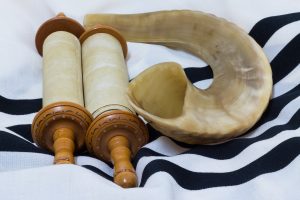
The ram’s horn shofar is a uniquely biblical instrument. Although the enemies of Elohim’s truth have misappropriated, counterfeited or perverted much of what is found in the Bible, so far as this author knows, the shofar is one thing that Satan, the adversary of all that is good, and his followers have left alone. It’s like the proverbial “hot potato” that’s Continue reading


The Terms and Conditions for Coming into the Presence of the Almighty

When coming into the Presence of Elohim, let’s never forget how high and set-apart he is and how low and defiled we are!

Exodus 19:10, Consecrate them today. How did Israel, as a bride-to-be, prepare herself to meet with YHVH? How are YHVH’s people now to be preparing themselves for their spiritual marriage with Yeshua? (Compare Exodus 19:10 with Revelation 19:7–9.) What is the righteousness of the saints (mentioned in Rev 19:8)? Righteousness is defined in Psalms 119:172 as, “… all thy [Torah] commandments are righteousness.” If what the Scriptures define as righteousness (i.e. the Torah) was “nailed to the cross,” as is popularly taught, then who is in error? The Scriptures or those who teach against YHVH’s Torah laws?

Discussion A. Why is it essential to study the example of the children of Israel preparing themselves to come into the presence of YHVH in Exodus 19? After all, if Yeshua did it all for us, we can just come boldly before the Father’s throne anytime, anyway we want, right (Heb 4:16)?

Let’s explore this concept a little to see what the Bible has to say about it.

Paul says in I Corinthians 10:11,

Now all these things happened to them [i.e. the children of Israel] as examples, and they were written for our admonition, upon whom the ends of the ages have come. (See also Rom 15:4.)

The writer of Hebrews has something similar to say in his prefatory remarks to his statement in Hebrews 4:16 about coming boldly before the throne of YHVH through the merits of the sinless righteousness of Yeshua our High Priest. In the preceding several Continue reading


The Third Day—Prophetic Significance

Exodus 19:1, 11, In the third month…the third day. 

Here we read that the Israelites arrived at Sinai in the third month. Jewish tradition teaches that YHVH most likely gave this order to the Israelites on the third day of the third month, and that this third day—the day YHVH gave the Ten Commandments—was on Shavuot.

Now let’s connect some dots or put some pieces of the puzzle together to form a prophetic picture of an amazing truth. Shavuot and the giving of the Ten Commandments was a day when YHVH, for the first time in recorded biblical history, sounded the heavenly shofar—known as the first trumpet. This relates back to the ram caught in the thicket by his horns. Abraham could see “the place” (Mount Moriah) afar off in three days (Gen 22:4), which related to Messiah’s first coming three millennia later. Likewise, the Israelites were to be ready “on the third day” to receive the Written Torah thundered from the lips of the pre-incarnate Yeshua the Messiah (Acts 7:38; 1 Cor 10:4) at Mount Sinai. But the “third day” reference here is also a prophecy analogous to Abraham’s “third day.” What is the connection? Abraham saw the death of the Redeemer on Mount Moriah and the Israelites were living out a prophecy that pointed to the same time when Messiah would come as the Living Torah culminating on the Feast of Shavuot. The “third day” reference for both Abraham and the Israelites had the same relevance, for both were living in the second century B.C. (i.e. before the birth of Yeshua, the Messiah) who was born near the beginning of the first century A.D.—or the third millennia, or third day prophetically, from both the time of Abraham and the Israelites.

Though a bit tangential to the subject of Shavuot, let’s look at another concept relating to the prophetic implications of the third day. As Yeshua, the Living Torah, came on the third day, so he will return on the third day after his first coming—or, in the third millennia after his first coming. That is, he came in the first millennium of our common era, and we have just passed into the third millennia of the same era and are now in the twenty-first century. According to biblical prophecy, Messiah will return in this third millennia, or third day:

Come, and let us return unto YHVH: for he has torn, and he will heal us; he has smitten, and he will bind us up. After two days will he revive us: in the third day he will raise us up, and we shall live in his sight. Then shall we know, if we follow on to know YHVH: his going forth is prepared as the morning; and he shall come unto us as the rain, as the latter and former rain unto the earth. (Hos 6:1–3)

This is a prophecy about the restoration of his people Israel in a spiritual marriage covenant to him (referred in Scripture as the “renewed covenant, see Jer 31:31,33; Heb 8:8–13). But it is also referring to the resurrection of the saints or, the bride of Messiah, who will participate in the marriage supper of the Lamb of YHVH. The saints are Israelites who are part of the Romans 11 olive tree whose root goes back to Abraham and to YHVH.

Yeshua makes further reference to the third day when he says,

…Behold, I cast out devils, and I do cures today and tomorrow, and the third day I shall be perfected. (Luke 13:32)

Yeshua was speaking of his ministry on earth at his first coming as well as his being resurrected on the third day. But, the “third day” is also a reference to his second coming in the third millennia or third day after his first coming. As he was “perfected” on the third day and raised from the dead, his saints will be “perfected” or resurrected at his second coming in the third millennia.

The Ten Commandments were given at Mount Sinai on the third day after two days preparation. That is, the children of Israel had two days to prepare and on the third day YHVH would give them his law from Mount Sinai. Similarly, Yeshua has had his people prepare themselves for 2000 years and in the third thousand-year period (or the seventh thousand year since creation—i.e. the Sabbath millennia) Messiah will return to resurrect his people after which the 1000-year sabbatical millennia will commence.

In reference to this, John records,

And the third day there was a marriage in Cana of Galilee… (John 2:1)

This is another prophetic statement referring to the marriage supper of Yeshua the Lamb of Elohim (Rev 19:7–9 cp. 2 Cor 11:2) to occur after the second coming of Yeshua Messiah in the third 1000-year period after his first coming.

Even after two days of preparation, ancient Israel was still not ready (spiritually) to receive the Torah from YHVH. On Shavuot, at Mount Sinai, YHVH entered into a marriage covenant with the children of Israel, but they were not ready to live up to the terms of that covenant. Those terms, simply stated, involved Israel being faithful and obedient only to YHVH, Israel’s spiritual marriage partner, and to his instructions in righteousness—the Torah. This Israel quickly demonstrated they were not willing to do, for they had hardly said “I do” to their marriage vows when they made and began worshipping the golden calf calling their act of spiritual adultery “a feast to YHVH” (Exod 32:5).

Between the time of the feasts of Shavuot and Yom Teruah when Moses received the second tablets of stone from YHVH containing the Ten Commandments, the children of Israel, the bride of YHVH, prepared herself not only to receive YHVH’s instructions the second time, and this time she was faithful to her marriage vows for approximately 38 years while she wandered in the wilderness after which she entered the Promised Land and “stayed the course” until after the death of Joshua.

Similarly, Messianic Israel of the first century a.d. (or “the Israel of Elohim,” Gal 6:16) received the Torah on the fleshly tablets of their hearts written by the finger of the Ruach HaKodesh on the day of Pentecost. But starting in about a.d. 70 with the destruction of the temple in Jerusalem and continuing up through the Second Jewish Revolt of a.d. 135 until the time of Emperor Constantine (in the fourth century), the second century bride of Messiah had, for the most part, abandoned YHVH’s Torah-commandments and had begun mixing the truth of Elohim with pagan practices, which was like the golden calf worship of old (e.g. Sunday worship, Christmas and Easter celebrations and many other pagan beliefs and traditions that exist in the Christo-pagan church to this day).

In our day, is not YHVH calling out a remnant of people who are leaving behind the traditions of golden calf worship, where the church has mixed the truth of YHVH’s Word with the pagan traditions of this world, and returning to the ancient blessed paths of YHVH’s Torah-instructions in righteousness (Jer 6:16, 19)? In fact, the Book of Revelation speaks of a group of end-time saints who will say “I do” to YHVH, and whose identifying mark is their faith in Yeshua the Messiah (i.e. the gospel message), and yet who faithfully keep YHVH’s Torah-commandments (Rev 12:17 and 14:12). Are these remnant redeemed believers not preparing themselves for the second coming of Messiah on the Yom Teruah when Yeshua, the Living Torah, will return to marry his spiritual bride—the saints, or sanctified ones, of YHVH (Rev 19:7–9)? As the children of Israel entered into the Promised Land under the leadership of Joshua, so YHVH’s spiritual bride will return to the spiritual Promised Land of Israel at the beginning of the Millennium under the leadership of Yeshua the Messiah (Heb 4:1–11).


Blog Scripture Readings for 1-28 Through 2-3-18

Aside

THIS WEEK’S SCRIPTURE READINGS FOR STUDY AND DISCUSSION:

Parashat Yitro — Exodus 18:1 – 20:23 (26)*
Haftarah — Isaiah 6:1 – 7:6; 9:5-6 (6-7)*
Prophets — 1 Kings 13:1 – 19:21
Writings — Psalms 117:1 – 119:160
Testimony — Luke 18:18 – 21:38

Our annual Scripture Reading Schedule for 2017-2018 is available to download and print.

Most of this week’s blog discussion points will be on these passages. If you have general comments or questions on the weekly Scripture readings not addressed in a blog post, here’s a place for you to post those. Just use the “leave a reply” link below.

The full “Read Through The Scriptures In A Year” schedule, broken down by each day, can be found on the right sidebar under “Helpful Links.” There are 4 sections of scripture to read each day: one each from the Torah, the Prophets, the Writings, and from the Testimony of Yeshua. Each week, the Torah and haftarah readings will follow the traditional one-year reading cycle.

* Verse numbers in parenthesis refer to the verse number in Christian English Bibles when they differ from Hebrew Bibles or the Tanakh.

Weekly Blog Scripture Readings for 1/28/18 through 2/3/18.


The Other Side of the Sabbath Law—Thou Shalt Work Six Days!

Exodus 16:4–30, The Sabbath. This chapter chronicles YHVH’s efforts to literally force an irreverent, unruly and disobedient nation to keep the seventh day Sabbath. He did so in a most poignant way—through food and hunger. It’s as if he were instructing the stiff-necked and rebellious Israelites that if they refused to follow his Sabbath instructions, they would literally go hungry. “If you don’t obey me, you don’t eat.” This shows the gravity the Creator places on the Sabbath command. Yet despite these clear instructions, most in the Babylonian church today, like the rebellious children of Israel of old, refuse to obey YHVH’s clear instructions regarding the Sabbath. Instead, they prefer to believe the doctrines of men proffered to them by their spiritual leaders that purport to invalidate the Sabbath command. Paul’s sage observation in Romans 8:7 describes the situation perfectly: “Because the carnal mind is enmity against Elohim: for it is not subject to the [Torah] law of Elohim, neither indeed can be.” In our day, the same question can still be asked of followers of Yeshua that YHVH asked of the Israelites at that time, “How long do you refuse to keep my commandments and my laws?” (Exod 16:28).

Not only this, but by forcing the Israelites to gather manna each day, he was teaching them to work six  days for their daily bread. Though the bread came from heaven—YHVH’s was its source—he still required the people to work each day by going out and gathering it. There is no free lunch even where YHVH is concerned. The nation of Israel wasn’t a welfare state empowering lazy freeloaders! If a man doesn’t work, he doesn’t eat.

The Sabbath command in Exodus 20 not only prescribes resting on the Sabbath, but this presupposes that one has followed the preceding command to work the previous six days. Humans are naturally inclined to laziness. If one doesn’t have to work, they won’t. YHVH works maintaining and sustaining the universe. YHVH who created humans in his image expects us to follow his example of working and then resting.

Moreover, this chapter is almost entirely dedicated to instructions pertaining to preparing for the Sabbath. This shows the priority that YHVH places on Sabbath observance for his people. Also note that these instructions are given many weeks before the official giving of the Torah (or law of Moses) at Mount Sinai. This is but one of the many examples of YHVH revealing key aspects of his Torah-law before he gave it the Israelites in one legal codified corpus at Mount Sinai.


Is There a Connection Between Sin and Sickness?

What if any is the connection between the sins we commit and the sicknesses and diseases that come upon us? Much, as the Bible teaches.

First, let’s establish some basic truths.

Everyone will eventually die, so not all sickness is a result of sin (Heb 9:27).

Some sickness isn’t due to sin, but so that YHVH might be glorified when the person is miraculously healed (John 9:2–3).

The purpose of some sickness is for spiritual refinement to bring us to a higher level spiritually as was the case with Job.

In a general sense, pain, suffering and death came upon all men because of Adam and Eve’s initial rebellion against YHVH Elohim in the Garden of Eden. As a result of the “fall of man,” all men have come under this curse and suffer as a result.

Unto the woman [Elohim] said, I will greatly multiply thy sorrow and thy conception; in sorrow thou shalt bring forth children; and thy desire shall be to thy husband, and he shall rule over thee. And unto Adam he said, Because thou hast hearkened unto the voice of thy wife, and hast eaten of the tree, of which I commanded thee, saying, Thou shalt not eat of it: cursed is the ground for thy sake; in sorrow shalt thou eat of it all the days of thy life; thorns also and thistles shall it bring forth to thee; and thou shalt eat the herb of the field; in the sweat of thy face shalt thou eat bread, till thou return unto the ground; for out of it wast thou taken: for dust thou art, and unto dust shalt thou return. (Gen 3:16–19)

Some sickness is a direct result of disobeying YHVH’s commandments; it’s YHVH’s judgment against that sin. In Exodus 15:26, YHVH speaks about not putting the diseases of Egypt upon his people if they will follow his commandments.

And said, If thou wilt diligently hearken to the voice of YHVH thy Elohim, and wilt do that which is right in his sight, and wilt give ear to his commandments, and keep all his statutes, I will put none of these diseases upon thee, which I have brought upon the Egyptians: for I am YHVH that healeth thee.

The Torah further makes the connection between sin and sickness when it lists the curses for Torah disobedience in Deuteronomy 28:21–22.

YHVH will make the plague cling to you until He has consumed you from the land which you are going to possess. YHVH will strike you with consumption, with fever, with inflammation, with severe burning fever, with the sword, with scorching, and with mildew; they shall pursue you until you perish.

In Deuteronomy 7:15, YHVH again mentions not afflicting his people with the sicknesses of Egypt if they will obey his Torah-commandments.

And YHVH will take away from thee all sickness, and will put none of the evil diseases of Egypt, which thou knowest, upon thee; but will lay them upon all them that hate thee.

The Bible indicates a direct relationship between sin and healing in Psalm 103:3,

Who forgiveth all thine iniquities; who healeth all thy diseases…

“Leprosy” or the infectious skin disease the Torah refers to as tsaraat (Lev 14:34) was a judgment from YHVH against several specific sins.

When ye be come into the land of Canaan, which I give to you for a possession, and I put the plague of leprosy in a house of the land of your possession…

In several instances in the Scriptures, we read that tsaraat was a direct result of a specific sin. In the case of Miriam, it was the sin of pride and rebellion against spiritual authority and using her tongue in an evil manner against YHVH’s spiritual authority (Num 12:1, 9–10). In the case of Gehazi, he became leprous because of greed and lying (2 Kgs 5:20–27). Uzziah, the king of Judah, became leprous because of his pride and rebellion against YHVH when he dared to violate the Torah by burning incense in the temple (2 Chron 26:16–23).

Envy can bring on bone diseases. Envy can also refer to “jealousy and sexual passion.”

A sound heart is the life of the flesh: but envy the rottenness of the bones. (Prov 14:30)

Sexually transmitted diseases are a direct result of sexual promiscuity and idolatry, and is a judgment from Elohim against those who engage in such ungodly practices.

For this cause Elohim gave them up unto vile affections: for even their women did change the natural use into that which is against nature: and likewise also the men, leaving the natural use of the woman, burned in their lust one toward another; men with men working that which is unseemly, and receiving in themselves that recompense of their error which was meet. (Rom 1:26–27)

Yeshua, on several occasions, equates sin and healing. That is to say, he viewed forgiveness of sin and healing of disease as synonymous concepts. To him, the sickness was a result of sin.

Whether is easier, to say, Thy sins be forgiven thee; or to say, Rise up and walk? (John 5:24)

Yeshua shows that illness can be a direct punishment for sin, as well, when he states that a man whom he had just healed was sick because of his sin.

Afterward Yeshua findeth him in the temple, and said unto him, Behold, thou art made whole: sin no more, lest a worse thing come unto thee. (John 5:14)

YHVH’s laws of judgment against sin are still in operation even in the so-called “New Testament era of grace.” YHVH struck down and killed Annaias and Sapphira because they lied to the apostles and the Spirit of Elohim (Acts 5:1–11).

Paul confirms the truth that there is still a correlation between sin and sickness when he states that some within the body of Yeshua get sick and die because of sin. Illness is a direct punishment for sin. Paul teaches that this can occur when a believer doesn’t have the proper fear and respect for YHVH Elohim and those things which are set-apart of kadosh such as blood and body of Yeshua as symbolized in the Passover communion service by the bread and the wine.

For I have received of the Master that which also I delivered unto you, that the Master Yeshua the same night in which he was betrayed took bread: and when he had given thanks, he brake it, and said, Take, eat: this is my body, which is broken for you: this do in remembrance of me. After the same manner also he took the cup, when he had supped, saying, This cup is the new testament in my blood: this do ye, as oft as ye drink it, in remembrance of me. For as often as ye eat this bread, and drink this cup, ye do shew the Master’s death till he come. Wherefore whosoever shall eat this bread, and drink this cup of the Master, unworthily, shall be guilty of the body and blood of the Master. But let a man examine himself, and so let him eat of that bread, and drink of that cup. For he that eateth and drinketh unworthily, eateth and drinketh damnation to himself, not discerning the Master’s body. For this cause many are weak and sickly among you, and many sleep. For if we would judge ourselves, we should not be judged. But when we are judged, we are chastened of the Master, that we should not be condemned with the world. (1 Cor 11:23–32)

When trials of our faith fall on us including sickness and disease, Scripture instructs us to receive it with joy realizing that this is occurring for our spiritual refinement. We are to then ask YHVH for wisdom presumably to help us to understand why the trial is occurring, so that we can repent of sin and learn from our mistakes.

My brethren, count it all joy when ye fall into divers temptations; knowing this, that the trying of your faith worketh patience. But let patience have her perfect work, that ye may be perfect and entire, wanting nothing. If any of you lack wisdom, let him ask of Elohim, that giveth to all men liberally, and upbraideth not; and it shall be given him. (Jas 1:2–5)

Let us not forget that whom our Father in heaven loves he chastens. Sickness often is a form of loving chastisement or discipline from YHVH Elohim,

And ye have forgotten the exhortation which speaketh unto you as unto children, My son, despise not thou the chastening of YHVH, nor faint when thou art rebuked of him: for whom the YHVH loveth he chasteneth, and scourgeth every son whom he receiveth. If ye endure chastening, Elohim dealeth with you as with sons; for what son is he whom the father chasteneth not? But if ye be without chastisement, whereof all are partakers, then are ye bastards, and not sons. Furthermore we have had fathers of our flesh which corrected us, and we gave them reverence: shall we not much rather be in subjection unto the Father of spirits, and live? For they verily for a few days chastened us after their own pleasure; but he for our profit, that we might be partakers of his holiness. Now no chastening for the present seemeth to be joyous, but grievous: nevertheless afterward it yieldeth the peaceable fruit of righteousness unto them which are exercised thereby. Wherefore lift up the hands which hang down, and the feeble knees; and make straight paths for your feet, lest that which is lame be turned out of the way; but let it rather be healed. (Heb 12:5–13)