The Real Meaning of “You shall know the truth…it’ll set you free.”

John 8:32, Know the truth. “The truth shall set you free” is an often-quoted axiom, but few understand its deeper biblical implications.

We violate the sanctity of Scripture if we impose on it our own meanings. This is a cavalier and presumptuous approach to understanding the Bible and can hardly be called “rightly dividing the word of Elohim” (1 Tim 2:15).This practice often occurs with this verse. To do so is to twist the meaning of the Scriptures to fit our own human vicissitudes, agendas and biases. This is humanism and insults the mind, will and sovereignty of the Almighty as divinely revealed in his Holy Word.

To properly understand this verse, we must look solely to the Bible for the keys to understanding it. We can start this process by first asking the question, what is truth?

The Bible defines its own terms when it calls the Torah truth (Ps 119:142 and 151). The truth of Torah (i.e. the law of Moses) will set a person free, for when one hears and obeys the Torah, one ceases sinning (i.e. violating YHVH’s Torah-law; 1 John 3:4), and therefore doesn’t come under the penalty of the Torah-law’s judgment for breaking it, which the Bible calls sin and which leads (ultimately) to eternal death (Ezek 18:4; Rom 6:23). When one is not under the judgment of sin, one is free. With freedom comes life.

Yeshua the Messiah himself is also the truth (John 14:6), for he is the Living Torah-Word of Elohim (John 1:1, 14). When we place our trusting faith in Yeshua and follow him, his spiritual life in the form of his Set-Apart Spirit will then flow through us and empower us to walk away from sin and follow the spiritual light of his Torah, which will keep us sin-free. This is the path that leads us toward the ultimate freedom from eternal death resulting in everlasting life (John 8:52). As such, sin will no longer have any legal claim on us, and thus we will not come into condemnation, but will pass from death into everlasting life (John 5:24). This is possible because Yeshua has taken upon himself our past sins (Rom 3:25), paid the legal penalty of them, and wiped our spiritual slate clean and has given us a fresh start in life (Gal 2:20; 1 Cor 5:17) to walk sin-free (in accordance with his standards of righteousness, which is the Torah). This is the result of knowing the truth and experiencing the freedom that comes therefrom.

It’s astounding how so many people have been taught to believe the exact opposite of the truth—that the laws of Elohim will place you under bondage instead of setting you free!

Now that you have been set free from the traditions of men, which make of none effect the word of Elohim, you now have the freedom to understand the fuller, biblical meaning of Yeshua’s statement, “And you shall know the truth and it shall make you free.”

 

To Whom Do the Biblical Feasts Belong: YHVH or the Jews?

John 7:2, The Jews’ Feast of Tabernacles. A casual reading of this verse (and other similar references in the Gospels to the “Jewish festivals”) may lead one to believe that the biblical feasts are of Jewish origination and thus for the Jews only. This is a prevalent notion in the mainstream church. However, understanding the Gospel writer’s comment in the cultural and spiritual context in which it was written will shatter this erroneous concept.

A study of the Bible will first reveal that the biblical feasts were given not only to the Jews, but to all the tribes of Israel by YHVH himself when he gave them the Torah after the children of Israel left Egypt.

Second, in the first century, different religious sects had different calendars so that they observed the biblical feasts at different times. For example, the Samaritans had their own calendar that differed from that of the mainstream Jews. Moreover, the Dead Sea scrolls reveal that the Essenes toyed around with several calendars. Within mainstream Judaism, there was even a difference of opinion (between the Sadducees/Boethusians and Pharisees), for example, as to when to celebrate the Feast of Pentecost.

So when John uses the term, “the Jews’ Feast of Tabernacles” he’s not indicating that the feasts were of Jewish origination and thus belonged exclusively to the Jews, but rather which calendar he’s referring to or on which days certain feasts were to be observed.


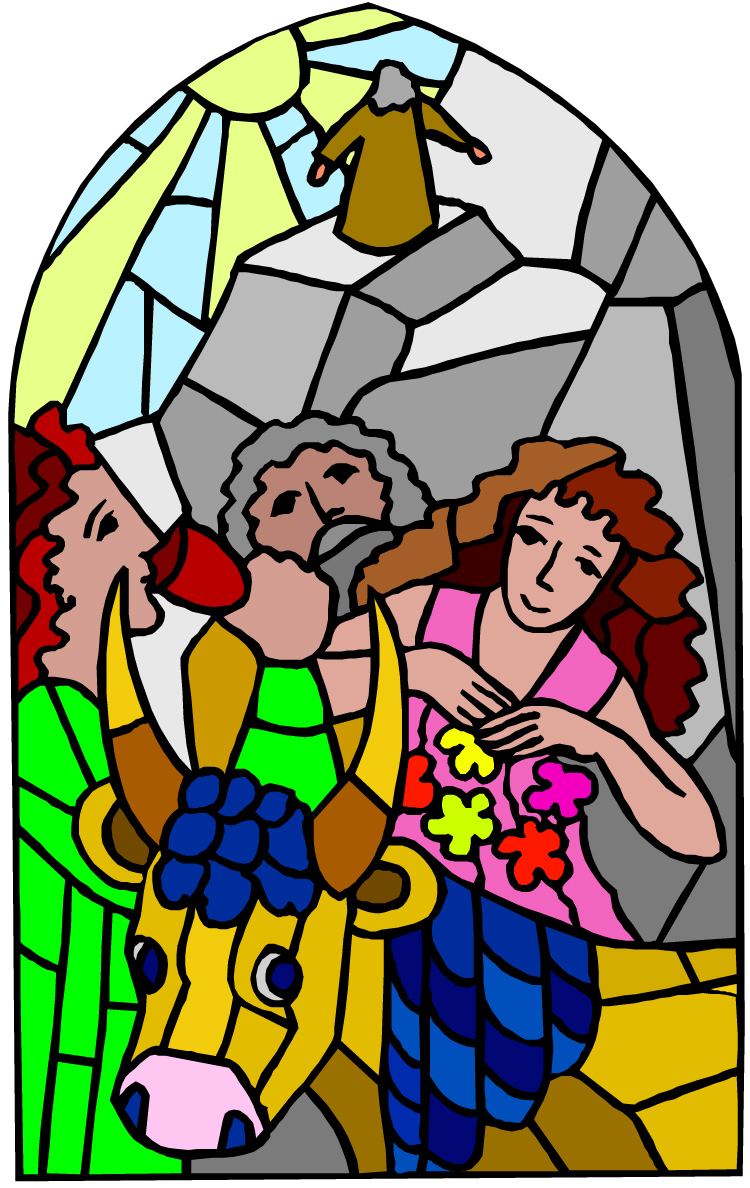
Golden Calf Worship Among YHVH’s People Today

Are YHVH’s people still prone to golden calf worship today?

Some things never change, since human nature is still the same today as it was thousands of years ago when the children off Israel worshipped the golden calf.

So let’s explore this question.

Let’s look at the series of events that occurred as the children of Israel were leaving Egypt, which have major relevance to what is occurring in mainstream Christianity in our day. If we fail to learn the lessons of history, we’ll likely repeat the mistakes of history. It has to do with golden calf worship.

YHVH redeemed the children of Israel out of Egypt and set the slaves free. He blessed them not only by giving them their freedom, but by giving them the wealth (gold and silver) of Egypt as well. We read that the Israelites exited of Egypt with a high hand. They were victorious, free and wealthy.

YHVH led them into the wilderness en route to the Promised Land—normally an eleven day journey. They had some difficulties: Pharaoh tried to kill them at the Red Sea, they lacked clean drinking water, and they had food issues, but YHVH provided them deliverance from Pharaoh, gave them clean water, manna and meat, and they overcame these trials.

Next, YHVH led the Israelites to the foot of Mount Sinai, and on Shavuot he made a covenantal agreement with them and gave them his Torah as their national constitution. They agreed to obey him and to keep his commandments. He promised to bless them if they remained faithful to him.

Moses went up to Mount Sinai to receive the Torah-covenant on two tablets of stone. While he was gone for 40 days, the people grew worried and anxious and become weary of waiting for Moses to return.  This was a test they had to pass of their faithfulness. Would they be faithful to YHVH and keep his commandments, or would they stray spiritually from the path of righteousness YHVH had given them and they had agreed to follow?

The Israelites got tired of waiting, and took the gold from Egypt and turned it into a golden calf, and then they rose up to play (to party). They even called their revelry a feast to YHVH! They used religious verbiage like “YHVH” and “feast” to add legitimacy to their Continue reading


The Sabbath/s of Elohim—An Identifying Sign Forever

Verily my sabbaths ye shall keep: for it is a sign between me and you throughout your generations; that ye may know that I am YHVH that doth sanctify you. (Exod 31:13)

There remaineth therefore a rest/Sabbath [Greek: sabbatismos or keeping of the Sabbath]  to the people of Elohim. (Heb 4:9)

Exodus 31:13–17, My Sabbaths you shall keep. Note that Sabbaths is plural. This is a reference not only to the weekly Sabbath, but to the feast day Sabbaths as well. However, the seventh day Sabbath remains central to YHVH’s spiritual economy for his people. Why did YHVH designate it as a sign (“signal, distinguishing mark, banner,” Exod 31:12) between him and Israel? As YHVH’s set-apart people, Israel was distinguishing itself from the surrounding nations who did not keep the Sabbath. What distinguishes the saints today as YHVH’s set-apart people from the non-believing heathen around them? Certainly our love for one another is a distinguishing mark, according to Yeshua (John 13:35). Yeshua also said that if we love him we will keep his Torah commandments (of which the Sabbath is the fourth of the ten commandments, John 14:15; Exod 20:8). John was inspired to write that those who say they know Elohim and don’t keep his Torah-commandments (of which the Sabbath is a foundation stone) are liars and the truth is not in them (1 John 2:3–6). And finally, Yeshua told those who were Torahless (i.e. workers of iniquity or lawlessness) to depart from him, that he didn’t know them even though they claimed to be his followers and had done many religious works in his name (Matt 7:21–23). Although the Sabbath and the biblical feasts may not be the exact sign of the Renewed Covenant, Elohim’s Sabbaths are foundation stones of the Torah, and the keeping of them remains to this day for the saints of Elohim (Heb 4:9).

The ArtScroll Stone Edition Tanach translates verse 15 as follows:

For six days work may be done and the seventh day is a day of complete rest, it is sacred to [YHVH] … (emphasis added)

What is complete rest? What is the connection between “complete rest” and the idea of sacredness or being set-apartness or kadosh? The people of YHVH are called to separate the kodesh from the common or profane:

Her priests have violated my Torah, and have profaned my set-apart/kodesh things: they have put no difference between the kodesh and profane [common, polluted] neither have they showed difference between the unclean and the clean, and have hid their eyes from my Sabbaths, and I am profaned among them. (Ezek 22:26)

And [the priests] shall teach my people the difference between the kodesh and profane, and cause them to discern between the unclean and the clean. (Ezek 44:23)

What is common or profane is that which is commonly done on the other six days of the week.

Exodus 31:14, Sabbath…profanes it. Profaning or polluting the Sabbath with secular activities is a sin. Sabbath desecration is as much a capital offence in YHVH’s eyes now as it was then. The wages of sin is still death (Ezek 18:4; Rom 6:23).

Exodus 31:18, Written with the finger. The Sabbath was ordained by Elohim and written by his finger. How dare men subsequently declare that the Sabbath was changed and that what YHVH wrote with his finger in tablets of stone is now irrelevant or passé! What hubris and arrogance on men’s part to counter the will and laws of Elohim with silly, specious and vacuous justifications for man-made and unbiblical teachings. Such edicts of men will not stand, but will blow away like dust in the wind, will be burned to ashes in the fiery judgment of Elohim, and will fall by the wayside like all the other traditions of men, which have dared to make the word of Elohim of no effect!


Introduction to Biblical Aroma Therapy—Essential Oils

Exodus 30:34–38, Sweet spices. According to Jewish tradition (b. Talmud Keritot 6a), there were eleven sweet spices (Heb. ketoret bisamim) in the tabernacle incense, four of which are mentioned here. They were balsam, clove, galbanum, frankincense, myrrh, cassia, spikenard, saffron, costus, aromatic bark (a type of cinnamon), and cinnamon. Four thousands of years, ancient cultures relied on the medicinal properties of aromatic plants. Only in recent years, has the West rediscovered the salutary benefits of these plants. Listed below are the suggested healing properties of several of these herbs. In modern times, the oils from these plants are being extracted for use in various ways. (Source of information is from various online sources and Aromatherapy Workbook by Marcel Lavabre.)

  • Galbanum (Ferula gummosa or Ferula galbaniflua) is an antiseptic (prevents the growth of disease-causing microorganisms), and helps to treat asthma, acne, coughs, cramps, scar tissue, wrinkles. Apparently, the smoke from burning the resin of this plant was used in ancient times to keep flies and snakes away.
  • Onycha may by cloves, which is an antiseptic, analgesic (pain relief), carminative (for relieving flatulence) or Styrax officinalis, which is a resin from this tree and is great for kidney support (edema), bronchitis, colds, sinusitis, skin conditions, and is said to relieve stress.
  • Frankincense is a skin tonic, heals infected wounds and is an anti-inflammatory. It helps to reprogram cellular memory thus promoting permanent healing. It is used against typhoid, allergies herpes, tonsillitis, head injuries, depression, and cancer. Research shows that it will lower cortisol by 40 percent just by deep inhalation. Elevated cortisol contributes to weight problems.
  • Myrrh (stacte) is a skin tonic or conditioner, anti-inflammatory, cough expectorant, vulnerary (heals wounds), fungicide, antiseptic, astringent (causes the contraction of body tissues—notably the skin). It is especially useful for mouth ulcers and throat infections. In ancient times, pregnant mothers anointed themselves with myrrh for protection against infectious diseases, and they used myrrh during labor to stretch the perineum and on umbilical cords. Myrrh has a long history of use in skin health and hygiene products, and it prolongs the life and scent of other oils. Myrrh helps to combat wrinkles, is antiseptic, aids in balancing the thyroid, clearing athletes foot, ringworm, viral hepatitis, thrush in babies, inflammation and bronchitis.
  • Cassia (Cinnamomum cassia) is an antiseptic, antibiotic, and immune system builder.
  • Spikenard is a skin tonic or conditioner.
  • Aromatic Bark is an antiseptic (against flu and infectious disease), stimulant (circulation, nervous system).
  • Cinnamon (leaf) is an antiseptic (against infectious disease), relieves skin irritants (e.g. poison oak).
 

Blog Scripture Readings for 2-25 Through 3-3-18

Aside

THIS WEEK’S SCRIPTURE READINGS FOR STUDY AND DISCUSSION:

Parashat Ki Tisa — Exodus 30:11 – 34:35
Haftarah — 1 Kings 18:1-39
Prophets — 2 Kings 19:1 – 25:30
Writings — Proverbs 1:1 – 7:27
Testimony — John 7:1 – 9:41

Our annual Scripture Reading Schedule for 2017-2018 is available to download and print.

Most of this week’s blog discussion points will be on these passages. If you have general comments or questions on the weekly Scripture readings not addressed in a blog post, here’s a place for you to post those. Just use the “leave a reply” link below.

The full “Read Through The Scriptures In A Year” schedule, broken down by each day, can be found on the right sidebar under “Helpful Links.” There are 4 sections of scripture to read each day: one each from the Torah, the Prophets, the Writings, and from the Testimony of Yeshua. Each week, the Torah and haftarah readings will follow the traditional one-year reading cycle.

Weekly Blog Scripture Readings for 2/25/18 through 3/3/18.


Are Humans Equal in the Eyes of the Creator?

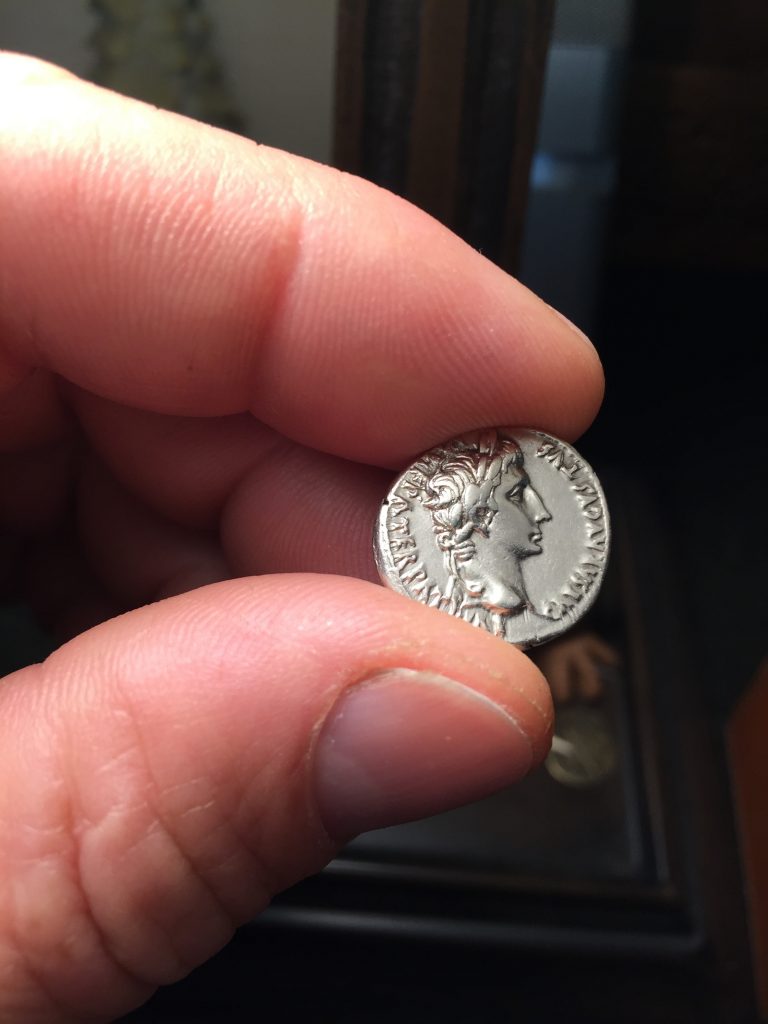
An genuine 2,000 year old holy half-shekel.

Exodus 30:15, Rich…poor. This passage teaches the equality of all believers. In YHVH’s eyes, each redeemed Israelite saints are equal. To the Creator of all things and who owns everything, no one is worth more than a half-shekel, and no one is worth less than a half shekel. The rich aren’t better than the poor and vice versa. This is also the moral of Yeshua’s Parable of Lazurus and the Rich Man (Luke 16:19–21). Contrary to what many Christians have been taught, this parable isn’t a doctrinal statement about the state of the dead and the afterlife. To many people, including the rich Scribes and Pharisees of Yeshua’s day, material success denotes superiority and even divine favor. The Bible dispels this false notion. YHVH looks at the heart and character of a person and the righteous fruits of their lives, and not at the outward, physical trappings—the proverbial cover of the book. The Scriptures address this issue in several places:

Judge not according to the appearance, but judge righteous judgment. (John 7:24)

A good tree cannot bring forth evil fruit, neither can a corrupt tree bring forth good fruit.

Every tree that bringeth not forth good fruit is hewn down, and cast into the fire. Wherefore by their fruits ye shall know them. (Matt 7:19–20)

But YHVH said unto Samuel, Look not on his countenance, or on the height of his stature; because I have refused him: for YHVH seeth not as man seeth; for man looketh on the outward appearance, but YHVH looketh on the heart. (1 Sam 16:7)

Now the Torah and the rest of the Scriptures teach that all the saints are equal. But what about the rest of humanity? Are all humans created equal?

There are many ways to look at this equality issue. But let’s see what the Bible teaches.

The Bible states in several places that all humans are created in the image of Elohim. This implies equality among all humans.

The Bible also states that all humans are sinners, that all deserve death and that none are righteous of themselves. This also implies equality.

The Bible states that Elohim so loved all the world that he sent his Son to die for all humanity. This implies equality among humans.

The Bible also state that Elohim loved us while we were still sinners. This implies equality among all humans.

Elohim desires all humans to be saved. This also implies equality among humans.

The Bible furthermore states that Elohim isn’t a respecter of persons. This implies equality among humans.

The Bible teaches that there is one Torah-law standard of righteousness for all people—Israelites and non-Israelites. This implies equality.

Moreover, the Bible states that Elohim will judge all humans by that law. All humans will come before his judgment seat. Thus all are equal before the law and before the Judge of the universe.

Conversely, there is no question that the Bible teaches that Elohim favors those who love and serve him. He favors them with a special love and enters into a personal relationship with them. He blesses then in a special way (salvation, healing, answered prayers, special protection, guidance, wisdom the Set-Apart Spirit, etc.) and eventually will reward them with eternal life, glorification and inclusion into his eternal kingdom as his adopted children. So in this sense, Elohim starts out loving and treating everyone equally, but those who choose to love and obey him he favors them and extends his grace to them. In this case, not everyone is treated equally. But this is not based on favoritism on YHVH’s part, but upon the choices that humans make with regard to his initial equal treatment of all. In the end, all humans will reap what they sow. If they obey Elohim they will be blessed with immortality. If they disobey him, with eternal death.