Obtaining Ultimate Salvation—A Process, Not a One Time Event

Deuteronomy 2:31, Begin to possess [the Promised Land]. Possession of the Promised Land was a process. This concept is as true for us as much as it was for the children of Israel.

The idea in mainstream Christianity that when you receive salvation at the beginning of your spiritual walk and that’s all there is to possessing or entering the kingdom of Elohim is a seriously incomplete one. It doesn’t fit the biblical models or the teachings of the apostolic writers about the need for the believer to persevere and overcome to the end to receive his ultimate eternal inheritance.

When this verse states that Israel “began to possess [the Promised Land],” what does this mean? Why didn’t YHVH give it to Israel all at once? What did Israel have to do to “possess” the land? What do we have to do to possess our spiritual inheritance? Does YHVH just hand it to us, or do we have to persevere, overcome and fight for it?

Leaving Egypt is a picture of a believer’s initial salvation, while entering the Promised Land is a picture of a believer’s ultimate salvation involving his glorification or the redemption of his physical body and being granted eternal inheritance at the resurrection. It’s also a picture of rewards for obedience. 

Much more could be said on this subject, and the apostolic writers show us. Suffice it so say, the idea that the mainstream church propagates that receiving salvation is a one time event like getting your ticked punched to a movie or amusement park ride falls woefully short of the biblical truth and has led many people astray spiritually. Yes, the initial steps in the process are relatively easy, but then there’s the repentance, the spiritual walk, the obedience and lordship of Yeshua, the overcoming, and the levels of rewards. All of these things are precursors and steps in the process to actually receiving eternal life and a resurrected glorified body.

The children of Israel’s exodus from Egypt and their subsequent 40 years journey to the Promised Land is a picture of this process and all the steps in between. It’s a picture of the redeemed believer’s life and all of the faith-building struggles one must encounter before entering the the Promised Land of their ultimate spiritually inheritance.

The idea that the saint can have it all here and now is not a biblical one, but an ear-tickling message promoted by hireling gospel peddlers and corporate church merchandizers who have something to sell you. Beware of these false teachers who refuse to tell you the whole truth as presented in the Bible! Let the buyer beware.


 

Dealing With Crazy Family Members

Deuteronomy 2:2–9, Edom. Edom (another name for Esau, brother of Jacob) and Moab and Ammon (sons of Lot) were blood relatives of the Israelites. Often those of our own family will stand in our way as we go in to possess our ­spiritual, Elohim-given inheritance and destiny.

What is the lesson from this passage of scripture on how to deal with less-than-cooperative family members who fail to recognize the calling on your life? Are we to make war with them? Are we in any way to be beholden to or dependent on them for our physical needs? If we became dependent upon them could this help or hinder our chances of entering our own spiritual destiny or “Promised Land” that YHVH has for us? Does YHVH desire our families to be saved? (See Acts 16:31; 2 Pet 3:9.) How can we be a light to our families if we are fighting and attempting to destroy those who would spiritually stand in our way? These aren’t easy questions to answer. One thing is certain though. We must put serving and obeying YHVH Yeshua above allegiance to our families. Yeshua had some pretty hard words in this regard (see Matt 10:34–39).

This passage also teaches us to avoid conflicts with family members at all costs. No good can come from such confrontations. How does verse 5 start out? Now go on to read verse 6. YHVH instructed the Israelites to treat their cousins with respect and civility—almost in a business-like manner. Nowhere does Scripture tell us that we have to like our heathen family members. But neither are we to act offensively toward them. Like the Israelites when forced to encounter long lost relatives, sometimes it is best to smile, be nice, but keep moving on! 

Another lesson to be learned from these verses is this: Choose your battles carefully. Avoid conflicts with others if possible. Go to battle only when YHVH tells you to. Only then will you come out victoriously, for then he will be fighting on your side and not against you. Latter in this chapter, we see that YHVH instructed the Israelites to engage certain nations and defeat them. When Israel obeyed him and fought only his battles, what was the outcome? (Read 2:24–3:11 cp. 3:22.)


Confronting the Lies About Paul—Galatians Explained from a Hebraic Perspective

You have been lied to about Paul and his epistle to the Galatians!


An Important Question

When addressing the lies that the mainstream church has been dishing out like a load of dung against Paul and the Word of Elohim (i.e. Yeshua the Messiah, the Word of Elohim) since the time of the early church fathers, let us first ask an important question that has far-reaching implication including whether you can trust the Bible and whether you are saved or not. In the Epistle to the Galatians. It is this: Is Paul advocating the abrogation of the Torah-law as mainstream Christianity teaches or not?

This is the lens through which most Christians view Galatians. For example, the chapter subheadings in my NKJV Bible reveal the antitorah bias of mainstream Christianity. The heading above Galatians 2:11 reads, “No Return to the Law,” and the heading over Gal 3:10 reads, “ The Law Brings a Curse.” When Christians study their Bibles and encounter these subheadings that are written by men and not inspired by the Spirit, what are they to think? Most don’t questions the scholars who translate the Bible or the publishers sell the Bibles. Most readers will automatically thinks to themselves, “After all, these translators and publishers are Bible experts, they know more than I do, so who am I to question them?”

Interestingly, the same author of Galatians elsewhere admonishes us to, “Prove/test all things; hold fast to that which is good” (1 Thess 5:21). This is the responsibility of each saint as he studies the word of Elohim. Therefore, it behooves us to have a touch of intellectual scepticism when studying the Scriptures to insure that we’re not unwittingly putting our faith in the traditions and doctrines of men by which the word of Elohim has Continue reading


Galatians: Explanation of Terms and Quick Overview

Definition of Terms in Galatians

The law (the Torah):

The Torah of Elohim as contained in the first five books of Scripture (the Penteteuch [Greek] or Chumash [Hebrew]). Defined literally, Torah in Hebrew meansteachings, precepts, instructions [in righteousness].” In the Jewish religion the term Torah can have both broader and narrower meanings than just the five books of Moses: (a) the entire Tenakh (or Old Testament); (b) the Oral Law; (c) or strictly the legal code (non-narrative) parts of the first five books of Moses. 

The law versus [a] law: 

In most cases where the term the law is found in the English “New” Testaments, the definite article the is not part of the original Greek (this can be verified by consulting a Greek interlinear), even though the English translators have not italicized it indicating it as a word which has been added by the translators to clarify the meaning of the text (as they have in the KJV and NASB Bibles). The term law by itself (without the definite article the preceding) can, at times, simply refer to: (a) any legal code of do’s and don’ts without reference to faith, heart conviction or love; (b) legalism; (c) a perversion of the Torah into a system of do’s and don’ts to earn, merit or keep Elohim’s love and favor and thereby to receive salvation. 

Under [the] law: 

(3:23; 4:4, 5, 21; 5:18; also Rom 3:19; 6:14, 15; 1 Cor 9:20, 21) under [the] law can alternatively be rendered under subjection to legalism, according to David Stern. Finally, let’s look actually at the Greek word under as it is used in the phrase under law. 

The Complete Jewish Bible (by David Stern) translates the phrase under [the] law as under legalism (see Stern’s Jewish New Testament Commentary, p. 344 where he Continue reading


Outline of Sefer Devarim—The Book of Deuteronomy: of Moses’ Farewell Address

Chapter 1:1–5, Introduction

Chapters 1:6–4:40, First Discourse

Moses gives a veiled rebuke for sin and disobedience, and gives a review of the journey from Mount Sinai to Kadesh with exhortations to obedience.

Chapters 4:44–11, Second Discourse, Part 1

The religious foundations of the covenant, the spirit in which it is to be kept and the motives to right obedience are discussed. Moses shows how the covenant defines the relationship between YHVH and Israel and emphasizes the basic spiritual demands that such a relationship imposes upon Israel.

Chapters 12–26, Second Discourse, Part 2

  • The code of law dealing with:
  • Worship, Chapters 12:1–16:17
  • Government, Chapters 16:18–18
  • Criminal Law, Chapters 19:1–21:9
  • Domestic Life, Chapters 21:10–25
  • Rituals and the Sanctuary, Chapter 26

Chapters 27–30, Third Discourse

The enforcement of the Torah-law with its blessings and curses; establishment of a fresh covenant between YHVH and Israel (i.e., the younger generation).

Chapters 31–34, The Last Days of Moses

  • Chapter 31, Committal of the law to the keeping of the priests.
  • Chapter 32, The Song of Moses (a prophecy about Israel’s future).
  • Chapter 33, Moses’ patriarchal blessing over the tribes of Israel.
  • Chapter 34, The death of Moses.

Overview of the Book of Deuteronomy/Devarim from Various Commentators

This last book of the Torah starts out with “These are the words which Moses spoke ….” The Hebrew name for Deuteronomy is Devarim meaning “words,” which is the plural form of devar meaning “word, speech, a matter or thing, a commandment, a report, a message, promise.” Note the similarity between the Hebrew word devar and the Greek word logos from John 1:1 (“In the beginning was the Word, and the Word Continue reading


Blog Scripture Readings for 7-15 Through 7-21-18

Aside

THIS WEEK’S SCRIPTURE READINGS FOR STUDY AND DISCUSSION:

Parashat D’varim — Deuteronomy 1:1 – 3:22
Haftarah — Isaiah 1:1-27
Prophets — Ezekiel 28:1 – 34:31
Writings — Nehemiah 4:1 – 10:39
Testimony — Galatians 3:1 – 6:18; Ephesians 1:1 – 3:21

Our annual Scripture Reading Schedule for 2017-2018 is available to download and print.

Most of this week’s blog discussion points will be on these passages. If you have general comments or questions on the weekly Scripture readings not addressed in a blog post, here’s a place for you to post those. Just use the “leave a reply” link below.

The full “Read Through The Scriptures In A Year” schedule, broken down by each day, can be found on the right sidebar under “Helpful Links.” There are 4 sections of scripture to read each day: one each from the Torah, the Prophets, the Writings, and from the Testimony of Yeshua. Each week, the Torah and haftarah readings will follow the traditional one-year reading cycle.

Weekly Blog Scripture Readings for 7/15/18 through 7/21/18.


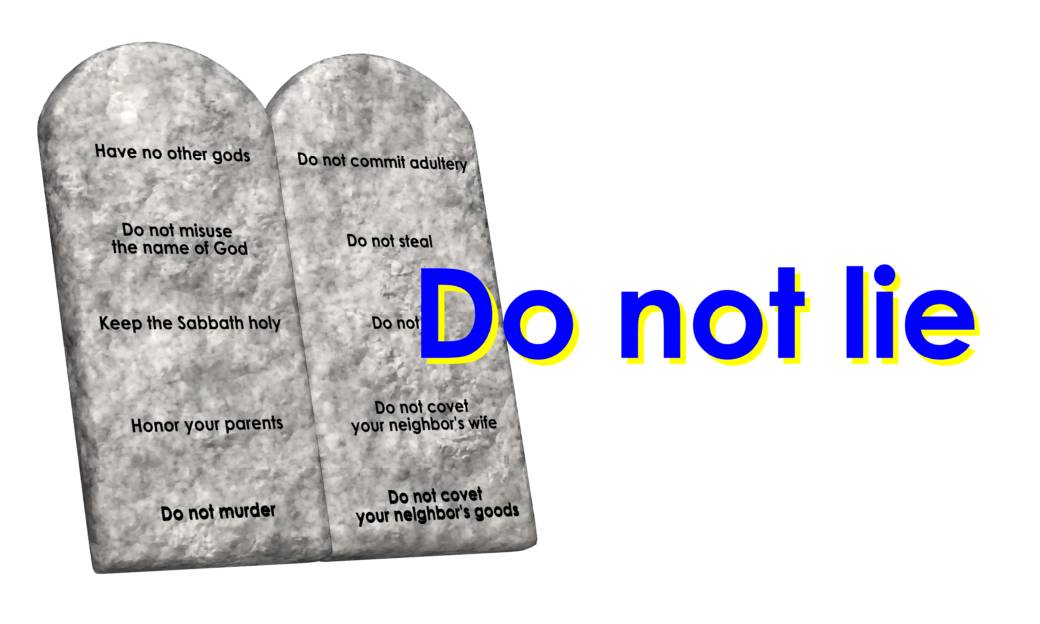
The Sabbath—A Bridge Back to the Future!

The biblical Sabbath is like a spiritual bridge that spans the ages—the past to the present and then on into the future. The seventh day Sabbath not only connects man to all three, but carries man back to the Creator and forward with him into eternity, that is, into the eternal Sabbath of the New Heavens and New Earth in the New Jerusalem. The Sabbath is a major bridge linking man to his past, present and future.

When men cease to “remember the Sabbath to keep it holy/kadoash/set-apart [from secular activities]” (Exod 20:8) and substitute it for other days of worship (e.g. Sunday) or replace it with secular work and activities, humans, to one degree or another, cut themselves off from that spiritual bridge linking them to the eternity beyond both past and future in which Elohim inhabits.

Interestingly, the Sabbath was the first biblical truth that the post-apostolic apostate-bound Christian church fathers abandoned in the second century. At the same time, the Sabbath is the first thing to which modern mainstream Christian who are rediscovering their Hebraic roots will return.

As such, these modern day spiritual truth-seekers and pilgrims are unwittingly retracing their steps back to the future and back to the point where their second century antecedents jumped off the spiritual bridge that links them to eternity and beyond.

Yeshua the Messiah is the Creator of and LORD of the Sabbath and, when on earth as a human, he never sinned by violating a single Bible commandment including the command to keep the Sabbath holy.

Moreover, the Sabbath was a sign that the Word of Elohim (who later revealed himself in flesh form as Yeshua the Messiah) audibly gave to the children of Israel at Mount Sinai as a sign linking them to himself in a deep, mystical spiritual way.

The Sabbath as a commandment and a sign linking Elohim to his people has never gone away. Yeshua is the same yesterday, today and forever and does not change.

Those who love Yeshua the Messiah will be imitating him (1 Cor 11:1) and showing him their love by keeping his commandments (John 14:15). The Sabbath will link them to him in a deeper spiritual and mystical way that only those who “remember the Sabbath to keep it holy” can fully understand.