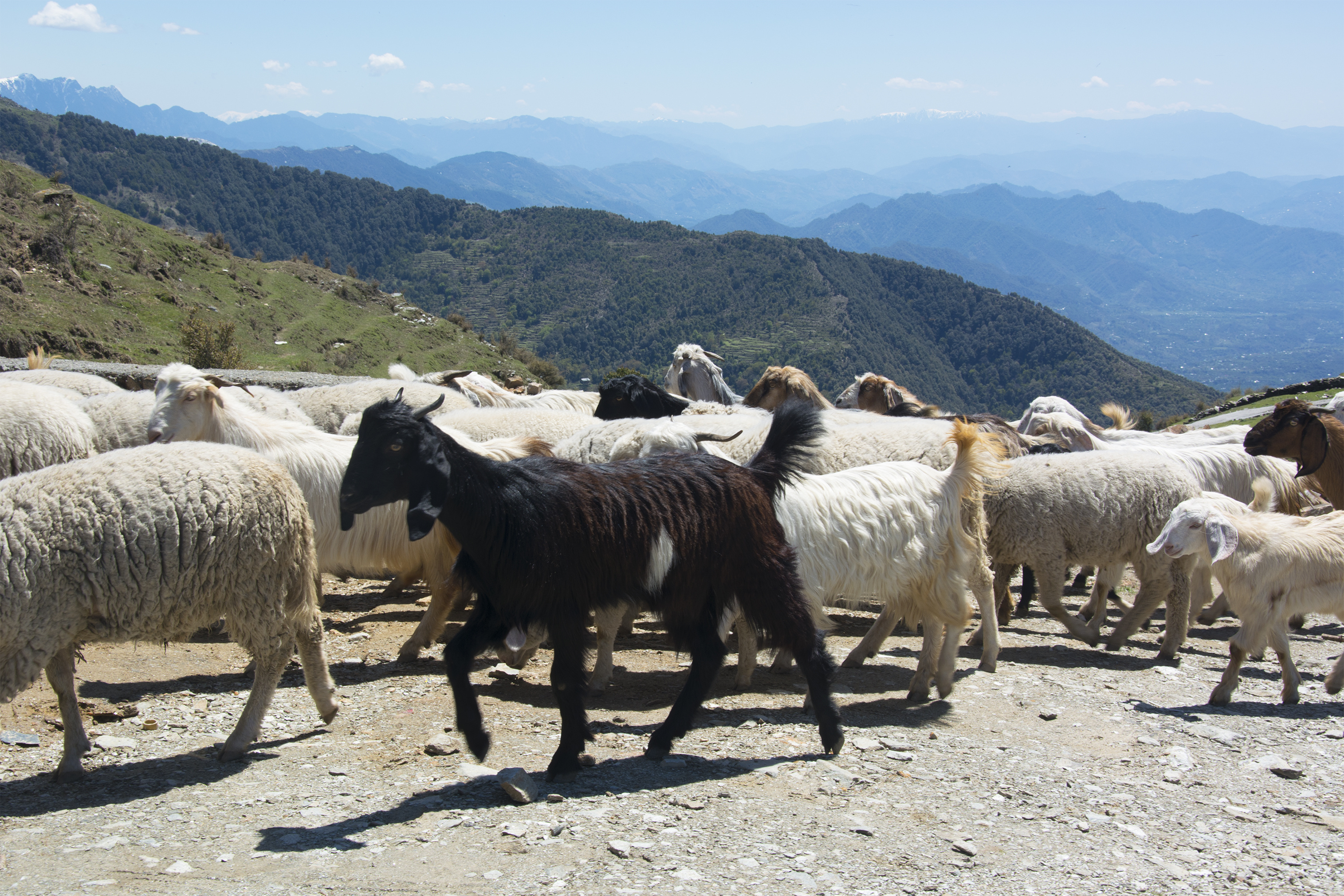
The Sheep and Goat Nations Judgment

Matthew 25:31–46, The nations will be gathered. 

Matthew 25:31–46 describes Yeshua’s judgment of the sheep and goat nations. Some see this event as occurring at the beginning of the Millennium. Others see it as a process culminating at the end of the Millennium with the release of Satan from his bottomless pit prison after which he will tempt the nations to rebel against King Yeshua. The last scenario seems unlikely, since those who follow Satan’s rebellion will receive immediate judgment upon arriving at Jerusalem to confront Yeshua. They will be devoured by fire out of heaven (Rev 20:9). No mention is made in this passage of a judgment between the sheep and goat nations, there is only swift judgment upon Gog and Magog.

It seems likely, therefore, that one of first orders of Yeshua’s official business upon his return to the earth will be to judge between the sheep and goats. Here he will separate the wicked from the righteous who have survived the wrath of Elohim at the end of the age just prior to Yeshua’s second coming. This is like a mop-up operation after a great war. Those who have shown kindness to the saints will be allowed into the kingdom of Elohim during the Millennium, while those who didn’t will be cast into the lake of fire. This appears to be an initial purging of the spiritual wheat from the chaff at the beginning of Yeshua’s millennial reign. Those who are left of the nations (Zech 14:16) are presumably those who didn’t take the mark of the beast and hence won’t be destroyed with those who did (Rev 19:20). They showed their faith by their actions, and King Yeshua’s grace will be extended to them and he will give them an opportunity to receive eternal life. Perhaps these are those who are implied in Revelation 16:2 who refuse to take the mark of the beast and worship him during the wrath of Elohim period. 

Some Bible teachers view the judgment of the nations not as a one-time event that occurs at the beginning of Yeshua’s millennial re.g. but as an on-going process during his reign. This could be the case, since Yeshua may give the nations time to accept his rule and learn the truth of the gospel little-by-little.

Whether those of the goat nations will be cast immediately into the lake of fire isn’t clear. The lake of fire is mentioned in Revelation 20 at the end of the Millennium and in conjunction with the white throne judgment. Perhaps Yeshua will allow the goats to remain on the earth, and they will be those rebels he will be forced to rule over with his rod of iron, and who will refuse to come up to keep the Feast of Tabernacles in Jerusalem annually (Zech 14:16–21). Perhaps they’re the ones who will eventually be deceived into rebelling against Yeshua at the end of the Millennium when the devil is released from the pit (Rev 20:7–10).

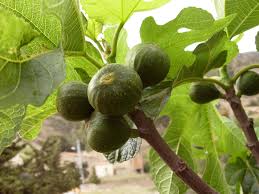
 

Is modern Israel the fig Tree of Matthew 24?

Matthew 24:32, Parable from the fig tree. The fig tree can be a biblical metaphor for Israel (see Hos 9:10). The modern nation of Israel, like the fig tree in the parable, re-sprouted in 1948. Is Yeshua saying here that the end times leading up to the second coming started with the rebirth of Israel in 1948, and that the generation alive at that time will not pass until the prophecies of the Olivet Discourse are fulfilled? This is a debated subject. Below, I present one possible interpretation of this prophetic parable.

While the Hosea 9 reference is not a direct reference to the rebirth of the nation of Israel in 1948, the fig tree analogy is applicable to Yeshua’s fig tree parable. And even though Hosea is primarily a discourse against the Northern Kingdom of Israel (Ephraim), his prophecies still contain many references to Judah (Hos 1:7, 11; 5:10, 12, 13, 14; 6:4, 11; 8:14; 11:12; 12:2). Therefore, we can conclude that though the book is primarily addressed to Ephraim, its many directives to Ephraim, to one degree or another, can also apply to Judah, since the Jews were guilty of the same sins as their northern brethren.

Yeshua chose his words carefully when describing the fig tree in his parable. (It helps to know something about fig trees, which as an horticulturalist I have cared for.) He mentions the branches being tender and beginning to put forth its leaves. Like all fruit trees, the fig tree begins to come alive in the spring after winter dormancy. First the buds swell and begin to pop with leaves, and then the fruit begins to form (the flower is actually inside the fruit). As the summer progresses, the leaves and fruit enlarge and the branches harden until harvest time in the fall. Yeshua seems to be describing a fig tree in the early spring. If the weather conditions are conducive and there is a long growing season, a fig tree will produce two crops of figs: one in the mid-summer and another one in the early fall.

To carry this metaphor over with regard to the reunification of the two houses, sticks, trees of Israel (i.e. Ephraim and Judah, as per Ezek 37), could we not say that the Jews (or Judah) returning to the land of Israel in 1948 is like the fig tree in early spring—young and tender, and preparing to bear its first crop of figs. By the time it produces its second crop of fruit in the fall, Ephraim (the Christians) will have been rejoined to the fig tree and the two (Ephraim and Judah) will be like a fig tree ready for harvest. This timing also corresponds with the biblical fall festivals which predict the second coming, which is also when the two houses of Israel will be regathered en masse.


Signs in the Heavens of the Second Coming

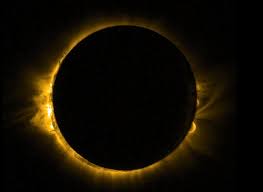
Matthew 24:29, 30, Sun will be darkened…sign of the Son of Man. Here Yeshua tells us that certain harbingers of his second coming will occur first. These include phenomenon occurring in the heavens involving the sun, moon and the stars. After this, a miraculous sign in the heavens will occur, and then Yeshua will come. Between the signs of the sun, moon and stars and the final miraculous sign of his coming there’s a gap in time. Yeshua later revealed to John that the cosmic disturbances involving the sun, moon and stars would correspond with the sixth seal (as part of the of the great tribulation that occurs before Elohim pours out his wrath on the earth) of Revelation 6:12–17. After this, Elohim pours out his wrath upon the earth (Rev 6:17; 11:18; 15:1; 16:1), and then the second advent of Yeshua occurs. 

Does the sign of the Son of Man coming (Matt 24:30lp) occur before or after the wrath of Elohim? That’s hard to say, but since Yeshua states that between the two events all men will mourn, perhaps this is a veiled reference to the wrath of Elohim that is to be poured out on unregenerate men during the seven trumpets, seven thunders and seven bowl judgments described in the Book of Revelation. Why else would men be mourning? The intervening time between the cosmic disturbances (the sixth seal of Rev 6:12–17) and Yeshua’s second coming during which Elohim pours out his wrath could be a year or more, since the Scriptures speak of the day (or a period of time) of YHVH’s wrath. The Hebrew word for day (Heb. yom) can mean both a day and a period of time. 

The prophet Isaiah speaks in several places about “the day of YHVH’s vengeance” (or words to this effect). This is the time period when YHVH will judge the nations including Babylon the Great, which occurs at Yeshua’s second coming (see Rev 18 and 19). In three places, Isaiah indicates that the day of YHVH will last for one year (Isa 34:8; 61:2 and 63:4). Interestingly, in Isaiah 63:4, the prophet couples the idea of the day of YHVH’s vengeance being a year long with the jubilee year—“the year of my redeemed has come.” This occurs as the Messiah (the subject of Isa 63:1–6) judges the enemies of Israel (notably Edom) as he is at the same time about to redeem (i.e. regather and return scattered Israel to its Promised Land inheritance). It appears that while Yeshua is judging Israel’s enemies at his second coming, he will at the same time be regathering the lost and scattered 12 tribes of Israel. Yeshua seems to allude to this in Matthew 24:31.


Yeshua on the “Pre-Tribulation Rapture” Doctrine

Matthew 24:29, 31, Immediately after the tribulation…gather the elect. Perhaps no other verse in the Bible disproves the pre-trib rapture theory better than this one.

Here Yeshua clearly states that the gathering of the saints to meet Yeshua as he is coming in the clouds occurs not only after the tribulation, but after the great tribulation (v. 21).

The tribulation and great tribulation are separate events from the wrath of Elohim, which John describes as being part of the seven trumpet and seven bowl judgments (Rev 6:17; 11:18; 15:1; 16:1).


The Powerful Influence of a Godly Woman

Genesis 28:1–2, Then Isaac called Jacob. By this time, it appears that Isaac had had a change of heart concerning Jacob. He was no longer angry with Rebekah and Jacob for their scheming , just acquiescence and acceptance of the fact that his younger son was YHVH’s choice to carry on patriarchal lineage and covenant.

This change of mind was no doubt do to Rebekah’s positive influence on Jacob in helping him to determine Elohim’s will.

The power and influence of a godly and righteous woman on a man’s life for good is not to be underestimated.

Conversely, what is the negative influence on a man’s life of an ungodly, carnally motivated woman?

It is better to dwell in the wilderness, than with a contentious and an angry woman. (Prov 21:19)


Live to eat or eat to live?

Genesis 27:4, Make me savory food. Sometimes when a person is of extreme age and is, to one degree or another, physically incapacitated from performing the functions of a normal life that produce pleasure and fulfillment, eating becomes the high point of their daily life because of the pleasure it brings.

Perhaps this was the case with Isaac.

As such, the simple act of the consumption of food can even overshadow even one’s spiritual walk.

An older person must guard against this and maintain their spiritual relationship with Elohim to the very end as best they can.


What kind of faith do you have? Active, Passive or Presumptive…

Genesis 27:1–32, Rebekah and Jacob’s scheming. How often do we take matters into our own hands to “help” YHVH out in fulfilling his promises for our life. Where is the faith in that? (Read Psalm 37:3–7, 23–24, 34.) Analyze the actions of your life on the basis of these words. Consider the following concepts of faith:

  1. Dynamic or Active Faith: A person with this kind of faith knows when to move ahead and when to wait.
  2. Passive or Inactive Faith: A person with this kind of faith never moves, but always sits idly by waiting for things just to happen on their own.
  3. Presumptuous or Impetuous Faith: A person with this kind of faith always moves and never waits.

Which kind of faith did the faith heros of Scripture evidence? What kind of faith do you have?