The Torah of YHVH Vs. the Law of Moses

Luke 2:24, Law of the Lord/YHVH. This phrase is found only three times in the NT—here and in vv. 24 and 39. The same phrase is additionally found 18 times in the Tanakh and obviously refers to the Torah (e.g. Pss 1:1; 19:7; 119:1). Is the law of YHVH the same as the law of Moses?

The phrase the law of Moses is found a similar number of times in the Bible: 15 times in the Tanakh and seven times in the NT. Obviously the phrases the law of YHVH and the law of Moses are synonymous terms in that they refer to the same thing: the Written Torah. From the obvious meanings of these two terms, we learn that YHVH Elohim is the divine source or origination of the Torah, while Moses was merely the one who first wrote it down or codified it, and as the leader of the nation of Israel, he administered it.

It is interesting, if not ironic, how the mainstream church chronically refers to the Torah as “the law of Moses,” when Scripture refers to the Torah as “the Torah of YHVH” the same number of times less one. The mainstream church’s choice of one term over the other seems to reveal, sadly, its apathy, if not, at times, its outright antipathy, toward YHVH’s Torah. To justify this ungodly attitude, it has chosen to use the term that casts the Torah-law of Elohim in the most negative light possible by inferring that its source is man and not Elohim. This furthermore underscores the truth of Paul’s words in Rom 8:7 about the carnal mind of man being at enmity with the laws of Elohim in that it refuses to be subject to them.


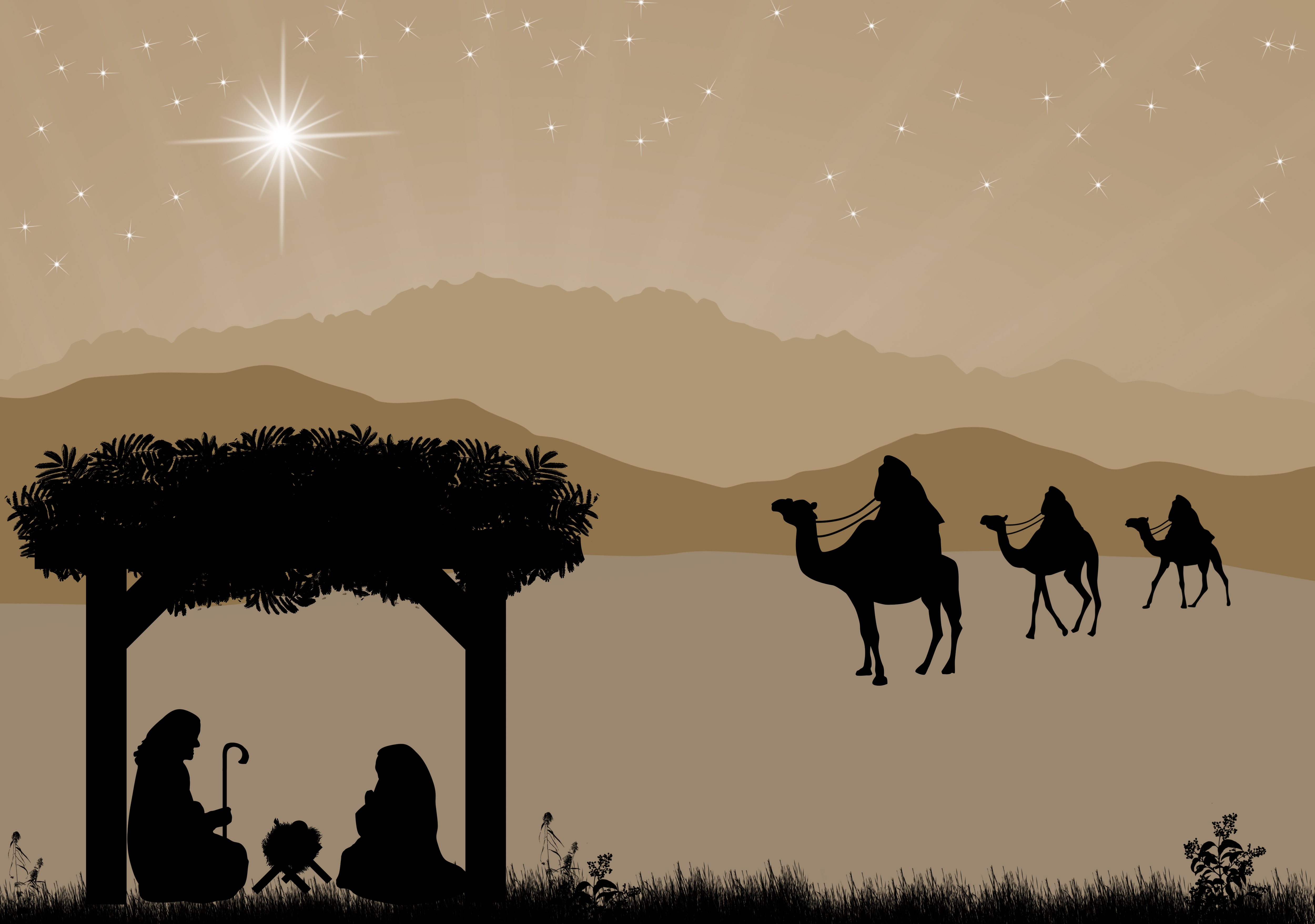
Was Yeshua born in a manger or a sukkah?

Luke 2:7, Manger. (Gr. phatne) The Greek word phatne literally means “feeding trough” and according to the word’s etymology and lexicology as stated in The TDNT, there is no indication that this manger is anything but a standard feeding trough or manger.

Nevertheless, this manger may have been a sukkah or tabernacle, which is the flimsy little hut that Israelites build during the biblical Feast of Tabernacles (Heb. Chag Sukkot) as commanded in the Torah (Lev 23:33–43).

We see the connection between a manger and a sukkah in Genesis 33:17 where Jacob built booths (or tabernacles; Heb. succot or sukkot is the plural form of sukkah) for his livestock showing us that the Hebrew word sukkah (pl. sukkot) can also mean “livestock barn or manger” as well as a temporary habitation where Israelites dwell during the biblically commanded festival of Sukkot.

This raises the possibility that Yeshua was actually born in a festival sukkah during the Feast of Tabernacles or Sukkot and not just in an animal barn as Christian folklore would have us believe. The LXX Greek word for sukkah in Gen 33:17 is skenas meaning “habitation, dwelling or tabernacle” and is the same word used in John 1:14 and Rev 21:1–3 in reference to Yeshua tabernacling with his people. Putting all the pieces together, Yeshua may have been born in a sukkah-manger prior to or during the Feast of Tabernacles with a human sukkah (or body, of which the physical sukkah during Sukkot is a metaphorical picture) in order to redeem man from sin, so that Yeshua might tabernacle with redeemed men forever in the New Jerusalem (Rev 21:3).


The Feud Between Moses and Zipporah Over Circumcision Explained

Exodus 4:25, Cut off the foreskin. Presumable, Moses would have already been circumcised by his mother when he was a baby, thus he was consecrated in YHVH’s eyes. However, for Moses to continue forward in his ministry call, it was necessary for him to consecrate his minor sons through the ritual act of circumcision in accordance with the Abrahamic Covenant. What is the lesson in this for us today? Simply this. A servant of YHVH must get his own spiritual house in order before pointing an accusing finger at someone else. If he doesn’t, he will be revealed as an arrogant, two-faced hypocrite thus bringing disrepute to YHVH as a laughing stock of the devil resulting in hindering the advancement of his kingdom. YHVH required this of Moses before confronting Pharaoh accusingly.

The cutting away of the flesh of the foreskin symbolically signifies the death of the carnal man from following idols of the flesh and dying to the lusts. The foreskin being at the forefront or the leading edge of a man’s anatomy represents cutting away the filthy flesh and going forward spiritually in a clean, righteous and sanctified state. One’s willingness to undergo this procedure indicates a willingness go forward as the Creator’s spiritual bondservant.

Zipporah. Why did Moses expect Zipporah to circumcise his sons? This is a question that has puzzled many Bible students over the years. To answer this question, we must understand the role of the mother in ancient Near East culture during Bible times. The mother was the sole manager of the household. Because ancient Israel was a subsistence economy, a household’s resources had to be managed carefully, and this was the woman’s responsibility. She directed the preservation and storage of food and allotted food rations to each family member to assure that everyone in the household was fed and the food lasted until the next harvest cycle. “In the world of ancient Israel, a man’s home was his wife’s castle She had the domestic authority which he did not” (Social World of Ancient Israel, p. 25, by Matthews and Benjamin). The mother’s dominant role over the household including the children perhaps explains why Moses expected Zipporah to circumcise his two sons (Exod 4:25–26). 

For the mother, childbearing and teaching children were synonymous roles. The Book of Proverbs shows the dual role of the mother (Prov 1:8; 6:20; 23:22–25; 31:1–9).

A mother’s intimate bond to her children not only last through pregnancy and infancy, but through the weaning process, which often didn’t occur until the child was four years of age. After teaching them how to walk, talk, dress themselves, she taught the child the domestic skills of gardening, cooking herding, weaving and making pottery (Social World of Ancient Israel, p. 28, by Matthews and Benjamin).


Who hardened Pharaoh’s heart? Pharaoh or Elohim?

Exodus 4:21, I will harden Pharaoh’s heart. There is an interesting interplay in the Torah’s narrative regarding the a condition of Pharaoh’s heart. At times, Scripture records that Pharaoh hardened his own heart (Exod 7:23; 8:15, 32; 9:34), and at other time times, we read that Elohim hardened Pharaoh’s heart (Exod 7:3, 13, 22; 8:19; 9:7, 12, 35; 10:1, 20, 27; 11:10; 14:4, 5, 8).

Who is in control of Pharaoh’s heart? Pharaoh or Elohim?

Initially, it appears that Pharaoh had some control over his heart disposition, but as time progressed, his heart became totally sold out to rebellion against YHVH. When he crossed this line, it was a point of no return for Pharaoh, and so YHVH simply used him to accomplish his purposes.

Paul discusses the sovereignty of Elohim with regard to the free will of men in Romans 9:15–18. YHVH can save whom he wishes (Mark 10:26–27 cp. Rom 9:18) and condemn whom wishes (Rom 9:18, 22).

It is true that YHVH loves the whole world (John 3:16) and is not willing that any should perish, but desires all to be saved (2 Pet 3:9). At the same time, there are those who will refuse Elohim’s love and remain in their sinful rebellion. These are the wicked that he has reserved for the day of his judgment (Job 21:30; Prov 16:4; Rom 9:22; Jude 4).

However, YHVH sets before humans two paths: life and death. All have the freedom and ability to choose the path of righteousness, leading to life, or wickedness leading to death (Deut 30:15–20). When Pharaoh chose the path of wickedness and death and hardened his heart to go in that direction, YHVH simply complied with the dictates of the king’s heart and used him accordingly for his sovereign purposes.

In the Exodus record relating to the condition of Pharaoh’s heart, we see that initially sometimes Pharaoh hardened his own heart, and sometimes it was YHVH who did it. In the end, however, it was YHVH who exclusively hardened Pharaoh’s heart. This is because by this time, Pharaoh had already predetermined to harden his heart, and YHVH was simply manipulating Pharaoh according to his sovereign purposes.

YHVH had not violated Pharaoh’s freedom of choice, but was playing along with the choices Pharaoh and already made.


Do you see and believe, or doubt and mock?

Luke 1:41–45, When Elizabeth heard. During this greeting, Elizabeth had a spiritual encounter that helped her to connect the dots to understand what was going on in YHVH’s divine plan for John and Yeshua.

By now, it is likely that Zechariah would have revealed to her the angel’s previous message (vv. 13–17). Now when the babe leapt in her womb at Mary’s arrival, and she was filled with the Spirit (a visceral experience), and then prophetic words came out of her mouth, this was evidence and confirmation to both Elizabeth and Zechariah of YHVH’s plans for their son.

YHVH has supernatural ways of conveying his divine will to his people, so that only people of faith will see and understand his ways and his plans for their lives. All others, unless confronted with visible signs and empirical evidence (as verified by logic, or observable evidence or experience), will dismiss these spiritual revelations and circumstances as delusion.

Even when signs and miracles occur, it is unlikely that the hard hearted unbeliever will even then believe YHVH. This was often the case with the children of Israel and many who saw the miracles surrounding Yeshua’s ministry.

In the face of supernatural occurrences, sadly and to their own detriment, the unbelievers usually resort to mockery and to scoffing ridicule. Those, on the other hand, who walk by faith and hear the voice of YHVH and know his ways of communication and will remain undeterred, will have their faith strengthened, and will follow Elohim wherever he leads them.


I AM THAT I AM and the Weightier Matters

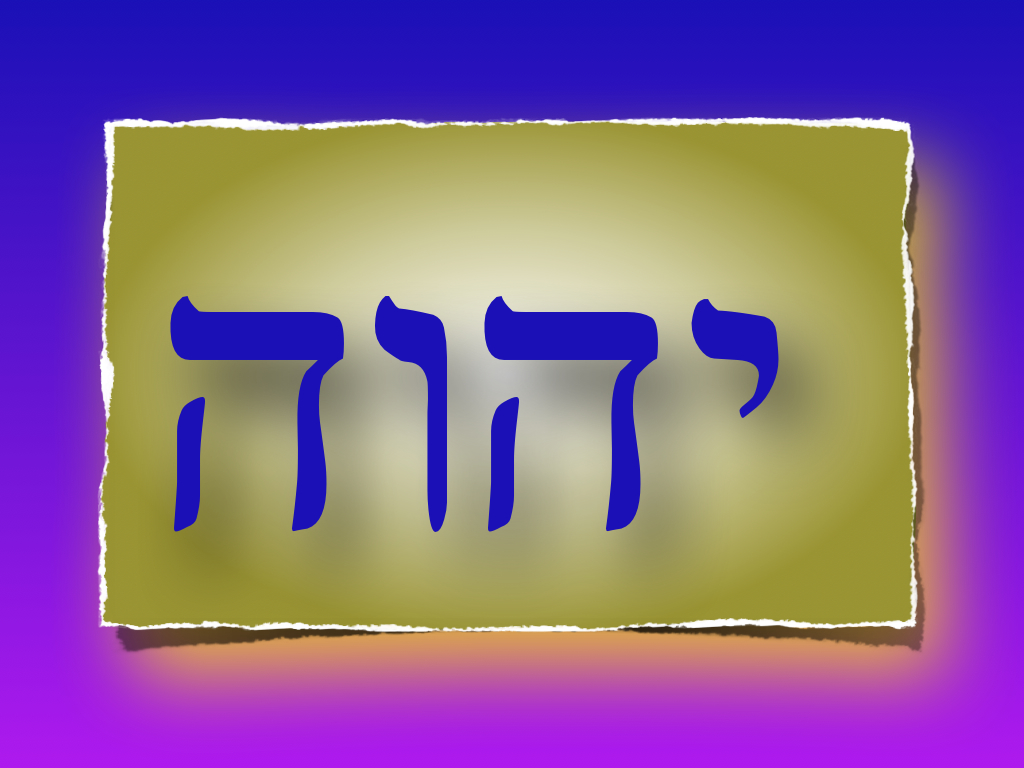
Exodus 3:14–15, I AM THAT I AM. The name YHVH is Elohim’s memorial name forever. It reflects that fact that he is; that he is undefinable in human terms, and that he has always existed. This is the name by which he is to be remembered (not forgotten as is the case with the ineffable name concept of the rabbinic Jews whereby the names of deity are forbidden to be used). Exodus 3:14 and 15 read as follows:

14 And Elohim said unto Moses, I AM THAT I AM (EHYEH ASHER EHYEH): and he said, Thus shalt thou say unto the children of Israel, I AM (EHYEH YHVH) hath sent me unto you. 15 And Elohim said moreover unto Moses, Thus shalt thou say unto the children of Israel, YHVH the Elohim of your fathers, the Elohim of Abraham, the Elohim of Isaac, and the Elohim of Jacob, hath sent me unto you: this is my name [Heb. shem] for ever, and this is my memorial [Heb. zeker] unto all generations.

Here are some examples of how various Bible versions translate the name of YHVH:

  • I Am That I Am (KJV)
  • I Am Who I Am (NAS, NIV, NKJV
  • I Am That Which I Am (YLT)
  • I Shall Be As I Shall Be (The ArtScroll Stone Edition Tanach)
  • I Will Be What I Will Be (The Gutnick Edition Chumash, JPS)
  • I Will Be There Howsoever I Will Be There (The Schocken Bible)
  • I Am the Being (LXX, Brenton)

Exodus 3:15 states that YHVH is Elohim’s memorial name that Moses was to use when referring to I AM THAT I AM. I AM THAT I AM is Elohim’s actual name and what he calls himself, but men are to refer to him as YHVH, which means “the existing one, the one who is, the one who will be.” Both the former and latter are forms of the Hebrew verb hayah meaning “to be.” YHVH instructed that YHVH was to be his memorial name forever. In other words, humans were to use YHVH to remember him by. There is no indication anywhere in the Bible that it was YHVH’s intention that his name was to be forgotten or hidden through euphemization. The word memorial in Exodus 3:15 is the Hebrew word zeker and means “memorial, remembrance or memory.” There is nothing here to indicate that his name was to be forgotten.

It must be noted here that we don’t refer to YHVH as I Am, for were we to do so it would be necessary to say “I Am,” and in all reality, we aren’t the I Am, but YHVH is the I Am. Just so there is no confusion when communicating YHVH’s name in every day speech, the Bible uses, not the Hebrew ehyeh meaning “I Am,” but the form of the verb which means “He Is.” In this way, every time we say his name we’re glorifying him, and not inadvertently glorifying ourselves.

The name YHVH, referred to as the tetragrammaton, is the personal name of the Creator and occurs some 6800 times in the Tanakh. The exact pronunciation of this name has been lost down through the ages, and there is debate among well-meaning individuals on how to pronounce this four consonant Hebrew name. Because there are now vowels in this name, scholars can only speculate and make educated guesses about what the vowels between the consonants should be. No one knows for sure how to vocalize the consonants Y-H-V-H. The best scholarly opinions on this subject are just that—educated guesses.

Instead of getting all worked up about how exactly to pronounce Elohim’s name, let’s just love, worship and obey YHVH! These are the weightier matters of the Torah (Matt 23:23; 1 Cor 13:1–13). This is the distinguishing mark a true disciple of Yeshua (John 13:35), and what will separate the goats from the sheep (Matt 25:37–44)—not how we pronounce YHVH’s name!

 

Is your job a launch pad into your ministry?

Exodus 3:1, Tending the flock. Moses spent forty years in the wilderness of Midian tending the flocks of Jethro, his father-in-law. After this phase of his life, YHVH called and commissioned Moses to lead the children of Israel out of Egypt and then to shepherd them through the wilderness en route to the Promised Land. This was the very same wilderness where Moses had shepherded Jethro’s sheep for forty years. Moses’ job as a physical shepherd prepared him for the next phase of his life—his ministry as a spiritual shepherd. 

Often YHVH chooses individuals as his servants based on their vocational background, which provides training for the spiritual ministry to which he then calls them. For example, David was a shepherd before he became the king over Israel. Yeshua was a carpenter before he became a builder of the spiritual house of Israel (Heb 3:3–6; 1 Pet 2:5), and several of Yeshua’s disciples were commercial fishermen before becoming “fishers of men” or apostolic evangelists. Sometimes our physical vocations may be an indicator of what our spiritual calling is. 

Being a shepherd of physical sheep is a most suitable profession to prepare one for tending YHVH’s spiritual sheep. A shepherd has to put the needs, comfort, care and protection of the sheep above that of his own. This is one reason why the Scriptures refer to those who care for and protect YHVH’s spiritual sheep as shepherds or pastors. There are many similarities between physical and spiritual shepherds, and physical and spiritual sheep. Unless one has been a physical shepherd and cared for physical sheep, it is unlikely these reasons will be readily apparent.