Blog Scripture Readings for 4-21 thru 4-27-19

Aside

THIS WEEK’S SCRIPTURE READINGS FOR STUDY AND DISCUSSION:

Parashat Reading — No Parasha This Week (Passover/Feast)
Haftarah — 
Prophets — Isaiah 55:1 – 61:11
Writings — Job 6:1 – 12:25
Testimony — Acts 15:1 – 18:28

Most of this week’s blog discussion points will be on these passages. If you have general comments or questions on the weekly Scripture readings not addressed in a blog post, here’s a place for you to post those. Just use the “leave a reply” link below.

The full “Read Through The Scriptures In A Year” schedule, broken down by each day, can be found on the right sidebar under “Helpful Links.” There are 4 sections of scripture to read each day: one each from the Torah, the Prophets, the Writings, and from the Testimony of Yeshua. Each week, the Torah and haftarah readings will follow the traditional one-year reading cycle.

Weekly Blog Scripture Readings for 4/21/19 through 4/27/19.


Examine Yourself Before Taking Communion at Passover

1 Corinthians 11:23, This is my body. We are sanctified through the offering of the body of Yeshua (Heb 10:10).When we eat the bread of communion, we are “eating” Yeshua who is the incarnate and Living Torah Word of Elohim (John 1:14). We are announcing that Yeshua is the spiritual bread of life from heaven that leads to eternal life (John 6:48–51), and we are announcing our desire to live by the totality of his Word (Matt 4:4). 

The bread symbolizing the body of Yeshua was unleavened, which is a picture of Yeshua’s sinless life. By eating this bread, we declare our faith in his sinless life by which he was able to pay for our sins. We also declare our identification with his sinlessness as an example for us to follow.

Yeshua took the unleavened bread and broke it signifying our deliverance from our sin nature by the breaking or death of his sinless body. The unleavened bread broken during the Passover meal speaks of our deliverance from the power of sin by the death of our old man. The rite of baptism is a picture of this (Rom 6:4–13). This paves the way for us to live a sanctified (sin-free) life.

We become unleavened or sinless (known as sanctification) because Yeshua our Passover Lamb was sacrificed for us (1 Cor 5:7). Our body of sin died with Yeshua when we were baptized making us unleavened (or sanctified, Rom 6:6). Let us therefore live in accordance with the new man, or new spiritual creation we have become through Yeshua (1 Cor 5:8; 2 Cor 5:17; Gal 2:20). When we eat the unleavened bread at the communion part of the Passover service, we remember that we are sanctified by grace and that the power of sin (or Torahlessness, see 1 John 3:4 cp. John 14:15) has been broken in our lives.

In the first Passover, the children of Israel were delivered from the penalty of their sins by the blood of the lamb on the door, which pointed forward prophetically to Yeshua’s sin-atoning death on the cross. But when they ate the unleavened bread, this speaks of their being delivered from their slavery to sin and oppression in Egypt. They were now to leave Egypt (a spiritual picture of the old man and life) and go toward the Promised Land (a spiritual picture of the new man) taking with them, on their knees, the dough of the unleavened bread. This points to the fact that the redeemed saints are to walk in the newness of a spiritually unleavened or sanctified life as pictured by their eating the communion bread. When we eat the bread of communion, we memorialize the events surrounding the Exodus, and recognize the present reality of freedom from sin in our own lives.

1 Corinthians 11:25, My blood. By the blood of Yeshua we are redeemed, liberated or released from the bondage of sin (Matt 26:28; Rom 3:25; Eph 1:17; Col 1:14; Heb 9:22; 1 Pet 1:18; Rev 5:9) and from sin’s death penalty claim on us (Rom 6:23; Ezek 18:4) brought on by our disobedience to YHVH’s instructions in righteousness, the Torah (which defines sin, 1 John 3:4). His blood also sanctifies (or separates, Heb 9:13–14; 13:12) us from past sin (Rom 3:25) or Continue reading →

 

Why Deleaven for the Feast of Unleavened Bread?

1 Corinthians 5:6, Purge out. The greater context of this passage is about putting sin out of our life (which is the temple of YHVH’s Holy Spirit, 1 Cor 3:16–17), which collectively form the spiritual body, church or the greater temple of Yeshua’s spiritual body (John 2:21). Therefore, sin that defiles the temple of Elohim must be put out of the church. In this letter to the Corinthians, Paul is especially concerned about the sin of sexual immorality that the church in Coringh had allowed to come into its midsts (1 Cor 5:1ff). From the context of this passage in light of Paul’s discussion about Passover and the Feast of Unleavened Bread, it would appear that he wrote this letter just prior to the spring festivals (1 Cor 5:6–8). He is urging the church to remove the leavening of sin from its midsts prior to keeping the Feast of Unleavened Bread, which he, by the way, urges the Corinthian believers to do. In fact, Paul’s admonition to “keep the Feast [of Unleavened Bread]” in verse eight, is the strongest imperative command in the Testimony of Yeshua (or NT) to keep the biblical festivals, and from this it’s evidence that in the mind of the apostle the biblical festivals were still relevant to Yeshua’s followers well past the middle of the first century, which means they’re relevant to the saints of today as well.

In his admonition to the Corinthian believers, it’s possible that Paul had in mind two examples in the Tanakh where spiritual revivals occurred after Hezekiah and Josiah cleansed the temple in Jerusalem of the filth of idolatry in preparation for Passover. Similarly, Ezra finished completion of the rebuilt temple in time to celebrate Passover (Ezra 6). These examples teach us that YHVH commands us to cleanse or deleaven our spiritual temples (individually and collectively) of sin annually in preparation for celebrating Passover and the Feast of Unleavened Bread. This spiritual spring house cleaning at the beginning of the biblical new year sets the tone spiritually for the rest of the year to go forward in a sin-free state. 

1 Corinthians 5:8, Leaven. What specifically is leavening? Leavening is primarily yeast that makes bread rise and, biblically, it  is the symbol for the sin of pride. Leavening is also a symbol of decay. The rising of bread dough is only possible by the natural process of decay. In ancient times, a pinch of fermented or sour dough was Continue reading →


New Covenant or Renewed Covenant? What Are Its Terms and Conditions?

Matthew 26:28, New testament. 

Did you ever wonder where the terms New Testament or New Covenant came from? Yes, you will find these phrases used in the Testimony of Yeshua portion of your English Bible in exactly nine places (Matt 26:28; Mark 14:24; Luke 22:20; 1 Cor 11:25; 2 Cor 3:6; Heb 8:8, 13; 9:15; 12:24), but does the English translation do justice to the Hebrew and Greek words behind them and to the biblical concept of the “New Covenant” as it is commonly called? 

Let’s begin to answer this question by first asking a question. When you think of the word new, what comes to your mind? A brand new car? A new house? A new pair of shoes? 

You see, in English there is one common word for new, while Greek and Hebrew have more than one word for new. While English speakers are limited to one word, they nuance the meaning of new by adding qualifiers to the word new (e.g. brand new as opposed to used but it’s new to me) to differentiate between brand new versus new to me, or refurbished or repaired new. 

In the Testimony of Yeshua, there are two Greek words for new: neos and kainos, and each one has Continue reading →


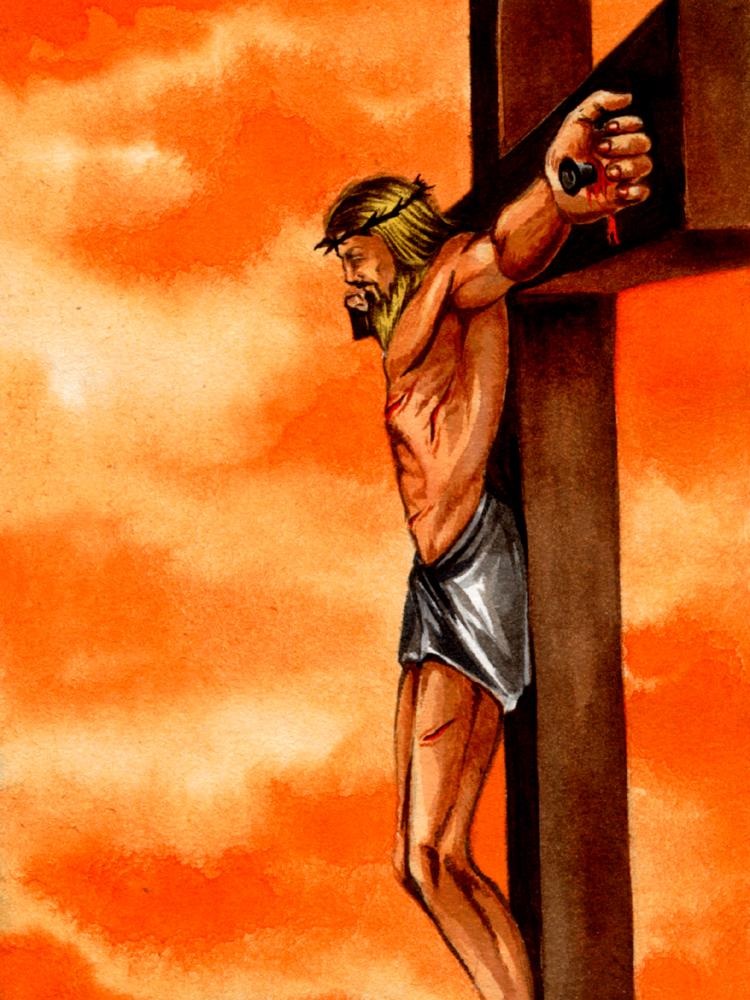
The Science of the Crucifixion

By Cahleen Shrier, Ph.D. (originally posted at http://www.apu.edu/articles/15657/)

Each year, Cahleen Shrier, Ph.D., associate professor in the Department of Biology and Chemistry [at Azuza Pacific University in California], presents a special lecture on the science of Christ’s crucifixion. She details the physiological processes a typical crucified victim underwent and teaches her students to see Christ’s death on the cross with new understanding. The exact events in this scenario may not have happened in Jesus’ specific case, but the account is based on historical documentation of crucifixion procedures used during that time period. Please be aware that the following is of a realistic and graphic nature.

It is important to understand from the beginning that Jesus would have been in excellent physical condition. As a carpenter by trade, He participated in physical labor. In addition, He spent much of His ministry traveling on foot across the countryside. His stamina and strength were, most likely, very well developed. With that in mind, it is clear just how much He suffered: If this torture could break a man in such good shape, it must have been a horrific experience.

Matthew 26:36-46, Mark 14:37-42, Luke 22:39-44

After the Passover celebration, Jesus takes His disciples to Gethsemene to pray. During His anxious prayer about the events to come, Jesus sweats drops of blood. There is a rare medical condition called hemohedrosis, during which the capillary blood vessels that feed the sweat glands break down. Blood released from the vessels mixes with the sweat; therefore, the body sweats drops of blood. This condition results from mental anguish or high anxiety, a state Jesus expresses Continue reading →


Peter’s Vision Explained—Demystified

Acts 10:13–15, Peter’s vision. In Peter’s vision of the sheet covered with unclean animals, the voice from heaven commanded him three times to kill and eat these unclean animals. Peter was confused by the meaning of this vision since being a Torah-law abiding Jew he knew that eating unclean meat was forbidden and in good conscience he could not do that which was contrary to YHVH’s Torah-law, for to do so was sin (sin is the violation of the law, 1 John 3:4). 

Often visions are metaphorical in nature and not literal. There are many examples in the Scriptures of people receiving metaphorical visions. For example, read the books of Daniel and Revelation. Indeed, Peter’s vision was no exception, for no sooner had the vision ended when three Gentile men appeared at his door seeking the gospel message and the Spirit of Elohim
bade Peter to go and to meet them. Peter then realized that the interpretation of his vision was that he should not call any man common or unclean; that is, the gospel message is for all people regardless of their ethnicity (verse 28). In Peter’s case, Bible itself interprets his vision. The issue is not about whether it is now permissible to eat non-kosher meat or not, but rather the Spirit of Elohim was directing the apostles to begin taking the gospel to the Gentiles, who by Jewish standards were considered common and unclean (verse 28).

Now consider this. If Yeshua had meant to say in Matthew 15:11 and Mark 7:18–19 that it was now permissible to eat all foods including those meats that the Torah prohibits to be eaten (e.g. pork, shellfish, etc.), presumably Peter would have known this, since he was present when Continue reading →


Prayer Points By Dr. Darlene

  • We MUST pray for enlightenment!  SO many people are falling prey to the claims of socialism and are not understanding what it really means.
  • I’m super concerned over the separation of the children who have not been vaccinated from the rest of the world, and especially since it will affect the Jewish community (in New York City) so much as the children cannot attend Passover celebrations.   This is a dangerous step towards forced vaccination and then…who knows what will come.  Please pray that people will stand and shout from the rooftops that we have the right to decide on what medical procedures we will submit ourselves and our kids to.
  • The U.S. has begin to see wrong as right and right as wrong to a much greater degree and faster than before, and special considerations are being given to celebrity people with harsh penalties for the righteous being imposed for the same offenses.  The steps towards condemning believers has really been stepping up lately.  We must be strong and courageous and pray in earnest.
  • Our beloved Israel was attacked last week and she responded with strength.  Praise Father for His care!
  • Our nation’s (the U.S.) children are being indoctrinated in our public schools and we must be steadfast to teach them the truth.  Many will grow up never realizing right from wrong, not knowing history.   Pray for guidance for parents as they raise up their children to the glory of Our Creator.
  • The U.S. must protect its borders and must insist on ONLY US citizens being allowed to vote.  Other countries who do not believe as we do, will change this nation and we will not be able to recognize it.
  • Pray for spiritual revival in Venezuela. In light of the recent social chaos and privations in that country, many people are going back to church. Many people are also turning to false religions as well. Pray that people seek YHVH Elohim and repent of their sins, not just seek him for what they can get out of him in their time of need.