The Tabernacle of Moses—YHVH’s Pattern of Salvation for Mankind

The Story of the Bible From Genesis to Revelation

Thy way, O Elohim, is in the Sanctuary (Heb. Kodesh). (Psalm 77:13)

The story of man, as recorded in the pages of Divine Scripture, begins in a garden and ends in a garden. In both of these paradises — the Garden of Eden and the heavenly New Jerusalem, man walks in intimate oneness with his Creator. Paradise was lost in the former and will be regained in the latter.

But between the two — between the books of Genesis and Revelation — is the saga of man’s separation from his loving Creator due to his prideful rebellion against YHVH’s Torah — his life-giving, fatherly and loving instructions in righteousness. Between Genesis and Revelation is the agonizing history of a Father reaching out in every conceivable manner to his prodigal children, urging them to repent of their sin, and to turn from the downward path that leads to spiritual darkness, separation and eternal death.

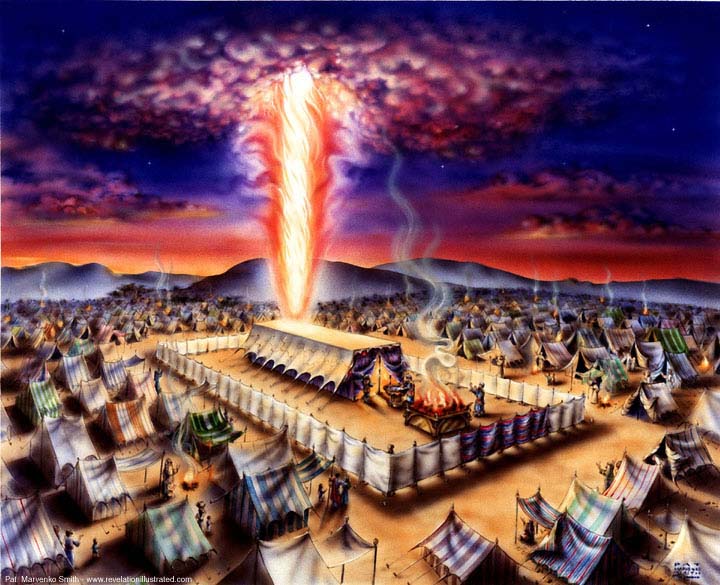
YHVH has a plan to redeem man — to save him; that plan is revealed in the Bible — the Word of Elohim. But the Bible is a big, complex and daunting book to most people. Deciphering this plan of salvation can be intimidating to those who do not have the keys to unlock the mysteries. Once the code is deciphered, however, and the plan unveiled, understanding the Book is a cinch. To understand the Tabernacle of Moses is to understand that plan. Though of divine origin, it is a simple layout and design. But its simplicity belies the true enigma of it. Even though the youngest child can understand the basic message of the tabernacle, within it’s linen veiled enclosure is to be found some of the deepest wisdom of the universe, for in it the mysteries of YHVH’s plan of redemption for mankind is revealed. In its furnishings and details one finds in code-form the seven-step plan of YHVH’s set-apart annual appointed times, as well as the seven steps of the biblical Hebraic wedding. These all reveal the steps every human must take to reverse the curse of death that fell upon Adam. They show man the way back to the Father and back to that garden paradise that man lost. Within the set-apart or holy sanctuary of the tabernacle is revealed the way of Elohim, the way of salvation and eternal life.

When Adam and Eve sinned, YHVH thrust them out of the paradise called Eden. They began to wander in search of redemption in a wilderness of separation brought on by their sin. From that point on, men continued to wander seeking redemption. Their wanderings took them further away from redemption and from YHVH the Redeemer, however. We pick this story up with the children of Israel who have left the Wilderness of Sin and begun to wander in the wilderness of Sinai in search of their destiny. After having revealed himself to them at their deepest point of despair, YHVH brought them to a mountain in the desert — Mount Sinai — and presented to them an alternative lifestyle — one that would give them hope and lead them to everlasting life replacing the hopelessness and uncertainty about their future. He then gave them a purpose and a destiny. YHVH gave them a job assignment. It was to build a tabernacle — a place of rest, healing, cleansing and intimate relationship with him. Whether they realized it or not, that simple tent was their future hope. It was the pathway back to paradise. Outside the tent was a hot, parched and gray wilderness full of serpents, scorpions and the dreaded heathen Amalekites. Inside was redemption, cleansing, life, food, leading to the glorious presence of the Elohim of Israel — a foreshadow of the New Jerusalem. David understood this when he said, “Thy way, O Elohim, is in the sanctuary” (Ps 77:13).

Continue reading
 

Exposing Christian Mythologies—Part 1

What are some of the main, non-biblical, false teachings, traditions of men doctrines in the Christian church that DO NOT line up with biblical Truth from a whole Bible, Hebraic (the Bible was written by Hebrews from a Hebraic perspective) context? Why is it important to ask these questions, and what does it have to do with each saint preparing for the second coming of Yeshua (Jesus) the Messiah? What this video and find out.


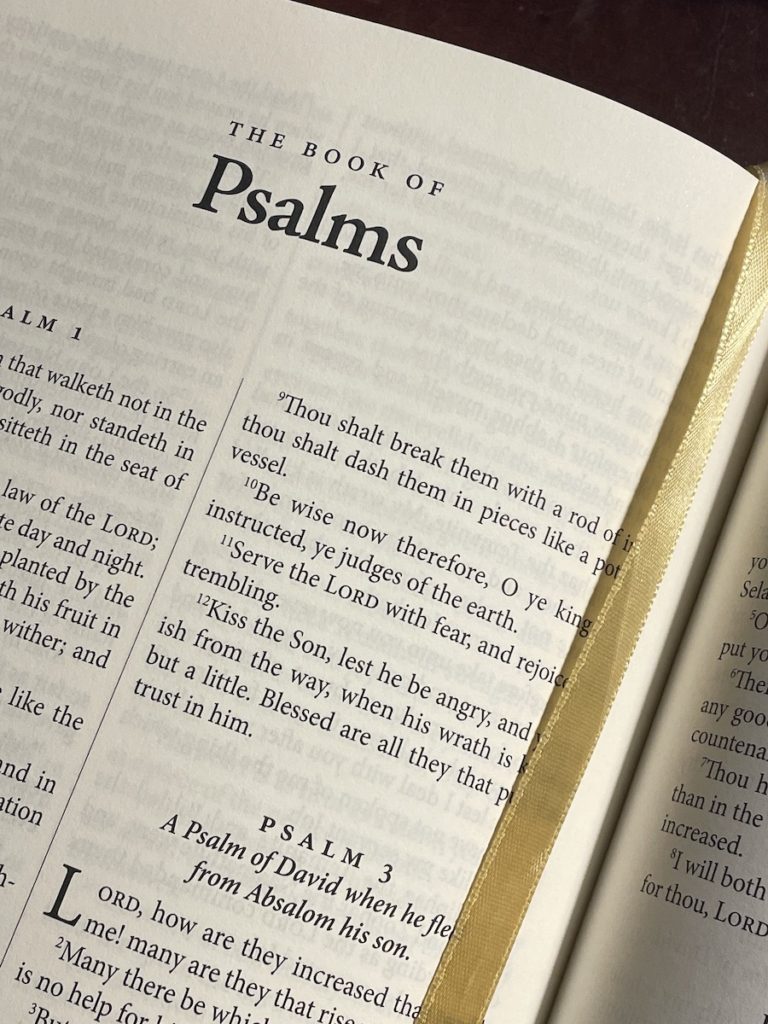
Psalms 82–88: From Heaven to Hell and in Between

Psalm 82

Psalm 82:1, Elohim stands…the gods/Congregation of the mighty. Dr. Michael Heiser in his two books, Reversing Hermon and The Unseen Realm puts forth a convincing argument that the elohim mentioned in this verse are what Scripture refers to in many places as “the hosts of heaven” and refer to Elohim’s divine heavenly council. This same council is also referred to in Deut 33:2; 1 Kgs 22:19; 2 Chron 18:18; Job 15:8; Jer 23:18; Dan 7:9–10 and Heb 2:1; Acts 7:53. 

“The congregation of the mighty” seems to be a reference to Elohim acting as the Supreme Judge among his divine, heavenly council that carries out his orders. This is more than the traditional “Godhead” (i.e., the Father, Son and Holy Spirit) and also includes angelic and spirit beings, and even Satan himself. 

From time to time, Elohim gathers his council together as we see in Job (Job 1:6; 2:1). Even lying spirits are subject to and do the bidding of Elohim who presides over this council also referred to as the host of heaven (1 Kgs 22:19–23). Moreover, some of the “Us” passages in the Scriptures, which have typically been attributed to the “Godhead,” according to Heiser, likely refer to this divine counsel (e.g., Gen 11:7; Ezek 44:6). This has been the view of ancient Jewish sages as well.

Modern biblical theologians have traditionally taken a non-supernaturalistic view of Psalm 82:1 by saying that the gods here refer to human rulers. While elohim may by definition and biblical usage refer to human rulers, this passage cannot be limited to this definition alone, since verse seven refers to these gods or elohim as “dying like men” as a result of Elohim’s divine judgment on them because of their wickedness. This threat makes little or no sense if it is referring only to human rulers. 

For the record, Yeshua quotes verse six in reference to human rulers (John 10:34; 14:30; 16:11), so this passage should not be taken to refer only to Elohim’s divine counsel or just to human rulers, but probably to both. This is because behind human rulers are evil spirits or principalities that govern the nations (Dan 10:20; Eph 6:12; Rev 13:2) and all of these are under the aegis of Satan, who has his own kingdom (Matt 12:26) and is presently the ruler of this world (John 12:31); however, even Satan’s kingdom is under the ultimate authority of YHVH Elohim.

The idea that there were and are unseen evil spirits and demi-gods that rule the nations of the world behind the scenes is revealed in the book of First Enoch and is also found in traditional ancient Mesopotamian historical accounts and forms the basis for the ancient Greek mythos, as Heiser proves. 

Additionally, we learn from Genesis chapter ten (in the Table of the Nations) that, at that time, there were seventy nations of the world that rebelled against YHVH at the Tower of Babel (Gen 11). Interestingly, and a little later, Jacob had 70 descendants who went down to Egypt (Exod 1:5) and who become the children of Israel. From them, Moses chose 70 elders to rule over Israel (Exod 24:1), which would eventually became the Great Sanhedrin that ruled the Jewish people. YHVH then commissioned Israel to evangelize the apostate nations by being a spiritual light to them (Deut 4:5–8)—a task they utterly failed to perform. Picking up where ancient Israel failed in its mission, Yeshua chose 70 disciples not only to replace the Jewish Sanhedrin in spiritual authority over the people of Elohim, but to go forth and to preach the gospel to the 70 nations (Luke 10:1–12, 17; Acts 1:8 cp. Matt 28:18–20) that had been lost to the kingdom of Satan at the Tower of Babel, thereby to reclaim the world for the kingdom of Elohim at the devil’s expense.

Eventually, and hopefully in the not too distant future, the resurrected and glorified saints, who will become the sons of Elohim and will be adopted into his divine family as small E elohim (John 1:12; 1 John 3:1; Gal 3:26; Rom 8:14; Eph 1:5), will rule and reign with Elohim (capital E Elohim, Rev 1:6; 5:10; 20:6) over the new heavens and new earth. This will all be to Satan and his kingdom’s detriment and to that of the small E elohim human rulers of his present-day earthly kingdom, all of whom will be cast into the lake of fire at the end of the age (Rev 20:10).

Psalm 82:6, You are gods…children of the Most High.This statement likely has a dual meaning or double entendré. It can refer to the righteous saints as Yeshua alludes to in John 10:34, or possibly to the demon-nephilim of Genesis 6:4–6 who were the spawn of the heavenly angelic hosts who became the fallen angels and who cohabited with women in the pre-flood world as the context of this psalm seems to suggest.

Psalm 83

Psalm 83:6–8, Edom. This is a ten-nation confederacy of Muslim nations led by Edom, Israel’s archenemy, who have conspired against Israel. This seems to be prophetic, since this event has yet to occur. The territories of these ancient peoples include the modern nations of Egypt, Palestine, Jordan, Syria, Saudi Arabia, Iraq and Turkey. The territory of the ancient Edomites is in the modern nations of Jordan, Ishmael are in northern Saudi Arabia, Moab and Ammon are in Jordan, Hagrites are in Jordan in the ancient area of Gilead, Gebal is in Jordan, Amalek (grandson of Esau) were found in the Negev Desert and Sinai Peninsula, Philistia are modern day Palestinians in the Gaza Strip area, and Assyria was centered on the upper Tigris River, in northern Mesopotamia (modern northern Iraq, northeastern Syria and southeastern Turkey). At the pinnacle of its power, the Assyrian empire stretched from the island of Cyprus to Persia (Iran), and from the Caucasus Mountains (Armenia, Georgia, Azerbaijan) to the Arabian Peninsula and Egypt. 

Continue reading
 

Why David Had to Fight for His Throne Is Why We Have to Fight for Eternal Life

2 Samuel 2–5

What We Can Learn from Israel’s Internecine Conflict Over Who Would Be the Next King of Israel

Second Samuel chapters two through five chronicle the conflict between those Israelites allied with David and those loyal to the family of Saul over who would be Israel’s next king. Scripture characterizes this bloody civil war with swords and spears that lasted for seven long years this way, “Now there was a long war between the house of Saul and the house of David. But David grew stronger and stronger, and the house of Saul grew weaker and weaker,” (2 Sam 3:1). Even though at YHVH’s command the now deceased Samuel had chosen and anointed David king over Israel many years earlier, why did YHVH require David to have to fight his way to the top leadership position in Israel? Why didn’t the Almighty just hand David the keys to the throne of Israel after the untimely death of Saul and his sons? What lessons can we learn from this tragic portion of Scripture?

There may be other reasons for this, but upon prayerful reflection several immediately come to mind. The first is this: When YHVH gives us a promise, he often does not tell us how or when the promise will be fulfilled. That is to day, there is no guarantee that it will be handed to us on the proverbial silver platter. 

Why is this? 

Everything in life is an uphill battle, even in fulfilling one’s spiritual, Elohim-ordained destiny. This is because the saints have resist the spiritual gravitational pulls that keep us grounded as prisoners on this earth; they all conspire to keep us from flying high spiritually. We are, in a sense, condemned to fight against and to overcome the world, the flesh and devil, which are all aligned against the will and ways of the Creator. However, on the positive side, in the process of having to overcome these enemies of Elohim’s plans, one grows in faith, patience and dependence on his Creator. The character of the saint is refined and strengthened in the fires of adversity. As the saying goes, “No pain, no gain.” Weightlifters, body builders, athletes and coaches understand this principle well. Gravity and inertia are against success and victory and these must be overcome to win. For this reason, the aspiring athlete pushes his or her body past the point of pain and endurance in order to attain higher levels of achievements resulting in victories and broken records.  A trophy awaits the winner. The same is true on the spiritual playing field.

In the Scriptures, there are few if any examples of physical or spiritual achievement without hard work. It all started in the garden after the fall of man when sin entered the world. After that, man had to go to work. Life was no longer a free lunch, so to speak. The days of living in a paradise called the Garden of Eden were gone where man could just stroll about naked freely feeding himself with the fruit just hanging from trees ripe for the picking. Now he had to struggle not only against his own carnal, fallen sin nature as well as against the devil serpent, but also against the unrelenting earth itself where weeds and thorns now grew and would only reluctantly yield its fruit by blood, sweat and tears to satisfy man’s hungry belly.

Why did the Creator make it necessary for man to have to endure such a lifelong struggle from cradle till grave? Other than the fact that this struggle was man’s criminal sentence for rebelling against his Creator, there is a greater purpose for man’s otherwise painful and laborious existence trapped on this time-space capsule called Earth. It is this: YHVH has called his saints to be overcomers, even as Yeshua, who led the way for us, was an overcomer. We read the following in the Scriptures:

These things I have spoken to you, that in Me you may have peace. In the world you will have tribulation; but be of good cheer, I have overcome the world. (John 16:33)

You are of Elohim, little children, and have overcome them [i.e. the spirit of Antichrist that controls the world], because He who is in you is greater than he who is in the world. (1 John 4:4)

For whatever is born of Elohim overcomes the world. And this is the victory that has overcome the world—our faith. (1 John 5:4)

Why does YHVH require his saints to be overcomers? Because the rewards that he intends to hand out are beyond anything any human can think or imagine, and are only for those who are willing to fight hard for them and who will thus appreciate them. What are these rewards that require so much overcoming to achieve? We read,

To him who overcomes I will give to eat from the tree of life, which is in the midst of the Paradise of Elohim. (Rev 2:7)

He who overcomes shall not be hurt by the second death. (Rev 2:11)

To him who overcomes I will give some of the hidden manna to eat. And I will give him a white stone, and on the stone a new name written which no one knows except him who receives it. (Rev 2:17)

And he who overcomes, and keeps My works until the end, to him I will give power over the nations. (Rev 2:26)

He who overcomes shall be clothed in white garments, and I will not blot out his name from the Book of Life; but I will confess his name before My Father and before His angels. (Rev 3:5)

He who overcomes, I will make him a pillar in the temple of My Elohim, and he shall go out no more. I will write on him the name of My God and the name of the city of My Elohim, the New Jerusalem, which comes down out of heaven from My Elohim. And I will write on him My new name. (Rev 3:12)

To him who overcomes I will grant to sit with Me on My throne, as I also overcame and sat down with My Father on His throne. (Rev 3:21)

And finally, the pièce de résistance:

He who overcomes shall inherit all things, and I will be his Elohim and he shall be My son. (Rev 21:7)

So, in reality, this physical sin-sick, spiritual wilderness of life in which we are condemned to exist physically is, in reality, a proving or testing ground, a class room, or a cauldron of fire to test and refine us, if you will, to prepare us for something much greater, which is way beyond anything we can think or imagine. It is a launch pad, for those who qualify, to send us into a perpetual spiritual orbit around YHVH Elohim-Yeshua.

Eye has not seen, nor ear heard, nor have entered into the heart of man the things which
Elohim as prepared for those who love him. (1 Cor 2:9)

Yes, YHVH Elohim put the first humans into a garden paradise and set before them the free gift of eternal life on the condition that they would first pass the test of obedience. Well, we all know what happened: they flunked the test and here we are today in the ensuing, resulting chaotic mess. 

Yet despite it all, our Father in heaven, who so loves the world, is still offering the same reward to whomsoever will believe on him and meet his conditions by passing the obedience-sin test. This is why we must swim upstream and overcome all that is coming against us and trying to pull us downward, for this is what it takes to fullfil the spiritual destiny to which he has ordained us and to win the prized trophy of eternal life. David had to pass such a test, as did Abraham, Moses, Yeshua and everyone else who would inherit eternal life. 

After two previous rebellions (i.e., the Luciferian and the Adamic rebellions), YHVH Elohim will not allow a third rebellion to occur resulting in everlasting chaos in his eternal kingdom. He wants peace, joy, love, holiness and righteous to be set in stone forever, not the opposite.

 

Natan’s Commentary on Psalms 48 to 50

Psalm 48

Psalm 48:2, Sides of the north. (See notes at Dan 11:6.) Zion here has the expanded meaning of referring to the Temple Mount where the temple stood, which laid in the northeast corner of the ancient city of Jerusalem (Keil and Delitszch). Technically, Zion refers to the ridge on which the city of David was situated, which is southeast of the modern old city of Jerusalem laying on the ridge above (west of) the Kidron Valley just east of the Tyropoeon Valley (which as since been filled in). When Solomon built the temple on Mount Moriah, the word Zion, took on the expanded or poetic meaning of referring also to the Temple Mount (Pss 2:6; 48:2,11–12; 132:13). Later the meaning of Zion was expanded further to include the city of Jerusalem, the people of Israel and the whole land of Israel (Isa 40:9; 60:14 Jer 31:12; Zech 9:13) and later even of the heavenly New Jerusalem (Heb 12:22; Rev 14:1).

Psalm 49

Psalm 49:1–14, An evangelistic message to the unsaved. This entire psalm is a good basis for a sermon to the unsaved or spiritually lost.

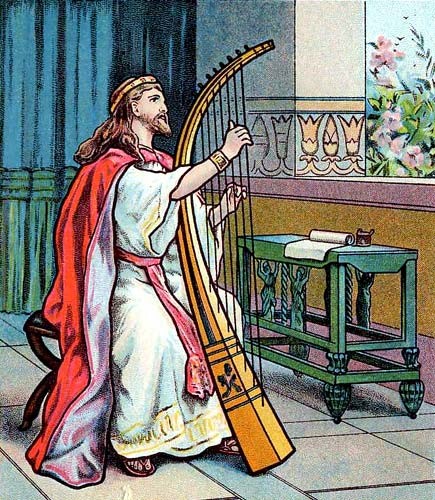
Psalm 49:4, Dark sayings [or riddles] on the harp. Harp is the Hebrew word kinor from an unused root word meaning “to twang.” Poetic music is a thought provoking way to “preach” the gospel; it touches the heart of man in a special way. This is because music is capable of bypassing the innate defensiveness of the mind and can go straight to the heart.

Psalm 49:7, None…can…redeem his brother. In that all men are of equal value before Elohim, a man can’t redeem his brother from the penalty of sin, which is death. One can only atone for his own sins by dying, and once dead, there is no more possibility of living, since the wages of sin is death. So there is no possibility for a man to atone for his own sins, much less those of another; this verse makes this truth clear. 

Even if a man could live a sinless life, he could, at best, save only one other individual—that is, give his life in exchange for only one other sinner. Only Yeshua, who was the Creator of all humans life (Col 1:16; Heb 11:3), could exchange his sinless life for all humanity. This is because common logic tells us that the one who creates something is of more value than the sum total of all that he creates. This is why verse eight states that the redemption of men’s souls is costly, since it cost the life of the Son of Elohim, the Creator of all things. Only this costly sin sacrifice could redeem men from the pit of the grave and give men the gift of eternal life (verse nine).

Another point to consider in this discussion is that since Yeshua was born of a virgin and not of the seed of man, his nature wasn’t polluted or defiled by Adam’s sin nature. If he had not been born of a virgin, this would have disqualified him from being the perfect and blemish-free Passover lamb sin offering for the remission of men’s sins before the judgment seat of Elohim. Since the life of man is in his blood (Lev 17:11), and man’s blood was defiled by Adam’s sin nature, and since Yeshua’s blood didn’t derive from man, but from his Father in heaven, Yeshua’s blood was acceptable to a holy Elohim as the required atonement for the redemption men’s souls (Lev 17:11 cp. Isa 53:10). No man except Yeshua has ever met these criteria, thus no man other than Yeshua is qualified to atone for another man’s sin. 

Because Yeshua was the blameless and sin-free Passover lamb, those who spiritually identify and unite with his atoning death through faith in him and via the ritual of baptism for the remission of sins can now be presented as blameless before Elohim in heaven (Col 1:21–23).

Psalm 49:8, The redemption of the soul is costly. Indeed it is, for it cost Yeshua his life.

Psalm 49:9, Continue to live. In other words, the soul is not immortal.

Psalm 49:10–20, The senseless person. That which the world esteems is an inversion of the truth and reality and is, therefore, anathema to and enmity with Elohim (Jas 4:4). The redeemed are those who have come out of the confused mixture of light and darkness or good and evil (called Babylonianism) of what worldly people esteem (1 Cor 6:17; Rev 18:4). They no longer esteem that which the unsaved foolish or senseless people esteem (i.e. wealth, the houses and monuments they create to last forever to honor their memory, as well as the lands they name after themselves, v. 11). This is the way of the senseless and foolish person (v. 12). The wise person knows that death comes to all humans, and all die like common animals (vv. 11, 20). Only Elohim has the power to redeem our non-immortal soul from the grave (v. 15), so that a person will see the light of life again (v. 19) at the resurrection of the righteous dead.

Continue reading
 

How Much Do YOU Love Yeshua?

Are you hot, cold or lukewarm in your love for Yeshua the Messiah? It’s time to take your temperature!

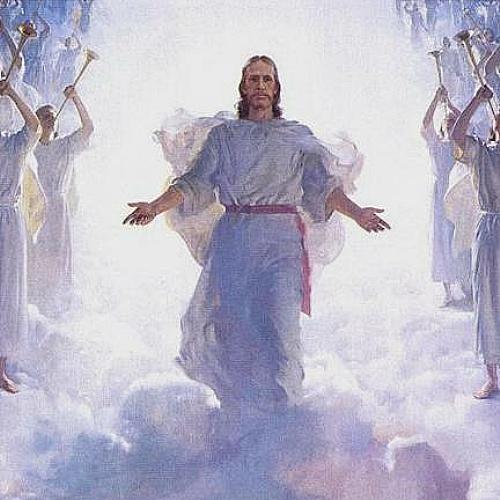
Having recently celebrated Yom Teruah (the Day of Trumpets) and now finding ourselves between Yom Kippur (the Day of Atonement) and Sukkot (the Feast of Tabernacles), we need to ask ourselves some questions. Since these fall biblical festivals prophetically picture the return of Yeshua the Messiah, the establishment his millennial kingdom on earth, and his marriage to his higher level (wise virgin) saints, it is time for each of us to take our spiritual temperature. Does our heart still pound passionately for Yeshua, our Master and Savior? How much do we love him, and is he first place in our lives above all else? If not, then what can we do about it? This article offers solutions to the prevalent spiritual disease known as lukewarmitis.


Do you love Yeshua the Messiah (Jesus Christ) first and foremost above everything else in your life? Yeshua said, “He who loves father or mother more than Me is not worthy of Me. And he who loves son or daughter more than Me is not worthy of Me. And he who does not take his cross and follow after Me is not worthy of [i.e. deserving of or suitable for] Me. He who finds his life will lose it, and he who loses his life for My sake will find it.” (Matt 10:37–39). Do you love Yeshua more than anything in your life including your most cherished family members and even your own life? 

To be worthy or deserving of or suitable for Yeshua, he demands that we put him first in our life above everything else. Yes, he loves everyone, but he will not grant eternal life and entrance into his kingdom to just anyone.  Many are called, few are chosen (Matt 22:14). To gain eternal life and entrance into his kingdom, one must be worthy of it. After all, he wants to give us everything including eternal life. But in exchange, he demands that we give him everything we have. O how we fall short in this!

The question is this: How much do YOU love Yeshua the Messiah? Is he the first love of your life? This is an important question to answer. Those people in whose lives he is not in first place, even though they may claim to believe in and even obey him, to one degree or another, risk being excluded from his kingdom. 

Do you think that you are automatically guaranteed of eternal life just because you give Yeshua some lip service,  perform some religious activities, and do a couple of good things now and again when it’s convenient? Well think again. To the saints in Ephesus, Yeshua warned,

Nevertheless I have this against you, that you have left your first love. Remember therefore from where you have fallen; repent and do the first works, or else I will come to you quickly and remove your lampstand from its place—unless you repent. (Rev 2:4–5)

The marriage supper of the Lamb (Yeshua) is coming. Some people will be worthy to be part of this, others who thought that they worthy will not be found worthy.

Then he said to his servants, “The wedding is ready, but those who were invited were not worthy.” (Matt 22:8; and do not forget about Yeshua’s warning to the lukewarm Laodiceans in Rev 3:14–22)

Similarly, the five foolish virgins also thought they were worthy to enter into the marriage feast of the Lamb of Elohim,  but were excluded because they did not love Yeshua enough to properly prepare themselves.

“Those who were foolish took their lamps and took no oil with them…Afterward the other virgins came also, saying, ‘Lord, Lord, open to us!’ But he answered and said, ‘Assuredly, I say to you, I do not know you.’ Watch therefore, for you know neither the day nor the hour in which the Son of Man is coming.” (Matt 25:3, 11–13)

Elsewhere Yeshua warned,

“Not everyone who says to Me, ‘Lord, Lord,’ shall enter the kingdom of heaven, but he who does the will of My Father in heaven. Many will say to Me in that day, ‘Lord, Lord, have we not prophesied in Your name, cast out demons in Your name, and done many wonders in Your name?’ And then I will declare to them, ‘I never knew you; depart from Me, you who practice lawlessness!’” (Matt 7:21–23)

Other Scriptures that speak of being worthy of Yeshua include,

[T]hat you may walk worthy [i.e. deserving or suitable] of the Lord, fully pleasing Him, being fruitful in every good work and increasing in the knowledge of Elohim… (Col 1:10)

[T]hat you would walk worthy [i.e. deserving or suitable] of Elohim who calls you into His own kingdom and glory. (1 Thess 2:12)

[W]hich is manifest evidence of the righteous judgment of Elohim, that you may be counted worthy [i.e. deem entirely deserving] of the kingdom of Elohim, for which you also suffer… (2 Thess 1:5)

Therefore we also pray always for you that our Elohim would count you worthy [i.e. to deem entitled or fit] of this calling, and fulfill all the good pleasure of His goodness and the work of faith with power… (2 Thess 1:11)

The following is a list of reasons to love Yeshua, so that he will become the first love in your life above everything and everyone else, and so that you will be counted worthy of him including deserving to receive his free gift of eternal life and inclusion in his kingdom.

  • Yeshua is your Creator; he gave you physical life (John 1:3, 10; Col 1:16; Heb 1:2, 10). 
  • Yeshua is your spiritual Creator and offers you eternal life (immortality) free of charge if you will only love, serve and obey him.
  • Yeshua died and paid the penalty for your sins, so that you might live forever with him in his Father’s kingdom.
  • When Yeshua came to this earth as a man, he gave you an example that you can follow of how to live your life.
  • Like a light in the darkness, Yeshua has given you the Truth of his word (the Bible) to guide me through life.
  • Yeshua has given you his Set-Apart (Holy) Spirit as an internal spiritual dynamic force to empower you from within to want to follow and obey him.
  • Yeshua has revealed the Father and his love to you and desires to make you a part of the Father’s spiritual home (John 14:23).
  • Yeshua supplies all of your needs according to his riches in glory (Phil 4:19) and freely gives you all things (Rom 8:32).
  • Yeshua has delivered you from all charges and condemnation of the enemy (Satan, the accuser of the brethren) against those who belong to him (Rom 8:33–34).
  • Yeshua is seated at the right hand of Elohim the Father in heaven where he defends you against the charges of Satan your enemy in the court of heaven (Rom 8:34).
  • Yeshua has made you to be more than a conqueror (over the world, the flesh and the devil) (Rom 8:37).
  • Yeshua has given you power and authority over all the enemy’s demonic forces (Luke 9:1; 10:19).
  • Through Yeshua, you will be made rich (1 Cor 8:9). What price tag can you put on eternal life?
  • Yeshua gives you hope (1 Thess 1:3).
  • Yeshua has granted you his mercy which leads to eternal life (Jude 1:21).
  • Yeshua’s love roots and grounds you (so that like a well-rooted tree, the storms of life cannot topple you) (Eph 3:17).
  • The knowledge of Yeshua’s love passes all human understanding and causes you to be filled with the fullness of Elohim (Eph 3:19).
  • Yeshua is able to do exceedingly abundantly above all that you ask or think (Eph 3:20).
  • The Father answers our prayers when we ask him anything in Yeshua’s name (John 16:23).
  • Countless other reasons to love Yeshua could also be added to this list…

For these reasons, who can separate us from the love of Yeshua?

Who shall separate us from the love of Messiah? Shall tribulation, or distress, or persecution, or famine, or nakedness, or peril, or sword? For I am persuaded that neither death nor life, nor angels nor principalities nor powers, nor things present nor things to come, nor height nor depth, nor any other created thing, shall be able to separate us from the love of God which is in Messiah Yeshua our Lord. (Rom 8:35, 38–39).

The bad news is that,

If anyone does not love the Lord Yeshua the Messiah, let him be accursed. O Lord, come! (1 Cor 16:22)

What is the curse that is upon those who do not love Yeshua? It is death, which is the result or wages of sin (Rom 6:23; Ezek 18:4). Yeshua will cast all of those who do not love him into the lake of fire (Rev 20:11–15). Simply stated, if they do not want him, then he will give them what they want—an eternity without him in the form of death—the extinguishing of life.