Communion or the Lord’s Supper Explained in Its Hebraic Context
The Importance of Memorials and Symbols
Obedient and truth-seeking disciples of Yeshua will want to love him by keeping his commandments (John 14:12), and by teaching and doing everything he commanded (Matt 28:20). They will be following Paul’s example to imitate Yeshua the Messiah (1 Cor 11:1) as well heeding John’s admonition “to walk just as [Yeshua] walked” (1 John 2:6). This applies to the important biblical ritual of communion as well. How can we celebrate communion just as Yeshua did it? How closely is your typical mainstream Christian church following Yeshua’s commandments when it conducts a communion or the Lord’s supper? We shall discover the answer below.
With regard to obeying YHVH’s commands, symbols and memorializations figure prominently in YHVH Elohim’s spiritual economy. Why is this? They are teaching aids. Physical humans need physical things to help them to comprehend spiritual truths and ideals. Using symbols, commemorations and memorializations is a method of teaching and relates to pedagogy, which is “the method and practice of teaching, especially as an academic subject or theoretical concept.” A effective teacher endeavors to build bridges of understanding between what the student knows and what the teacher wants to teach the student— between the known and the unknown, between what the student understands now and what the teacher wants his students to learn. A successful teacher learns the skill of building bridges of understanding with his students to bring them to a higher level of understanding. The same is true of YHVH Elohim as we works with humans to teach them about spiritual things.
On a spiritual level, YHVH Elohim, our Heavenly Teacher, employes similar pedagogic or teaching techniques as he endeavors to bring men to a higher level of understanding heaven’s spiritual truths and realities. The use of symbols and memorials as teaching tools is essential to this process of teaching and learning.
The Bible is full of symbols and memorials that represent or point to something else and act as teaching aids to assist humans in learning about Elohim and what he requires of us. For example, the very name of the Creator, YHVH (Yehovah), is a memorial, symbol or remembrance (Heb. zeker from zakar) of who Elohim really is (Exod 3:15). His name is a way for humans to connect with him. The same is true of each of our names. Our name is a label, a pointer, a symbol of who we are, but it’s not really us. Similarly, eating unleavened bread during the Feast of Unleavened Bread is a memorial (Heb. zikrown from zakar) of coming out of Egypt and putting sin out of one’s life (Exod 13:9). The twelve stones on the high priest’s breastplate were memorials (Heb. zikrown from zakar) of the twelve tribes of Israel (Exod 28:12). The grain offering that was made on the altar of sacrifice in the Tabernacle of Moses was a memorial (Heb. azkarah from zakar) or remembrance that prophetically pointed to Yeshua the Messiah’s death on the cross and the fact that he is the bread of life (Lev 2:2). Blowing shofars on the Day of Trumpets is a memorial (Heb. zikrown from zakar) of many things past, present and prophetically including the second coming of Yeshua and the firstfruits resurrection (Lev 23:24). In fact, the whole Tabernacle of Moses, the Levitical priesthood, the sacrificial system, the Sabbath and biblical feasts is a complex system of memorials, remembrances and symbols to point humanity to the higher, upward spiritual path, which eventually brings him to Yeshua the Messiah. This is so abundantly clear in the Bible. Why don’t more people see this? Why do so many Christians and their leaders have such an apathy, even antipathy for these things? It’s mind boggling, especially in view of the fact that these teaching aid memorial and symbols were ordained of Elohim himself!
The overarching purpose and meaning of the Hebrew word zakar and its derivatives is something that “gets men to think about something, to meditate upon something, to pay attention to something, to remember something, to mention something, to declare or proclaim something or to commemorate something” (see The TWOT on the meaning of zakar).
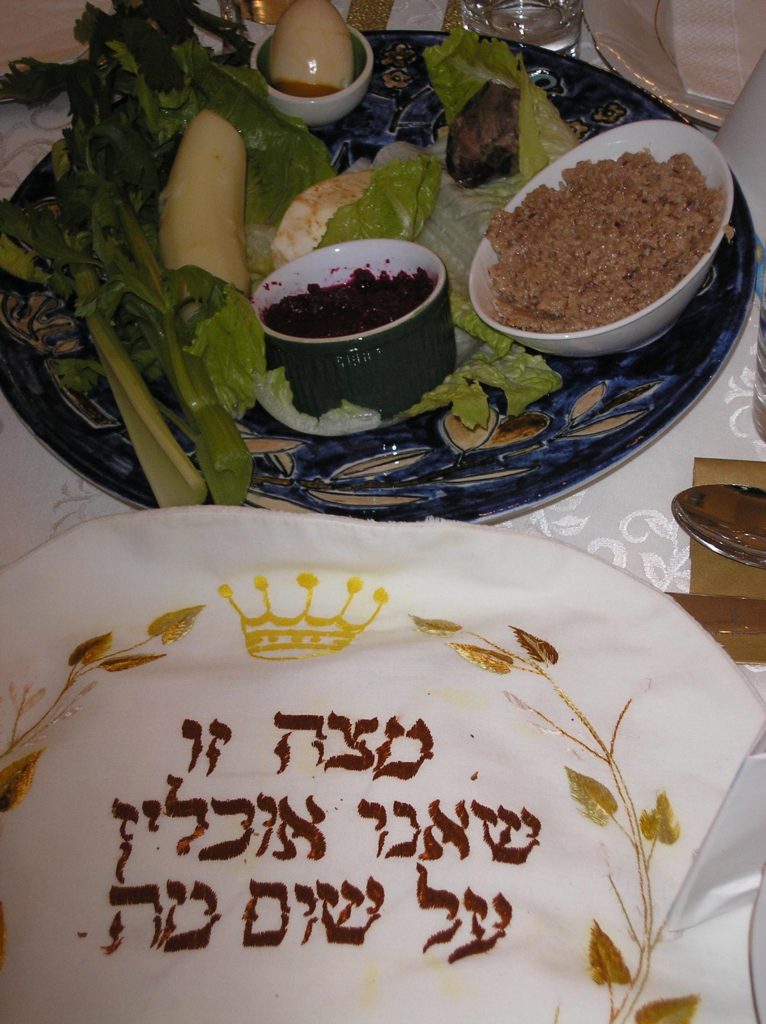
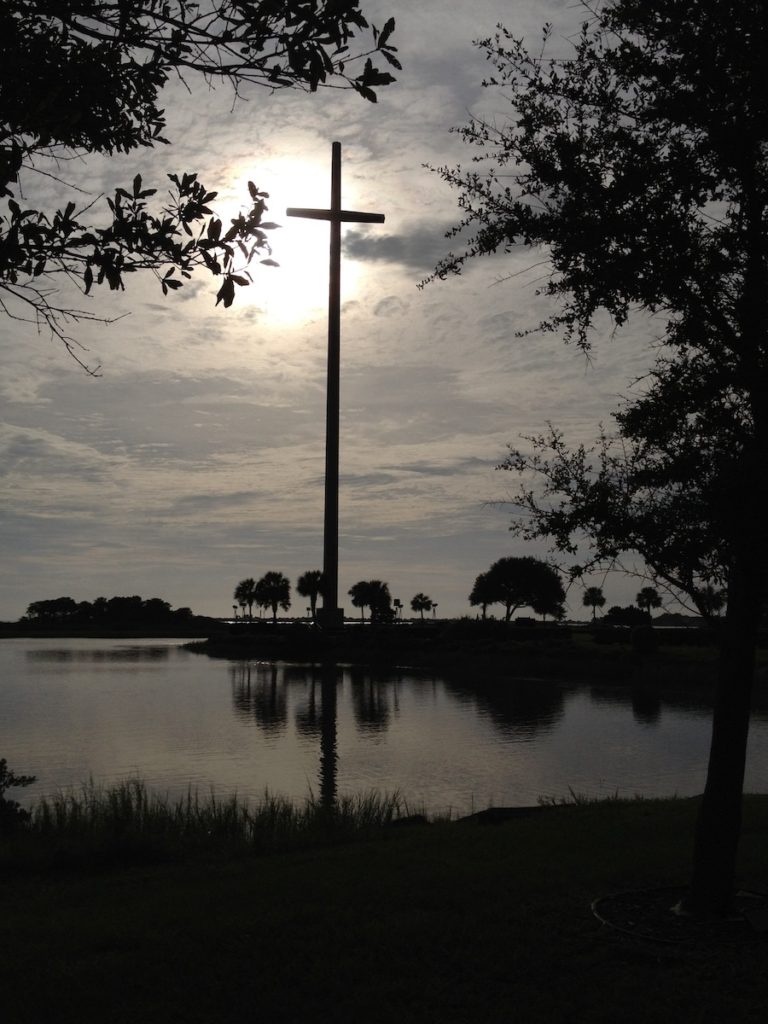
Why do people need to remember something or to stop and think about something? Simply this. In the busyness of life, people forget a lot of things that they should remember, meditate on, ponder, be thankful for and learn from. The fact that people tend to forget important things is the whole reason we have national holidays, statues, gravestones, war medals, a national flag and anthem, birthdays and anniversaries, photo albums and other manmade traditions. Biblically, the same can be said of a Torah scroll, the Bible itself, the Sabbath, the biblical feasts, the cross as a symbol of something, the ritual of baptism and Passover, which had embedded in its observance the Lord’s supper (1 Cor 11:20), communion (1 Cor 10:16) or the Lord’s table (1 Cor 10:21). All of these remembrances or memorials are designed to cause us to pause and stop and to reflect on something that is beyond us (in the past or future) or above us. The memorialization of past events should cause us to better appreciate those who have gone before us and be thankful for our present blessings. Such reflections can help us not to repeat the mistakes of past generations and at the same time learn from their wisdom. Simultaneously, things that memorialize future events (like the Sabbath and the biblical feasts) should encourage us onward and upward in our spiritual journey. They strengthen our faith and give us hope for tomorrow. Symbolic rituals like baptism and communion can help us to connect to present realities that relate to our upward spiritual walk and our relationship to Yeshua the Messiah—our Master and Savior.
What Does Communion Memorialize?
So what does the Christian sacrament of communion or the Lord’s supper memorialize? To its credit, the mainstream Christian church understands the basic meaning of communion quite well. But let’s review this basic understanding, while, at the same time, adding some Hebraic or whole Bible background information. This will hopefully help us to appreciate more fully this glorious sacrament, which, sadly, due to its frequent occurrence in many churches, can become banal ritual that is easily taken for granted.
Isn’t your life already busy enough? Who has time for a six-hour Passover Seder commemorating something that happened thousands of years ago? What could this possibly have to do with my life here and now, you may ask? How can a 3500-year-old Biblical ritual in any way relate to those living in the age of the laser, satellites, the worldwide web and computers? Well, let’s see!
The Preacher said in Ecclesiastes 3:15, “That which is has been already and that which will be has already been.…” Life is full of paradoxes. Do advancements in technology, science, economics, medicine, religion, and world government really promise to give men the rest for their weary souls for which they long?
How about a different approach to the questions and problems facing modern man? Is it possible to go forward by going backwards? This is a thesis that the ancient prophet Yermeyahu (Jeremiah) proffered to those who had ears to hear. He said, “Thus says YHVH, ‘Stand by the ways and see and ask for the ancient paths, where the good way is, and walk in it; and you will find rest for your souls. But they said, we will not walk in it’” (Jer 6:16). What were those ancient paths to which this white-haired Jewish prophet referred? This question is answered three verses later: “Because they have not listened to My words, and as for My Torah, they have rejected it also” (verse 19). YHVH through his prophets has been showing men the way of rest for their souls for thousands of years, yet men consistently refuse to listen. They always have a better way, so it seems!
The festival of Passover is one of the most ancient paths to be found in all of the Scriptures. In it are contained clues that will help the partakers of it to understand the past, present and the future.
A God-hater, Karl Marx, the father of modern communism, said that religion is the opiate of the masses. Yes, this can be said of dead, truthless and spiritless religion. But how about that religion which gives definition, purpose, meaning, hope and destiny to a man’s life? How could anything that comes directly from the Loving Father who created you and me in his own image be detrimental to us?
It has been said that the religion of the Bible tells a person where he has come from, where he is at and where he is going. Could it not be said that a man who knows the answers to these questions possesses true wisdom and wealth, and has indeed found rest for his troubled soul?
One of the most important scriptures in the Jewish faith is the famous shema passage of Deuteronomy 6:4–9. This passage, which is like a “pledge of allegiance” for the Jews, starts out by saying, “Hear [shema], O Israel …” The word shema literally means “to hear and to do.” Later, in verse five, the shema continues, “And you shall love YHVH your Elohim with all your heart, and with all your soul and with all your might.” Loving our Heavenly Creator is not just a mind-thing, but also an action and a doing thing. It is something we act out and participate in. This is the Hebrew way … the ancient paths! As a path is for the purpose of walking down, even so, Passover is meant to be celebrated. This is how YHVH’s people showed their love and devotion to him. Yeshua, the Jewish Messiah, reiterated this when he said, “If you love me, keep my commandments [or Torah mitzvot]” (John 14:15).
This is what the Passover Seder is all about. We, as humans, learn by doing. We learn obedience by obeying. We learn to love by loving. We learn about heavenly and spiritual mysteries by walking out the types and shadows found in Scripture (of which Passover is but one) that point to the heavenly and spiritual domain or dimension of YHVH himself. The French have a saying: L’appétit vient en mangeant. Translated this means: Appetite comes while eating. Or we could say that the more one eats (delicious food) the more one wants. David said in Psalm 34:8, “O taste and see that YHVH is good: blessed is the man that trusts in him.” The more we walk out the commandments of our Heavenly Father, the more of his goodness we behold, the more of his blessings we receive, the more our soul finds rest, the more we want to walk out his commandments, the more we behold his goodness, and so on goes this wonderful spiritual growth-cycle.
So why do we go to the trouble, expense and time to celebrate a Passover Seder? First, it helps us to fulfill the commands YHVH gave to us to do at Passover, such as eating lamb, unleavened bread and bitter herbs; telling our children the story of the Passover; holding a “set apart convocation” and so on (Exod 12:14–20, 43–49; Lev 23:4–5; Num 9:2–3; 28:16; Deut 16:1–3). But again we ask, what is the significance and relevance to us of this celebration?
Passover is but the first piece of a panoramic puzzle or the first thread in a rich tapestry of YHVH’s plan of redemption of mankind. Though the children of Israel kept the first Passover 3500 years ago in the land of Egypt, this ancient celebration is not only a memorial of what occurred then, but is of utmost significance to the spiritual life of the Believer today. It has future or prophetic implications, as well. Passover is the first step of a spiritual journey that, if one continues in it faithfully to the end, will lead one into the very presence of YHVH Elohim, our Heavenly Father, himself. What a journey! Let’s look at it.
The biblical pilgrimage or aliyot (singular: aliyah) festivals are Passover (Pesach) and Unleavened Bread (Chag haMatzot) and the Feast of Weeks or Pentecost (Shavuot) in the spring and the Feast Tabernacles (Chag haSukkot) in the fall (see Lev 23). At these feasts, the Torah, the Word of Elohim, commands all of YHVH’s his people Israel to come up (or make aliyah) to the place where YHVH has chosen to place his name. There they are to worship and serve him as they fellowship with joy with their Israelite brothers from far and near.
What are the reasons and benefits for YHVH’s people to faithfully and obediently celebrate his holy or set-apart feasts as he has commanded in is Set-Apart Word?
The biblical feasts are a prophetic shadow-picture of things to come (Col 2:16–17; Heb 10:1). When they were given to ancient Israel they pointed forward to future events that would occur to the nation of Israel including redeemed believers. The spring feast days, for example, point to Yeshua the Messiah’s first coming, while the fall feast days point to his second coming leading into the Messianic Age (Millennium) and into eternity beyond.
All the biblical feasts point to Yeshua. Yeshua is the Hebrew name for Jesus and means “salvation.” All the biblical festivals point to the various stages or steps of the path of salvation that believers find themselves on.
All of the feasts point back to and commemorate historical events that occurred in Israel’s history. By studying and celebrating these feasts, we can learn valuable historical spiritual lessons that are, at the same time, representative of our own spiritual journey (1 Cor 10:1–6, 11). The biblical feasts also point to present spiritual realities in the life of the redeemed believer. The feasts—especially the fall feasts—point to prophet events that are yet to happen. As such, they function as a sort of road map that tell us where we’ve come from, where we’re at, and where we’re going in our spiritual journey.
YHVH Elohim commands his people to keep what the Scriptures calls his appointed times or biblical festivals. They are times when he makes an appointment to meet with his people (Lev 23:1–2, 4). It is at these festivals or commanded assemblies that YHVH teaches his people about his wonderful plan of salvation or the redemption of the world through Yeshua the Messiah.
The feasts are in the Bible and the whole Bible is the inspired word of Elohim (2 Tim 3:16). Yeshua commands his saints to live by every word that comes out of the mouth of Elohim (Matt 4:4). The feasts are in the Bible, and believers need to study and obey the whole Bible, which is the inspired word of Elohim (2 Tim 3:16).
The feasts set forth the pattern of heavenly things on earth (Heb 8:1–2, 5; 9:8–9, 23; Exod 25:8–9, 40; 26:30; Num 8:4; Ezek 43:1–6, 10–12), and, therefore, reveal to us spiritual mysteries about things in heaven.
As physical human beings, we need physical means and methods to help us understand spiritual mysteries that are above and beyond our intellect. YHVH gives us the natural to help us to understand the supernatural or the spiritual, which would otherwise be beyond our comprehension (1 Cor. 2:9–13). The biblical feasts play an important role in our spiritual growth, development and maturation and bring us higher and closer to Elohim through Yeshua the Messiah. Therefore, Elohim’s feasts act as bridges to help us to transcend the physical and not only to understand the spiritual, but to actually come up to the higher spiritual level. As such, they bring us closer to YHVH Elohim, our Creator and Heavenly Father.
Yeshua, the apostles and early believers celebrated the biblical feasts. The apostles walked as Yeshua walked, and instructed us to do the same (1 Cor 11:1; 1 John 2:6).
The Bible tells us that YHVH’s feasts will be celebrated during the Millennium, so why shouldn’t we be keeping them now?
Yeshua said that if we love him, we will be keeping his commandments (John 14:15). Elsewhere, Yeshua equated the commandments with the Torah (Luke 18:20), of which the biblical feasts are a part.
If you want to know YHVH, you will be keeping his Torah-commandments of which the feasts are a part (1 John 2:3–6).
YHVH’s Word commands us to appear before him three times each year at the three aliyot or pilgrimage feasts (Passover/Unleavened Bread, the Feast of Weeks/Pentecost, and the Feast of Tabernacles, Exod 23:14–17). If we’re going to be obedient to his instructions in righteousness, we must gather together in the place where he has chosen to place his name (Deut 16:2, 6, 11).
The aliyot feasts are a time for all Israel—including the saints of Elohim, who are “the Israel of Elohim” (Gal 6:16)—to gather together to worship YHVH (Lev 23:2, 4).
When we obey YHVH’s commands, we are blessed in wonderful and unexpected ways (Deut 28:1–14).
When we come together at his appointed times (moedim) and at the place where he has chosen to place his name, we show YHVH that we love him and want to meet with him. As a result, we will experience a special divine joy (Deut 12:5–7, 18).
When we come together at his appointed times (moedim) at the place where he has chosen to place his name we show our fellow redeemed Israelites that we love them and want to fellowship with them. This brings unity and one accordness into the spiritual body of Yeshua.
At the feasts, there is corporate worship, and when YHVH’s people praise him together, he inhabits the praises of Israel (Ps 22:3).
When redeemed Israel comes together, YHVH camps in the midst of his people (Ps 34:7).
When the disciples of Yeshua come together, he is in their midsts (Matt 18:20).
At the aliyot feasts, people from outside of one’s local congregation ideally gather together for a common purpose: to obey, worship and serve YHVH. This binds all the saints together in a common focus and purpose. In this atmosphere, new and lasting friendships are forged and the kingdom of Elohim is expanded and he is glorified.
At the aliyot feasts, one has the opportunity to hear new teachers with fresh manna or teachings.
The aliyot feasts give our young people and adult singles an opportunity to meet prospective spouses.
The aliyot feasts give one an opportunity to visit new places and provides one with a great (and biblically-based) excuse to take a much needed vacation.
The aliyot feasts are a place to not only meet new people, but to exchange ideas and to get your Bible questions answered.
At the aliyot feasts, one is provided with extended times of anointed praise and worship, which brings redeemed Israel together, unites heaven and earth, unites the body of Yeshua and causes everyone to grow spiritually.
We are going to proclaim that the biblical new year has arrived based on reports of aviv (or abib) barley being found and the new moon sighting in the land of Israel (see https://www.facebook.com/search/top?q=devorah%27s%20date%20tree and https://www.facebook.com/HaleviTeacher). Based on this report, Passover (Pesach) will occur on Sunday, March 28, 2021 with the first high holy day of the Feast of Unleavened Bread occurring on the following day (Monday, March 29, 2021). We will now discuss the reasons for our decision.
To be sure, some people may consider this to a borderline call this year, but the preponderance of evidence, in my opinion, is that this is the month of the aviv barley. (For more info on the biblical calendar and the biblical definition of “the month of the aviv/abib [barley]”, see my articles on the subject at https://www.hoshanarabbah.org/teaching.html#feast). Here are the reasons that we have chosen to call this new biblical month the first month of the new year:
As far as we know, Devorah Gordon and her team are the most experienced aviv barley searches currently operating in the land of Israel, and have been at this for some 20 years. We know and trust Devorah (along with her former husband, Nehemia Gordon), and were privileged to be part of their team in 2008. So we have a sense of how the barley search system works as well as the integrity of those involved.
Based on my extensive understanding of the Scriptures on the subject of the biblical calendar (see my articles on the subject at the link provided above), for the first month of the biblical calendar to be called the month of the aviv, aviv barley must be found in the land of Israel at the beginning of the month. According to the above referenced reports, aviv barley has been found. True, there is not a lot of it, but it is there. Moreover, by the time Wavesheaf Day occurs in about three weeks, it is highly probable that there will be much more aviv barley.
In the past, other people have proclaimed the new month based on the potential of aviv barley being found by Wavesheaf Day. We have rejected this notion for several reasons. First, it is our belief based on our study of the Scripture that for the month to be called “the month of the aviv” (a biblical term), aviv barley must already be present in the land of Israel by the first day of the first month. Second, if there is no aviv barley to be found by the first day of the first month, then there is no guarantee that it will be found in time for the Wavesheaf Day two or three weeks later. Maybe there will be enough aviv barley, may be there will not be. It is anyone’s guess. Why is this? Because the ripening of the barley depends on the weather, and no one can predict what the weather will do. If it is warm, then the barley will ripen; it it is cold, it will not ripen. This is why there needs to be aviv barley by the first day of the first month for it to be the month of the aviv barley. For example, in 2008 when we were in the land of Israel, we did not find aviv barley when we searched for it. Yet, there was a man who proclaimed that month to be the first month of the year based on the notion that the barley might be aviv by the middle of the month and in time for the Wavesheaf Day. As it happened that year, the barley was still not aviv when he thought it would be, and so his proclamation was false. For this reason, it is important that there be aviv barley by the first day of the first month for that month to be proclaimed the month of the aviv and, hence, the first month of the biblical new year.
Why is it important for there to be aviv barley by the first day of the first month of the new year? Simply this. In ancient biblical times and according to Scripture, the Israelites were commanded to go up to Jerusalem (or wherever YHVH chose to place his name) to celebrate the Passover and Feast of Unleavened Bread. They had to walk there. Depending on where they were coming from, this journey may have taken anywhere from several days to more than a week to make. If the new month was declared based on potential sighting, and not on the actual occurrence of barley at the beginning of the month, then there was the potential for a major problem for the Israelites. What if they prepared for the journey to Jerusalem, left their farms, made the journey only to find out that the barley still was not aviv? What then? They had to make the trek back home by foot, only to turn around a short time later and make the trip all over again when the barley was finally aviv. Such a situation is not an issue in our day of modern transportation, but in biblical times, this would have been a major economic inconvenience if not a debacle for many people. For this reason, the barley had to be aviv by the beginning of the first month.
In ancient Israel, the Mishnah records that there was a whole process that occurred to determine whether the barley was aviv or not. This process was officiated over by the religious and political leaders of Israel. It involved many people and important protocols were followed to insure accurate information. Today, we do not have such resources at our disposal. Most of us are not in the land of Israel. We have to trust those who are there for accurate information. That is my wife and I went to Israel in 2008 to experience this process ourselves and to meet the people involved.
We realize that well-meaning people will have different opinions on some of the points mentioned above. This is where love and respect comes in. There is no need to criticize, slander or libel others who have different opinions. We are all doing the best that we can to live up to the light of truth that has been given to us. Truth is being restored to YHVH’s people in these last days (see Acts 3:21 and Mal 4:4–6) and this is a process that takes time involving one heart and mind at a time. As such, everyone is at a different place on the truth-restoration trajectory. So let us love and respect one another, even if someone has a different opinion than ours. At this point, I am reminded of Paul’s instructions in Romans 14,
Receive one who is weak in the faith, but not to disputes over doubtful things…Who are you to judge another’s servant? To his own master he stands or falls. Indeed, he will be made to stand, for Elohim is able to make him stand.…But why do you judge your brother? Or why do you show contempt for your brother? For we shall all stand before the judgment seat of Messiah.…Therefore let us not judge one another anymore, but rather resolve this, not to put a stumbling block or a cause to fall in our brother’s way.…Therefore do not let your good be spoken of as evil; for the kingdom of Elohim is not eating and drinking, but righteousness and peace and joy in the Holy Spirit. For he who serves Messiah in these things is acceptable to Elohim and approved by men. Therefore let us pursue the things which make for peace and the things by which one may edify another. (Rom 14:1, 4, 10, 13, 16–19)
Passover is just around the corner. It is the first step in YHVH Elohim’s plan of salvation or redemption of sinful humans to reconcile fallen man back to him. Did you ever wonder how this process really works?
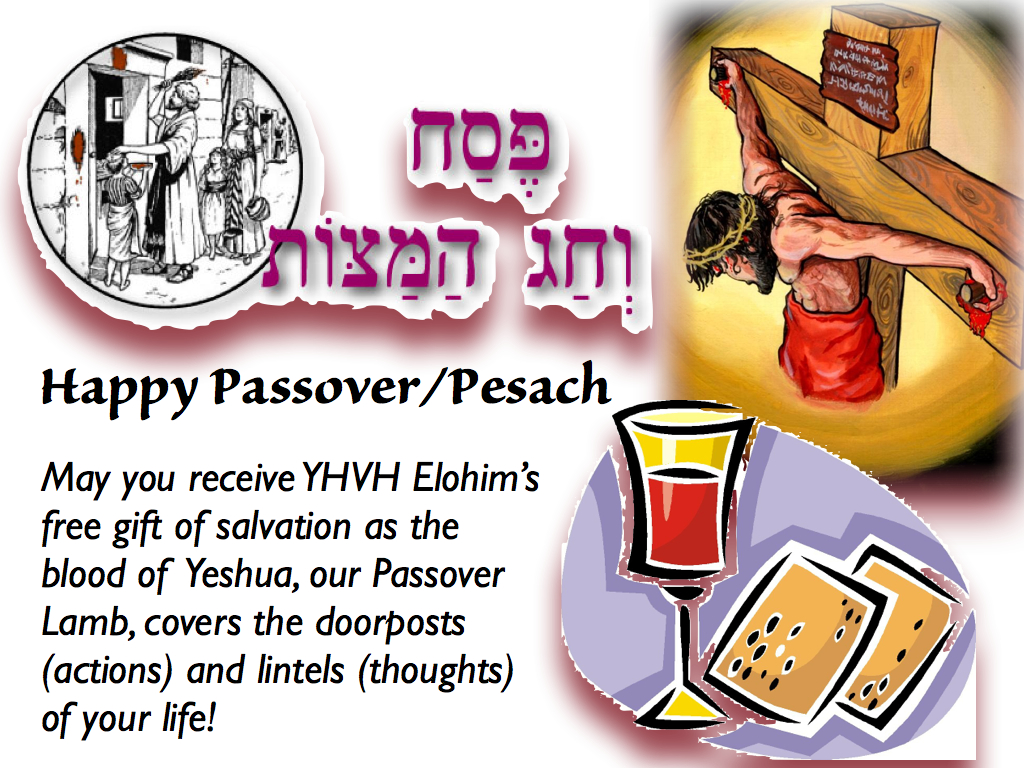
There is never a better time to begin repenting of sin and getting under the blood of the Lamb of Elohim than just before Passover. As the children of Israel applied the lamb’s blood to the door posts and lintels of their house, so we must apply the sin-cleansing and Satan-defeating blood of Yeshua afresh to our lives (i.e. to our thoughts as represented by the door lintel and to our hands or actions as represented by the door posts). Cleansing of our sin occurs as we repent of our sins, and pray for and receive YHVH’s forgiveness. He will then cover our sins over or wash away our sins by Yeshua’s blood (1 John 1:9; Rev 1:5).
In Egypt at Passover time, YHVH judged all those who had failed to put the lamb’s blood on the door posts of their houses. In other words, they weren’t under the blood of the lamb, but were still under the penalty of sin, which is death (Ezek 18:4; Rom 6:23). Any unrepented of sin in our lives brings the curse of death on us. To the degree that we have sin in our lives is the degree to which the spirit of death has a legal claim on us. Now is the time to repent of sin by confessing it and seeking Elohim’s forgiveness under the blood of Yeshua and then forsaking that sin through YHVH’s grace (1 John 1:9).
Let us now discover the miraculous process of how to overcome sin in more detail through a spiritual magnifying glass. How do we go from being a lost sinner—the walking damned or the living dead—to becoming the glorified and immortalized children of Elohim?
It works like this: When we confess and repent of our sins, Yeshua will pass over or forgive us of our past sins (Rom 3:25; Ps 103:8–12). From this point forward, it is up to us to embrace a new mindset and a new spiritual identity and reality; that is, we must reckon our old sinful man as having been crucified with Yeshua, in that we are now dead to sin, no longer slaves to sin, freed from the power of sin, and alive to Elohim in Yeshua our Lord (Rom 6:7–11). Yeshua is the one who victoriously defeated the power or sting of sin, which is death, hell and the grave at the cross and through his resurrection (1 Cor 15:56–57; Col 2:13–15). Through our faith in him and our legal identification with his death, burial and resurrection through the symbolic ritual of baptism for the remission of sine, his victory is legally applied to us by the courts of heaven, which is how he has made us more than conquerors over sin and death (Rom 8:37; 6:1–14) such that the power of sin and death will no longer have dominion over us (Rom 6:12–14). He now gives us strength through his enabling and empowering grace to resist and overcome sin, that is, to not let sin control us any longer (Rom 6:12). He promises to give us a new, circumcised heart as he writes his laws or commandments on our hearts, so that we will be supernaturally inclined to love him by keeping his commandments (Jer 31:33; 24:7; Heb 8:10; 10:16; Ezek 36:25–27; Isa 51:7; Ps 40:8; 37:31; Deut 30:6; John 14:12 cp. Rom 7:22). What is that supernatural power that works in us to help keep us from sinning? It the Spirit of Elohim or the Comforter that Yeshua promised would come along side of us to aid us in the process of overcoming sin (John 14:16–18, 25–26; 15:26–27; 16:7–14).
To summarize, this whole supernatural and miraculous process of being victorious over sin is activated when we first acknowledge our sin, confess our sin, repent of our sin and then place our faith in Yeshua’s death and burial. This occurs when we appropriate or reckon, by faith, our old sinful man to have been crucified with Yeshua, and then been resurrected in the newness of spiritual life with him. We now embrace the new identity that he has given us—a spiritual reality that he has imparted to us and has been legally recorded in heaven (Col 2:14)—that we are a new creation and are victorious over sin (Gal 2:20; 2 Cor 5:17), and have become Spirit-begotten children of Elohim. This whole process is summarized from beginning to end in Paul’s Epistle to the Romans chapters six through eight. The end result, if we continue in a right spiritual relationship with Yeshua the Messiah for the rest of our lives, is that our names will be recorded in Elohim’s Book of Life, and our physical bodies will be glorified—we will be given immortality—at the resurrection of the righteous dead, which occurs at the second coming of Yeshua.
This whole process or chain of events that transforms sinful humans into glorified and immortal children of Elohim begins at Passover which symbolizes the first steps a person takes when he comes to faith in Yeshua the Messiah.