Let My People Think—Rightly Dividing Scripture According to the Hebraic Rules of Biblical Interpretation (part 1)

(Author’s note: This is the updated and completely rewritten version of an article that I wrote in the early 2000s. The information contained therein is based largely on the booklet entitled, Hermeneutics: How to Understand the Scriptures by James Scott Trimm [http://www.nazarene.net or http://www.lulu.com/shop/james-trimm/nazarene-jewish-manifesto/paperback/product-403845.html], although I have added many of my own insights and new information to the original material.)

When reading the Bible, how do we properly interpret it, so that we arrive at the author’s intended meaning? This has proven to be a daunting task for both Christians and religious Jews. There is a saying: Put three Jews in a room will have five opinions. The same could also be said of Christians. Perhaps the fundamental principles of biblical interpretation as laid out in this article, if followed, will help to bring some unanimity among truth-seeking Bible believers. Who knows?

Over the millennia, differing views on the meaning of many Bible verses have resulted in countless church splits and the founding of thousands of religious denominations. This is a problem than can be mitigated if not largely alleviated if YHVH’s people learn to follow Paul instructions to the young Timothy to “study to shew thyself approved unto Elohim, a workman that needeth not to be ashamed, rightly dividing the word of truth” (2 Tim 2:15, emphasis added). How do we do this? This will be the subject of discussion below.

If there is a right way to divide the word of truth as 2 Timothy 2:15 states, then it follows logically that there must also be a wrong way to do it. As a matter of fact, we actually have biblical record of this occurring among the first-century believers. In 2 Peter 3:16 we read, “As also in all [Paul’s] epistles, speaking in them of these things; in which are some things hard to be understood, which they that are unlearned and unstable wrest [or twist], as they do also the other scriptures, unto their own destruction.” In this case, some believers were twisting Paul’s writings to say something other than what the author meant. Sadly, this practice still goes on today. Whole denominations, sects and even cults have been founded on the twisting of scriptures resulting in countless biblical heresies and millions of people being deceived. 

Twisting or improperly interpreting Scripture can lead to one’s spiritual ruination if the result is a false “salvation” or the loss of one’s salvation. This is no small matter! Over the years, there have been whole denominations that claim to justify through their erroneous biblical interpretation such heinous abominations and sinful practices as abortion, homosexuality (sodomy), torture and even genocide. Scripture warns very clearly that “no prophecy [or divinely inspired utterance] of the scripture is of any private interpretation.” YHVH Elohim will judge false teachers severely!

But there were also false prophets among the people, even as there will be false teachers among you, who will secretly bring in destructive [or damnable, KJV] heresies, even denying the Lord who bought them, and bring on themselves swift destruction…and their destruction does not slumber. (2 Pet 2:1, 3)

So with all these warnings and admonitions in mind how can we insure that we will not fall into the trap of misinterpreting Scripture and coming up with the “damnable heresies” and false teachings as we read about in 2 Peter 2:1–3 that lead many people astray? This now brings us to our study of the rules of biblical interpretation that were extant in the first century during the time of Yeshua and the apostles, as well as the universal rules of simple logic that every honest scholar and truth seeker follows.

As we shall discover below, during the first-century there were specific rules of scriptural interpretation that were taught and well-known among Bible students and scholars. These had been developed over the centuries by leading learned Jewish biblical sages to ensure that false teachings and twisting of Scripture would not occur. We can learn from the wisdom of those who have gone before us.

As Bible student seeking to reconnect ourselves with the Hebraic roots of our Christian faith, we realize that much twisting of Scripture has occurred from the time of the last apostle until now in Christian theology. Grossly aberrant teachings have been promoted in churchianity where, for example, it is taught that Messiah Yeshua and Paul came to “do away with” the Torah-law. Sabbath has been changed to Sunday and Passover to Easter. Christmas, Lent, Halloween and other Christian holidays have replaced YHVH’s commanded and blessed feasts. Moreover, the church has set aside many biblical standards of holiness such as the Torah’s dietary laws and now permits the eating of what the Bible refers to as abominable things (e.g. pork and shellfish). In these lasts days as the saints prepare to be the spotless or sin-free bride of Yeshua in anticipation of his second coming, it is time for us all to awake from our spiritual sleep and to repent of our errant ways and return to scriptural Truth. It is time that YHVH’s people search out the Truth and come into alignment with it. This involves learning how to properly interpret Scripture, so that we will have the tools to separate the spiritual wheat of Truth from the chaff of unbiblical doctrines and traditions of men. Currently, YHVH is raising up a spiritual priesthood who is learning to separate the holy from the profane, the precious from the vile (Jer 15:19; Ezek 22:26; 44:23), as his saints extricate themselves from the spiritual Babylon of religious confusion in which they find themselves (Rev 18:4). For too long YHVH’s people have been feeding from the serpent’s tree of the knowledge of good and evil instead of from the tree of life. The former is contains the evil the doctrines and traditions of men that have made of none-effect the Word of Elohim (Mark 7:9, 13). “Come out of her my people” and “be separate, do not touch what is unclean, and I will receive you,” is YHVH-Yeshua’s cry to his end time saints (Rev 18:4; 2 Cor 5:17), who love him and keep his commandments (John 14:15, 21; Rev 12:17; 14:12).

Objectivity Versus Subjectivity 

The first rule in proper Scriptural interpretation is to know the difference between objectivity and subjectivity. The word objective means “to exist outside of or independent of the mind, something which is observable or verifiable by facts, not by emotions or feelings of the individual.” By contrast, the word subjective means “something relating to the mind of the individual as the subject of experience.” James Trimm states succinctly that objective means “existing independent of the mind,” while subjective means “that which comes from a person’s point of view.” Facts are objective while opinions are subjective. Trimm goes on to say that many in Christendom, however, have developed a “do-it-yourself, do-your-own-thing” approach to biblical interpretation. Christians will often have Bible studies in which they ask, “What does this verse mean to you?” In response, many Christians will often say, “To me this verse means….” By contrast, the truth-seeking approach is to ask, “Okay, so if you were not here what would this verse mean?”

Exegesis Versus Eisegesis

These complicated sounding terms relate to the idea of subjectivity versus objectivity. ­Eisegesis (subjectivity) is interpreting a text by reading one’s own ideas into the text and pulling out a subjective meaning. Exegesis (objectivity), on the other hand, is an explanation or critical interpretation of a text by drawing the author’s intended message out of the text, and letting the text speak to you. The former approach is an inaccurate reading of a text and misses the author’s message, while the latter approach is an accurate reading of the text and catches the author’s message correctly. Many biblical examples can be given of how both mainstream Christian and Jewish religious systems have interpreted various Bible passages subjectively (or using an eisegetic approach). Here are some examples of this:

  • In Matthew 5:17, Yeshua said, “Do not think that I came to destroy the Law or the Prophets. I did not come to destroy but to fulfill.” To the modern Christian, this statement means that the Torah-law or law of Moses is largely no longer binding upon the New Testament Christian, since Yeshua did it or fulfilled it for us, even thought the context of the passage (especially the following several verses) say exactly the opposite thing.
  • In Romans 10:4 we read, “For Christ is the end of the law for righteousness to everyone who believes” (NKJV). To most Christians, this means that the necessity to adhere to the laws of the Torah terminated with the death of Messiah, even though in the context of the surrounding verses Paul, the author, is actually teaching that the law is binding upon Christians even as it was upon the Israelites under Moses.
  • Romans 14:5–6 states, “One person esteems one day above another; another esteems every day alike. Let each be fully convinced in his own mind” (NKJV). To most Christians this verse is proof that the seventh day Sabbath is no longer a required observance, and that Scripture now allows one to rest on any day of the week, even though the Sabbath is not what Paul is even referring to in this passage of Scripture.
  • Yeshua says in Revelation 3:20, “Behold, I stand at the door and knock. If anyone hears My voice and opens the door, I will come in to him and dine with him, and he with Me.” Christians typically apply this verse to unsaved, non-Christians, when in reality it is referring to the saints who are already saved but who are asleep spiritually and lukewarm in their faith. 
  • Modern religious Jews apply the Messianic suffering servant figure of Isaiah 53 to the modern Jewish people and the State of Israel, when this prophecy is clearly referring to a singular individual who dies atoning for the sins of YHVH’s people and then resurrects to life again.
  • One of the most famous verses in modern American Christendom is 2 Chronicles 7:14 which says, “if My people who are called by My name will humble themselves, and pray and seek My face, and turn from their wicked ways, then I will hear from heaven, and will forgive their sin and heal their land.” The context of this verse, however, is Solomon praying in Jerusalem at the temple’s dedication and the land of Israel is being referred and not America. Not only that, most modern readers fail to understand why YHVH would allow the land of his people to come under judgment. It was because they had forsaken his Torah commandments (the law of Moses, see vv. 17, 19). Only if they would return to his Torah would YHVH heal their land. The typical modern reader misses both of these points.
  • Many Christians quote Hosea 4:6 which reads, “My people are destroyed for lack of knowledge. Because you have rejected knowledge, I also will reject you from being priest for Me….” However, they fail to read the rest of the verse, which explains why YHVH has rejected his people. It is “because you have forgotten the Torah-law of your Elohim, I also will forget your children.”
  • 1 Timothy 4:4 reads, “For every creature of God is good, and nothing is to be refused if it is received with thanksgiving” (NKJV). Most Christians read this verse and stop there. They take it to mean that the biblical dietary laws of Leviticus 11 have been done away with and that it is now permissible to eat pork and other unkosher foods. Yet they fail to read the next verse, which says that not only prayer, but the Word of Elohim (i.e. Lev 11) sanctifies or determines the kind if meat that the saints are to eat.
  • Ezekiel:15–28 contains the well-known “Two Sticks Prophecy.” Many modern Bible teachers declare that this prophecy has already been fulfilled by the Jews returning to the modern State of Israel, when in reality, there are major aspects of it that will not be fulfilled until after the second coming of Yeshua.
 

Psalm 46—Discovering Layers of Meaning in Scripture

Psalm 46:1–11, Amidst geo-political turbulence, divine protection and a heavenly lifeline exists for the saints. What is the overall message of this psalm? Even though the chapter subheading of my NKJV Bible, for example, describes this psalm as “God the refuge of his people and conqueror of the nations,” there is a deeper, more inspiring message to be discovered here that this title misses. Let’s dig into this precious morsel of the Word of Elohim to discover what this life-changing message is.

When it comes to discovering the hidden golden nuggets in Scripture, one must be willing to become a spiritual hardrock miner who is not averse to the difficult work of picking away at the seemingly unyielding and implacable rock and soil to uncover the mother lode of hidden treasure underground. Like digging for gold, the deeper one digs into Scripture and the more time and effort one invests in the process, the more likely one is to pull the unspeakably valuable treasures out of the spiritual bedrock of the Bible. I have been digging into this Rock of Ages daily for more than fifty years, and my heart and mind still tingle and pulsate with enthusiasm (please look up the meaning of the word enthusiasm for a cool nugget  of truth that reveals why I purposely chose this word) when I discover new treasures therein.

To uncover these nuggets that lay below the surface words of Scripture, it is critical to understand an important fact: There are at least four layers of understanding to be found buried in the Word of Elohim. Let’s discover and briefly explore what these are. 

Laying on the surface of Scripture, we find the peshat or literal meaning of what has been written. For example, a literal man named Noah built a literal ark of wood that floated on a literal flood of literal water,  Moses led the children of Israel out of Egypt, and Yeshua was a carpenter’s son from Judea who lived in the first century. On a moral or philosophical level, the ten commandments, for example, are literal rules of righteous conduct that apply to our daily lives.

Digging deeper, we come to the next level as we drill down deeper into the Word of Elohim. This is the remez or suggested or hinted at meaning of a scriptural passage. For example, the Torah talks about “an eye for eye” when it comes to criminal justice. This may be taken literally to mean that if you injure someone’s eye, your eye is to be similarly injured as payment for your crime, thus evening the scales of justice. Moreover, an injured eye does not require the death penalty, and the crime of murder requires more than a slap on the wrist. So what this verse is really saying or hinting at beyond its literal or peshat level meaning is that the punishment must fit the crime.

Continue reading
 

Revelation 3-4: Natan’s Commentary Notes

Revelation 3

Revelation 3:9, Worship/bow down before your feet. This scripture has puzzled many. Who are these saints before which those who are of the synagogue of Satan will at some time in the future bow down in worship? Who are those who are of the synagogue of Satan? First, the saints are wearing crowns (verse 11) and they have the name of Elohim written upon them (verse 12). We know that a group of saints will be ruling with Yeshua in his millennial kingdom (Rev 1:6; 5:10). These same saints will be part of the first resurrection (Rev 20:6), which occurs at Yeshua’s second coming. Not all saints will be kings and priests. There are levels of rewards (and responsibilities) in YHVH’s kingdom depending on how obedient one has been to his Torah-commandments. This Yeshua teaches in Matthew 5:19. Some saints will be the least in his eternal kingdom, while some will be the greatest depending on their level of Torah-obedience. Similarly, Yeshua identifies two groups of saints in his Parable of the Ten Virgins (Matt 25:1–13)—the wise saints and the foolish saints. The wise virgins will go into the wedding supper of Yeshua, and presumably will become his bride, while the foolish ones will be left outside. In Revelation chapter three, Yeshua further identifies two groups of believers: those who are spiritually lukewarm and those who are spiritually hot (Rev 3:14–22). It is not a stretch to connect those who are spiritually on fire in Laodicea with those in Philadelphia who have been faithful to his commands, who will be given a crown and who will be worshipped.

Can we further identify these faithful saints who will be worshipped (or before whom the knees of lower order saints will bend, which is the actual meaning in the Greek of the word worship) in Yeshua’s kingdom? They have crowns and are thus ruling as kings and have the name of Elohim written on them. Similarly, the 144 thousand have the seal of YHVH’s name on them (Rev 7:3–4 and 14:1), and they keep his Torah commandments and have the testimony or faith of Yeshua (Rev 14:12). These are the likely candidates for being those Yeshua describes in Matthew 5:19 who will be the greatest in the kingdom of Elohim, and who others will worship (Rev 3:9). 

Why would people be worshipping (or bending the knee before) these glorified, resurrected and kingly saints? There are several possible explanations here for this. First, the bride of Yeshua will be ruling and reigning with Yeshua as a queen (in ancient Jewish thought) or like a king (under Yeshua, who is the King of kings, as presented in the book of Revelation). Second, Paul teaches us that those saints who will be resurrected will be literally adopted (Rom 8:15, 23; 9:4; Gal 4:5; Eph 1:5) into the family of Elohim as sons or children of YHVH Elohim. 

In Galatians, Paul speaks of redeemed believers being both Abraham’s seed and being adopted as sons of Elohim (Gal 3:29; 4:5). Elsewhere where the term adoption is used in the Testimony of Yeshua, it is in reference to our relationship with our Heavenly Father, not with our earthly father, Abraham. The redeemed are therefore, sons or the seed of Abraham, yet adopted into the family of Elohim as spiritual sons (Rom 8:15, 23; Eph 1:5). In other words, the saints are literal sons or seed (physically) of Abraham, yet adopted sons (spiritually) of YHVH. This adoption will be finalized or completed at the resurrection when the saints receive their spiritual bodies (Rom 8:23), for then they will be like him for they shall see him as he is (1 John 3:2).

Elohim is a plural word in Hebrew and can mean many things, and has many usages in the Scriptures. It is used to refer to the Creator, YHVH Elohim, as well as to angels, kings, judges and humans in authoritative capacities. When the saints are resurrected, they will be as Elohim and will be part of the family of Elohim, though they will not be Elohim, who has existed forever and is the Creator of all things. It appears that these saints will be worshipped, not as YHVH Elohim, but as his created sons who have been elevated through the process of redemption, sanctification, glorification and adoption into members of the family of Elohim.

Revelation 3:14, The church at Laodicea.

Will you pass the test and make it into YHVH’s kingdom? 

Continue reading
 

Revelation Chapters One and Two—Natan’s Commentary Notes

Revelation 1

Revelation 1:1, Must shortly take place/come to pass. John expected that the prophecies that followed were about to occur. This seems to be proof that the Book of Revelation (at least up to Rev 10:11) was written before A.D. 70. The second half of this book was John prophesying again (see Rev 10:11) and must have been written after the fall of Jerusalem at the hand of the Romans.

Revelation 1:2, Testimony. In the NT or Testimony (marturia) of Yeshua (as compared to the Old Testament, also known in the book of Revelation as the Word of Elohim), the word testimony (as found in many places) is either the Greek word marturia or marturion meaning “testimony, witness, or one who testifies.” Interestingly, our English word martyr comes from these Greek words. A martyr is one who testifies to their faith and is killed for it. These Greek words refer to both one who shares their testimony of the good news of Yeshua or the gospel message including their personal testimony. It can also refer to one who as a prophet testifies of future events, but the word is not confined to that meaning only. Consider this. One doesn’t have to be a prophet to testify to the future events that the Bible already tells us are coming such as the second coming, the establishment of Elohim’s kingdom on earth, punishment for the wicked and rewards for the righteous, the glorification of the saints as well as inclusion in the family of Elohim as his glorified and spiritual children. These are all future events and are part of the gospel message.

Marturia and marturian come from the root word martus which is “a witness in a legal or historical sense, a spectator to anything.” As born again believers in Yeshua, we are witnesses to the power of Yeshua in our lives and the validity of the gospel message. For example, Stephen was a martus or martyr (Acts 22:20) as he was preaching the gospel to those who stoned him (see also Rev 2:13 where Antipas was slain for his faith as well). In the Gospel of John, John the apostle writes (marturia) the record John the Baptist in John 1:19. In John 1:32, John the Baptist records or bears witness (martureo) of what he saw pertaining to Set-Apart Spirit coming down upon Yeshua. A little later, John the Gospel writer testifies (martureo) that Yeshua is the Son of Elohim (John 1:34). The word martureo is also used of those who viewed the miraculous resurrection of Lazaurs (John 12:17), and of John who was witness to or who bore record of (martureo) the death of Yeshua (John 19:35). Many more examples could be given, but you get the idea. Marturia and its cognates can have several meanings that include the gift of prophecy, but is not limited to that.

Revelation 1:7, Even they who pierced him. How will those who killed Yeshua see him at his second coming if they are dead? Only those alive on earth and the righteous dead will be resurrected at his second coming will see him. Perhaps, they will see him descending from the New Jerusalem in his power and glory at the end of the Millennium when he will resurrect all the unrighteous dead who then must appear before him on bent knew at the white throne judgment before being cast into the lake of fire.

Revelation 1:10, The Lord’s Day. This verse is one of the cliche biblical passages that mainstream church scholars use to “prove” Sunday’s replacement of the Sabbath. The problem with this position is that there’s no clear scriptural proof that the apostles ever changed the Sabbath to Sunday. What’s more, to view this passage as referring to Sunday is to take a phrase the early church fathers used as a euphemism for Sunday when pushing for Sunday in place of Sabbath observance and to retroactively apply this meaning to John’s use of the phrase. Frankly, it is biased and dishonest scholarship to take the phrase “the Lord’s day” with its second century colloquial meaning and then to back-apply this meaning to John’s use of the phrase when there’s no reason to believe this was John’s intended meaning.

Alternatively, the phrase, “the Lord’s day, can be a reference to the biblical term “the day of the Lord’s wrath” when YHVH, in the end times, will judge the nations for their wickedness. This is a point that several biblical scholars have made (see From Sabbath to Sunday, by Samuele Bacchiochi, p. 111; E. W. Bullinger’s Companion Bible footnote on Rev 1:10; The Jewish New Testament Commentary on this verse, p. 791, by David Sterns).

There is actually more scriptural proof that the phrase “the day of the Lord” is a reference to the seventh day Sabbath than to the first the week. In Isaiah 58:13, the prophet YHVH refers to the Sabbath as “my holy day…the holy day of the Lord.” So conceivably, it could have been on the Sabbath day itself that John received his vision on the island of Patmos about that great and terrible day of YHVH’s wrath that is to come on the earth just prior to the Messiah’s second coming.

Revelation 2

Revelation 2:17, A white stone. The Romans of biblical times exchanged a token of friendship between friends that could be passed on down from one generation to another. The ritual consisted of two friends writing their names on a tile of wood or stone, which was then divided in half and each took the piece containing name of their friend. To produce the counterpart of the one of the pieces to the other friend (or his heirs) guaranteed friendship and hospitality. The white stone with a new name on it is likely a reference to this first century practice (Manners and Customs, p. 70).

Revelation 2:27, A rod of iron. Yeshua’s rod of iron is similar to the scepter of a king, which was taken from the shepherds rod, since a king was viewed as the shepherd of his people. The scepter was not only a symbol of protection, but of power and authority.

Revelation 2:28, The morning star. In the Latin Vulgate Bible (translated by Jerome in about A.D. 400 for the Roman Catholic Church) is the official Latin Bible of the Catholic Church the biblical term morning start is translated into Latin as lucifer. According to the Catholic Encyclopedia, when morning star is translated as lucifer, it is not referring to the devil, but rather denotes the exalted state from which he fell. That exalted state refers to the glory of heaven or the morning star (Rev 2:28), and to Yeshua himself who Peter and John refer to as the Morning Star (2 Pet 1:19; Rev 22:16) (http://www.newadvent.org/cathen/09410a.htm). The name Lucifer appears in some Catholic liturgy. It would seem that this is not a reference to the devil, but to Elohim or to Yeshua.


Introduction to the Book of Revelation

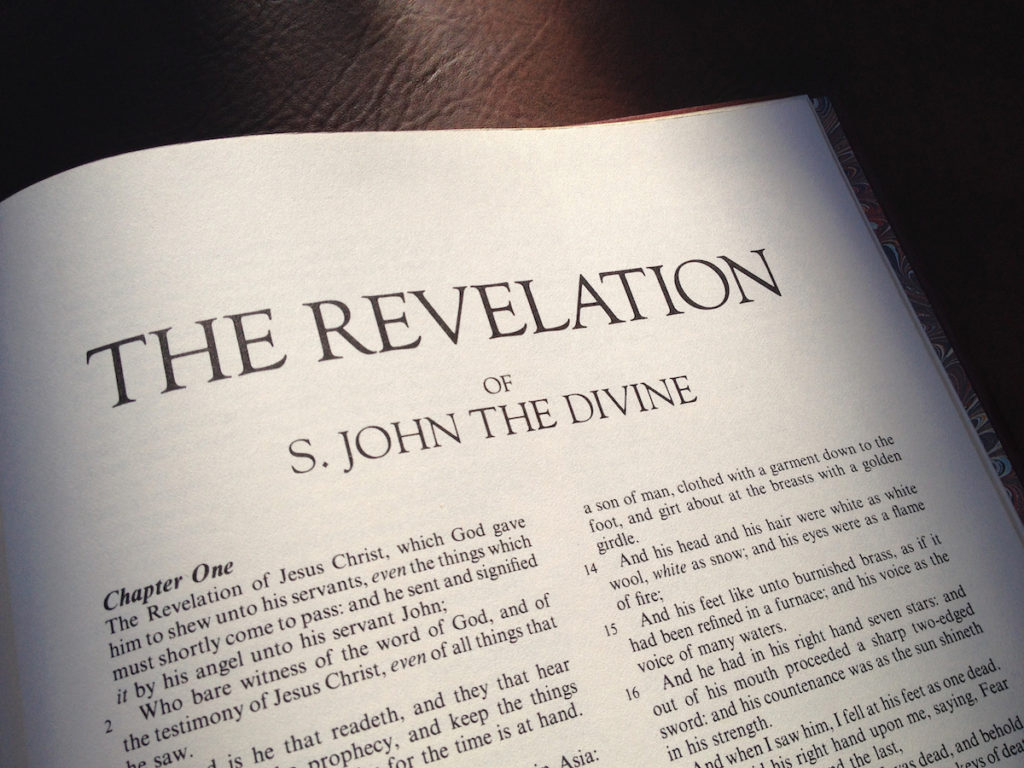
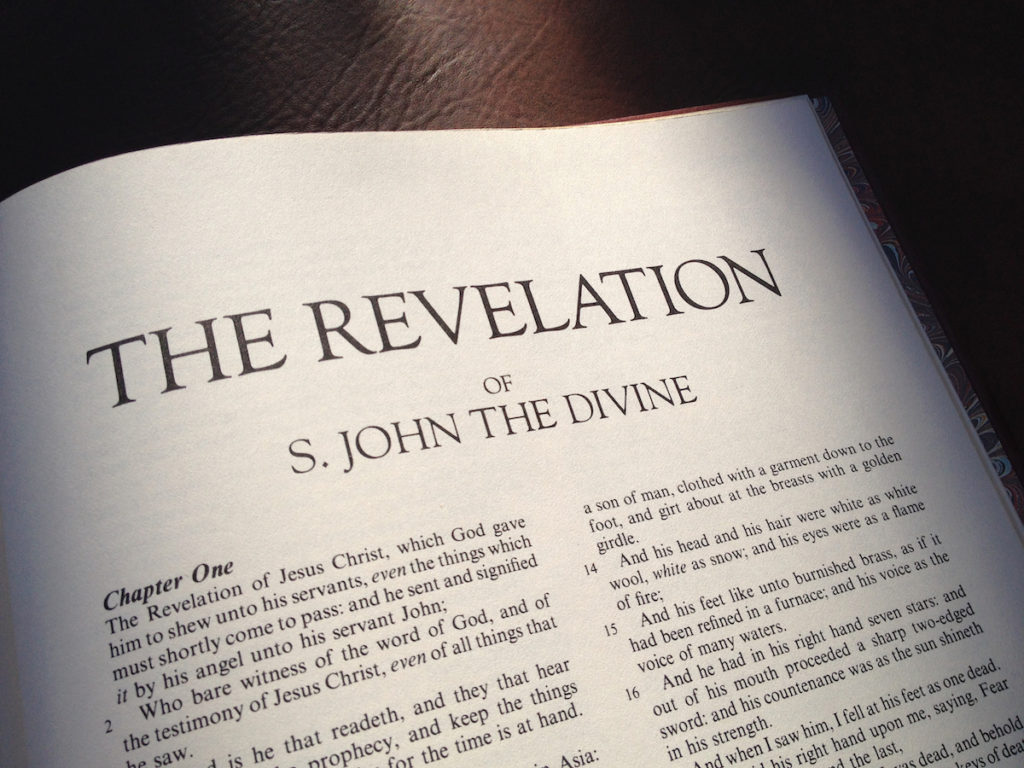
The Koine Greek name for the Book of Revelation is apokalupsis from which our English word apocalypse derives, is a word that in the minds of most people conjures up visions of horrific and cataclysmic events in which there is war, political and environmental upheaval involving mass death and destruction. This idea is a misnomer however. Though the Book of Revelation indeed foretells of a cataclysmic end times scenario, the Greek word apokalupsis literally means “laying bear, making naked; a disclosure of truth, instruction concerning things before unknown, manifestation, appearance,” and hence our English name for this book: Revelation. This meaning is made clear in the first verse of this same book.

The Revelation of Yeshua the Messiah, which Elohim gave unto him, to shew unto his servants things which must shortly come to pass; and he sent and signified it by his angel unto his servant John.

The Book of Revelation is just that—a revelation of things to come to pass, which Yeshua is making known to his servants (plural). This includes you and me. 

Although, I don’t claim to have all or even much understanding pertaining to this book, I here share with you what I enlightenment I have been given to this point on several key topic. This is simply my understanding to this point until YHVH by his Spirit gives us more understanding. Until then, may we remain as little children, pale in hand, on the seashore of the vast ocean of YHVH’s unfathomable wisdom and knowledge in faith waiting for him to fill our buckets with more of his divine revelation.

What Should Be Our Perspective on the Book of Revelation?

On another note, there are those who champion the view that events of the Book of Revelation are primarily in the past tense. That is to say, Revelation records the events leading up to and following the destruction of the Jewish temple and Jerusalem in A.D. 70. The view that the events of Revelation were mostly fulfilled in the first century is called the preterist view, and those who support this position draw our attention to verses which point to the immediacy of the prophecies of the book being fulfilled—to events which must “shortly take place” (i.e. Rev 1:1, 3; 22:6, 10). 

The problems with this view are several. To make it work, most of the prophecies of the book have to be allegorized. As such, preterists believe that little if anything Revelation says can be taken literally. The purpose of Revelation, they say, was to comfort the churches in Asia Minor in light of the persecutions they were enduring (Rev 1:4). While much in Revelation is obviously allegorical, to say that it all is, is simply applying a broad brush approach and, in my opinion, denies some of the basic rules of biblical interpretation. My approach is to take what the book says to be literal, unless the context or passages elsewhere in the Scriptures give us reason to interpret it symbolically.

The second major objection I have to the preterist view is that since most scholars agree that John wrote this book in the last decade of the first century, this view would make John’s Book of Revelation a record of history, as opposed to a prophecy “of things which must shortly come to pass,” which is contrary to the book’s purpose as the first verse of the book clearly states. The preterist view cannot accommodate this reality unless scholars can prove that John wrote all of his book before A.D. 70, a date which is at odds with the records of the early church fathers, which place the date of the books writing in the 90s. 

Why I’m Not a Preterist

Preterism is the Christian eschatological (understanding of end time events) concept that all Bible prophecy has already been fulfilled including Yeshua’s Matthew 24 Olivet Discourse and those prophecies in the book of Revelation.

Continue reading
 

The Purpose of the Epistle of Hebrews—Lift YOUR Eyes Upward to Our Heavenly High Priest

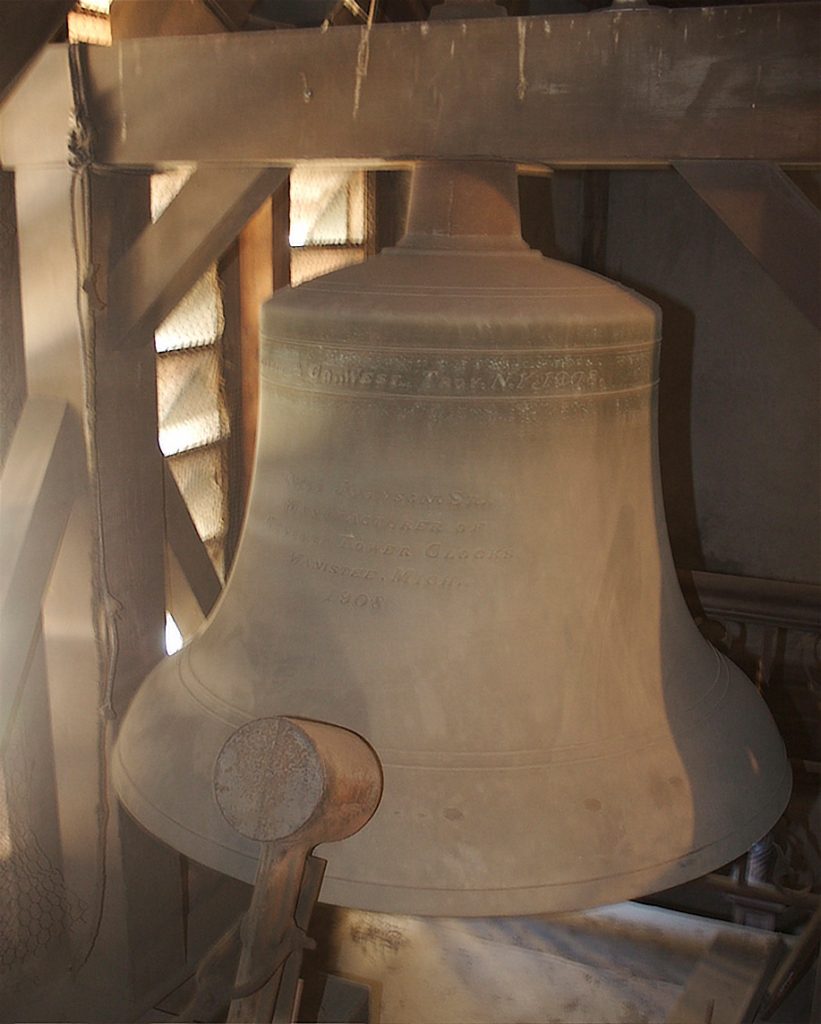
Let the Truth of YHVH’s Word ring clearly like a bell in the hearts and minds of Truth-seekers everywhere!

What follows you have probably never heard before. Hopefully the truth of it will ring loudly like a bell in your heart and mind!


What is the main theme of the Epistle to the Hebrews? For certain, The the author is not debating about the validity of the Torah-law of Elohim. To say that he is to miss the whole point of the book. Rather he is discussing whether the Levitical system with its sacrifices and various rituals involving the Tabernacle of Moses (and later the temple in Jerusalem) is still valid or not.

Why is this such an important issue in the author’s mind? Simply for this reason: the temple is about to be destroyed or has already been destroyed along with its Levitical and sacrificial systems. This begs the question: How are the saints of Yeshua now to view the temple with its rites?

There is debate among scholars as to when this epistle was written, but it is commonly accepted that it dates to around A.D. 70, which is when the Romans destroyed the temple in Jerusalem along with its sacrificial system and Levitical priesthood. Therefore, of paramount importance in the mind of the author is the issue of the relevance, if any, the Levitical and sacrificial systems had in the life of the disciple of Yeshua. We see throughout this epistle that it is the author’s position that these systems in every way pointed to Yeshua and were thus fulfilled by his life, death, resurrection and current intercession on behalf of the believer at the right hand of his Father’s throne in heaven. 

Again, what is not an issue in the author’s mind is whether YHVH’s Torah-law is valid or not. This was never the issue in this epistle, even though the mainstream church has erroneously and traditionally made it the issue as its advocates twist and mangle the Scripture to say what they want it to say instead of what it actually says. Just because a thousand, million or billion people scream in unison that two plus two equals five, that man descended from the cousins of apes or that the earth is flat does not make it so. The same is true when Christian theologian existing in an echo chamber of their own construction scream and declare that the book of Hebrews is in some way invalidating the Torah.

True, the Levitical system was an aspect of Torah, but it was given to the children of Israel after YHVH had initially revealed his Torah-law to them at the foot of Mount Sinai. The Levitical and sacrificial systems were temporarily added to the overall Torah (Gal 3:19) after the golden calf incident as a way to help the Israelites spiritually by preventing them from falling into idolatry again. It was designed to guide them in the path of righteousness. The Levitical system was, therefore, a temporary parenthetical subordinate subset of the Torah in place until the Messiah would come to which the whole system pointed. Whether it was no permissible to steal, murder, lie, commit adultery, worship idols, practice witchcraft, have sex with animals, keep the Sabbath and biblical feasts was never the issue of this book or anywhere else in the Bible including Paul’s epistles. 

At issue in the author’s mind is whether the temple service was still needed some forty years after the death and resurrection of the Messiah, who himself predicted the demise of the temple along with its sacrificial system. Was the impending destruction at the hands of the Romans the  fulfillment of Yeshua’s prophecy? Until that time, the temple in Jerusalem had played such a central role in the lives of religious Jews everywhere including, to some degree, the apostles (as the book of Acts indicates) that the idea of its irrelevance is an issue of extreme importance and to be carefully considered. The author of Hebrews is wrestling with this whole idea and because the temple’s destruction is imminent (assuming Hebrews was written before A.D. 70), or had just happened (if the epistle was written just after A.D. 70), he has to convincingly make the point, from Scripture, that the temple and its rites are now irrelevant for the disciple of Yeshua. Therefore, in ana effort to prove that the Levitical and sacrificial systems are now longer needed, the whole book of Hebrews is about transferring the believers’ focus away from a physical and earthly temple with its rites and ceremonies and, instead, to lift the focus of the saints’ collective gaze into the heavens where the true and eternal temple of Elohim exists (after which the earthly tabernacle and temple were patterned) and where Yeshua the Messiah is currently ministering as our Great High Priest. This is the whole purpose of the Epistle to the Hebrews—to glorify Yeshua the Messiah and to fix our attention on him and him alone!


Hebrews 1–4—Are YOU in the true rest of YHVH?

Hebrew 1

Hebrews 1:9, Loved righteousness and hated lawlessness. To the degree that we love righteousness, we will hate Torahlessness and vice versa. To love righteousness and the laws of Elohim is to love his him, to love his Word and to love Yeshua. To the degree we disdain his Torah is the degree that we disdain him and Yeshua the Messiah, the Word made flesh regardless of our protestations to the contrary, regardless of our religious activities and regardless of how much we throw our emotions at him and call it praise and worship. Obedience to his Torah-Word from Genesis to Revelation is barometer indicating the depth of our love for him.

Hebrew 2

Hebrews 2:1-2, Lest we drift away. One can lose one’s salvation (see also 1 Cor 9:27; Heb 6:4–6; 10:26 cp. 1 Tim 1:19; Matt 13:20–22) if one neglects (v. 2) and doesn’t carefully guard and maintain their spiritual relationship with YHVH and his Word.

Hebrews 2:7, A little lower. See notes at Ps 8:5.

Hebrews 2:18, He is able to aid. To receive the aid of Yeshua, our Great High Priest, all we have to do is to humble ourselves and recognize that we are sinners and need help, and then to ask him for help as well as to avail ourselves of the help that he has already give us, namely, the light of his Word, which, if we study and feed on, will guide us and keep us in the straight and narrow path. 

Hebrew 3

Hebrews 3:3, He who built the house. Yeshua is the builder of his spiritual house—the church. Interestingly, his earthly father trained him to be a carpenter. Often the physical or natural and spiritual dimensions parallel each other. The idea of Yeshua being the Creator of all things including humanity (Heb 1:10; John 1:3, 10) and being the builder of his spiritual house provides us with an important truth. How is it that the death of Yeshua—one human—could pay for the sins of the whole earth—many humans? Simply this. Yeshua in his pre-incarnate state as the Word of Elohim created all humans. His life is more valuable than the lives of all those he created, since he is the Creator, even as life of the builder of a house has more value than all the houses he builds. This is why Yeshua could pay for the sins of the whole world, and why his life was more valuable than those of all the humans that have ever lived in the history of the world.

Hebrews 3:6, Hold fast…firm to the end. Ultimate salvation—the redemption of our bodies, our glorification and inclusion in the family of Elohim (or theosis) occurs after we have overcome the world, the flesh and the devil and remained firm to the end. The end is either our physical death, or our spiritual transformation or the first resurrection at Yeshua’s second coming.

Hebrew 4

Hebrews 4:2,The gospel was preached. The children of Israel heard the gospel message even as it was preached in the time of Yeshua, the apostles and in our day. They were without excuse for not accepting the gospel message. As the writer goes on to show, they rejected it because of the hardness of their hearts. People still reject the gospel today for the same reason.

Hebrews 4:3, 5, 8, 9, 10, 11, Rest. The term rest is also a biblical Hebraic idiom or Hebraism (see Deut 12:9, 10; 25:19; 1 Kgs 8:56; 1 Chron 23:25; Ps 95:121; 1 Thess 1:7) for the rest from one’s enemies and that one obtains once one has come into the promised land of their inheritance that YHVH has prepared for his saints. For the Israelites, this was the physical Promised Land in which they settled after having defeated the Canaanites. For the saint, ultimately, this is the Promised Land of the kingdom of Elohim and the New Jerusalem, which they will obtain in the final sense at the second coming of the Messiah when they receive their glorified bodies at the resurrection during the millennium, of which the seventh day Sabbath is a prophetic picture.

Hebrews 4:9–10, Rest. The Greek word sabbatismos means “a keeping of the Sabbath” and is derived from the Hebrew word sabbaton meaning “the seventh day or Sabbath.” In Hebrew the word for Sabbath is shabbat, which originates from the root verb shabat meaning “to cease, desist, rest.” Those who have entered into the Sabbath rest do so by following the example of YHVH the Creator who not only rested spiritually, but literally rested on the seventh day after the creation. He set this as an example for man to follow. 

Some people see this verse in Hebrews only as a mandate to rest from their spiritual works by putting their faith in Yeshua. This is only partial rest. We must follow the example of YHVH who literally rested on the seventh day as well. 

Yeshua in his preincarnate state was YHVH the Creator (Heb 1:10; John 1:3, 10). He kept the Sabbath as YHVH the Creator, and as Yeshua the Messiah as well. (If Yeshua didn’t keep the Sabbath, then he was a sinner in that he violated the law, and is not our perfect, sin-free Savior! If he kept the Sabbath, and the Gospels record that he did do so, we are to imitate him as his obedient disciples and imitators by doing what he did (1 Cor 11:1; 1 John 2:6). 

Some deceptive Christian “teachers” will state that Yeshua broke the Sabbath by quoting John 5:18. First, again if Yeshua had broken the fourth commandments, he would have become a sinner (1 John 3:4), but we know that he was sinless (Heb 4:15), so this was not the case. Second, John records that it was the misguided Jews who were accusing Yeshua of sin, even though he had done nothing to break any of the Torah’s laws regarding the Sabbath. Third, the word “break” as used in John 5:18 is the Greek word luo, which in its primary definition means “to loosen literally or figuratively.” Yeshua was “breaking” or “loosening” the man-made, extra-biblical laws or constraints that the Pharisees had put on people with regard to how to keep the Sabbath. Yeshua was brushing aside or “breaking” or “loosening” some of these non-biblical and man-made restrictions to bring people back to a Sabbath observance that was less burdensome and restrictive. He in no way was violating the Torah, which would have made him a sinner.

When we rest both physically and spiritually, we’re walking out a higher level of truth by walking out both the letter and the spirit of YHVH’s Torah-law as Yeshua taught us to do in his Sermon on the Mount (Matt 5:17–48), and as such, we’ve positioned ourselves before YHVH to receive more divine revelation from him. 

In other words, the more we obey him faithfully in love, the more truth he can entrust us with for safekeeping, for he knows we won’t take for granted or trample his precious truth nuggets. To those who are faithful in much, YHVH gives more. That’s how it works in his spiritual economy. 

To this day, many of the religious keep the Sabbath by physically resting on this day, but they have missed the revelation of spiritual rest in Yeshua, while the mainstream Christians have rejected the physical Sabbath rest but they accepted the spiritual rest in the Messiah. Both sides have half the truth. Let’s put the two halves together and walk out the full truth—both the physical and the spiritual side of the Sabbath as Yeshua and his disciples did! 

Keeping the seventh day Sabbath with this fuller understanding is another way of connecting the gospel message to its Hebraic, pro-Torah roots.

Hebrews 4:12, Soul and spirit. (See notes at 1 Thess 5:23.) Here the writer attests to the separateness of the soul and the spirit of man. They are not indistinguishable from each other.

Hebrews 4:14,Great high priest. How could Yeshua, a non-priest (non-cohen) be our Great Heavenly High Priest, since he was from the tribe of Judah and not from the tribe of Levi, much less a descendant of Aaron? (See notes at 7:14; Exod 19:2, 4). 

Hebrews 4:16, Come boldly. The veil (Heb. porechet) in the Tabernacle of Moses separated the compartments of the holy place and the holy of holies which housed the ark of the covenant and the was where the glory or presence of Elohim resided. The holy of holies pictured the heavenly throne room of Elohim, and only the high priest could enter it once a year on the Day of Atonement (or Yom Kippur). It was forbidden for anyone else to come into the holy of holies (except Moses, who as a prophetic picture of Yeshua the Messiah, who often went there to receive instructions from Elohim). That veil separating Elohim from the people thus preventing the common person from entering into the holy of holies was miraculously ripped in two when Yeshua died on the cross (Luke 23:45), thus symbolizing that now the way was open way for every saint to come boldly through the “vieil” of Yeshua’s flesh (i.e. through the atoning blood of and a personal spiritual relationship with Yeshua; Heb 10:20) into the very presence of YHVH Elohim.