Blog Scripture Readings for 5/13 through 5/19/12

Aside

For the sixth week of seven weeks of the 50-day count of the omer.

Numbers 20–26; Ezekiel 5–18; and Psalms 45–51

Most of this week’s blog discussion points will be on these passages. The full year’s Bible Reading Schedule can be found on the right sidebar under “Helpful Links.”

If you have general comments or questions on the weekly Scripture readings not addressed in a blog post, here’s a place for you to post those. Just use the “leave a reply” link below.


How the Red Heifer Relates to Yeshua’s Death on the Cross

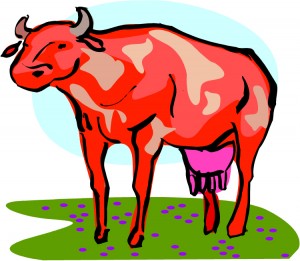
How does the mysterious ritual of the red heifer relate to Yeshua’s atoning death on the cross? Below is a list points of how Yeshua’s death fulfilled every aspect of the curious red heifer ritual.

  • The heifer was to be pure red in color (Num 19:2). Red is the color of the stain of sin (Isa 1:18, “though your sins be as scarlet … red like crimson.”). Red is the color of the tzaaras skin infection dealt with in Leviticus 13:19, 24, 42–43. Red is also the color of clay earth out of which Elohim formed the first man naming him Adam (Strong’s H119/120) which means “ruddy, red, bloody or rosy in color.” Red is also the color of the Second Adam, Yeshua the Messiah, who was literally red, while being covered in his own blood while hanging on the cross as our sin sacrifice.
  • The red heifer was to be spotless and without blemish or defect (Num 19:2). More care was exercised in choosing a spotless cow than in any other sacrifice. This spotless purity represents Messiah Yeshua, the perfect, and sinless sacrifice.
  • The red cow had borne no yoke (Num 19:2). Similarly, Messiah was neither under the yoke of sin nor was beholden to or under bondage to any human, institution, government, religious system or anything else of an earthly nature.
  • The heifer was slain outside of the camp (Num 19:3). During the first and second temple eras the red heifer was slain on the Mount of Olives by the priests. The Mount of Olives was located off the Temple Mount and outside the walls of the city of Jerusalem (see The Pentateuch/Numbers, p. 329, by Samson Hirsch). Messiah Yeshua was sacrificed outside of the city gates of Jerusalem (Heb 13:12) and very possible, contrary to Christian tradition, on the Mount of Olives from which the front of the temple and the veil was clearly visible. Remember, the rent veil was visible from the place of crucifixion (Matt 27:51, 54; Mark 15:38–39).
  • The red heifer was to be slaughtered and then totally burnt (Num 19:5). This represents the burning and agonizing death and suffering of Messiah on the cross. Messiah suffered in body, soul and spirit (Isa 53) to atone for man’s sin.
  • The red heifer is just one more of the many shadow pictures that point to the Suffering Servant Messiah found in Torah. Other of these antetypes or prophetic shadow-pictures include: Continue reading →
 

Is Celebrating Shavuot (Pentecost) Optional?

Is celebrating the biblical feast of Shavuot (aka the Feast of Weeks or Pentecost) optional for the born-again, redeemed Israelite believer in Yeshua the Messiah in the 21st century?
The short answer is, “NO!” unless one considers the clear commands of the Word of Elohim to be merely suggestions and not commands. “NO!” unless one rejects following the examples of Yeshua, the Apostle Paul and the Book of Acts followers of Yeshua. “NO!” unless one has become so conditioned to following the traditions of men that have made of non-effect the Word of Elohim that they have become blind and deaf to the clear truth of the Scriptures.

You see, we live in an age where the majority of so-called “Bible believers” and church people are more concerned about feelings, popularity, majority consensus, what others think, having fun, being entertained, the lust of the flesh and eyes that most either don’t know what the Word of Elohim says, or don’t care. Oh, they will swear otherwise, but their actions speak louder than their words. Amos the prophet describes this spiritual sickness well when he referred to apostate Israel as suffering from a “famine of the hearing of the words of YHVH,” (Amos 8:11). You see, the word “hearing” in Hebrew is shema, which means not just “to hear,” but “to do and to obey” as well. It seems that nowadays, like then, a lot of folks hear, but few obey.

On May 27, 2012, we will be celebrating the biblical feast of Shavuot (Lev 23:15–22, Acts 2:1; 20:16). On this blog, and on our ministry website (hoshanarabbah.org) we have been promoting our congregation’s and our ministry’s Shavuot celebration to those in our local area (the Pacific Northwest U.S. region). Well, what prompted this blog post was an interesting response I received today from someone who thanked us for the announcement, but was sorry they couldn’t make it to Shavuot because they had a birthday party to attend instead.

So, I submit, once again, the question, is celebrating Shavuot optional? Let me list the reasons why it is not — according to the Word of Elohim:

  • Shavuot is a miqra kodesh (holy convocation) and sabbath when YHVH commands his people to stop whatever they are doing, gather together, and to meet with him on this day (Lev 23:1,15–21).
  • YHVH enacted Shavuot as a statute forever for his people Israel (Lev 23:21).
  • If you’re a follower of and believer in Yeshua then that makes you a son of Abraham (Gal 3:29), and an Israelite (Eph 2:11–19), and so the command to observe Shavuot applies to you. Only the heathens are exempted from this celebration, and that exemption isn’t without eternal consequences, for to not obey the Torah-commands of YHVH-Yeshua is sin (1 John 3:4), and the wages of sin is eternal death (Rom 6:23).
  • If you call yourself a Christian, Messianic, or a follower of Yeshua, then you’ll not want to risk being a hypocrite (or a sinner), but rather, you’ll want to do what he did and celebrate all of the biblical feasts including Shavuot. You’ll also want to follow the example of Paul who instructed us to imitate Yeshua as he imitated Yeshua by doing what Yeshua did (1 Cor 11:1). To imitate means to do exactly what someone else does. Paul celebrated Shavuot (Acts 20:16).
  • If you love Yeshua, you will be keeping his Torah-commandments (John 14:15) of which Shavuot is one.
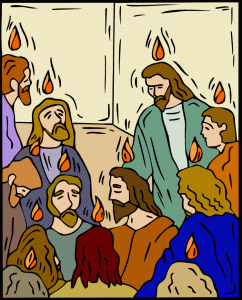
  • Some believers in Yeshua feel that we only need to do what he directly commanded us to do. Well, he commanded his disciples to tarry in Jerusalem until they were endued with power from on high, which occurred on the day of Pentecost (Luke 24:49; Acts 2:1–4). Therefore, he was commanding them to celebrate it, which they continued to do as we see from the example of Paul above.
  • Finally, if there is any biblical feast that has precedence to be celebrated in our day, it would be the Feast of Pentecost, since, as many of us have been taught in our churches, the NT church was birthed on this day. So, if it was good enough for them, why not for us? Moreover, it seems to me, that if there is any church group out there that should be leading the way in celebrating the biblical Feast of Shavuot or Pentecost, it should be the Pentecostals, right?

So now what’s your excuse for not celebrating Shavuot as YHVH Elohim in the Scriptures commands?

 

Tzitzits Encounters of the Spiritual Kind

Numbers 15:37–41, Put a blue thread in the tassels of the corners. In this passage of scripture, YHVH instructs the Israelites to wear a tassel of blue thread attached to the four corners of their garments. Why? So that when they would look on these tassels they will remember to do all the commandments of YHVH and to be set-apart (or holy) unto Elohim. They were to wear tzitzit as a sign of being set-apart forever!

The tassels or tzitzits are not unlike the wedding ring one wears as a physical and outwardly visible reminder of one’s marriage vows and commitment to one’s spouse.

Yeshua wore tzitzits (see Matt 9:20; Mark 14:36; the Greek word for hem means “tassel”).

An unintended benefit of wearing tzitzit—other than fulfilling the Torah command to do so—is that when people see you wearing them, they will often ask you what they are. This has given us many opportunities to share the message of the Hebrew roots of the Christian faith with those around us. Though not their primary purpose, tzitzits can, nevertheless, become an evangelism tool. This has happened to me many times.

Please share with the readers of this blog spiritual encounters you have had while wearing your tzitzits.

For more information on the law of the fringes, read my article on the subject at http://www.hoshanarabbah.org/pdfs/tzitzit.pdf.


Celebrate Shavuot / Pentecost With Us!

YOU ARE INVITED!

Memorial Day weekend (May 25–27) this year also happens to be the biblical Feast of Weeks, Shavuot or Pentecost—one of YHVH’s commanded festivals (Lev 23:15–22, Acts 2:1; 20:16). 

You are invited to join us in Canby, Oregon (just south of Portland) for this weekend-long event. For details and registration, go to http://shavuotnw.org/.


Counting Down the Omer—From Slavery to Divine Empowerment!

From the Depths of Slavery to a Kingdom of  Priests

YHVH’s command for us to count the omer as a countdown to the Feast of Weeks or Shavuot (or Pentecost, Lev 23:15–16 and Acts 2:1) memorializes the Israelites journey from spiritual babyhood to adulthood. During this 49-day count, Israel ascended from out of the depths of slavery and suffering in Egypt, was baptized in the Red Sea, and then arrived at Mount Sinai—a place of a spiritual standing before YHVH as a kingdom of priests (Exod 19:6). It was there that YHVH gave them his instructions in righteousness—the Torah on Shavuot. This time period represents Israel’s passage from slavery to freedom. They came out of slavery permeated with the leaven—the sins, values, and pagan concepts—of Egypt leaving it all behind as pictured by the Feast of Unleavened Bread. YHVH gave Israel 49 days to overcome and to get rid of the impurities of Egypt, and to  become the nation Israel—a holy priesthood (Exod 19:6) and the bride of YHVH (Ezek 16:8; Jer 2:2; 31:32). There, at the foot of Mount Sinai, YHVH wanted them to become his ambassadors to this world of his heavenly kingdom and truths.  Continue reading →


Blog Scripture Readings for 5/6 – 5/12/12

Aside

For the fifth week of seven weeks of the 50-day count of the omer.

Numbers 12–19; Jeremiah 43–52; Ezekiel 1–4; and Psalms 38–44

Most of this week’s blog discussion points will be on these passages. The full year’s Bible Reading Schedule can be found on the right sidebar under “Helpful Links.”

If you have general comments or questions on the weekly Scripture readings not addressed in a blog post, here’s a place for you to post those. Just use the “leave a reply” link below.