Blog Scripture Readings for 5/27 through 6/2/12

Aside

Numbers 34–36; Deuteronomy 1–5; Ezekiel 33–46; and Psalms 59–65

Most of this week’s blog discussion points will be on these passages. The full year’s Bible Reading Schedule can be found on the right sidebar under “Helpful Links.”

If you have general comments or questions on the weekly Scripture readings not addressed in a blog post, here’s a place for you to post those. Just use the “leave a reply” link below.


Meeting Your Maker…On Pentecost!

A Study on Exodus 19—Are You Ready for Pentecost?

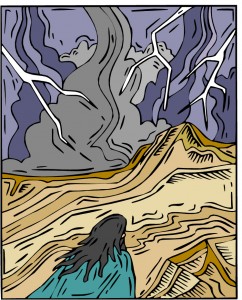
On Shavuot or Pentecost, YHVH gave his people Israel the Torah at Mount Sinai. But before they could see his glorious manifest presence, hear his voice, and receive his Word, they had to prepare themselves to meet him. Are you preparing yourself to meet YHVH this coming Sunday—on Pentecost?

An invitation. In this chapter, YHVH invites his people to come near to him, to receive his Torah, and to enter into a spiritual relationship with him. He had just delivered them from their sins, suffering and bondage when he led them out of Egypt (v. 4). He now offered them enticing blessings and status among the nations of the world (v. 6) if, and only if, his people would agree to his terms and conditions (v. 5).
But he would not allow his people to accept his benefits on their terms, but only on his terms. This is where men and religious systems have missed it: they want to accept YHVH on their own terms, not YHVH’s terms. Such is the religion of humanism—that man knows better than YHVH what is good for him, which is the religion the serpent pawned off on the first man and woman at the tree of knowledge. The problem is that accepting YHVH on our terms is called sin, which leads to misery and eventually to eternal death!

There are preconditions to meeting with YHVH and coming into relationship with him—coming to his high and holy mountain, his place of abiding, and his presence. Coming to this place is not without cost. David talks about who can come to the mountain of YHVH in Psalms 15 and 24. Only those who have clean hands and pure heart and who abstain from sin.

YHVH told the children of Israel that they could approach him and become his special people if they would meet certain conditions, and only then would he bless them (v. 5–6).

Even after the people had agreed with his terms (v. 8), after they had accepted him as their Savior when they put the blood of the lamb on the door posts of their homes resulting in the judgments of YHVH passing over them (Exod 12), YHVH’s blessings could come only after they had met certain requirements. Salvation is based on faith and grace alone, but rewards and blessings come based on obedience to the commandments of Elohim (Matt 5:19). To receive YHVH’s blessing, the Israelites had to consecrate themselves to him (vv. 10,14). This involved putting away the filth of the world (symbolized by washing their clothes) along with men’s carnal passions (symbolized by abstaining from sexual relations with their wives, vv. 10, 14–15). Graciously, YHVH gave them two days to accomplish this (v. 10). They had to get ready to meet YHVH (v. 11). One can’t expect simply to waltz into the presence of the Mighty King of the Universe in a casual and haphazardly manner!

YHVH had additional protocols that the people had to follow to come into his presence. Boundary stones were set up at the base of the mountain (v. 12). A death penalty came upon any who crossed those boundaries and came presumptuously into the presence of the Creator of the Universe (vv. 13, 22, 24). Moreover, before they could come into the presence of the Almighty, the fear of YHVH had to be established in the hearts of the people—something that is entirely lacking among most people in our generation including those in the church!

It was then and only then after the Israelites had agreed to meet YHVH’s terms and conditions, after having consecrated themselves for two days prior, and then set up boundary stones at the base of the mountain that the fire and glory of YHVH fell upon the mountain for all the people to see. It was then that YHVH hand delivered to his chosen and consecrated people his precious instructions in righteousness—the Torah.

 

Understanding the Feast of Weeks (Shavuot)

Shavuot is the third of the seven festivals (after Passover and the Feast of Unleavened Bread) of YHVH and occurs in the late spring of the year.

Passover pictures coming out of one’s spiritual Egypt or the world, putting faith in Yeshua the Messiah, and having one’s sins covered by the blood of Yeshua the Lamb of Elohim. As one comes out of the world and turns one’s life over to lordship of Yeshua, one turns from a life of sin and turns to loving and obeying the commands of Yeshua (John 14:15). In other words, one must leave one’s sin (as pictured by leavening in bread) in Egypt, and live a new sin-free life under Yeshua. The Feast of Unleavened Bread pictures this process of de-leavening one’s life of sin, and “eating” the unleavened bread of YHVH’s Word.

However, humans are not able to remove sin from their own lives by their own efforts anymore than one can pull oneself up by the ­bootstraps. Sin is too much a part of our mind, will and emotions that we need the working and enabling power of YHVH’s Set-Apart Spirit (Ruach HaKodesh) in our lives to bring sin to light and to empower us to overcome it. This happens as we begin to feed upon the Word of YHVH-Yeshua (the Bible) and little-by-little our lives come into conformity with that Word and with the life of Yeshua. He is the Word of YHVH made flesh (John 1:14; Rom 8:29). This is pictured by the children of Israel receiving the words and instructions on how to live a set-apart and sanctified life (contained in the Torah-law) of YHVH Elohim at Mount Sinai during the Feast of Weeks. This was repeated during the apostolic era on the Day of Pentecost as Yeshua promised to send the Comforter to live inside of redeemed believers aiding them at arriving at the truth of YHVH (John 14:16, 26; 15:26; 16:7, 13). This promise was fulfilled on the Day of Pentecost (Acts 2).

In the Bible, Shavuot is also known as the Feast of the Harvest of the First Fruits (Exod 23:16), Day of First Fruits (Num 28:26) and the Feast of Weeks or Shavuot (which is Hebrew for weeks, Exod 34:22; Deut 16:10, 16; 2 Chr 8:13). Shavuot falls fifty days “from the day after the [weekly] Sabbath” (NKJV) that falls during the Days of Unleavened Bread, and hence the derivation of the name Pentecost (meaning “to count fifty”) as recorded in the Testimony of Yeshua (or New Testament/NT, Acts 2:16).

YHVH through his Torah (the law of Moses) instructed his people that Shavuot was…

  • a day of rest where laborious or servile work was prohibited (Lev 23:21)
  • a commanded assembly (Lev 23:21)
  • a time when the priests offered up offerings and sacrifices (Lev 23:18–20)
  • a time when all males were to bring the tithes of the increase of their income (Exod 23:14; Deut 16:16)
  • a time when the priests were to offer up as a wave offering to YHVH two loaves of leavened bread made of the freshly harvested wheat (Lev. 23:17–20)
  • to occur where YHVH would place his name and all were to go there to celebrate it (Deut 16:11)
  • a time of rejoicing (Deut 16:11)
  • to be forever (Lev 23:21)
  • The early first-century, Book of Acts believers celebrated Shavuot (or Pentecost) in Acts 2:1 as did Paul (Acts 20:16).

Happy Shavuot!


Why Celebrate YHVH’s Feasts?

Shavuot/Pentecost is next Sunday (May 27, 2012). Are you ready to celebrate this biblical feast of YHVH? Here are seven reasons from the Bible why you should:

  1. YHVH’s feasts are a prophetic shadow-picture of things to come (Col 2:16–17; Heb 10:1). When they were given to ancient Israel, they pointed forward to future events that would occur to that nation. The spring feast days, for example, pointed to Messiah’s first coming, while the fall feast days point to his second coming leading into the Messianic Age (or Millennium) and into eternity beyond.
  2. All the feast days point to Yeshua. The name Yeshua means “salvation” and these days all point to the various steps along the path of salvation that redeemed believers find themselves on.
  3. Many of the feast days point back to historical events that occurred in Israel’s history from which we can learn lessons and that are representative of our own spiritual journey (1 Cor 10:1–6,11).
  4. In the Scriptures, YHVH commands his people to keep the biblical feasts. They are called moedim, which is a Hebrew word meaning “divine appointment.” They are times when YHVH makes a spiritual appointment to meet with his people (Lev 23:1–2, 4). At that time, YHVH teaches his people about his wonderful plan of salvation or redemption of the world through Yeshua the Messiah.
  5. The feasts are in the Bible, which is the inspired Word of Elohim (2 Tim 3:16). He commands his people everywhere to obey his Word and to observe his feasts (Matt 4:4; Lev 23; Matt 5:17–20) forever (Lev 23:14, 21, 41; Mal 3:6; Heb 13:8)!
  6. The feast days set forth the pattern of heavenly things on earth (Heb 8:1–2, 5; 9:8–9, 23; Exod 25:8–9, 40; 26:30; Num 8:4; Ezek 43:1–6, 10–12).
  7. We as physical beings need physical means and methods to help us understand spiritual realities. YHVH gives us things to do in this physical dimension to help us to understand the supernatural (or spiritual) level (1 Cor 2:9–13).

 Happy Shavuot!


Blog Scripture Readings for 5/20 through 5/26/12

Aside

For the seventh week of seven weeks of the 50-day count of the omer.

Numbers 27–33; Ezekiel 19–32; and Psalms 52–58

Most of this week’s blog discussion points will be on these passages. The full year’s Bible Reading Schedule can be found on the right sidebar under “Helpful Links.”

If you have general comments or questions on the weekly Scripture readings not addressed in a blog post, here’s a place for you to post those. Just use the “leave a reply” link below.


Shavuot — What, Why and When?

On May 27, 2012, we will be celebrating the biblical feast of Shavuot (aka Pentecost and the Feast of Weeks) as did the ancient Israelites, and the Book of Acts believers, and Paul (Lev 23:15–22, Acts 2:1; 20:16).

What is Shavuot All About?

In the roughly 49 days between Passover (Pesach) and the Feast of Weeks (Chag haShavuot), a momentous spiritual dynamic occurs. This period of time is comprised of forty-nine days or seven days of seven weeks, which is seven times seven—the biblical number for complete or full perfection. Add one day and you arrive at Pentecost. Fifty is the biblical picture of jubilee picturing redemption from the enslavement to this world.

Historically, the children of Israel were redeemed from their sins by the blood of the lamb on the first Passover in Egypt. At this time, YHVH betrothed himself to Israel (Exod 6:7). YHVH then led them out of Egypt into the wilderness, and on Shavuot he married them at Sinai (Exod 24 cp. Ezek 16:8; Jer 2:2; 31:32). At the same time, YHVH gave them his Torah, which was their ketubah or marriage vows.

Shavuot is a picture of the bride of Yeshua the Messiah coming into full maturity spiritually and coming to marriageable age. She has gone from being a spiritual child and slave in Egypt to becoming the fully mature spiritual bride and queen of the King of the universe.

At the time of Yeshua, he betrothed himself to both houses of Israel on Passover. Then, on Pentecost, he then sent his Spirit, the Comforter, as a seal of this covenant. He hasn’t married this bride (that’s you and me) yet — something that occurs at his second coming. In the mean time, he has placed her in a 2000-years-long wilderness to get ready for him — to fall in love with him (to love him by keeping his Torah commands; John 14:15) by receiving his Torah into their hearts.

In the end times, he’s going to bring his bride (the saints) out of the wilderness of Babylon (called the Second Exodus), and they will repent of their Torahless ways. We are now getting ready for this day. Understanding the prophecies of the Bible that speak of these end-time events, and understanding who the principal players are (the two houses of Israel) is the key to insure that we’re ready for our Messiah — that we’ll be wise and not foolish virgins who have our lamps full of oil (the Torah and Spirit of Elohim).

Shavuot, along with Passover (Pesach) and the Feast of Tabernacles (Sukkot) are three times each year when YHVH commands his people to gather together to celebrate before him (Exod 23:14–17).

You can fulfill this command and move forward into your spiritual destiny by joining with your fellow redeemed Israelites from the greater Portland, Oregon
area at Shavuot NW in Canby, Oregon on May 27, 2012.
 

When Was the Shofar Blown in Ancient Israel?

Psalms 47:5, Elohim has gone up with…the sound of the shofar. The shofar is an instrument unique to the ancient Hebrews and their descendants. In the Scriptures, we see that the shofar played a highly significant role in Hebraic culture. Below are some examples this instrument’s importance:

  • The very first time the Scriptures
    records the blowing of the shofar occurring was to herald YHVH’s giving of theTorah at Mount Sinai (Exod 19:16, 19 and 20:18).
  • The shofar was blown to usher in Yom Teruah. This was a call to Sabbath rest, a memorial of blowing trumpets, a set-apart convocation and marked the beginning of a ten-day period of self-examination and repentance culminating with the Day of Atonement (Num 29:1).
  • The shofar was blown to herald the Day of Atonement (Yom Kippur) to announce the Year of Jubilee. Every fifty years slaves were freed, debts were forgiven and land returned to the original owner (Lev  25:9-10 [verse 10 says, “Proclaim liberty throughout all the land to all its inhabitants” and is inscribed on the Liberty Bell.”])
  • Shofars were blown continually by seven priests before the Ark of the Covenant, as part of the battle plan to take the city of Jericho as the Israelites were entering the Promised Land (Josh 6:4–20).
  • Shofars were blown by Gideon to rally Israelites soldiers against the Midianites and again by his 300 soldiers in their battle against Midian (Judg 6:34 and 7:8,16,20).
  • Shofars were blown to welcome the Ark of the Covenant (representing the anointed and glorious presence of YHVH among his people) while David danced with all his might (2 Sam 6:15; I Chron 15:14).
  • The shofar was blown when a king was anointed (1 Kgs 1:34, 39, 41; 2 Kgs 9:13).
  • The shofar was blown when the Israelites swore an oath of allegiance to YHVH (2 Chron 15:14).
  • The shofar was blown to rally the troops (Num 10:9–10; Neh 4:18, 20).
  • Israel sounded the shofar in the time of war to be remembered by YHVH, to be saved from its enemies,  and rout the enemies of Israel by sending fear into their hearts and confusion into their camps (Num 10:9–10; Judg 7:20–22).
  • The shofar was blown to announce YHVH’s presence and to praise and worship Him (Pss 47:5, 98:6; 150:3; Isa 18:3; 27:13; Rev 1:10)
  • The shofar was blown to call people to repentance or fasting (Isa 58:1; Hos 8:1; Joel 2:1)
  • The shofar was blown to sound the alarm of war (Jer 4:19, 21; 6:1; 17; 51:27; Joel 2:1, 15).
  • The shofar was blown to sound the warning of danger (Amos 2:2; 3:6; Zeph 1:16; Hos 5:8, 8:1; Ezek 33:2-9; Isa. 58:1). The sound of the shofar is compared to a prophet’s voice.
  • The shofar was blown by YHVH (Zech 9:14).
  • The shofar was blown by the angels (Matt 24:31; Rev 8:2,3; 9:1,13–14; 10:7; 11:15).
  • The shofar was blown to announce the coming of a Jewish bridegroom to fetch his betrothed — a picture of Yeshua returning for his bride, the saints. All the righteous living and the righteous dead will receive glorified, resurrected bodies and will meet him in the air at the sound of the shofar. (Compare Matt 24:31; 25:6; 1 Cor 15:52;
    1 Thess 4:16; Rev 11:15–18).

When the righteous hear the sound of the shofar these things should be called to remembrance. The shofar is a powerful reminder of the mighty right arm of YHVH outstretched on behalf of his people. The sound of the shofar sends tremors of fear throughout the camp of the enemies of YHVH and his people and rallies the righteous to take courage and to rise up against evil knowing they will be victorious through faith in YHVH Elohim.

When was the first time you heard the sound of the shofar? How did it impact your life? How has the shofar affected your life since then?