Psalm 81 and the New Moon/New Month

Please note: This brief study is an excerpt from a larger work I am about to publish on this blog entitled, “When Does the Biblical Month Begin? Refuting 14 Pro-Conjunction Arguments in Favor of the Visible Crescent.” Stay tuned. — Natan

A Study on Psalm 81 — Is the Word Keseh Proof That the Month Is Conjunction-Based? 
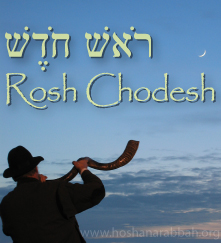
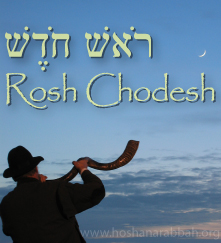
rosh_chodesh 2

A source of great controversy has been the meaning of the Hebrew word keseh as used in Psalm 81:3. The conjunctionists use this word as definitive proof that the new moon starts at the conjunctions. Complicating the issue is the fact that this word occurs only two times in the Tanakh, making its meaning all the more difficult to quantify. Let’s now look at the issues surrounding the meaning of this word.

New Moon Conjunctionist Assertion: In Psalm 81:3 (also Prov 76:10; Job 26:7–9), the phrase full moon is the Hebrew word keseh meaning “concealed, dark, hidden or covered.” This points to a full or dark new moon. The overwhelming use of keseh in the Tanakh (Old Testament) fits the definition above. Job 26:9 to backs up this claim, when you link it back to keseh in Psalm 81:3.

Refutation A: There are several problems with this argument. The word keseh/vxf in Job 26:9 is not the same keseh found in Psalm 81:3. These are two Hebrew words that sound similar and are transliterated the same. In Psalm 81:3, keseh/vxf (Strong’s H3677) ends in the Hebrew letter heh, while the Job 26:9 kiseh/txf (Strong’s H3678) ends with the letter aleph and has a completely different meaning.  This keseh means “seat (of honour), throne, seat, stool, throne; royal dignity, authority, power.” This different Hebrew word has nothing to do with concealing or covering. Some lexicons say that both words have the Hebrew word kasah as their root, but as we shall see below, scholars aren’t certain whether keseh derives from kasah or from a similarly sounding Aramaic loan word that doesn’t mean “concealed or covered” at all, but means “fullness or full moon” and hence the alternate reading in Psalm 81:3. Strong’s and TWOT both state that keseh/vxf in Psalm 81:3 can also be spelled keseh/txf, although it is vowel pointed differently and thus pronounced differently than the keseh/txf meaning “throne.” Both TWOT and Strongs list these words separately in their indexes, but the confusion comes when they list the alternate spelling of keseh (with the ending aleph/t under the heading of the keseh that Continue reading

 

Errant Teachings in the Hebrew Roots Movement Pt. 1

This video is an expose and refutation of some false and unbiblical tachings in the Hebrew Roots Movement. These include the lunar “Sabbath”, the boker to boker “Sabbath”, the conjunction new moon, polygamy and rejecting the deity of Yeshua the Messiah.


Tonight is the first day of the seventh month…

The new moon was not spotted in the land of Israel yesterday (Monday, Sept 14), which means tonight (Tuesday, Sept 15) will mark the beginning of the seventh month on the biblical calendar. This day also marks the beginning of the fall biblical feast season. HalleluYAH! Time to celebrate. It’s all good news, which we need in these dark times!

Yom Teruah (or the Day of Shouting/Shofar Blasts) is the biblical name for the traditional the Jewish holiday of Rosh Hashanah) is on the first day of the seventh month (Lev 23:23–25). This is a high holy sabbath day.

rosh_chodesh 2

On the tenth day of the seventh month will be Yom Kippur (the Day of Atonement, Lev 23:26–32).This year, it will be on Friday, Sep 25. This too is a high holy sabbath day.

Next, from the 15th to the 21st day of the seventh month (Sept 30 to Oct 6) will be Sukkot (the Feast of Tabernacles, Lev 23:33–43).

Finally, at the end of Sukkot will be an additional holiday called Shemeni Atzeret (or the Eighth Day, Lev 23:36, occurring on Oct 7). Hebrew roots and messianic people often overlook this high holy day sabbath, but it’s part of the Torah, and so we celebrate it.

All of these festivals are significant spiritually for the redeemed believer and are steps in YHVH’s plan of salvation. The fall feasts are also prophetic of events that will happen prior to and after the second coming of our beloved Messiah Yeshua.

For written instructional materials on these feasts, please go to http://www.hoshanarabbah.org/teaching.html#feast. For videos teachings about these feasts, go to our YouTube channel at https://www.youtube.com/user/HoshanaRabbah.

You may wonder why some people are celebrating these feasts on other days than the ones mentioned above. There are several reasons for this. I’ll briefly explain.

The rabbinic and orthodox Jews will be celebrating their feasts two days earlier. This is because their calendar is usually incongruent with occurrence of the visible new moon. How did they get off the biblical calendar, you might ask? For the answer to this questions, please read my article at http://www.hoshanarabbah.org/pdfs/new_moons.pdf.

Some people keep the biblical feasts on the astronomical new moon conjunctions, which is not the biblical way to determine the months. I explain this in the following article at http://www.hoshanarabbah.org/pdfs/vis_moon.pdf.

If you want a comprehensive understanding of the biblical calendar please read the following article at http://www.hoshanarabbah.org/pdfs/cal_demyst.pdf.

It’s important that we understand the biblical calendar issues, since there is a lot of confusion out there on the subject. Also, YHVH calls his feasts moedim or divine appointments, for it is then that he meets with his people. It’s important to do so when he has told us to do so, not when we choose to so.

Get a cup of tea  or coffee, find a comfortable chair and prop up your feet and get to reading on the subject of the biblical calendar. We have provide you some simple to understand resources to understand this subject. You’ll need to concentrate though and have your Bible handy so you can look up the verses yourself and prove that what we’re saying is the truth. You might need to read over some of the material a couple of times to wrap your brain around the concepts. I’ve tried to make it as simple as possible. It’s really not that bad. Once you understand it, you’ll have a firm foundations from which to go onward and upward in YHVH’s truth.

Understanding the biblical calendar and knowing when to keep the biblical feasts is part of the restoration of all things that must occur in conjunction with Yeshua’s second coming (Acts 3:21). By obeying YHVH and keeping his feasts on the calendar he established, you are part of the fulfilling of Bible prophecy and are helping to hasten Yeshua’s coming.


The Feasts, Yeshua the Sun of Righteousness and the Calendar

Leviticus 23, The Biblical Feasts. Yeshua the Messiah is the Light of the world or the Sun of Righteousness (Mal 4:2) or the Greater Light to show man the path of spiritual darkness of this world. The saints are like the moon or lesser light that reflects the light of the sun or the greater light into the darkness of this world.

Sun of Righteousness 16958560

The biblical feasts are calculated based on the lunations of the moon. They YHVH’s plan of salvation to show man the way to Yeshua who is spiritually the Greater Light as represented by the sun. The feasts are like a tract or sermon by which the saints preach the gospel message of salvation to the world. The saints as the lesser light reflect the message of salvation through Yeshua the Greater Light into the darkness of this world through their adherence to the biblical feasts. This is why the moon — the lesser light — is so pivotal to YHVH’s calendar and feasts.

Judah’s calendar is off; it’s not in accordance with the moon. It claims to be, but it’s not. At the same time, they’re not bring the gospel message of Yeshua to the world — only the doctrines of men and men’s traditions. Their whole message is askew and fails to reflect the Greater Light of Yeshua.

Similarly, the mainstream church tries to preach the gospel, but without understanding the moon, feasts and biblical calendar their message of the gospel is only a partial one and is also off.

A time may come in the future when the calendar and feasts will go off the sun and not the moon. This may occur when there is a new heaven and a new earth when Yeshua is ruling on this earth and he will be the only Light of the world. That time isn’t yet, though, for it’s still the saints’ job as the lesser light to be like the moon to reflect the truth of Yeshua, the Greater Light, to this world through a lunar-based calendar and the biblical feasts.


Happy Biblical New Year!

 And YHVH spake unto Moses and Aaron in the land of Egypt, saying, “This month shall be unto you the beginning of months: it shall be the first month of the year to you.” (Exodus 12:1–2)

IMG_1393

Abib barley has been found in the land of Israel. Today the new moon was sited from the land of Israel. This marks the beginning of the biblical new year — the first day of the month of the Abib (or Nisan).

Fourteen days from today (Saturday, March 4) will be Passover. Fifteen days from today (Sunday, March 5) will be the first day of the Feast of Unleavened Bread.

To learn more about the biblical calendar and the seven biblical feasts including Passover and the Feast of Unleavened Bread, go to http://www.hoshanarabbah.org/teaching.html#feast.

To download a printable copy of the biblical calendar, so you know when the spring feasts are, go to http://www.hoshanarabbah.org/calendars.html.


What is the Significance of the Abib Barley?

Every detail in the Scriptures is important.

The longer we study the Bible, the more our spiritual radar zeroes in on these seeming insignificant details and the more we see how they relate to other details elsewhere in the Scriptures. Pretty soon, the pieces of the puzzle fall into place, and like digging for gold, spiritual nuggets are discovered.

To the serious biblical studier, it becomes impossible to dismiss the Bible as simply another  religious book written by men. As more of these puzzle pictures form, one realizes that the Bible has been fearfully and wonderfully crafted by an intellect that is superior to that of any man. A small detail in Exodus 9:31 is another example of this as the following study will show.

Exodus 9:31, The barley was in the head. Barley was cultivated as a grain crop in ancient Egypt, as well as in Israel, and grows wild like a weed throughout the region to this day. Several passages in the Scriptures witness to the fact that the barley was the indicator of which month was to be the first month of the year for the Israelites, so that they could determine when the biblical feasts were to be observed.

Barley 32335508

Observe the month of Abib, and keep the Passover unto YHVH your Elohim: for in the month of Abib YHVH your Elohim brought thee forth out of Egypt by night. (Deut 16:1, emphasis added)

Please notice, the definite article the proceeding the phrase “month of Abib.” The state of the barley indicates a specific month in the spring. Months in the biblical Hebrew calendar have always been determined by the first visible sliver of the new moon from antiquity. This specific month is to be the beginning the biblical new year (Exod 12:2). The month of the Abib is not so much the name of a month as it is a description of the month. Below are listed the other three places in the Scriptures where this phrase is found.

This day came you out in the month Abib. (Exod 13:4)

You shall keep the Feast of Unleavened Bread: (you shall eat unleavened bread seven days, as I commanded thee, in the time appointed of the month Abib; for in it you came out from Egypt: and none shall appear before me empty). (Exod 23:15)

The feast of unleavened bread shall you keep. Seven days you shall eat unleavened bread, as I commanded you, in the time of the month Abib: for in the month Abib you came out from Egypt. (Exod 34:18, emphasis added on all)

What does the word abib in the phrase “the month of the Abib (or Aviv)” mean? The Hebrew word abib is found only six times in the Bible and is transliterated into the English (in the KJV) as “abib,” meaning “in the ear,” or “green ears of grain.” The Theological Wordbook of the Old Testament, defines the word abib or aviv as follows: Continue reading


What’s the Big Deal About Abib Barley? It’s in the Bible, so you need to know!

Exodus 9:31, The barley was in the head Barley was cultivated as a grain crop in ancient Egypt, as well as in Israel, and grows wild like a weed throughout the region to this day. Several passages in the Scriptures witness to the fact that the barley was the indicator of which month was to be the first month of the year for the Israelites, so that they could determine when the biblical feasts were to be observed.

Observe the month of Abib, and keep the Passover unto YHVH your Elohim: for in the month of Abib YHVH your Elohim brought thee forth out of Egypt by night. (Deut 16:1, emphasis added)

Barley in Israel  2

Please notice, the definite article the proceeding the phrase “month of Abib.” The state of the barley indicates a specific month in the spring. Months in the biblical Hebrew calendar have always been determined by the first visible sliver of the new moon from antiquity. This specific month is to be the beginning the biblical new year (Exod 12:2). The month of the Abib is not so much the name of a month as it is a description of the month. Below are listed the other three places in the Scriptures where this phrase is found.

This day came you out in the month Abib. (Exod 13:4)

You shall keep the Feast of Unleavened Bread: (you shall eat unleavened bread seven days, as I commanded thee, in the time appointed of the month Abib; for in it you came out from Egypt: and none shall appear before me empty). (Exod 23:15)

The feast of unleavened bread shall you keep. Seven days you shall eat unleavened bread, as I commanded you, in the time of the month Abib: for in the month Abib you came out from Egypt. (Exod 34:18)

What does the word abib in the phrase “the month of the Abib (or Aviv)” mean? Continue reading