A Vision for Sukkot in 2012

The following is Hoshana Rabbah Biblical Discipleship Resource’s vision for its Sukkot celebration it sponsors each year in Oregon. This year is our tenth anniversary. Read and be inspired…

A Prophetic Vision

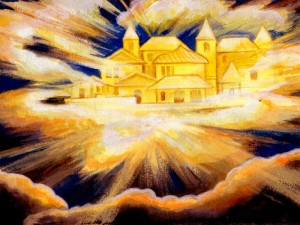
Imagine it. Babylon the Great is fallen, forsaken and abandoned. Good at long last has triumphed over evil. The saints celebrate their victory over their captive demonic oppressors. Eden of the distant past is recalled while the heaven on earth of the New Jerusalem is just over the next horizon. The Creator of the universe—the King of kings—makes his abode in Jerusalem. The Bridegroom Prince of Peace kisses his princess. They live happily ever after. This is the storybook ending to 6000 years of hell on earth!

These flash images—downloaded from heaven and archived in the prophecies Ancient Holy Scriptures—are about to begin leaping off the pages of your Bible. This is the Feast of Tabernacles (or Sukkot)—a week-long biblical festival and a foretaste of the age to come (to learn more about this biblical feast, go to http://www.hoshanarabbah.org/pdfs/sukkot.pdf).
At Sukkot Northwest 2012 in LaPine, Oregon, we will not only fulfill the biblical (Torah) commands to gather together and to joyfully celebrate Sukkot, but, at the same time, come prepared to experience a foretaste of the Millennium where the saints of the Most High shows their love for their Heavenly Bridegroom and for each other by gathering at the place where YHVH has chosen to place his name (Deut 16:13–15; 12:5–7,17–21; 14:23). Yes, in his Word, YHVH commands his people to celebrate Sukkot each year—forever (Lev 23:1–2, 34-41; Deut 16:13–17). Though Sukkot is a commanded assembly (Lev 23:34–36; Deut 16:13–15), it’s more like a doting father ordering his children to indulge themselves in the best and most exciting, other-worldly vacation of their lives! How can anyone refuse such an invitation?

Knowing our Heritage Prepares Us to Receive Our Inheritance

At Sukkot Northwest 2012, we, as redeemed Israelites, will rejoice in our biblical heritage as we memorialize the wanderings of our ancestors in the wilderness en route to the Promised Land. Continue reading →


Spanking Illegal in Delaware??

SPANK A KID, GET HARD TIME in Delaware

State adopts definition that ‘pain’ is ‘physical injury’

http://www.wnd.com/2012/09/spank-a-kid-get-hard-time/?cat_orig=faith

More and more, our society is setting itself in opposition to the Word of Elohim. Pray that YHVH will protect us from the godless rebels who rule over us, and that He will spare his saints from the severe judgments that will come against those societies which eschew his instructions in righteousness.

Proverbs 22:15,

Folly is bound up in the heart of a child, but the rod of discipline will drive it far from him.

Proverbs 23:13–14,

Do not withhold discipline from a child; if you punish him with the rod, he will not die. Punish him with the rod and save his soul from death.

Proverbs 29:15,

The rod of correction imparts wisdom, but a child left to himself disgraces his mother.


Are You Ready for Yom Kippur?

What is the spiritual significance of the biblical holiday of Yom Kippur? How does it relate to the life of the redeemed believer? What is its significance with regards to end-times Bible prophecy as it relates to the second coming of Yeshua? How do you celebrate Yom Kippur? To help to prepare you to celebrate this important appointed time (moed), read Natan’s article on the subject at http://www.hoshanarabbah.org/pdfs/yom_kippur.pdf

On the biblical calendar Yeshua and his disciples used, Yom Kippur occurs this year on Thursday, Sept. 27. The rabbinic Jews will celebrate Yom Kippur on Wednesday, Sept. 26 (in accordance with the Hillel 2 calendar from ca. 360 AD; for more information on this subject, go to http://www.hoshanarabbah.org/pdfs/new_moons.pdf).


The Bible on Divorce (and Remarriage)—A Sticky Wicket!

Matthew 19:8, Put away your wives. Most churches allow for divorce, but some do not permit remarriage under any circumstances. This is may seem like an extreme position, those who teach this can make a strong case that this is the Bible’s position.

Some churches teach that divorce and remarriage is acceptable in some instances, but not in others. This is where it gets sticky and depends on the interpretations of many clear as well as some unclear biblical passages. The truth is that each marriage and divorce case is unique. Each situation needs to be evaluated case by case based on biblical guidelines. My thoughts (below) on the subject of divorce and remarriage are only general in nature.

Some churches take the approach that all sins can be forgiven except the sin of divorce and remarriage. This would mean that divorce and remarriage is the unpardonable sin for which the blood of Yeshua is ineffective. This is a biblically untenable position.

The Scriptures say that YHVH hates divorce (Mal 2:16). Why? Because he had to divorce his own (spiritual) wife, Israel, because of her adultery against him (e.g., Jer 3:8). But he’s going to remarry her again, but this time it will be to redeemed Israel, which is a new, spiritually regenerated bride. Furthermore, Yeshua died to pay the price for Israel’s capital sin of adultery. On our website (http://www.hoshanarabbah.org/pdfs/divorce.pdf), I have a teaching about the prophetic implications of divorce where I discuss this issue.

The Torah allows for divorce and remarriage following certain protocols (Deut 24:1–4). Yeshua acknowledges this in the Gospels and accepts this fact due to of the hardness of people’s hearts (Mark 10:4–5).

The issue of divorce and remarriage becomes sticky, since in Matthew 5:32 and 19:9 no one knows the exact meaning of the word “fornication.” Even the Jews of Yeshua’s time debated about its meaning, and the two Pharisaical schools of the day defined pornea (Greek) or ervah (Hebrew, see Deut 24:1, uncleanness) differently. Continue reading →


Weekly Blog Scripture Readings for 9/23 through 9/29/12

Aside

Exodus 35–40; Leviticus 1; 2 Chronicles 19–32; and Matthew 21–27

Most of this week’s blog discussion points will be on these passages. See  Bible Reading Schedule.

If you have general comments or questions on the weekly Scripture readings not addressed in a blog post, here’s a place for you to post those. Just use the “leave a reply” link below.

Weekly Blog Scripture Readings for 9/23 through 9/29/2012


Voting for Obama?

Take a look at this:

100 Days Until Taxmageddon

http://www.atr.org/days-taxmageddon-a7203

More judgment on America!


The Golden Calf and the Church

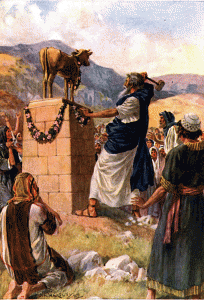
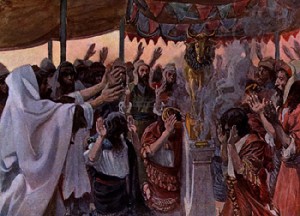
Exodus 32, The Golden Calf Incident: A Prophetic Picture of the Church

On Shavuot (the Feast of Weeks or Pentecost), at Mount Sinai, YHVH entered into a marriage covenant with the children of Israel, but they were not ready to live up to the terms of that covenant.

Those terms, simply stated, involved the Israelites being faithful and obedient only to YHVH, Israel’s Elohim (God) and spiritual husband, and to his instructions in righteousness, the Torah. This Israel quickly demonstrated they were not willing to do, for they had hardly said “I do” to their marriage vows (Exod 24:3,7) when they made and began worshipping a golden calf—a pagan deity from Egypt — and calling it YHVH.

Between the time of the festival of Shavuot and Yom Teruah (the Day of the Awakening Blast) when Moses received the second tablets of stone from YHVH containing the Ten Commandments, the children of Israel, the bride of YHVH, prepared herself not only to receive YHVH’s instructions again, but this time to be faithful to her marriage vows. This Israel did. She remained faithful to YHVH for approximately 38 years while trekking through the wilderness of Sinai, after which she entered the Promised Land and “stayed the course” until after the death of Joshua.
Similarly, redeemed Israel of the first century A.D. era received the Torah on the fleshly tablets of their hearts written by the finger of the Spirit of Elohim on the Day of Pentecost (Shavuot) as recorded in Acts 2. But starting at about A.D. 70 with the destruction of the temple in Jerusalem and continuing up through the Second Jewish Revolt of A.D.135 until the time of Emperor Constantine (in the fourth century), the first-century spiritual bride of Messiah had, for the most part, abandoned YHVH’s Torah-commandments and turned, to one degree or another, to a mixed form of worship (of which ancient Israel’s worship at the golden calif was a prophetic foreshadow) where some pagan practices were assimilated into the early churches’ belief system (most notably, Sunday replaced the Sabbath, and Christmas and Easter replaced the biblical feasts).

In our day, YHVH is calling out a remnant of people from the church who are leaving behind the pagan traditions of golden calf worship and who are returning to the ancient blessed paths of YHVH’s Torah-instructions in righteousness. Does not the book of Revelation speak of a group of end-time saints who will say “I do” to YHVH, and whose identifying mark is their faith in Yeshua the Messiah (i.e., the gospel message) and yet who faithfully keep YHVH’s Torah-commandments (Rev 12:17 and 14:12)?

When Yeshua returns on or near Yom Teruah (the Day of the Awakening Blast) at the end of the age, he will be ready to marry a bride that is without spot and wrinkle who has come out of the Babylonish religious whore system (Rev 18:4). This bride who will be wearing the robes of righteousness of Torah-obedience (Rev 12:17; 14:12; 19:7–9, and she will be ready to enter into a covenantal agreement—a wedding contract or ketubah—with Yeshua, the Bridegroom ever to remain faithful to him and never again to return to Baal or golden calf worship. He will lead his wife into the Messianic Age or Millennium, even as he in the pillar of fire through Joshua (in Hebrew, Yeshua) led the younger generation of wilderness Israelites into the Promised Land.