The Biblical Feasts—Yesterday, Today and Forever

The Feast Days Were Ordained At Creation

And Elohim said, Let there be lights in the firmament of the heaven to divide the day from the night; and let
them be for signs, and for seasons, and for days, and years. (Gen. 1:14 )

Earth 1

Here we see the linking of the heavenly bodies with the sacred seasons and feast days of YHVH Elohim. The word signs (owth, Strong’s H226) means “a distinguishing mark, banner, a remembrance, a proof, an omen, a warning, a token, an ensign, a miracle.” The heavenly bodies were created as signs or signals of something. The word seasons (moed, Strong’s H4150) means “a congregation, feast, season, appointed time, assembly.” What is being taught here is that the sun, moon and stars are signals that set the appointed times, sacred assemblies or feast days of YHVH for his people. In Leviticus 23:4 we see further proof of this point: “These are the feasts of YHVH, even holy convocations, which you shall proclaim in their seasons” (emphasis added). Please note the possessive pronoun their indicating that the feast days “own” or “possess” the seasons and thus predate the seasons, which are determined by the astral bodies. In other words, YHVH created the heavenly bodies and seasons for the feast days, which are a shadow-picture of his plan of salvation or redemption for the world. It could be said that the entire physical creation was made in order to have a place where in to implement and showcase YHVH’s glorious plan of salvation.

The Feast Days Are Forever

And this day shall be unto you for a memorial; and you shall keep it a feast to YHVH throughout your generations; you shall keep it a feast by an ordinance forever (Exod 12:14).

[I]t shall be a statute forever throughout your generations in all your dwellings (see also verses 21 and 31; Lev 23:14).

Forever (olam, Strong’s H5769 ) means “everlasting, perpetual, evermore, always, continuous, unending future, for eternity.” Is it possible that Yeshua had the created purpose of the heavenly bodies as well as this earth in mind as well as the eternal nature of the Feast Days contained in the Torah-law of YHVH when he addressed the permanent and inviolate nature of YHVH’s Torah-law, of which the feasts are a part, in Matthew 5:17–19:

Think not that I am come to destroy the Torah, or the prophets: I am not come to destroy, but to fulfil. For verily I say unto you, Till heaven and earth pass, one jot or one tittle shall in no wise pass from the law, till all be fulfilled. Whosoever therefore shall break one of these least commandments, and shall teach men so, he shall be called the least in the kingdom of heaven: but whosoever shall do and teach them, the same shall be called great in the kingdom of heaven.

The Feast Days Were Observed in the Apostolic Period

  • Acts 18:21, “But bade them farewell, saying, I must by all means keep this feast that comes in Jerusalem …” (one of the Pilgrimage Festivals; namely Passover/Days of Unleavened Bread or Pentecost or Feast of Tabernacles)
  • Acts 20:6, Unleavened Bread
  • Acts 20:16, Pentecost
  • 1 Corinthians 5:7–8, “Therefore let us keep [or celebrate] the feast [referring to Pesach and Hag Ha Matzot], not with old leaven, neither with the leaven of malice and wickedness; but with the unleavened bread of sincerity and truth.”
  • Acts. 27:9, the Day of Atonement
  • Acts 21:24, “… you yourself also walk orderly, and keeps the Torah” (which includes observance of YHVH’s annual festivals).

The Feast of YHVH to Be Observed in the Millennium

  • Zechariah 14:16, 18, 19, The Feast of Tabernacles
  • Ezekiel 45:17, The Sabbaths (plural, includes the weekly and annual Sabbaths or festivals) and solemnities (moedim) or appointed times (see also verse 9).
  • Ezekiel 45:21, Passover and Feast of Unleavened Bread
  • Ezekiel 45:25, The Feast of Tabernacles
  • Ezekiel 46:1, The weekly Sabbath
  • Ezekiel 45:17 and 21, solemn or appointed times (moedim) and feasts (Strong’s H2282 ; chag meaning “pilgrimage feast, festival, celebration, holy day, time of dancing, cyclical/yearly seasonal event; i.e., the feast days).”
 

New Video: The Gospel of Yeshua in the Sanctuary of the Tabernacle of Moses

In this video, Natan begins to decode the mysteries of the Tabernacle of Moses and shows how YHVH’s plan of salvation and the gospel message of Yeshua are encrypted within the tabernacle’s ceremonies and furnishings. The focus of this teaching is on the tabernacle sanctuary.

Learn how the following things point to Yeshua and relate to your spiritual journey to the New Jerusalem:

  • The door to the Tabernacle of Moses
  • The menorah
  • The table of showbread
  • The altar of incense
  • The veil
  • The ark of the covenant
  • The glory cloud

A free study guide is available at http://hoshanarabbah.org/pdfs/tabernacle.pdf.

Watch this video at


America: #1 In Fear, Stress, Anger, Divorce, Obesity, Anti-Depressants, Etc.

AMERICA NEEDS YESHUA AND THE TORAH!

In the sobering article below (see link), the author outlines trends that he believes indicate that America’s social fabric is literally ripping apart at the seams at an alarming rate.

21080711

Like a watchman on the wall, I’ve been watching these trends develop for many years, and all I can say is this: America (and the other nations of the world too!) needs a spiritual revival! America (and the world) needs Yeshua! America needs to get back to the spiritual values of the Bible if it’s going to survive.

Sadly, like an adolescent teen in stubborn and prideful rebellion against his parents, America is locked in a fight against the God of the Bible and refuses to submit to the values contained therein that helped make this nation great, and that also have the power to turn this nation around.

Let me be honest. My life and our ministry is dedicated to helping to restore the spiritual values of the Bible, and to bring people into a living, personal and a powerful relationship with Yeshua the Messiah through His Word, the Bible. This is our only hope individually and collectively as a nation and as a world!

Now here’s the article—
By Michael Snyder, April 23, 2013
Read this article at http://www.infowars.com/america-1-in-fear-stress-anger-divorce-obesity-anti-depressants-etc/


New Video: The Gospel Message in the Tabernacle of Moses — The Courtyard

In this video, Natan begins to decode the mysteries of the Tabernacle of Moses and shows how YHVH’s plan of salvation and the gospel message of Yeshua are encrypted within the tabernacle’s ceremonies and furnishings. The focus of this teaching is on the outer courtyard.

In this video, you will learn…

  • How the Red Heifer Altar and the Brazen Altar point to Yeshua’s atoning death on the cross.
  • How the  door points to Yeshua and the four Gospels.
  • How the linen curtains are a picture of the saints.
  • How the Bronze Laver relates to the first steps a new believer in Yeshua takes after getting saved.

A free study guide is available at http://hoshanarabbah.org/pdfs/tabernacle.pdf

Watch this video at http://youtu.be/BEyM8h-WDCc


Blog Scripture Readings for 4/21 through 4/27/13

Aside

Parashat Emor — Leviticus 21:1 – 24:23
Haftarah — Ezekiel 44:15-31
Prophets — Jeremiah 12:1 – 18:23
Writings — Job 16:1 – 22:30
Testimony — Acts 25:1 – 28:31; James 1:1 – 3:18

Most of this week’s blog discussion points will be on these passages. If you have general comments or questions on the weekly Scripture readings not addressed in a blog post, here’s a place for you to post those. Just use the “leave a reply” link below.

The full “Read Through The Scriptures In A Year” schedule, broken down by each day, can be found on the right sidebar under “Helpful Links.” There are 4 sections of scripture to read each day. One each from the Torah, the Prophets, the Writings, and from the Testimony of Yeshua. Each week, the Torah and haftarah readings will follow the traditional one-year reading cycle.

Weekly Blog Scripture Readings for 4/21 through 4/27/13.

We are instructed in Vayikra/Leviticus 23:15-16: “You shall count for yourselves – 
from the morrow after the Shabbat, 
from the day when you bring the Omer of the waving – seven Shabbatot [weeks], they shall be complete. 
Until the morrow after the seventh Shabbat 
you shall count fifty days; 
and you shall offer a new meal offering to YHVH.”

This is the 4th week of the counting of 7 weeks.


On Crime and Punishment—Biblical Style

Leviticus 20:1, On capital crimes. This chapter contains a number of Torah laws that when violated carry capital punishment. In 1 Corinthians 6:9–11, several of the same crimes are mentioned (i.e., adultery, fornication, homosexuality, idolatry), but the violators were forgiven and received salvation (verse 11). Why were these sins punishable by death in ancient Israel, but not later on? The Leviticus 20 directives apply to Israelites or those from foreign nations who had attached themselves to Israel (verse 2) who are held to a higher accountability and thus should know better not to commit these sins in the first place. On the other hand, the believers in Corinth had practiced these sins before they came to a knowledge of the truth, and were thus held to a lower level of accountability because of their ignorance.

20343970

What about the Corinthian believer who was sleeping with his stepmother (1 Cor 5:1–5)? In Leviticus, in the nation of Israel, this sin would have been punishable by death. In the first century, the Jews didn’t have their own nation, but were under Roman law and were thus not able to execute people for capital crimes. The next best thing to do apart from capital punishment was to put the sinning man out of the congregation, which is what Paul did. This was tantamount to spiritual death. These are the exact discipline protocols Yeshua advised be carried out within the body of believers (Matt 18:15–20). Such an individual was to be excommunicated and treated as a heathen and sinner (verse 17). And how are heathens and sinners to be treated? They are to be evangelized and brought to repentance, which is what happened to the sinner in Corinth (2 Cor 2:5–8).

Now David committed adultery and murder in his affair with Bathsheba, but was not sentenced to death. Why? Why was the Torah not carried out fully in David’s case? Surely he knew that he was sinning beforehand. For one thing, he repented bitterly (see Ps 51) and was forgiven. He never again committed these sins. In his case, mercy of Elohim rejoiced over or trumped his judgment (Jas 2:13 cp. Ps 85:10; Jer 9:24; Ezek 33:11; Mic 7:18; Exod 34:6–7).

Though Leviticus 20 records capital punishment for a variety of crimes, in Israel’s long history, the Jewish sages inform us that very few executions ever occurred for violating these laws. Mercy and grace seemed to be more the rule than the exception, and this modus operandi carried over into the era of the New Covenant as well.


Wake Up Call to an Apostate Nation

Jeremiah 2:4–28 and 3:4, Weeping for and a Warning Against an Apostate Nation

In this scripture passage, Jeremiah, the weeping prophet (lamenting for the apostate condition of the nation of Israel), speaking on behalf of YHVH, pleads with Israel to return to YHVH, the Elohim (God) of Israel, who had graciously blessed that nation. Under YHVH’s watchful care, Israel had prospered, yet eventually, like the first century believers in Laodicea (Rev 3:14–22), material prosperity had led to their forsaking YHVH for secularism.

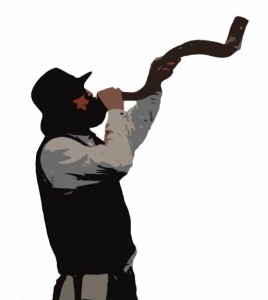
Shofar-NL blowing

Jeremiah addresses all levels of Israelite society: kings, princes, priests, prophets, pastors and the people. No one escaped his stinging rebuke. In our day, kings and princes would correspond to our political leaders, while prophets, priests and pastors to our spiritual leaders. The people would be everyone else.

In verse 13, Jeremiah states that Israel was guilty of two sins: they had forsaken YHVH, the Fountain of Living Waters, and had exchanged his divine and life-giving truth for the stagnant waters of man-made cisterns, which in Hebraic poetic symbolism is a metaphor for false, humanistic religious and philosophical systems of men. In verse 27, Jeremiah accuses Israel of turning its back on YHVH and exchanging worship of the Creator for worship of the creation and material objects (idols). This is reminiscent of what the Apostle Paul declares in his Epistle to the Romans (chapter one) of a society that rejects the divinely revealed truth of YHVH as found in the Scriptures, and then begins worshipping that which the Creator created including the earth, animals and their own bodies (resulting in hedonism and sexual perversion). In verse 21, Jeremiah declares that Israel had become like a degenerate plant and a strange or foreign grape vine, which can be related to the wild olive tree Paul speaks of in Romans 11. (See also Jer 11:16.)

With all this in mind, can we identify any spiritual parallels between ancient Israel and modern America? If Jeremiah were alive today what might he say to America?

A Wake Up Call — The Battle For the Soul of America

For several generations now, a righteous remnant of end-time warriors has been fighting an uphill battle against immorality, abortion, rebellion against the biblical laws of YHVH, Continue reading →