His Name Is to Be Remembered

Exodus 3:15, This is my name. Here Elohim states that YHVH is the name Moses was to use when referring to I AM THAT I AM. Both the former and latter are forms of the Hebrew verb hayah meaning “to be.” YHVH instructed that YHVH was to be his memorial name forever. In other words, humans were to use YHVH to remember him by. There is no indication here that it was YHVH’s intention that his name was to be forgotten or hidden through euphemisation. The word memorial is the Hebrew word zeker (Strong’s H2143) and means “remembrance, memory.”

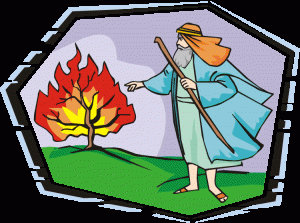
burning bush

It must be noted here that we don’t refer to YHVH as I Am, for were we to do so it would be necessary to say “I Am,” and in all reality, we aren’t the I Am, but YHVH is the I Am. Just so there is no confusion when communicating YHVH’s name in every day speech, the Bible uses, not the Hebrew ehyeh meaning “I Am,” but the form of the verb which means “He Is.” In this way, every time we say his name we’re glorifying him, and not inadvertently glorifying ourselves.


What’s the Problem With My Shoes?

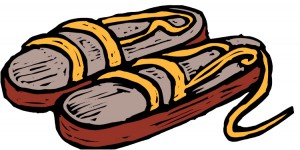
Exodus 3:14, Take your sandals off. In the Orient, it is common to take off one’s shoes before entering a house, since typically would sit on a mat or a rug (as opposed to a chair). To keep these mats from getting soiled by dirt, sandals were left outside. The idea of defilement from the shoes led to the custom of removing shoes when entering sacred place, which the Moslems practice to this day when entering a mosque. It is because of this, that the Messenger of YHVH asked Moses to take off his sandals at the burning bush.

20388246


Exodus: O’view and Main Themes

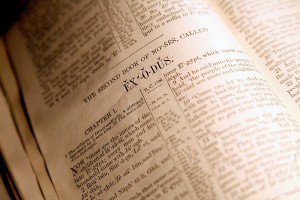
Exodus (Shemot) is the book whose principle theme is redemption—Israel’s deliverance from Egypt (Mitzraim). Here we learn how YHVH saves his people and we are shown that his people are redeemed in order to worship him.
Exodus 1-65289158
The Theme of Redemption

Say, therefore, to the sons of Israel, “I am YHVH, and I will bring you out from under the burdens of the Egyptians, and I will deliver you from their bondage. I will also redeem you with an outstretched arm and with great judgments. Then I will take you for My people, and I will be your Elohim; and you shall know that I am YHVH your Elohim, who brought you out from under the burdens of the Egyptians. I will bring you to the land which I swore to give to Abraham, Isaac, and Jacob, and I will give it to you for a possession; I am YHVH.” (Exod 6:6-8, emphasis added)

Worship

And he said, “Certainly I will be with you, and this shall be a token unto you, that I have sent you, when you have brought forth the people out of Egypt, you shall serve Elohim upon this mountain.” (Exod 3:12, emphasis added)
And I say unto you, “Let my son go, that he may serve [Hebr. awvawd, Strong’s H5647] me, and if you refuse to let him go, behold, I will slay your son, even your firstborn.” (Exod 4:23, emphasis added)
And you shall say unto him, “YHVH Elohim of the Hebrews has sent me to you, saying, ‘Let my people go, that they may serve [Hebr. awvawd, Strong’s H5647] me in the wilderness, and, behold, until now you would not hear.’” (Exod 7:16, emphasis added)

The Basic Outline of Exodus

  • Chapters 1–6 show us the need for redemption.
  • Chapters 7–11 show us the power or might of the Redeemer as the ten plagues are poured out upon Egypt.
  • Chapters 12–18 show us the character of redemption; purchased by blood and emancipated by power.
  • Chapters 19–24 we are taught the duty of the redeemed.
  • Chapters 25–40 we see the restoration of the redeemed—provisions are made for the failures of the redeemed.

The Metaphors in Exodus

  • Egypt is a metaphor for the world, the place of sin and bondage where one is held captive before being delivered or redeemed by the power of YHVH and the blood of Yeshua, the Lamb of Elohim. It is interesting to note that ­although Egypt was the land of science and art, it was similarly the land of death. Their religion was fixated with death.
  • Pharaoh is a metaphor for Satan, a merciless taskmaster who opposes the people of YHVH every step of the way.
  • Pharaoh’s magicians is a metaphor for demonic spirits, doing Pharaoh’s bidding in opposing Israel.
  • Moses is a prophetic metaphor for Yeshua (his first coming), the Deliverer of his people from the bondage and power of sin, death and hell, which is the power of the enemy, Satan.
  • The blood of the lamb on the door posts is a metaphor for Yeshua, the Redeemer, whose death on the cross atoned for man’s sins causing YHVH’s judgment against sin to pass over us.
  • The crossing of the Red Sea is a metaphor for our union with Messiah Yeshua in his death and resurrection via the ritual of tevilah (immersion or baptism) at a mikvah (a gathering of waters).
  • The journey through the wilderness is a metaphor for the trials and testing that occur during the redeemed believer’s spiritual walk through this life with YHVH’s provision to meet every need and his protection from every attack of the adversary.
  • The giving of the Torah is a metaphor for the obedience and submission that we owe to YHVH, our new Master.
  • The Tabernacle of Moses with its furnishings is a metaphor for YHVH’s plan of redemption (salvation) for mankind and the steps in man’s spiritual maturation into intimacy with the Father through Yeshua the Messiah.
 

Blog Scripture Readings for 12/15 through 12/21/13

Aside

Parashat Sh’mot — Exodus 1:1 – 6:1
Haftarah — Isaiah 27:6 – 28:13; 29:22-23
Prophets — 2 Samuel 8:1 – 14:33
Writings — Psalms 82:1 – 88:18
Testimony — Luke 1:1 – 2:51

Most of this week’s blog discussion points will be on these passages. If you have general comments or questions on the weekly Scripture readings not addressed in a blog post, here’s a place for you to post those. Just use the “leave a reply” link below.

The full “Read Through The Scriptures In A Year” schedule, broken down by each day, can be found on the right sidebar under “Helpful Links.” There are 4 sections of scripture to read each day. One each from the Torah, the Prophets, the Writings, and from the Testimony of Yeshua. Each week, the Torah and haftarah readings will follow the traditional one-year reading cycle.

Weekly Blog Scripture Readings for 12/15 through 12/21/13.


New Video: Book of Job O’View—Growing in Righteousness

The Book of Job, one of the oldest books in the Bible, contains many nuggets of wisdom relating to man trying to understand his place in the world, the laws of cause and effect, his eternal destiny and his relationship with his Creator. This video gives a quick overview of this enigmatic book and discusses how the conventional explanation of Job doesn’t do justice to its fuller and deeper Hebraic understanding.


What Is Our Greatest Enemy and How Do We Defeat It?

There’s an enemy lurking and seeking to destroy us.  It’s sneaky and can overtake us unawares. This vicious enemy is weariness, complacency, and apathy and is perhaps are greatest spiritual foe. It can weaken and even destroy individuals and a nation. It can weaken us so that we  become sitting targets and victims of the world, flesh and the devil.

21446002

We can be very active in spiritual works and ministry, but fall prey to this enemy at the same time. Religious activity devoid of heart, love, passion and the Spirit can leave us like an empty spiritual shell. Europe and America are full of beautiful old churches and cathedrals and denominations that are cold, empty and devoid of spiritual life. The same thing can happen to individuals.

Let me give an example of what I mean by asking a simple question. We may have fallen into the snares of weariness, apathy and complacency without even knowing it. If the answer to this question is yes, then we may be a victim who needs to take a serious look at the state of his or her spiritual life. The question is this: How would your life change today if you knew Yeshua were coming tomorrow?

Most exert great effort to prepare our homes when we know that company is coming to visit us. Why don’t we attach the same priority of effort to our spiritual homes with regard to Yeshua? He could come anytime. Let me explain. Continue reading →


New Video: What Is Your Idol? Lessons from the Rich Young Ruler

In the Bible, the rich young ruler had everything and was a good person, but despite all this, he had one idol in his life that kept him out of God’s kingdom. What is the most important thing in your life, the thing you’ve given your heart affection to? This is your god or idol. In this video learn how our idols keep us from coming into a relationship with the Creator of the Universe and from entering into his eternal kingdom.