Are you a Phinehas or a Zimri?

Phinehas the priest stood for righteousness by taking a stand against wickedness. At the same time, Zimri compromised morally and followed the lusts of his flesh by succumbing to the ways of this world as he fell into fornication with a heathen woman.

Numbers 25:7, Phinehas…took a javelin. Phinehas, the priest, rose up against evil and took a stand for righteousness and YHVH commended him for it. In this case, the grandson of Aaron the high priest was not acting as a self-appointed vigilante as it may appear. Rather, YHVH had given the priests the authority to act as judges in Israel and to pronounce sentence in criminal matters (Deut 17:9–11). Spear 1-21279897

Additionally, Phinehas was doubly justified in his action against the fornicators (Cozbi and Zimri), since he was an eyewitness of these sexual crimes, and the Torah teaches that the hand of the eyewitness was to be the first to rise up in executing judgment against the criminals (Deut 17:6; Ezek 44:24). So as an eyewitness and as a priest, he was legally justified in his actions. The priests and Levites were to act as Israel’s legal experts (Lev 10:10–11; Deut 24:8; 33:10; 2 Chron 17:9; 30:22; Neh 8:2, 8; Hag 2:11; Ezek 44:23; Mal 2:7) and to make determinations between the holy and the profane (Ezek 22:26; 44:23).

Who are YHVH’s priest on the earth today? According to Peter, and John the saints are those priests (1 Pet 2:7; Rev 1:6; 5:10; 20:6). As such, the saints presently possess the divinely mandated legal authority to fulfill the responsibilities of the priesthood of old when it comes to Continue reading →


New Video: It’s Heart Check-Up Time

It’s time to check our hearts! This video will help you to go deeper in your spiritual walk as you consider several key issues. Are you caught up in religiosity (religious acts and legalistic pride), or are you serving YHVH from a heart of love and obedience? If our hearts are right, we will love Yeshua by keeping his Torah-commandments as he says in John 14:15.


Blog Scripture Readings for 7-6 through 7-12-14

Aside

THIS WEEK’S SCRIPTURE READINGS FOR STUDY AND DISCUSSION:

Parashat Pinchas — Numbers 25:10 – 30:1 (29:40)* 
Haftarah — 1 Kings 18:46 – 19:21
Prophets —Ezekiel 19:1 – 24:27
Writings —Daniel 8:1 – 12:13; Ezra 1:1–11
Testimony — 1 Corinthians 15:50 – 16:24; 2 Corinthians 1:1 – 5:21

Most of this week’s blog discussion points will be on these passages. If you have general comments or questions on the weekly Scripture readings not addressed in a blog post, here’s a place for you to post those. Just use the “leave a reply” link below.

The full “Read Through The Scriptures In A Year” schedule, broken down by each day, can be found on the right sidebar under “Helpful Links.” There are 4 sections of scripture to read each day. One each from the Torah, the Prophets, the Writings, and from the Testimony of Yeshua. Each week, the Torah and haftarah readings will follow the traditional one-year reading cycle.

* Verse numbers in Hebrew Bibles and Christian Bibles can sometimes be different. The verses in the parenthesis refer to the verse number in Christian Bibles.

Weekly Blog Scripture Readings for 7/6 through 7/12/14.


Baptized for the dead???

1 Corinthians 15:29, Baptized for the dead. For certain, Paul is not talking about proxy baptism for dead people in hopes of saving them spiritually as some incorrectly teach. If so, this would fly in the face of everything else he taught about the purpose and significance of the baptism ritual. If the dead know nothing, as the Scriptures teach (Eccl 9:5), then how can a dead person consciously identify with the death, burial and resurrection of Yeshua, which is the purpose of baptism?

Without a faith in Yeshua, this is the fate of the dead.

Without a faith in Yeshua, this is the fate of the dead.

Verse 29 is an awkward verse, to be sure. When we have such a hard to understand verse, it’s illogical to pull it out of context and make a doctrine out of it as the Mormons do.

Instead, we must interpret this verse in the light of and against the contextual backdrop of other clear passages that relate to the same subject. In the context of 1 Cor 15, Paul is talking about a believer’s hope through Messiah, and how those who don’t have faith in Yeshua have no hope of eternal life. If we die with a faith in Yeshua, we have the hope of being resurrected from the dead as he was. If we die without that hope, then all we have is this physical life and then we die and that’s it.

In verse 19 (in the context of the previous verses), Paul mentions the hope that we have in Messiah because of his bodily resurrection. So when we come to verse 29 and we come across the phrase “baptized for the dead” I believe he is saying this: because baptism is a picture of death and resurrection, if we go through that ritual and there is no hope of resurrection for the dead, then what’s the point of it all? Why get baptized if there is no hope and “if the dead do not rise at all” as he says in the latter part of the same verse? To clarify this verse, we could succinctly rewrite it as follows: “Otherwise, what will thy do who are baptized for [the hope of] the dead, if the dead do not rise at all? Why then are they baptized for the [hope of] the dead?” This verse has nothing whatsoever to do with getting baptized for your dead relatives. Such an interpretation of verse 29 is a sad twisting of this verse and has caused millions of people to waste a lot of time digging into their family genealogy and then getting “baptized” for all their dead relatives.

I recall what Peter said of the writings of Paul,”as also in all his epistles, speaking in them of these things, in which are some things hard to understand, which untaught and unstable people twist to their own destruction, as they do also the rest of the Scriptures” (1 Pet 3:16). First Corinthians 15: 29 is another example of what Peter was talking about.


Reasons to Believe in Yeshua

1 Corinthians 15:20, But now Messiah is risen from the dead. Why Believe in Yeshua the Messiah? Have you ever heard someone say, “I’ll believe it when I see it”? Is seeing really believing?  Many people saw Yeshua when he was on this earth, but most didn’t believe him. 15209414

It has been 2000 years since Yeshua walked this earth, and since we’ve never seen him, nor even talked to those who saw him, what is the basis of our faith? Is faith in Yeshua blind? Or are there logical reasons to believe in him?

For those of us who have had a faith in Yeshua for a while, for us there are a myriad reasons that have come together to form the basis of our faith. However, for those who are new in their faith walk and don’t have a lifetime of “spiritual experiences” that corroborate that faith, initially finding a basis for that faith can be difficult.

Some people come to Yeshua because that’s their last hope. They’ve hit rock bottom in their lives and there’s no where else to go. They hear and believe the gospel message of hope and end up experiencing the power of the Yeshua and his Holy Spirit in their lives. Others take a more reasoned approach to establishing a faith in Yeshua. Perhaps their lives haven’t hit rock bottom, but they know they’re missing something — there’s still a void in their life. They sense that there must be more to life — a higher purpose — than simply existing and then dying. Others come to faith in Yeshua because they look around and see intelligent design behind everything in existence, which speaks of a Creator, which leads them to want to know more about him. Some people come to Yeshua as a way of dealing with their on mortality.  In their quest to answer the question of whether there’s life after death, they come to faith in Yeshua. Perhaps some come to faith in Yeshua due to the pang of a guilty conscience because of their sin and the need for redemption. Some people have studied the world’s religions and find that only the gospel message as presented in the Bible addresses the deeper issues of life.

These are all valid and logical reasons for coming to faith in Yeshua. Whatever the reason for believing what the Bible says about Yeshua, there are good reasons to believe in him  based on both the claims of the Bible and logic.

Yeshua — A Historical Figure

Whatever we think about Yeshua pro or con, he was a historical figure. More has been written about him than anyone else, and he has impacted the world more than anyone. There must be something to all this, and thus we have

Continue reading →


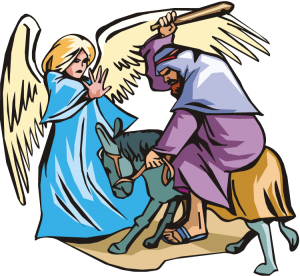
Would Balaam have been content in mainstream Christianity?

Numbers 22:5, Pethor … by the river. Balaam was from the land of Pethor, which is “by the River.” This is a reference to the Euphrates River, the great river of Babylon (The ArtScroll Stone Edition Chumash, p. 857). Thus Balaam was a Babylonian, although he may have been a transplanted Edomite according to some Jewish scholars (see The ArtScroll Bereishis/Genesis Commentary on Gen 36:32).

Balaam's ass 3

One of the aspects of Babylon of the last days is her religious system (Rev 13:11ff) the head of which is the false prophet (Rev 16:13; 19:20; 20:10). The Babylonish religious system of the end days is a blend of both good and evil (reminiscent of the tree by that name in Eden from which the serpent beguiled Adam and Eve away from YHVH’s path of truth and righteousness into a false religious system).

In the last days, YHVH is calling his people out of that false religious system (Rev 18:4) with its false prophets who prophesy a mixture of good and evil. What religious system is this scripture referring to that YHVH’s people are caught up in? Reflect on the implications of this. To what degree have you heeded YHVH’s call to “come out of her”—namely, any man-made religious or church systems that has components that are contrary to the Word of Elohim?

Like mainstream Christianity, the Scriptures seems to indicate that Balaam had some knowledge of the truth of YHVH but refused to wholeheartedly submit to YHVH (2 Pet 2:15). Let us not forget Yeshua’s warning about false prophets arising in the last days who might deceive the very elect (Matt 24:24).

Numbers 22:10ff, Carnal men want to be like YHVH’s saints, to be the recipients of the blessings of Israel, and to be numbered among YHVH’s chosen, but few want to walk the walk required to receive these blessings and privileges. Many will “court YHVH” by getting as close to him as possible without actually crossing over (becoming an Ivrit/Hebrew) and surrendering their all to him. The sacrifice of doing so is too great for most.

To cross over to YHVH’s side means that fame and fortune must be laid aside and one must become a servant-slave of YHVH. Balaam couldn’t cross over.

Most people in the mainstream church are like Balaam. How serious are you about serving YHVH? It is said of the end-times saints that they loved not their lives unto death (Rev 12:11).

Paul declares that followers of Yeshua must become “living sacrifices” in service of YHVH (Rom 12:1). Yeshua gave his very life for you. Are you holding back some of your life for him? Do the cares of this world, the desire for pleasures, material goods, entertainments or acclaim still have a grip on your heart? Are they preventing you from moving into your spiritual calling and destiny—to truly walk by faith?


Blog Scripture Readings for 6-29 through 7-5-14

Aside

THIS WEEK’S SCRIPTURE READINGS FOR STUDY AND DISCUSSION:

Parashat Balak — Numbers 22:2 – 25:9 
Haftarah — Micah 5:6 – 6:8
Prophets —Ezekiel 13:1 – 18:32
Writings —Daniel 1:1 – 7:28
Testimony — 1 Corinthians 12:1 – 15:49

Most of this week’s blog discussion points will be on these passages. If you have general comments or questions on the weekly Scripture readings not addressed in a blog post, here’s a place for you to post those. Just use the “leave a reply” link below.

The full “Read Through The Scriptures In A Year” schedule, broken down by each day, can be found on the right sidebar under “Helpful Links.” There are 4 sections of scripture to read each day. One each from the Torah, the Prophets, the Writings, and from the Testimony of Yeshua. Each week, the Torah and haftarah readings will follow the traditional one-year reading cycle.

Weekly Blog Scripture Readings for 6/29 through 7/5/14.