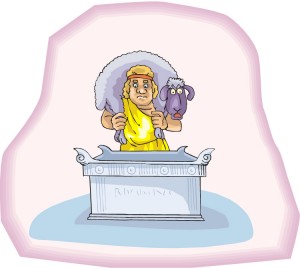
Is every born again believer automatically the bride of Yeshua? Will all believers get to abide in the holy of holies with Yeshua in his everlasting kingdom? What are the levels of rewards in Yeshua’s kingdom? Who will be the least and the greatest according to what Yeshua said in Mathew 5:19? Watch this video to learn the answers.
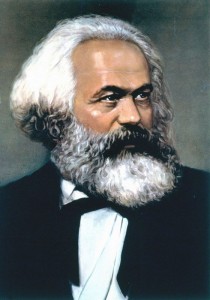
Oy vey … NO Way! Karl Marx for President
People actually want Karl Marx for President of the U.S.
You gotta see this short video. Talk about low information and brainwashed voters!
In light of these facts, this emphasizes the fact why we Torah-loving and Yeshua following saints must all the more endeavor to be salt and light in the societal darkness around us. Be strong and carry on! And now the video:
http://www.infowars.com/video-obama-supporters-endorse-karl-marx-as-next-potus/
Blog Scripture Readings for 3/1 Through 3/7/15
Aside
THIS WEEK’S SCRIPTURE READINGS FOR STUDY AND DISCUSSION:
Parashat Ki Tisa — Exodus 30:11 – 34:35
Haftarah — 1 Kings 18:1 – 39
Prophets — 2 Kings 19:1 – 25:30
Writings — Proverbs 1:1 – 7:27
Testimony — John 7:1 – 9:41
Most of this week’s blog discussion points will be on these passages. If you have general comments or questions on the weekly Scripture readings not addressed in a blog post, here’s a place for you to post those. Just use the “leave a reply” link below.
The full “Read Through The Scriptures In A Year” schedule, broken down by each day, can be found on the right sidebar under “Helpful Links.” There are 4 sections of scripture to read each day. One each from the Torah, the Prophets, the Writings, and from the Testimony of Yeshua. Each week, the Torah and haftarah readings will follow the traditional one-year reading cycle.
Weekly Blog Scripture Readings for 3/1 through 3/7/15.
Is there a back door around the bloody cross?
Exodus 30:15 and 16, To make atonement for your souls. Some will read these verses and conclude that one can buy their redemption through charitable giving and therefore circumvent the need to place one’s faith in Yeshua’s atoning death on the cross. Does this passage suggest a theology where man can save himself from his sins by acts of charity? Let’s dig a little deeper to see what these verses are really teaching us.
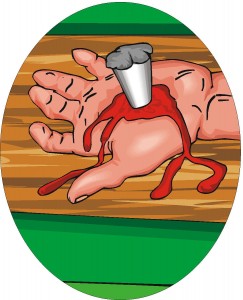
In this passage, YHVH instructed the Israelites to pay an annual half-shekel temple tax. This money went, in part, toward, the service (verse 16) and constructing of the Tabernacle of Moses (e.g., Keil and Delitzsch Commentary on the OT, vol. 1, p. 459; Exod. 38:21–31), and later toward the purchase of the animals the priests sacrificed (The Temple and Its Service, by Alfred Edersheim, p. 48). In this way, the people were participating vicariously in the act of sacrificing an innocent animal as an offering or atonement for their sins. Again, the Scriptures reveal that this sacrificial system merely pointed prophetically toward the Greater Sacrifice that would come later in the Person of Yeshua, the Redeemer of Israel. (Read Isa 53.) On the point that the paying the half-shekel was a merely a temporary solution to the problem of man’s sin, Keil and Delitzsch say in their commentary on this passage,
As an expiation [atonement] for souls, it pointed to the unholiness of Israel’s nature, and reminded the people continually, that by nature it was alienated from God, and could only remain in covenant with the Lord and live in His kingdom on the ground of His grace, which covered its sin (Ibid.).
Keil and Delitzsch’s point is further strengthened in Exodus 30:16, which says,
And you shall take the atonement money of the children of Israel, and shall appoint it for the service of the tabernacle of the congregation; that it may be a memorial unto the children of Israel before YHVH, to make an atonement for your souls. (emphasis added)
The giving of the half-shekel was a memorial to what? The Hebrew word for memorial is zikrown (Strong’s H2146) meaning “reminder, token, record.”
According to The TWOT, a zikrown is an object or act which brings something else to mind or which represents something else. It reminded them of their sinfulness and pointed prophetically to a Redeemer—Yeshua the Messiah— who would come and take away their sins once and for all (Heb 10:10). For a more detailed study of this subject, please see our teaching article entitled, “The Atonement: Bloody or Bloodless? Understanding the Concept of Atonement in the Torah” located on the Hoshana Rabbah website at http://www.hoshanarabbah.org/pdfs/atone.pdf.

The Horns of the Altar and Yeshua
Exodus 29:12, Horns of the altar. The four horns of the altar of sacrifice was the place where the blood of atonement was sprinkled (also Lev 4:4, 17, 18, 25, 30, 34; 8:15; 9:9; 16:18).
Horn in Hebrew is qeren meaning “horn, hill or ray.” This word is used to describe the rays of light rays emanating from the face of Moses after his encounter with YHVH (Exod 34:29) and the horns of an animal (Ps 69:31).
In ancient cultures, the horn was a metaphor for physical strength or spiritual power (Deut 33:17; 2 Sam 22:3; Ps 18:2).
Elsewhere, YHVH is referred to as man’s “horn of salvation” meaning he is the strength of our salvation. The Hebrew word for salvation is yesha meaning “deliverance, rescue, safety, welfare, victory, prosperity.” The root of yesha is the verb yasha meaning “to save, to deliver, to give victory.” Not only is YHVH called our “horn of salvation” in the Tanakh, but this designation is applied to Yeshua as well in the Testimony of Yeshua (Luke 1:69). Interestingly, the derivative of the Hebrew name Yeshua is Yehoshua (or Joshua), which also derives from yasha.
It should be evident from this quick study that the horns of the altar are a picture of Yeshua, who is the horn or strength of our salvation through his shedding his blood for our sins on the altar of the cross. If this is the case, then why are there four horns on the altar? This is likely symbolic of the four attributes of Yeshua, even as are the four colors of cloth used throughout the tabernacle prophetically symbolize the same thing: crimson speaks to Yeshua’s humanity, purple to his kingship, blue to his divinity, and white to his sinlessness or righteousness.
The Jewish sages view the four horns as symbolizing the four corners of the earth, for, in Hebraic thought, the earth is nothing more than a large altar dedicated to Elohim. (See The ArtScroll Tehilim/Pslams Commentary on this verse and notes at Ps 118:27.)
It’s time to wake up and let reality slap us in the face!
John 5:46–47, Believed Moses. These two verses at the end of chapter five can easily be overlooked, but their implications are huge.
Quite simply, Yeshua is saying that those who don’t believe the writings of Moses (i.e., the Torah) won’t believe the words of Yeshua who himself upheld the Torah and taught its validity in the lives of his disciples.
This then begs the following question: Where does this leave all those who claim to be followers of Yeshua, but who believe that the law of Moses was abrogated? It’s hard to be absolutely black and white on this matter, since only YHVH can judge the heart condition of each individual, for undoubtedly many who claim the law was “done away with” still adhere to many of the law’s tenets (e.g., you shall not steal, murder, lie, commit adultery, worship idols and you shall honor your parents, etc.) and are thus obedient to the law to one degree or another. However, we can safely say that it’s a matter of degrees. To the degree that we don’t believe the words of Moses, we don’t believe the words of Yeshua who was a proponent (and, in reality, as the Word of Elohim, the Originator) of the Torah-law of Moses.
John makes a similar statement in his first epistle from which we can deduce the following: To the degree we don’t keep the (Torah) commandments of Elohim, we won’t know him; that is to say, conversely, if we keep his commandments which are a reflection of his character, will and heart, we will be able to know what pleases him, which in turn will determine the depth of our spiritual relationship with him (1 John 2:4).
In reality, these should be simple concepts to grasp and put into practice in one’s spiritual walk, yet, sadly, most religious leaders have misled Christians to believe anything and everything but the simple truth through their convoluted doctrines and traditions of men by which they have made the word of Elohim no effect (Mark 7:13).
It’s time for Elohim’s people to come out of the Babylonian church system with its mixture of truth along with half-truths and lies (Rev 18:4).