YHVH’s Judgment on Egypt’s Idol-Gods About to Repeat Itself

Exodus 7:14, The ten plagues plus one. The ten plagues were Elohim’s judgment against the gods and idols of Egypt (Exod 12:12; 33:4; Num 33:4). Here are the list of plagues and possible suggestions as to which gods of Egypt YHVH was judging. Modern man worships these same false gods, and YHVH will bring his judgements against them in the last days.

Divine Intervention

  • The first plague was the water turning to blood. This may have been a judgment against abortion (the Egyptians threw their babies into the Nile for sacrificial purposes) and against materialism (since fewer children mean fewer expenses for a family, and the Nile River was the source of Egypt’s prosperity).
  • The second plague was frogs. This may have been a judgment against pride (frogs puff themselves before they croak) and environmentalism or animal worship. In America, for example, after 9/11, how many bumperstickers did we see that had the words “pride” on them, and “God bless America” as if YHVH is duty-bound to bless America? How can YHVH bless a nation that refuses to repent and turn from its arrogant and wicked ways?
  • The third plague was lice. This may have been a judgment against pride and narcissism (self worship), since the Egyptians were highly focused on their personal appearance and hygiene, their appearance and in shaving of body hair.
  • The fourth plague was flies, which may have been a judgment against devil worship, occultism and witchcraft (i.e., the whole religious system of Egypt). A biblical name for Satan was Beelzebub, or lord of the flies (Matt 2:25–27; Luke 11:15–19).
  • The fifth plague was the death of the livestock. This may have been a judgment against transportation and commerce.
  • The sixth plague was boils, which may have been a judgment against the Egyptians obsession with their bodies and faith in medical science.
  • The seventh plague was hail, which may have been a judgment against their agriculture industry and earth worship.
  • The eighth plague was locusts. This may have been a judgment against Egypt’s food production. The Nile River and its delta was one of the bread baskets of the ancient world and a source of great wealth to Egypt.
  • The ninth plague was darkness. This may have been a judgment against Egypt’s intelligentsia and religious system, which was spiritually devoid of the light of truth.
  • The tenth plague was the death of the firstborn, which was a judgment against Egypt’s future and posterity.
  • The destruction of Pharaoh and his armies in the Red Sea was a judgment against Egypt’s political and military might.

Is YHVH Elohim bringing America and other “Christian” nations under judgment for the sins they have committed against him even as he brought judgment against the gods of Egypt? What are the similarities between gods of ancient Egypt and those of western and Christian culture? In America, for example, in recent years, there has been a marked increase in adverse weather conditions, natural catastrophes, terrorism, bank and financial failures, personal and corporate bankruptcies, high unemployment and inflation rates, and high foreclosure rates on homes just to name a few possible judgments against a nation that has turned its back on Elohim and the Bible.


“You brood of vipers!” saith John the Baptist

Luke 3:7–17, Then he said to the multitudes. What’s really going on in this exchange between John the Baptist and the religious folks of his day? Let’s step back and look at the bigger picture.

109311326

The multitudes of Jews had to make the long, hot and arduous journey down through the Judean mountains down to the Jordan River, which was the lowest spot on earth, to hear John the Baptist who was the latest fad preacher to come on the scene. However, when they arrived at his lonely wilderness pulpit, instead of stroking their egos by complimenting them for their religious zeal, he excoriates them and calls them a brood of vipers. John confronts them when he says that if they don’t repent, the fires of YHVH’s judgment will consume them (John 3:7–9). John’s preaching pierces their hearts, and lays them low spiritually, and they ask him what he expects them to do (John 3:10). John then preaches a message of social justice involving giving to the poor, being fair and honest in your business dealings, and if you’re a government worker, treating the citizens you serve with respect (John 3:11–14).

Interestingly, he doesn’t instruct these religious Jews in what many might consider to be the specificities and dos and don’ts of the Torah-law, although it could be reasoned that many of these folks already had a basic understanding of Torah already. Whether they were living up to it or not is another question.

Whatever the case, in our day, most gospel-believing Torah teachers are telling their listeners to punctiliously start observing the 613 commandments of the Torah, and to Continue reading →


Blog Scripture Reading for 1-3 Through 1-9-16

Aside

THIS WEEK’S SCRIPTURE READINGS FOR STUDY AND DISCUSSION:

Parashat Va’eira — Exodus 6:2 – 9:35
Haftarah — Ezekiel 28:25 – 29:21
Prophets — 2 Samuel 15:1 – 21:22
Writings — Psalms 89:1 – 94:23
Testimony — Luke 3:1 – 6:26

Most of this week’s blog discussion points will be on these passages. If you have general comments or questions on the weekly Scripture readings not addressed in a blog post, here’s a place for you to post those. Just use the “leave a reply” link below.

The full “Read Through The Scriptures In A Year” schedule, broken down by each day, can be found on the right sidebar under “Helpful Links.” There are 4 sections of scripture to read each day. One each from the Torah, the Prophets, the Writings, and from the Testimony of Yeshua. Each week, the Torah and haftarah readings will follow the traditional one-year reading cycle.

Weekly Blog Scripture Readings for 1/3 through 1/9/16.


Was Yeshua Born in a Manger or Sukkah?

Luke 2:7, Manger.

Manger. (Gr. phatne) The Greek word phatne literally means “feeding trough” and according to the word’s etymology and lexicology as stated in The TDNT, there is no indication that this manger is anything but a standard feeding trough or manger. Nevertheless, this manger may have been a sukkah or tabernacle, which is the flimsy little hut that Israelites build during the biblical Feast of Tabernacles (Heb. Chag Sukkot) as commanded in the Torah (Lev 23:33–43). Here’s why.

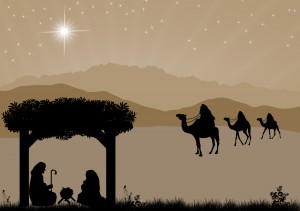
Christmas nativity scene

We see the connection between a manger and a sukkah in Genesis 33:17 where Jacob built booths (or tabernacles; Heb. succot or sukkot is the plural form of sukkah) for his livestock showing us that the Hebrew word sukkah (pl. sukkot) can also mean “livestock barn or manger” as well as a temporary habitation where Israelites dwell during the biblically commanded festival of Sukkot.

This raises the possibility that Yeshua was born in a festival sukkah during the Feast of Tabernacles or Sukkot and not just in an animal barn as Christian folklore would have us believe. The LXX Greek word for sukkah in Gen 33:17 is skenas meaning “habitation, dwelling or tabernacle” and is the same word used in John 1:14 and Rev 21:1–3 in reference to Yeshua tabernacling with his people.

Putting all the pieces together, Yeshua may have been born in a sukkah-manger prior to or during the Feast of Tabernacles with a human sukkah (or body, of which the physical sukkah during Sukkot is a metaphorical picture) in order to redeem man from sin, so that Yeshua might tabernacle with redeemed men forever in the New Jerusalem (Rev 21:3).


What’s the Significance of Moses’ Three Miracles?

Here’s question from Jim M.

I was wondering if you knew what the sages had to say about the 3 signs Moses was given by God to authenticate his ministry. God could have chosen rainbows, butterflies, and the Hallelujah chorus to send back with Moses. Instead He chooses a poisonous snake, leprosy, and water into blood. To me these signs all speak of rebellion, sin, and death.

Here are my thoughts:

Exodus 4:3, Serpent. A serpent can be a biblical metaphor for Satan or demonic powers (e.g., Gen 3:1; Luke 10:19 cp. 9:1 and Mark 16:18; Rev 12:9; 20:2). Pharaoh as ruler over Egypt (a metaphor for this world) was a type of Satan who is the ruler of this world. A rod or a staff can be a biblical metaphor for power, authority, rulership or judgment (Gen 38:18; Exod 4:17, 20; Ps 2:9; Rev 19:15). In this verse, it seems evident that YHVH was giving Moses authority over the powers of Satan and his forces. When Moses cast down his rod, it became a serpent, and Moses was immediately able to assume control over the serpent at will for the purposes of advancing YHVH’s spiritual kingdom. This seems to have been YHVH’s way of showing Moses that he was giving him supernatural authority over Pharaoh (Satan) in fulfilling his divine commission to liberate the children of Israel. The staff changing into a serpent reminds us of the authority Yeshua gave his disciples to cast out demons and to heal diseases (Luke 9:1; 10:19; Mark 16:15–18). Furthermore, YHVH instructed Moses to construct a bronze serpent and place it on a pole so that when the Israelites looked on it, they were healed of the bites of the fiery serpents (Num 21:8). The serpent represents sin, since it is Satan the serpent who introduced sin to man in the Garden of Eden, which brought upon man the curse of death. Yeshua took that curse on himself when he was lifted up on the cross of judgment as Moses lifted up the bronze serpent in the wilderness (John 3:14). Yeshua defeated Satan the serpent at the cross, even as Moses’ serpent defeated the serpents of the satanic Pharaoh’s magicians.

Exodus 4:6, Put your hand in your bosom. This second sign was to demonstrate Moses’ authority over sickness, disease and sin. Leprosy is as biblical metaphor for sin and the fact that it’s highly contagious (Lev 13–14). Only the Yeshua’s death on the cross can heal men of this spiritual disease as the Torah’s cleansing ritual for leprosy metaphorically points to (Lev 14:4–7).

Exodus 4:9, Blood on the dry land. This was the third sign or witness that YHVH gave Moses as confirmation of his divine commission. The Scripture instructs us to confirm things in the mouth of two or three witnesses (2 Cor 13:1). The Nile River and god to the Egyptians and was the source of much of Egypt’s economic wealth, since it watered that country’s crops. Bringing the judgment of death upon the Nile’s waters was a judgment against one of Egypt’s gods and its economic might.

Exodus 4:3–9, A summary. The three signs that YHVH had Moses perform to Pharaoh were merely warning shots against a wicked and unrepentant nation instructing them to submit to YHVH’s will. YHVH was telling the Egyptians that if they refused to obey his prophet, he would unleash demonic spirits, plagues of sickness and economic destruction on that nation. These are YHVH’s judgments against a nation that refuses to repent. Of course, Egypt refused to obey YHVH, and so he not only brought these judgments against Egypt, but much more, such that Egypt was totally destroyed. The same fate befalls the Mystery Babylon the Great worldwide system of the end times as we read about in the Book of Revelation.


Who Hardened Pharaoh’s Heart?

Exodus 4:21, I will harden Pharaoh’s heart. There is an interesting interplay in the Torah’s narrative regarding the a condition of Pharaoh’s heart. At times, it’s recorded that Pharaoh hardened his own heart (Exod 7:23; 8:15, 32; 9:34), and at times, we read that Elohim hardened Pharaoh’s heart (Exod 7:3, 13, 22; 8:19; 9:7, 12, 35; 10:1, 20, 27; 11:10; 14:4, 5, 8).

22319344

Who was in control of Pharaoh’s heart? Pharaoh or Elohim? Initially, it appears that Pharaoh had some control over his heart disposition, but as time progressed, his heart became totally sold out to rebellion against YHVH. When he crossed this line, it was a point of no return for Pharaoh, and so YHVH simply used him to accomplish his purposes.

Paul discusses the sovereignty of Elohim with regard to the free will of men in Romans 9:15–18. YHVH can save who he wishes (Mark 10:26–27 cp. Rom 9:18) and condemn who he wishes (Rom 9:18, 22).

It is true that YHVH loves the whole world (John 3:16) and is not willing that any should perish, but desires all to be saved (2 Pet 3:9). He has made the wicked for the day of his judgment (Job 21:30; Rom 9:22). However, YHVH sets before humans two paths: life and death. All have the freedom and ability to choose the path of righteousness, leading to life, or wickedness leading to death (Deut 30:15–20).

When Pharaoh chose the path of wickedness and death and hardened his heart to go in that direction, YHVH simply complied with the dictates of the king’s heart and used him accordingly for his sovereign purposes.

In the Exodus record relating to the condition of Pharaoh’s heart, we see that initially sometimes Pharaoh hardened his own heart, and sometimes it was YHVH who did it. In the end, however, it was YHVH who exclusively hardened Pharaoh’s heart. This is because by this time, Pharaoh had already predetermined to harden his heart, and YHVH was simply manipulating Pharaoh according to his sovereign purposes. YHVH had not violated Pharaoh’s freedom of choice, but was playing along with the choices Pharaoh and already made.


Peace on Earth; Good Will Toward Men(?)

Luke 2:14, Peace on earth. (See William Mounce’s Basics of Biblical Greek textbook, p. 43 for further explanation on this.) This often quoted phrase can also be translated as “on earth, peace toward men of good will.” This phrasing makes more sense, since the biblical concept of peace or shalom is a blessing only to men who have good will, make good choices or who are benevolent or of kindly intent, which is the definition of the Greek word eudokia.

green planet with the word peace

The shalom or total well-being, which is a gift from YHVH, doesn’t come to men who are of ill-intent or ill-will.

For example, when Yeshua was teaching his disciples how to preach the gospel, when going from town to town, he instructed them to lodge in homes that were worthy to hear the message. Upon them, the disciples were to leave their peace. Those homes who didn’t receive the gospel message were to considered unworthy and their peace was not to be left with them (Matt 10:11–14).

This teaches us that peace is something that is befitting of those who are worthy or of good will, and not to those who are unworthy or of ill-will.