New Video: Galatians Chapters 4 to 6 Explained Hebraically

What is Paul really saying in his Epistle to the Galatians? Is he advocating the abrogation of the Torah (the law of Moses), or is there another issue he is addressing? What is the larger and loftier message in this amazing epistle? Watch this video to find out.
For the study notes that I used while giving this teaching, go to http://hoshanarabbah.org/blog/2016/09/03/galatians-chapters-4-to-6-explained/.


A Prophet Like Unto Moses…

Deuteronomy 18:10, One who causes his son or daughter to pass through the fire. This was done in honor of the Canaanite deity Molach (see Lev 18:21 and 20:1–6). The name molach/lKN/mem-lamed-chaf sofit in Hebrew means “king” with the root of the word meaning “to rule or reign.” Child sacrifice (the ancient form of modern abortion/infanticide), though a pagan practice that YHVH abhorred, was practiced by both houses or kingdoms of Israel as they drifted into syncretism with the heathen cultures around them (see 1 Kgs 11:7; 2 Kgs 16:3; 21:6; 23:10,13; Jer 7:31; 19:5; Ezek 16:20; 23:37). Baal appears to be a synonym of Molach (see Jer 19:5 and the Ency. Britan. eleventh edit., vol. 18, p. 676). The dead bodies of sacrificed children were thrown into the garbage dump of the Valley of Hinnom or Tophet just below the Temple Mount in Jerusalem (Jer 7:31; 19:5–6). Apparently, the children were not burned alive, but were slain (by knife) like any other sacrifice before being thrown into the fire and then into the garbage dump (Ibid.). The ancients sacrificed their children to appease their bloodthirsty gods of prosperity, sensuality and fertility (The Story of Civilization, vol. 1, by Will Durant, pp. 66–67, 297).

What can we learn from these random pieces of information concerning the ancient practice of child sacrifice? It was done in honor of their deity; in other words, their idol was the king that ruled their lives. What is the chief deity in Continue reading →


New Video: The Month of Elul—Preparing for the Fall Biblical Feasts


Dealing With Matters of Controversy In the Local Congregation

Arguing 1-20481165

Deuteronomy 17:6 (and 19:15), By the testimony of two or three witnesses. One could not be accused of a crime without the testimony of two or three eyewitnesses. This admonition is repeated in the Testimony of Yeshua:

But if he will not hear you, then take with you one or two more, that in the mouth of two or three witnesses every word may be established. (Matt 18:16)

This is the third time I am coming to you. In the mouth of two or three witnesses shall every word be established. (2 Cor 13:1)

Against an elder receive not an accusation, but before two or three witnesses. (1 Tim 5:19)

He that despised Moses’ law died without mercy under two or three witnesses. (Heb 10:28)

Most gossip and slander would stop if this commandment were followed, and thus much division and strife within the congregation of believers. How many times have you repeated hearsay and gossip without checking the source? Even if you know it to be true, is it beneficial and righteous to repeat it to others? One Jewish sage goes so far as to say that Messiah has not come back because of all the gossip and slander of the people of Israel. Perhaps. At the very least, the Spirit of Elohim is greatly grieved, our intimacy with Elohim is diminished, and our marriages, families, friendships and congregations are fractured, hurt or destroyed because we speak things that should not be uttered.

How often do we accuse, slander and gossip about other people through use of the “evil tongue” (lashon hara) without going through proper channels and following proper biblical protocols to resolve interpersonal conflicts as Yeshua instructed in Matthew 18? How often do we attack others and spread our evil reports and accusations about others when we were not even eyewitnesses to what occurred or were not involved in the matter? How often do we attack YHVH’s leaders and accuse them of evil when there are no other witnesses (1 Tim 5:19)? YHVH hates those who sow discord among brethren and lying false witnesses, and calls this practice an abomination (Prov 6:16–17, 19). So let’s all be careful with our mouths!

Deuteronomy 17:8–13, Matters of controversy. How respectful and obedient are you to the spiritual leaders YHVH has placed over you? Or do you follow their wise counsel only if and when it suits you? Nowadays if we don’t like a leader we simply leave our congregation and find a new one. In ancient Israel, this was not an option, nor was it an option in the first century. There was one congregation in each town, and if there was a disagreement, people had to learn to work out their differences. What if we were in that situation today? How would that change your method of operation if you couldn’t just “cut and run” whenever things didn’t go your way or you got offended?


Blog Scripture Readings for 9-4 Through 9-10-16

Aside

THIS WEEK’S SCRIPTURE READINGS FOR STUDY AND DISCUSSION:

Parashat Shoftim — Deuteronomy 16:18 – 21:9
Haftarah — Isaiah 51:12 – 52:12
Prophets — Amos 2:1 – 8:14
Writings — 1 Chronicles 17:1 – 23:32
Testimony — 1 Timothy 5:1 – 6:21 | 2 Timothy | Titus

Most of this week’s blog discussion points will be on these passages. If you have general comments or questions on the weekly Scripture readings not addressed in a blog post, here’s a place for you to post those. Just use the “leave a reply” link below.

The full “Read Through The Scriptures In A Year” schedule, broken down by each day, can be found on the right sidebar under “Helpful Links.” There are 4 sections of scripture to read each day. One each from the Torah, the Prophets, the Writings, and from the Testimony of Yeshua. Each week, the Torah and haftarah readings will follow the traditional one-year reading cycle.

Weekly Blog Scripture Readings for 9/4 through 9/10/16.


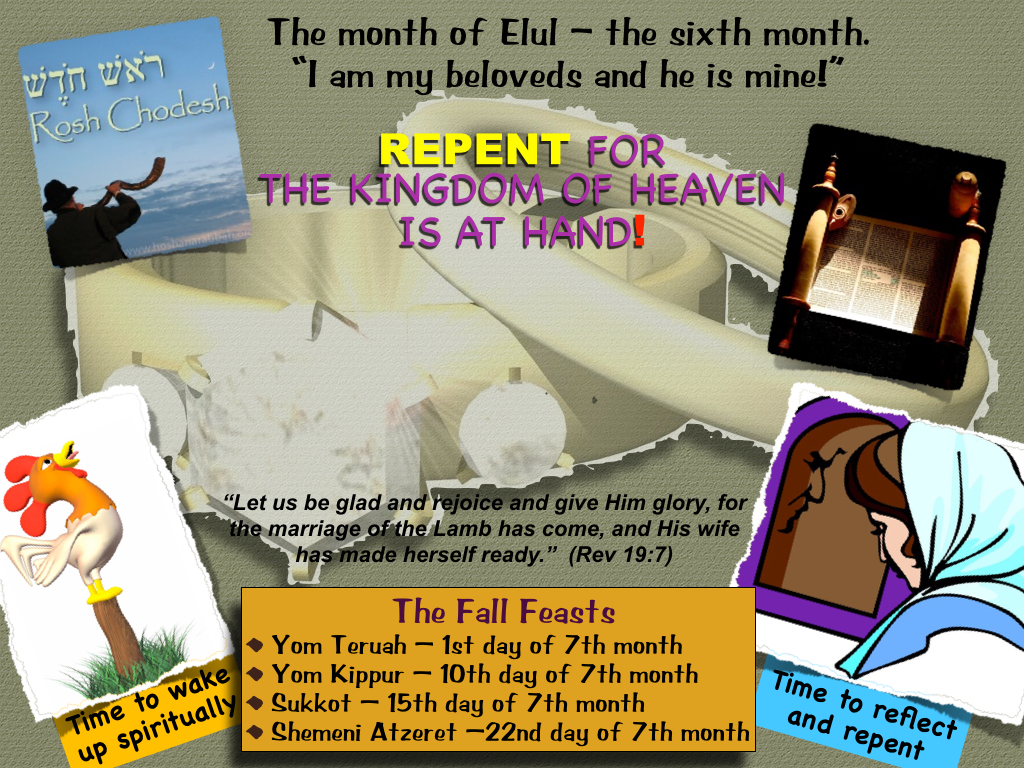
The Month of Elul is here—time to prepare for the fall feasts!

Elul-graphic.0011

Getting in Sync With YHVH Times and Seasons

What are the forty days of teshuvah (the Hebrew word meaning “repentance”) all about? Let’s briefly explore this concept to see how why they occur when they do and how they relate to the fall biblical feasts and the second coming of King Yeshua the Messiah.

Repentance

During these forty days, which begin on the first day of the sixth month on the biblical calendar and end on the Yom Kippur (the Day of Atonement), it is time for the redeemed believer to get his or her spiritual house in order for the upcoming biblical high holy days. Why? Because these holidays prophetically picture the second coming of Yeshua the Messiah and his gathering his people to himself, and the coming judgments upon the earth of the wicked and lukewarm, and the pouring out of YHVH’s wrath upon the wicked along with the destruction of Babylon the Great by Yeshua. They also point to the time when Yeshua will establish his millennial kingdom on this earth, and finally, the coming of the new heaven and new earth at the end of the millennium.

Furthermore, during the forty days of teshuvah, it’s time for YHVH’s people to awake from their spiritual slumber (1 Thess 5:1–8; Rom 13:11–14) and repent (or make teshuvah) from sin and turn back to wholehearted obedience to Elohim. The three months between the biblical feasts of Shavuot or Pentecost and Yom Teruah (the Day of Shofar Blasts) prophetically pictures the 2000 year time period between the first and advents of Yeshua the Messiah. As we near the end of this period, it is time to get ready for Yeshua’s second coming and to put off spiritual lukewarmeness by repenting of sin (Torahlessness) and by putting on the robes of righteousness and looking heavenward in anticipation of our Messiah’s coming. The forty days between the first day of the sixth month and Yom Kippur is the time to be doing this.

Why forty days and why now? According to the biblical record and Jewish tradition, Moses received the tablets of the ten commandments on Shavuot (the Feast of Weeks or

Continue reading →


What’s first in your life? YHVH’s will or your own?

Who or what is number one in your life?

Who or what is number one in your life?

I’m amazed at how many so-called Torah or Hebrew roots people do not orient their lives around YHVH’s commanded feasts. They fit their carnal schedules to the feasts, and not vice versa. They observe these divine appointments and commanded assemblies only when it conveniently fits in with job and school schedules or family plans (like vacations and other family events). If Yehovah’s feasts conflict with their their carnal plans, guess what takes second seat? Yep! The feasts.

I’m reminded of what Yeshua commanded us, his disciples, in Matt 6:33.

But seek ye first the kingdom of Elohim, and his righteousness; and all these things shall be added unto you.

Too many times, we seek YHVH’s kingdom only when it conveniently fits in with our schedule. Is this putting YHVH first in our lives? The devil must be laughing at us for our misguided priorities and lack of obedient commitment to Elohim!

Yeshua said of those who pursue carnal things above obedience to him,

But Yeshua said to him, “No one, having put his hand to the plow, and looking back, is fit for the kingdom of Elohim.” (Luke 9:62)

So what excuses do we make for explaining our sinful actions in light of this verse?

Remember what Yeshua said in Matt 22 in the Parable of the Wedding Feast? He invited many people to the wedding feast, but they all had excuses why they couldn’t come. They had jobs, family and other cares of this life to attend to ahead of being at the Master’s wedding feast. What was the Master’s reaction and the fate of those carnal people? Go read what Yeshua said in Matt 22:1–14. In conclusion, Yeshua said, “Many are called, but few are chosen.”

Finally, Yeshua said,

 He that loveth father or mother more than me is not worthy of me: and he that loveth son or daughter more than me is not worthy of me. And he that taketh not his cross, and followeth after me, is not worthy of me. (Matt 10:37–38)

Frankly, I’m totally fed up with people who refuse to put Yehovah Yeshua first in their lives. For many years now I have been pouring out my life trying to stir up the body of Yeshua to seek him first ahead of all the physical things that are more important to them. A few of you are listening. Yah be praised, and I love these people more than words can express. But you are the minority! You know that well. For the rest of you, it’s time to wake up. Yeshua is knocking on the door of your Laodicean lukewarm life and wanting to come in to your life as he states in Rev 3:14–22. You can fool yourself, and some of your friends, but you can’t fool the all-powerful, all-knowing Just and Righteous Judge of the Universe to whom we all will answer for our actions on judgment day whether they were good or bad in his view according to his written word.

Deuteronomy 16:1ff, Keeping the biblical feasts. How important are YHVH’s feast days (annual set-apart times or moedim) to you? The Israelites and first-century Messianic believers planned their entire year’s schedule around them. That’s how important YHVH’s annual festivals were to them. Do we travel Continue reading →