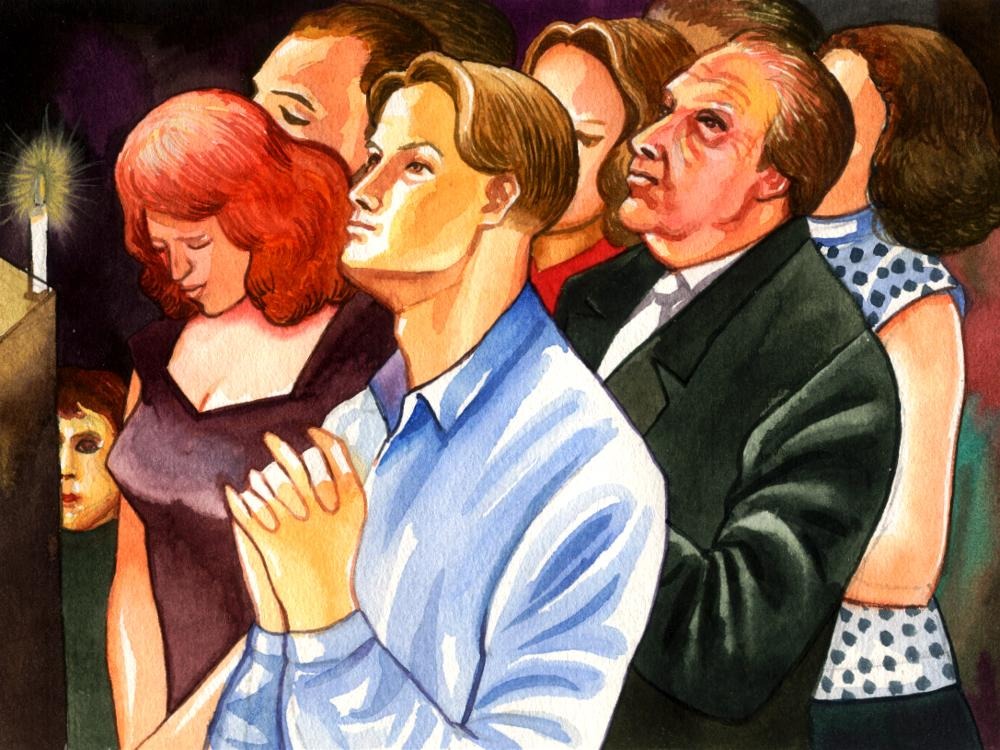
The Local Congregation—Love and Support It or You’ll Lose It!

church-congregation-16958344

After pastoring a local congregation in the Hebrew Roots Movement for the past 18, I’ve recognized a serious problem. Those who have a local congregation take it for granted, while those who don’t are aching to have one. Most of those who are blessed to have a local congregation to attend weekly take it for granted and do not fully appreciate the work and sacrifice that it takes to keep a congregation going. They take it for granted. On the other hand, those aren’t blessed to have a local fellowship long for one.

Here are some things for everyone to consider in this regard.

Hebrews 10:25, Not forsaking the assembling. The broader scriptural context of this verse gives us some valuable clues about the importance of believers in Yeshua assembling together on a regular basis. What was in the mind of the writer of Hebrew that caused him to place this admonition about assembling together after his discussion about the earthy versus heavenly tabernacle, how Yeshua is our Great High Priest, and how the blood of Yeshua is much more efficacious in cleansing us from sin then the sprinkling of animal blood on the mercy seat in the tabernacle? What’s more, the writer goes on to talk about the saints boldly entering the most holy place of the heavenly sanctuary by way of the blood of Yeshua and being washed by the water of the Word of Elohim. After this, he admonishes the saints to not forsake assembling together, and so much more so as they see “that Day” (i.e., the day of Yeshua’s coming) approaching. What does all this have to do with the saints assembling together? It is this: The saints coming together (on the seventh day Sabbath, biblical feasts and any other times) should be a holy of holies experience — the nearest thing to heaven on earth this side of heaven! In as much as the holy of holy, in Hebraic thought, is a prophetic picture of the bridal chamber where YHVH will meet and spiritually commune with his people, by the saints assembling together, they are rehearsing the soon coming reunion between Yeshua and his bride (redeemed believers who love Yeshua by keeping his commandments) at his second coming. This is the larger context behind the admonition to “not forsake the assembling of ourselves together.”

The Benefits of Being Part of a Local Congregation

Church attendance is plummeting in America. Though roughly 85 percent of Americans claim to be Christian, only a very small percentage of these people attend church services weekly. Those who do, spend only one or two hours a week in church at the most. Even Continue reading →


Solomon’s Downward Spiritual Spiral Begins

Beautiful egyptian woman bronze portrait.

2 Chronicles 8:11, Daughter of Pharaoh…my wife. Solomon couldn’t bring his heathen wife into the City of David, for fear of defiling the holy ground thereof. So why did he marry her in the first place?

This obviously was a marriage strictly for political purposes (and being a kings daughter, she was probably good looking to boot!)

This type of action on Solomon’s part was the beginning of his spiritual descent that eventually led to idolatry and witchcraft.

Even as Samson had a weak spot for beautiful women and it led to his downfall, the same happened with Solomon. Instead of trusting in YHVH to be the strength of his kingdom as he had promised to do, Solomon relied on comprising political alliances, horses and chariots—something which YHVH commanded his servants not to multiply (Deut 17:16). To do this would lead them into a secular downward spiral orientation and take them away from trusting in Elohim for their defense and protection.

What is the lesson in this for us? Though we are in the world, we are not to be of the world, as Yeshua said in John 17. To live on this earth, we must sagaciously navigate the waters of this cosmos without getting sucked in to using worldly methods to advance the kingdom of Elohim. If not careful and discerning we can fall into the trap of using the methodologies of this world as a pretext for doing “the Lord’s work” when in reality we’re fulfilling our own carnal agendas and desires for money, power and public recognition.


How to Really Get Clean on the Inside

piece of soap and foam

Hebrews 9:13–14, Purifying the flesh…cleansing your conscience. The Levitical sacrificial system was never able to atone for sin in the full sense. These sacrifices were effective only temporarily in that they had to be continually repeated. These sacrifices never mitigated YHVH’s judgment against sin. The Levitical sacrifices simply covered over sin, so that the sinner could stand before Elohim without being consumed by his righteous judgments.

Only Yeshua’s death could satisfy Elohim’s judgment against sin. Only his atoning sacrifice could thoroughly wash away our sins, remove the death penalty, which is the wages or penalty of sin, and cleanse the sinner of a guilty conscience or spirit of man so that one could “serve the living Elohim.” Sin can contaminate the spirit of man, which houses the conscience of man (2 Cor 7:1). Only the blood of Yeshua can miraculously cleanse our flesh and spirit and bring us to perfect holiness in the fear of Elohim (Ibid.) This Yeshua did in a spiritual sense in the spiritual temple in heaven, which is greater than the physical temple on earth, which was a mere copy or shadow of the one in heaven (Heb 8:3–6).

The cleansing the temple system offered was physical and external, while the one Yeshua offers through the heavenly temple gives internal cleansing.


The Connectedness of YHVH’s Word

blue volumetric lattice

Deuteronomy 27:15–18, The commandments are all inter-connected. To the casual reader, the admonitions contained in these verses may seem to be arranged in a random order, but this is not the case.

Consider the following: The prohibition against idolatry (verse 15) is juxtaposed with that of degrading one’s parents (i.e., not honoring one’s parents, or as S. R. Hirsch states in his commentary, “who outwardly is respectful to his parents but inwardly considers himself vastly superior to them”) along with trespassing against one’s neighbor’s property by removing his neighbor’s boundary markers or landmarks.

Now consider this: One who does not honor and fear YHVH but turns to idolatry (the second commandments) will not honor one’s parents (the fifth commandment) (and vice versa) will likewise not honor the property of one’s neighbor (including his neighbor’s wife). Juxtaposed next to these commands is the prohibition against misleading a blind person (verse 18). This means that we should not take advantage of his blindness by advising him in a way beneficial to us and detrimental to him.

Juxtaposed to that is one who steals justice from another by perverting judgment against one who is weaker socially or financially or who is less informed at law than another thereby giving the advantage to the stronger (The ArtScroll Davis Edition Baal HaTurim Chumash/Devarim, pp. 2126–2127).

Can you see how each command is interrelated with all the others? Does this not give one insight into the curious statement found in James 2:10, which declares that if you have broken one commandment you have  broken them all? We can see that in one way or the other, all of YHVH’s commandments are inter-related, all depend on each other, and they all stand or fall together.

Now relate James 2:10 back to verse eight where the entire Torah-law can be summarized as the “royal law of love.” As you review YHVH’s list of prohibitions in Deuteronomy 27 can you see any other relationships between these juxtaposed concepts? Learning to exegete (draw truth out of) Scripture in this manner will yield a whole new level of spiritual revelation to the reader.


Are you a blasphemer? Don’t say “No” too quickly!

On the one hand, many people claim to love the God of the Bible, and on the other hand, they are, often unwittingly, blaspheming him. How is this possible?

Deuteronomy 28:15, To the voice of YHVH. What is the voice of YHVH? Is his voice the voice that uttered the Torah at Mount Sinai? Is it the voice of his Spirit inside of you? Is it the voice of Yeshua as largely recorded in the red letters of the Testimony of Yeshua, or is it the entire Word of Elohim called the Scriptures?

If his voice is all of the above, then should any parts aspects of his voice contradict with any other?

If we have a theology where one aspect of YHVH’s voice contradicts with and another and we believe something he has said has been “done away with,” then what does this imply about the mind and nature of YHVH? There is a psychological term for this. It is called schizophrenia, a dual or multiple personality disorder or insane.

Now we would never dare label YHVH with such terms, for to do so would be blasphemy, yet many of our religious beliefs make YHVH into something that he is not, and we risk become an unwitting party to attaching this blasphemous labeling to the Almighty Creator if we subscribe to these false theologies.

One things is certain. YHVH is not a liar, nor does he ever contradict himself. If there seems to be a problem with inconsistency in YHVH’s Word the problem is with our ­misunderstanding or misinterpretation of it, and NOT with the actual Word or voice of YHVH!


A Homeschooling Mama Bear Speaks Out

Thanks William for bringing my attention to T.E. Solomon and her video entitled, “NOT all Hebrew roots Christians are “Flat Earthers.” I encourage everyone to watch it as I just did. It’s balanced, passionate and biblical. It’s just plain good old basic common sense, which seems to have scarce among many Hebrew roots teachers as it is elsewhere in the world.

Enjoy and be edified.


Who was at fault—Elohim or man?

Many hands pointing finger at you

Hebrews 8:8, Finding fault with them. What was the fault of the first covenant? The Torah-law of Elohim, or the people who failed to abide by the terms of the covenant, i.e, the Torah? The next verse gives us the answer: “because they continued not in my covenant…” The Israelites were at fault.

YHVH gave Israel his Torah-laws (or instructions in righteousness) to teach them how to love him and to love their neighbors (Mark 12:29–31). If they followed his Torah-instructions, he promised to bless them (Deut 28:1–14), and declared that all would go well with them (Deut 4:30). Of course, we know the sad history of ancient Israel and how they rebelled against YHVH again and again. There was nothing wrong with his Torah laws, which said, you shall not murder, steal, commit adultery, lie, covet, kidnap, commit homosexuality or incest, worship false gods, take YHVH’s name in vain, keep his Sabbaths, don’t practice divination, honor your parents and so on. What’s wrong with these? Nothing. The fault was with the people who failed to abide by these standards of righteousness, and this is exactly what the author of Hebrews is saying here. Because the people broke their contractual or covenantal agreement with YHVH and literally abandoned him for false gods, he was forced to make a new covenant with other people who would have the heart and love and obey him. This is exactly what Jeremiah prophesied would occur, and the writer of Hebrews is simply quoting Jeremiah in this passage. What is the main difference between the first and second covenants? As the Israelites of old didn’t have the heart to obey YHVH because of the hardness (or carnality) of their hearts (Heb 3:8, 15; 4:2, 7), YHVH promised through Jeremiah to renew his covenant with the descendants of the ancient Israelites (i.e., the house of Israel and the house of Judah, Jer 31:31; Heb 8:8), but this time, by his Spirit, he would write his Torah-laws on their hearts and in their inward parts, so they wouldn’t resist obeying him, but would desire to be pleasing in his sight. So the fault was with the hard-hearted Israelites, not with YHVH standards of righteousness called his Torah-laws!