Eight Things You Can Do Now that Donald Trump Will be President

usa-1-21632842

Yehovah Elohim, the Creator of the universe, has granted the USA a reprieve from a well-deserved spiritual judgement by allowing Donald Trump to win the US presidency in a stunning and historical election upset over Hillary Clinton.

Donald Trump IS NOT the answer to America’s problems. No human is. Only Yeshua the Messiah is. Period. Yet down through the ages, Yehovah has chosen to use human instruments to accomplish his purposes no matter how flawed they may be. The Bible records several notable examples of amazing flawed individuals and even a heathen leader that the Creator has used. Two examples of this were Samson the womanizer who helped liberate the Israelites from their wicked Philistine enemies, and Cyrus the heathen Persian king who sent the Jews back to the land of Israel to rebuild the temple. Beyond that, Moses, King David (he as also an adulterer) and Paul the apostle were all murderers. Also let’s not forget how the Almighty Creator used Balaam’s donkey to accomplish his purposes!

The choice in my mind was clear who to vote for. Admittedly, I never cared for Donald Trump from the time I read his best-selling book back in the 1980s, The Art of the Deal. This was because of his extreme arrogance and his womanizing. However, as the owner and operator of a business since I was twelve years old, I can’t but help but respect anyone who is a success in the business world. Most business fail in the first five years. Anyone who can make it, deserves credit and respect.

Beyond that, the choice was clear. I will be blunt here. This may offend some, but I don’t care. You can switch the channel if you don’t like it. It’s time wake up and get real. Our choice was between a woman who is a lying, megalomaniac, Jezebel witch and sexual deviant who was also a traitor to her country and totally sold out to the Babylon the Great New World Order and a very flawed and rather typical carnal man. That’s all.

America had a choice to make. It could continue down the road of leftist progressivism that has failed everywhere in the world where it has been tried. It could choose a leader Continue reading →


Mysteries Pertaining to the Kingdom of Heaven Explained

new-heavenearth

Matthew 13:1–58, Yeshua unlocks fundamental mysteries pertaining to the kingdom of heaven. 

Let’s systematically analyze this amazing chapter section-by-section to see if we can unlock some deep mysteries pertaining to the kingdom of Elohim.

In the Parable of the Sower, Yeshua reveals that he is sowing the seeds of the gospel message far and wide across the field of the world (v. 38). That seeds falls on all types of ground and there are external influences (i.e., the world, the flesh and the devil) that affect whether the seed will germinate and come to fruition or not. The bottom line is that the majority of seed gets destroyed along the way and fails to produce fruit.

Yeshua then explains the purpose of parables (see comments on v. 14). The main point of this discussion is that only those who are genuine and earnest truth seekers will find the deep spiritual truths of Yeshua’s kingdom behind his parables. These are the ones who have “eyes to see and ears to hear” who will eventually become part of his kingdom. All others will fall by the wayside having disqualified themselves by their lack of spiritual zeal and tenacity to enter into his kingdom.

Yeshua’s Parable of the Wheat and Tares is an expansion of one aspect of the of the previous parable. In the Parable of the Sower, bad seed (i.e., the sons of the wicked or the lawless/Torahless one, vv. 38 and 41) can also be sown by the enemy (the wicked one or the devil, v. 39) into the field in which the good seed on the good ground is sown. This means that of the seed that is sown there’s a reduction factor of four to one. Only one in four seeds or twenty-five percent comes to fruition. Amongst the remaining twenty-five percent, tares or noxious weeds that are planted by the Satan will grow up around the good seed or wheat. The wheat plants are the saints or the sons of the kingdom (v. 38) or the righteous (v. 43) who must be tried, tested and spiritually refined along the way by the tares amongst them. Will the saints be faithful to the Master, or will they fall victim to the lies and dessemblance of the false saints or satanic elements among them? Distinguishing who are wheat and tares is only possible by evaluating the fruits that are produced (Matt 7:15–20). This takes time to determine as a plant slowly develops and it then becomes evident whether it’s a wheat or a tare. At the end of the age, Yeshua will send his angels to separate out the wheat and the tares (see Matt 24:31 and Rev 7:1–8 cp. 14:14–20). The former will inherit his everlasting kingdom, while the latter will be burned up in the lake of fire.

Through the process of separation, refinement and elimination, the good seed in the fertile ground germinates and begins to spread its roots and grow into a large plant. Though the saints are like many individual plants in Yeshua’s spiritual field, Yeshua likens the expansion of the kingdom of Elohim in the life of the saints to a singular mustard seed that though it is very small, in time it becomes a very large tree-herb in the garden. Even as a large plant that is now well established in Yeshua’s garden (despite the opposition of the tares), the wicked one will continue to send his demonic agents (the birds of heaven, see vv. 4 cp. 19) that will attempt to find shelter within the branches of the tree. As demonic spirits and their agents were attracted to Yeshua (Mark 3:11) and his apostles (Acts 16:16–18), even so in our days, those with demonic spirits will be attracted to the congregation of the righteous.

Next, Yeshua likens his kingdom to the action leaven in bread dough. This is the only reference in the Scriptures to leaven as a positive thing. In this case, bread may be viewed as a metaphor for the spiritual body of Yeshua. Indeed, Yeshua is the bread of life (John 6:26–40) that is unleavened or sin-free. However, when humans become part of Yeshua’s kingdom or spiritual body it will expand, which is a good thing. However, because humans aren’t sin free, but are like leavening (a biblical metaphor for sin), the bread or body of Yeshua will grow, though comprised of sinful humans who have been redeemed from sin. This calls to mind the bread waving ceremony the priests conducted on the Feast of Weeks (Shavuot) where they waved two leavened wheat flour loaves of bread representing the two houses of Israel above the altar before YHVH for his acceptance. Though YHVH is set-apart or holy and hates sin, his mercy triumphs over his judgment against men’s sin, and he graciously accepts humans who have been redeemed from sin by Yeshua the Messiah, who is the Bread of Life. His eternal kingdom will be comprised of imperfect humans who have been redeemed from sin, which is why he likens the expansion his kingdom to leaven being used to expand the bread.

Yeshua then likens the kingdom of heaven to a treasure buried in a field, which a man discovers and sells all he has to buy the field containing the treasure. This parable shows the heart attitude that one must have if they want to be part of Yeshua’s everlasting kingdom. They must seek first his kingdom above everything else in their life (Matt 6:33), and be willing to die spiritually to anything that comes ahead of Yeshua (Matt 10:39; 16:25).

The kingdom of heaven is also like a pearl of great price — an ultimate treasure — that one must be willing to sell all to “purchases.”

The Parable of the Dragnet teaches us that as the gospel is preached, it is like a giant fishnet that is cast out across the seas of humanity. Many people will respond to the glorious gospel message of salvation and the kingdom of heaven. However, like the Parable of the Wheat and Tares, the gospel message will attract both the sons of the kingdom and the sons of wicked into the same field (as in the earlier Parable of the Wheat and Tares) or fishnet (as in the Parable of the Dragnet). Again, Yeshua reveals that at the end of the age, his angels will separate out the good fish (the sons of the kingdom) from the bad fish (the children of the devil). The latter will be cast into the lake of fire (see Matt 24:31 and Rev 7:1–8 cp. 14:14–20).

Yeshua finishes his teaching on the kingdom of Elohim by explaining that only those who study the Bible deeply and diligently will understand these mysteries of the kingdom of heaven. They will view them as priceless treasures and desire to share them with others.

Sadly, Matthew 13 ends by showing that Yeshua’s own friends and family largely rejected his teachings on the kingdom of heaven. “A prophet is not without honor except  in his own country and in his own house,” he concludes.

 

Who Was Sarah?

sarah20474058

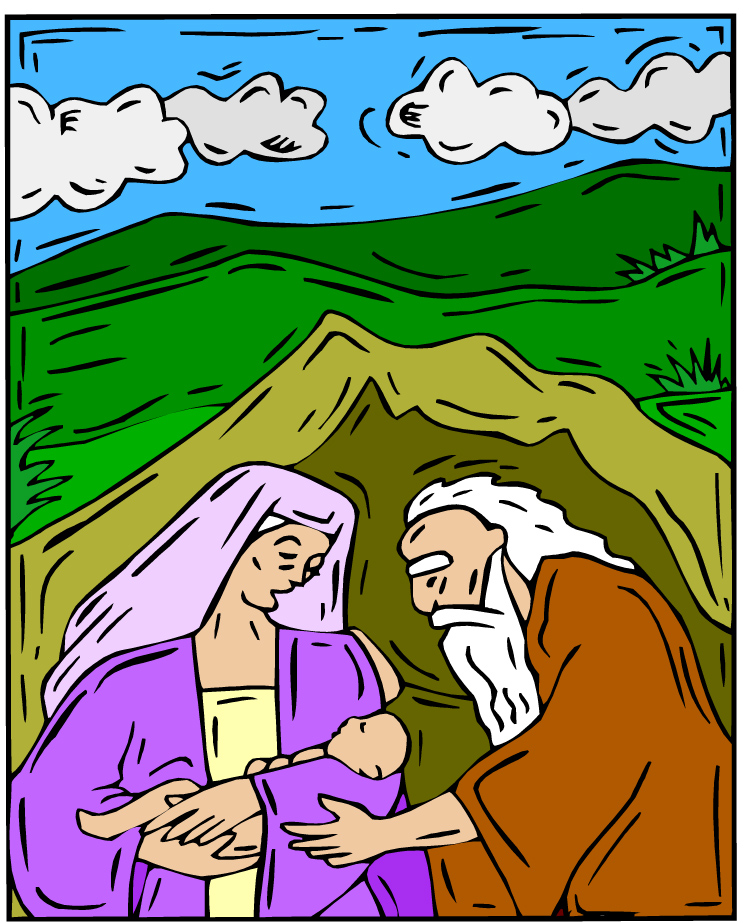
Sarah—A Great Woman of Faith

Sarah was very beautiful in character and physical appearance, since the two are related (Gen 12:10–20). A person with an ugly, angry, bitter disposition will not have a beautiful, attractive countenance.

At age 90 she was still youthfully beautiful, or else why would King Abimelech have abducted her and wanted to marry her? (Gen 20:2). Sarah was of such honorable character, demeanor and bearing that a king would honor her by wanting to marry her.

Sarah was coequal with Abraham in the covenantal promises. Prior to Gen 17:15-22 the covenant was solely with Abraham. Here Sarah was made an equal party in this covenantal promise. And just as Abraham’s new role was signified by a change of name, so was Sarah’s. The word Sarai, means “my princess,” implying that she owed her greatness to her status as Abraham’s wife. Henceforth she would be called only Sarah, which signifies that she would become a “princess to all the nations of the world.” Prior to the covenant, Sarai’s personal majesty made her the princess of Abraham (and his country Aram). Now, however, all limitations were removed. She was princess “par excellence”—to all mankind (The Stone Edition Chumash, p. 75).

Sarah protected the spiritual atmosphere of her home. She was guarding her righteous son, Isaac, from the profaneness and mockery of the unrighteous Ishmael. She was concerned that Ishmael’s behavior toward Isaac would impede or prevent Isaac from fulfillment of his godly mission. Any relationship with wicked people would have been harmful to Isaac and his children as Abraham recognized when he decided that he could not remain together with Lot. This is why Sarah demanded that Abraham drive Ishmael and Hagar away, and why YHVH ratified Sarah’s righteous request (The Stone Edition Chumash, p. 97, Gen 21:10–11). “Evil conduct corrupts good manner” (1 Cor 15:33).

Sarah was obedient and respectful to her husband, and Paul used her as an example for righteous women to follow.

Likewise, ye wives, be in subjection to your own husbands; that, if any obey not the word, they also may without the word be won by the conversation of the wives; while they behold your chaste conversation coupled with fear. Whose adorning let it not be that outward adorning of plaiting the hair, and of wearing of gold, or of putting on of apparel; but let it be the hidden man of the heart, in that which is not corruptible, even the ornament of a meek and quiet spirit, which is in the sight of God of great price. For after this manner in the old time the holy women also, who trusted in God, adorned themselves, being in subjection unto their own husbands: Even as Sarah obeyed [to listen, to hearken to a command, be obedient, to submit to] Abraham, calling him lord [Gr. kurios means “master, sir; a title of honour expressive of respect and reverence”]: whose daughters ye are, as long as ye do well, and are not afraid with any amazement. Likewise, ye husbands, dwell with them according to knowledge, giving honour unto the wife, as unto the weaker vessel, and as being heirs together of the grace of life; that your prayers be not hindered. (1 Pet 3:1–7)

Sarah, like Abraham, had faith in Elohim. Behind Abraham, a great man of faith, was Sarah, who was a great woman of faith.

Through faith also Sarah herself received strength to conceive seed, and was delivered of a child when she was past age, because she judged him faithful who had promised. Therefore sprang there even of one, and him as good as dead, so many as the stars of the sky in multitude, and as the sand which is by the sea shore innumerable. (Heb 11:11–12)


The Abrahamic Covenant—Foundation of the New Covenant

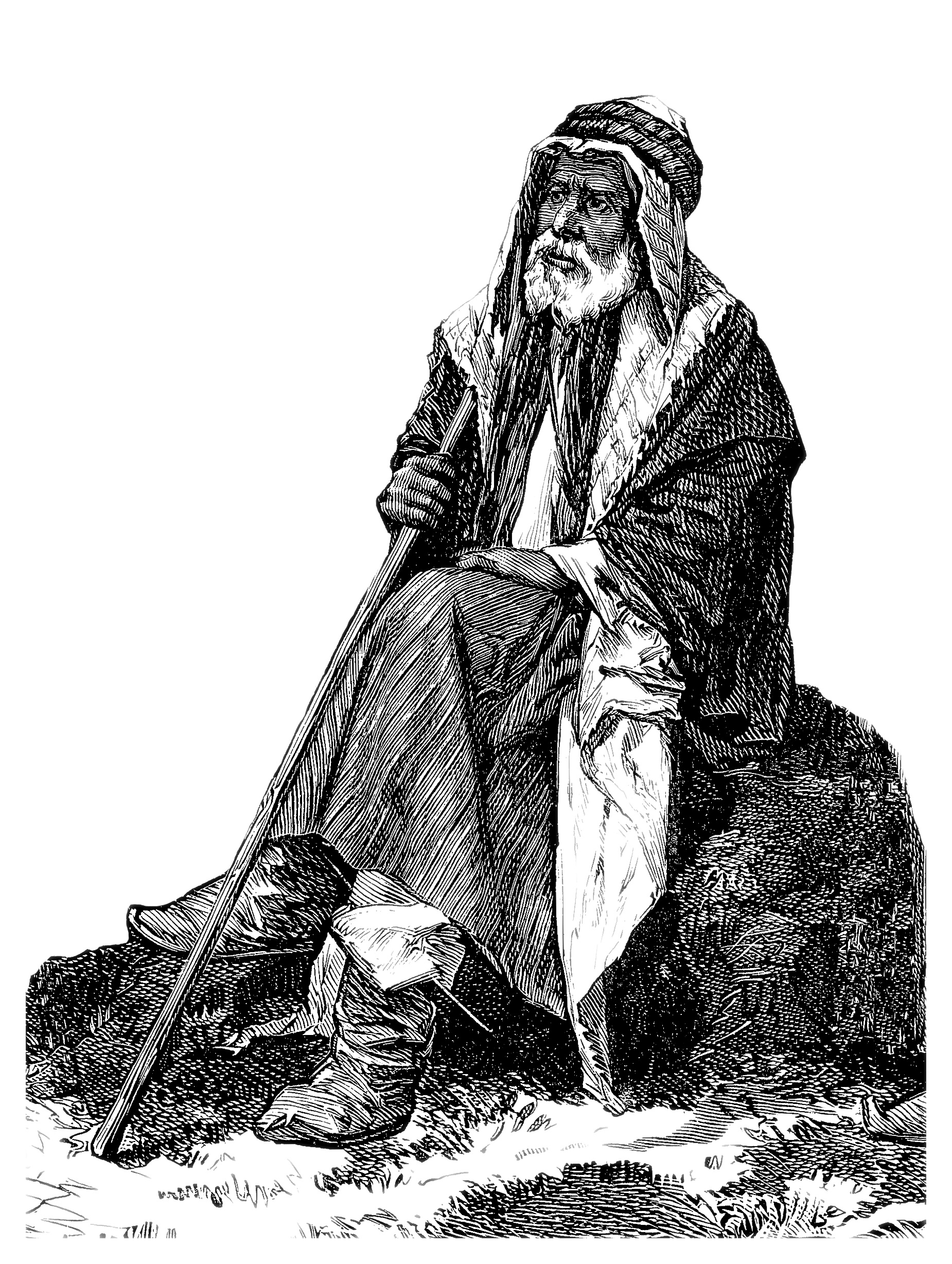
Old Semitic Man

The Abrahamic and Mosaic Covenants Are Subsections of the Torah Covenant (or the Old Covenant)

The Torah, the first five books of the Bible, is the chronicle of YHVH giving man instructions to follow, and of his entering into covenantal relationships with men and men either keeping those agreements or breaking them.

The word Torah means “instructions, teaching or precepts; specifically in biblical context: the teachings or instructions of YHVH to lead men into a righteous relationship with him through covenantal agreement.” The Torah is a giant b’rit or covenant. The Torah in a number of places even refers to itself by the Hebrew word b’rit or covenant. We see this in the following passages:

Exodus 34:27, And YHVH said unto Moses, Write you these words: for after the tenor of these words I have made a covenant with thee and with Israel.

Deuteronomy 29:1, These are the words of the covenant, which YHVH commanded Moses to make with the children of Israel in the land of Moab, beside the covenant which he made with them in Horeb.

The Torah is not unlike an instruction manual that one might receive from the manufacturer of an automobile, computer or some such device to help the buyer to operate his new purchase in a manner that allows him to receive years of trouble-free service. The Torah is YHVH’s instruction manual to help man to live in a way that brings life and blessing; it helps man to enter into a loving relationship with his Creator and to have a trouble-free relationship with his fellow man.

Within the first five books of the Torah-covenant are several smaller covenantal subdivisions such as the Abrahamic and the Sinaitic or Mosaic Covenants. The Theological Wordbook of the Old Testament (TWOT) describes this as follows, “Deuteronomy 29:13–14 shows the Sinaitic Covenant was an extension of the Abrahamic ­Covenant…. The Sinai renewal merely stressed man’s responsibility where the Abrahamic Covenant emphasized Elohim’s promise… The Priestly Covenant of Num 25:12–13, the Davidic Covenant of 2 Sam 7 and the New Covenant of Jer 31:31 are all administrative aspects of the same covenant, Elohim’s Covenant of grace. This covenant reaches its Continue reading →


Blog Scripture Readings for 11-6 Through 11-12-16

Aside

THIS WEEK’S SCRIPTURE READINGS FOR STUDY AND DISCUSSION:

Parashat Lekh L’kha — Genesis 12:1 – 17:27
Haftarah — Isaiah 40:27 – 41:16
Prophets — Joshua 15:1 – 21:45
Writings — Psalms 19:1 – 26:12
Testimony — Matthew 12:1 – 15:39

Our new Scripture Reading Schedule for 2016-2017 is available to download!

Most of this week’s blog discussion points will be on these passages. If you have general comments or questions on the weekly Scripture readings not addressed in a blog post, here’s a place for you to post those. Just use the “leave a reply” link below.

The full “Read Through The Scriptures In A Year” schedule, broken down by each day, can be found on the right sidebar under “Helpful Links.” There are 4 sections of scripture to read each day. One each from the Torah, the Prophets, the Writings, and from the Testimony of Yeshua. Each week, the Torah and haftarah readings will follow the traditional one-year reading cycle.

Weekly Blog Scripture Readings for 11/06/16 through 11/12/16.


What is the yoke of Yeshua and why is it easy?

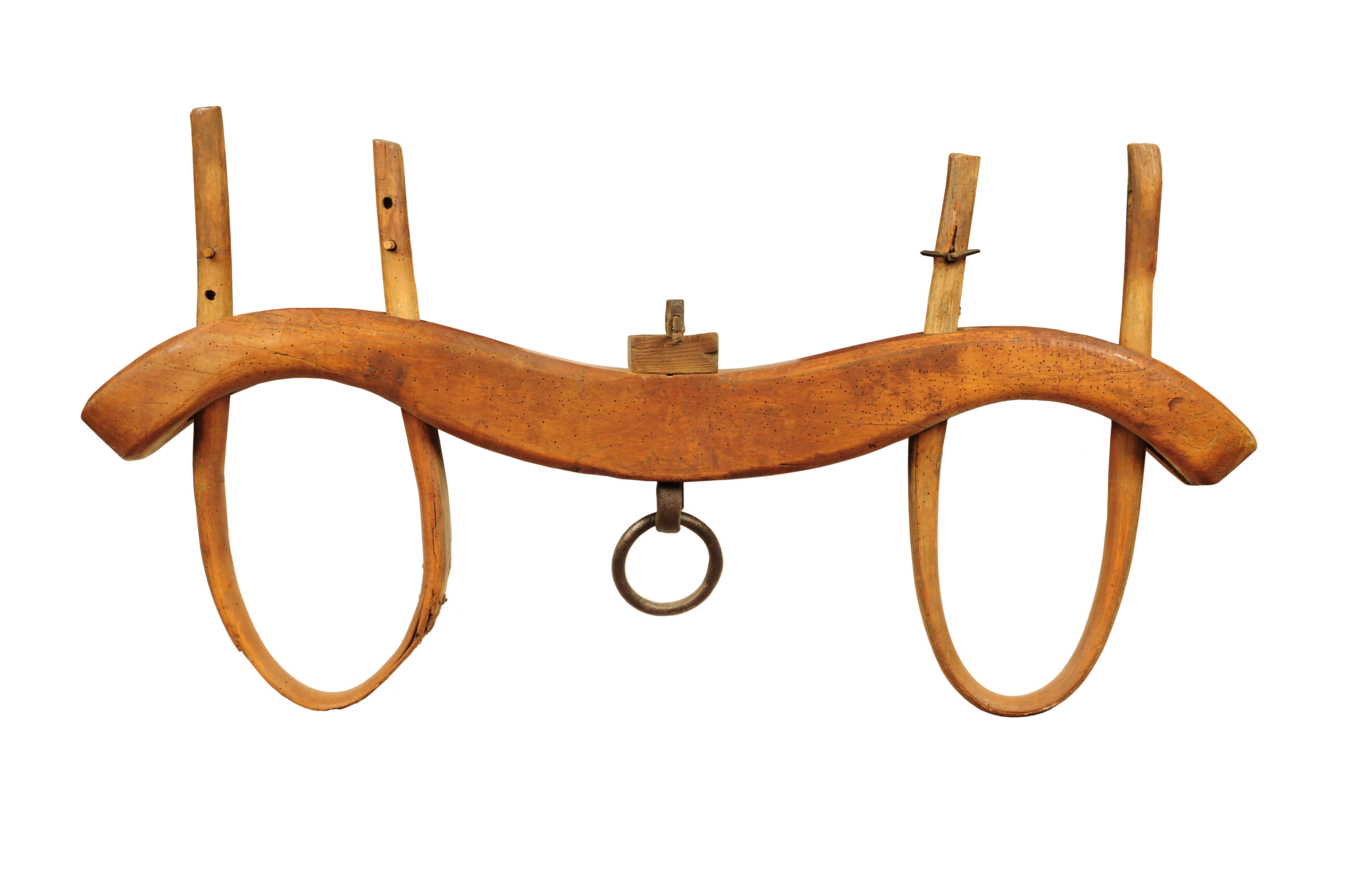
Bow Yoke for Oxen

Matthew 11:29, Take my yoke. This is an invitation to the marriage covenant with Yeshua; to become yoked to him in love, voluntarily through love, not compulsion or fear (see notes at Song 8:6).

Here Yeshua is inviting his followers to take on themselves the yoke of the marriage covenant (the New, Renewed or Everlasting Covenant of Jer 31:31, 33 and Heb 8:8); that is, to accept him as their heavenly and everlasting spiritual Bridegroom. This is the yoke of the bondservant to which all the apostolic writers made reference when they called themselves the bond servant of Yeshua.

Men have only two choices: Be a bond servant to Satan or to Yeshua. The former leads to judgment against sin which is death, while the latter leads to mercy and forgiveness, deliverance from death and sin through Yeshua resulting in eternal life.

The marriage covenant or New/Renewed/Everlasting covenant isn’t one of compulsion (based on the fear of death), but is based on voluntary servitude and is a freewill choice. Love can’t exist under an atmosphere of compulsion, but only when there’s freewill choice.

This freewill choice to take on oneself the yoke of Torah is evidenced in the decision of the apostles vis-à-vis the Gentiles inclusion into covenantal relationship with Yeshua and the rest of the believers in Acts 15. The Pharisee believers were compelling the Gentiles to follow the Torah as a prerequisite for salvation and inclusion into the community of believers (Acts 15:1). On the contrary, the apostles made it clear in their verdict that only certain minimum requirements be imposed on the Gentiles to be granted entrance into the community of believers. The Gentiles needed to be drawn into the Torah covenants, not by compulsion or fear, but through invitation and freewill choice based on love. The apostles go on to say in Acts 15:21 that on this basis, the Gentiles will learn to take on the yoke of Torah little-by-little out of love for Elohim and Yeshua their Bridegroom, and not out of fear and compulsion.

Matthew 11:30, My yoke is easy. The farmer of biblical times when plowing his field with a team of oxen had to ensure that the yoke was not ill-fitting, but that it fit comfortably on the necks of the animals pulling the plow. An ill shaped and a heavy yoke would irritate the oxen making the task of plowing difficult for both the animals and the operator, while a comfortable, well-fitting yoke made the task much easier.


Who are the lost sheep of the house of Israel? Maybe you’re one of them…?!

Lone Sheep

Matthew 10:6, Lost sheep of the house of Israel. The phrase the house of Israel has several possible meanings depending on the context of the surrounding verses in which it is found.

The phrase the house of Israel is used 146 times in the Scriptures. Prior to the division of the united kingdom after the death of Solomon, this phrase referred to all twelve tribes of Israel. Afterwards (during the time of the prophets), it was used in contradistinction to the phrase “house of Judah” in reference to the Northern Kingdom.

In the Testimony of Yeshua, Yeshua makes reference to the “lost sheep of the house of Israel” (Matt 10:6; 15:54). Elsewhere in the Testimony of Yeshua this term refers to all twelve tribes of Israel (Acts 2:36; 7:42; Heb 8:10), and in some references it refers to just the Northern Kingdom (Heb 8:8). The context of the passage of scripture surrounding this phrase determines its meaning.

Although this phrase can include all the tribes of Israel and not just the Jews who were largely from the tribe of Judah, in Matthew 10:6, Yeshua seems to equate the lost sheep of the house of Israel with the Jews who were living in the land of Israel in his day, and not to the rest of the Israelite tribes who were at that time scattered among the Gentile nations. It was Yeshua’s priority to take the gospel message first to the Jews in Jerusalem and Judea, and then to the rest of the world, and he expected his disciples to follow this same pattern (Acts 1:8).

In the larger sense, the Scriptures reveal that all of YHVH’s people have been like sheep that have gone astray spiritually, every man to his own way, because of sin (Isa 53:6). So in the broadest sense, this phrase refers to all the tribes of Israel including Gentiles with which they have mixed themselves through intermarriage.

Eventually, the gospel message is for everyone universally. Yeshua demonstrated this when, on several occasions, he ministered to non-Jewish Gentiles including preaching the gospel message to the Samaritan woman in John chapter four.