Abraham Spiritual Journey from Initial Faith Onward—A Model for Us to Follow

Genesis 26:5, Because. Based on Paul’s teaching in Romans 4, we see that the Abrahamic Covenant is the model for salvation, which is salvation by grace through faith leading to or resulting in good works or righteousness (Eph 2:8–10).

From this verse, it might appear the Abrahamic Covenant wasn’t a faith-based covenant at all, but a works based on. In other words, Abraham had to do something to be counted righteous or to come into good standing with Elohim—a concept which is commonly referred to as “earning salvation.”

The fact is that in the Abrahamic Covenant, Abraham only had to have faith and believe in YHVH to be justified or to be considered righteous by Elohim (Gen 15:6). It was on this basis that YHVH granted him “salvation.”

But this initial step of faith on Abraham’s part and the righteousness Elohim attributed to him was but the first step in Abraham’s faith walk. From that point, he had to walk out his faith and continue trusting YHVH (see also Gen 19:5). The apostolic writers present the idea that one’s spiritual journey is a walk, not a one time event that occurs at the beginning of that walk.

Our faith walk is more than just mental assent with a few emotions thrown in for good measure. It’s more than just following the golden rule about loving our neighbor in some nebulous sort of way. It’s faithfulness to YHVH’s instructions. James clearly states in his epistle that this is how one demonstrates the legitimacy of one’s faith when he declares that faith without works is dead (Jas 2:18, 20, 26).

Abraham demonstrated his faithfulness by his obedience to YHVH’s Torah or YHVH’s Word or voice. Furthermore, as a result of this obedience, YHVH promised to bless him beyond simply being granted initial salvation or righteousness.

This two-step approach or model still holds true in the Testimony of Yeshua. One is saved or delivered from the wages of their past sin (Rom 3:25), (Rom 6:23) which is death, by their faith (initial salvation), and then one ceases from that sin by continuing in the good works of Torah obedience (Eph 2:8–10).

Yeshua and the apostolic writers in numerous instances reveal that future rewards (both temporal and eternal rewards) come as a result of one’s good works (e.g. Matt 5:19). The ultimate reward is being granted eternal life and inclusion in the family of Elohim.

Abraham obeyed my voice, and kept [also: observe, preserve, guard; shamar, my charge [mishmereth], my commandments [mitzvah] my statutes [chuqqah], and my laws [toroti]. There are those who teach that the Torah-law does not predate Moses. Not only does this verse disprove that, but it also shows that Abraham kept the Torah-law of Elohim. In a Hebrew lexicon or word dictionary, look up each of these words and study their meanings and how they are used contextually in the Scriptures.

My voice. This verse equates the voice of Elohim with his Torah commands. To obey the voice of Elohim is to obey his Torah instructions. The voice and Torah of Elohim are two ways of saying the same thing. YHVH’s servants were obeying his voice, the Torah, long before it was written down by Moses.

My laws [Torah]. The word Torah here is in the plural. The Jewish sages teach that this is speaking of both the written and oral Torahs (the latter being Jewish oral tradition). Since Yeshua questioned the validity of the Jews’ oral Torah (what became known much later as the Talmud) or the tradition of the elders as he refers to it in Matt 15:2; Mark 7:3, 5), so should we. Instead of being a prophetic reference to the Talmud (which contains many Jewish fables and traditions that, in reality, violate the Written Torah [see Matt 15:6; Mark 7:7–13]), it is more likely that Moses (the author of Genesis), when using the plural form of the word Torah, was referring to the various subdivisions of the overall Torah contained in the first five books of the Bible. These subdivisions or aspects (like facets of a diamond) could include historical narrative, prophecy, the universal principles or commandments of the Torah that are applicable to all men for all time, specific commandments that applied to Israel before the cross (e.g. the Levitical and sacrificial systems) and to the Torah that was given to Moses and was written down into a codified form (like a constitution) for the governing of the nation of Israel and was referred to in the Gospels as “the law of Moses.”

The primary meaning of the word Torah, according to the Theological Wordbook of the Old Testament (TWOT) is “teaching” (and not “law”). Strong’s Concordance lists the meaning of Torah in this order: “a precept, a statute.” The New Brown-Driver-Briggs-Gesenius Hebrew-English Lexicon defines Torah as “direction, instruction, law” (in that order). According to Strong’s Expanded Exhaustive Concordance of the Bible,

Torah primarily signifies “direction, teaching, instruction” (Prov 13:14). It is derived from the verb yarah [meaning] ‘to project, point out’ and hence to point out or teach. The law of [Elohim] is that which points out or indicates His will to man … Seen against its background of the verb yarah, it becomes clear that Torah is much more than law or a set of rules. Torah is not restriction or hindrance, but instead the means whereby one can reach a goal or ideal.

The TWOT similarly states,

The word Torah basically means “teaching” whether it is the wise man instructing his son or [Elohim] instructing Israel. The wise give insight into all aspects of life so that the young may know how to conduct themselves and to live a long blessed life (Prov 3:1f). So too [Elohim], motivated by love, reveals to man basic insights into how to live with each other and how to approach [Elohim]. Through the law [Elohim] shows his interest in all aspects of man’s life which is to be lived under his direction and care. Law of [Elohim] stands parallel to [the] word of [YHVH] to signify that law is the revelation of [Elohim’s] will (e.g. Isa 1:10).

As already noted, the word Torah originates from the root word yarah, which means “to flow as water, to lay or throw as in shooting an arrow; to point out as if aiming the finger to make a point, to teach.” Another cognate (related word) of the word Torah is the Hebrew word moreh which means “teacher or archer (as in one who shoots at a target).” Moreh derives from the same Hebrew root word, yarah, as does Torah. Therefore, when one is walking according to the Torah of YHVH Elohim, one is walking in the light of YHVH’s truth, which is hitting the mark of righteousness. Likewise, YHVH’s teachings or instructions are a river of life flowing from his throne aimed at hitting the mark of truth and righteousness. By contrast, the Hebrew word for sin is chata which means “to miss the mark,” i.e. transgressing the Torah as 1 John 3:4 states, “Sin is the transgression of the Torah.”


 

Genesis 25:19–28:9 Parashat Toldot (A Gospel Oriented Torah Study)

This is a gospel-oriented Torah study. Our goal is to connect the good news of Yeshua the Messiah (the gospel message) to its Hebraic, pro-Torah roots or foundations. The information given here is more than head knowledge. Understanding and wisdom (the right application of knowledge that is based on truth) is taught thus making biblical truth practical, relevant and applicable to your daily life. The truths of the Bible not only have the power to transform your life here and now for the better, but eventually to take you past the veil of death and into eternity.

This Torah study is subdivided in sections by topic in a magazine format thus making it easy to watch at several sittings.

May you be blessed as you watch this video.

For a free, printable adult and youth Torah study guide on this Torah portion (parashah), please go to http://www.hoshanarabbah.org/parshiot.html.


Blog Scripture Readings for 11-12 Through 11-18-17

Aside

THIS WEEK’S SCRIPTURE READINGS FOR STUDY AND DISCUSSION:

Parashat Toldot — Genesis 25:19 – 28:9
Haftarah — Malachi 1:1 – 2:7; 1 Samuel 20:18-42**
Prophets — Judges 11:1 – 17:13
Writings — Psalms 40:1 – 47:9
Testimony — Matthew 25:1 – 27:66

Our annual Scripture Reading Schedule for 2017-2018 is available to download and print.

Most of this week’s blog discussion points will be on these passages. If you have general comments or questions on the weekly Scripture readings not addressed in a blog post, here’s a place for you to post those. Just use the “leave a reply” link below.

The full “Read Through The Scriptures In A Year” schedule, broken down by each day, can be found on the right sidebar under “Helpful Links.” There are 4 sections of scripture to read each day: one each from the Torah, the Prophets, the Writings, and from the Testimony of Yeshua. Each week, the Torah and haftarah readings will follow the traditional one-year reading cycle.

** A different Haftarah is read when it is a special sabbath in Jewish tradition. This week it is Shabbat Machar Chodesh (Sabbath of tomorrow’s new moon) on the traditional calendar where 1 Samuel 20:18-42 is read. Otherwise, Malachi 1:1 – 2:7 would be read.

Weekly Blog Scripture Readings for 11/12/17 through 11/18/17.


Exposing the Dark Side: The Bible on Blood Letting and Drinking, Human Sacrifice, Pedophilia, Abortion, Self-Cutting and Tattoos

The subject of blood is a gory one that few like to talk about. This Torah deals with this subject as the study below shows.

The Bible teaches about both righteous and wicked practices related to the proper and improper treatment and use of blood. The Testimony of Yeshua has a lot to say about the blood of Yeshua, which is at the center of the gospel message. At the same time, the devil has twisted the concept of blood as part of his scheme to kill, steal and destroy via murderous and heinous satanic rituals, deviant practices and even some legally accepted procedures like abortion.

As our society becomes more post-Christian and slides irrevocably into heathenism and outright devil or Baal worship, we must not bury our heads in the  proverbial sand and ignore the realities of the present gross evil darkness that is enveloping everything around it. As children of the light, we must stand for righteousness, which means we must know enough about the dark side to properly oppose it. May this brief article help in this process.  Natan

The sacrificing of animals as an act of worship or for any reason is a foreign concept in our modern, secularized society, but this was not the case in the ancient biblical world. Concomitant with sacrifices is the idea of freewill offerings,which, in the ancient world, were often made together as an act of worship to various deities. 

With regard to sacrifices, man’s first act of worship outside the Garden of Eden was to make offerings and sacrifice to Elohim (Gen 4:1–4). Making a sacrifice to Elohim was also Noah’s first act of worship after the flood (Gen 8:20). The same is true of Abraham upon receiving the covenant from Elohim (Gen 12:6). At key points in his spiritual journey, Abraham repeated this same act of worship (Gen 12:8; 13:3, 18). The same is true of the Israelites who after having received the Torah at Sinai made a sacrifice to Elohim as they entered into a covenantal agreement with him (Exod 24:4). Subsequently, YHVH instructed the Israelites to establish an entire sacrificial system as a means to be reconciled to him. Similarly, animal sacrifices and offerings being made to various deities was an important aspect of the heathen cultures of the biblical world. Even in the first century, the Greeks were still sacrificing animals in their pagan temples to their gods and goddesses (1 Cor 8:1–13; 10:20) as were the Jews prior to the destruction of their temple in A.D. 70 (Acts 21:24 cp. Num 6:13–21).

So, in the mind of the ancients, what was the purpose of sacrifice? The ritual killing and offering of an animal was part of a religious ritual either to appease or to gain the favor of a deity. 

With this concept in mind, several points should be noted. Man’s rebellion and sin against Elohim in the Garden of Eden caused man to be cut off from his Creator and incur his judgment against man’s sin. The Garden of Eden and the fall of man event is part of the mythos of many ancient civilizations (e.g. Mesopotamian, Summerian, Greek, Indians, Moslem and apparently the Babylonians, Chaldeans, Persians, Egyptians, Assyrians, Ethiopians, Mexicans and Chinese as well), and thus this idea of man’s separation from deity because of his sin informed the ancients of their need to be reconciled to a deity or deities. 

Continue reading →
 

What Are the Weightier Matters of the Torah-Law? The Higher Torah and the Highest Torah Explained

This is a teaching that every saint who is returning to the biblical, Torah roots of their faith needs to read. Why? So they don’t become hyper-focused on the dos and don’ts of the Torah-law, become legalistic, become head-knowledge-oriented people who have forgotten the spirit and heart of the law, become those who end up bowing down to the idol of intellectualism, and, most importantly, so they don’t forget the centrality of the gospel message with Yeshua the Messiah at its center.  Natan

Matthew 23:23, Weightier matters of the Torah. What are the weightier matters of the Torah? Torah is not an end-all. It is a vehicle that leads us to something. What is that? What really matters to YHVH when all is said and done???? It is the greater Torah or the higher Torah. The Gospel of Matthew (23:23) records that Yeshua rebuked the religious leaders of his day for their not following the higher Torah. What did Yeshua really mean by “the weightier matters of the Torah”?

What Is the Ultimate Goal of the Torah?

A strict obedience to the Torah is NOT the ultimate goal the Torah! The Torah, as wonderful as it is, points us to something even better and higher!

What are the weightier matters of the Torah? Perfect obedience to the Torah is not the ultimate goal of the saint. The Torah is merely a vehicle to lead us to something. What is that? What is the greater Torah, the higher and the highest Torah? What really matters to YHVH when all is said and done???? The Gospel of Matthew (Matt 23:23) records that Yeshua rebuked the religious leaders of his day for their not following the higher Torah.

Woe unto you, scribes and Pharisees, hypocrites! for ye pay tithe of mint and anise and cumin, and have omitted the weightier matters of the Torah, judgment, mercy, and faith: these ought ye to have done, and not to leave the other undone.

What did he really mean by “the weightier matters of the Torah”?

The Deeper Meaning of the Word “Torah”

Almost every place where you see the word “law” in the Old Testament (or Tanakh), it is the Hebrew word “Torah.” This word is used 219 times in the Tanakh, and in almost every case it is translated in the KJV and in most other English Bibles as “the law.” Is this all this word means? Is “law” even its main definition according to the Hebrew?

Let’s begin to answer this question by asking another one. When you think of the term “the laws” what comes into our mind: good thoughts or bad thoughts? Do you think of a list of dos and donts—what you are legally permitted to do and not to do? Do you think of red and blue flashing lights and a sirens? Or a man in a blue uniform with a star and a gun? A black-robed judge with a gavel? A prison or jail cell? If so, these can be scary thoughts!

Let’s see what the word “Torah” really means according to the Scriptures.

In Proverbs 13:14, the Bible tells us that the Torah is the fountain of life and keeps one and keeps one from the snares of death. This doesn’t sound like a bad thing, does it? It fact, it sounds really good!

Next start open your Bible to Proverbs 1:7 where we read that the fear of Elohim is the beginning of wisdom. In verse 8, Solomon urges us to not forsake the law. The word law in this verse is Torah. Continue reading what Solomon teaches us about the benefits of YHVH’s instructions and wisdom found in the Torah. Start reading in verse 9 to the end of chapter. Here he is talking about the path of sinners (those who lawless or Torahless). Next start reading in chapter three and continue to the end of chapter four. Whenever you see the words “law,” “instruction,” “wisdom,” “instructions” “commandments,” “truth,” “mercy,” “knowledge” or “words” think of Torah, for that is what these words are referring to. Does this sound like the Torah-law of Elohim is a bad think that should evoke thoughts and emotions of fear and anxiety in a person? Or does the Bible view Torah as a fountain that brings life, wisdom, mercy, truth and knowledge?

On our journey to discover what is the higher Torah, let’s turn to Psalm 119. Perhaps no other biblical chapter explains the ramifications and extols the virtues of the Torah more than this psalm of David.

Based on Psalm 119 and Proverbs chapters one through three, what are the blessings and benefits of Torah-obedience?

  • It takes away feelings of shame, guilt, reproach and contempt. (Ps 119:6, 22)
  • It gives us an upright (straightness of) heart. (Ps 119:7)
  • It cleanses one’s ways and keeps a one clean. (Ps 119:9)
  • It keeps us from sinning against YHVH. (Ps 119:11)
  • It brings delight and joy. (Ps 119:24, 70, 77, 162, 174)
  • It gives us the ability to answer those who reproach (taunt, defy, rail against) us. (Ps 119:42)
  • It gives us freedom (a large or broad area to walk in). (Ps 119:45, 96)
  • It allows us to speak wisely before leaders. (Ps 119:46)
  • It brings us comfort. (Ps 119:52)
  • It gives us something to sing about (Ps 119:54)
  • It brings hope. (Ps 119:74, 81)
  • It makes us wiser than our enemies. (Ps 119:98)
  • It gives us more understanding than our teachers and the ancients. (Ps 119:99, 100)
  • It keeps our feet from evil. (Ps 119:101)
  • It gives light to our path. (Ps 119:105; Prov 6:23)
  • It helps to order our steps and keeps sin from having dominion over us (Ps 119:133)
  • It shows us what truth is. (Ps 119:142, 151)
  • It gives something to love. (Ps 119:159, 163)
  • It causes us to hate evil. (Ps 119:163)
  • It gives us great peace. (Ps 119:163)
  • It defines righteousness for us and gives us understanding as to what righteousness is. (Ps 119:172; Prov 2:9)
  • It brings an understanding of the fear of Elohim, which is the beginning of wisdom (Prov 1:7; 2:5)
  • It gives us discretion (purpose, to know the difference between good and evil). (Prov 2:9)
  • It delivers us from the way of the evil man. (Prov 2:12)
  • It will keep us from the strange woman (a metaphor for sin or wickedness). (Prov 2:16)
  • It shall bring long life and peace. (Prov 3:2,16)
  • It shall give you favor and good understanding in the sight of Elohim and man. (Prov 3:4)
  • YHVH will direct your paths. (Prov 3:6)
  • It shall bring you good health physically. (Prov 3:8)
  • It will bring you physical wealth (because you tithe to YHVH). (Prov 3:9–10, 16)
  • It brings the loving correction and chastisement of YHVH. (Prov 3:11–12)
  • It brings happiness. (Prov 3:13, 18)
  • It brings honor (glory, abundance, riches). (Prov 3:16)
  • It is a tree of life. (Prov 3:18)
  • It brings life to your soul and grace (favor) like an ornament around the neck (Prov 3:22)
  • It will cause you to walk safely so that your foot will not stumble. (Prov 3:23)
  • It will make you so that you are not afraid—so that you can sleep safely at night and have sweet sleep. (Prov 3:24)

As we can see so far, the Torah is more than merely a list of dos and don’ts.  It brings Continue reading →


What Does the Bible Teach About Self Defense?


In Psalm 149:6–7, David, a man after Elohim’s own heart, speaking of the saints wrote, “Let the high praises of El be in their mouth, and a two-edged sword in their hand to execute vengeance upon the heathen, and punishments upon the people.” Was David’s statement merely poetic hyperbole, or was this how he, as the king and a spiritual shepherd of Israel, literally defended the people YHVH had placed under his charge? We know from his life story that the latter was the case.

20699115

When Abraham, the father of the faithful and a man who was the model of righteousness had his nephew Lot kidnapped what was his response? Does Scripture record that he prayed, then sat down expecting YHVH to supernaturally intervene and cause the Babylonians to release Lot? No. His response was to muster the 318 soldiers of his own personal army and to pursue the five kings. What was the result? YHVH granted Abraham a miraculous victory over Lot’s captors and Abraham gave a tithe of the spoils of war to Melchizekek (Gen 14).

The Torah, YHVH’s divine instructions in righteousness, in Exodus 22:2, permits and even expects a man to defend himself against a thief breaking into his home. If the defense of one’s home results in the death of the thief, there is no retribution against the defender. There are no penalties or prohibitions in biblical law against a man acting in self defense.

The well-known Aaronic Blessings (Num 6:22–27) contains the following words, “May Continue reading →


In Response to the Texas Church Massacre—It’s Time for a New Mindset!

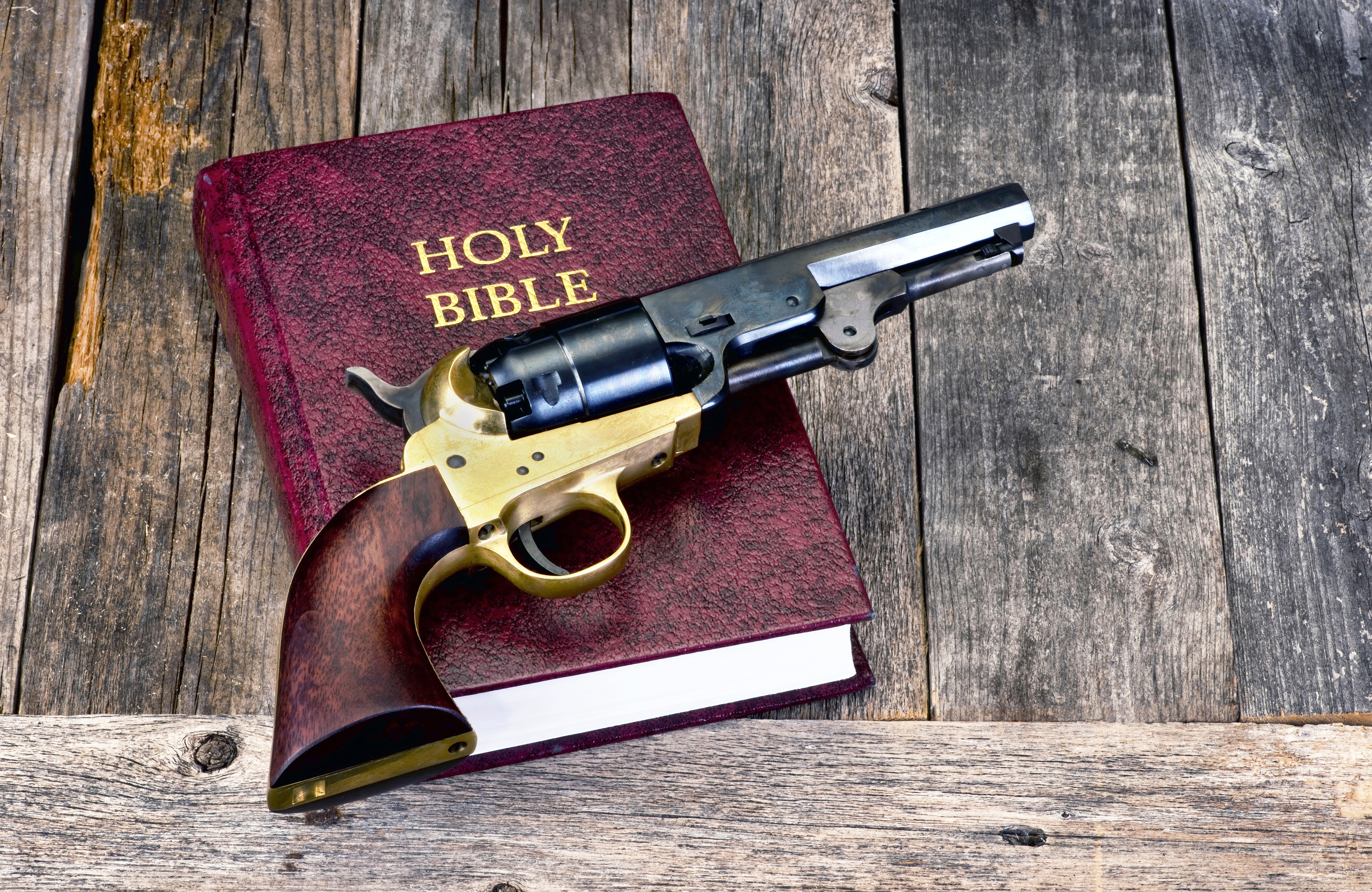
Wake up Christians! We’re living in a post-Christian society full of anarchists and Satanic God-hating nihilists who hate you and me. We’re sliding quickly into the heathenistic barbarism of Baalism. It’s the wild west guys! It’s time to wake up from you spiritual nap and to saddle for battle! The battle starts on your knees, but it doesn’t stop there.
In light of the recent Texas church massacre, Christians need to consider this: Yeshua told his disciples (that’s you and me) to be wise as serpents and harmless as doves. Instead, the churches are full of people who are oblivious to the evil serpents who want to kill and destroy them, and at the same time are still harmless as doves.
 
Sadly, most Christians are living in an altered reality bubble of denial about how evil the dark side really is. Too many believers are blinded by their normalcy bias and feel (emphasize the word feel—feelings are usually not based on reality ) that things aren’t as bad as they really are. This is the spiritual blindness of Laodiceanism that Yeshua talked about in the Book of Revelation chapter three. They don’t want to believe that things are as bad as they really are, and that Yeshua’s return is imminent, and that Satan is desperate to maintain control over his world no matter what and will stop at nothing before his ultimate defeats occurs. To face this reality would mean that these sleep-walking saints would have to wake up from their spiritual nap, repent of sin and get honest about their spiritual walk with Yeshua! This would mean that they would have to confront their sin of putting Yeshua on the back burner of their lives and to repent of their addictions to Facebook and other social media, as well as recognize their idolizing their electronic devices, video games, movies, sports and other mind-numbing forms of entertainment and start giving more time to the one who bought them with his blood, redeemed them from sin and demands total obedience and allegiance as a pre-condition for granting them the ultimate reward of eternal life.
 
Not only that, most saints get their news info from the Uncle Walter propagandistic and slanted major news outlets that tell us “that’s the way it is” and we as sheeple blindly believe them.
In reality, most of these journalistic liars typically either under-report or gloss over the depths of the evil of the dark side and its hatred for villainous desires against Bible believers. This is because these leftist news pundits are sympathetic fellow-travelers with the God-hating evil-doers. While maybe not guilty of crimes against Christians, they hate Bible believers and are guilty of murder in their hearts because their own deeds are evil. To expose the other guy would be to expose themselves for who they really are. It’s a defensive tactic of human nature to hide the truth for fear of self-exposure. At the same time Christians are oblivious to the murderous evil of the satanic-serpents who want to kill, steal and destroy, while they still naively act as harmless as doves.
 
All this to say that when I was pastoring, many years ago after the first several church shootings occurred, I got a concealed carry permit and always carried a firearm during church services. I saw the handwriting on the wall and refused to bury my head in the sand to the reality of the times in which we are living. How could I be so arrogantly ignorant to think that I was so special to YHVH that a church shooting couldn’t occur in my church? Look, if I’m going to be a martyr for Yeshua like nearly all the original apostles were, that’s one thing, but I refused to be a martyr because of my own naive stupidity!
 
Others in our congregation got their carry permits as well. I would have pitied the poor demoniac who would have tried shoot up our congregation! At the same time, we kept the doors of the church locked while services were occurring and kept a security guard at the door, while, at the same time, covering our congregation with spiritual warfare prayers as our first and most important line of defense.
 
Wake up America, wake up pastors, wake up Christians, this is 2017, not 1957! Pastors need to start acting like shepherds and start protecting their flock instead of leaving their trusting sheeple vulnerable like sitting ducks!
 
Our first and most important defense is spiritual warfare and the blood of Yeshua. After that, well…you connect the dots! We must do your part.
 
Most of you have locks on your doors, wear seat belts while driving, carry a spare tire in your car, have a first aid kit, smoke detectors in your home and have insurance to protect yourselves from everything, but when it comes to protecting yourselves in church, we’ve become naive and trusting ignoramuses who are living in the mental bubble of a past reality!
 
It’s time to grow up America! We’re not living in the 1950s anymore. It’s time for the sleeping church to wake up! Pastors: It’s time to start acting like shepherds who really protect the sheep both physically and spiritually instead of acting like the hirelings most of you really are!