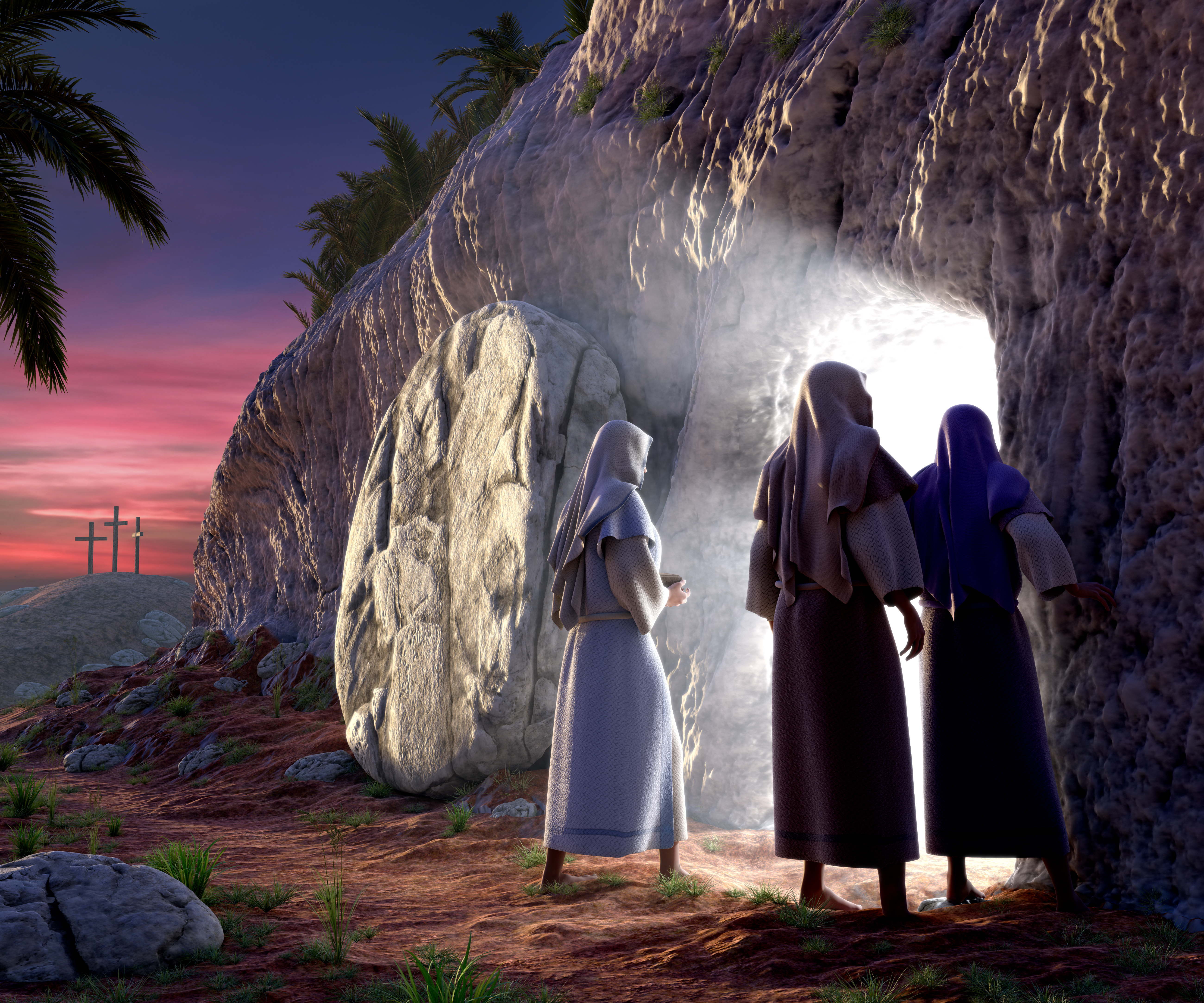
“The First Day of the Week”—Mian Sabbaton/Mia Ton Sabbaton Explained

Matthew 28:1, First of the week. 

Is this phrase only emphasizing that Yeshua’s resurrection was on the first day of the week, or is it also telling us something else? This verse reads:

 “In the end [Greek: de] of the sabbath [Greek: sabbaton], as it began to dawn [Greek: epiphosko] toward the first day [a supplied word which is not in the Greek] of the week [Greek: sabbaton], came Mary Magdalene and the other Mary to see the sepulchre.” (KJV)

The other parallel passages in the Gospel accounts include:

And when the sabbath [Greek: sabbaton] was past [diaginomai], Mary Magdalene, and Mary the mother of James, and Salome, had bought sweet spices, that they might come and anoint him. (Mark 16:1, KJV)

Now upon the first [Greek: mia] day [a supplied word which is not in original Greek] of the week [Greek: sabbaton], very early in the morning [Greek: orthros] , they came unto the sepulcher, bringing the spices which they had prepared, and certain others with them. (Luke 24:1, KJV)

Now one of the week, while still very early, they came on the tomb … (Luke 24:1, J.P. Green Interlinear)

The first [Greek: mia] day [a supplied word which is not in original Greek] of the week [Greek: sabbaton] cometh Mary Magdalene early, when it was yet dark, unto the sepulcher, and seeth the stone taken away from the sepulcher. (John 20:1, KJV)

According to Vine’s Expository Dictionary of New Testament Words, the Greek word shabbaton as used in Matthew 28:1, Mark 16:2, Acts 20:7,11 and 1 Corinthians 16:2 though translated in the KJV as “the first day of the week” literally and idiomatically means, “one of the sabbaths” signifying “the first day after the sabbath.” (p. 810)

Some scholars see this as a reference to the beginning count of the Feast of Weeks since in all the above references either that Feast or the Feast of Unleavened Bread is mentioned in the textual context of each passage.

The Interlinear Bible of J.P. Green translates sabbaton in Matthew 28:1, John 20:19, and Acts 20:7 as sabbaths, though he translates the same word not as sabbaths, but first of the week or of a week in Mark 16:2 and 1 Corinthians 16:2 respectively. Green translates the phrase containing sabbaton in Luke 24:1 as “But on one of the week, while still very early…” Likewise, Young’s Literal Translation reads, “And on the eve of the sabbaths, at the dawn, toward the first of the sabbaths…” The Bishops Bible of 1568 translates John 20:1 as, “The first day of ye Sabbothes, came Marie Magdalene early, when it was yet darke, unto the sepulchre, and sawe the stone taken awaye from the grave.”

On Acts 20:7, Vincent’s Word Studies in the New Testament admits that sabbaton is plural in the Greek, though he reference it as a singular word saying, “The plural [is] used for the singular, in imitation of Hebrew form. The noun Sabbath is often used after numerals in the signification of a week. See Matt 28:1; Mark 16:2; John 20:19” (vol. 1, p. 558).

The Greek word sabbaton, as noted, is from the Hebrew word shabbaton, which is from the Hebrew root word shabbat, which can mean “weeks of Sabbaths.” Shabbatown (Strong’s H7677, from H7676) means “a special holy day” and is used in reference to the weekly Sabbath, Day of Atonement, the sabbatical year, Day of Trumpets and the first and last days of the Feast of Tabernacles and is translated in the KJV as rest (8 times), sabbath (3 times). Examples of its usage include:

  • The weekly Sabbath: Exod 31:15; 16:23; 35:2; Lev 23:3
  • The Day of Atonement: Lev. 16:31; 23:32
  • The sabbatical year: Lev 25:4
  • The Day of Trumpets: Lev 23:24
  • The First day of the Feast of Tabernacles and the Eighth Day (Shemini Atzeret): Lev 23:34

What can we conclude from this? The word translated for first [as in “first of the weeks”] is the Greek word mia which, according to the Greek lexicons, refers to the cardinal number one and is not the ordinal number first, which is a completely different Greek word. Why would the writers of the Gospel accounts of the empty tomb emphasize literally week one? Could it be that they are referring to week one of the counting of the omer the seven weeks between the weekly Sabbath within the seven day festival of Hag HaMatzot (Feast of Unleavened Bread) and Shavout (Pentecost or the Feast of Weeks)? The Torah specifically speaks of the day after the Sabbath when the high priest would lift heavenward in a waving motion the freshly cut barley for Elohim to accept (Lev 23:9–14). This event, which would occur on the first day of the week (Sunday) would also commence the counting of the 49 days (seven weeks) of the omer concluding with the celebration of Shavuot (Pentecost, literally meaning to count fifty) on the fiftieth day (Lev 23:15–16).

It seems likely that not only did Yeshua resurrect just after the end of the Sabbath, and barely into the evening portion of the first day, but that he ascended to heaven on the first day, as well, when the priests were waving the barely omer—on Wave Sheaf or First Fruits Day.

Therefore, the Gospel writers were emphasizing a “morrow after the Sabbath” or first day (Lev 23:15) wave sheaf offering, which was a prophetic shadow-picture of Yeshua’s resurrection and ascension to his Father in heaven (John 20:17) to be accepted as the first of the first fruits of those resurrected from the dead (1 Cor 15:20–23) as well as the commencement of the counting of the seven weeks leading to Shavuot (Pentecost).

Interestingly, E.W. Bullinger, the noted late nineteenth-century British Bible scholar, linguist and author of the Companion Bible has come to the same conclusion. Bullinger says in his Companion Bible commentary on John 20:1, states that the phrase “On the first day of the week” should read “on the first (day) of the Sabbath.” He goes on to explain that this is passage is a reference to the Leviticus 23:15–17. On the day that the disciples found the empty tomb was “the first of the days for reckoning the seven Sabbaths to Pentecost. On this day, therefore, the Lord became the firstfruits (verses 10–11) of God’s resurrection harvest (1 Cor 15:23).” (The Companion Bible, p. 1570).


Passover and Unleavened Bread Videos


For more videos on Passover and the Feast of Unleavened Bread, visit


Why Celebrate the Passover?

Isn’t your life already busy enough? Who has time for a six-hour Passover Seder commemorating something that happened thousands of years ago? What could this possibly have to do with my life here and now, you may ask? How can a 3500-year-old Biblical ritual in any way relate to those living in the age of the laser, satellites, the worldwide web and computers? Well, let’s see!

The Preacher said in Ecclesiastes 3:15, “That which is has been already and that which will be has already been.…” Life is full of paradoxes. Do advancements in technology, science, economics, medicine, religion, and world government really promise to give men the rest for their weary souls for which they long?

How about a different approach to the questions and problems facing modern man? Is it possible to go forward by going backwards? This is a thesis that the ancient prophet Yermeyahu (Jeremiah) proffered to those who had ears to hear. He said, “Thus says YHVH, ‘Stand by the ways and see and ask for the ancient paths, where the good way is, and walk in it; and you will find rest for your souls. But they said, we will not walk in it’” (Jer 6:16). What were those ancient paths to which this white-haired Jewish prophet referred? This question is answered three verses later: “Because they have not listened to My words, and as for My Torah, they have rejected it also” (verse 19). YHVH through his prophets has been showing men the way of rest for their souls for thousands of years, yet men consistently refuse to listen. They always have a better way, so it seems!

The festival of Passover is one of the most ancient paths to be found in all of the Scriptures. In it are contained clues that will help the partakers of it to understand the past, present and the future.

A God-hater, Karl Marx, the father of modern communism, said that religion is the opiate of the masses. Yes, this can be said of dead, truthless and spiritless religion. But how about that religion which gives definition, purpose, meaning, hope and destiny to a man’s life? How could anything that comes directly from the Loving Father who created you and me in his own image be detrimental to us?

It has been said that the religion of the Bible tells a man where he has come from, where he is at and where he is going. Could it not be said that a man who knows the answers to these questions possesses true wisdom and wealth, and has indeed found rest for his troubled soul?

One of the most important scriptures in the Jewish faith is the famous shema passage of Deuteronomy 6:4–9. This passage, which is like a “pledge of allegiance” for the Jews, starts out by saying, “Hear [shema], O Israel …” The word shema literally means “to hear and to do.” Later, in verse five, the shema continues, “And you shall love YHVH your Elohim with all your heart, and with all your soul and with all your might.” Loving our Heavenly Creator is not just a mind-thing, but also an action and a doing thing. It is Continue reading →


Was Solomon’s Porch Where the Acts Two Pentecost Occurred?

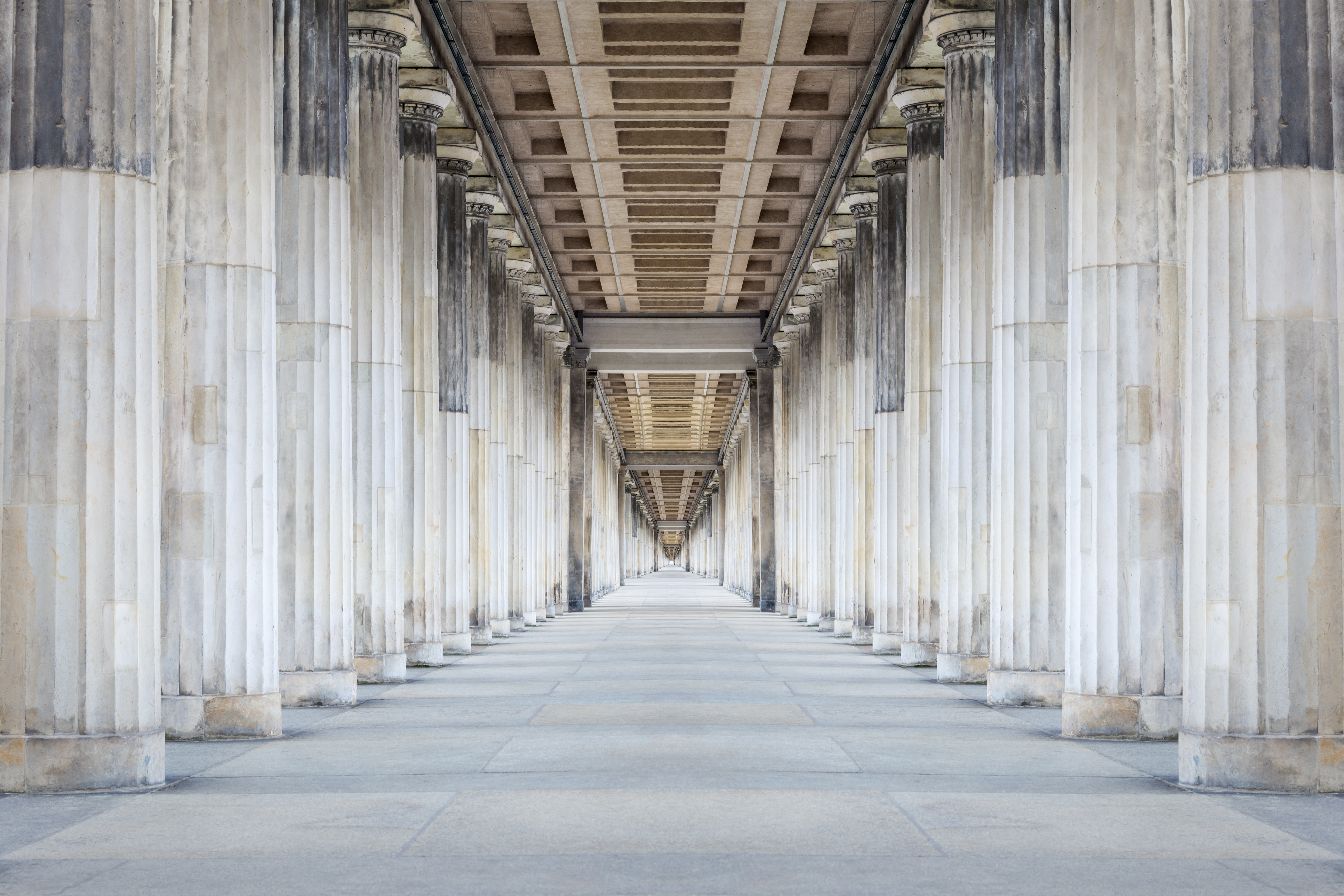
Acts 5:12, Solomon’s porch/portico/colonnade. This was a large covered area supported by marble columns which supported a wooden roof structure and was located on the east side of the temple mount area along the eastern wall that overlooked the Kidron Valley and faced the Mount of Olives just above the Garden of Gethsemane. This portico was built so that pilgrims and Levites visiting the temple would have a place to gather that was protected from the weather. Meetings and gatherings occurred here, and this was a gathering place of the early disciples as noted in Acts 3:11. There Yeshua taught and debated with the Jews (John 10:22–29). Here, the disciples were gathered in one accord (Acts 5:12). This is likely the spot where the Acts 2 Pentecost gathering occurred.

This portico (colonnade or cloister) that was located on the eastern wall and that existed in the time of Yeshua and the disciples was originally constructed by King Solomon according to Flavius Josephus.

These cloisters belonged to the outer court, and were situated in a deep valley, and had walls that reached four hundred cubits [in length], and were built of square and very white stones, the length of each of which stones was twenty cubits, and their height six cubits. This was the work of King Solomon, who first of all built the entire temple. (Josephus Flavius Ant. xx.9.7)

While the Babylonians destroyed the temple in their conquest of Jerusalem in about 586 B.C., if we are to believe Josephus, they apparently left Solomon’s Portico intact.

In the description of Solomon’s Temple and the complex including not only the temple itself, but its adjacent houses, upper chambers or rooms and inner chambers we read the following:

Then David gave to his son Solomon the plan of the porch of the temple, its buildings, its storehouses, its upper rooms, its inner rooms and the room for the mercy seat; and the plan of all that he had in mind, for the courts of the house of the LORD, and for all the surrounding rooms, for the storehouses of the house of God and for the storehouses of the dedicated things… (1 Chron 28
11–12; NASB)

We don’t know where these upper rooms were located in the temple complex, but if they were located in what later became known as Solomon’s Porch, which was still in existence in the first century, then this may give us a clue where the upper room that is mentioned in the Book of Acts was located, and where the gathering of the saints on the day of Pentecost occurred. In addition to Solomon’s Porch on the east side of the Temple Mount area, additional porticos were constructed subsequently by King Herod (in 16 B.C.) on all the other sides of the Temple Mount along the outside walls (Smith’s Bible Dictionary, p. 681; The International Standard Bible Encyclopedia, vol 4, p. 772). The portico on the south side was larger and taller than the others and was called the Royal Portico (ibid.; Jospephus’ Ant. xv.11.5).


What Is a “New Testament” Church Supposed to Do?

Acts 2:42, 46, They continued. This passage along with 1 Tim 4:13 is a list of activities the early saints did when they gathered together. This included continuing steadfastly in the apostles’s doctrine, which includes “reading [the “Old Testament” Scriptures], exhortation, [studying or teaching] doctrine” (1 Tim 4:13), fellowshipping, eating meals together, praying and praise [and worshipping] Elohim.

Expounding on this further, we read in 1 Cor 14:26, “Whenever you come together, each of you has a psalm, has a teaching, has a tongue, has a revelation, has an interpretation. Let all things be done for edification.” Spiritual gifts should be exercised when the saints come together as well (1 Cor 14:12).

How many modern church gatherings habitually incorporate these elements into their weekly meetings?


Preparing Ourselves for Passover

Repent of Sin and Get Under the Lamb’s Blood. As the children of Israel applied the lamb’s blood to the door posts and lintels of their house, so we must apply the sin-cleansing and Satan-defeating blood of Yeshua afresh to our lives (i.e. to our thoughts as represented by the door lintel and and to our hands or actions as represented by the door posts). This occurs as we repent of our sins, and pray for and receive YHVH’s forgiveness. He will then cover our sins over or wash away our sins by Yeshua’s blood (1 John 1:9; Rev 1:5).

In Egypt at Passover time, YHVH judged all those who had failed to put the lamb’s blood on the door posts of their houses. In other words, they weren’t under the blood of the lamb, but were still under the penalty of sin, which is death (Ezek 18:4; Rom 6:23). Any unrepented of sin in our lives brings the curse of death on us. To the degree that one has sin in their life is the degree to which the spirit of death has a legal claim on us. Now is the time to repent of sin by confessing it and seeking Elohim’s forgiveness under the blood of Yeshua and then forsaking that sin through YHVH’s grace (1 John 1:9).

Here are some things of which to repent.

Pride. Do you always think that you’re right? Your opinion is what matters the most? Do you have a hard time with those who don’t see it your way, when you don’t get your way? Do you have a fit when people disagree with you? Do you criticize others and put others down (especially those who are closest to you)? Do you belittle, mock, scorn and ridicule Continue reading →


Baptisms—Plural?!

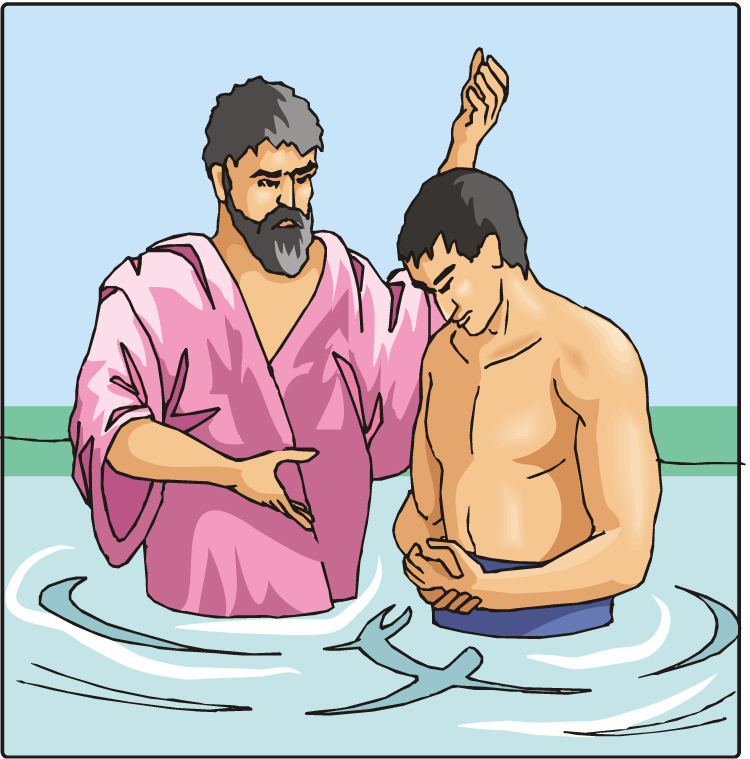
Acts 2:23, Be baptized. (Also see notes at Matt 28:19.) The term baptism in Hebrew is tevilah meaning “immersion,” which occurs at a mikveh meaning “a gathering of waters.” For those coming from a Christian background baptism is something that occurs at the beginning of a believer’s spiritual walk and involves baptism (immersion) in water for the remission of sins (Acts 2:38; 22:16; Rom 6:3–6; 1 Cor 15:29; Gal 3:27; Eph 4:5; Col 2:12; 1 Pet 3:21). Yet Paul the apostle talks of baptisms (plural) in Heb 6:2. What are these other baptisms? Evidently, in biblical thought immersion for the remission of sins is but one of many such ritual immersions.

Indeed, in the Testimony of Yeshua we not only read about baptism for the remission of sins, but the baptism of repentance of John the Baptist (Acts 1:5; 10:37; 13:24; 19:4), baptism (immersion) of the Set-Apart Spirit (Luke 3:16; Acts 1:5; 8:16; 11:16), and baptism with fire (Matt 3:11; Luke 3:16). Here we see the four types of immersions spoken of in the Testimony of Yeshua.

The concept of ritual immersion for a variety of reasons stems from commands in the Torah relating to ceremonial washings signifying spiritual and physical cleansing (Lev 14:1–4, 7, 9; Exod 19:10; Lev 8:6; 15:5, 8, 10–13, 16–18, 21; 16:4).

Moreover, the prophet Ezekiel speaks of YHVH sprinkling his people to cleanse them from their impurities, which is a picture of the new spiritual life of which immersion is e a type (Ezek 36:25).