Natan’s 2018 Shavuot Talking Points—The Deeper Meaning of Shavuot

What is the purpose of religion?

What’s should be the higher purpose of religion? It should answer the deeper questions of life.

  • What’s the meaning and purpose of life?
  • Who am I?
  • Where did I come from?
  • Who made me?
  • Why am I here?
  • Whoever made me, what do they expect of me?
  • Where am I going? What’s my ultimate destiny? Is there life after death?

Let’s narrow the picture down.

Why are we here today?

So why are we here celebrating Shavuot today?

  • To fulfill the requirements of religious ritualism?
  • To get your religious fix?
  • Out of human pride—to do your religious thing so that you feel better than the poor religious slobs still celebrate Christmas and Easter who don’t keep YHVH’s biblical feasts?
  • To hear some exciting exotic, arcane, ear tickling message that leaves your head bursting with something new and exciting? Not! That does nothing to bring you to repentance, change your life and bring you closer to Yeshua.
  • Out of obedience to and worship of Yeshua you Lord and Master?
  • Or because you love Yeshua with all your heart and want to obey him by keeping his commandments not because you’re expecting anything out of it personally but because he is worthy of worship and obedience? Period?!
  • Or to be spiritually transformed, so that you can be about your Father’s business to help transform society around you for the kingdom of Elohim?

Some of these reasons are good, and some of them are not so good.

For those keeping Shavuot out of obedience, which is a good thing, remember that obeying Elohim’s Torah laws is not an end in itself, but a means to an end. 

Romans 10:4,

For Christ is the end [end result, goal or aim] of the Torah-law for righteousness to every one that believeth.

Torah obedience is merely a vehicle to bring you something higher. Too many people make obedience including keeping the feasts the goal and not the process to achieve the goal. 

When you get in a car to go somewhere, you believe that you’ve arrived at your destination just because you’re sitting in your car. Same with Torah Continue reading →


We’re Back from Alaska—Inside Passage, Calving Glaciers, Denali, Grizzlies, Moose and More

My bride and I just returned from our fourth annual pilgrimage to Alaska. Sandi and I seem to be addicted to the endless, expansive, inimitable and inexpressible natural beauty of Alaska. We can’t get enough, so we keep going back for more. Not a bad addiction!

We did the Inside Passage again, but this time hit some spectacular areas we hadn’t seen before. But the prize was getting into the interior of Alaska and journeying up by rail to Denali National Park and taking a tour bus almost 93 miles into the park itself to the end of the road. Not only did we see Denali (formerly known as Mt. McKinley), the highest mountain in North America and third tallest peak on the planet at 20,320 feet or 6,190 m), but we experienced, what I’m dubbing, the Noah Anointing—the animals came to our tour bus ark of safety including many grizzly bears! More on that later including photos and videos of bears, moose, bighorn sheep and caribous up close—only feet away! Suffice it to say, Yah blessed us immensely. Did I mention the epic glacial calving we experienced in Glacier Bay? Again, stay tuned for pics and vids.

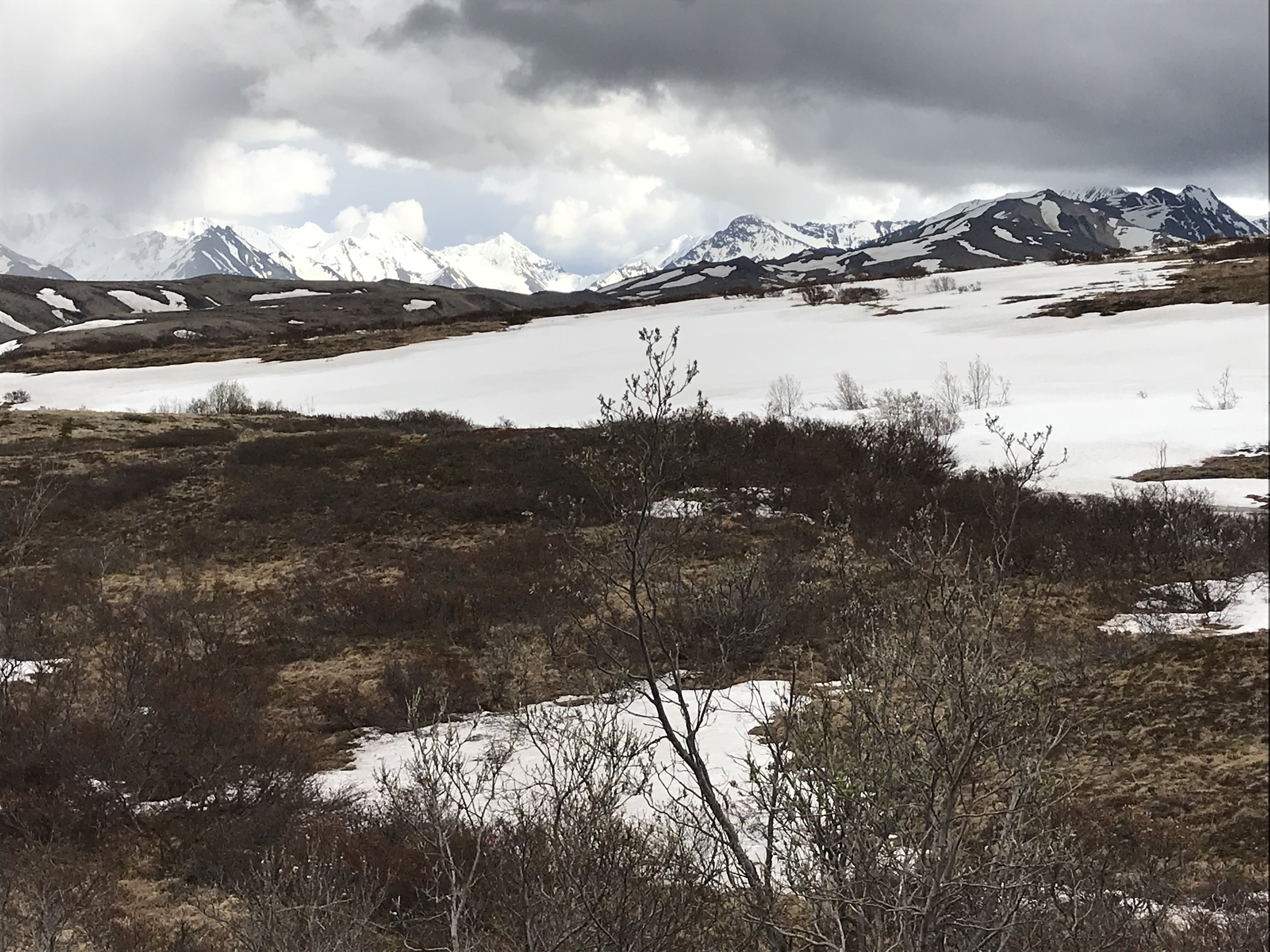
Here are several teasers that I snapped with my iPhone. We had five cameras going! There’s much more to come… 

This is the inside door of the pit toilets in Denali National Park—GRIZZLY BEAR COUNTRY!

Please stay tuned for more. You have seen anything yet. These are just a few photos snapped from an iPhone! We had five cameras (still and video) rolling…


Blog Scripture Readings for 6-10 Through 6-16-18

Aside

THIS WEEK’S SCRIPTURE READINGS FOR STUDY AND DISCUSSION:

Parashat Korach — Numbers 16:1 – 18:32
Haftarah — 1 Samuel 11:14 – 12:22
Prophets — Jeremiah 45:1 – 51:64
Writings — Esther 3:1 – Esther 9:32
Testimony — 1 Corinthians 1:1 – 7:24

Our annual Scripture Reading Schedule for 2017-2018 is available to download and print.

Most of this week’s blog discussion points will be on these passages. If you have general comments or questions on the weekly Scripture readings not addressed in a blog post, here’s a place for you to post those. Just use the “leave a reply” link below.

The full “Read Through The Scriptures In A Year” schedule, broken down by each day, can be found on the right sidebar under “Helpful Links.” There are 4 sections of scripture to read each day: one each from the Torah, the Prophets, the Writings, and from the Testimony of Yeshua. Each week, the Torah and haftarah readings will follow the traditional one-year reading cycle.

Weekly Blog Scripture Readings for 6/10/18 through 6/16/18.


Blog Scripture Readings for 6-3 Through 6-9-18

Aside

THIS WEEK’S SCRIPTURE READINGS FOR STUDY AND DISCUSSION:

Parashat Sh’lach L’cha — Numbers 13:1 – 15:41
Haftarah — Joshua 2:1-24
Prophets — Jeremiah 38:1 – 44:30
Writings — Ecclesiastes 8:1 – 12:14; Esther 1:1 – Esther 2:23
Testimony — Romans 10:1 – 16:27

Our annual Scripture Reading Schedule for 2017-2018 is available to download and print.

Most of this week’s blog discussion points will be on these passages. If you have general comments or questions on the weekly Scripture readings not addressed in a blog post, here’s a place for you to post those. Just use the “leave a reply” link below.

The full “Read Through The Scriptures In A Year” schedule, broken down by each day, can be found on the right sidebar under “Helpful Links.” There are 4 sections of scripture to read each day: one each from the Torah, the Prophets, the Writings, and from the Testimony of Yeshua. Each week, the Torah and haftarah readings will follow the traditional one-year reading cycle.

Weekly Blog Scripture Readings for 6/3/18 through 6/9/18.


Blog Scripture Readings for 5-27 Through 6-2-18

Aside

THIS WEEK’S SCRIPTURE READINGS FOR STUDY AND DISCUSSION:

Parashat B’ha’alatkha — Numbers 8:1 – 12:16
Haftarah — Zechariah 2:14 (10)* – 4:7
Prophets — Jeremiah 31:1 – 37:21
Writings — Ecclesiastes 1:1 – 7:29
Testimony — Romans 3:1 – 9:33

Our annual Scripture Reading Schedule for 2017-2018 is available to download and print.

Most of this week’s blog discussion points will be on these passages. If you have general comments or questions on the weekly Scripture readings not addressed in a blog post, here’s a place for you to post those. Just use the “leave a reply” link below.

The full “Read Through The Scriptures In A Year” schedule, broken down by each day, can be found on the right sidebar under “Helpful Links.” There are 4 sections of scripture to read each day: one each from the Torah, the Prophets, the Writings, and from the Testimony of Yeshua. Each week, the Torah and haftarah readings will follow the traditional one-year reading cycle.

* Verse numbers in parenthesis refer to the verse number in Christian English Bibles when they differ from Hebrew Bibles or the Tanakh.

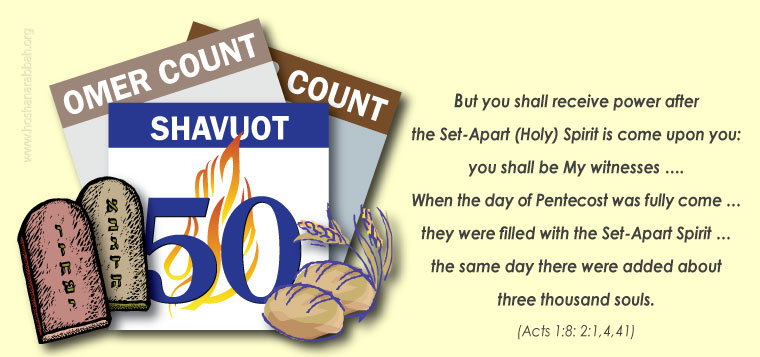
Today is the 50th day of the counting of 
50 days from the day of the waving of 
the Omer on the morrow after the Shabbat. Today is the morrow after the 7th Shabbat. Chag Shavuot — Feast of Weeks —Pentecost is fully come. HalleluYah!

Weekly Blog Scripture Readings for 5/27/18 through 6/2/18.


When Is the Feast of Weeks, Shavuot or Pentecost?

When is the Feast of Weeks (Heb. Chag Shavuot) or Pentecost? This has been a subject of debate among the Jews going back for two thousand years to the first century, and still is today among well meaning people who love Elohim and desire to follow his word. This is the question I will address in this study.

Since Shavuot is the only biblical holiday that involves counting days and weeks (hence its name, the Feast of Weeks), there are different opinions about when to start the count leading up to Shavuot. The Torah tells us to count from the Sabbath associated with the Feast of Unleavened Bread.

And you shall count for yourselves from the day after the Sabbath, from the day that you brought the sheaf of the wave offering: seven Sabbaths shall be completed. Count fifty days to the day after the seventh Sabbath; then you shall offer a new grain offering to the LORD. (Lev 23:15–16, NKJV)

This sounds simple enough. Or is it?

The question and the subject of the debate is which Sabbath do you start counting from? The day after the weekly Sabbath occurring during the Feast of Unleavened Bread or the day after the high holy day Sabbath of the first day of the Feast of Unleavened Bread, which occurs on the fifteenth day of the first month of the biblical year?

In the first century in the time of Yeshua and the apostles, there were two main opinions among the leading Jews on when to start counting the weeks (called “the counting of the omer”) leading up to Shavuot. The religious sect of the Pharisees whose spiritual descendants are the modern rabbinic Jews started the counting of the omer from the day after first high holy day of the Feast of Unleavened Bread, which is a high holy day Sabbath (John 19:31). On the other hand, the Sadducees, the other main Jewish sects of the first century (along with the Boethusians, which was likely a sub-sect of the Sadducees; see A History of the Jewish People in the Time of Jesus Christ, second division, vol 2, p. 37, by Emil Schurer; Commentary on the NT from the Talmud and Hebraica, vol. 4, p. 23 [commentary on Acts 2:1], by John Lightfoot) counted the omer from the day after the weekly Sabbath that falls within the week of the Feast of Unleavened Bread. Some modern Messianics follow the rabbinic method, while others follow the Sadducean method.

It is generally understood by historical scholars that the Jewish sect of the Continue reading →


Getting Ready for Shavuot, the Feast of Weeks or Pentecost

Next Sunday (May 27, 2018) is Shavuot or the biblical Feast of Weeks (also known as Pentecost). This is according to the visible new moon, aviv barley calendar, which I prove and explain in my three calendar articles on the subject (https://www.hoshanarabbah.org/teaching.html#feast) was the calendar in use at the time of Yeshua and the apostles. Those who follow the rabbinic calendar (invented in the middle of the fourth century A.D. and approved by the Roman emperor, Constantine) celebrated Pentecost a week earlier. Those who follow the any of the other non-biblical calendars (e.g. the astronomical new moon conjunction calendar, the vernal equinox calendar, the Enoch calendar, etc., etc.) would have celebrated or will be celebrating Shavuot on some other day.

The following are links to resources that I produced (with the help of my wife) to help you to understand the importance of this day and why we need to celebrate it with full understanding of its significance in YHVH’s plan of redemption for sinful humans.