Unveiling the Evil Forces Behind Babylon Then and Now

Genesis 10:8–9; 11:1–9, Nimrod…Babel .Comparisons can be made between Nimrod and his rebellion against Elohim (and apostasy from the faith of his fathers) with that of the man of sin (literally, “man of Torahlessness” in 2 Thess 2:1–12) in the end times. We can also compare the formation of Babylon and the building of the Tower of Bavel to the end-time one-world system called Babylon the Great (Rev 18). For the present, let’s explore how Satan, the devil-serpent, has been the motivating force behind collectivization and organization of humans in his rebellion against YHVH Elohim, the Creator. 

Secular Humanism:
The Devil’s Original Lie and the Religion of the New World Order

We are presently watching unfolding before us an epic and cosmic struggle between the forces of evil and good. The world system or cosmos of the devil is pitted against the unalterable and immutable plans, purposes and Word of the sovereign Creator of the universe, YHVH Elohim. 

At the center of this battle is man. He was created in the image of Elohim and destined to become a son of Elohim. The Adversary, on the other hand, wants to make man into his image—a son of perdition. Man has to choose whom he will follow. To sit on the sidelines, ignore the battle and not to choose is, by default, to choose the side of the devil. Man must carefully choose his course of action, for the consequences are eternal. Inaction—not to choose—is to ignore the battle and by default to choose the side of the devil.

That battle will reach its nexus at the end of the age, just prior to the return of the Messiah. Will man fall for the lies of the counterfeit Messiah, or remain faithful to the Truth and Word of the real Messiah? To resist the deceiver and not fall for his lies one must know the face of his enemy: his tactics, game plan and the nature of his deception. The lies he will use in the end times to woo the multitudes to his side are not new. The tactics and game plan are the same, for it has never changed from the beginning. What are the lies he will use to seduce man to his side of this struggle? When did the deceiver first ply his trade? The answers are in the Book of Life.

The Big Lie and Its Origin

The Scriptures Speak of a “Lie”

There are those who turn from the revealed truth of Elohim and turn to believing a lie as Romans 1:24–25 states:

Wherefore Elohim also gave them up to uncleanness through the lusts of their own hearts, to dishonor their own bodies between themselves: who changed the truth of Elohim into a lie, and worshipped and served the creature more than the Creator, who is blessed for ever. Amen

The Man of Sin/Lawlessness will cause many to turn from YHVH’s truth and believe a lie as 2 Thessalonians 2:7–12 states:

For the mystery of iniquity does already work: only he who now restrains will do so, until he be taken out of the way. And then shall that Wicked be revealed, whom YHVH shall consume with the spirit of his mouth, and shall destroy with the brightness of his coming: even him, whose coming is after the working of Satan with all power and signs and lying wonders, and with all deceivableness of unrighteousness in them that perish; because they received not the love of the truth, that they might be saved. And for this cause Elohim shall send them strong delusion, that they should believe a lie: that they all might be damned who believed not the truth, but had pleasure in unrighteousness.

Outside of the New Jerusalem will be those wicked ones who believe a lie as the Book of Revelation states:

And there shall in no wise enter into it any thing that defiles, neither whatsoever works abomination, or makes a lie, but they which are written in the Lamb’s book of life. (Rev 21:27)

Blessed are they that do his commandments, that they may have right to the tree of life, and may enter in through the gates into the city. 15 For without are dogs, and sorcerers, and whoremongers, and murderers, and idolaters, and whosoever loves and makes a lie. (Rev 22:14–15)

The primary meaning of these passages is referring to those who have exchanged the truth of YHVH for a lie. But what lie? Who did Yeshua say was the father of lies (John 8:44)? The devil is, of course. So, ultimately all lies that humans believe had to have originate from those lies the devil through the serpent told the first humans in the Garden of Eden.

What Was This “Big Lie”?

Continue reading →

 

Who are the lost sheep of Israel and 12 reasons why it’s important to know…

Matthew 10:6, Lost sheep of the house of Israel.The phrase the house of Israel is used 146 times in the Scriptures, and has several possible meanings depending on the context of the surrounding verses in which it is found. To help us to define this term, let’s discover its historical roots or how it originated. 

Prior to the division of the united kingdom of Israel after the death of Solomon, this phrase referred to all twelve tribes of Israel. Afterward the death of Solomon, the nation of Israel split into two nations—the Northern Kingdom and the Southern Kingdom. The latter was comprised primarily of the tribes of Judah, Benjamin and Levi, while former kingdom was comprised of the remaining tribes of Israel. During this time, the phrase the house of Israel as a reference to the Northern Kingdom of Israel was often used in contradistinction to the phrase “house of Judah” in reference to the Northern Kingdom of Israel.

In the Testimony of Yeshua, the Messiah makes reference to the “lost sheep of the house of Israel” (Matt 10:6; 15:54). To which tribes was he referring? All of them or only some of them? Elsewhere in the Testimony of Yeshua this term refers to all twelve tribes of Israel (Acts 2:36; 7:42; Heb 8:10), and in some references it refers just to the Northern Kingdom (Heb 8:8). The point here is that the context of the passage of scripture surrounding this phrase determines its meaning. 

Although this phrase can include all the tribes of Israel and not just the Jews who were largely from the tribe of Judah, in Matthew 10:6, Yeshua seems to equate the lost sheep of the house of Israel with the Jews who were living in the land of Israel in his day, and not to the rest of the Israelite tribes who were at that time scattered among the Gentile nations. It was Yeshua’s priority to take the gospel message first to the Jews in Jerusalem and Judea, and then to the rest of the world, and he expected his disciples to follow this same pattern (Acts 1:8). 

In the larger sense, the Scriptures reveal that all of YHVH’s people have been like sheep that have gone astray spiritually, every man to his own way, because of sin (Isa 53:6). So in the broadest sense, this phrase refers to all the tribes of Israel including Gentiles with which they have mixed themselves through intermarriage. 

Eventually, the gospel message is for everyone universally. Yeshua demonstrated this when, on several occasions, he ministered to non-Jewish Gentiles including preaching the gospel message to the Samaritan woman in John chapter four, the Syro-Phoenician woman in Mark chapter seven, and the Roman centurion in Matthew chapter eight.

Twelve Benefits of Understanding Who
the Two Houses of Israel Are
 

Is the commonly called “two house” or “two-stick” message” of the Bible something we should study? Are there any spiritual and prophetic benefits to understanding who the two houses of Israel are? The answer is yes. I would prefer to call it the “One House Message,” since this biblical truth involves the regathering and reunification of the Jews (the house of Judah) and the Christians (the house of Israel or Ephraim) into one nation through Yeshua the Messiah. This is the one new man message Paul proclaimed in Ephesians chapter two. This is the great and largely overlooked truth behind the message of the gospel of Yeshua the Messiah. This is why it’s important to understand.

Continue reading →
 

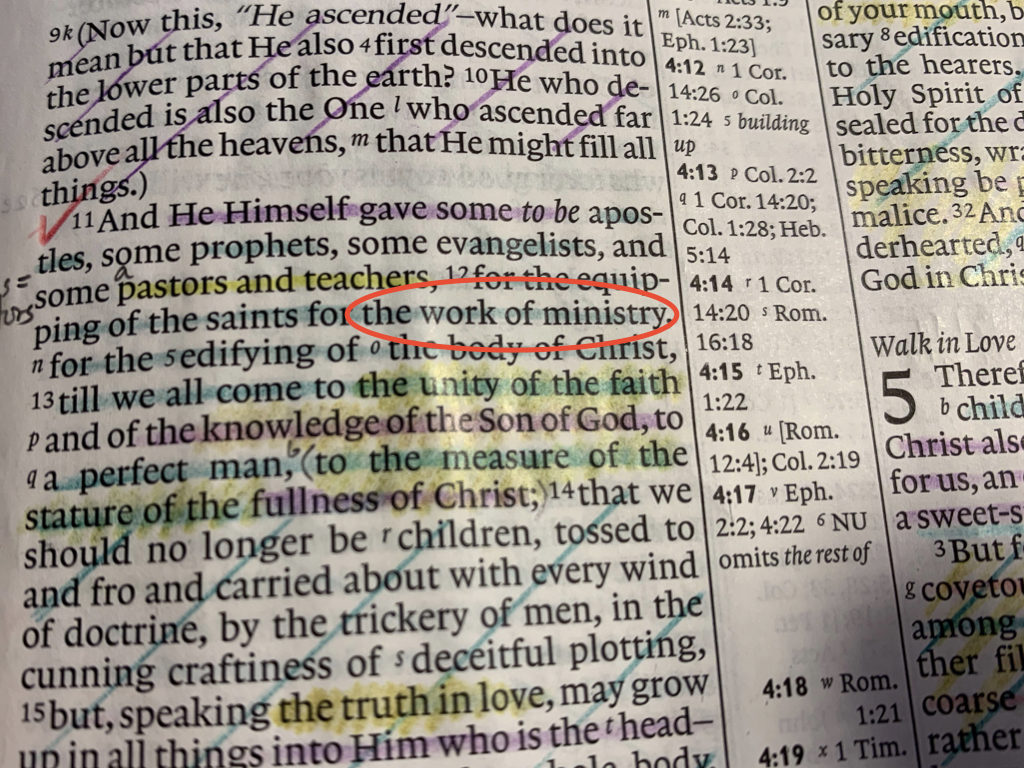
Have you been called into the ministry? Here are you marching order…

Matthew 10:5–42, Yeshua sent out. The Commissioning of the Twelve Disciples.

Do you have a ministry call on your life? If you’re a disciple of Yeshua, then you should. Yeshua has commissioned every saint to help fulfill the great commission to spread the gospel to the world. Below are some basic guidelines on how to know that you’re in the perfect will of Elohim for the ministry to which he has called you.

There are several steps one must go through when receiving a ministry commission from Yeshua. The following steps are based on Yeshua’s commissioning his disciples in Matthew 10. As modern-day disciples of Yeshua, we need to take these into consideration when assuming a ministry role. These are the requirements of his laborers who will work in his harvest field (see Matt 9:37 for context).

  • Yeshua calls one into the ministry (Matt 10:1). Some people go into the ministry as a career like they would any other job by their own choice. This is unbiblical. Involvement in Yeshua’s ministry is by his invitation only. 
  • After calling one into the ministry, there is a time of training. This is the biblical norm. For some, it was five years (e.g. the Levites), or forty years (Moses and Joshua). David had a period of training before becoming king, as did Paul the apostle and Elisha. For Yeshua’s disciples, it was three-and-one-half years. The Matthew ten account is part of the disciples’ training program.
  • After calling them, Yeshua then gave his disciples their marching orders by telling them where to go and not to go (Matt 10:5–6). They were to go to the lost sheep of the house of Israel, although, later on Yeshua instructed them to go the Gentiles. Paul even taught in several places that the lost sheep of Israel were to be found among the Gentiles, as the ancient biblical prophets predicted they would be.
  • Yeshua then instructed them what their ministry was to be (Matt 10:7–8). They were to do exactly as Yeshua himself did: preach the gospel of repentance and the kingdom of Elohim, and to heal the sick.
  • He then gave them instructions pertaining to travel arrangements—what they were to take on their journey, where they were to stay, and how to act when encountering resistance (Matt 10:9–15). This included lodging, food and financial remuneration. On the latter point, today many itinerant evangelists flagrantly violate Yeshua’s strictures in this regard and have become nothing more than travelling salesmen and peddlers always with their hands out for financial gain. They have simply become merchandisers of the gospel, sadly.
  • Next, Yeshua warned his disciples against persecution (Matt 10:16–26). He assumed that persecution would be a natural result of preaching the gospel. Conversely, it could be assumed that something is out of spiritual order when one preaches the gospel and persecution doesn’t occur. 
  • Yeshua then instructed his disciples about fear—who to fear and not to fear. They were to fear YHVH, not men (Matt 10:27–31). This is an important point, since preaching the gospel to the lost can be intimidating, which is why so few do it. Yeshua promises divine protection for his disciples who preach the gospel as he has instructed (Matt 10:29–30).
  • The workman is worthy of his hire. Yeshua promises spiritual rewards to those who preach the gospel (Matt 10:32–33).
  • For those who are called into Yeshua’s ministry, he demands total commitment. One must put Yeshua first above all other human relationships. For this, expect rejection from family and friends (Matt 10:34–39). 
  • Again, Yeshua holds out the promise of spiritual rewards for those who heed his call to become a disciple who works in his spiritual harvest field (Matt 10:39 cp. Matt 9:37).
 

Half of millennials and 75% of Gen Zers have left their job for mental health reasons

From CNBC at Half of millennials and 75% of Gen Zers have left their job for mental health reasons.

This article raises a few questions that need to be asked? Could this trend among our young people have anything to do with…

  • The purposeful and planned secularization of our society over the past few decades by the God- and Bible-hating spirit of Antichrist secular humanists, who have determinately attempted to toss Elohim and his Word out of all aspects of our society?
  • The rise of abortion that has devalued the meaning of life and has murdered the brothers and sisters of many young people leaving them to feel like survivors of a mass genocide by unloving and murderous parents?
  • The rise of the necessity of having two working parents in the home and two income families to survive in the wake of the rising costs of living (and taxation due to the rapid growth of big government and the welfare state), thus leaving no one in the home to raise the children, thus leaving them feeling disconnected and unpainted and unloved?
  • The decline of biblical morality and the preaching of the transforming power of the gospel in the church?
  • The rise of materialism in the corporate church and the hypocrisy of many so-called Bible preachers and teachers who have brought the Word of Elohim into disrepute due to their shameful and unbiblical lifestyles?
  • The rise in the power of the internet along with electronic devices and social media that distract, inoculate people against, brainwash and stupefy people away from the deeper and more meaningful activities and issues of life?

PUBLISHED FRI, OCT 11 201910:43 AM EDTUPDATED TUE, OCT 15 201911:24 AM EDTTodd Wasserman@TODDWASSERMAN

KEY POINTS

  • A recent study by Mind Share Partners, Qualtrics and SAP reveals that half of millennials and 75% of Gen Zers have left a job for mental health reasons.
  • In addition, the American Psychological Association found the percentage of people dealing with suicidal thoughts increased 47% from 2008 to 2017.
  • Companies like Cisco, which claims that 7% of its U.S. workforce is accessing some form of mental health and substance abuse treatment, is confronting the issue head-on, with several programs available to its 75,000 employees and 11,000 managers.
stressed female worker with pile of folders

Christopher Robbins | Photodisc | Getty Images

Cases of burnout have been increasing at an alarming rate in recent years among millennials and Gen Zers. It’s a growing problem in today’s workplace because of trends like rising workloads, limited staff and resources and long hours.

It’s no surprise, then, that a recent study by Mind Share Partners, Qualtrics and SAP reveals that half of millennials and 75% of Gen Zers have left a job for mental health reasons.

Continue reading →
 

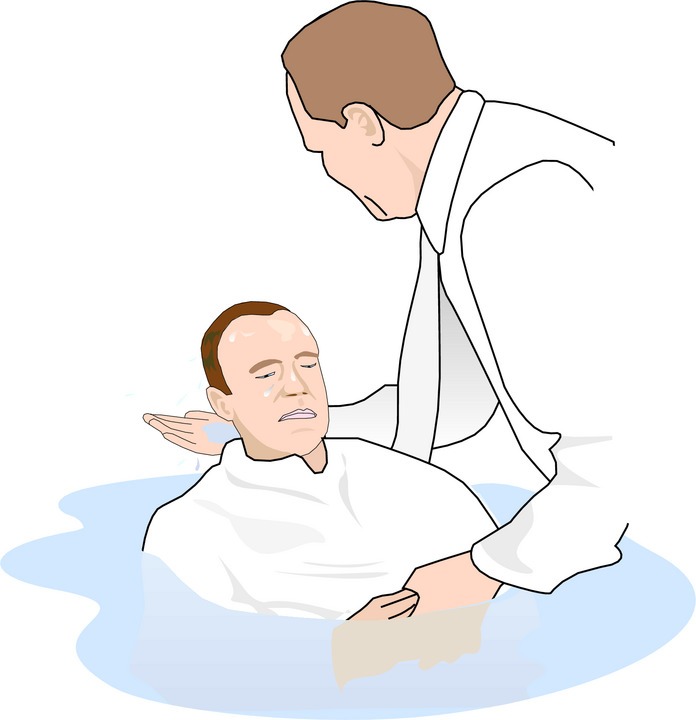
Understanding the Biblical Ritual of Water Immersion from a Hebraic, Whole Bible Perspective

To understand the biblical ritual of water baptism for the remission of sins, which is one of the first acts of faith that a new  disciple of Yeshua must take as he begins his spiritual walk (Acts 2:38; Matt 29:19; Mark 16:16), we must first define our terms, and then we can look into the biblical Hebraic origins of this ancient rite to discover the spiritual relevance and significance of it to a modern disciple of Yeshua the Messiah. 

So what is immersion or baptism? The traditional Hebrew word for immersion is mikveh (or mikvah), which literally means “a gathering of waters.” Next we have the Hebrew word tevilah, which is analogous to the New Testament Greek word baptidzo from which the English word baptize derives. Tevilah means “immersion or baptism in water.” So technically, when one is baptized for the remission of sins, one does a tevilah at a mikvah. 

Baptism is an ancient Hebrew custom that carried over into the apostolic era as sanctioned by Yeshua himself. What are the origins of this ancient custom, and what is its significance and applicability to a modern follower of Yeshua the Messiah?

Tevilah is an ancient custom that goes back to the Levitical or Aaronic priesthood. There YHVH Elohim required the priests to wash themselves in water at the bronze laver in the Tabernacle of Moses before they were allowed to perform their ministerial duties before YHVH Elohim. This was the third step in the seven step process of consecrating a new priest (Exod 29:4). After that, they confessed their sins over a bull, which was then sacrificed (Exod 29:10–11, the fifth step), then Moses anointed them with oil (the sixth step, Exod 29:21). These seven steps are a prophetic picture showing us how one comes to faith in Yeshua the Messiah by confessing his sins, accepting Yeshua’s sin-atoning death on the altar of the cross, then being immersed in water as a sign of spiritual cleansing and rebirth, and then receiving the oil of Elohim’s Spirit consecrating them for becoming part of the royal priesthood of Elohim (1 Pet 2:9; cp. Rev 1:6; 5:10; 20:6). After the initial cleansing ceremony for the consecration of a new priest, YHVH also instructed the priests to wash each time they come into the tabernacle to serve him (Exod 30:18–21). This ritual cleansing was so important that if the priests of old failed to come into the presence of Elohim without first washing, the priest was sentenced to death (v. 20). This step teaches us that once we come to faith in Yeshua, we must be continually being washed in the water of Elohim’s word (Eph 5:26) and the blood of Yeshua to keep us cleansed from the defilement of ongoing sin (Rev 1:5; 1 John 1:7–9), lest we die in our sins. Thus, the consecration process for service to YHVH that the priests went through during the time of Moses is a prophetic picture of what a one must also go through to become a disciple of Yeshua the Messiah; therefore, baptism is a picture of spiritual cleansing and consecration or being set-apart (from the world) for spiritual service to Elohim. This concept is elucidated on in various places in the Testimony of Yeshua (the New Testament).

Continue reading →
 

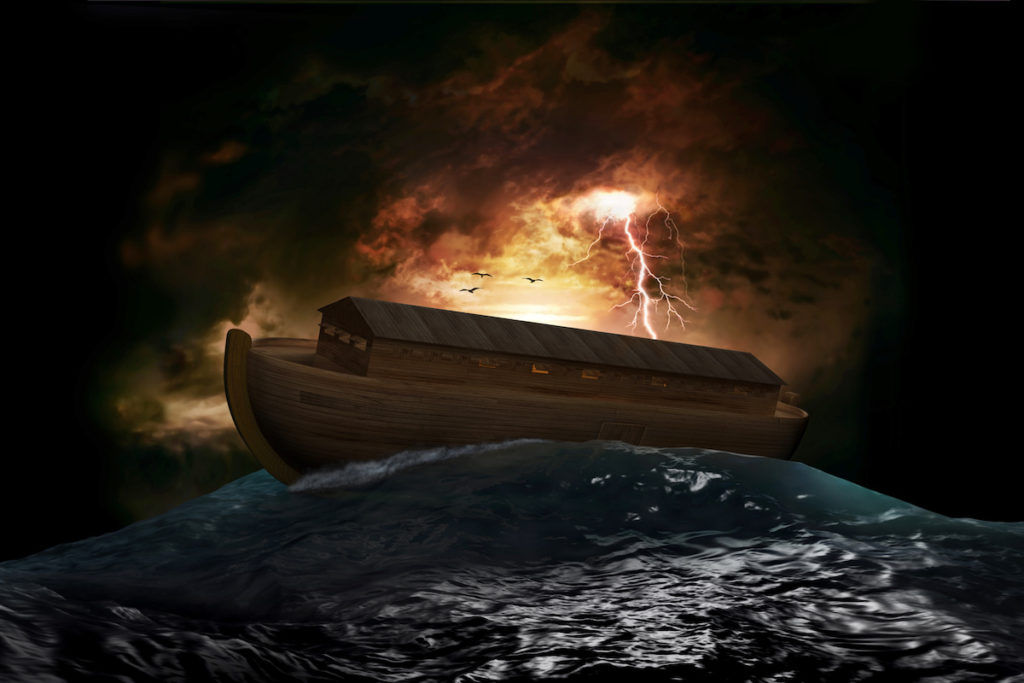
“As it was in the days of Noah…”

Genesis 7:4, Forty days. For 40 days it rained upon the earth. Forty is the biblical number for trial, testing, spiritual refinement and judgment. For example, YHVH refined Moses in the wilderness for 40 years. YHVH made the Israelites wander in the wilderness 40 years as a judgment against their sin. Yeshua fasted for 40 days in the wilderness in preparation for his earthly ministry. Similarly, the 40 days it rained on the earth is a prophetic antetype of YHVH’s final wrath being poured out upon this earth (Rev 15–16). 

Similarly, YHVH’s saints will go through a time of spiritual testing and refinement prior to YHVH pouring out his wrath upon wicked mankind. This we see in the context of Revelation 11:18, which is the resurrection of the saints to meet Yeshua in the air and occurs after the seventh trump has sounded. 

Moreover, according to Yeshua’s Matthew 24 prophecy, YHVH’s saints will still be on the earth during the tribulation and great tribulation period at the end of the age (Matt 24:29–31).

Genesis 7:4, 10, After seven days. Noah was a preacher of righteousness for 120 years prior to the flood (Gen 6:3; 2 Pet 2:5). He no doubt endured the mockery and persecution of those who did not believe his message about a coming flood, and the need for an ark of safety when that generation had never experienced rain or floods (Heb 11:7; 2 Pet 2:5). 

In Genesis 7:4 and 10, YHVH allows Noah to experience seven more days of persecution before the rains of judgment come upon the earth after which YHVH shut Noah and his family up in the ark of safety (Gen 7:16) after which the ark “was lifted above the earth” (Gen 7:17). Yeshua likens the end times just prior to his second to the days of Noah (Matt 24:37–39). Yeshua further teaches that his saints will not only go through tribulation on this earth (Matt 24:3–22), but that his people will even go through “great tribulation” (Gr. megathlipsis, v. 21). 

After this, Yeshua teaches that the saints will be lifted up above the earth to meet him in the air after the great tribulation (Matt 24:29–31), and not before it as some in the church erroneously teach and believe. 

The Scriptures reveal that Noah endured another seven days of tribulation before the wrath of Elohim was poured out upon the wicked inhabitants of the earth. This may be a prophetic picture of a seven-year tribulation period the saints will have to go through before the wrath of Elohim (which is different than the tribulation period) is poured out upon this earth (See Rev 11:15–18 [compare with 1 Cor 15:51–53] and chapters 15 and 16 where the seven last plagues are called the wrath of Elohim). 

The Scriptures clearly teach that YHVH’s people will not have to endure his wrath (1 Thess 1:10; 5:9), but conversely teaches that all will go through tribulation (John 16:33; Acts 14:22; Rev 7:14). Scripturally, tribulation and wrath are two different words and concepts.

Genesis 7:23–24, Only Noah. As Noah was saved in an ark of safety of YHVH’s design from his wrath against wicked man, so the righteous of today have a similar ark of safety. Yeshua is that spiritual “ark of safety” that once inside (or in spiritual relationship with) we will be spared from the judgments of Elohim (John 5:24–29 cp. Rev 11:15–18; 14:4–5 cp. 14:14–20).


Who are “workers of iniquity” and what is their fate?

Matthew 7:21–23, What is the will of the Father? In verse 21, Yeshua makes reference to “the will of the Father.” In Hebraic thought, to what is he referring here? What is “the will of the Father”? Keep in mind that when Yeshua gave this teaching the only Scriptures in existence were the writings of the Tanakh, and the first five books of Moses in the Bible, were the central teaching document for the Jewish people—the nation of Israel. Therefore, we would be expected to find “the will of the Father” to be revealed in the Word (or Oracles) of Elohim originating from heaven and delivered to man. The will of the Father was revealed at Mount Sinai and was the reference point of all the Hebrew prophets who were constantly charging the people of Israel to return to the ancient paths of YHVH’s Torah (Jer 6:16, 19; 18:15). As we see in Psalm 40:8, the will of Elohim is nothing more than delighting in obeying the Torah from one’s heart—something this psalm prophesies the coming Messiah would do. 

Yeshua, the Living Word or Torah (instruction, precepts, teachings) of Elohim, came to set Torah on a firm foundation (the whole point of the Sermon on the Mount, as we have seen) by rescuing it from the hands of the hypocritical, greedy, arrogant and self-righteous religionists of his day. Yeshua said in John 7:16 that his doctrine or teaching was not his own, but that of his Father in heaven and that those who do the will of the Father will recognize that his doctrine or teaching is from the Father (verse 17).

In John 7:19, Yeshua asks the Pharisees: “Did not Moses give you the Torah, and yet none of you keep [do, perform] the Torah?” What is the summation of what Yeshua is saying here? He is telling the people that he came to do the will of his Father, to bring to them the oracles or doctrine of the Father as given at Mount Sinai (called the Mosaic Covenant), and that these words are not his and that, basically, he is simply a messenger transmitting his Father’s words to the people—the very words of Moses, which he accuses the people of not keeping or obeying.

This was the message of Yeshua to the people in his day. Is this not a relevant message to the Christian church of our day, which teaches that the Torah-law of Moses is of little nor no relevance to Believers? The idea that Yeshua came to abrogate the Torah-law of Moses is difficult to comprehend in light of such Scriptures as John 14:15, a direct quote from Exodus 20:6, where Yeshua equates himself with YHVH who spoke at Mount Sinai. (See also 1 Cor 10:4.) Do you comprehend the full impact of this? Yeshua, whom the Christians call Jesus Christ, is the very one who spoke out from Mount Sinai and the one who gave the Torah-law and led the Children of Israel through the Wilderness. It is this Torah-law that Yeshua came to uphold and restore as we have seen by our study on the Sermon on the Mount.

We see that many religionists will claim to be followers of Yeshua, but what separates the true followers from the counterfeit ones is whether they are doing the will of YHVH or not. Many will be prophesying in Yeshua’s name, casting out devils and doing many miraculous works in his name, but this is not the proof that they are his. What is the proof? He says in verse 23, “And then will I profess unto them, I never knew you: depart from me, you that work iniquity.”

Continue reading →