Our new annual Scripture Reading Schedule for 2019-2020 with daily readings is available to download and print. If you are still working through 2018-2019’s Scripture Reading Schedule, the link will still be available on the right sidebar under “Helpful Links”. If you are using a mobile device or tablet, the link may be below, meaning you’ll need to scroll down instead.
Most of this week’s blog discussion points will be on these passages. If you have general comments or questions on the weekly Scripture readings not addressed in a blog post, here’s a place for you to post those. Just use the “leave a reply” link or the “share your thoughts” box below.
The full “Read Through The Scriptures In A Year” schedule, broken down by each day, can be found on the right sidebar under “Helpful Links.” There are 4 sections of scripture to read each day: one each from the Torah, the Prophets, the Writings, and from the Testimony of Yeshua. Each week, the Torah and haftarah readings will follow the traditional one-year reading cycle.
* Verse numbers in parenthesis refer to the verse number in Christian English Bibles when they differ from Hebrew Bibles or the Tanakh.
Weekly Blog Scripture Readings for 6/7 through 6/13/2020.
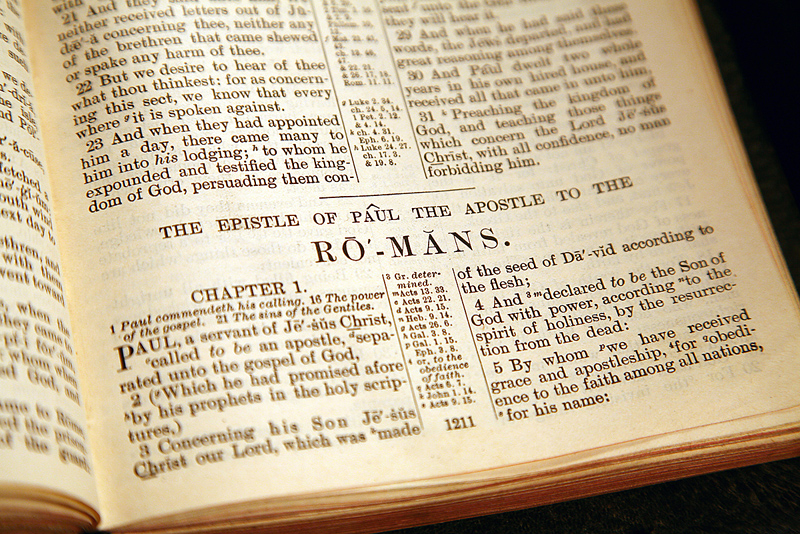
In this video on the book of Romans, we discuss Paul’s view of the gospel, the Torah (the law of Moses) and the reunification of the nation of Israel.The material presented here is totally fresh and is from a Hebraic perspective and is likely totally different than anything you’ve heard on this subject to this point.
The following overview of Romans is a radical departure from what the mainstream church teaches. Read it and see if what follows doesn’t unite the truth of the Bible from beginning to end, instead of pitting one section of the Bible against the other, which is approach the church typically takes when presenting the teachings of Paul.
The Main Themes of Romans
This is perhaps the only book in the Bible that is organized systematically like a theological textbook from beginning to end with each point leading to the next. This is not how biblical books are typically arranged.
In this epistle, there are several main themes.
Pre-eminently, Elohim is the Just Judge of the universe to whom all are accountable (both Jews and Gentiles). This concept alone is huge, since most humans don’t want to believe they’re accountable to anyone except their own egos.
The Torah is Elohim’s standard of righteousness by which he will judge the deeds of all men (both Jews and Gentiles) fairly. If people can accept the fact that there is a supreme Being to whom they’re accountable for their actions, then it’s a short next logical step to accept that such a Being (Elohim) has laws that man must follow if he’s not to run afoul of that Being.
Next, Paul counters a religious system that purported to explain who that Being was and what he required of sinful man. This was Judaism. The problem is that Judaism had perverted the truth of Elohim into a racially exclusive, legalistic, works-based salvational system. Paul attempts to correct this error, and restore this religion to its original truth.
Paul then presents the gospel message of salvation by grace through faith in Yeshua the Messiah is at the center of YHVH’s process to redeem sinful man.
Before Elohim, the Creator of the universe, there is no racial inequality between Jews and Gentiles. Elohim isn’t a racist. All are equal before him. All are sinners, and all need Yeshua.
Paul’s Epistle to the Romans keeps Yeshua and the gospel message front and center, yet at the same time Paul weaves together the good news of Yeshua with that of the righteous lifestyle of Torah-obedience. Together, these two messages form a beautiful tapestry-like picture encompassing the message of the entire Bible from Genesis to Revelation — a message of the salvation of man resulting in his being reconciled to Elohim, and his becoming elevated to the spiritual status as a child of Elohim. This process occurs through man’s relationship with Yeshua the Messiah who is both the Written Torah incarnate.
Part 1 — Introduction: The Cornerstone of the Gospel Message
At the very beginning of his epistle, Paul carefully and boldly sets in place the cornerstone for what is to follow. He declares the preeminence of the gospel message and his submission to the lordship of Yeshua the Messiah and his unflinching mission to preach this truth.
In Psalm 149:6–7, David, a man after Elohim’s own heart, speaking of the saints wrote, “Let the high praises of El be in their mouth, and a two-edged sword in their hand to execute vengeance upon the heathen, and punishments upon the people.” Was David’s statement merely poetic hyperbole, or was this how he, as the king and a spiritual shepherd of Israel, literally defended the people YHVH had placed under his charge? We know from his life story that the latter was the case.
When Abraham, the father of the faithful and a man who was the model of righteousness had his nephew Lot kidnapped what was his response? Does Scripture record that he prayed, then sat down expecting YHVH to supernaturally intervene and cause the Babylonians to release Lot? No. His response was to muster the 318 soldiers of his own personal army and to pursue the five kings. What was the result? YHVH granted Abraham a miraculous victory over Lot’s captors and Abraham gave a tithe of the spoils of war to Melchizekek (Gen 14).
The Torah, YHVH’s divine instructions in righteousness, in Exodus 22:2, permits and even expects a man to defend himself against a thief breaking into his home. If the defense of one’s home results in the death of the thief, there is no retribution against the defender. There are no penalties or prohibitions in biblical law against a man acting in self defense.
The well-known Aaronic Blessings (Num 6:22–27) contains the following words, “May YHVH bless you and keep [or, safeguard, The ArtScroll Stone Edition Tanach] you.” The word keep is the Hebrew word shomar (Strong’s H8104) meaning “guard, observe, watch, have charge of, protect, save.” Such a promised blessing could be taken in two different ways: one simply sits back and does nothing to protect oneself, for that is YHVH’s job; or one does what one can to protect oneself in a reasonable and prudent manner, and beyond that one trusts YHVH to do the rest. The latter and not the former is the logical approach to follow, and is substantiated by numerous scriptural examples to be the correct interpretation of this verse.
Psalm 145, the famous Ashrei blessing of the daily Jewish prayers, states that YHVH protects all who love him, but all the wicked he will destroy (verse 20). The psalmist restates this idea elsewhere when he declares that YHVH saves his servant “out of all his troubles,” the righteous he “delivers … out of all their troubles,” and “many are the afflictions of the righteous, but YHVH delivers him out of them all” (Ps 34:6, 17, 19, emphasis added). The question we must ask here is this: does all literally mean all, in biblical thought? Clearly Scripture gives us a historical record of many of YHVH’s servants being persecuted and even martyred. Furthermore, the Scriptures prophesy that in the future many saints can expect this fate as well. Such passages are to be found in both the Tanakh (Old Testament) and Testimony of Yeshua (New Testament). Are the promises of YHVH a lie, or are we missing what he is really saying to us when he promises to deliver his people from all their troubles? Clearly, in light of the scriptural promises, the historical record and prophecies recorded in Scripture, all can mean only one thing: YHVH will deliver his people from ultimate evil, namely, death, hell and the grave, and he will avenge them of their adversaries by bringing ultimate judgment against them. This doesn’t mean that he won’t deliver his people from present evil by supernaturally protecting them, but some will suffer and even die a martyr’s death here and now. His people must trust in his sovereignty, love, justice and be assured that he has their best interests in mind even if they suffer and die now. The reward of the righteous is sure as is the fate of the wicked; both are in the hands of a just and all powerful Elohim.
With these truths in mind, it is the responsibility of the righteous to walk in faith, trusting YHVH day-by-day with their lives, but not to be blithely ignorant of the evil around them throwing all caution and prudent preparations to withstand evil to the winds of fate and calling it faith in YHVH. This is not faith; it is folly! Wise saints do not even practice this kind of “blind faith” in their daily physical lives. Most have locks on their doors, have fire extinguishers and first aid kits handy, maintain insurance policies, keep spare tires in their cars, wear seat belts and have extra batteries and food in their homes in case of an emergency. Proper preparation is called wisdom, and to not do so is foolish and fool-hardy. To not prepare, if one is able to do so, is not faith, but is tempting YHVH, something Scripture tells us not to do (Matt 4:7; Deut 6:16).
Silhouette of several muslim militants with rifles
When you see evil coming your way, the first and most important thing to do is to watch and pray (Matt 26:41; Mark 13:3). Pray for discernment and guidance from the Spirit of Elohim as to what to do. Don’t react impulsively out of fear, but out of love, power and a sound mind (2 Tim 1:8); be led by the Spirit. Perfect love casts out fear (1 John 4:18). Reacting out of fear or emotion leads to cloudiness and confusion of thinking leading to wrong action.
Pray and trust in YHVH for deliverance and protection (Ps 3:3; 57:1; 68:1; 69:1; 107:6, 20; 108:6; 121:1, 2; 144:11; 145:19–20).
Do spiritual warfare against the enemy using the Scriptures.
Sometimes there is a time to fight (Ps 94:16; 144:1; 149:6), sometimes a time to flee (Matt 24:16–20; Eccl 3:3, 8). We must pray for discernment and guidance from above to know what to do and when. If YHVH directs us to fight, keep this in mind: fighting doesn’t always involve physically violent confrontation. Fighting can also involve spiritual warfare and clever non-violent tactics. Think Gideon who used lamps and shofars to defeat the Midianites.
If in response to preaching the gospel,
Jeremiah was taken by the crowd/civil authorities and imprisoned
Paul submitted to the custody of the Roman civil authorities.
Yeshua submitted to the Jewish and Roman civil authorities.
Peter, John and James submitted to the civil authorities.
If civil authorities demand one to go against the laws of Elohim, it’s biblically permissible to defy them in deference to the higher governmental authority of Elohim (Act 4:19; 5:29).
If you’re being physically attacked by evil doers, consider the following…
Self defense from evil attackers is not a sin. It’s not against Scripture to defend yourself and your loved ones. In fact, it’s the duty of a man to provide for his family by protecting his loved ones (1 Tim 5:8).
To turn the other cheek when evil people attack your family and loved ones is a twisting of Scripture and is not what Yeshua meant when telling his disciples to do so (Matt 5:39). Turning the other cheek should be the saint’s response to wrongs and offenses committed against the saints by evil doers in the regular course of life. Yeshua in no way means that when a robber, murderer, kidnapper, terrorist, mugger, rapist or other such vile person comes to kill, steal and to destroy that the saint is to passively lay down and let the evil doer have his way with us and our loved ones. If so, then doing so violates many other scriptures where YHVH’s people defended themselves against such enemies, and did so with YHVH direction and blessing.
Remember this: when evil times come, this provides an excellent opportunity to share the love of Yesshua and the Truth and hope of the gospel message with those around us including our unconverted neighbors and loved ones. This is an opportunity for them to see our faith and love in action, and to see the hand of Elohim move on our behalf in answer to our prayers of faith. In so doing, the kingdom of Elohim will be expanded.
Boy reading from a gevil parchment scroll. This one is written on goat skin.
Jude 3,Contend…for the faith…once…delivered.
Beloved, while I was very diligent to write to you concerning our common salvation, I found it necessary to write to you exhorting you to contendearnestly for the faith which was once for all delivered to the saints. (Jude 1:3, emphasis added)
In recent year there has been great awareness brought upon the subject of non-Christian cults by Christian apologetic organizations whose mission it is to defend the “historic Christian faith” against teachings they consider to be contrary to the Bible and to traditional or normative Christian theology and tradition.
Many well-meaning and sometimes misguided Christians in their zeal to protect Christian beliefs from the onslaught of cult groups who are attempting to missionize those around them including Christians have developed a fortress-like mentality where they deem everything a cult that does not agree with their understanding of the “historic Christian faith”. Yet many of these same Christians would be hard-pressed to give a dictionary definition of the word cult or to define it in terms of the sociological, psychological and theological perimeters laid out by those Christian theologians who have been pioneers in the area of cult awareness, Christian apologetics to cultists and defining what a cult is.
The author has a unique perspective on the subject of cultism having been born and raised in a name-brand cult till age 30 where upon leaving the cult he became an ordained Christian evangelist in a major Christian (Protestant) denomination where he evangelized those bound up in cultism.
Let us first define from Webster’s Dictionary the word cult:
1) a particular system of religious worship;
2) an instance of great veneration of a person, ideal, or thing;
3) the object of such devotion;
4) a group or sect bound together by devotion to or veneration of the same thing, person, ideal, etc…
5) religion that is considered or held to be false or unorthodox (Webster’s Encyclopedia of the English Language, Random House, 1983).
How does the late Dr. Walter Martin, author of the famous book, The Kingdom of the Cults and founder of the anti-cult, Christian apologetic organization, The Christian Research Institute in southern California define a cult. In the above-named book on page 11, quoting a Dr. Braden, Martin writes: “A cult…is any religious group which differs significantly in some one or more respects as to belief or practice from those religious groups which are regarded as the normative expression of religion in our total culture [emphasis added].”
To properly answer the question stated in the title of this article, Is the Hebrew Roots Movement cultic or is Christianity a cult? We must ask and explore the following questions: What is normative? No doubt, whatever the majority is believing at a particular point in history could be called normative. But is the majority always right? Who is the majority now? Was it always the majority? These are questions that need to be asked and addressed when defining the word “cult.”
Numbers 6:22–27, The Aaronic or Priestly Blessing. The Aaronic Blessing is about the power of blessing and the power of our words. The Scriptures teach us that our words can heal, build up and encourage, or kill, tear down and curse, that the power of life and death is in the tongue. What kind of words come from your mouth—especially to your spouse and children? Charity begins at home. How often do you speak blessings over your children and spouse? Do you bless those who curse you as Yeshua instructed his disciples to do?
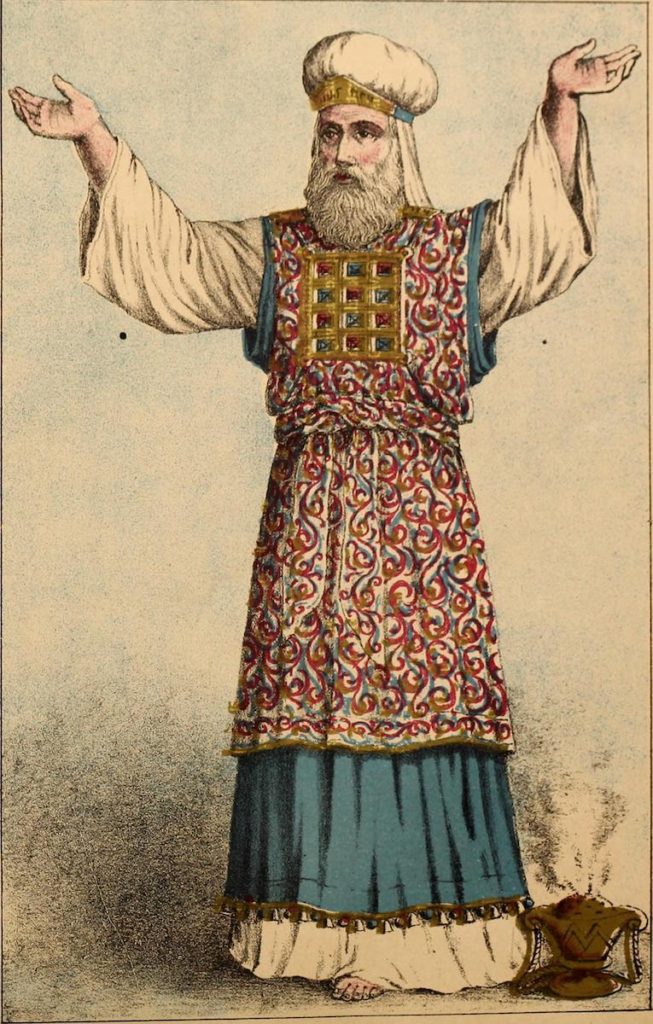
The Levitical priesthood was one of YHVH’s blessings or marriage gifts to his bride, Israel. It was given to her at the time of their marriage to him at Mount Sinai. The Aaronic or Priestly Blessings of Numbers 6:22–27 indicate that the priests were to be a conduit of YHVH’s blessings to his people. TheArtScroll Stone Edition Chumash correctly states it this way: “[The priests did not] have any independent power to confer or withhold blessings—only God can assure people of success, abundance, and happiness—but that part of their Temple service is to be the conduit through which God’s blessing would be pronounced on His people” (p. 762). Hirsch in his commentary on the priestly blessing states that it is Jewish tradition for the human instrument conveying the blessing to raise his hands (vertically and not horizontally) to heaven while reciting this blessing so as not to give the people the impression that the priest is conveying the blessing, but that it is coming from heaven (The Pentateuch Numbers, p. 99, Judaica Press). The Jewish sages further note that in Numbers 6:22–23, the Torah uses the word saying three times to emphasize the fact that the blessings flow from YHVH to the Israelites and are to be passed on to subsequent generations. The saints are YHVH’s priesthood now (“a chosen generation, a royal priesthood, a kadosh nation, a peculiar people,” 1 Pet 2:9). Are you an instrument of blessing everywhere you go? Do you ask YHVH to use you every day to spread the light of his truth and his love to others?
The Aaronic Blessing can be subdivided into three sections:
(a) The First Blessing:May YHVH bless you and safeguard you. The Jewish sages take this to refer to the material and physical blessings that Torah obedience brings as enumerated in Deuteronomy 28:1–14. This includes good health, wealth, divine protection and victory over enemies. YHVH’s blessing and his safeguarding of those blessings from those who would kill, steal and destroy them go hand-in-hand. The sages teach that “the best way for someone to preserve his wealth is to use it for charity and good deeds. That assures him of God’s continued blessing” (ibid. p. 763).
(b) The Second Blessing:May YHVH illuminate his countenance for you and be gracious to you. The sages teach that this illumination refers to the light of the Torah and they cite Proverbs 6:23, “For the commandment is a lamp and the Torah is a light.” Compare this with what John said about Yeshua in John 1:1–14; 8:12; 9:5 about Yeshua being the Light of the world. YHVH’s grace also involves him granting his people Torah knowledge, wisdom and understanding to utilize Torah properly and fully; to use the insights gained therefrom to comprehend his purposes (ibid. p. 763).
(c) The Third Blessing:May YHVH lift his countenance and establish peace/shalom for you. In Hebraic poetic symbolism, the idea of YHVH’s face or countenance shining toward his people is a metaphor of divine grace and favor. Contrariwise, when his face is turned against his people, this represents divine disapproval and shame upon his people (For examples of this in the Scriptures see Pss 4:6; 31:16; 67:1 cp. Lev 17:10; 20:5, 6, 17; Deut 31:17; 2 Chron 30:9; Ps 34:16 ; Jer 44:11; Ezek 7:22.). The sages note that peace is an essential component of the other blessings, for what good is physical blessings and spiritual insight if one’s life is devoid of peace? What is the Jewish concept of peace? It is balance, which is the absence of strife between the opposing forces in one’s life. Sin disrupts this balance and causes strife and warfare as well as creating a barrier between YHVH and his people (Read what Yeshua, the greatest and only true Rabbi of all, taught about this in Matthew 5:23–24.). When such strife and barriers exist causing the negation of peace, what are some things one must do to restore the peace? After all, Yeshua said, “Blessed [Happy] are the peacemakers …” Does peace just happen or is it necessary to exert effort to create it? Can there be peace where there is sin (i.e. Torahlessness)? Does it logically follow that the more our ways line up with the Torah of YHVH, the more our ways are pleasing to him, the more peace we will experience in all our relationships? (Read Proverbs 16:7.)