Understanding the Mystery of Ezekiel’s Temple

Ezekiel 40–48

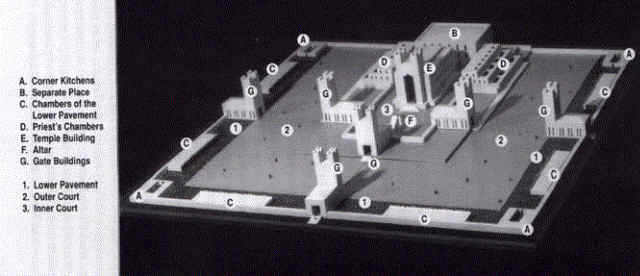
Ezekiel’s vision of a temple is enigmatic. Few passages in the entire Bible are more difficult to understand than chapters 40 to 48 of the Book of Ezekiel where the prophet describes in detail a temple—a habitation for YHVH himself—that he saw in a vision. Ezekiel’s temple is similar to the Tabernacle of Moses and Solomon’s Temple, but different and grander. 

Is this temple to be actually built during the Messianic Era or Millennium (which is the most common interpretation of this prophetic passage)? Or is this temple not a literal temple that will be built, but only figurative and spiritual in nature containing some hidden spiritual message? Bible commentators are uncertain. The Christian commentator Matthew Henry brushes off the vision with a scant commentary giving the following reasoning why: “Here is a vision … which is justly looked upon to be one of the most difficult portions in all the book of God. When we despair to be satisfied as to any difficulty we meet with, let us bless God that our salvation does not depend upon it, but that things necessary are plain enough; and let us wait till God shall reveal even this unto us.” Not content to leave this issue on Matthew Henry’s spiritual back burner, this author has assembled a series of insightful quotes from scholars who have studied Ezekiel’s Temple in depth and have some thought-provoking ideas as to its spiritual significance that may well spur the reader to examine this subject more thoroughly for himself.

Next, we present some excerpts from some Jewish and Christian commentaries on the subject of Ezekiel’s temple.

The Soncino Pentateuch sees this vision describing a temple that will be built in the New Jerusalem after the return of the exiled Israelites, which occurs when Messiah comes to establish his kingdom on earth. “This new temple was … to symbolize and embody in concrete form the teachings of Holiness and Purity preached by the Prophet in the preceding 39 chapters of his book.… The real hope of the future for Ezekiel lies in perfect and willing obedience to the Law” (p. 350).

The ArtScroll Chumash notes that at the beginning of the Book of Ezekiel the prophet is shown the glory of YHVH departing the Temple in Jerusalem because of all the abominations done therein (Ezek 9 and 10). That Temple became but an empty shell destined for soon destruction at the hands of the Babylonians. “But [Elohim] removes his Presence from places, not from his people. Throughout Ezekiel’s sad task of warning the nation of the consequences of its waywardness, [Elohim] told him that Israel would remain his people, that he would share their exile, and that he would bring them home again. In the concluding chapters of the book, Ezekiel saw the vision, the architecture, the dimensions, the laws of the Third Temple. Finally, he saw the vision of the Shechinah’s [YHVH’s glorious Presence] return—the same Shechinah whose departure he had tearfully witnessed twenty years earlier” (pp. 1158–1159).

The essence of the nine chapters devoted to describing this temple is found in 48:35 where the name of the city is given: YHVH Is There/YHVH Shama (vnÑ vuvh), according to the ArtScroll Tanch Series Ezekiel Commentary. The focus of the New Jerusalem is that it is the resting place of the Divine Presence. “[Elohim] wills that there be a New Jerusalem only because he wills that there be a place of welcome for the Divine Presence.… This Temple is to become the throne and footstool for the Divine Presence (43:7) and, in contrast to the two previous Temples which became defiled—and subsequently destroyed—through Israel’s sins, this one is to stand inviolate. [Elohim] is to dwell in it, never to depart (43:7)” (p. 605).

Adam Clarke in his commentary sees a direct correlation between the layout of Ezekiel’s temple and the message of the cross. “The tabernacle and temple were types of the incarnation of [Yeshua the Messiah]: ‘Destroy this temple, and after three days I will raise it up;—but this he spoke of the temple of his body’ (John 2:19,21). And in that Temple ‘dwelt all the fullness of the Godhead bodily.’ Into this immaculate humanity did the glory of the Supreme [Elohim] enter; and thus, ‘[Elohim] was in [Messiah] reconciling the world to himself.’ And this [Yeshua] is Immanuel, [El] with us” (Clarke’s Commentary, vol. 4, p. 540).

E.W. Bullinger in his noted Companion Bible says of Ezekiel’s Temple or Sanctuary, that it is the palace or habitation of the Messiah in connection with “the city of the great King” (Ps 48:2; Matt 5:35) (Appendix 88, p. 126).

“These closing chapters [Ezek 40 through 48] describe the new temple and a new order of worship for Israel. Most important they conclude with the name of the city, [YHVH] Is There. This is the key for understanding this whole vision of Ezekiel, which is paralleled by Revelation 21:1–22:15. As John has an angel guide to show him around his New Jerusalem, so Ezekiel has an angel to explain to him his temple vision. Though scholars vary in their interpretation, the temple is best interpreted symbolically, representing the ­worshiping community of the Messiah, during the church age, the Millennium, and climaxing in the world to come” (Spirit Filled Life Bible, notes on Ezek 40:1).

So what is the bottom line here? Will Ezekiel’s Temple literally be built or is it merely metaphorical symbology or both? 

Ezekiel’s Temple—A Literal Millennial Temple

There are solid biblical reasons to believe that Ezekiel’s temple vision foretells a literal temple that will be built in the future. In Messiah’s Coming Temple—Ezekiel’s Prophetic Vision of the Future Temple, by John W. Schmitt and J. Carl Laney, the authors make a compelling case for this being a description of a literal millennial temple. “Taken literally, Ezekiel 40–48 describes a temple that will exist during the kingdom (millennial age). Also Ezekiel is not alone in his prediction regarding a future temple; other prophets confirm the view that there will be a literal temple in the future kingdom (Isa 2:3; 60:13; Jer 33:18; Joel 3:18; Mic 4:2; Hag 2:7–9; Zech 6:12–15; 14:16, 20–21)” (ibid. p. 81). Moreover, if we are to believe John’s account of the New Jerusalem’s river of life lined with trees of life (Rev 22:1–2), then we must believe that Ezekiel’s similar account is literal as well (Ezek 47:1, 7, 12).

Those who believe that Ezekiel’s Temple is an allegorical representation of this present church age “introducers unwarranted allegorization and tends to read ideas into the passage rather than drawing out the t ruth that is there. Furthermore, thee is very little that corresponds to the church in Ezekiel’s vision” (ibid., p. 81).

 

Deuteronomy 13—Dealing With Both Carnal and False Prophets

Deuteronomy 13:1, If there arise a prophet.

In the modern (especially Charismatic) church not only is the term “prophet” carelessly thrown about, but so is the term “false prophet,” which is often applied to any Christian who simply “misses” hearing the word of Elohim correctly, but isn’t guilty of leading Elohim’s people astray spiritually into heathenism. We need to fine tune our use of these words and learn how the Bible uses them and then do the same.

For years, I also had been using the term false prophet too broadly and generically (as many in the church do) to apply to those who either prophecy presumptuously out of the dictates of their own heart, or who hear a word from Elohim but incorrectly interpret it or misapply it (as was the case with Nathan the prophet who repented for telling David incorrectly that it was YHVH’s will for him to build the temple), as well as to those evil prophets who lead YHVH’s people away from the Truth of Elohim and into paganism.

The term “false prophet” is not to be found in the Tanakh (or Old Testament) at all, and is only occurs several times in the Testimony of Yeshua (or New Testament) and is applied to patently evil, satanic individuals. Therefore, based on the biblical evidence, it is incorrect to apply this term to a godly individual who, for example, makes an accurate prophecy, but gets the dates wrong, or somehow misinterprets a prophetic message from YHVH. 

Although the term “false prophet” isn’t found in the Tanakh, there are many warnings given against individuals who, through their false prophecies, lead YHVH’s people astray into idolatry or who don’t urge the people to repent and get back to YHVH’s straight paths of Torah-obedience, or who otherwise involved in ungodly activities (e.g. Deut 13:1–5; 18:20–22; Jer 23:9ff; 28:1ff; Ezek 13:2ff; Isa 28:7). The term “false prophet” doesn’t strictly apply to a godly person who isn’t leading YHVH’s people into apostasy.

Therefore, based on the biblical evidence, the godly person who “misses it,” so to speak, should be more correctly called a presumptuous prophet (Deut 18:22), or foolish prophet (Ezek 13:2) or a carnal prophet (i.e. who speak out of the flesh; Ezek 13:1). Based on scriptural evidence, I can see no justification for applying the derogatory term “a false prophet” to a Christian who simply misinterprets a prophetic word from Elohim, or who erroneously adds their own ideas to the prophetic word while assuming they are from heaven. One should be wary of such a “prophet,” and, if possible, teach him or her how to hear and interpret a prophetic word correctly from Elohim, but the church should not reject them as a false prophet. For this reason and for the purpose of accountability, Paul instructed the saints in Jerusalem (and us) to judge the prophets who prophesy in the local congregation (1 Cor 14:29) to insure that what they are saying is indeed from Elohim and lines up with his Written Word.

Deuteronomy 13:1–6, A prophet or a dreamer … a sign or a wonder. A prophet may claim to receive his or her vision or “word from YHVH” while they are awake in a vision or in a dream while asleep (The ArtScroll Stone Edition Chumash, p. 1007). According to Rashi (the Jewish Torah commentator), a sign is a supernatural event in heaven while a wonder is a miraculous event on earth. There are those among the people of YHVH who, as Adam Clarke states in his commentary on this verse, “pretend to have a divine influence, so as to be able perfectly to direct others in the way of salvation” or shows some “miraculous proof of his mission … or some type of representation of what he wishes to bring you over to” (vol. 1, p. 774). Yeshua warned about false prophets in the latter days who would deceive many (Matt 24:11) and false messiahs who might even deceive the “very elect” (verse 24). Paul talks about a “man of sin” that would arise showing signs and lying wonders such that some would fall from the truth of the salvation message of the gospel (2 Thess 2:1–12). Paul warns, “do not be soon shaken in mind, or be troubled, neither by spirit, nor by word … let no man deceive you by any means (verses 2–3). He then (in verses 15–17) encourages the brethren to stand fast in the simple truths of the gospel of Yeshua:

Continue reading
 

Colossians 2—What was wiped out and nailed to the cross?

Liar!

The mainstream church has lied to you about Colossians chapter two. How is this, you ask? Read on for the answer…

Colossians 2:14, Having wiped out. Here Paul mentions that Yeshua blotted out the handwritings of legal decrees that were against us when he died on the cross (Col 2:12–15). What was against us? It was the Torah law that specified that the sin of adultery carried the death penalty (Lev 20:10). For those who are washed in Yeshua’s redeeming blood and have been buried with him by water immersion or baptism (Col 2:12 cp. Rom 6:3–11), the devil, who is the accuser of the brethren (Rev 12:10), no longer has any legal basis against which to lay the charges of the sin of unfaithfulness against us before the Almighty (Col 2:15). Likely, there is a heavenly record of each man’s sins written in one of the books (which are in addition to the book of life) mentioned in Revelation 20:12. These books be opened at the last judgement and will be used to determine one’s eternal rewards based on one’s works of righteousness (v. 12). Some will be granted eternal life, while others will be destroyed in the lake of fire (v. 15). As mentioned, those who are under the blood of Yeshua and whose names are written in the Lamb’s book of life, there is no condemnation. 

In this passage, Paul may be alluding to the law of the jealous regarding an unfaithful woman (Num 5:11–31). In this case, the Torah instructs a man to bring his wife whom he suspects of adultery before the priests along with an offering of barley meal. What follows is one of the Torah’s more curious rituals. The priests, in front of the woman, sprinkle some dirt from the door of the tabernacle into an earthen vessel filled with holy water. Her head is uncovered, and she is then made to hold the barley meal, while she is put under oath and questioned about her alleged extramarital sexual activities. A curse is put on her if she has been unfaithful, and the curses are written in a book. The words are then scraped from the book and put into the water. The woman is then made to drink the bitter waters. If she is guilty, the curse takes effect causing her belly to swell and her thigh to rot. 

Continue reading
 

Deuteronomy 12—Where to Worship, the Religion of the Wilderness, Beware of False Gods

Deuteronomy 12:2ff, You shall utterly destroy. What are the present-day high placeswhere the world has placed its altars to its gods that as a called-out people and a set-apart nation YHVH is calling us to cast down and to destroy? Idols be they physical or material, emotional, and psychological in nature that form strongholds in our hearts and minds are things that hinder or prevent us from serving and obeying YHVH fully. What prevents you from keeping YHVH’s Sabbath and appointed times annual festivals (moedim)? What keeps you from prayer and intimate and set-apart times with him? What keeps you from hearing the voice of Yeshua and from loving him fully by keeping all of his commands? How about television, sports, your job and work schedule, family and peer pressure, fear, sinful habits and addictions, lust, greed, materialism and so on? What are you going to do about it?

Deuteronomy 12:3, You shall obliterate [destroy, put to death] their names [i.e. the names of pagan gods]. As The ArtScroll Stone Edition Chumash points out, not only was Israel to remove the idols themselves, but they were not even to refer to them by their proper names (p. 1000). Rashi, the ancient Jewish sage, says that names of ridicule were to be coined for the pagan gods and used instead. He points out in his commentary on this verse that Jews would actually formulate derisive wordplay names based on the original names of the gods. For example, the pagan temple called, “the house of the crest” became “the house of the ditch” in that the words crest and ditch were similar in Hebrew. Or the idol “everyone’s eye” became “thorn in the eye.” A similar example of this occurred during the Second Jewish Revolt of A.D. 135. The leader of that revolt, Simon bar Kosiba, was given the name Simon bar Kochba (meaning “star”), but when his revolt failed at the hands of the Romans his detractors nicknamed him Simon bar Koziba meaning “Son of a Lie” (Rabbi Akiba’s Messiah, by Daniel Gruber, p. 165). Coming up with names of ridicule for pagan deities and concepts may seem like a silly child’s game to some, but could it not serve to indelibly imprint on the minds of YHVH’s people the seriousness of idolatry and idolatrous practices? Could this not be a means of guiding the younger generation away from the ways of evil and into the paths of righteousness? In following the Jewish interpretation on this Torah command, what are some present day “gods,” “goddesses” or modern-day idols that could use renaming?

Deuteronomy 12:5ff, Put his name. Where has YHVH chosen to place his name spiritually? Are you bringing your tithes and offerings to that place so that YHVH can bless you?

Honour YHVH with your substance, and with the first fruits of all your increase so that your barns be filled with plenty …(Prov 3:9–10)

Give, and it shall be given unto you; good measure, pressed down, and shaken together, and running over, shall men give into your bosom. For with the same measure that you use it shall be measured to you again. (Luke 6:38)

“‘Will a man rob Elohim? Yet you are robbing me! But you say, “How have we robbed you?” In tithes and offerings. You are cursed with a curse, for you are robbing me, the whole nation [of you!] Bring the whole tithe into the storehouse, so that there may be food in my house, and test me now in this,’ says YHVH of Hosts, ‘if I will not open for you the windows of heaven and pour out for you a blessing until it overflows. Then I will rebuke the devourer for you, so that it will not destroy the fruits of the ground; nor will your vine in the field cast [its grapes,],’ says YHVH of hosts.” (Mal 3:8–11)

Giving (through tithes and offerings) is a spiritual, kingdom principle and a key to obtaining blessings and success.

Deuteronomy 12:5, Only at the place that YHVH will choose … to place his name there … shall you seek out his Presence [habitation] and come there.The word presence (as translated in The ArtScroll Stone Edition Chumash) is the Hebrew word sheken (IFA) and as a verb means “to dwell or tabernacle,” and as a noun it means “dwelling, or tabernacle.” According to The TWOT, the verb is used 129 times in the Tanakh (OT) of which 43 times YHVH is the subject; that is, it describes where he dwells (e.g. on Mount Zion [Ps 74:2], among his people [Exod 25:8], or in Jerusalem [Zech 8:3]). On several occasions, it refers to his divine and glorious presence dwelling among his people (e.g. Exod 24:16; Ps 85:9). The word mishkan, which was the portable tabernacle, sanctuary or earthly dwelling place of the glorious presence of YHVH among his people, is derived from this word. What is YHVH saying in this verse? Namely, he is telling his people NOT to go just anywhere to worship him, but to go only where he has placed his name. How do we know where that is? It will be where his manifest glory and presence is to be found! Where you fellowship and worship him collectively with other believers is the manifest glory and presence of YHVH there to confirm that YHVH has placed his name there? If not, why not? Now let’s read Psalm 63:1–4,

Continue reading
 

General Michael Flynn’s Open Letter Warning America About a Marxist Takeover

Please share this letter and video!!!!! The survival of America and freedom-loving people everywhere depend on information like this getting out!!!!

From WesternJournal.com at:

By Michael Flynn 
Published August 5, 2020 at 11:17am

We are witnessing a vicious assault by enemies of all that is good, and our president is having to act in ways unprecedented in decades, maybe centuries.

The biblical nature of good versus evil cannot be discounted as we examine what is happening on the streets of America.

It’s Marxism in the form of antifa and the Black Lives Mattermovement versus our very capable and very underappreciated law enforcement professionals, the vast majority of whom are fighting to provide us safe and secure homes, streets and communities.

When the destiny of the United States is at stake, and it is, the very future of the entire world is threatened.

As Christians, shouldn’t we act? We recognize that divine Providence is the ultimate judge of our destiny. Achieving our destiny as a freedom-loving nation, Providence compels us to do our part in our communities.

It encourages us in this battle against the forces of evil to face our fears head-on. No enemy on earth is stronger than the united forces of God-fearing, freedom-loving people.

We can no longer pretend that these dark forces are going to go away by mere prayer alone. Prayers matter, but action is required.

This action is needed at the local, state and federal levels. Action is also required in the economic, media, clerical and ecclesiastical realms.

Decide how you can act within your abilities. Stand up and state your beliefs. Be proud of who you are and what you stand for. And face, head-on, those community “leaders” who are willing to allow dark forces to go beyond peaceful protests and destroy and violate your safety and security.

Churches and houses of worship must return to normal. We invite everyone of goodwill to not shirk their responsibilities and instead act in a fraternal fashion. If for no other reason or with no other ability, act in a spirit of charity.

We cannot disrespect or disregard natural law along with our own religious liberties and freedoms.

I am witnessing elderly people lose their connection to all that is good in their lives: connections to their faith, their families and their individual freedoms, especially the simple act of attending church, something they’ve been doing for decades.

Let us not be intimidated or fear those who cry out that we are in the minority; we are not.

Good is always more powerful and will prevail over evil.

However, evil will succeed for a time when good people are divided from each other and their personal lives — children away from their teachers, preachers from their congregations, customers from their local businesses.

America will never give in to evil. Americans work together to solve problems.

We do not and should not ever allow anarchy and the evil forces behind it to operate on any street in our nation.

No one should have to fear for their very life because some dark, disturbed force is challenged by the very essence of what America stands for.

We are “one nation under God” and it is our individual libertiesthat make us strong, not liberties given to our government. Our government has no liberty unless and until “we the people” say so.

God bless America and let’s stand by everything that was and is good in our lives, in our communities and in our country.

Otherwise, America as the true North Star for humanity will cease to exist as we know it.


The same letter as read:

From https://www.youtube.com/watch?v=u4v–JSn5lk


Christianity and Aleister Crowleyism

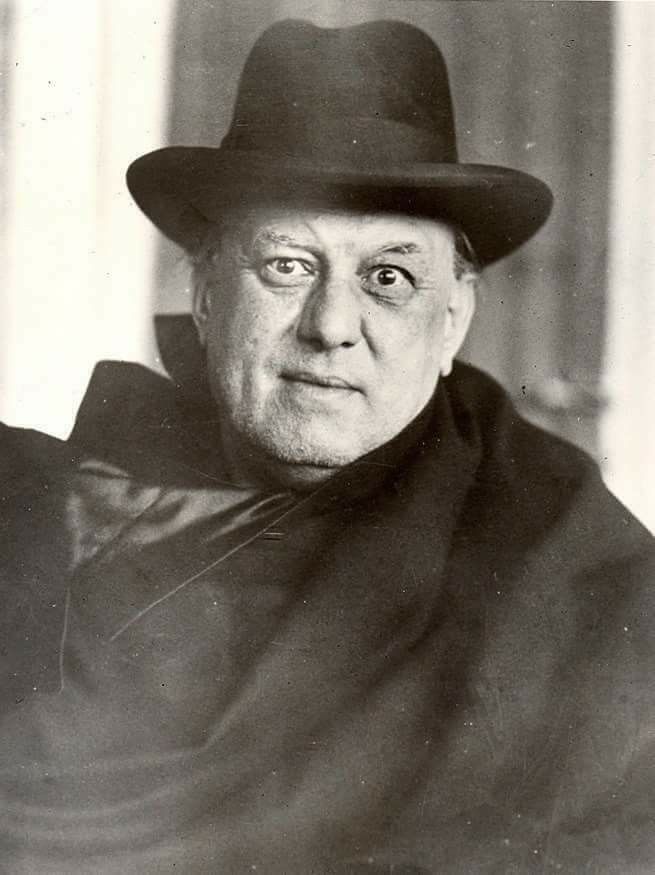
The occultist and Satanist Aleister Crowley (1875-1947)

Deuteronomy 10:4–5, Wrote on the tablets…put the tablets in the ark. If the two tablets are biblical symbols for the heart of man onto which YHVH Elohim writes his laws (see notes at Exod 34:1), then the ark of acacia wood which sites in the holy of holies (the earthly representation of Elohim’s throne room) into which the two tablets were deposited represents the human body and life which, ideally, should abide in the presence of Elohim guided by the Torah-Word of Elohim. Aaron’s rod that budded and the pot of manna, which the ark also contained, respectively represent the tree of life or tree-cross on which Yeshua gave his life as an atonement for our sin and Yeshua as the bread of life, which is a prophetic picture of the Word of Elohim that the saint must feed on in order to obtain eternal life.

Ten Commandments…down from the mountain. Moses received the Torah-instructions from out of the fiery presence of Elohim and brought them down from the mountain—a symbol of heaven. Elohim gave his Torah-law or instructions in righteousness to man to be deposited in the ark (a symbol of the human heart and mind). In light of these facts, it is unthinkable that Christian theologians came along many centuries latter and developed a philosophical system that, to one degree or another, relegated YHVH’s Torah-law—his instructions in righteousness—to past times and people, and subsequently declared to millions of Christians that the Torah was “done ways with,” “fulfilled,” “nailed to the cross” and was “against us,” and therefore is largely irrelevant and unnecessary to obey. The pride and hubris of such a belief is, frankly, astounding and clearly demonstrates to what degree the carnal mind of man will twist the Word of Elohim to devise his own religious system to fit his own will. 

This mainstream Christian belief system is totally in accordance with the lying words of the snake in the tree: “Has Elohim indeed said?” (Gen 3:1), and the rebellious deceitfulness and sinfulness of the unregenerate human heart (Jer 17:9; Rom 8:7).

Moreover, such a theological approach is akin to the occult social or spiritual philosophy developed in the early 1900s by the occultist and Satanist Aliester Crowley—dubbed at the time as “The wickedest man in the world” (1875-1947). Crowely dubbed his Torah-hating religious system Thelema where the mantra was, “Do what thou wilt shall be the whole of the Law.” Crowley taught that “adherents of Thelema should seek out and follow their true path, i.e. find or determine their True Will” (https://en.wikipedia.org/wiki/Thelema). 

How is the philosophy of Thelema any different than the one that the serpent seduced Adam and Eve at the tree of knowledge into believing when he questioned the Torah-Word and sovereign authority of the Creator of the universe? Now follow the bouncing ball. Christian theology that, to one degree or another, advocates the abrogation and irrelevance of YHVH’s Torah contains within it the same underlaying fundamental philosophical strains as the Satanic religious system that Crowley founded more than a century ago. In mainstream Christianity, “Do what thou wilt” means, in essence, that one has the freedom to pick and choose only those aspects Elohim’s Torah-law that one desires or wills to follow. Sadly, this belief system simply illustrates what two biblical authors wrote long ago about the inherent sinful and rebellious nature of man:

The heart is deceitful above all things, and desperately wicked; who can know it? (Jer 17:9)

For those who live according to the flesh set their minds on the things of the flesh, but those who live according to the Spirit, the things of the Spirit. For to be carnally minded is death, but to be spiritually minded is life and peace. Because the carnal mind is enmity against Elohim; for it is not subject to the Torah-law of Elohim, nor indeed can be. (Rom 8:5–7, emphasis added)

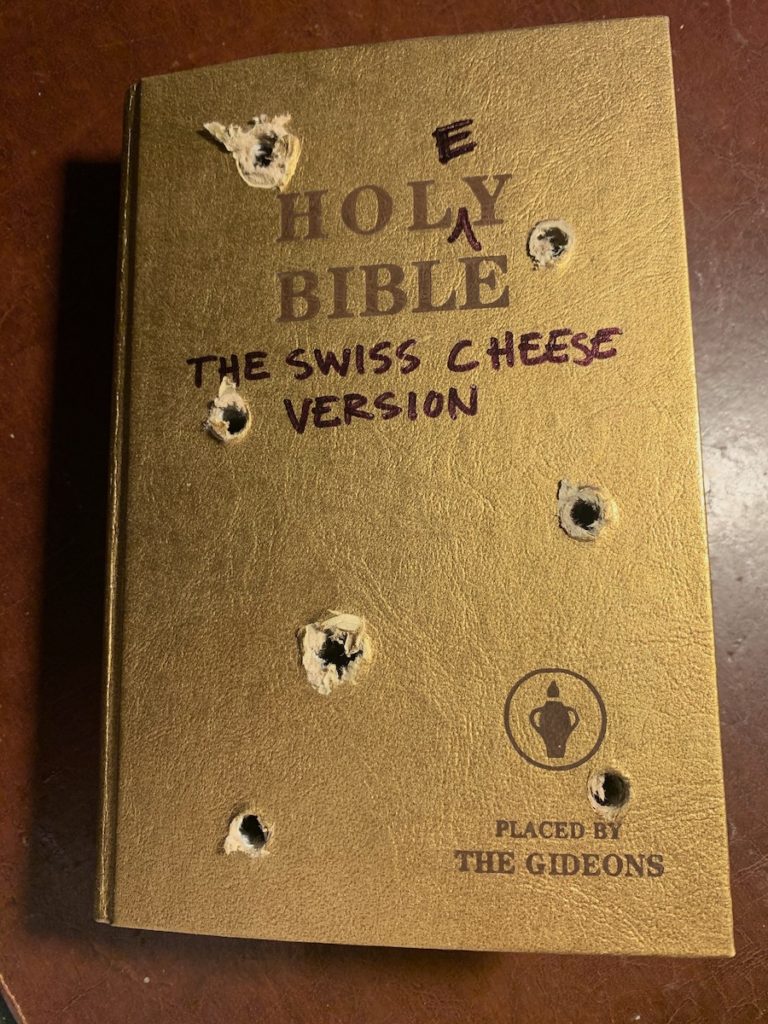
To wit, most Christians do not follow the Holy Bible, which declares that man shall live by every word the proceeds from the mouth of Elohim (Deuteronomy 8:3; Matt 4:4), Rather they follow the Holey Bible, the Swiss Cheese Version—a version with pages ripped out of it. Those pages contain the instructions of Elohim that they deem not necessary to obey.

I have a lot of Bibles in the Bible collection in my personal library. This is my least favorite one! — NL
 

Deuteronomy 11—Love and Obedience to YHVH Is Rewarded

Deuteronomy 11:1, Love YHVH … and keep …his commandments.Compare this verse with what Yeshua said in John 14:15. When we understand that Yeshua is “YHVH your Elohim” does that not give us a new perspective about not only who Yeshua was/is, but his teachings in the Gospels? Does this shed new light on the issue when Paul said to “follow me as I follow the Messiah” (1 Cor 11:1)? What did Paul mean by this? Was Paul really pro-Torah?

Deuteronomy 11:8, That you may be strong.Obeying YHVH by keeping his Torah-commandments keep us strong. Strong is the Hebrew word chazaq meaning “to be strong, grow strong, to prevail, to be firm, be caught fast, be secure; to grow stout, grow rigid, to restore to strength, give strength, sustain, encourage, make bold, encourage, to repair, to withstand.”

Deuteronomy 11:13, If you will hearken. Stale versus fresh manna. In the Hebrew, this phrase literally reads, “If hearken, you will hearken….” Rashi (the Medieval Jewish Torah scholar) interprets the double usage of this verb to mean, “If [you] listen to the old, you will listen to the new” meaning that if one listens to what one has already learned by taking care to review and understand it, one will gain new insights or fresh insights into the Torah (The ArtScroll Sapirstein Edition Rashi—Devarim, p. 110; The ArtScroll Stone Edition Chumash, p. 995). 

What does this teach us about studying YHVH’s Word consistently and regularly? YHVH gave the Israelites fresh (not stale) manna every day, even as he watered the land of Israel with the early (fall) and latter (spring) rains (a symbol for spiritual refreshment), so that the land would be fruitful without the need of man-made irrigation systems. Manna and rain both came from heaven and are used as figures of speech Hebraically to represent Torah-truth. 

Is your life being renewed regularly with fresh revelation and insights into the Word of YHVH, into his very heart and character? Does this not refresh, nourish and sustain the ground of your life, so that it yields an abundant spiritual crop of joy, shalom, intimacy with the Father and anointing? Is your life a place of fresh manna and constant rain, or a place of stale bread and drought? If so, what changes do you need to make in your life to change this situation?

Continue reading