Overview of the Book of Leviticus/Vayikra

Outline of Leviticus

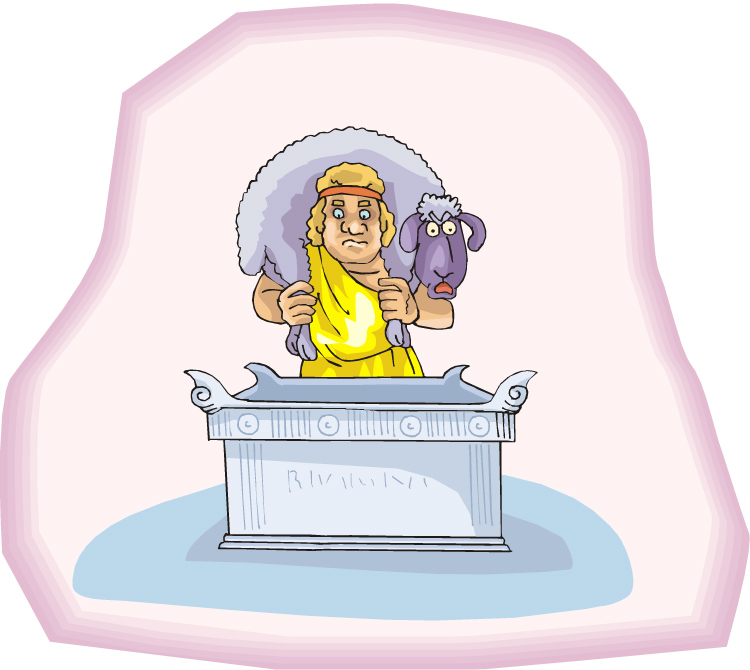
Leviticus is divided into to several main parts. Chapters one to 16 deal with laws of sacrifice and purification. In the second section (chapters 17–25), Elohim sets forth his demands for holy living that his people might maintain a right relationship with him. Chapter 26 lays out the blessings and curses for obedience to YHVH’s commands. The final chapter of the book ends with some miscellaneous laws. The following is an overview of Leviticus chapter-by-chapter.

  • The five main offerings (Lev 1–7)
  • The ordination of priests (Lev 6:8–7:38)
  • Laws of cleanliness (food, childbirth, diseases, etc.) (Lev 11–15)
  • Day of Atonement (Lev 16–17)
  • Moral laws regulating relationships between humans (Lev 18–20)
  • Regulations for priests, the offerings of the annual feasts (Lev 21:1–24:9)
  • Punishment for blasphemy, murder, etc. (Lev 24:10–23)
  • The Sabbatical year, Jubilee, land laws, slavery (Lev 25)
  • Blessings and curses (Lev 26)
  • Regulations pertaining to vows made to YHVH (Lev 27)

Themes and Main Points of Leviticus

  • Leviticus stands at the center of the Torah, and there’s a reason for this, since it shows man how to come into relationship with Elohim by addressing the sin issue and showing man the upward path of holiness and righteousness. 
  • Holiness (or being set-apart) is the key theme of Leviticus. This includes the set-apartness of YHVH and the need for man to become set-apart as well if he is to come into a relationship with the Almighty (Heb. kadosh, Lev 11:44). Leviticus lays out the terms are laid out by which an unholy, profane, polluted or sinful people can come into a spiritual and even contractual and marital relationship with their holy, morally pure and sinless Creator. It also delineates the terms of the contract including penalties for its violation and blessings for adherence to it.
  • Leviticus carries on to completion the giving of the Torah-law, which started in Exodus 20, and which firmly established the Torah as Israel’s binding covenant with Elohim and the legally binding document that would govern that nation. The Torah literally became the nation of Israel’s constitution. 
  • This book, for the first time in detail, shows man the way of expiation (or atonement) and forgiveness of sin, thus prophetically pointing the way in major detail to Yeshua the Messiah, the Lamb of Elohim, who was yet to come and who would ultimately take away men’s sin once and for all (without the continual need of animal sacrifices) by his sacrificial death on the cross.
  • The narrative of Leviticus covered probably only a month.
  • Leviticus is the first book of Torah that rabbinic Jews start teaching their young children, since they believe that those who are pure in heart (i.e. children) should be engaged in the study of purity (i.e. the laws of purification and atonement, which is the central themes of Leviticus).
  • Even today, Leviticus remains the foundation for Jewish life, since it includes the laws pertaining to diet, the biblical feasts, sex, marriage, family purity, and our relationship with our fellow man. 
  • The emphasis the modern rabbinic Jews place on Leviticus is evidenced by the fact that the tabernacle service found in this book is at the heart of the modern Jewish synagogue prayer service, and forms the basis for their daily devotions. Jewish liturgical prayer is largely based on the tabernacle sacrificial system  as outlined in Leviticus.
  • The offerings and other ceremonies revealed in Leviticus serve to show the holiness of YHVH.
  • Leviticus teaches us that YHVH can only be approached through proper and prescribed protocols.
  • In Leviticus, spiritual set-apartness (holiness) is symbolized by physical perfection. All blemishes or defects symbolize man’s spiritual defects, which break his spiritual wholeness. Therefore, the religious system in Leviticus required:
  1. Perfect animals for sacrifices (Lev 1–7).
  2. Priests without physical deformity (Lev 8–10).
  3. A woman to be ritually purified from hemorrhaging after childbirth (Lev 12).
  4. Ritual purification from sores, burns, baldness (Lev 13–14).
  5. Ritual purification from a man’s bodily discharges (Lev 15:1–18).
  6. Ritual purification after a woman’s menstrual cycle (Lev 15:19–33).

All of these ritualistic requirements point to one thing: the holiness of Elohim and man’s need to put off sin and the defilement of the flesh, which causes pollution and profaneness, thus separating us from a set-apart, pure and perfect Elohim. This teaches man to strive to reach higher spiritual levels and not to be content with the mundane, fleshly, earthly level of his own human existence, but to reach for the heavens where Elohim abides.

  • Leviticus reveals that those with certain diseases or ailments had to leave the camp (symbolic of leaving YHVH’s Presence—like Adam and Eve leaving the Garden of Eden after they had sinned). Israelites could be readmitted to the camp (symbolic of returning to YHVH’s Presence) only after certain protocols had been performed and the person had been pronounced whole by the priests.
  • In Exodus 19:6, YHVH’s call for Israel to become a kingdom of priests. As such, they were to be a light to the nations and, in a sense, to evangelize the world by showing Elohim’s glory to those nations around them (Deut 4:4–8). Israel was to be YHVH earthly representation of YHVH’s kingdom on earth. Leviticus showed Israel how to walk in a set-apart (kadosh or holy) manner before YHVH and the world—how to be in the world, though not of the world, as Yeshua taught his disciples in John 17:11, 14.

All Was Overseen by the Priests

The priests oversaw and controlled the sacrifices, rituals, ceremonies, the rest of the tabernacle service as well as the day-to-day life of the Israelites.

It was their job to establish Israel as a kadosh nation, and to instruct Israel in spiritual cleanliness and set-apartness (holiness), to preserve them spiritually, and to present them to YHVH as a pure and righteous people. YHVH has given the same responsibility to the five-fold ministry that he has raised up to operate within the spiritual body of redeemed believers today (Eph 4:11–16). This new, royal priesthood (1 Pet 2:9) is comprised of apostles, prophets, evangelists, pastors and teachers who have the purpose of “equipping of the saints for the work of ministry, for the edifying of the body of Messiah, till we all come to the unity of the faith and of the knowledge of the Son of Elohim, to a perfect man, to the measure of the stature of the fullness of Messiah” (Eph 4:12–13).

Holiness—The Dominant Theme of Leviticus and the Bible 

Continue reading
 

What is the truth that will set you free?

John 8:32, Know the truth. “The truth shall make you free” is an often-quoted axiom, but few understand its deeper biblical implications. When Yeshua made this statement to Jews, what did he mean? To Yeshua what is truth? Two verses later, he mentions being a slave to sin. What is sin, and what does that have to do with truth? As many times as you’ve heard this axiom, have you heard anyone explain verse 32 in the larger context of Yeshua’s statement? We will now do so below.

We violate the sanctity of Scripture if we impose on it our own meanings. This is a cavalier and presumptuous approach to understanding the Bible and can hardly be called “rightly dividing the word of Elohim” (1 Tim 2:15).This practice often occurs with this verse. To do so is to twist the meaning of the Scriptures to fit our own human vicissitudes, agendas and biases. This is humanism and insults the mind, will and sovereignty of the Almighty as divinely revealed in his Holy Word. 

To properly understand this verse, we must look solely to the Bible for the keys to understanding it. We can start this process by first asking the question, what is truth? 

The Bible defines its own terms when it calls the Torah truth (Ps 119:142 and 151). The truth of Torah (i.e. the law of Moses) will set a person free, for when one hears and obeys the Torah, one ceases sinning (i.e. violating YHVH’s Torah-law; 1 John 3:4), and therefore doesn’t come under the penalty of the Torah-law’s judgment for breaking it, which the Bible calls sin and which leads (ultimately) to eternal death (Ezek 18:4; Rom 6:23). When one is not under the judgment of sin, one is free. With freedom comes life. 

Yeshua the Messiah himself is also the truth (John 14:6), for he is the Living Torah-Word of Elohim (John 1:1, 14). When we place our trusting faith in Yeshua and follow him, his spiritual life in the form of his Set-Apart Spirit will then flow through us and empower us to walk away from sin and follow the spiritual light of his Torah, which will keep us sin-free. This is the path that leads us toward the ultimate freedom from eternal death resulting in everlasting life (John 8:52). As such, sin will no longer have any legal claim on us, and thus we will not come into condemnation, but will pass from death into everlasting life (John 5:24). This is possible because Yeshua has taken upon himself our past sins (Rom 3:25), paid the legal penalty of them, and wiped our spiritual slate clean and has given us a fresh start in life (Gal 2:20; 1 Cor 5:17) to walk sin-free (in accordance with his standards of righteousness, which is the Torah). This is the result of knowing the truth and experiencing the freedom that comes therefrom. 

It’s astounding how so many people have been taught to believe the exact opposite of the truth—that the laws of Elohim will place you under bondage instead of setting you free!

Now that you have been set free from the traditions of men, which make of none effect the word of Elohim, you now have the freedom to understand the fuller, biblical meaning of Yeshua’s statement, “And you shall know the truth and it shall make you free.”


YOU can’t believe Jesus/Yeshua without also believing Moses!

John 5:46–47, Believed Moses. These two verses at the end of chapter five can easily be overlooked, but their implications are huge. Quite simply, Yeshua is saying that those who don’t believe the writings of Moses (i.e. the Torah) won’t believe the words of Yeshua who himself upheld the Torah and taught its validity in the lives of his disciples. 

This then begs the following question: Where does this leave all those who claim to be followers of Yeshua, but who believe that the law of Moses was abrogated? It’s hard to be absolutely black and white on this matter, since only YHVH can judge the heart condition of each individual, for undoubtedly many who claim the law was “done away with” still actually adhere to many of the law’s tenets (e.g. you shall not steal, murder, lie, commit adultery, worship idols and you shall honor your parents, etc.) and are thus obedient to the law to one degree or another. 

However, we can safely say that it’s a matter of degrees. That is to say, to the degree that we don’t believe the words of Moses, we don’t believe the words of Yeshua who was a proponent (and, in reality, as the Word of Elohim, the Originator) of the Torah-law of Moses. 

John makes a similar statement in his first epistle from which we can deduce the following: To the degree we don’t keep the (Torah) commandments of Elohim, we won’t know him; that is to say, conversely, if we keep his commandments which are a reflection of his character, will and heart, we will be able to know what pleases him, which in turn will determine the depth of our spiritual relationship with him (1 John 2:4). 

In reality, these should be simple concepts to grasp and put into practice in one’s spiritual walk, yet, sadly, most religious leaders have misled Christians to believe anything and everything but the simple truth of the Bible and instead have concocted convoluted man-made doctrines and theological theories resulting in unbiblical church traditions by which they have made the word of Elohim of no effect (Mark 7:13). It’s time for Elohim’s people to come out of the Babylonian church system with its webbed mixture of truth along with half-truths and outright lies (Rev 18:4).

Moreover, Yeshua is saying here that Moses’ prophecies about the coming Messiah formed the foundation for all the subsequent biblical messianic prophecies and the eventual coming of Yeshua the Messiah. If one couldn’t believe these prophecies of Moses, how would they recognize, much less believe in, Yeshua when he did come?


Did Yeshua really “break” the law, and if so, whose “law”?

John 5:18, [Yeshua]…broke the Sabbath. Allow me to share an interesting and sad, but true story from my life about a false Christian teacher that I went head-to-head with. Many years ago, I was in a meeting where a Christian Bible teacher was giving a message on the end times. In the middle of his teaching and totally out of context, he quoted this passage from John and claimed that Yeshua broke the Sabbath. There was a rustle in the audience of about 300 people. A little later, he made the same statement again and began to deride the Sabbath. This time there was an audible moan from some in the audience—many of whom were Sabbath keepers. A feeling of being hit in the gut went through me. A little later, he made the same statement again, and continued to bash Sabbath observance. This time, I could hold my peace no longer, and I stood up and challenged him in the middle of the meeting. I told him that to say that Yeshua had broken the Sabbath was to call Yeshua a sinner, and that Yeshua had not broken the Sabbath, but some Jewish legal traditions (or halakhah) pertaining to the Sabbath. The speaker was flustered and had no response, and the host of the meeting decided to take an intermission.

A year later, it was announced that this Bible teacher had suddenly and unexpectedly dropped dead in the pulpit while preaching. One can’t help but wonder if he had come under divine judgment for blasphemously teaching that Yeshua was a sinner by supposedly breaking the fourth commandment.

Had this false teacher simply pulled down a concordance from his bookshelf and looked up the word broke in the Greek, and had read John’s statement in verse 12 in the context of verses 8–10, he wouldn’t have been teaching this blasphemous heresy about our Master and Savior!

Here is the explanation of this passage: The word broke is the Greek word luo meaning “to loose, untie someone or something bound, to dissolve, destroy.” According to The Theological Dictionary of the NT, luo means “to free from prison, open something closed; destroy fetters, foundations, walls; to release.” What Yeshua was breaking was the Jews’ extra-Torah legal traditions that made the Sabbath a burden by prohibiting the alleviation of human suffering and need on this day (John 5:8–10). He was in no way violating the actual Torah, since there is no Torah-law prohibiting healing on the Sabbath or carrying one’s bed role. In attempting to follow the Torah through men’s traditions, many of the Jews of Yeshua’s day had actually omitted the weightier matters of the Torah (justice, mercy and faith, see Matt 23:23), and had forgotten that YHVH is more concerned with heart issues rather than religious legalism, since he desires mercy over sacrifice, and the knowledge of Elohim over burnt offerings (Hos 6:6).

Any tradition of man that violates the letter and the spirit of the Torah is an illegal tradition. Yeshua was only violating an illegal tradition of men. Therefore, in the eyes of the Jews he was breaking the Torah. In reality, he was loosing (not breaking) the Torah from the traditions of men that had corrupted the true intent of the Sabbath law. A better translation of this verse would be, “he…loosened/untied the Sabbath [from men’s legalistic traditions].” Yeshua didn’t come to set men free from the Sabbath. He came to set the Sabbath free from men’s unbiblical traditions.

Did Yeshua Break the Law?

Continue reading
 

The Dynamics of Divine Revelation

Exodus 21–23, Basic principles of morality and righteousness. After having given the ten statements (or “ten commandments”), which forms the basic cornerstone of the whole Torah and out of which all the other Torah commands branch, Elohim now expands on these ten basic principles in chapters 21 to 23. This passage contains the basics of how to love YHVH Elohim and one’s neighbor as oneself (the golden rule). Exodus chapters 20 to 23 contain the basic laws and principles for a society to function smoothly at a high level spiritually. They form the foundation of societal governance, which the new nation of Israel needed in order to survive spiritually (in right relationship with Elohim) and to survive physically and morally as a holy or set-apart nation surrounded by heathen nations.

It is also interesting to note that YHVH didn’t give Israel all 613 Torah laws at once, but introduced them to Israel little-by-little on an as-need basis and so as not to overwhelm them all at once. It was like a parent teaching a child one step at a time on how to act like an adult. YHVH started with the ten statements of Exodus 20, then expanded these ten into the basic laws of chapters 21 through 23, and he then goes from there instructing the Israelites in ways of righteous living. This teaches us another truth about how YHVH operates with men: He reveals himself to those who seek him slowly, methodically over time. He and his ways are too transcendently great and expansive for the mind of man to encompass all at once.

For my thoughts are not your thoughts, neither are your ways my ways, saith YHVH. For as the heavens are higher than the earth, so are my ways higher than your ways, and my thoughts than your thoughts. (Isa 58:8–9)

This measured method of divine revelation is exactly how the apostles chose to reveal YHVH’s truth to the new Gentile converts in Acts 15—little by little. First they heard the gospel message and came to Messiah, then they were given basic rules to follow in order to enter into the fellowship of the saints, then they would learn the laws of Moses over time each Shabbat.

Learning the divinely revealed truths of Elohim and his ways of righteousness as found in the Bible is a step-by-step process that will last a lifetime.


How Love I Thy Torah!—Exploring Psalm 119

Spiritual Insights from the Hebrew Language

If you were to open your King James Bible (or any other similar Bible, e.g. the NAS, NIV, NKJV, etc.) to the exact middle of the Bible, where would you land? Somewhere in the Book of Psalms at or near Psalm 119. Actually, by chapters, either Psalm 117 or 118 is the exact center of the Bible—so Psalm 119 isn’t too far off. 

Interestingly, Psalm 117 is the shortest chapter in the Bible with only two verses, while Psalm 119 is the longest. In this chapter, David exuberantly declares that all people everywhere should be praising YHVH because of his merciful kindness (or his grace) toward us, and for his truth (i.e., his Word or Torah, which is the biblical definition for truth, see Ps 119:142,151).

The mercy of YHVH and having faith in him is the theme of the first part of Psalm 118. The latter half of the chapter goes on to teach about the salvation of YHVH, and many understand this to be a messianic prophecy pointing to Yeshua, our heaven-sent Savior and Redeemer, who is the Living Torah–Word (John 1:1,14).

Then we come to Psalm 119, which, for 176 verses divided into 22 sections (one for each of the letters of the Hebrew alphabet), extols the supreme and inimitable virtues of the Word of Elohim (i.e., the Torah). David treats the Torah as if he were a jeweler who, after discovering the world’s rarest, largest and most beautiful diamond, carefully and in awe scrutinizes its every facet and all of its unique qualities, and then expresses his unspeakable delight over its supreme virtues.

In Psalm 119, David discusses Torah in all of its ramifications, and he uses many different terms for Torah. The most common is the word law, which in most cases is the Hebrew word Torah meaning “teaching, instruction, precept or law” of Elohim, which are his instructions in righteousness that when followed lead man to life, blessings, peace, joy, favor with Elohim and deliverance from evil. Beside the word law, Psalm 119 contains many other words that are synonymous with the Torah. They include:

  • your way
  • your testimonies
  • your precepts
  • your statutes
  • your commandments
  • your righteous judgments
  • your word
  • your wondrous works
  • the path of your commandments
  • the word of truth
  • your ordinances
  • everlasting righteousness
  • the truth

Overview of Psalm 119

Continue reading
 

An Overview of the Ten Words or Commandments

Exodus 20:1–17,

The Ten Words or Ten Commandments by which they are more commonly known are but the mighty cornerstone of the 613 commandments of the Torah. The Jewish sages teach that all 613 are implied in the Ten; or that the Ten can be expanded into 613. The Tanakh (Old Testament) and Jewish writings contain a number of phrases that express the quintessential essence of the Torah. One of these best-known passages naming several of these phrases is in the Jewish Talmud: “[R.] Simlai said, ‘613 commandments were given to Moses—365 negative mitzvot (commandments), the same as the number of days in the year, and 248 positive mitzvot, the same as the number of parts in a man’s body. David came and reduced them to eleven (Ps 15), Isaiah to six (Isa 33:15), Micah to three (Mic 6:8), Isaiah again to two—“Observe and do righteousness” (Isa 56:1). Then Amos came and reduced them to one, “Seek me and you shall live” (Amos 5:4)—as did Habakkuk, “The righteous one will attain life by his trusting [or by faith] faithfulness (Hab 2:4)”’ (Makkot 23b–24a, abridged, from the Jewish New Testament Commentary, by David Stern, p. 565). 

We see some of these same Torah summation-type statements in the Testimony of Yeshua. For example, the phrase, “the just shall live by faith” is found in three passages of the Testimony of Yeshua (Rom 1:17; Gal 3:11; Heb 10:38); In Leviticus 19:18, we find the phrase, “you shall love your neighbor as yourself,” which is the summation of the last five of the famous Ten Commandments. This in itself is a summation of all of the 613 Torah commandments that relate to human relationships, which we see in Yeshua’s famous “Golden Rule” passage of Matthew 7:12, “Therefore all things whatsoever you would that men should do to you, do you even so to them, for this is the law and the prophets.” Paul echoes this concept in Romans 13:8, “Love does not do harm to a neighbor; therefore love is the fullness of the Torah.” Love is the foundation and quintessential concept behind the Torah-law of Elohim. Yeshua states this in Mark 12:29–31, 

“And Yeshua answered him, ‘The first of all the [Torah] commandments is, Hear, O Israel; YHVH our Elohim is one Master: And you shall love YHVH your Elohim with all your heart, and with all your soul, and with all your mind, and with all your strength. This is the first commandment. And the second is like, namely this, you shall love your neighbor as yourself. There is none other commandment greater than these.’”

Love must be the motive behind all our righteous deeds or else our actions count for nothing (1 Cor 13:1–13). The concept of love and the keeping of YHVH’s Torah-law are codependent actions. One cannot exist without the other. John, in his epistle, discusses this idea at length in 1 John 2:7–11; 3:11–24; 4:7–21 where he states that “Elohim is love” (1 John 4:8, 16), and that one’s love of Elohim and man is linked to obedience to the Torah commandments (1 John 2:3–11; 3:11–18). As YHVH first loved us, we should love our fellow man (1 John 4:7–11), in word, deed and in (Torah) truth (1 John 3:18). This relates to Yeshua’s admonition to his disciples in John 14:15, “If you love me, keep my Torah-commandments.”

Lest one recoil at the thought of having to keep 613 commandments of the Torah please be advised of the fact that there are approximately 1050 commandments in the Testimony of Yeshua!

The 18 Benefits of Studying and Obeying YHVH’s Torah

Continue reading