An Overview of the Sacrificial System and Its Relevance to YOU

Leviticus 1–7

Although Jewish and Christian scholars disagree about whether the sacrifices were to cease after the coming of the Messiah, as Edersheim points out, all agree that the object of a sacrifice was substitution for the offender (The Temple – Its Ministry and Service, p. 90). He also notes that the Jewish fathers along with the Scriptures that all these substitutionary sacrifices pointed to none other than the Messiah. This understanding is especially expressed in the proto-rabbinic biblical Aramaic commentaries or Targumim (e.g. Tarum Jonathan and the Jerusalem Targum; ibid., p. 92). Later rabbinic sages, in light of the rise of Christianity, were loath to accept this interpretation and, to this day, pretend it was never the belief of their ancient predecessors. 

As the Tanakh progresses, the concept of the substitutionary sacrifice as it relates to the sinner and to the Messiah expands and unfolds. The unity of the Tanakh in this regard and its progression of revelation on this subject must be taken into consideration when studying the sacrifices listed in Leviticus and the rest of the Torah if we are to understand completely the biblical concept of substitutionary sacrifice as well as the Messianic prophecies. The concept of sacrifice in the Tanakh point us prophetically in progressive stages to the sin atoning death of the Messiah on behalf of sinners. Such passages in the Tanakh as Pss 2, 22, 35, 69, 72, 89, 110, 118 along with Isa 52:13–53:12 (many other scriptural passages could be cited here as well) point undeniably to the Person and work of Yeshua the Messiah including his suffering and glorification. The apostolic writers understood these prophecies and how Yeshua fulfilled them perfectly (e.g. Isa 52:13–53:12 cp. Heb 9:11–15; 10:4–7, 1; etc.), and this understanding forms the basis for the New Testament, which the authors thereof refer to as The Testimony of Yeshua (Rev 1:9; 6:2; etc.). 

Brief Overview: Six Types of Offerings (Heb. korban) Offered on the Altar (Lev 1-7)

Burnt or Elevation (Heb. Olah) Offering (Lev 1:3–17) 

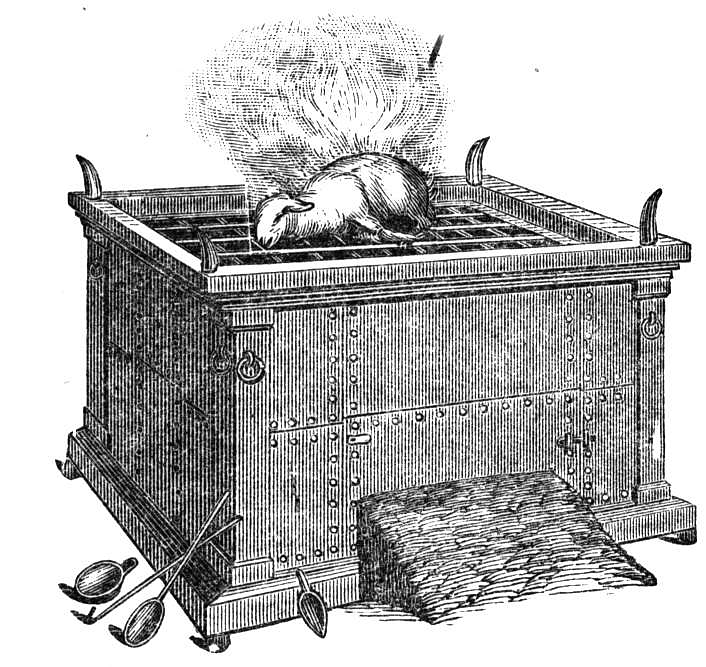
The olah or ascending offering signified the offerer giving himself up totally, wholly ascending or complete surrender to Elohim. The priests offered up this sacrifice up twice daily—the morning and evening (Exod 29:38–42; Num 28:1–8). This offering was always a male animal whose blood was to be sprinkled around the altar. The offerer was to lay his hands on the head of the animal before it was slaughtered symbolizing substitutionary atonement for sins. The offering would be accepted as a sweet aroma by Elohim.

Continue reading

 

What is the “mother” of all sins?

Psalm 138:6, Lowly…humble. YHVH prefers the lowly (Isa 66:2; Matt 5:8; Jas 4:6; 1 Pet 5:5) and finds human pride to be abominable (Prov 6:16–17). Human pride is perhaps the mother of all sins. It prevents Elohim from working with a person, for a proud person is unable to see themselves as they really are, and fails to recognize their sinfulness and their need for a Redeemer, and thus is unable to come into alignment with commandments of Elohim that produce his character in a person, thus bringing the person into a spiritual relationship with Elohim. Pride prevents and destroys relationships between humans and between humans and Elohim. That’s why Elohim hates it so much. Humility brings a person closer to Elohim; pride keeps a person far from Elohim. 


What do YOU lift your eyes up to?

Psalm 123:1, Unto you I lift my eyes. How many people in our post-Christian era lift their eyes to Elohim anymore for anything? Not many. Even most so called believers put their trust in just about everything else besides Elohim in their time of need whether it’s in medical doctors, money, .self-help psychology, the government, or themselves. For example, when they are sick, most people instinctively call their doctors first before praying to Elohim for wisdom and healing. They seldom seek YHVH when making major decisions in their lives. They rarely seek YHVH’s guidance, direction, wisdom and counsel on anything. They spend more times lifting their eyes up to their electronic devices (a modern version of the tree of the knowledge of good and evil) instead of to YHVH and his Word, and they are to addicted to the things of this world and, at the same time, blind to their own idol-worshipping habits to even recognize it. We are a lukewarm and idolatrous people. This was a concern of John, which is why he ended his first epistle with these words, “Little children, keep yourselves from idols” (1 John 5:21). If this was true then, how much more so now? YHVH help us!


Are YOU destined for the trash heap?

Luke 12:5, Killed…cast into hell [Gehenna]. There are two deaths: a physical and a spiritual death. All humans will die a physical death (Heb 9:27), but not everyone will die a second or spiritual death. This death is reserved for the unregenerate wicked and is called the lake of fire (Rev 20:12–15). The Hinnom Valley (Gr. Gehenna) on the west side of Jerusalem was a Hebrew metaphor for the fate of the wicked. The Jews used this valley as a refuse dump, and it was there that the bodies of dead animals and criminals were burned. Literally, at the white throne judgment after having judged the unregenerate wicked, YHVH will cast them into his spiritual garbage dump to be burned up (Rev 20:11–15).


Humble yourself willingly before Elohim has to force you to do so !

Exodus 10:3, How long will you refuse to humble yourself before me? The sovereign Creator ultimately demands that everyone submits to his will and purposes. Those who refuse to do so imperil themselves. The Scriptures record that YHVH also held other political leaders in addition to Pharaoh accountable for exalting themselves against him and for refusing to humble themselves before him. These include Nebuchanezzar (Dan 4:19ff), Belshazzar (Dan 5:22), Zedekiah (2 Chron 36:12), Lucifer (Isa 14:13ff) and Herod (Acts 12:21–23). 

Furthermore, those who put their trust in false gods will come under the judgment of the one supreme and true Elohim or Mighty One of the Bible. Elohim uses men’s false gods or idols as a judgment against sinners to help them to see the futility of their idolatrous delusions and to bring them to repentance (e.g. Isa 66:4–5; Prov 10:24).

As Elohim judged the false gods of Egypt one by one and brought that arrogant nation down, he will do the same in the end days with Babylon the Great and the gods or idols of this world. We see a striking parallel between the plagues YHVH brought upon Egypt and those he will bring upon the rebellious inhabitants of earth just prior to Yeshua’s second coming. For example, the seventh plague of the seventh vial is an ultimate expression of the fierceness of Elohim’s wrath upon a rebellious and still blaspheming world (Rev 16:17–21). Seventy five pound hailstones will fall from heaven and the earth will quake beneath. There will be no hiding place from Elohim’s wrath. Additional end-time plages that replicate those of Egypt include grievous sores to come upon men (Rev 16:2), the seawater and fresh water turning to blood (Rev 16:3–4), and darkness upon the earth (Rev 16:10). After this, Babylon the Great will fall (Rev 18:2), even as ancient Egypt fell under the mighty blows of YHVH’s judgment.

Psalm chapter two summarizes the rebellious arrogance of men, and their conspiracy against the Creator to keep control of their earthly kingdoms. Elohim will laugh at them from heaven and will send his Son to judge them and to break their kingdoms in pieces with a rod of iron. Kiss Messiah the Son now and worship him if you expect to escape these judgments (v. 12)!

What gods or idols do we have in our lives that we are holding on to? Each of the plagues against Egypt was a direct strike against one of the many gods of Egypt (Exod 12:12; Num 33:4). Elohim will destroy all pretenders and imposters who dare to challenge his sovereignty. (See notes at Exod 7:14.) The god of self will is the most powerful false god each human will ever face!


Trials and persecution? Yes. Divine judgement? No.

Exodus 8:22; 9:4, 26, Set apart the land of Goshen. YHVH separated the children of Israel from the Egyptians in that he spared them from the last seven plagues. What does this teach us about the judgments of Elohim? The Israelites were made to go through the first three plagues only. Do YHVH’s people ever experience trials and tribulations? Yes. (Read Deut 8:2–5; 2 Tim 3:12; Heb 11, the entire chapter; Rev 7:9–14.) Do the saints need spiritual refinement in order to help them become the chaste bride of Yeshua who is without the spot and wrinkle of sin? Yes. (Read Eph 5:27; 1 Cor 3:9–17.) The saints may go through tribulation, but they will not have to experience Elohim’s wrathful judgments unto death upon a wicked world (1 Thess 1:10; 5:9 cp. Rev 6:17; 7:2–3). Other examples of the saints going through tribulation, but then being delivered before Elohim poured out his final wrath upon the wicked include Lot in Sodom, and Noah at the flood.

Exodus 8:23, I will make a difference. As YHVH intensifies his judgments on a nation to get that nation’s attention, he, at the same time, will highlight his true servants by affording them special protection from the judgments. He delivered both Noah and Lot from his severe judgments upon the surrounding heathen rebels. This will occur in the end times when YHVH will allow some of his servants to escape his judgments (Ezek 9:4; Luke 21:36; Rev 7:4; 9:4). He will lead them through the flood and fire (Isa 43:2).


The sins and false gods of a nation catch up with it!

Exodus 7:14, The ten plagues. The ten plagues were Elohim’s judgment against the gods and idols of Egypt (Exod 12:12; 33:4; Num 33:4). Here are the list of plagues and possible suggestions as to which gods of Egypt YHVH was judging. Modern man worships these same false gods, and YHVH will bring his judgements against them in the last days. 

  • The first plague was the water turning to blood. This may have been a judgment against abortion (the Egyptians threw their babies into the Nile for sacrificial purposes) and against materialism (since fewer children mean fewer expenses for a family, and the Nile River was the source of Egypt’s prosperity).
  • The second plague was frogs. This may have been a judgment against pride (frogs puff themselves before they croak) and environmentalism or animal worship. In America, for example, after 9/11, how many bumperstickers did we see that had the words “pride” on them, and “God bless America” as if YHVH is duty-bound to bless America? How can YHVH bless a nation that refuses to repent and turn from its arroant and wicked ways?
  • The third plague was lice. This may have been a judgment against pride and narcissism (self worship), since the Egyptians were highly focused on their personal appearance and hygiene, their appearance and in shaving of body hair.
  • The fourth plague was flies, which may have been a judgment against devil worship, occultism and witchcraft (i.e. the whole religious system of Egypt). A biblical name for Satan was Beelzebub, or lord of the flies (Matt 12:25–27; Luke 11:15–19).
  • The fifth plague was the death of the livestock. This may have been a judgment against transportation and commerce.
  • The sixth plague was boils, which may have been a judgment against the Egyptians obsession with their bodies and faith in medical science.
  • The seventh plague was hail, which may have been a judgment against their agriculture industry and earth worship.
  • The eighth plague was locusts. This may have been a judgment against Egypt’s food production. The Nile River and its delta was one of the bread baskets of the ancient world and a source of great wealth to Egypt.
  • The ninth plague was darkness. This may have been a judgment against Egypt’s intelligentsia and religious system, which was spiritually devoid of the light of truth.
  • The tenth plague was the death of the firstborn, which was a judgment against Egypt’s future and posterity.

The destruction of Pharaoh and his armies in the Red Seawas a judgment against Egypt’s political and military might. 

Is YHVH Elohim bringing America and other “Christian” nations under judgment for the sins they have committed against him, even as he brought judgment against the gods of Egypt? What are the similarities between the gods of ancient Egypt and those of western and (formerly) Christian cultures? In America, for example, in recent years, there has been a marked increase in adverse weather conditions (e.g. droughts), natural disasters (e.g. wild fires, mass deaths of different kinds of animals, earthquakes in unlikely places), terrorism, bank and financial failures, personal and corporate bankruptcies, economic inflation, cost of living increasing, high foreclosure rates on homes, private and government financial debt, government scandals and corruption and, mass invasion by illegal and criminal, persecution of Christians, an invasion of demonic religions (e.g. Islam) just to name a few of the possible judgments against a nation that has turned its back on Elohim and the Bible.